
预制菜透明化

Search documents
记者探访成都西贝:“罗永浩菜单”已上线 食客表示以为不用排队,结果还是等了
Xin Lang Cai Jing· 2025-09-14 02:15
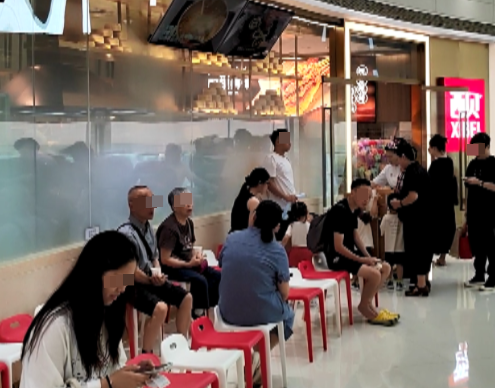
Core Viewpoint - The ongoing dispute between Luo Yonghao and the restaurant chain Xibei regarding "pre-prepared dishes" has sparked significant public interest, with Luo advocating for transparency in the pre-prepared food market to protect consumer rights [1][8]. Group 1: Impact on Xibei - Following the controversy, Xibei has introduced a "Luo Yonghao menu" and allowed customers to tour the kitchen and view detailed ingredient lists [1][3]. - Despite the controversy, a visit to a Xibei location in Chengdu showed that the restaurant was still busy, with customers primarily being families [1][11]. - Some staff reported a slight decrease in customer traffic due to the controversy, but the restaurant remained popular, especially among families with children [3][11]. Group 2: Customer Reactions - Many customers expressed that they were unaware of the "pre-prepared dishes" debate and were primarily motivated to dine at Xibei because their children enjoy the food [1][11]. - A significant number of diners were parents who did not seem concerned about the ongoing dispute, focusing instead on their children's preferences [11]. Group 3: Xibei's Response to the Controversy - Xibei has publicly opened its kitchen for tours and provided detailed ingredient lists to enhance transparency [5][6]. - The restaurant has implemented a health declaration form for visitors wishing to tour the kitchen, ensuring compliance with health standards [6]. - Staff confirmed that while some dishes are pre-prepared, others are cooked fresh upon order, indicating a mix of preparation methods [10].

罗永浩直播称不反对预制菜,展示西贝海鲈鱼、小牛焖饭牛肉包等产品配料表
Cai Jing Wang· 2025-09-13 15:36
Group 1 - The core viewpoint is that the individual does not oppose pre-prepared meals but aims to promote transparency in the industry to protect consumer rights [1] Group 2 - During a live broadcast, images were shown of a refrigerator at a restaurant containing a bag of "de-boned yellow flower fish fillet" with a shelf life of 18 months [3] - Another product, "sea bass," also displayed a shelf life of 18 months, with ingredients including sea bass, water, edible salt, ginger, yeast extract, and a moisture-retaining agent, indicating it is a pre-marinated product [3] - The "small beef braised rice beef package" weighing 2.5 kilograms was shown to be non-instant and not directly provided to consumers [4]
罗永浩与西贝谁有理?与其口水仗,不如让大家吃得明白
Qi Lu Wan Bao· 2025-09-13 10:41
Core Viewpoint - The ongoing debate between Luo Yonghao and Jia Guolong regarding pre-prepared dishes has sparked widespread attention, highlighting issues such as the definition of pre-prepared dishes, their use in dine-in restaurants, and the protection of consumer rights [1][2]. Industry Insights - The pre-prepared dish market in China is projected to exceed 600 billion yuan by 2025, indicating that the industry is entering a phase of standardized development [3]. - Major restaurant chains are encouraged to take the lead in ensuring food safety and quality, demonstrating their commitment to consumers [3]. Consumer Expectations - Consumers are generally open to pre-prepared dishes, especially given the time-consuming nature of food preparation; however, they demand transparency regarding the nature of the dishes served, including which are pre-prepared and which are freshly cooked [2][3]. - There is a clear expectation for restaurants to provide transparent information about their dishes, ensuring that price and quality align, which reflects a respect for consumer rights [2]. Regulatory Context - The official definition of pre-prepared dishes was established by the State Administration for Market Regulation in March of last year, clarifying that dishes made in central kitchens do not fall under this category [1].
罗永浩和西贝都在努力地“摆事实讲道理”
Qi Lu Wan Bao· 2025-09-13 10:30
Group 1 - The debate between Luo Yonghao and Xibei regarding "pre-made dishes" has intensified, with Luo advocating for transparency and consumer rights [1] - Luo presented evidence of food additives in Xibei's frozen fish, highlighting the presence of seven food additives in the ingredient list [1] - Xibei's response has been perceived as passive, with concerns raised about their use of frozen products and the handling of leftover food [1] Group 2 - Luo Yonghao's skills in public debate and topic setting have been noted, while Xibei's responses have been criticized for lacking preparation [2] - The crisis management approach of Xibei has been deemed unprofessional, with suggestions for a more strategic response, such as an apology followed by an invitation for a kitchen tour [2] - Despite the amateurish handling, Xibei's transparency about their kitchen practices has allowed consumers to gain a clearer understanding of their operations [2] Group 3 - The public confrontation over pre-made dishes serves to protect consumer rights and encourages businesses to operate within legal frameworks [3] - The exchange of opinions between supply and demand sides can benefit regulatory bodies in making informed decisions [3] - The ultimate goal is to prompt regulatory authorities to establish national standards for pre-made dishes, benefiting consumers in the long run [3]
西贝营业额大降,于东来力挺西贝视频已不可见
Zheng Quan Shi Bao· 2025-09-13 10:28
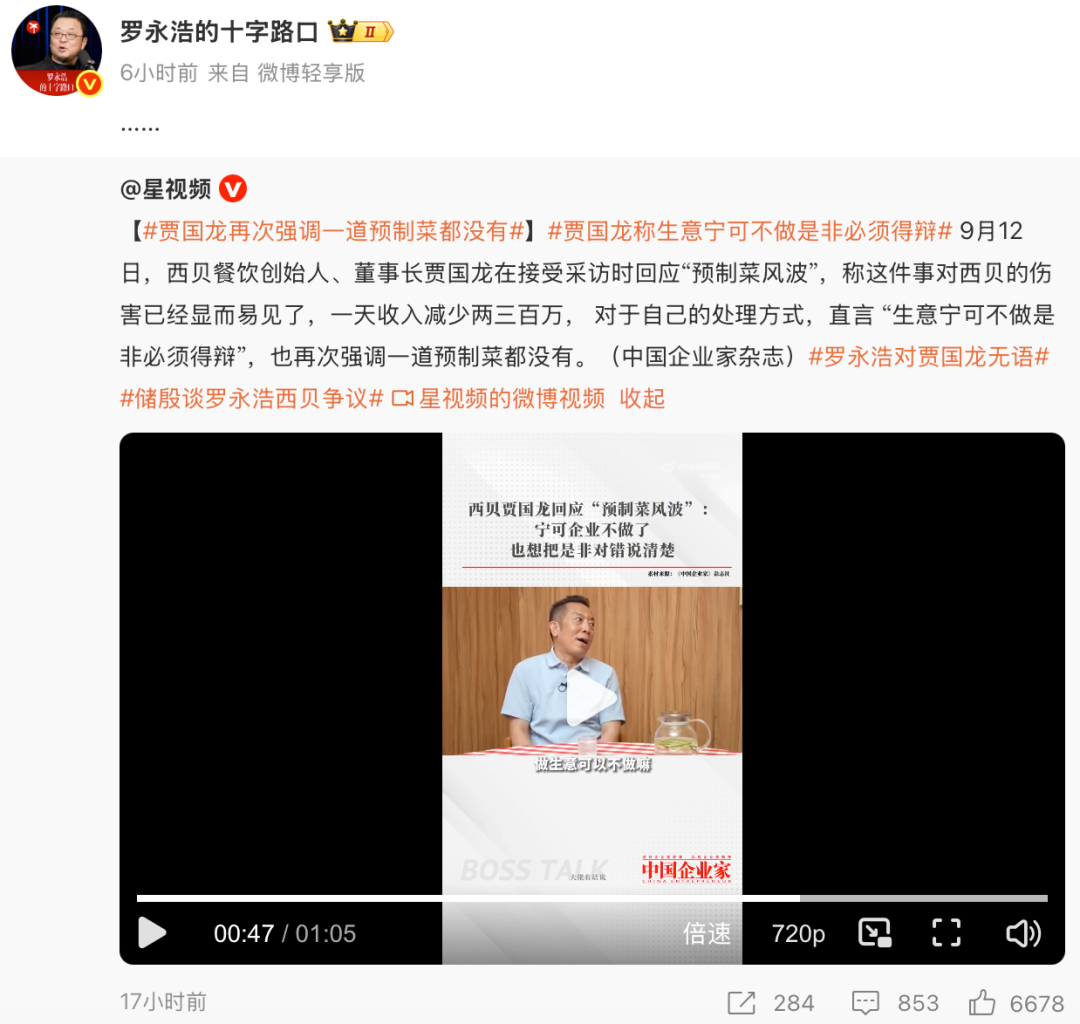
Core Viewpoint - The ongoing dispute between Luo Yonghao and the restaurant chain Xibei regarding the use of "pre-prepared dishes" has led to significant financial repercussions for Xibei, with reported daily revenue losses of 1 million yuan on September 10 and 11, and an expected decrease of 2 to 3 million yuan starting September 12 [1][2]. Group 1: Financial Impact - Xibei's revenue has been adversely affected, with a direct loss of 1 million yuan per day on September 10 and 11, and an anticipated loss of 2 to 3 million yuan per day from September 12 onwards [1]. - The controversy has resulted in a noticeable decline in customer traffic for Xibei, indicating a broader impact on the brand's reputation and financial health [1]. Group 2: Industry Reactions - Several prominent figures in the restaurant industry have publicly supported Xibei, emphasizing the challenges faced by businesses and the importance of constructive criticism rather than damaging accusations [2]. - Luo Yonghao has expressed concerns about the potential harm to Xibei and the restaurant industry as a whole, advocating for legislative measures to ensure transparency in the use of pre-prepared dishes [2]. Group 3: Legal and Regulatory Aspects - Legal opinions suggest that Xibei's use of certain ingredients may classify them as pre-prepared dishes under current regulations, raising questions about the company's marketing claims [3]. - A draft national standard for food safety regarding pre-prepared dishes is set to be publicly reviewed, which could lead to clearer definitions and regulations for the industry [3][4]. Group 4: Consumer Awareness - Luo Yonghao has emphasized the need for transparency in the restaurant industry, asserting that consumers have the right to know whether pre-prepared dishes are used [4]. - The discussion highlights a growing demand for clarity and honesty in food sourcing and preparation, as consumers increasingly seek fresh and authentic dining experiences [5].
刷屏!罗永浩:太好了,万众期待!!西贝营业额大降,于东来力挺西贝视频已不可见,抖音账号已私密!
Zheng Quan Shi Bao· 2025-09-13 10:07
Core Viewpoint - The ongoing debate between Luo Yonghao and the restaurant chain Xibei regarding "pre-made dishes" has led to significant financial repercussions for Xibei, with a reported daily revenue drop of 1 million yuan following Luo's comments, escalating to an estimated 2-3 million yuan per day thereafter [1][4]. Group 1: Financial Impact - Xibei's daily revenue decreased by 1 million yuan on September 10 and 11, with projections of a further decline to 2-3 million yuan starting September 12 [1]. - The controversy has resulted in a noticeable drop in customer traffic for Xibei [1]. Group 2: Industry Reactions - Prominent figures in the restaurant industry have expressed support for Xibei, emphasizing the challenges faced by businesses and the importance of constructive criticism rather than damaging accusations [4]. - Luo Yonghao's comments have sparked a broader discussion about the transparency of pre-made dishes in the restaurant industry, with calls for legislative action to protect consumer rights [4][8]. Group 3: Legal and Regulatory Aspects - Legal opinions suggest that Xibei's use of certain pre-made ingredients may violate existing regulations, raising concerns about potential false advertising [5]. - A draft national standard for pre-made dishes is set to be publicly reviewed, which could standardize definitions and disclosure requirements for restaurants [6][7]. Group 4: Consumer Awareness - Luo Yonghao has stated that while he does not oppose pre-made dishes, consumers have the right to know whether restaurants use them, advocating for greater transparency in the industry [9]. - The debate highlights a disconnect between consumer expectations for freshness and the reality of industrial food processing methods used by some restaurants [10].
刷屏!罗永浩:太好了,万众期待!!西贝营业额大降,于东来力挺西贝视频已不可见,抖音账号已私密!
证券时报· 2025-09-13 10:01
Core Viewpoint - The ongoing debate between Luo Yonghao and the restaurant chain Xibei regarding "pre-made dishes" has highlighted significant issues in the restaurant industry, particularly concerning transparency and consumer rights [1][10]. Group 1: Impact on Xibei - Luo Yonghao's claim about Xibei serving pre-made dishes has led to a noticeable decline in Xibei's business, with daily revenue dropping by 1 million yuan on September 10 and 11, and an expected decrease of 2 to 3 million yuan starting September 12 [2]. - Xibei's CEO, Jia Guolong, emphasized that the restaurant does not serve any pre-made dishes and expressed the urgency of addressing the situation to mitigate further damage [2][6]. Group 2: Industry Reactions - Many prominent figures in the restaurant industry have publicly supported Xibei, indicating a divide between public opinion and industry sentiment [7]. - Yu Donglai, the owner of a well-known restaurant, expressed gratitude for Xibei and similar brands, highlighting the challenges faced by entrepreneurs and the importance of constructive criticism rather than condemnation [7]. Group 3: Legal and Regulatory Developments - A draft national standard for pre-made dishes, led by the National Health Commission, has passed expert review and will soon seek public opinion, marking a significant step towards regulatory clarity in the industry [8][9]. - The new standards will require restaurants to disclose their use of pre-made dishes, transitioning the industry from unregulated growth to a more compliant framework [10]. Group 4: Luo Yonghao's Position - Luo Yonghao clarified his stance on pre-made dishes, stating he does not oppose them but advocates for transparency regarding their use in restaurants [10]. - During a live broadcast, he criticized Xibei's claims of not using pre-made dishes, arguing that the lack of national standards does not justify misleading consumers about the freshness of ingredients [10][11].

从病死猪肉也吃到嫌弃预制菜,罗永浩的执念可以放下
第一财经· 2025-09-13 09:52
Core Viewpoint - The article discusses the evolving perception of pre-prepared meals (pre-cooked dishes) in the restaurant industry, highlighting the need for transparency and consumer awareness regarding their use in dining establishments [3][6]. Group 1: Industry Trends - The Chinese government is actively promoting the pre-prepared meal industry as a new sector, with initiatives aimed at enhancing standardization and safety regulations [4]. - The 2023 Central Document No. 1 emphasizes the development of pre-prepared meal standards, indicating strong governmental support for this industry [4]. - The trend towards using pre-prepared meals in restaurants is seen as inevitable due to demands for quick service, food safety, and cost-effectiveness [4]. Group 2: Consumer Awareness and Rights - There is a growing call for restaurants to disclose the use of pre-prepared meals to uphold consumer rights, as highlighted by recent regulatory documents [6]. - The upcoming national standards for food safety regarding pre-prepared meals will require restaurants to inform customers about their use, enhancing transparency [6][7]. - The article suggests that while the majority of meals may become pre-prepared, restaurants that offer freshly cooked meals could leverage this as a unique selling point [6]. Group 3: Quality Control and Safety - The emphasis on public disclosure of pre-prepared meals does not inherently improve their taste or safety; the focus should be on stringent quality control and adherence to food safety regulations by producers and restaurants [7]. - Ensuring high-quality pre-prepared meals is crucial for consumer satisfaction and trust in the industry [7].

壹快评丨从病死猪肉也吃到嫌弃预制菜,罗永浩的执念可以放下
Di Yi Cai Jing· 2025-09-13 09:05
Group 1 - The core viewpoint emphasizes the importance of strict quality control in the prepared food industry, with both production and restaurant businesses needing to adhere to food safety regulations without any negligence [1][4] - The prepared food industry is recognized as a new sector supported by the government, with initiatives aimed at enhancing standardization and regulation, as highlighted in the 2023 Central Document No. 1 and subsequent notifications from multiple ministries [2][3] - The increasing use of prepared foods in restaurants is seen as a trend driven by the need for quick service, food safety, and cost-effectiveness, catering to consumer demands for convenience [2][3] Group 2 - There is a growing call for transparency regarding the use of prepared foods in restaurants, with regulatory bodies advocating for clear disclosure to protect consumer rights [3][4] - The upcoming national standards for food safety in prepared foods are expected to clarify the identity and usage of these products in the restaurant sector, marking a significant step towards transparency [3] - The notion that most restaurant meals may become prepared foods in the future suggests a shift in consumer expectations, where only a minority of meals will be freshly cooked, potentially changing marketing strategies for restaurants [3]
预制菜争议持续发酵:西贝发公开信 罗永浩开直播
Zhong Guo Jing Ying Bao· 2025-09-13 02:18
Core Viewpoint - The ongoing controversy surrounding Luo Yonghao's criticism of XIBEI's use of pre-prepared dishes has led to public discussions about food transparency and consumer rights in the restaurant industry [1][4]. Group 1: Company Response - XIBEI issued a letter to customers clarifying that the dishes Luo Yonghao consumed do not fall under the definition of "pre-prepared dishes" as outlined by the six ministries in their recent notification [1][3]. - XIBEI expressed gratitude to Luo Yonghao for dining at their establishment but firmly opposed his claims, stating that they are unfounded and damaging to the brand's reputation [3][4]. - The company provided a detailed "operational guideline" for the preparation of the 13 dishes Luo ordered, emphasizing their commitment to food safety and quality [3]. Group 2: Luo Yonghao's Position - Luo Yonghao clarified in a live stream that he does not oppose pre-prepared dishes but advocates for transparency regarding their use in restaurants, emphasizing consumers' right to know whether dishes are freshly made or pre-prepared [4][5]. - He highlighted specific examples of pre-prepared items found in XIBEI's kitchen, questioning the integrity of the restaurant's claims about their food preparation practices [5][6]. - Luo referenced a report indicating that a significant percentage of major restaurant chains in China, including XIBEI, utilize pre-prepared dishes, suggesting that the industry lacks clear standards [5][8]. Group 3: Industry Insights - The China Chain Store and Franchise Association provided insights into the definition and scope of pre-prepared dishes, clarifying that items produced in central kitchens for specific restaurant chains do not qualify as pre-prepared dishes under current regulations [8][9]. - The association emphasized the importance of food safety and quality standards in the production of semi-finished and finished dishes, which are prepared on-site by restaurant chefs [9][10]. - There is an ongoing effort to establish national standards for pre-prepared dishes, with the health commission leading the initiative to solicit public opinions on these standards [10].