风格漂移

Search documents
聊聊基金业绩基准征求意见稿
Sou Hu Cai Jing· 2025-11-09 09:52
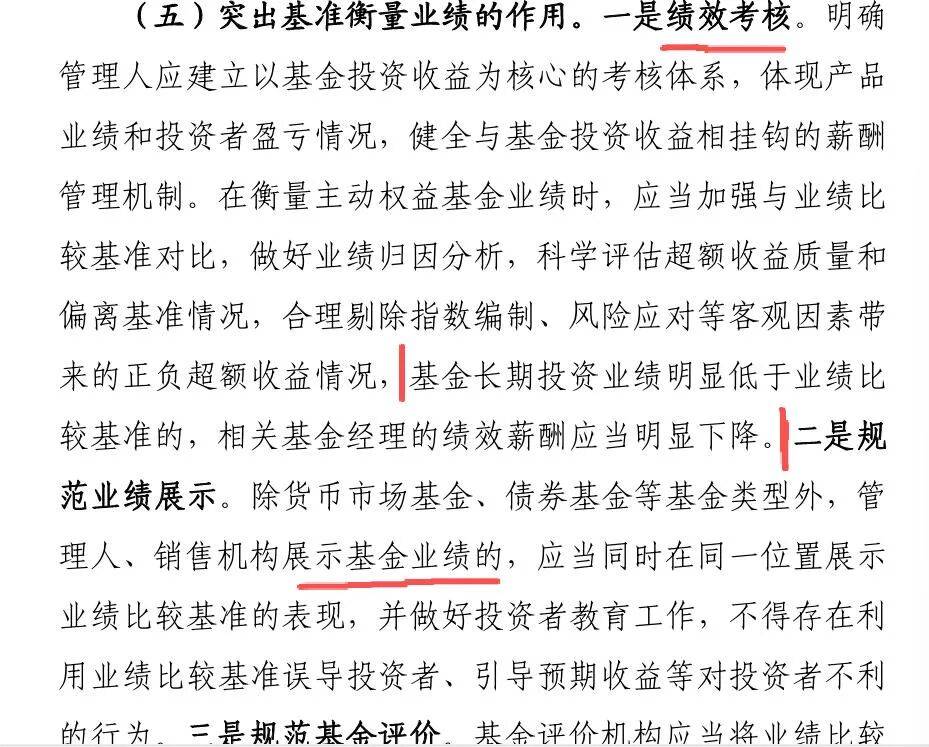
Core Viewpoint - The new draft for fund performance benchmarks is generally seen as favorable for investors and sales personnel, while it may create additional work for fund companies [2][6][15]. Group 1: Benefits for Investors and Sales Personnel - The issue of "style drift" in fund management has been a concern, where fund managers may not adhere to their stated investment strategies, leading to investor losses [2][4]. - The new regulations will hold fund managers accountable by linking their compensation to performance against established benchmarks, potentially reducing the occurrence of misleading practices [4][6]. - Clearer performance benchmarks will enhance communication between sales personnel and investors, making it easier to explain fund strategies and performance [6][8]. Group 2: Implications for Fund Companies - Fund companies will face increased responsibilities to ensure that their funds' performance benchmarks align with their investment strategies, which may require significant adjustments [6][8]. - The establishment of a benchmark library by the fund industry association will necessitate that fund companies actively participate in the selection of appropriate indices for their funds [9][15]. - There is a concern that the current benchmark library may not adequately cover emerging industries and new indices, which could complicate fund management and performance reporting [15][16].

公募基金改革再“落子”,基金业绩或将告别“盲盒”时代!
Sou Hu Cai Jing· 2025-11-04 09:47
Group 1 - The phenomenon of style drift in A-share market is prevalent, where funds claiming to focus on consumer themes are heavily investing in technology stocks, leading to confusion regarding their actual investment strategies [1] - A specific mixed strategy fund has changed managers six times in nine years, resulting in inconsistent investment styles and poor performance during critical market events [1] - As of October 31, 2023, 63.46% of actively managed equity funds have underperformed their benchmarks over the last three years, indicating a significant issue within the fund management industry [2] Group 2 - The China Securities Regulatory Commission (CSRC) has released a draft guideline emphasizing the importance of performance benchmarks in mutual funds, stating that benchmarks should reflect the product's positioning and investment style [3] - The new regulations aim to prevent funds from changing their benchmarks arbitrarily due to manager changes or short-term market fluctuations, promoting more stable investment strategies [4] - As of October 31, 2023, 183 funds have announced changes to their performance benchmarks this year, a notable increase from 144 in the same period last year, indicating a proactive approach to comply with upcoming regulations [4] Group 3 - The selection of performance benchmarks is now strictly regulated, requiring strategy funds to use corresponding strategy indices, which aims to enhance accountability in fund management [5][6] - Funds without a clear thematic focus have more lenient requirements, but investors are advised to pay close attention to fund managers' styles and past performance when selecting these funds [7] Group 4 - Index funds are considered a safer investment option for ordinary investors due to their lower susceptibility to manager biases and more precise industry positioning [10] - Historical data shows that actively managed funds often underperform index funds over the long term, suggesting that index funds may be a more reliable choice for wealth accumulation [11]
A股盘前播报 | 商务部回应安世半导体相关问题 公募业绩比较基准指引出炉
智通财经网· 2025-11-03 00:43
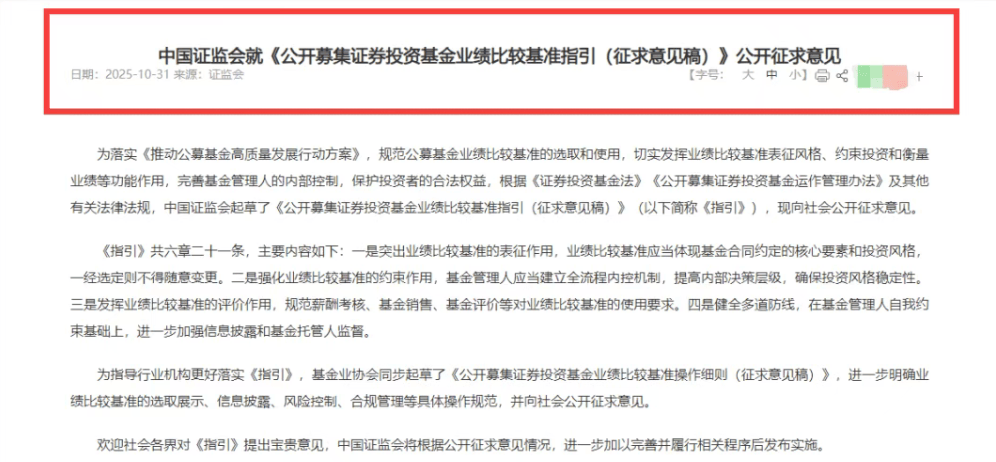
Group 1 - The Ministry of Commerce responds to ASML-related issues, indicating that China will consider exemptions for eligible exports due to disruptions in the global supply chain caused by inappropriate government interventions [1] - The China Securities Regulatory Commission has released guidelines for public fund performance benchmarks, aiming to prevent style drift and enhance investment behavior stability [2] - The Ministry of Finance and the State Taxation Administration clarified that taxpayers selling standard gold outside exchanges must pay value-added tax according to existing regulations [3] Group 2 - In October, new energy vehicle companies reported strong delivery numbers, with Leap Motor exceeding 70,000 units, Xiaopeng and NIO setting monthly delivery records, and Xiaomi maintaining over 40,000 units [4] - The solid-state battery technology industry conference was held, emphasizing the importance of demand and corporate profitability for market sustainability [5] - Citic Securities identified structural opportunities in the market, focusing on manufacturing upgrades, Chinese enterprises going abroad, and edge AI [7] - Everbright Securities suggested that the market may continue to experience range-bound fluctuations, with a focus on opportunities in media and computer sectors related to AI applications [9] Group 3 - China has achieved its first thorium-uranium nuclear fuel conversion based on molten salt reactors, which could enhance energy independence and has broad market prospects [10] - The introduction of a new payment channel for high-value innovative drugs in 2025 is expected to create significant investment opportunities in the pharmaceutical sector [11] - The president of the China Animal Husbandry Association emphasized the need to control pig production capacity, predicting a year-on-year decline in pig prices by 2025 [12]


公募新规专治“风格漂移” 基金“盲盒”时代有望终结
Di Yi Cai Jing· 2025-11-02 23:48
Core Viewpoint - The recent regulatory changes in China's mutual fund industry aim to enhance the effectiveness of performance benchmarks, ensuring they accurately reflect fund strategies and prevent misleading practices in fund management [1][2][4]. Group 1: Regulatory Changes - On October 31, the China Securities Regulatory Commission and the Asset Management Association of China released draft guidelines for mutual fund performance benchmarks, emphasizing their role in defining investment styles and measuring performance [2][4]. - The new regulations will link fund managers' compensation to their performance relative to these benchmarks, a move that is stricter than in some developed markets [1][2][8]. - A one-year transition period has been established to adjust existing products to the new benchmarks, minimizing market disruption [3][5]. Group 2: Industry Response - As of October 31, at least 132 mutual fund products have changed their performance benchmarks this year, surpassing the total for the previous year, indicating a shift towards regulatory compliance [1][5]. - Many funds are moving away from commonly used indices like the CSI 300 to more relevant industry-specific indices that better align with their investment strategies [5][6]. - The adjustments reflect a growing recognition of the need for benchmarks that accurately represent the investment focus of funds, addressing previous issues of misalignment [5][6]. Group 3: Performance Measurement - Data shows that only 37% of actively managed equity funds have outperformed their benchmarks over the past three years, highlighting a significant performance gap [7]. - The new regulations aim to create a more transparent and stable risk-return profile for funds, reducing the occurrence of "style drift" where funds deviate from their stated investment strategies [8][9]. - Fund managers are expected to shift their focus from short-term trading to long-term strategies that optimize performance within the framework of the new benchmarks [9].
泰信基金6只“迷你基”规模告急,持有人大会将决定命运走向?
Hua Xia Shi Bao· 2025-10-31 10:37
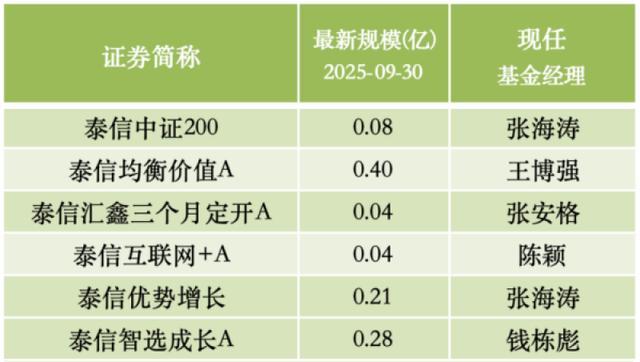
Core Viewpoint - The article highlights the challenges faced by Taixin Fund, particularly the scale crisis of several funds with net assets below 50 million yuan for over 60 consecutive working days, alongside issues of "style drift" that have led to negative ratings from professional agencies [1][2][6]. Fund Scale Challenges - Six funds under Taixin Fund are reported to have net assets below 50 million yuan, including Taixin CSI 200, Taixin Balanced Value A, Taixin Huixin Three-Month Open A, Taixin Internet + A, Taixin Advantage Growth, and Taixin Smart Growth A [2][4]. - The Taixin Advantage Leading Mixed Fund, established in September 2022, saw a net value drop of 9.63% in 2023, ranking in the top 30% of its peers, but by 2025, despite a 23.38% increase in net value, it fell to the 2979th position out of 4500 similar funds [2][3]. Regulatory Compliance and Solutions - The fund manager disclosed that the fund has been below the 50 million yuan threshold for over 60 days and has submitted a solution to the regulatory authority, which may include options like continued operation, conversion, merger with other funds, or termination of the fund contract [4][5]. - The fund management company has committed to maintaining the interests of fund holders by bearing the fixed costs associated with the affected funds [4]. Style Drift Issues - Taixin Fund's products have faced criticism for "style drift," leading to a lack of ratings from agencies like Jiaan Jinxin, which noted that significant deviations from the investment style outlined in the fund contracts could harm investors [6][8]. - For instance, the Taixin Internet + Mixed Fund, which should primarily invest in internet infrastructure, has shifted its focus to major holdings in companies like Kweichow Moutai and Agricultural Bank of China, raising concerns about adherence to its stated investment strategy [6][8]. Future Strategies - In response to the style drift concerns, Taixin Fund plans to focus on sectors that leverage modern technology and services, particularly in AI and healthcare, to align with its investment themes [9]. - The company aims to enhance its research and marketing strategies to foster sustainable growth, emphasizing the importance of matching product offerings with research capabilities rather than pursuing rapid scale expansion [10].
一看就懂!主动权益基金的8大缺点!
Sou Hu Cai Jing· 2025-10-06 16:46
Core Viewpoint - Active equity funds are expected to generate excess returns in the current market environment and for a long time to come, but they also have notable drawbacks that need to be understood for a more rational investment framework [2] Group 1: Performance Challenges - The performance of active equity funds heavily relies on the alignment between the fund manager's investment style and market trends, with most funds unable to consistently outperform the market due to style rotation [4] - The "champion curse" phenomenon illustrates that once market styles shift, fund performance can change rapidly, making chasing top performers a significant trap for ordinary investors [4] Group 2: Individual Manager Risks - The core of active funds is the fund manager, whose investment philosophy, capability, emotional control, and even health can directly impact fund performance [6] - There is a risk of manager turnover, as talented fund managers are scarce and may be poached or switch firms [6] - Some managers may deviate from their investment style under pressure to achieve short-term rankings, leading to potential performance issues [6] Group 3: Misalignment of Interests - Fund companies earn revenue from management fees, which are driven by fund size, creating a misalignment with investors' goals of net asset value growth [6] - This misalignment may lead companies to prioritize scaling over maximizing absolute returns for investors, with rare instances of unethical practices like "lifting the car" and "mouse warehouse" [6] Group 4: Retail Investor Behavior - During market rallies, fund companies may issue numerous funds or investors may heavily subscribe, forcing managers to build positions quickly even if they are bearish on future performance [7] - Conversely, during market downturns, managers may be compelled to sell at low prices to meet redemption requests, exacerbating losses [7] Group 5: Scale Issues - Once a fund becomes a "blockbuster" due to excellent performance and its size swells to hundreds of billions, its excess returns often diminish [9] Group 6: Fund Issuance Timing - The most active periods for new fund issuance often coincide with market peaks and high valuations, exposing investors to long-term holding risks [11] Group 7: Cost Considerations - Fees represent a certain loss, and investors must carefully evaluate costs before investing, as active equity funds typically have higher management fees than index funds, which can significantly erode long-term returns due to compounding effects [13] Group 8: Information Asymmetry - Marketing materials often highlight historical performance but rarely disclose the logic behind returns and their sustainability, making it difficult for ordinary investors to assess a manager's actual investment capabilities, strategy stability, and potential risk exposure [15] Recommendations - Avoid chasing short-term champions and instead evaluate their long-term performance and style consistency over 3-5 years [18] - Focus on the fund manager as a core analysis element, considering their years of experience and the depth and consistency of their investment philosophy [18] - Be cautious of excessively large "giant" funds [18] - Use fee structures as a strict selection criterion, opting for funds with lower fees under similar conditions [18]
投资最容易踩的坑,都在这里了!
雪球· 2025-10-06 05:44
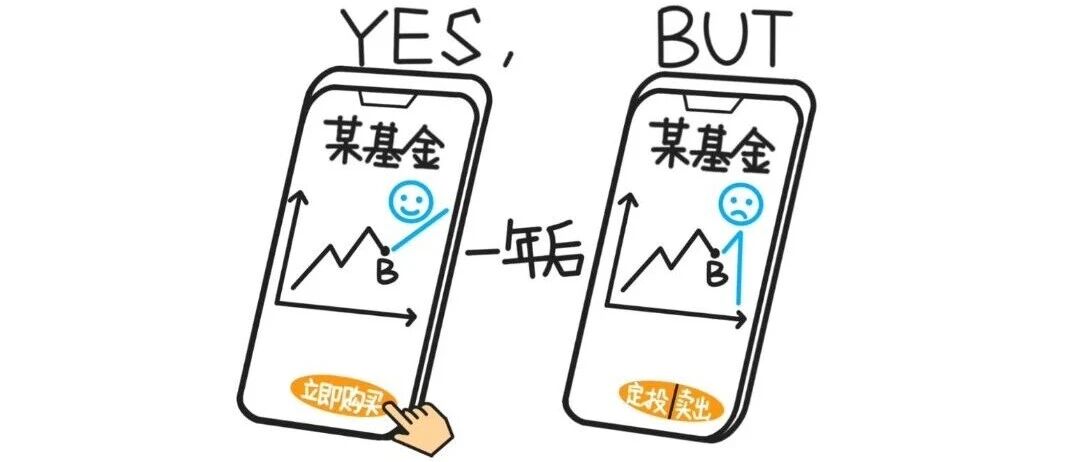
Group 1 - The article discusses the phenomenon of "champion curse" in the fund industry, where fund managers who achieve top rankings often struggle to maintain their performance in subsequent years due to market cycles and style shifts [4][6][7] - It emphasizes the importance of focusing on long-term performance of fund managers rather than being misled by short-term rankings when selecting funds [9] Group 2 - The article highlights the issue of misleading fund names, where fund managers may use popular industry themes in fund titles while the actual investment direction may differ significantly [10][12] - It advises investors to check the actual holdings and changes in holdings of funds to avoid those with a history of style drift [14] Group 3 - The article points out the problem of ineffective diversification, where investors may follow popular influencers and end up investing in funds that are heavily concentrated in the same sector, leading to synchronized downturns [16][18] - It stresses that true diversification should focus on the underlying assets rather than just the number of funds [20] Group 4 - The article discusses the limitations of large-scale funds, where a fund manager managing a significant amount of capital may face constraints in selecting small-cap stocks, potentially impacting performance [22][24] - It recommends choosing funds with a moderate scale to allow fund managers more flexibility in their investment decisions [27] Group 5 - The article warns against the risks of small-scale funds, which may face forced liquidation if they do not attract enough capital, leading to potential losses for investors [30][31] - It suggests avoiding funds with a scale below 100 million to mitigate the risk of forced selling [34]
泰信基金权益产品业绩分化
Shen Zhen Shang Bao· 2025-09-15 02:33
Core Insights - The performance of products under Taixin Fund shows significant differentiation, with some funds achieving long-term gains while others have underperformed their benchmarks in recent years [1][2] - The company has faced criticism from third-party evaluation agencies regarding style drift in two of its products in Q2 of this year, which the company attributes to compliance with contract terms related to "new technology transformation of traditional services" [1] Fund Performance - Taixin Fund currently manages 35 products with a total net asset value of 32.937 billion yuan, ranking 98th among peers; its only money market fund has a scale of 19.454 billion yuan, while non-money market funds are below 13.5 billion yuan, ranking 127th [1] - The company has only one equity fund with a scale of 11.22 million yuan and 20 mixed funds totaling 6.184 billion yuan, which together account for less than 19% of the company's total management scale [1] - There are 13 bond funds under Taixin Fund with a combined scale of 7.288 billion yuan; however, the company has only two index products, both with scales below 50 million yuan [1] Performance Disparity - Among the equity products, some funds like Taixin Medical Service Mixed Fund and Taixin Small and Medium Cap Selected Mixed Fund have significantly outperformed their benchmarks over the past year and several years [2] - Conversely, several funds, including Taixin Development Theme Mixed Fund and Taixin Modern Service Industry Mixed Fund, have underperformed, with some showing a net value decline of around 50% over the past three years [2] - Specific funds have underperformed their benchmarks by at least 20 percentage points over the past two years, indicating a clear performance disparity within the company's offerings [2]
近一年涨105.62%难掩“风格漂移”!前海开源大安全核心混合重仓中国平安、指南针,换手率飙至1143.55%
Xin Lang Ji Jin· 2025-09-10 10:00
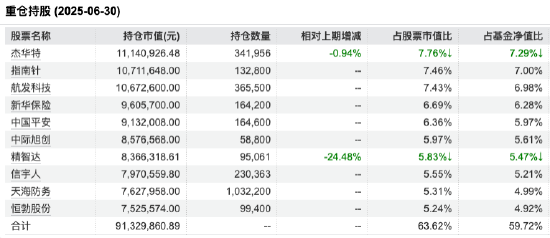
Core Viewpoint - The article highlights the phenomenon of "style drift" in public funds, where several funds have deviated significantly from their stated investment themes, raising concerns in the market [1][11]. Fund Analysis - The Qianhai Kaiyuan Great Security Core Mixed Fund, despite being themed around "Great Security," shows a notable deviation in its actual holdings, which span various sectors including semiconductors, software development, aerospace equipment, insurance, and automotive parts [2][11]. - As of the second quarter of 2025, the fund's top ten holdings include companies like Jiehuate, Guiding Compass, and China Ping An, with a sector distribution of 45.31% in technology, 34.64% in manufacturing, and 16.86% in finance [2][3]. Investment Performance - The fund manager, Liu Hong, has achieved a total return of 53.27% since taking over the fund on August 8, 2022, with an annualized return of 14.80% [4]. - As of September 2025, the fund's performance over the past year reached 105.62%, with two-year and five-year returns of 87.02% and 81.70%, respectively, leading to a total return of 199.80% and an annualized return of 10.91% [5]. Trading Activity - The fund exhibits a highly aggressive investment style, with a turnover rate of 1143.55% in the first half of 2025 and 813.82% at the end of 2024, indicating frequent adjustments in its portfolio [7][8]. - This high turnover rate, combined with the deviation from its investment theme, raises questions about the sustainability and stability of its investment strategy [7]. Market Context - Liu Hong noted that the fund's performance was impacted by the imposition of reciprocal tariffs by the U.S. and China, leading to significant market fluctuations. However, subsequent negotiations and supportive domestic policies resulted in a rebound in A-shares [10]. - The fund's strategy focuses on mid-term performance trends of listed companies and industry trends, particularly in TMT (Technology, Media, and Telecommunications), non-bank financials, and machinery sectors [10]. Fund Characteristics - The fund has a scale of 153 million yuan, which, while not large, is stable and far from the liquidation threshold [11]. - The article serves as a warning to investors about the importance of scrutinizing a fund's actual holdings and investment logic rather than relying solely on its name, to avoid falling into the "style drift" trap [11].



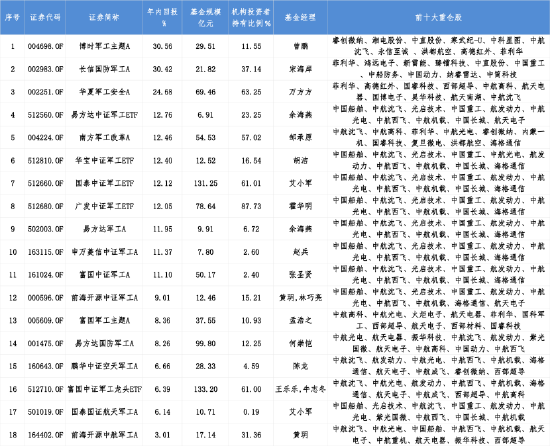
豪赌AI芯片引风格漂移争议,博时军工主题A年内收益30.56%领先,寒武纪持仓占比近一年升至6.8%
Xin Lang Ji Jin· 2025-09-05 08:48
Core Viewpoint - The article highlights the performance of military-themed funds, particularly focusing on the BoShi Military Theme A fund, which has shown impressive returns but raises concerns about its investment strategy and potential style drift due to significant holdings in AI chip stocks like Cambricon [1][3][11]. Fund Performance - As of September 4, 2023, 11 military-themed funds have achieved over 10% returns this year, with three exceeding 24%. BoShi Military Theme A leads with a return of 30.56%, followed closely by Changxin National Defense Military A at 30.42%, and Huaxia Military Security A at 24.68% [1][7]. - BoShi Military Theme A's total assets amount to 2.951 billion yuan, placing it in the mid-range among military-themed funds [9]. Investment Strategy - The fund manager, Zeng Peng, indicated a high allocation to the missile industry and maintained investments in sectors like military AI, drones, satellite industries, and information security [7][11]. - The fund's top ten holdings account for 63.25% of its net value, with over 30% in information technology stocks [7]. Holdings Analysis - Cambricon, an AI chip company, has become the fourth-largest holding in BoShi Military Theme A, with a market value of 200.3 million yuan, representing 6.79% of the fund's net value [4][5]. - In contrast, other top-performing military funds maintain a higher concentration in traditional military stocks, indicating a more focused investment strategy [7]. Institutional Investor Sentiment - Institutional ownership in BoShi Military Theme A is only 11.6%, significantly lower than other military funds, such as Huaxia Military Security A at 63.3% and Guotai Zhongzheng Military ETF at 61% [7][11]. Managerial Changes - The current fund manager, Zeng Peng, has a total return of -13.04% since taking over in June 2022, despite the fund's strong performance this year [9][11]. - The previous manager, Lan Dong, achieved a total return of 107.80% over nearly five years, indicating a stark contrast in performance and investment philosophy [9][11].