AI音乐

Search documents
全球最强AI音乐模型,现在来自中国!高晓松也来围观了
量子位· 2026-01-28 13:33
一水 发自 凹非寺 量子位 | 公众号 QbitAI 把AI模型发布会开在Livehouse,昆仑天工你是懂氛围感的(doge)! 虽然乍一听有点奇怪,但如果告诉你这里正在发布的是一款 音乐模型 ,估计你也就get到它的小巧思了。 先不说别的,咱这就火速品鉴一下这支由 新模型Mureka V8 提供BGM的MV: 在发布会现场,昆仑万维董事长兼CEO方汉表示: 为什么要把Mureka当品类来做?这其实和我们的使命有关——我们想让音乐变成每个人都拥有的表达方式,记录当下的心情、记忆、想 说的话等等。 而当好的AI音乐成为一种新品类,AI版"Spotify"(指旗下的Mureka)会成为行业的灯塔 ,能让创作者被看见,让作品被放大,让行 业形成新的共识。 而他所描绘的这一未来图景,也获得了高晓松及国内顶尖唱片公司负责人的认可。作为离产业一线最近的人,他们对好的AI音乐引发的变革浪 潮,感知也最为敏锐。 是不是很有韩国女团打歌的feeling了~不过从现场来看,这还只是Mureka V8实力的冰山一角—— 在各路音乐人实测中, 它一举打败硅谷顶尖音乐模型Suno V5,登顶垂类世界第一 。 而随着这一标志性节点的出 ...



刚刚,AI音乐被重新定义!昆仑天工甩出新王炸,拿下全球第一
机器之心· 2026-01-28 13:08
图源: B 站 UP 主「漫游会议室」 当然,AI 音乐并不是要取代人类创作者,反而更有可能帮助他们的作品出圈。这个月,FYI.AI 创始人、美国音乐团体 Black Eyed Peas 成员 Will.i.am 在接受采访时 表示,「AI 正在为创作者带来一场新的文艺复兴。」AI 的加入使得音乐创作变成了一种人机协作的融合形态。 1 月 28 日,国内 AI 音乐界扛把子昆仑天工,面向全球用户发布了 最新音乐大模型 Mureka V8 。 新模型在继续降低创作门槛、推动「人人都能成为创作者」的同时,旗帜鲜明地亮出了 AI 音乐进化为一种新音乐品类的概念。 今晚 8 点,由 Mureka 包揽词曲与编曲的 M:RA 女团主打歌曲《MCE》已经在 QQ 正式上线。同时与太和音乐联合发行了这首歌的 MV,气场十足,感觉一下子就 将我们拉进了打歌舞台现场: 机器之心编辑部 如今,AI 神曲传播的速度已经远远超出了我们的想象。 在 B 站,有这样一位音乐 UP 主「漫游会议室」,他将《西游记》中的经典人物「请进」录音棚,利用 AI 来填词、作曲。在三个多月时间里,创作出了 30 个作 品,大部分都是百万播放量,其中爆 ...

2026年AI音乐新趋势,产业生态全面革新
Sou Hu Cai Jing· 2026-01-23 15:10
Group 1 - The core viewpoint is that AI technology is having a disruptive impact on the music industry, reshaping music creation logic, copyright management, business models, and offline scenarios, leading to trends such as "decentralized creation" and "virtual idols dominating the mainstream market" [1][3]. Group 2 - The music industry is transitioning from "human-driven" to "algorithm-enabled" as generative AI technology matures, with AI music tools rapidly penetrating creation, distribution, and performance by 2024 [3]. - There is a significant reduction in outsourcing music budgets for small and medium-sized game companies, which are now opting for "voice synthesis + template arrangement" solutions [3]. - The demand for recording studios and mixing engineers is sharply declining, with the utilization rate of recording studios dropping from 100% in 2024 to 20% currently [3]. - The impact of AI is expected to reshape the entire industry chain, potentially giving rise to new professions such as AI music planning, AI music aesthetic consulting, and AI digital human IP operation [3]. Group 3 - The next three years are predicted to be a critical battleground between "human singers" and "virtual idols," with the market acceptance of mixed performances by virtual and real members, as demonstrated by the Korean group aespa [5]. - It is forecasted that by 2028, over 70% of the top ten songs on popular charts will be performed by AI singers [5].

别再给我推AI音乐了
3 6 Ke· 2026-01-20 12:56
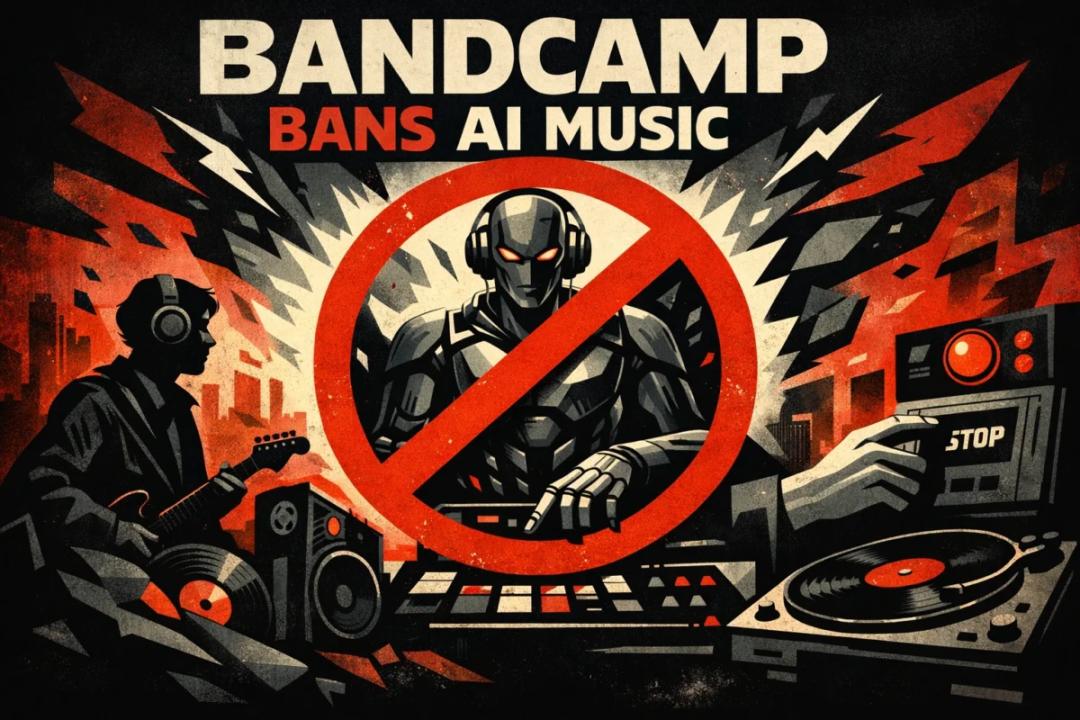
Core Viewpoint - Bandcamp has announced a complete ban on AI-generated content, emphasizing the importance of human creativity in music and the desire for listeners to trust that the music they discover on the platform is created by humans [1][3]. Group 1: Industry Response to AI Music - The ban by Bandcamp comes four months after the launch of a $13 monthly promotional subscription service, indicating a shift in focus towards human creativity amidst growing concerns about AI music [3]. - The music industry is experiencing a significant transformation due to AI music, with listeners expressing fatigue over the constant push of AI-generated content [5][16]. - AI music has infiltrated various platforms, leading to a collective awareness among listeners who are increasingly frustrated with the prevalence of AI-generated songs [14][23]. Group 2: Listener Attitudes Towards AI Music - Listeners' attitudes towards AI music can be categorized into three groups: those who initially enjoy it but lose interest upon realizing it is AI-generated, those who become annoyed by the repetitive nature of AI music, and those who remain indifferent as long as the music is enjoyable [11][13]. - The phenomenon of AI music has led to a loss of personal taste and appreciation for music, as listeners feel their preferences are being reduced to predictable patterns [7][13]. - Many listeners are unaware that the seemingly original music they encounter is often generated by algorithms, leading to a misunderstanding of the nature of the content they consume [20][22]. Group 3: Market Dynamics and AI Music Production - The rapid expansion of AI music is evident, with platforms like TME and ByteDance's Soda Music Lab developing competitive AI music generation tools [23][25]. - AI music has been integrated into the distribution system, allowing creators to publish AI-generated content for a fee, which reflects a recognition that AI music should not be equated with human creativity [25]. - The production of AI music has become industrialized, with new roles emerging in the music industry focused on reworking AI-generated content to add a human touch [29]. Group 4: Regulatory and Ethical Considerations - International platforms like Deezer and Spotify are beginning to address the issue of AI-generated music, with Deezer marking AI content and Spotify removing millions of low-quality AI songs [32][34]. - In contrast, the regulatory response in domestic markets has lagged behind the rapid growth of AI music, raising concerns about copyright issues and the ethical implications of AI-generated content [34][36]. - The lack of clarity in regulations allows for exploitation of the system, leading to a situation where listeners are left confused about the authenticity of the music they are consuming [34][36].
回望2025:中国音乐产业的十个关键词
3 6 Ke· 2025-12-31 11:58
Core Insights - The Chinese music industry in 2025 reflects a complex landscape filled with challenges and opportunities, marked by significant changes and evolving dynamics [1] Group 1: Overseas Artists in China - The Chinese music scene has embraced a global perspective, with an influx of overseas artists like Imagine Dragons and Katy Perry, indicating a shift towards more diversified operations in the Chinese market [2][4][6] - This trend has led to a closer connection between global and local music scenes, prompting domestic artists to confront their shortcomings in execution and branding [2][4] Group 2: Decline of Hit Songs - The value of hit songs has diminished, with the most popular tracks in 2025, such as "Jumping Machine," achieving only around 5 million uses on Douyin, compared to previous years where hits garnered over 10 million [7][9] - The oversaturation of music supply and increased competition have made it difficult for songs to achieve the same level of impact as in the past, leading to a reevaluation of what constitutes value in music [9] Group 3: Competition in Music Festivals - The music festival market has seen an influx of various entertainers, including actors and influencers, leading to a dilution of the music-centric experience and increased tensions between different audience segments [10][12][14] - The industry is experiencing a struggle between commercial interests and artistic integrity, with a push towards a more refined and professional approach to music festivals [14] Group 4: Rise of Top Artists - Major artists like Cai Xukun and Lu Han have made significant comebacks, with Cai's song "Deadman" breaking records shortly after release, showcasing the enduring appeal of top-tier talent [15][19] - The integration of high-quality production and storytelling in performances has become a hallmark of successful tours, as seen in Lu Han's recent concert series [19] Group 5: Local Rap Scene - The Chinese rap scene has gained a distinct identity, with artists like Zang Lao surpassing major figures like Jay Chou in monthly listeners on Spotify, highlighting a shift towards localized content [22][23] - The ongoing debate between traditional and modern styles in rap has sparked discussions on cultural respect and aesthetic diversity [25] Group 6: AI Integration - AI technology has become a core component of the music industry, with platforms like NetEase and Tencent Music introducing AI songwriting tools, leading to both innovation and challenges in music creation [26][28][32] - The rise of AI-generated content has also led to concerns about the quality and originality of music, as the industry grapples with the implications of mass-produced songs [32] Group 7: Short Drama OSTs - The short drama OST market has seen formal recognition, with regulatory bodies focusing on copyright issues and the integration of music into short-form content becoming a new trend [33][36][38] - The collaboration between short drama producers and music labels is on the rise, enhancing the overall market impact of OSTs [38] Group 8: Music Variety Shows - Music variety shows are adapting to challenges posed by the rise of live performances, with many shows struggling to attract top talent and facing declining viewership [39][41][42] - Innovative formats and a focus on authentic content are being explored to revitalize the genre and engage audiences [42] Group 9: Polarization in the Live Performance Market - The live performance market is experiencing a stark divide, with major artists enjoying immense success while smaller acts face significant financial challenges [43][45][47] - The disparity highlights the difficulties for mid-tier and independent artists in securing profitable performance opportunities [47] Group 10: Emergence of Second-Generation Stars - 2025 marks a notable year for second-generation stars entering the music scene, with several offspring of famous artists making their debut and gaining attention [48][50][51] - While these new artists benefit from their family backgrounds, their long-term success will depend on their individual talent and market reception [51]

用抖音“喂”出1.2亿用户 字节跳动的音乐阳谋
Bei Jing Shang Bao· 2025-12-30 08:32
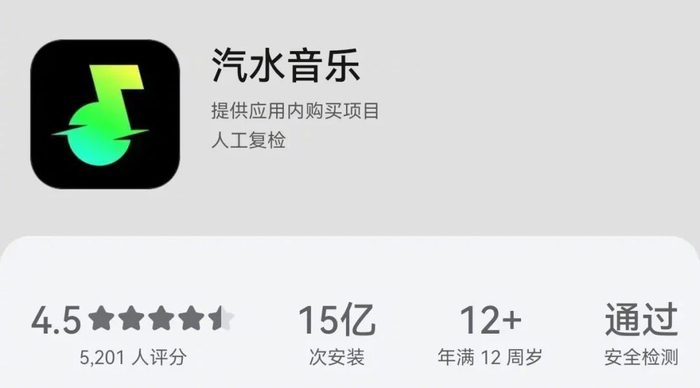
Core Insights - The article discusses the rapid growth of "Soda Music," a music app developed by ByteDance, which has reached 120 million monthly active users, closely approaching NetEase Cloud Music's 147 million users [1][6] - Soda Music serves as a music library for various content platforms like Douyin and aims to redefine how users discover songs, rather than competing directly with established music platforms [1][3] - The app's growth is heavily reliant on Douyin's traffic and algorithm support, but it faces challenges in monetization and sustaining user engagement in the long term [1][10] User Engagement and Growth - Soda Music's user acquisition is primarily driven by its integration with Douyin, where users can easily access the app while browsing [1][6] - The app has a high user retention rate, with 82.1% of its monthly active users coming from Douyin [6] - Users appreciate the app's free membership model, which allows them to access music by watching ads, making it a cost-effective alternative to other music services [7][9] Market Position and Strategy - The app was launched in June 2022, initially functioning as a music collection tool for Douyin users, but has since evolved to include a diverse music library [3][9] - Soda Music's catalog includes popular Douyin songs, various covers, classic tracks, and original works, including AI-generated music [9] - The app's strategy includes leveraging AI to enhance user experience and engagement, with plans to establish an "AI Music Creation Lab" to support creators [9][10] Monetization Challenges - Despite its rapid user growth, Soda Music's "free + low-cost" model raises concerns about its ability to cover rising copyright and operational costs [10][17] - The app aims to replicate Douyin's successful user acquisition strategy but faces difficulties in establishing a stable revenue model through advertising and subscription services [10][15] - Industry experts suggest that Soda Music may struggle to attract core music users due to its limited copyright content, positioning it more as a supplementary service within ByteDance's broader entertainment ecosystem [17][18] Competitive Landscape - The competitive dynamics of the online music platform market remain largely unchanged, with no significant evidence that ByteDance is prioritizing Soda Music over other ventures [17] - The introduction of "Tomato Music," another free music app by ByteDance, indicates that the company is exploring multiple avenues in the music space [18]
这音乐App月活直逼网易云,1.2亿用户是用抖音“喂”出来的?能赚到钱吗
Bei Jing Shang Bao· 2025-12-30 06:52
Core Insights - Soda Music has rapidly grown to 120 million monthly active users, closely approaching NetEase Cloud Music's 147 million, largely due to its integration with Douyin's traffic and resources [2][8] - The platform serves as a copyright music library for content platforms like Douyin, Jianying, and Xigua Video, positioning itself as a disruptor in the music market [2][5] - Despite its growth, Soda Music faces challenges in monetization, as its user acquisition strategy relies heavily on a free model, raising questions about long-term profitability [12][16] User Engagement and Growth - Soda Music's user base is significantly driven by Douyin, with 82.1% of its users coming from the platform [8] - The app's initial appeal was as a "music collection" tool for Douyin users, with a high percentage of trending songs being popular Douyin tracks [6][11] - Users appreciate the platform's free membership model, which allows them to access music without traditional subscription fees [9][11] Market Position and Strategy - The platform's music library includes a mix of Douyin hits, popular covers, classic tracks, and original works, including AI-generated music [11] - Soda Music's strategy involves leveraging AI to attract users, with a focus on creating a comprehensive ecosystem for music creation and monetization [11][12] - The platform's growth has raised concerns about its ability to sustain profitability given the high costs associated with copyright and operations [12][15] Competitive Landscape - The music industry is characterized by a strong head effect, making it difficult for new entrants like Soda Music to establish a stable commercial model [12][15] - Analysts suggest that Soda Music may struggle to attract core music users due to its reliance on a free model, which could undermine its competitive advantage [15][16] - The introduction of new music apps by ByteDance, such as Tomato Music, indicates a broader strategy to capture the music market, but also highlights the competitive pressures Soda Music faces [16]


“直播教父”刘岩:我不是造浪的人,但浪来了要入水
Jing Ji Guan Cha Wang· 2025-12-28 03:33
Core Insights - Liu Yan, known as the "father of live streaming," reflects on the commercialization and entertainment focus of the industry, acknowledging his role in its development [4][9][10] - The evolution of the internet in China is traced from the "Copy to China" era to the current generative AI landscape, highlighting the shifts in business models and consumer behavior [5][6][14] - Liu Yan emphasizes the importance of exploring new possibilities and the need for innovation in a rapidly changing technological environment [5][21] Company Development - Liu Yan founded the live streaming platform Six Rooms in 2006, which became one of the most visited video websites in China, leveraging short video content and user engagement [7][14] - The financial crisis of 2008 forced Six Rooms to adapt by focusing on internal resources and exploring new revenue streams, leading to the successful implementation of live streaming [8][10] - Six Rooms achieved profitability in 2009, becoming the first profitable video website in China, but faced increasing competition from platforms like YY, Kuaishou, and Douyin [13][14] Industry Trends - The live streaming industry shifted towards a focus on monetization and entertainment, with mechanisms like virtual gifts and ranking systems becoming standard [11][13] - Liu Yan's departure from Six Rooms came during a peak in the live streaming business, as he sought to explore new avenues beyond human-dependent models [15][16] - The rise of generative AI has prompted Liu Yan to establish the 43 Group, focusing on the potential of AI and the exploration of new creative expressions [18][19] Future Directions - Liu Yan is exploring the concept of "digital resurrection," aiming to create digital representations of individuals that encompass their personality and memories [16][19] - The company is adopting a unique investment approach, focusing on small-scale, self-funded projects that prioritize innovation and creativity over traditional venture capital constraints [23][24] - Liu Yan's vision emphasizes the importance of allowing technology to foster diverse expressions and opportunities, moving away from the monopolistic tendencies of previous business models [24]

根脉中华 | 一所湾区音乐学院的“未来协奏曲”
Xin Lang Cai Jing· 2025-12-26 15:55
Core Viewpoint - The integration of traditional music with modern technology, particularly AI, is seen as a potential dialogue rather than a conflict, emphasizing the importance of preserving traditional music while embracing innovation [1][3]. Group 1: Traditional Music and Education - The Shenzhen University of Technology's Music College aims to protect and pass on traditional music, focusing on the nuances of ethnic vocal music that AI cannot replicate [1]. - Students are encouraged to engage with traditional music, viewing it as a living language that resonates with contemporary culture [1]. Group 2: AI and Music Industry - The relationship between AI and music has sparked discussions among students, with a consensus emerging that AI can amplify human creativity rather than limit it [3]. - The concept of training "music architects" is introduced, where students learn not only performance but also project design, AI music production, and sound and lighting design [3]. Group 3: Regional Influence - The Greater Bay Area is described as an ideal environment for the intersection of music and technology, fostering an open and pragmatic spirit conducive to cross-disciplinary experiments [3].

2025是“乐坛小年”吗?
3 6 Ke· 2025-12-25 11:38
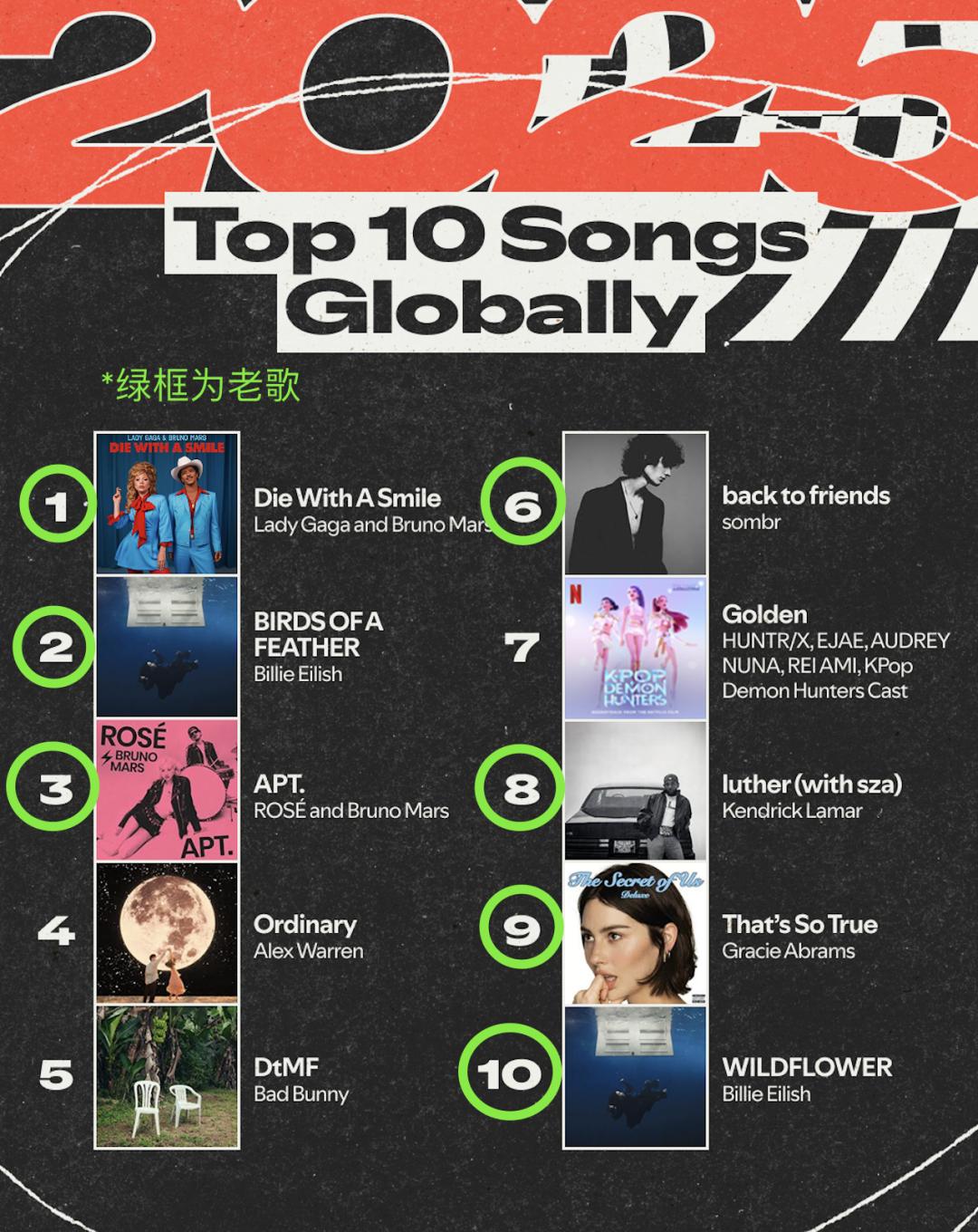
Core Insights - The music industry in 2025 is perceived as a "small year" due to the lack of breakout new hits, with many of the top songs being older tracks [1][4][8] - Despite the perception of a "small year," 2025 is also seen as a "watershed" moment with the rise of AI, stagnation in music streaming, and a booming live performance market reshaping the music economy [3][12][23] Streaming and Song Popularity - Major platforms like Spotify and TikTok show that the top songs of 2025 are predominantly older tracks, with Spotify's top three songs being from previous years [4][8] - The most popular song of 2025 is "APT." by ROSÉ and Bruno Mars, which was released in 2024 but continues to dominate charts [4][8] - In the Chinese music scene, songs like "Jumping Machine" and "Great Ambition," both released in 2024, are leading the charts, indicating a similar trend [10][12] Live Performance Market - The live performance market is thriving in 2025, with record-breaking ticket sales for top artists, indicating a shift in focus from recorded music to live events [20][22] - The touring market is now seen as a primary revenue driver, with artists' streaming numbers significantly increasing during tour periods [21][22] AI and Industry Dynamics - The rise of AI-generated music is creating new trends, with AI songs starting to gain traction, although they are not yet mainstream [16][25] - The music industry is experiencing a generational shift, with older artists dominating while younger preferences are not being met, leading to a potential decline in industry vitality [14][23] - The concept of "super fan economy" is emerging, emphasizing deeper connections with core fans as streaming revenue growth slows [23][25] Market Performance Data - The global recorded music market is projected to see a significant decline, with streaming revenue growth slowing down dramatically, particularly in the U.S. where it dropped by 40% year-on-year [17][20] - Various countries are experiencing reduced growth in their music markets, with notable declines in streaming revenue across major markets [17] Future Outlook - The music industry is at a crossroads, with the potential for AI to reshape the landscape, but also a growing divide between fans of traditional music and those embracing AI [28][29] - The future may see a continued emphasis on live performances and a more segmented market as consumer preferences evolve [28][29]