碳达峰碳中和

Search documents
单月90项!10月储能政策风向标:多省更新补贴与市场规则
中关村储能产业技术联盟· 2025-11-24 10:16
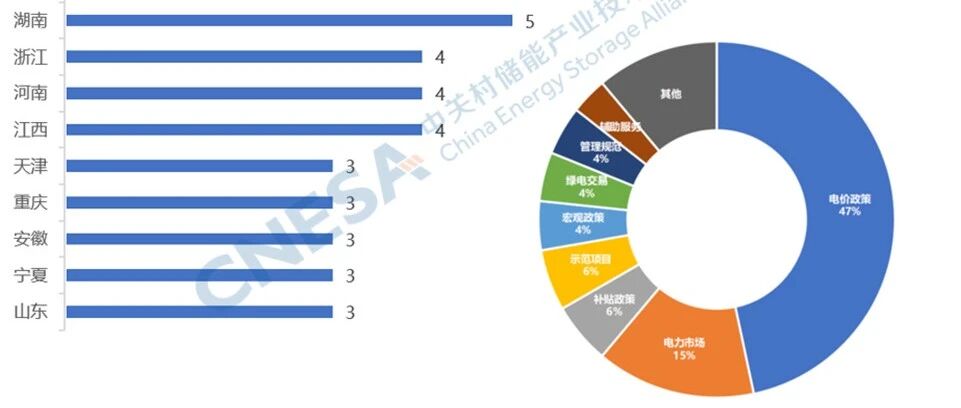
文 | 中关村储能产业技术联盟 2 0 2 5年10月储能政策从国家到地方共有90项发布或征求意见,涉及电价政策、电力市场、 补贴政策、示范项目等方面,中关村储能产业技术联盟对本月储能政策进行了梳理解读,希 望与业界同仁共同交流探讨。 一、政策数据概览 根据CNESA Da t aLi n k全球储能数据库的不完全统计,2025年9月份 共发布储能相关政策 9 0 项 , 其 中 国 家 层 面 发 布 9 项 。 从 重 要 程 度 来 看 , 非 常 重 要 类 39 项 , 其 中 , 国 家 、 广 东、河北、青海 发布数量居多,从政策类别来看, 电价政策、电力市场政策居多。 二、重要政策概览 【国家层面】 国家商务部、海关总署发布对锂电池和人造石墨负极材料相关物项实施出口管制的决定 ,对锂电池相关物项和正极材料相关物项等实施管制,包括3A0 0 1 重量能量密度大于等 于3 00 Wh/ k g的可充放电锂离子电池、用于制造可充放电锂离子电池的设备等。 国家发展改革委、国家能源局发布《跨省跨区电力应急调度管理办法》 ,提到应急调度 在受入省的落地侧电价,按省间现货市场结算价格上限或南方区域现货市场出 ...

中国新能源产业迎来历史性发展机遇,光伏仍有5-10倍增长空间
Mei Ri Jing Ji Xin Wen· 2025-11-24 02:17
Group 1 - The core viewpoint emphasizes the necessity for China to reduce its high dependence on foreign energy sources and to achieve energy independence through solar, wind, and storage technologies, supporting carbon peak and carbon neutrality goals [1] - The global solar industry is expected to see significant growth, with leading companies potentially experiencing growth rates of 5 to 10 times, given China's dominance in the production of polysilicon, which accounts for 95% of global capacity [1] - The "14th Five-Year Plan" highlights the strategic goal of building an energy powerhouse, presenting a historic opportunity for the development of China's renewable energy sector [1] Group 2 - CITIC Securities believes that the photovoltaic industry chain has reached a bottom in terms of volume, price, and profit, with expectations for a recovery in the first quarter of 2025 as inventory pressures ease [2] - Supply-side overcapacity in the photovoltaic main chain is projected to reach 60%-90% from 2024 to 2025, but measures such as administrative constraints and supply-side reforms are expected to accelerate the elimination of outdated capacity [2] - The global photovoltaic installation is anticipated to reach 560-570 GW in 2025, driven by stable domestic installations and growing demand in emerging markets like India and the Middle East [2]

和音:共同推动全球气候治理行稳致远
Ren Min Ri Bao· 2025-11-23 11:10
COP30期间,中国发挥积极建设性作用,与各方一道支持主席国巴西推动大会取得成功,致力于在坚持 多边主义、聚焦行动落实的基础上,为下一个10年的全球气候治理指明方向、创造条件。中方举办 了"中国角"系列边会,主题包括中国碳达峰碳中和之路、中国能源转型与新能源发展等,为全球气候治 理提供中国经验参考。COP30主席多拉戈称赞,"中国提出的解决方案惠及所有人,而不仅仅是中国自 身。" 人与自然和谐共生是中国式现代化的鲜明特点。中国将碳达峰碳中和作为国家战略,构建了全球最系统 完备的碳减排政策体系,建成了全球最大、发展最快的可再生能源体系,是世界能耗强度下降最快的国 家之一。中国的绿色发展正不断为世界增添新绿意。 在应对气候变化领域,中国是多边主义的坚定拥护者、国际合作的积极推动者、低碳技术的主要贡献 者、绿色转型的重要引领者。中国始终积极落实《联合国气候变化框架公约》及其《巴黎协定》,落实 2030年国家自主贡献取得显著成效,提前完成风电、太阳能发电总装机容量和森林蓄积量等目标。截至 2025年10月底,中国已与43个发展中国家签署55份气候变化南南合作谅解备忘录。中国已向《联合国气 候变化框架公约》秘书处提交了 ...
刘小涛会见爱尔兰科克郡郡长弗雷
Xin Hua Ri Bao· 2025-11-22 23:52
Core Points - The meeting between Jiangsu Province Governor Liu Xiaotao and Cork County Mayor Frank highlighted the deepening cooperation between China and Ireland, particularly in economic and cultural exchanges [1] - Jiangsu is focusing on green transformation in line with China's carbon peak and carbon neutrality goals, aiming to enhance bilateral investment cooperation in clean energy, zero-carbon parks, and green buildings [1] - Cork County emphasizes the importance of technological innovation and green development, seeking to strengthen collaboration in various fields including trade, technology, education, culture, and tourism [1] Summary by Categories Economic Cooperation - Jiangsu and Cork County are both participants and beneficiaries of economic globalization, with a focus on expanding bilateral investment cooperation [1] - The meeting aims to enhance cooperation in clean energy and green infrastructure, aligning with Jiangsu's strategic goals [1] Cultural Exchange - The two regions plan to promote youth exchanges through events like the "Clover Cup" and "Plum Blossom Cup" speech competitions, fostering deeper cultural ties [1] Strategic Goals - Jiangsu's commitment to the "3060" carbon neutrality strategy is a key driver for its green transformation efforts, which are expected to create new opportunities for collaboration with Cork County [1]
“十五五”经济社会发展主要目标解读积极稳妥推进和实现碳达峰
Jing Ji Ri Bao· 2025-11-22 23:43
Core Viewpoint - The article emphasizes China's commitment to achieving carbon peak and carbon neutrality as a solemn promise to the international community and an inherent requirement for high-quality development [1][2]. Group 1: Carbon Peak and Neutrality Goals - The "14th Five-Year Plan" period is crucial for China to actively promote carbon peak and carbon neutrality, contributing significantly to global climate governance [2][3]. - China has established a comprehensive carbon reduction policy framework over the past five years, with provincial governments implementing local carbon peak plans [3][4]. Group 2: Green Development and Energy Transition - China has cultivated over 6,400 green factories and more than 490 green industrial parks, leading the world in new energy vehicle production and sales [3]. - The country has built the world's largest renewable energy system, with renewable energy accounting for nearly 60% of total installed power generation capacity, achieving wind and solar power installation targets ahead of schedule [3]. Group 3: Carbon Emission Control Measures - The "Suggestions" propose implementing a dual control system for carbon emissions, focusing on both total emissions and intensity, transitioning from energy consumption control to carbon emission control [5]. - The energy sector's low-carbon transition is critical for achieving national contribution goals, requiring a balance between supply assurance and emission reduction [6]. Group 4: Carbon Market and Policy Recommendations - The article discusses the expansion of the national carbon emissions trading market and the establishment of a voluntary greenhouse gas reduction trading market [8]. - Recommendations include enhancing the carbon market's coverage, introducing quota allocation methods, and reforming the assessment of national carbon emission targets [9].
积极稳妥推进和实现碳达峰
Jing Ji Ri Bao· 2025-11-22 21:56
Core Viewpoint - The article emphasizes China's commitment to achieving carbon peak and carbon neutrality as a solemn promise to the international community and an inherent requirement for high-quality development [1][2]. Group 1: Carbon Peak and Neutrality Goals - The "14th Five-Year Plan" period is crucial for China to actively promote carbon peak and carbon neutrality, contributing significantly to global climate governance [2][3]. - China has established a comprehensive carbon reduction policy framework over the past five years, with over 6,400 green factories and more than 490 green industrial parks developed [3]. Group 2: Energy Transition and Low-Carbon Development - The energy structure in China is expected to shift from a coal-dominated model to a multi-energy complementary approach, with oil and natural gas roles evolving to support both energy security and raw material needs [7]. - The electricity sector is identified as a key area for achieving national contribution goals, requiring a transition to zero carbon and supporting decarbonization in other sectors [6]. Group 3: Carbon Emission Control Measures - The implementation of a dual control system for carbon emissions, focusing on both total emissions and intensity, is highlighted as a critical step in the green transition [5]. - The national carbon market currently covers about 70% of carbon emissions, and there are suggestions to expand its coverage and improve market efficiency through various measures [8][9]. Group 4: Climate Adaptation and Resilience - The new national contribution goals include building a climate-adaptive society, guiding future actions for climate change adaptation over the next decade [9]. - Enhancing public awareness and strengthening technological support for climate adaptation are prioritized, along with developing a comprehensive adaptation technology system [9].
热词看未来|持续提高新能源供给比重
Xin Hua She· 2025-11-22 00:55
新型能源体系以非化石能源为供应主体、化石能源为兜底保障、新型电力系统为关键支撑、绿色智慧节 约为用能导向。加快建设新型能源体系,既能够推动能源绿色低碳转型、支撑实现碳达峰碳中和,也是 保障国家能源安全的重要支撑。 国家能源局数据显示,"十四五"时期,我国加快"逐绿向新",能源转型跑出"加速度"。全社会用电量 中,每3度电就有1度绿电;全国能源消费中,非化石能源占比每年增加1个百分点,煤炭占比每年减少1 个百分点。 2025年前三季度,全国可再生能源新增装机3.1亿千瓦,同比增长47.7%,约占新增装机的84.4%。其 中,水电新增716万千瓦,风电新增6109万千瓦,太阳能发电(含光热)新增2.4亿千瓦,生物质发电新 增105万千瓦。 《建议》明确建设能源强国,要求促进清洁能源高质量发展,加强化石能源清洁高效利用,对电力系统 建设作出部署,将助推我国加快"逐绿向新",未来将会有更多的绿电点亮万家灯火。 《中共中央关于制定国民经济和社会发展第十五个五年规划的建议》提出,加快建设新型能源体系。 编导:杲均丰 包装:胡心懿 新华社音视频部制作 ...
安康市举行2025年央企国企助力安康高质量发展活动
Sou Hu Cai Jing· 2025-11-21 12:23
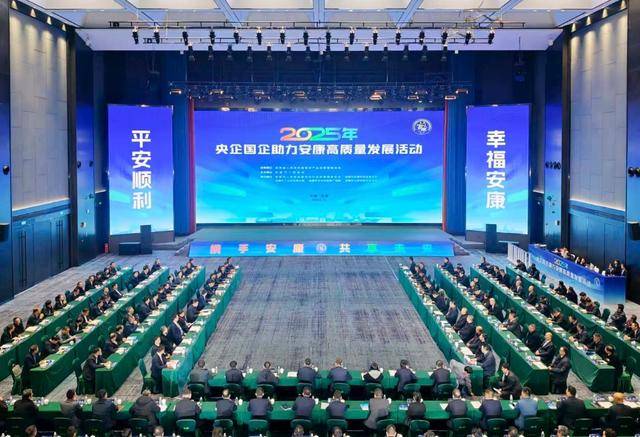
Group 1 - The event aims to leverage state-owned enterprises (SOEs) to support the high-quality development of Ankang, aligning with national strategies and resource advantages [3] - The initiative seeks to foster collaboration between government and enterprises, focusing on major strategic projects in areas such as the Belt and Road Initiative, ecological economic development, and carbon neutrality [3] - The meeting highlighted the importance of creating competitive industrial clusters and enhancing cooperation for mutual benefits, contributing to the development of Shaanxi province and serving as a model for the western region [3] Group 2 - Various government departments presented major project plans for the "14th Five-Year Plan" and key projects in new materials, tourism, and urban construction [4] - A signing ceremony was held for 22 projects, with a total investment of 15.9 billion yuan, covering areas like renewable energy and smart city development [4] - Participation included 25 central enterprises and 30 provincial state-owned enterprises, indicating strong interest and commitment to the development initiatives [4]
ESG中国·第八届北京责任展开幕式暨《企业社会责任蓝皮书》发布会在京召开
Zheng Quan Ri Bao Wang· 2025-11-21 09:42
Core Insights - The event "Anchoring the 14th Five-Year Plan, New Journey of Responsibility - ESG China, 8th Beijing Responsibility Expo and Release of Corporate Social Responsibility Blue Book (2025)" was held in Beijing, emphasizing the importance of integrating ESG principles into corporate practices [1][2] - The Corporate Social Responsibility Blue Book (2025) was released, marking the 17th consecutive year of publication, analyzing the performance of top 100 state-owned, private, and foreign enterprises in ESG management and information disclosure [2] Group 1 - The president of the China Enterprise Reform and Development Research Association highlighted the evolution of corporate social responsibility in China over the past 20 years, urging companies to embed responsibility into their core operations and innovate within the ESG framework [1] - The emphasis was placed on the need for enterprises to align their development with national goals, uphold the principle of "people-oriented" development, and adopt a sustainable approach to contribute to China's modernization [1] Group 2 - The Blue Book provides a comprehensive analysis of significant events in the corporate social responsibility sector over the past two decades, offering insights into trends and best practices for companies to enhance their sustainable competitiveness [2] - Additionally, two white papers were released by representatives from China Resources Group, detailing their strategies and achievements in carbon neutrality and ecological protection, serving as a model for industry-wide green transformation [2]
热词看未来丨持续提高新能源供给比重
Xin Hua She· 2025-11-21 08:54
Core Viewpoint - The article emphasizes the importance of accelerating the construction of a new energy system that prioritizes non-fossil energy, ensures energy security, and supports the transition to a low-carbon economy [1][2][8]. Group 1: New Energy System Development - The new energy system is characterized by non-fossil energy as the main supply, fossil energy as a backup, a new power system as a key support, and green smart savings as the energy consumption direction [1]. - The "14th Five-Year Plan" indicates a significant acceleration in energy transition, with one-third of the total electricity consumption being green electricity [4]. Group 2: Renewable Energy Growth - In the first three quarters of 2025, the newly installed capacity of renewable energy reached 310 million kilowatts, marking a year-on-year increase of 47.7%, accounting for 84.4% of the total new capacity [6]. - The breakdown of new renewable energy installations includes 7.16 million kilowatts from hydropower, 61.09 million kilowatts from wind power, and 240 million kilowatts from solar energy [6]. Group 3: Policy and Strategic Goals - The recommendations from the Central Committee highlight the need to build a strong energy nation, promote high-quality development of clean energy, and enhance the efficient use of fossil energy [8]. - The focus on the construction of the power system is expected to facilitate the transition towards greener energy sources, leading to more households being powered by green electricity in the future [8].