资本运作

Search documents
晋控煤业:资本运作提升公司实力 高比例分红回报股东
Zheng Quan Ri Bao· 2025-06-10 17:14
Core Viewpoint - 晋能控股山西煤业股份有限公司 has demonstrated resilience in the face of challenges, focusing on optimizing management systems and enhancing operational efficiency to boost development momentum [1] Financial Performance - In 2024, the company achieved a revenue of 15.033 billion yuan and a net profit attributable to shareholders of 2.808 billion yuan [2] - The coal production for the year was 34.6664 million tons, with a sales volume of 29.9665 million tons, generating coal business revenue of 14.7 billion yuan [2] - Research and development expenses increased by 5.96% year-on-year to 322 million yuan [2] Technological Advancements - The company has completed the intelligent mining construction of its two main mines, enabling remote monitoring and automated control of the mining process [2] - Ongoing projects include the development of a snow removal system by the Tashan Railway subsidiary, which has been submitted as a provincial key project [2] Strategic Acquisitions - The company plans to acquire the exploration rights and related assets of the Panjiayao Mine, which has a designed production capacity of 10 million tons per year, to enhance capital operations and resolve competition issues with its controlling shareholder [3] Dividend Policy - The company proposes a cash dividend of 7.55 yuan per 10 shares, totaling 1.264 billion yuan, which represents 45% of the net profit for 2024 [3] - The dividend payout ratio has increased from 34.64% in 2022 to 40.06% in 2023, and now to 45% in 2024, indicating a commitment to returning value to shareholders [3] Market Outlook - The company is actively adjusting its product structure and expanding market reach to enhance shareholder returns, emphasizing the importance of improving performance to support shareholder value [4] - The coal industry is viewed as a stable investment opportunity, with institutional investors showing interest in the company's dividend strategy [4]

宣布终止!000078“深表歉意”
Zhong Guo Ji Jin Bao· 2025-06-07 02:07
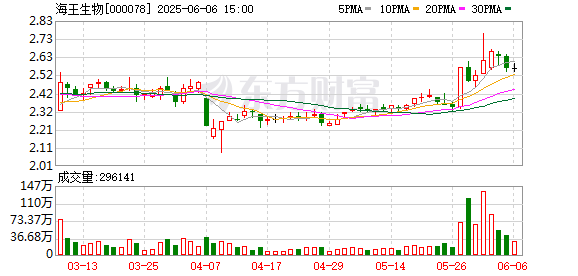
Core Viewpoint - The company, Haiwang Bio, has announced the termination of its control change and private placement plan, marking the end of a capital cooperation that was initiated in early 2024 [2][8]. Group 1: Background of Control Change and Private Placement - The control change and private placement plan began on January 13, 2024, when Haiwang Bio and its controlling shareholder, Haiwang Group, signed a cooperation agreement with Sifang Group to transfer part of the shares [5]. - On July 28, 2024, a share transfer agreement was signed, where Sifang Group was to acquire 315.7 million unrestricted shares from Haiwang Group, representing 12% of Haiwang Bio's total shares [5][6]. - To ensure the smooth transfer of control, a voting rights waiver agreement was signed, where Haiwang Group would relinquish voting rights for 900.7 million shares, effectively transferring control to Sifang Group [5][6]. Group 2: Termination of Agreements - On June 6, 2025, the capital cooperation was abruptly terminated, with Haiwang Bio, Haiwang Group, and Sifang Group signing a termination agreement [8]. - The termination was described as a "no-fault termination," indicating that it was a result of amicable negotiations, with no party liable for breach of contract [8]. - Haiwang Group is required to return a deposit of 10 million yuan to Sifang Group within five days of the termination agreement's effectiveness [8]. Group 3: Impact of Termination - Following the termination, Haiwang Bio stated that there would be no change in its controlling shareholder or actual controller, and business operations would continue as normal [11]. - The company expressed regret for any inconvenience caused to investors and emphasized its commitment to focusing on core business areas, particularly in medical devices [11]. - Haiwang Bio indicated that it would continue to seek potential partnerships with state-owned enterprises for future equity cooperation opportunities [11]. Group 4: Financial Performance - In the first quarter of 2025, Haiwang Bio reported a revenue of 7.38 billion yuan, a year-on-year decrease of 8.8%, and a net profit attributable to shareholders of 23.72 million yuan, down 44.4% year-on-year [12]. - As of June 6, 2025, the company's stock price closed at 2.56 yuan per share, with a total market capitalization of 6.736 billion yuan [13].


棒杰股份筹划易主背后:跨界光伏深陷亏损泥潭 光伏产线继续停产
Xin Lang Zheng Quan· 2025-06-04 08:12
陶建伟及其一致行动人以4.18元/股(较市价溢价5.8%)向上海启烁转让5.03%股份(对应2310万股,总 价9655.8万元),同时将剩余14.91%股份的表决权委托给上海启烁行使。上海启烁仅支付不足1亿元现 金即获得19.94%表决权,成为控股股东,黄荣耀成为实控人。这种结构大幅降低收购成本,同时保留 原股东未来股权处置灵活性。 陶建伟自2022年宣布跨界光伏后,已通过四次套现收割超6亿元:2022年股权转让套现4.84亿元;2023 年初减持套现1.36亿元;此次控制权转让再获现金近亿元。其辞任董事长、引入协鑫系背景高管(后因 内幕交易被罚)等操作,已显露退出意图。 6月2日晚间,棒杰股份公告称,公司控股股东、实际控制人陶建伟及其一致行动人陶士青、持股5%以 上股东苏州青嵩与上海启烁睿行企业管理合伙企业(有限合伙)(下称"上海启烁")签署《股份转让协 议》及《表决权委托协议》。本次交易完成后,棒杰股份的控股股东由陶建伟变更为上海启烁,实际控 制人将由陶建伟变更为黄荣耀。 同时,棒杰股份光伏业务主体扬州棒杰决定其生产线继续停产,复产时间未提及。 控制权变更:低价让渡与资本纾困的博弈 - 跨界转型≠市值捷 ...

A股公司密集更名折射四大现象
Shang Hai Zheng Quan Bao· 2025-06-02 18:26
Group 1 - Over 60 A-share companies have completed or initiated name changes since 2025, with more than 30 companies involved in changes to their stock abbreviations [1] - The name changes often reflect business adjustments, strategic transformations, or capital operations, indicating companies' proactive adaptation to market changes [1][2] - In May alone, more than 10 A-share companies announced plans to change their stock abbreviations, highlighting a trend towards rebranding in response to evolving business landscapes [1][2] Group 2 - Weier Co. announced a name change from Shanghai Weier Semiconductor Co., Ltd. to Haowei Integrated Circuit (Group) Co., Ltd., with the stock abbreviation changing to Haowei Group, to better reflect its business structure and enhance investor understanding [2] - The company reported that its image sensor solution business generated revenue of 19.19 billion yuan in 2024, accounting for 74.76% of its main business revenue [2] Group 3 - Companies changing their stock abbreviations have disclosed the proportion of existing business revenue to total revenue, as per the Shanghai Stock Exchange's guidelines [3] - Xiangyou Pump indicated that its strategic transformation led to significant changes in its business structure, prompting a name change to Meihu Intelligent Manufacturing Co., Ltd. [3] Group 4 - Xiangyou Pump's revenue from various product categories, including oil pumps and new energy vehicle components, reflects a shift in its business focus, with oil pump revenue decreasing over the years [4] Group 5 - Mergers and acquisitions are key strategies for companies to achieve high-quality development and are significant reasons for name changes [5] - Zhu Mian Group changed its name from Gree Real Estate to reflect its new strategic focus on the duty-free business after a major asset swap [5] Group 6 - Companies like Wolong New Energy have shifted their focus from real estate to new energy, prompting a name change to better align with their new business direction [5][6] - The new name reflects a commitment to intelligent and sustainable industrial solutions [6] Group 7 - Several companies are emphasizing "intelligent" and "technological" aspects in their name changes, indicating a shift towards modernization and innovation [6][7] - Yuma Shade changed its name to Yuma Technology to better represent its focus on functional shading materials that align with national innovation goals [7] Group 8 - Companies are increasingly shedding "environmental" labels, indicating a shift in business focus or industry positioning [9] - For instance, Aofu Technology changed its name from Aofu Environmental Protection to Aofu Technology to reflect its clearer strategic focus on new materials [9]

苍南国资6.3亿元财务资助支持思创医惠可持续发展
Zheng Quan Shi Bao Wang· 2025-05-30 05:02
Group 1 - The core point of the news is that Cangnan State-owned Assets is providing substantial financial support to Sichuang Medical Technology Co., Ltd. (思创医惠) through a loan of up to 630 million RMB, which signifies strong backing for the company's sustainable development [1][2] - The financial assistance from Cangnan Shanhai Industrial Group Co., Ltd. is based on mutual agreement and will be calculated at the one-year Loan Prime Rate (LPR) without requiring any guarantees or collateral from Sichuang Medical [1] - This financial support reflects Cangnan State-owned Assets' confidence in Sichuang Medical's future development and aims to alleviate the company's short-term funding pressures while supporting its long-term growth [2] Group 2 - Cangnan State-owned Assets has extended its involvement with Sichuang Medical from asset-level support to equity and control, with plans for Cangnan Jian Investment to acquire a significant stake in the company [2] - The recent financial aid is part of a broader strategy by Cangnan State-owned Assets, which includes asset disposal, subsidiary equity acquisitions, and control transfer, to create a comprehensive support system for Sichuang Medical [2]

Goheal:那些被热炒的上市公司资本运作项目,到底是战略选择还是叙事陷阱?
Sou Hu Cai Jing· 2025-05-29 08:50
Core Viewpoint - The article discusses the phenomenon of companies using compelling narratives to mask underlying weaknesses in their business models, particularly in the context of capital markets. It highlights the risks of investing based on attractive stories rather than solid data, emphasizing the need for critical evaluation of such narratives [1][4]. Group 1: Identifying Narrative Traps - Companies with significant market value anxiety and sluggish core growth are more likely to use storytelling to compensate for their realities, which can be seen as either a strategic offensive or a desperate self-rescue [4]. - A common tactic is to repackage outdated projects as new strategic initiatives, misleading investors into believing in a genuine transformation when it is merely a rebranding of old assets [5]. - The article warns against projects that prioritize narrative over actual funding and resource allocation, as these often lead to unmet expectations and project delays [6]. Group 2: Evaluating Strategic Intent - The lack of genuine resource synergy in asset acquisitions can indicate a "拼盘式重组" (拼盘式整合), where companies combine unrelated assets without a coherent strategy, leading to high failure rates in integration [7]. - Some projects that appear to be strategic expansions may actually be efforts by controlling shareholders to revitalize resources and reduce financial risks, rather than building core competencies [8]. - The article suggests that effective narratives should be grounded in realistic execution capabilities and industry trends, rather than superficial market buzzwords [8][9]. Group 3: Critical Questions for Investors - Investors are encouraged to ask three critical questions when evaluating new announcements from companies: Is the core business logic clear? Are resources adequately aligned? Is the funding arrangement comprehensive? [9]
中叶私募:直接投资与私募股权,资本运作的黄金搭档
Sou Hu Cai Jing· 2025-05-29 07:11
Core Viewpoint - Direct investment and private equity are key elements in capital operations, complementing each other to drive corporate growth and market prosperity [1][3][5] Group 1: Direct Investment - Direct investment serves as an important funding source for corporate growth, allowing investors to inject capital directly into companies in exchange for equity or assets [1][3] - This investment model provides stable funding support, enabling companies to undertake projects and expand their business [1][3] - Investors must possess keen risk insight and strong response capabilities to navigate market uncertainties and operational challenges [1][3] Group 2: Private Equity - Private equity operates with a professional approach, relying on experienced fund managers to gather capital for investments in non-listed companies [3][4] - Investors conduct thorough due diligence across various dimensions, including financial status, market prospects, and management teams, to ensure capital safety and stable returns [3][4] - In addition to funding, private equity offers management optimization consulting and market expansion planning, enhancing the overall competitiveness of companies [3][4] Group 3: Synergy of Direct Investment and Private Equity - The collaboration between direct investment and private equity creates a powerful capital operation synergy, especially beneficial during the startup phase of companies [3][4] - As companies grow, private equity's long-term operational experience and strategic planning capabilities help optimize internal structures and broaden market channels [3][4] - This tailored capital operation model meets the funding and management needs of companies at different growth stages, providing comprehensive support for rapid development [3][4] Group 4: Market Impact - The integration of direct investment and private equity plays a crucial role in the prosperity of the market economy, attracting substantial social capital into the real economy [4][5] - Direct investment injects continuous vitality into the development of the real economy, while private equity guides capital towards high-growth potential enterprises, stimulating innovation and driving industry upgrades [4][5] - Together, they promote a virtuous cycle and continuous evolution of the market ecosystem [4][5]
TCL百亿大并购!
国芯网· 2025-05-28 11:22
Core Viewpoint - TCL Technology is aggressively expanding its semiconductor display business through significant acquisitions, despite a decline in net profit, indicating a strong commitment to strengthening its core operations in the semiconductor sector [2][3]. Group 1: Acquisition Details - TCL Technology announced the acquisition of 21.53% of Shenzhen Huaxing Semiconductor for 11.562 billion yuan, using a combination of cash (7.203 billion yuan) and shares (4.359 billion yuan) [2]. - Post-acquisition, TCL's stake in Shenzhen Huaxing Semiconductor will increase from 62.68% to 84.21%, enhancing its control over this core asset [2]. - This acquisition marks TCL's second major acquisition within six months, following a 10.8 billion yuan purchase of LG Display's Guangzhou LCD panel factory to expand capacity and capture market share vacated by Korean companies [2]. Group 2: Financial Performance - In 2024, TCL Technology's semiconductor display business revenue grew by 24.6% year-on-year to 104.3 billion yuan, achieving a historical high and accounting for over 60% of total revenue [3]. - The net profit for TCL Technology rebounded significantly from a slight loss of 0.07 billion yuan in 2023 to a profit of 6.23 billion yuan in 2024 [3]. - TCL Huaxing, as the core panel business, is the second-largest panel manufacturer in mainland China, with large-size LCD TV panels being its primary strength [3]. Group 3: Business Focus - TCL Technology, founded in 1982, has shifted its focus entirely to the panel industry following a major asset restructuring in 2018, divesting traditional consumer terminal and related businesses [2]. - The company's current business segments include semiconductor displays, new energy photovoltaics, and semiconductor materials [2].

邦彦技术“蛇吞象”式外延并购折戟 如何破局内生增长乏力之困
Xin Lang Zheng Quan· 2025-05-28 04:10
Core Viewpoint - The acquisition of 100% equity in Shenzhen Xingwang Xintong Technology Co., Ltd. by Bangyan Technology has been terminated after six months of planning, marking a significant setback for the company's strategic transformation efforts [1][2]. Group 1: Acquisition Details - The planned acquisition was a "snake swallowing an elephant" type of transaction, with Xingwang Xintong reporting a revenue of 632 million yuan and a net profit of 47 million yuan in 2023, while Bangyan Technology reported only 181 million yuan in revenue and a loss of 52.25 million yuan [2]. - The transaction was intended to be completed through a combination of share issuance and cash payment, with the share price set at a 30% discount to the market price [2]. - The failure of the acquisition was attributed to a lack of consensus among the transaction parties, primarily due to valuation discrepancies and concerns over Xingwang Xintong's dependence on Huawei's supply chain [2]. Group 2: Financial Performance and Challenges - Following the termination of the acquisition, Bangyan Technology's stock price plummeted by 14.68%, resulting in a market value loss of over 400 million yuan, reflecting market disappointment over the failed strategic move [2]. - The company heavily relies on military contracts, with 87.4% of its revenue coming from this sector, which has been adversely affected by budget cycles and delays in client acceptance [3]. - In Q1 2025, the company's revenue fell by 78% year-on-year to 27.71 million yuan, with a continued net loss of 27.20 million yuan, exacerbating financial pressures [3]. Group 3: Strategic Alternatives - To navigate its current challenges, Bangyan Technology needs to focus on its military business and expedite order fulfillment to stabilize cash flow [4]. - The company is also exploring technology self-research and has initiated product lines in cloud computing and AI, aiming to penetrate civilian markets [4]. - Future capital operations may involve seeking moderately sized, synergistic acquisition targets and potentially introducing strategic investors to alleviate financial pressures [4].

HYBE向腾讯音乐出售SM股份,网友评论:“当初抢的头破血流”
Sou Hu Cai Jing· 2025-05-27 23:46
Core Viewpoint - HYBE has announced the complete divestment of its shares in SM Entertainment, with Tencent acquiring the stake in a deal valued at 243.3 billion KRW (approximately 1.3 billion RMB), marking a significant shift in the K-pop industry landscape [1] Group 1: Transaction Details - The transaction was executed through an off-market block trade on the 30th, bypassing the secondary market to avoid potential backlash from retail investors [2] - Tencent acquired a 9.66% stake in SM, which, combined with Kakao's 32.4% ownership, indicates a strong Chinese-Korean capital alliance in the management of SM [2] Group 2: Market Reactions - The announcement has led to significant discontent among Korean retail investors, who feel misled after previously investing heavily in SM alongside HYBE [2] - Online discussions reflect a sense of impending change in SM's management dynamics, especially with Tencent now as a major shareholder [4] Group 3: Strategic Implications - The cash-out of over 200 billion KRW by HYBE is seen as a strategic move to fund future growth initiatives, including global tours for Le Sserafim and the debut of NewJeans in the U.S. [4] - The current competitive landscape among the three major K-pop agencies is evolving, with YG relying on Blackpink, JYP on Stray Kids, and SM now facing a mixed ownership structure with Chinese capital involvement [4]