高端化战略

Search documents
中炬高新三大问题待解:一季度业绩大幅下滑 刚恢复增长又遇到渠道库存问题
Xin Lang Zheng Quan· 2025-05-23 06:34
Core Viewpoint - After regaining minority equity in Chubang, Zhongju Gaoxin has not achieved the expected growth, with a significant decline in revenue and net profit in Q1 2024 compared to the previous year [1][2]. Financial Performance - In Q1 2024, Zhongju Gaoxin reported revenue of 1.102 billion yuan, a year-on-year decrease of 25.81%, and a net profit decline of 24.24% [1][2]. - The company's revenue decreased by 3.78% in 2023, with a further decline of 24.24% in Q1 2024 [2]. - The management expenses and sales expenses increased year-on-year, contributing to the accelerated decline in net profit [2]. Market Position and Competition - Zhongju Gaoxin is the worst-performing company among the four A-share listed companies primarily engaged in soy sauce production, excluding "ST Jiajia" [2]. - The soy sauce market in China reached a scale of 100.4 billion yuan in 2023, with a CAGR of 3.2% from 2018 to 2023, indicating a shift to a low-growth phase in the seasoning industry [4]. Company Governance Issues - The board of directors' election has been repeatedly postponed, raising concerns about the management's ability to maintain strategic stability and drive growth [1][5]. - The company has faced historical governance issues, including the investigation of former executives for breaching fiduciary duties [3][5]. Strategic Challenges - The company is experiencing challenges in its high-end strategy and R&D investment, lagging behind competitors in the "zero additives, reduced salt" trend [6]. - Zhongju Gaoxin's production capacity expansion plans, including a 1.275 billion yuan investment to upgrade its Zhongshan base, may lead to difficulties in absorbing new capacity amid stagnant sales [6].

雷军谈小米站上新起点:11年造芯路交出新答卷 未来五年研发翻倍再投2000亿元
Guang Zhou Ri Bao· 2025-05-22 15:01
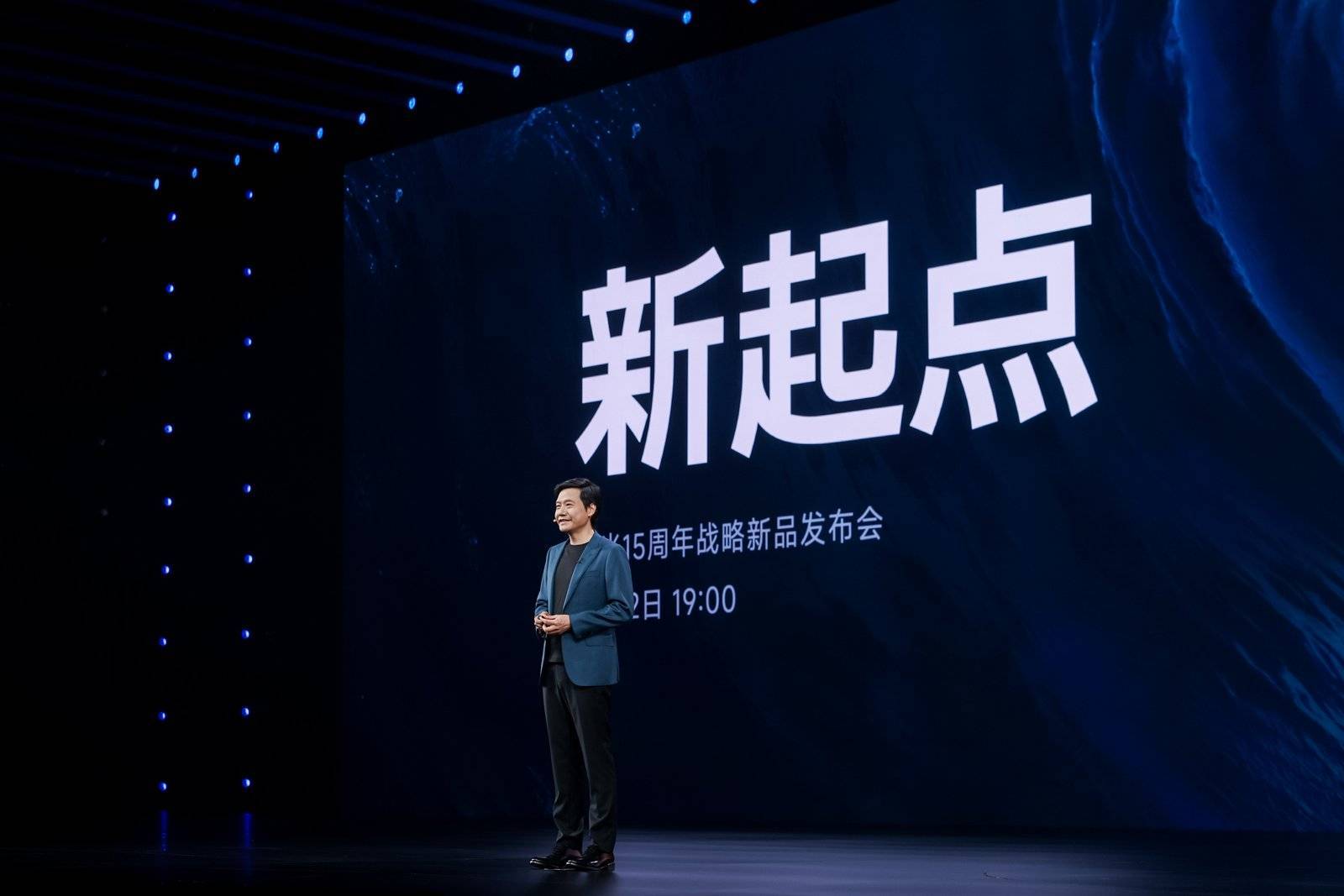
5月22日晚,当小米集团创始人、董事长兼CEO雷军站在以《新起点》为主题的新品发布会上时,小米15周年的战略也随之浮出水面。在这之中,除了小 米汽车旗下首款SUV车型——小米YU7外,小米自主研发设计的首款3nm旗舰处理器"玄戒O1"备受关注,也意味着小米高端化战略的加速落地。站上开 始硬核质变的新起点,雷军激动地表示"在硬核科技探索的路上,小米是后来者,也是追赶者,但我们相信,这个世界终究不会强者恒强,后来者总有机 会"。 在此次发布会上,雷军还宣布未来五年(2026-2030),小米在核心技术研发上将再投2000亿元,向着"全球新一代硬核科技引领者"继续登攀。 玄戒O1之外,小米此次还发布了自主研发设计的4G手表芯片玄戒T1,搭载在小米Watch S4"15周年纪念版"上。玄戒T1不是简单的手表芯片,还集成了小 米自主研发设计的首款 4G 基带,支持eSIM通信,标志着小米在基带这一关键赛道迈出了重要一步。 雷军表示,两款自研玄戒芯片、三款搭载自研芯片的终端产品,是小米芯片战略的重要成果展示:"不论遇到多大的困难,小米芯片研发都会坚持下去, 至少投资十年、至少投资五百亿元!" 坚定投入研发未来五年投入20 ...


玄戒O1、小米YU7正式亮相,雷军谈小米15周年:疾风知劲草,用更坚实的成长回应一切
Sou Hu Cai Jing· 2025-05-22 14:21
Core Insights - Xiaomi celebrated its 15th anniversary with a strategic product launch event, introducing its first 3nm flagship processor "Xuanjie O1" and the first long-lasting 4G smartwatch chip "Xuanjie T1" [1][3] - The event showcased several high-end products, including the Xiaomi 15S Pro, Xiaomi Pad 7 Ultra, and Xiaomi Watch S4 "15th Anniversary Edition," as well as the debut of Xiaomi's first SUV, the Xiaomi YU7 [1][3][23] Product Launches - The Xuanjie O1 is a significant milestone as Xiaomi becomes the first company in mainland China and the fourth globally to design a 3nm flagship SoC, filling a gap in advanced chip design in the region [3][11] - The Xiaomi 15S Pro features two material versions, priced at 5499 RMB for 16GB+512GB and 5999 RMB for 16GB+1TB [3][5] - The Xiaomi Pad 7 Ultra is available in multiple configurations, with prices ranging from 5699 RMB to 7399 RMB depending on specifications [3][5] - The Xiaomi Watch S4 "15th Anniversary Edition" is priced at 1299 RMB and supports eSIM functionality [3][5] Automotive Development - The Xiaomi YU7 SUV is positioned as a "luxury high-performance SUV," set to officially launch in July with advanced design and technology features [23][26] - The YU7 boasts impressive specifications, including a maximum horsepower of 690 and a 0-100 km/h acceleration time of 3.23 seconds, with a range of up to 835 km [26][30] Chip Development Strategy - Xiaomi's chip development journey began in 2014, with a focus on smaller chips before returning to large-scale chip development in 2021, leading to the creation of the Xuanjie series [6][9] - Over the past four years, Xiaomi has invested over 13.5 billion RMB in the Xuanjie project, with a team of over 2500 people, ranking among the top in the domestic semiconductor design sector [9][11] Future Investment Plans - Xiaomi plans to invest an additional 200 billion RMB in core technology research and development over the next five years, aiming to solidify its position as a global leader in hard-core technology [33][41] - The company has experienced significant growth, with a projected 35% increase in revenue for 2024, driven by its smartphone, IoT, and electric vehicle segments [35][39]
一季度净利润增长近40% 拆解美的集团的“增长方法论” | 寻光一季报
Mei Ri Jing Ji Xin Wen· 2025-05-22 12:07
Core Viewpoint - Midea Group achieved significant growth in Q1 2025, with revenue exceeding 120 billion yuan and a year-on-year growth rate of over 20%, while net profit increased nearly 40% [1][4]. Group 1: Financial Performance - In Q1 2025, Midea Group's total revenue reached 128.4 billion yuan, with a net profit of 12.42 billion yuan, reflecting year-on-year growth rates of 20.6% and 38.0% respectively [4]. - The growth in revenue and net profit has been consistent over the years, indicating a strong and sustainable performance [1]. Group 2: Business Segments - Both C-end (consumer) and B-end (business) segments contributed to revenue growth, with C-end smart home business growing by 17.4% and B-end solutions growing by 25.3% [5]. - The B-end business has become a significant revenue driver, with a total revenue exceeding 100 billion yuan in recent years [13]. Group 3: Strategic Initiatives - Midea Group is focusing on simplifying operations to enhance growth, aiming to eliminate non-value-adding activities [7]. - The company is transforming its Direct-to-Consumer (DTC) model to improve user engagement and operational efficiency [8]. Group 4: Global Expansion - Midea Group has been actively pursuing acquisitions to expand its global footprint, including notable acquisitions in Europe and China [9][12]. - The overseas OBM (Own Brand Manufacturing) business has shown strong growth, accounting for 43% of the smart home business's overseas revenue in Q1 2025 [9]. Group 5: High-End Market Strategy - Midea Group is penetrating the high-end market with its COLMO and Toshiba brands, achieving over 55% year-on-year growth in retail sales for these brands in Q1 2025 [13]. - The company has made adjustments to its high-end brand strategy, including reducing the number of retail outlets to enhance brand positioning [13]. Group 6: Challenges and Opportunities - Despite the growth, Midea Group acknowledges that there is still significant room for improvement in its B-end business segments [14]. - The company anticipates a recovery in its robotics and automation business, which faced challenges in recent years due to cyclical impacts from the automotive industry [14].

小米15周年战略新品前瞻!雷军提前剧透
Wind万得· 2025-05-21 22:45
Core Viewpoint - The article highlights Xiaomi's strategic transformation from a consumer electronics company to a hard-tech enterprise, marked by the launch of self-developed chips, flagship smartphones, high-end tablets, and smart vehicles at its 15th-anniversary event [1][10]. Group 1: Self-Developed Chips - Xiaomi's self-developed SoC chip "Xuanjie O1" is a significant focus of the event, representing a culmination of its chip development journey since 2014, with a total investment exceeding 13.5 billion RMB and a team of over 2,500 people [2][3]. - The "Xuanjie O1" chip utilizes a second-generation 3nm process with 19 billion transistors, featuring an "1+3+4" octa-core design and achieving impressive performance metrics, including a Geekbench score of 3119 for single-core and 9673 for multi-core [2]. Group 2: High-End Smartphone - The Xiaomi 15S Pro, the first model to feature the "Xuanjie O1" chip, is expected to enhance imaging, cooling, and AI capabilities, with a potential 40% improvement in night photography quality compared to its predecessor [5]. - The device supports 90W fast charging and features a 6.73-inch 2K display, with a camera system that includes a 50MP Leica triple-camera setup [5]. Group 3: High-End Tablet - The Xiaomi Pad 7 Ultra is set to debut with a 14-inch display and 120W fast charging, representing a significant upgrade over the Xiaomi Pad 7 Pro [7]. - It is designed for productivity, supporting multi-window operations and compatibility with various office software, positioning it as a "mobile workstation" in competition with brands like Apple and Huawei [7]. Group 4: Smart Vehicle - The Xiaomi YU7, the company's first SUV, is designed as a mid-to-large pure electric vehicle with a range of up to 820 kilometers and features advanced technology such as a heads-up display and integration with Xiaomi's ecosystem [9][10]. - The vehicle aims to attract consumers seeking smart experiences, although it faces intense competition in the SUV market from established players like Tesla [10]. Group 5: Market Performance - Xiaomi Group's stock has performed exceptionally well in the Hong Kong market, with a year-to-date increase of 57.83%, reflecting strong investor confidence in the company's strategic direction [15].

小牛电动营收增超35%,比亚迪却横刀入局,两轮车开启终极混战
美股研究社· 2025-05-20 12:14
Core Viewpoint - The electric scooter industry is experiencing intense competition driven by technological advancements, market expansion, and strategic positioning, with companies like Niu Technologies facing challenges despite recent revenue growth [1][5]. Revenue Growth and Market Expansion - Niu Technologies reported a revenue of 682 million RMB in Q1 2025, marking a significant year-on-year increase of 35.1% [3]. - The gross margin decreased from 18.9% to 17.3% compared to the same period last year [3]. - The net loss narrowed to 38.8 million RMB, down from 54.8 million RMB, indicating improved financial performance [3]. - Sales of electric scooters reached 203,313 units, a 57.4% increase year-on-year, with the Chinese market contributing 183,065 units, up 66.2% [3][4]. - Niu's channel expansion strategy has led to 4,119 franchise stores in China and a growing international network with 57 dealers across 53 countries [3][4]. Product Strategy and Market Positioning - Niu focuses on product diversification, introducing high-end models like the NXT series with advanced safety features, setting new industry standards [4]. - The company maintains a premium pricing strategy, with an average price above 3,000 RMB, differentiating itself from traditional brands like Yadea and Aima that dominate the low-price segment [4]. - Despite recent successes, Niu faces pressure from traditional brands that are rapidly innovating, necessitating a stronger competitive edge [4]. Profitability Challenges and High-End Strategy Controversy - Niu's financial trajectory shows volatility, with a revenue of 3.288 billion RMB in 2024, a 24% increase, but a net loss of 193 million RMB, highlighting ongoing profitability issues [6]. - Historical performance reveals a decline in average selling price from 4,928 RMB in 2019 to 3,203 RMB in 2024, indicating a shift towards volume-driven sales [7]. - The company has struggled with a prolonged period of losses since 2022, contrasting sharply with its previous peak performance in 2021 [7]. Competitive Landscape and Technological Innovations - BYD's introduction of the "blade battery" technology for two-wheelers marks a significant shift in the industry, enhancing energy density and reducing costs [9][10]. - The competitive environment is evolving towards a focus on technology rather than price, with traditional brands needing to adapt to maintain market share [10]. - Niu must accelerate its battery technology upgrades and consider strategic adjustments to navigate the dual challenges of high-end market pressure and the need to penetrate the mass market [10].


小米YU7、自研芯片、新机“定档”,高盛:买!
Hua Er Jie Jian Wen· 2025-05-19 07:19
Core Viewpoint - Xiaomi is launching multiple significant products, including the Xiaomi 15S Pro, Xiaomi Pad 7 Ultra, and its first SUV, the Xiaomi YU7, alongside the self-developed SoC chip, the Xiaomi Xuanjie O1, which is expected to enhance its high-end strategy [1][5][7]. Smartphone Business - Xiaomi is steadily increasing its market share in the smartphone sector, particularly in China, with a focus on high-end models [5][10]. - The introduction of the self-developed Xuanjie O1 chip, built on a second-generation 3nm process, is seen as a key milestone in Xiaomi's chip development and is expected to support its high-end strategy [7]. - Goldman Sachs forecasts Xiaomi's smartphone shipments to reach 170 million units by 2025, slightly below market consensus [7]. AIoT Business - Xiaomi's AIoT business is projected to grow approximately 50% year-on-year, with major contributions from large appliances and tablets [5][8]. - By 2027, large appliances and tablets are expected to account for about 40% of AIoT sales and 50% of gross profit, up from 30% and 35% in 2024 [8]. Electric Vehicle Business - The second phase of Xiaomi's electric vehicle factory has passed government inspection and is set to begin trial production soon, with the third phase showing early signs of progress [9]. - Delivery estimates for the YU7 SUV (including YU7 Ultra) are around 320,000 units by 2025/26 [9][12]. Financial Performance - Xiaomi's global smartphone market share reached 14% in Q1 2025, with significant growth in the Chinese market [10]. - In the home appliance sector, sales of air conditioners, washing machines, and refrigerators saw year-on-year increases of 103%, 184%, and 145%, respectively [11]. - The global tablet shipment increased by 57% to 3.1 million units, positioning Xiaomi third in both global and Chinese markets [11]. AI Ecosystem Development - Xiaomi launched its first open-source inference-based large language model, MiMo, and is building a vast AIoT ecosystem with over 700 million active smartphone installations and more than 900 million connected AIoT devices [13]. - Adjusted net profit forecasts for 2025-2027 have been increased by 3-6% due to stronger IoT sales and gross profit outlook [13]. Upcoming Catalysts - Key upcoming events include the Q1 earnings report, the release of the "Xring" chip, the "2025 Investor Day" meeting, and the launch of the YU7 SUV, with expected monthly sales of around 30,000 units [13][14][15].

雷军透露小米自研芯片细节:采用二代3nm工艺
Sou Hu Cai Jing· 2025-05-19 06:32
Core Insights - Xiaomi is set to unveil a series of significant new products, including the Xiaomi玄戒O1 chip, Xiaomi 15S Pro, Xiaomi Pad 7 Ultra, and the first SUV, Xiaomi YU7, at a strategic product launch event on May 22 [1][8] - The launch of the Xiaomi玄戒O1 chip represents a major breakthrough in Xiaomi's chip development journey, which has faced numerous challenges since its inception in 2014 [3][7] Xiaomi's Chip Development Journey - Xiaomi initiated its chip development project in September 2014, aiming to create a mid-to-high-end mobile SoC chip, with the first chip, 澎湃S1, launched in 2017 [5][6] - After facing technical difficulties and market challenges, Xiaomi shifted focus to smaller chips, such as fast charging and battery management chips, while accumulating valuable experience [5][6] - In early 2021, Xiaomi made two pivotal decisions: to enter the automotive sector and to restart its large chip business, emphasizing the importance of high-end flagship SoCs for its strategic goals [3][5] Xiaomi玄戒 Project - The Xiaomi玄戒 project was established with ambitious goals, including the use of the latest manufacturing processes and achieving top-tier performance and efficiency [4][6] - The project has seen a commitment of at least 500 billion RMB over ten years, with over 135 billion RMB invested as of April 2024 and a team of over 2,500 people [4][6] - The expected R&D investment for this year is over 60 billion RMB, positioning the玄戒 project among the top three in China's semiconductor design sector [4][6] Upcoming Product Launch - The Xiaomi玄戒O1 chip, set to be released on May 22, utilizes second-generation 3nm technology, aiming to compete at the flagship level [7] - This launch signifies an important step for Xiaomi in the chip development field and aligns with its high-end strategy [7][8] Future Outlook - The upcoming product launch will not only showcase advancements in chip technology but also expand Xiaomi's product lineup, including the Xiaomi 15S Pro and Xiaomi YU7, catering to diverse consumer needs [8] - As Xiaomi celebrates its 15th anniversary, the company aims to enhance its technological capabilities and market competitiveness across various sectors, including chips, smart hardware, and software services [8]
雷军宣布!小米股价拉升!
证券时报· 2025-05-19 05:38
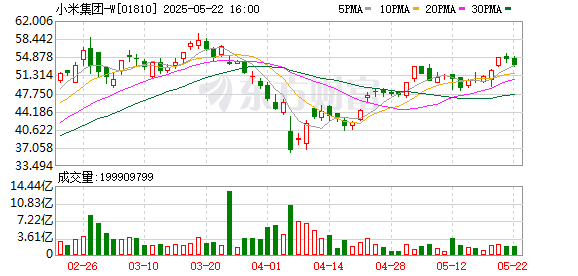
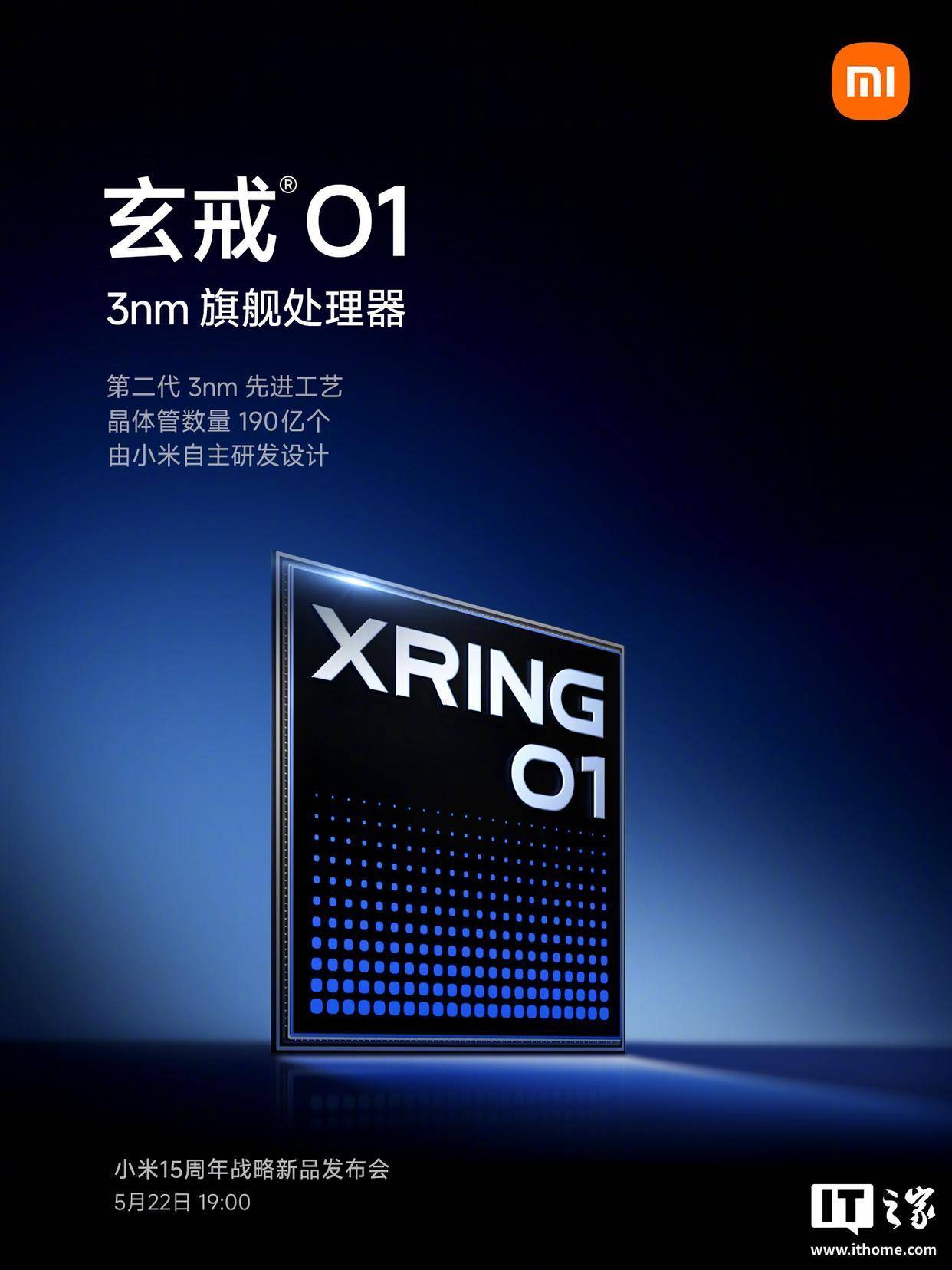
据了解,小米玄戒O1采用3nm旗舰处理器,是小米11年芯片研发之旅的里程碑。为研发玄戒芯片,小米已经累计投入超135亿元。受小米发布会定档等消息影响,小 米集团股价也迅速反弹,截至发稿,小米集团股价已从早盘下跌近4%拉升翻红。 小米首款自研SoC芯片和首款SUV车型小米YU7将于同一天发布。 5月19日,小米集团董事长兼CEO雷军发微博称,小米战略新品发布会定在5月22日晚7点召开。雷军表示,这次重磅新品特别多,包括手机SoC芯片小米玄戒O1、小 米15SPro、小米平板7Ultra和首款SUV小米YU7等。 玄戒芯片力争"跻身第一梯队" 雷军表示,小米玄戒O1采用第二代3nm工艺制程,力争跻身"第一梯队旗舰体验"。据了解,玄戒O1是小米自主研发设计的SoC芯片。在玄戒立项之初,就拥有很高 的目标:最新的工艺制程、旗舰级别的晶体管规模、第一梯队的性能与能效。 雷军透露称,四年多时间,截至今年4月底,玄戒累计研发投入已经超过了135亿元人民币。目前,研发团队已经超过了2500人,2025年预计的研发投入将超过60亿 元。 "我相信,这个体量,在目前国内半导体设计领域,无论是研发投入,还是团队规模,都排在行业前三 ...
铜冠铜箔:5月12日召开业绩说明会,投资者参与
Zheng Quan Zhi Xing· 2025-05-13 10:40
Core Viewpoint - The company anticipates steady growth in demand for high-end copper foil products, particularly in the PCB and lithium battery sectors, despite current competitive pressures in the lithium battery copper foil market [2][3]. Industry Overview - The PCB copper foil industry is experiencing a mild recovery, with long-term demand expected to grow steadily, especially for high-end products [2]. - The lithium battery copper foil sector is facing intensified competition, but future trends indicate a shift towards ultra-thin and high tensile strength products [2]. Company Performance - In 2024, the company produced 54,011 tons of copper foil and sold 55,087 tons, generating revenue of 4.719 billion yuan, with a net loss of 156.34 million yuan [5]. - For Q1 2025, the company reported revenue of 1.395 billion yuan and a net profit of 4.75 million yuan, indicating a year-on-year revenue increase of 56.29% and a net profit increase of 117.16% [7]. Strategic Direction - The company plans to continue its high-end strategy, optimizing product structure and expanding profit channels by enhancing the production of high-performance copper foil products [4]. - The focus will be on developing ultra-thin, high-density, and high tensile strength copper foil products to improve profitability [4]. Financial Metrics - The company's debt ratio stands at 26.42%, with investment income of 3.7494 million yuan and financial expenses of 10.284 million yuan, resulting in a gross margin of 2.72% [7]. - The company has seen a net inflow of 6.4344 million yuan in financing over the past three months, indicating positive market sentiment [7].