
ESG

Search documents
ESG市场观察周报:国内落地ESG债券国标,海外加码气候风险与能效投资-20260126
CMS· 2026-01-26 07:26
证券研究报告 | 金融工程 2026 年 1 月 26 日 国内落地 ESG 债券国标,海外加码气候风险与能效投资 ——ESG 市场观察周报(20260125) 1、要闻速览:国内绿色金融国标落地,海外聚焦气候风险管理与家庭能效 国内动态方面,我国金融领域首部 ESG 国家标准《债券发行人环境、社会和治 理评价框架》正式发布,将于 2026 年 4 月 1 日实施;生态环境部等三部门联合印 发《关于加强重点行业大气环境绩效分级管理的指导意见》,建立"1+1+1+N"管 理体系;工信部明确将从优化供需、强化品牌、夯实产业根基三方面发力,促进消 费品工业绿色化、智能化发展。 国际动态方面,欧洲央行加码检测银行气候风险实际影响并评估其转型计划; 英国政府拟投入 150 亿英镑,启动规模最大的"温暖家园计划";安联投资推出十 亿美元新兴市场气候基金,撬动私营资本助力可持续发展。 2、市场动向: ESG 指数表现分化,碳价继续上涨 本周国内外 ESG 主题指数表现分化。国内 300ESG 指数小幅下跌 0.89%, SEEE 碳中和指数上涨 0.70%,上证社会责任与 180 治理指数分别下跌 0.69%和 0.70% ...
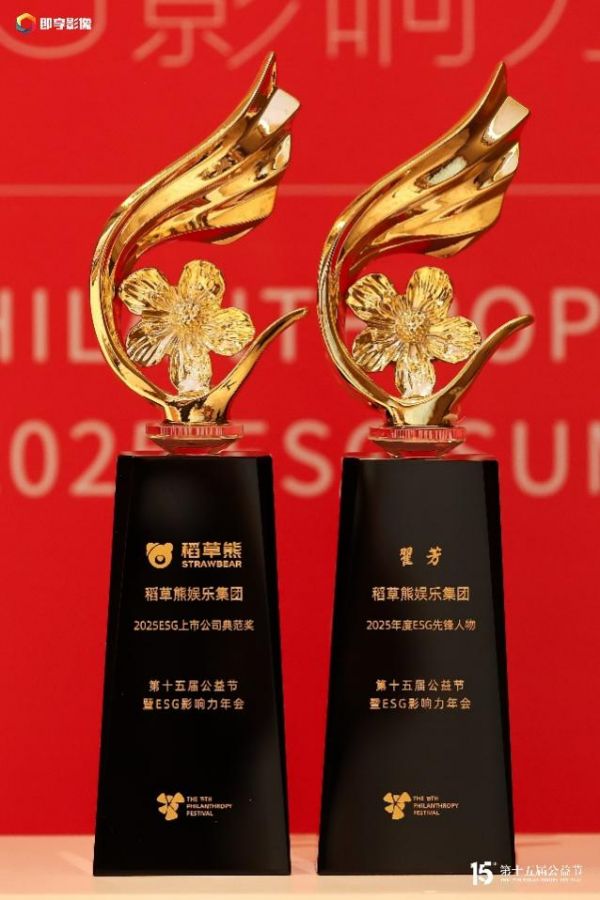
持续深化ESG实践 稻草熊娱乐获评ESG上市公司典范奖及年度先锋人物奖
Sou Hu Wang· 2026-01-26 07:04
1月23日,第十五届公益节暨2025ESG影响力年会在北京举办,作为中国公益与ESG领域的年度标杆盛 会,本届年会汇聚数百名来自政府、上市企业及公益组织的代表参会,现场正式揭晓2025在环境、社会 及公司治理领域的优秀实践企业及领袖人物。 中国剧集制片及发行商稻草熊娱乐集团(02125.HK,下称"稻草熊娱乐"或"公司"),凭借在ESG体系建 设、绿色工业化内容生产、公益行动等领域的突出实践成果与行业引领力连续三年受到评委会高度认 可,成功获评"2025 ESG上市公司典范奖";公司执行董事兼首席运营官、ESG委员会成员翟芳女士凭借 在推动企业ESG战略制定与落地、积极参与公益行动等卓越表现,再次获评"2025 年度 ESG 先锋人物 奖",成为影视内容行业积极践行ESG、履行企业社会责任的典范。 公开信息显示,稻草熊娱乐集团成立于2014年,是中国主要的电影、剧集、微短剧等分集类内容制片商 及发行商之一,公司以独创的稳定平台型运营模式、高效的大中台服务能力以及对头部行业资源的号召 力,形成了独具特色的内容开发生态链,2025年投资出品了《三叉戟2》、《乌云之上》、《在人 间》、《漂白》、《赴山海》、《双轨》 ...

零碳工厂:工业领域落实“双碳”目标的关键抓手
中国能源报· 2026-01-26 04:24
Core Viewpoint - The article discusses the issuance of the "Guiding Opinions on the Construction of Zero Carbon Factories" by five departments including the Ministry of Industry and Information Technology, marking a significant step in promoting zero carbon factory construction as a national strategic action aimed at achieving carbon neutrality in the industrial sector [1][3]. Summary by Sections Zero Carbon Factory Definition and Goals - A zero carbon factory prioritizes the use of green electricity and energy-saving modifications to reduce carbon emissions, aiming for net-zero emissions through carbon offsetting via green trading [1]. - The construction of zero carbon factories is set to be included in government work reports by 2025, indicating its elevation from industry exploration to a national strategy [1]. Key Tasks and Industry Focus - The "Guiding Opinions" outline three clear aspects: construction objects, goals, and pathways, focusing on key industries such as automotive, lithium batteries, photovoltaics, steel, non-ferrous metals, and petrochemicals, which together account for over 65% of the industrial added value and approximately 50% of total carbon emissions in China [3][4]. Development Goals and Phased Approach - The document sets clear, phased development goals, emphasizing the need to establish low-carbon competitive advantages in sensitive international trade sectors by 2027, particularly in automotive and electronics [4]. - By 2030, the focus will shift to consolidating low-carbon achievements in foundational materials and consumer goods, promoting collaborative carbon reduction across supply chains [4]. Construction Pathways and Mechanisms - The "Guiding Opinions" propose a comprehensive lifecycle approach to carbon reduction, including scientific carbon accounting, source reduction, process reduction, consumption carbon fixation, intelligent carbon control, and efficient carbon management [5]. - It emphasizes the need for differentiated deployment of tasks among various stakeholders, including local authorities, enterprises, industry associations, and research institutions, to create a multi-faceted governance structure for zero carbon factory construction [5]. Four Guiding Principles - The article outlines four guiding principles for zero carbon factory construction: 1. **Prudent Development**: Tailoring strategies to industry characteristics and ensuring steady carbon reduction without compromising economic growth [7]. 2. **Systematic Advancement**: Integrating energy optimization, resource recycling, and supply chain collaboration into a comprehensive carbon reduction strategy [8]. 3. **Soft and Hard Integration**: Combining physical measures with robust carbon management systems to enhance overall carbon management capabilities [9]. 4. **International Leadership**: Establishing standards and databases that reflect China's characteristics and actively participating in international standard-setting [9]. Recommendations for Stakeholders - Local authorities are advised to implement science-based policies that consider regional industrial characteristics and avoid sacrificing normal operations for short-term emission reductions [12]. - Enterprises should focus on enhancing their green competitiveness by aligning with ESG disclosure requirements and establishing effective carbon management systems [12]. - Research institutions are encouraged to innovate standards and frameworks that support zero carbon factory construction, ensuring alignment with international practices [13]. Conclusion - The "Guiding Opinions" serve as a clear action guide and institutional framework, marking a solid step towards zero carbon development in China's industry, with the potential to set a global benchmark for industrial green transformation [13].

四大证券报精华摘要:1月26日
Xin Hua Cai Jing· 2026-01-26 00:13
Group 1 - The Beijing Stock Exchange has welcomed three new listings, bringing the total number of listed companies to 290 and the total market capitalization to 967.05 billion yuan, approaching the 1 trillion yuan mark [1] - The IPO review process on the Beijing Stock Exchange is maintaining a high frequency, with expectations for continued rapid issuance of IPOs due to deepening market reforms [1] Group 2 - The semiconductor industry is experiencing strong performance driven by demand from artificial intelligence, with many companies reporting increased operating rates in chip manufacturing [2] - A total of 506 A-share companies have forecasted net profit growth for 2025, with 16 companies expecting growth exceeding 500%, driven by factors such as market expansion and cost reduction [12] Group 3 - The mandatory disclosure of ESG reports is transforming the quality and comparability of data, moving from qualitative case studies to quantitative data points, enhancing transparency in environmental information [3] - The shift towards a more systematic approach in regulatory oversight of listed companies is evident, with over 90 companies facing administrative penalties in 2025, indicating a stricter enforcement environment [6][7] Group 4 - The short-term funding environment is expected to remain reasonably ample, with the People's Bank of China focusing on guiding overnight rates to operate near policy rate levels [4] - The A-share market is witnessing a structural opportunity, with a focus on technology growth and resource sectors as brokers conduct extensive research on companies [8] Group 5 - The new fund establishment has reached 76 this year, raising a total of 71.939 billion yuan, with a significant number of funds achieving over 20% returns, indicating strong investor interest [10] - The proactive equity funds are heavily invested in the electronics, pharmaceuticals, and power equipment sectors, reflecting a strategic focus on high-growth industries [14]
A股ESG强制披露“首考”进行时 投资者“阅卷”如何识金
Zhong Guo Zheng Quan Bao· 2026-01-25 21:58
环境信息尤其是温室气体排放数据的披露将显著增强。毕马威中国ESG报告和鉴证服务副总监杨歆雯表 示,由于指引要求将"应对气候变化"作为具有财务重要性的议题进行强制披露,相关数据的详实度有望 大幅提升。她认为,从"案例展示"转向"数据驱动"是必然趋势,"对投资者而言,数据是最直观、可比 的,特别是单位营收的能耗、碳排放、专利数量等强度数据"。 "华菱钢铁(000932)在ESG方面做了哪些工作,公司ESG评级情况如何?""特锐德(300001)如何通 过优化治理结构(如独立董事比例、股权激励)和股东权益保护措施,进一步提升ESG评级至A 级?""江苏国信(002608)在ESG建设及可持续发展方面有哪些具体规划?"……在A股可持续发展报告 强制披露"首考"进行之际,投资者关系互动平台上的此类提问愈发密集,凸显市场对上市公司ESG的关 注已升至新高度。 转变并非一蹴而就。郭沛源提醒,在初期,详实的案例描述与量化数据披露或将并行。投资者"阅 卷"时,需优先关注指引明确要求的核心章节,特别是"双重重要性"原则的运用、范围三碳排放的核算 与披露、气候情景分析及韧性评估。 在"数据森林"中,以下几处堪称核心"考点",直接检 ...
A股ESG强制披露“首考”进行时投资者“阅卷”如何识金
Zhong Guo Zheng Quan Bao· 2026-01-25 21:06
"华菱钢铁在ESG方面做了哪些工作,公司ESG评级情况如何?""特锐德如何通过优化治理结构(如独 立董事比例、股权激励)和股东权益保护措施,进一步提升ESG评级至A级?""江苏国信在ESG建设及 可持续发展方面有哪些具体规划?"……在A股可持续发展报告强制披露"首考"进行之际,投资者关系 互动平台上的此类提问愈发密集,凸显市场对上市公司ESG的关注已升至新高度。 2026年是A股可持续发展报告强制披露的元年。对投资者而言,掌握科学的"阅卷"方法,不仅是规 避"漂绿"风险的防御性策略,更是主动识别那些在绿色转型中管理扎实、数据透明、勇于创新的价值创 造者的核心能力。这场以提升信息透明度为起点的变革,正推动市场走向估值更精准、生态更健康、发 展更可持续的新阶段。 ● 本报记者 昝秀丽 透视数据内核 过去,阅读一份ESG报告犹如欣赏一幅写意画——重在理念阐述与案例展示。而在强制披露的"首 考"中,这幅画正转变为由数据点阵构成的工笔画,在完整性、规范性与数据深度上呈现质变。 核心变化源于监管框架的夯实。"此前上市公司若自愿披露,可能存在'报喜不报忧'的选择性倾向。在 强制披露框架下,报告的完整性与公司间可比性将显著改 ...
绿色低碳改造提速 驱动企业生产模式转型
Zhong Guo Zheng Quan Bao· 2026-01-25 21:05
Group 1 - The current green and low-carbon transformation of enterprises requires not only improved management levels but also a combination of technological innovation and financial support to promote deeper transformation [1]
Better Artificial Intelligence Tech ETF: Roundhill's CHAT vs. Vanguard's VGT
Yahoo Finance· 2026-01-25 17:06
Core Insights - The Roundhill Investments - Generative AI & Technology ETF (CHAT) has shown higher recent returns and yield compared to the Vanguard Information Technology ETF (VGT), which is characterized by lower costs and a larger asset base [2][3] Cost & Size Comparison - CHAT has an expense ratio of 0.75% while VGT has a significantly lower expense ratio of 0.09% - As of January 23, 2026, CHAT's one-year return is 39.4% compared to VGT's 16.8% - CHAT offers a dividend yield of 2.7%, whereas VGT's yield is only 0.4% - VGT has assets under management (AUM) of $130.7 billion, while CHAT has $1.0 billion [4][5] Performance & Risk Comparison - Over a two-year period, the maximum drawdown for VGT is (27.23%) compared to CHAT's (31.35%) [6] Holdings Composition - CHAT focuses on generative artificial intelligence with 52 holdings, primarily in technology (85%), followed by communication services (9%) and consumer cyclical (6%). Major holdings include Alphabet, NVIDIA, and Microsoft [7] - VGT provides broader exposure with 310 holdings, predominantly in technology (98%), featuring top companies like NVIDIA, Apple, and Microsoft [8] Summary of Investment Profiles - CHAT has outperformed VGT in terms of one-year return and yield but comes with higher volatility and a steeper drawdown - CHAT is actively managed with an ESG screen, while VGT follows a passive management approach tracking a broad technology index - VGT offers greater diversification and a lower expense ratio, making it more suitable for long-term investors [9]
ESG行业周报:我国金融领域首部ESG评价国家标准正式发布,英国推出千亿住宅光伏扶持计划
Xinda Securities· 2026-01-25 10:24
Investment Rating - The report does not specify a direct investment rating for the industry but highlights significant developments in ESG standards and initiatives [2]. Core Insights - The first national ESG evaluation standard in China's financial sector has been officially released, set to be implemented on April 1, 2026. This standard aims to support the country's green development strategy and enhance the quality of the bond market [3][13]. - The UK government has launched a £15 billion (approximately 140.3 billion RMB) public funding initiative to upgrade energy efficiency in up to 5 million homes by 2030, addressing energy poverty for up to 1 million families [4][18]. Summary by Sections Domestic Developments - The ESG evaluation framework (GB/T 46912-2025) includes a three-tier system covering environmental, social, and governance aspects, with 11 evaluation dimensions and 33 topics [3][13]. - The National Development and Reform Commission has allocated 93.6 billion RMB to support approximately 4,500 projects in industrial, energy, and environmental sectors [14]. - The Ministry of Industry and Information Technology is focusing on fostering new green development momentum through energy-saving and carbon-reduction technologies [15]. International Developments - The UK's "Warm Homes Plan" aims to facilitate the installation of solar photovoltaic systems in new homes, significantly reducing energy costs for consumers [4][18]. - The European Central Bank is intensifying its monitoring of banks' climate risk management and transition plans [20]. ESG Financial Products Tracking Bonds - As of January 25, 2026, China has issued 3,927 ESG bonds with a total outstanding amount of 5.77 trillion RMB, where green bonds account for 62.34% of the total [5][22]. - In January 2026, 94 ESG bonds were issued, raising 54.4 billion RMB, with a total of 1,303 ESG bonds issued in the past year amounting to 1.4024 trillion RMB [5][22]. Public Funds - There are 955 ESG products in the market with a total net value of 1.261496 trillion RMB, where ESG strategy products represent 49.74% of the total [5][34]. - In January 2026, only one ESG product was issued, with a share of 0.11 million, and a total of 189 ESG public funds were issued in the past year [5][34]. Bank Wealth Management - The market has 1,223 ESG products, with pure ESG products making up 53.23% of the total [6][39]. - In January 2026, 80 ESG products were issued, primarily focusing on pure ESG and social responsibility [6][39]. Index Tracking - As of January 23, 2026, major ESG indices have underperformed compared to the market, with the Wind All A Sustainable ESG index showing the highest increase of 0.28% [8][40]. - Over the past year, major ESG indices have generally increased, with the Wind All A Sustainable ESG index rising by 28.83% [8][40]. Expert Opinions - Professor Guo Yi from Beijing Technology University discusses the ethical implications of AI development, emphasizing the need for policies that align with societal values and the integration of ESG principles into AI practices [9][42].
我国金融领域首部ESG评价国家标准正式发布,英国推出千亿住宅光伏扶持计划
Xinda Securities· 2026-01-25 08:37
Investment Rating - The report does not specify a direct investment rating for the industry but highlights significant developments in ESG standards and initiatives [2]. Core Insights - China's first national ESG evaluation standard, titled "Environmental, Social, and Governance Evaluation Framework for Bond Issuers" (GB/T 46912-2025), was officially released and will be implemented on April 1, 2026. This standard aims to support the country's green development strategy and enhance the quality of the bond market [3][13]. - The UK government has launched the "Warm Homes Plan," which will invest £15 billion (approximately 140.3 billion RMB) to upgrade energy efficiency in up to 5 million homes by 2030, addressing energy poverty for up to 1 million families [4][18]. Summary by Sections Domestic Developments - The ESG evaluation framework includes a three-tier system of "evaluation items - evaluation dimensions - evaluation topics," covering 11 evaluation dimensions and 33 evaluation topics, providing a standardized guide for ESG evaluations [3][13]. - The National Development and Reform Commission has allocated 93.6 billion RMB to support approximately 4,500 projects in industrial, energy, and environmental sectors, promoting equipment upgrades and energy efficiency [14]. - The Ministry of Industry and Information Technology is focusing on three areas to cultivate new momentum for green development, including enhancing traditional industries, providing new energy-saving equipment, and developing new green energy business models [15]. ESG Financial Products Tracking - As of January 25, 2026, a total of 3,927 ESG bonds have been issued in China, with a total outstanding amount of 5.77 trillion RMB, where green bonds account for 62.34% of the total [5][22]. - The market has 955 existing ESG products in public funds, with a total net value of 12,614.96 billion RMB, where ESG strategy products represent the largest share at 49.74% [5][34]. - There are 1,223 existing ESG products in bank wealth management, with pure ESG products making up 53.23% of the total [6][39]. Index Tracking - As of January 23, 2026, major ESG indices have underperformed the market, with the Wind All A Sustainable ESG index showing the highest increase of 0.28%, while the 300 ESG Leading index recorded the largest decline of 1.53% [8][40]. Expert Opinions - Professor Guo Yi from Beijing Technology and Business University discusses the ethical implications of AI development, emphasizing the need for policies that guide AI applications towards beneficial outcomes. He suggests integrating ESG principles with AI to address new challenges faced by enterprises [9][42].