
大语言模型

Search documents
“AI主流发展路线已经遇到瓶颈”
第一财经· 2025-11-26 09:52
Core Insights - The main argument presented by Ilya Sutskever is that the current mainstream AI development path has reached a bottleneck, marking the end of the scaling era and a return to a research-focused paradigm [4][5]. Group 1: AI Development Phases - Sutskever identifies three phases in AI research: from 2012 to 2020 was the research era, from 2020 to 2025 was the scaling era, and now the field is transitioning back to a research era due to diminishing returns from scaling [4]. - He emphasizes that while computational power has increased significantly, it no longer guarantees better performance, leading to a blurred line between scaling and computational waste [4]. Group 2: Generalization and Model Limitations - A fundamental issue in the pursuit of AGI is the poor generalization ability of large models compared to humans [5]. - Sutskever points out that current models perform well on various evaluations but often make simple mistakes, suggesting that the training data may be too narrow, which disconnects evaluation performance from real-world performance [6]. Group 3: Emotional Intelligence in AI - Sutskever proposes that current AI may lack emotional intelligence, which could serve as a guiding value function, essential for effective decision-making [7]. - He draws parallels with humans who have lost emotional processing abilities, indicating that emotions play a crucial role in decision-making and could be a missing element in AI development [7]. Group 4: Alternative Perspectives in AI - Yann LeCun, a Turing Award winner, criticizes the limitations of large language models (LLMs), arguing they cannot perform complex reasoning and are merely statistical models [8]. - LeCun advocates for "world models" that learn from visual information, akin to how young animals learn, as a more promising direction for AI development [8][9]. - Fei-Fei Li also emphasizes the importance of building world models that can understand spatial relationships and interactions, suggesting a need for a new AI paradigm that incorporates generative, multimodal, and interactive capabilities [9]. Group 5: Industry Consensus - There is a lack of consensus in the AI industry regarding the future direction, but it is clear that the era of merely increasing computational power is over, necessitating a reevaluation of the paradigms that will lead to AGI [9].


小米大模型首曝光:参数规模为64亿 在CMMLU中文向大模型排名第1
Xin Lang Ke Ji· 2025-11-26 08:25
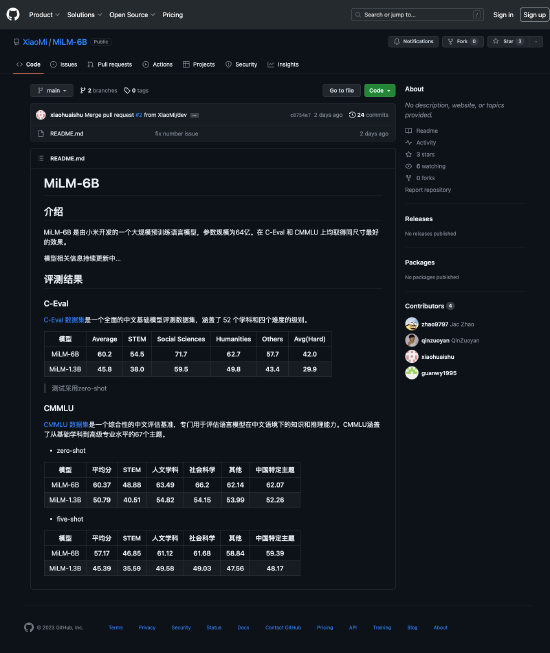
在今年的一季度财报中,小米表示,2023年4月,小米集团正式组建AI实验室大模型团队。目前小米AI 领域相关研发人员超1200人。 近日,小米的大语言模型MiLM-6B首次现身C-Eval、CMMLU两大AI模型评测榜单。 资料显示,MiLM-6B是由小米开发的一个大规模预训练语言模型,参数规模为64亿。截至当前, MiLM-6B在C-Eval总榜单排名第10、同参数量级排名第1,在CMMLU中文向大模型排名第1。 ...

WPS 365升级为全球一站式AI协同办公平台 年底将推出国际版
Zheng Quan Ri Bao· 2025-11-26 08:09
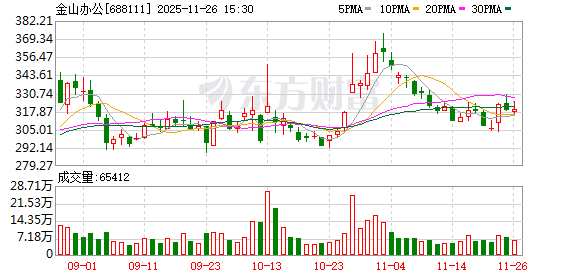
Core Insights - Kingsoft Office has upgraded WPS 365 to a global one-stop AI collaboration platform, introducing new products such as WPS Lingxi Enterprise Edition and Team Space, aiming to cover all mainstream platforms globally [3] - The WPS 365 platform integrates various tools including messaging, documents, meetings, emails, and smart document libraries, achieving unified access, integration, data, and control to maximize organizational efficiency [1][3] - The AI middle platform of WPS 365 has been applied in multiple industries, enhancing document intelligence capabilities for tasks such as smart retrieval and analysis of accumulated data [2] Product Features - WPS 365 will launch an international version by the end of the year, supporting cross-regional and cross-language global office collaboration, with compatibility with Microsoft 365 [1] - The upgraded smart document library utilizes technologies like OCR, LLM, and NLP to transform scattered documents into reusable knowledge [2] - The digital employee has been upgraded to version 2.0, serving as an intelligent agent based on the company's private knowledge, crucial for building an organizational understanding [2] Strategic Goals - The introduction of the AI middle platform aims to activate comprehensive knowledge within enterprises, enabling better decision-making through the integration of large model engines and proprietary knowledge [2] - Kingsoft Office's initiatives are positioned to address challenges faced by expanding organizations, such as increased internal systems and data leakage risks [1]

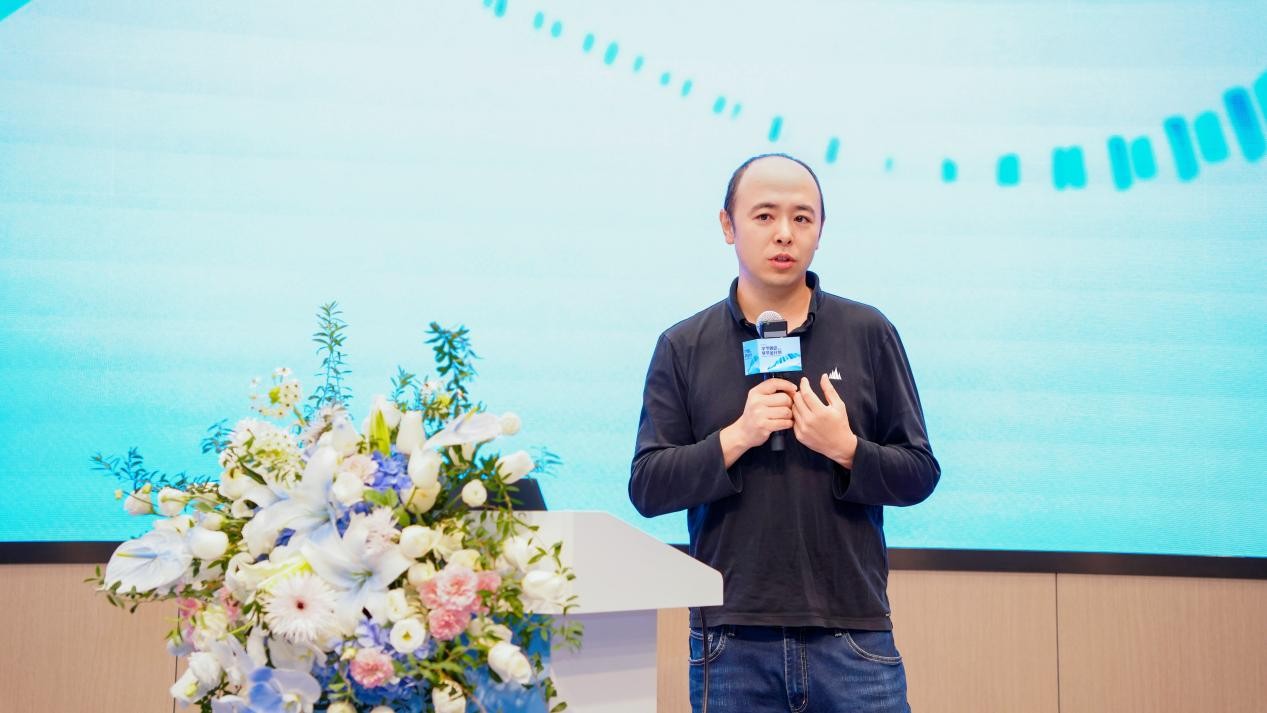
杨震原:2021 年字节团队曾训出大语言模型,但当时 “没眼光”
3 6 Ke· 2025-11-25 11:26
Core Insights - ByteDance has been actively exploring technology since its inception, focusing on large-scale machine learning systems for recommendation algorithms [1][5][34] - The company has made significant advancements in AI, particularly with its AI dialogue assistant "Doubao" and its leading position in the Chinese MaaS market through Volcano Engine [2][34] - ByteDance is investing heavily in XR technology, aiming to enhance user experience through improved hardware and software solutions [22][30] Group 1: Technology Development - In 2014, ByteDance set an ambitious goal to develop a recommendation system with a feature scale of one trillion, leveraging large-scale machine learning [5][9] - The company initially underestimated the potential of large language models, but quickly pivoted to invest in this area starting in 2022, leading to successful applications [34][35] - ByteDance has developed a stable training system called MegaScale, achieving a floating-point operation utilization rate exceeding 55%, which is 1.3 times higher than mainstream open-source frameworks [34] Group 2: AI and Machine Learning - The company has recognized the importance of large-scale data for creating valuable models and algorithms, particularly in the context of real-world applications [10][34] - ByteDance's AI dialogue assistant "Doubao" has become the most popular in China, showcasing the company's success in AI applications [2][34] - The company is also exploring advanced AI models, including the Seed Edge plan, which focuses on cutting-edge research in large models [35] Group 3: XR Technology - ByteDance acquired the Pico team in 2021 to enhance its XR capabilities, focusing on both content and foundational technology [22][30] - The company aims to achieve a pixel density (PPD) of nearly 4000, significantly higher than existing products, to improve clarity in XR experiences [26][29] - ByteDance is developing a dedicated consumer electronics chip to address processing bottlenecks in mixed reality applications, achieving a system latency of around 12 milliseconds [31][30]
第十六届IEEE云计算技术与科学国际会议落幕
Zhong Guo Xin Wen Wang· 2025-11-25 09:24
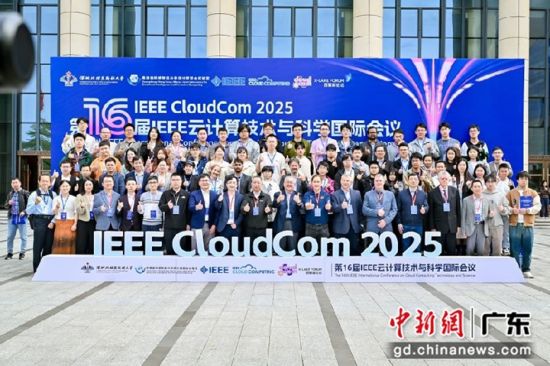
Core Insights - The 16th IEEE Cloud Computing Technology and Science International Conference (CloudCom2025) was recently held in Shenzhen, hosted by Shenzhen North University of Moscow, attracting over 200 top scholars, academicians, and industry experts to discuss advancements in cloud computing, edge computing, big data, and security privacy [1][2] Group 1: Key Presentations - Professor Abdallah Shami from Western University, Canada, delivered a keynote on "Automated Network Intelligence: Driving 5G and Future Development," emphasizing the critical role of artificial intelligence in the evolution of 5G and future networks [1] - Professor Xu Ke from Tsinghua University presented on "Secure Internet Architecture and Key Technologies," sharing forward-looking ideas for building safer and more reliable network architectures [1] - Academician Gong Jianya from Wuhan University discussed "Challenges and Thoughts on Intelligent Interpretation of Remote Sensing," highlighting the application and development trends of remote sensing technology in intelligent interpretation [1] - Academician Weihua Zhuang from the University of Waterloo focused on "6G Intelligent Network Management," exploring new opportunities and challenges in network management in the 6G era [1] Group 2: Additional Expert Contributions - The conference featured presentations from experts such as Professor Li Nan from the National University of Defense Technology, Professor Duan Lingjie from Hong Kong University of Science and Technology (Guangzhou), Professor Chen Jiachao from Sun Yat-sen University, and Professor Xu Ruifeng from Harbin Institute of Technology (Shenzhen), covering topics like 6G semantic communication, human-machine feedback learning, and AI applications in Web3 finance [2] - Over the three-day conference, multiple parallel sessions were held, addressing popular fields such as cloud scheduling optimization, federated edge learning, 5G and AI security, intelligent IoT, and large language models, discussing specific technical issues like emotion recognition, drone resource allocation, digital twins, and task offloading [2]
——电力设备行业周报:锂电材料价格具备长期增长空间,储能需求有望持续向好-20251123
Guohai Securities· 2025-11-23 11:01
Investment Rating - The report maintains a "Recommended" rating for the industry [1] Core Views - The lithium battery materials prices have long-term growth potential, and energy storage demand is expected to continue improving [1][4] - The power equipment sector shows positive fundamental changes and potential catalysts, maintaining an overall "Recommended" rating for the sector [8] Summary by Sections Recent Trends - The power equipment sector has shown a performance of -1.4% over the last month, 20.6% over the last three months, and 24.4% over the last year, outperforming the CSI 300 index [3] - The report highlights the ongoing supply-side reforms in the photovoltaic industry, with a focus on stabilizing prices amid fluctuating demand [4] Wind Power - The offshore wind pricing policies are favorable, with competitive bidding prices ranging from 0.3 to 0.391 CNY/kWh, indicating a supportive environment for project acceleration [5][6] - The onshore wind market is expected to maintain year-on-year growth, with an average annual demand for wind turbines projected to reach around 140GW [6] Energy Storage - As of November 18, 2025, there are 40.15GW/167.24GWh of GWh-level energy storage projects under construction or in operation, with significant projects located in Inner Mongolia, Xinjiang, and Gansu [6] - Trina Solar's energy storage business is experiencing continuous growth in orders, with a recent contract for 2.66GWh of storage products signed with clients across North America, Europe, and Latin America [6] Lithium Battery - Companies in the lithium battery supply chain are advancing solid-state battery developments, with significant production capabilities being established [7] - A major agreement between Rongbai Technology and CATL for sodium battery materials is expected to enhance the industrialization of sodium batteries [7] AIDC - NVIDIA's third-quarter performance exceeded expectations, with a revenue of $57.01 billion, driven by strong demand for data center products [7] - The ongoing development in AIDC is anticipated to drive demand for power equipment technology upgrades [7] Power Grid - Five flexible interconnection projects have been approved, with a total investment of 24.4 billion CNY, aimed at enhancing inter-provincial power support capabilities [8] - The report emphasizes the growth potential in power infrastructure driven by the increasing penetration of clean energy [8]
IT员工抄公司量化代码赚8千万,被罚1.7亿;传毫末智行停工解散、赔偿不明;实习生抽中显卡被公司要求上交?回应来了 | AI周报
AI前线· 2025-11-23 05:33
Group 1 - An IT employee in Zhejiang was fined 1.7 billion yuan for stealing company trading algorithms and profiting 88.58 million yuan through insider trading [3][4][5] - The employee, Lin Yiping, was involved in key responsibilities at a tech company linked to two private equity firms, allowing him access to confidential information [3][4] - The regulatory body found sufficient evidence of his wrongdoing, leading to a five-year ban from the securities market [5] Group 2 - The autonomous driving company, Haomo Zhixing, backed by Great Wall Motors, has reportedly ceased operations and is in the process of dissolution [6][7][8] - Haomo Zhixing, established in November 2019, was known for its advancements in autonomous driving technology and had over a thousand employees at its peak [6][7] - The company faced challenges as Great Wall Motors shifted focus to other suppliers, leading to significant management turnover [7] Group 3 - ByteDance's Seed team has seen the departure of seven core members this year, including key figures who have joined Meta and Apple [11] - Former Baidu VP Jing Kun's AI startup Genspark raised $275 million in Series B funding, achieving a valuation of $1.25 billion [12][13] - TikTok's algorithm head, Song Yang, has left for Meta, indicating a trend of talent migration from TikTok to major competitors [14][15] Group 4 - Rabbit, a tech company, has reportedly delayed employee salaries for several months, leading to employee strikes, while the CEO claims a new AI hardware version is forthcoming [16] - New Oriental's chairman, Yu Minhong, faced backlash for a planned trip to Antarctica with employees, which he later clarified was intended for educational purposes [17][18][19] Group 5 - Alibaba's AI application "Qianwen" faced service interruptions due to high user traffic on its launch day, prompting a response from the company [20][21] - Ant Group's AI assistant "Lingguang" also experienced service issues shortly after its launch, indicating high demand for AI tools [22] Group 6 - Google launched the Gemini 3 Pro image model, which is designed for advanced image generation and editing tasks, showcasing significant improvements over competitors [29][30][31] - OpenAI introduced the GPT-5.1-Codex-Max model, optimized for long-running tasks and capable of handling extensive context windows [32][33] - Musk's xAI company released Grok 4.1 Fast, a low-cost model that excels in real-time applications, indicating a competitive landscape in AI development [34][35]

Karpathy组建大模型「议会」,GPT-5.1、Gemini 3 Pro等化身最强智囊团
机器之心· 2025-11-23 04:06
Core Viewpoint - The article discusses the shift in content consumption habits towards efficiency, particularly in the context of AI models summarizing information for users, indicating a leap in human capability in the AI era [1][2]. Group 1: AI Model Utilization - Andrej Karpathy has adopted a habit of using large language models (LLMs) to read and summarize information, reflecting a broader trend among users [1][2]. - Karpathy initiated a project that combines four of the latest LLMs into a council to provide diverse insights and evaluations [3][4]. Group 2: LLM Council Mechanism - The LLM council operates as a web application where user questions are distributed among multiple models, which then review and rank each other's responses before a "Chairman LLM" generates the final answer [4][11]. - The council's process includes three stages: initial responses from each model, mutual evaluation of those responses, and final output generation by the chairman model [8][9][11]. Group 3: Model Performance and Evaluation - The models exhibit a willingness to acknowledge superior responses from other models, creating an interesting evaluation dynamic [6][7]. - In evaluations, GPT 5.1 was noted for its rich insights, while Claude was consistently rated lower, although subjective preferences varied among users [7]. Group 4: Future Implications and Open Source - The LLM council's design may represent a new benchmark for model evaluation, with potential for further exploration in multi-model integration [12][13]. - Karpathy has made the project open source, inviting others to explore and innovate upon it, although he will not provide support for it [14][15].

超过ChatGPT!“灵光”上线4天下载突破100万;谷歌否认拿用户邮件训练AI模型丨AIGC日报
创业邦· 2025-11-23 01:09
Group 1 - Google denies using user emails to train AI models, clarifying that there have been no changes to their policies regarding Gmail content and AI training [2] - Ant Group's new AI assistant "Lingguang" achieved over 1 million downloads within 4 days, surpassing the download speed of major global AI applications like ChatGPT and Sora2 [2] - A survey by Bitkom reveals that young users prefer using AI for information searches over traditional search engines, with 50% of respondents occasionally using AI for searches [2] Group 2 - Apple's latest research indicates that large language models (LLMs) can accurately identify user activities based on textual descriptions of audio and motion data, potentially applicable to Apple Watch [2]



快速响应高效协同 庄睦德:中国研发团队是梅赛德斯-奔驰全球研发网络核心支柱
Zhong Guo Jing Ying Bao· 2025-11-22 11:24
Core Insights - Mercedes-Benz showcased the AMG GT XX concept car at the "2025 Mercedes-Benz XX Technology Innovation Day," highlighting its advancements in electrification and intelligence, marking a significant step towards future mobility [1][2] - The GT XX concept car features innovative technologies such as an axial flux motor and direct cooling battery technology, breaking 25 performance records on real racetracks, demonstrating Mercedes-AMG's leadership in high-performance electrification [1][3] Group 1: Technological Advancements - The AMG GT XX concept car is the first pure electric model utilizing F1-derived driving technology, showcasing a commitment to high performance and durability in electric vehicles [1][3] - The vehicle is equipped with a super-fast charging system, achieving an average charging power of over 850 kW, allowing for a range increase of 400 kilometers in approximately 5 minutes [4] - The battery design incorporates advanced materials, achieving an energy density of 300 Wh/kg, and features a lightweight aluminum alloy casing for improved safety and heat dissipation [4] Group 2: R&D and Collaboration - The Chinese R&D teams are identified as a core pillar of Mercedes-Benz's global R&D network, leading various projects such as new hybrid batteries and intelligent parking systems [2][3] - Mercedes-Benz emphasizes a collaborative approach, partnering with companies like ByteDance and Momenta to enhance AI capabilities and autonomous driving technologies [5][6] - The company is celebrating 20 years of R&D in China, focusing on integrating local partnerships to bring innovative technologies into everyday use for Chinese consumers [6]