
自由贸易

Search documents
商务部:中国-东盟自贸区3.0版升级议定书主要有三个突出特点
Xin Lang Cai Jing· 2025-10-28 02:53
Core Points - The signing of the China-ASEAN Free Trade Area 3.0 Upgrade Protocol marks a significant achievement in trade relations and is a response to the challenges faced by the international trade system [2][3] Group 1: Importance of the Protocol - The protocol signifies the commitment of China and ASEAN to multilateralism and free trade amidst rising protectionism and unilateral trade measures [2] - It establishes a new milestone for deeper regional economic integration, expanding cooperation into emerging fields such as digital and green economies [3] - The protocol supports the construction of a China-ASEAN community with a shared future, enhancing economic cooperation and promoting a resilient regional supply chain [3] Group 2: Background and Negotiation Process - The China-ASEAN Free Trade Area is the first free trade agreement established by both parties, with the initial agreement announced in 2002 [4] - The 3.0 version negotiations began in November 2022 and involved nine formal rounds and over 120 working group meetings [4][5] - The trade volume between China and ASEAN reached $982.3 billion in 2024, a 17-fold increase since the establishment of the free trade area [4] Group 3: Key Features of the Protocol - The protocol aims to promote open, mutually beneficial, and inclusive cooperation, adapting to new trends in international trade [6] - It expands into five new areas: digital economy, green economy, supply chain connectivity, competition and consumer protection, and support for small and medium-sized enterprises [7] - The protocol enhances the level of openness and establishes a systematic cooperation framework for both traditional and emerging fields [7] Group 4: Main Content of the Protocol - The protocol includes nine major areas of upgrade, covering both existing fields and new areas with significant cooperation potential [8] - In the digital economy, it establishes a high-level rule system and cooperation arrangements, including customs duty exemptions on electronic transmissions [9] - The green economy section defines key areas for cooperation, including green trade and sustainable finance, while committing to not use environmental standards as trade barriers [9] - The supply chain section introduces a dedicated chapter for cooperation, enhancing regional supply chain resilience and connectivity [10] - The protocol also addresses standards and technical regulations, health measures, customs procedures, competition, consumer protection, and support for small and medium-sized enterprises [11][12][13]
商务部国际司负责人解读中国—东盟自贸区3.0版升级议定书
Bei Jing Ri Bao Ke Hu Duan· 2025-10-28 02:37
Group 1 - The signing of the China-ASEAN Free Trade Area 3.0 upgrade protocol is a significant achievement marking the commitment to multilateralism and free trade amidst global economic challenges [2][3] - The protocol aims to deepen regional economic integration by expanding cooperation into emerging fields such as digital economy, green economy, and supply chain connectivity [3][6] - The protocol supports the construction of a China-ASEAN community of shared future, enhancing economic cooperation and promoting a resilient regional supply chain system [3][4] Group 2 - The China-ASEAN Free Trade Area has evolved through multiple phases since its inception in 2002, with the 3.0 version negotiations officially starting in November 2022 [4][5] - The trade volume between China and ASEAN reached $982.3 billion in 2024, a 17-fold increase since the establishment of the free trade area [4] - The protocol includes nine major areas of upgrade, incorporating both traditional trade facilitation and new emerging sectors [8][9] Group 3 - The protocol introduces new fields such as digital economy, green economy, and consumer protection, reflecting a commitment to leading international rule-making [7][8] - It establishes a comprehensive framework for cooperation in the digital economy, including measures for data flow, cybersecurity, and digital infrastructure [8][9] - The green economy section outlines commitments to sustainable practices and the elimination of trade barriers related to environmental standards [9][10] Group 4 - The protocol enhances customs procedures and trade facilitation through digital technologies, aiming to streamline processes and reduce costs for businesses [11][12] - It establishes a competitive and consumer protection framework, enhancing rights for consumers and ensuring fair competition among businesses [12][13] - The protocol includes measures to support small and medium enterprises, promoting their participation in international trade and enhancing their competitiveness [13][14]
李强在第28次东盟与中日韩领导人会议上的讲话(全文)
证监会发布· 2025-10-28 02:25
Core Viewpoint - The speech emphasizes the importance of open cooperation among East Asian countries to overcome economic challenges and sustain growth, highlighting the region's historical economic achievements and the need for strategic collaboration moving forward [2][4][5]. Group 1: Economic Cooperation - The ASEAN and China-Japan-South Korea cooperation has shown resilience and vitality despite facing increased challenges and uncertainties in the global economic landscape [2][5]. - Open cooperation has been a key factor in East Asia's economic miracles, allowing countries to complement each other's strengths and avoid politicizing trade issues [4][5]. Group 2: Regional Stability - The current international situation is marked by conflicts and instability, which threaten global development; thus, maintaining peace and stability in East Asia is crucial [5][6]. - There is a strong call to uphold free trade and multilateral trade systems while opposing protectionism to advance regional economic integration [5][6]. Group 3: Supply Chain Collaboration - East Asia possesses a comprehensive industrial chain with strong complementary advantages, and there is a need to enhance collaboration across different segments of the supply chain [5][6]. - The region should focus on improving cooperation in finance, trade, and food security to create new growth points and enhance internal development momentum [5][6]. Group 4: Innovation and New Growth Drivers - The region is encouraged to support technological innovation, particularly in fields like artificial intelligence, robotics, and biomedicine, to enhance innovation capabilities [6][7]. - Continued collaboration in digital economy, electric vehicles, and clean energy is essential to seize development opportunities [6][7].


美国挖坑中国填!特朗普赴日会见高市早苗,中国在东盟收拾烂摊子
Sou Hu Cai Jing· 2025-10-28 02:23
Group 1 - The article highlights China's efforts to fill the leadership void left by the U.S. in Southeast Asia, particularly in promoting open trade and strengthening regional economic ties during a summit in Kuala Lumpur [1][3] - The U.S. under President Trump is facing criticism for its high tariffs on Southeast Asian countries, which analysts believe is a strategy to pressure these nations to align with U.S. interests against China [3][4] - The Regional Comprehensive Economic Partnership (RCEP), supported by China, is emphasized as a significant trade agreement that could buffer the impact of U.S. tariffs, covering about 30% of global GDP [4][6] Group 2 - China's call for maintaining free trade and opposing protectionism is seen as a direct response to U.S. tariff policies, aiming to promote regional economic integration [3][4] - The article notes the challenges China faces, such as criticism from the Philippines regarding its actions in the South China Sea, which complicates its regional leadership aspirations [4][6] - Brazil's President Lula expresses optimism about achieving better trade agreements with the U.S., reflecting a common sentiment among Southeast Asian nations to balance relations with both the U.S. and China [6][7]
“为亚太区域合作持续注入动力”
Ren Min Ri Bao· 2025-10-27 22:38
Core Insights - The APEC has played a significant role in promoting regional economic integration and cooperation over the past 30 years, with a unique value derived from its flexibility and inclusiveness [2] - China is expected to take on a leading role in APEC, particularly in promoting green transformation and economic connectivity, aligning with APEC's long-term advocacy [3][4] - The importance of maintaining a free and open trade and investment environment is emphasized, especially in the face of rising unilateralism and protectionism [3] Group 1 - APEC serves as a platform for equal participation and mutual benefits among economies at different development stages, facilitating trade and investment agreements [2] - The organization actively addresses global challenges, expanding its agenda to include climate change, green transformation, and digital economy [2] - China has proposed new ideas for APEC that align with its goals, focusing on open cooperation and sustainable development [3] Group 2 - Malaysia and China have implemented projects under the Belt and Road Initiative, which have positively impacted various sectors in Malaysia, including heavy industry and tourism [3] - The collaboration in sectors such as photovoltaics, energy storage, 5G, and electric vehicles has been deepening, injecting new momentum into Malaysia's economic growth [3] - The need for new growth engines in the context of the digital revolution is highlighted, with cooperation in AI, digital payments, and green technology being crucial for economic transformation [4] Group 3 - Malaysia is actively implementing economic revitalization measures, including the "Changming Economy" framework and the 2030 New Industrial Blueprint [5] - The 2014 APEC meeting hosted by China marked a milestone in initiating the APEC Free Trade Area construction process, showcasing China's coordination and organizational capabilities [5] - There is anticipation for China's role as the host of APEC again in 2026, reflecting its ongoing commitment to regional cooperation [5]

“为亚太区域合作持续注入动力” ——访马来西亚国会议员陈家兴
Ren Min Ri Bao· 2025-10-27 22:22
Core Viewpoint - The Asia-Pacific Economic Cooperation (APEC) has played a significant role in promoting regional economic integration and cooperation over the past 30 years, with a unique value derived from its flexibility and inclusiveness [1] Group 1: APEC's Role and Impact - APEC has been instrumental in facilitating trade and investment liberalization, as well as promoting economic and technological cooperation among member economies [1] - The organization maintains a strong vitality, continuously injecting momentum into regional cooperation [1] - APEC provides a platform for economies at different development stages to participate equally and achieve mutual benefits [1] Group 2: China's Leadership and Initiatives - China has taken a leading role in promoting green transformation and economic connectivity within APEC, aligning with the organization's long-term advocacy [2] - The Belt and Road Initiative has led to significant projects in Malaysia, such as the Kuantan Industrial Park and East Coast Rail Link, enhancing various sectors including heavy industry and tourism [2] - Cooperation in areas like photovoltaics, energy storage, 5G, and electric vehicles has deepened, injecting new momentum into Malaysia's economic growth [2] Group 3: Challenges and Future Directions - The rise of unilateralism and protectionism makes it more crucial than ever to maintain a free and open trade and investment environment [2] - APEC economies need new growth engines in the face of technological revolutions, with collaboration in AI, digital payments, and green technology being essential for economic transformation [3] - Malaysia's implementation of the "Charming Economy" framework and various economic revitalization measures will benefit from cooperation with China and other regional countries [3]
美财长:不再考虑对华加征100%关税
Sou Hu Cai Jing· 2025-10-27 12:04
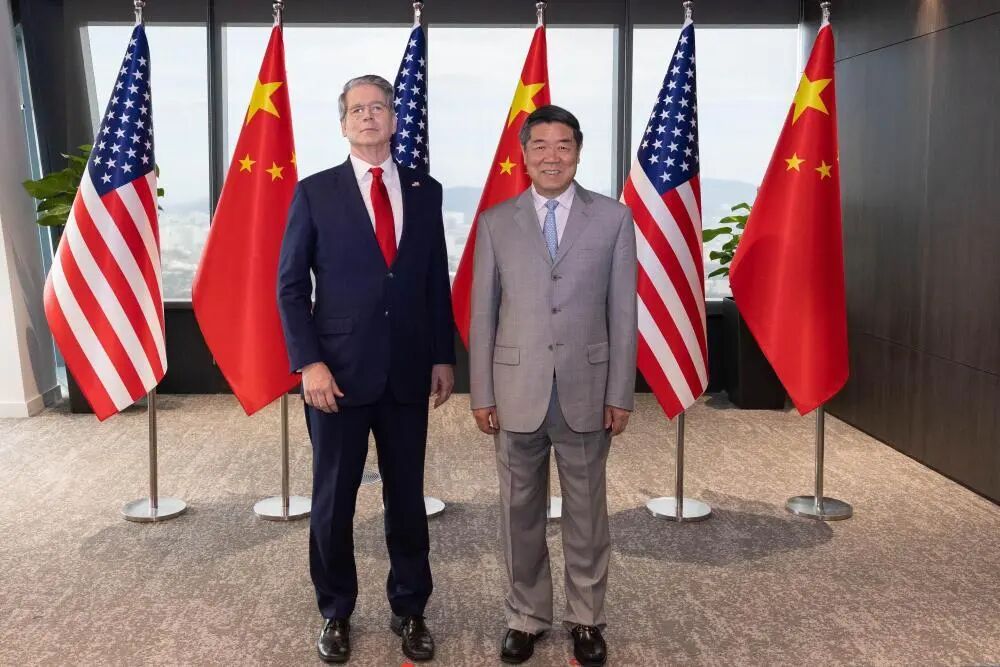
Core Points - The recent two-day trade talks between China and the U.S. in Kuala Lumpur resulted in a basic consensus on key economic issues, including maritime logistics, shipbuilding, and agricultural trade [1][2][3] - Both sides emphasized the importance of mutual respect and cooperation to resolve trade disputes, highlighting the significance of the U.S.-China economic relationship on a global scale [2][5] - The discussions were described as constructive, with both parties expressing a commitment to further detail and internal approval processes for the agreements reached [1][4] Group 1 - The talks were led by China's Vice Premier He Lifeng and U.S. Treasury Secretary Steven Mnuchin, lasting over five hours on the first day [2][3] - The U.S. Treasury Secretary stated that a "very successful framework" was established during the negotiations, which could pave the way for a meeting between the two countries' leaders [3][4] - The outcome of the talks is seen as a sign of easing tensions between the two largest economies, with the current suspension of tariffs set to expire on November 10 [4][5] Group 2 - The discussions covered a wide range of topics, including export controls, the extension of tariff suspensions, and cooperation on fentanyl issues, indicating a comprehensive approach to trade relations [2][5] - Analysts noted that the timing of the talks before the APEC meeting could signal a positive development in U.S.-China relations, which is crucial for global economic stability [5][6] - The upcoming APEC meeting is expected to be influenced by the outcomes of the U.S.-China discussions, with South Korea playing a pivotal role as the host [6][7]
因为一个广告叫停交易?特朗普暂停与加拿大贸易谈判,加拿大秒怂
Sou Hu Cai Jing· 2025-10-27 11:26
Core Viewpoint - A television advertisement funded by the Ontario government, costing approximately 75 million CAD (about 54 million USD), has led to the termination of all trade negotiations between the U.S. and Canada, highlighting the fragility of diplomatic relations and the impact of media on political dynamics [1][3][20] Group 1: Advertisement and Political Reaction - The advertisement utilized a clip of former U.S. President Reagan's speech, which was edited and misinterpreted, provoking a strong reaction from President Trump who perceived it as a provocation [3][5] - The ad aimed to remind Americans of the dangers of high tariffs, echoing Reagan's warnings about trade barriers harming American workers and consumers, but it was stripped of its historical context [5][9] - Trump's immediate response on social media labeled the ad as "fraudulent" and accused it of "interfering with the judiciary," reflecting his sensitivity to external criticism and the political implications of the advertisement [11][12] Group 2: Canada’s Response and Economic Implications - Following Trump's reaction, the Ontario government quickly announced the suspension of the advertisement in an attempt to reopen negotiations, demonstrating the pressure Canada faces as the U.S. is its largest trading partner, with nearly 75% of Canadian exports going to the U.S. [14][18] - The incident illustrates a pattern where Canada has had to retract policies or advertisements that provoke U.S. ire, indicating a power imbalance in their economic relationship [18][20] - Canadian Prime Minister Trudeau acknowledged the end of the long-standing close economic relationship with the U.S., reflecting a growing awareness of the precariousness of their dependency on American markets [20][24] Group 3: Broader Implications on Global Relations - The incident underscores the shifting dynamics in global power relations, where even minor actions by a dominant economy like the U.S. can significantly alter the policies of smaller nations [22][24] - The advertisement serves as a symbol of the challenges faced by smaller countries in asserting their independence and the need for a more stable and less dependent economic relationship [24]

中美吉隆坡磋商达成基本共识,“紧张局势有所缓和”
Huan Qiu Wang· 2025-10-27 02:29
Core Points - The recent US-China trade talks in Kuala Lumpur resulted in a basic consensus on several key economic issues, including maritime logistics, shipbuilding industry measures, and agricultural trade [1][3][4] - Both sides expressed a commitment to further define specific details and follow their internal approval processes [1][4] - The discussions were characterized as constructive, with both parties acknowledging the importance of maintaining stable economic relations [3][4][5] Group 1: Key Issues Discussed - The talks covered a range of topics, including export controls, extension of tariff suspension, fentanyl-related tariffs, and the 301 maritime fee measures [4][5] - The US Treasury Secretary described the negotiations as having established a "very successful framework" for future discussions [4][5] - Both sides indicated that the discussions were intense but ultimately productive, with a focus on mutual respect and cooperation [3][6] Group 2: Future Implications - The outcome of these talks is seen as a potential easing of tensions between the two largest economies, with implications for global trade dynamics [5][6] - The upcoming APEC meeting is expected to be influenced by the results of the US-China discussions, with global attention on whether the two leaders will meet [7][8] - Analysts suggest that the success of these negotiations could impact not only US-China relations but also broader economic interactions in the Asia-Pacific region [6][8]
中加关系研讨会在加拿大渥太华举办
Xin Hua She· 2025-10-27 00:25
Core Points - The Chinese Embassy in Canada held a seminar on China-Canada relations, highlighting the progress made and the potential for further cooperation [1][2] - Chinese Ambassador Wang Di emphasized the importance of mutual respect and common interests, urging both countries to deepen practical cooperation and enhance cultural exchanges [1] - Canadian Senator Huo Yuanbao noted the favorable conditions for improving China-Canada relations and called for strengthened communication [1] - The founding chairman of the Canada-China Business Council praised China's development achievements and encouraged both sides to foster mutual understanding and trust [1][2] Group 1: Key Discussions - Participants discussed enhancing communication and dialogue between China and Canada, focusing on cooperation in trade, energy, agriculture, culture, education, tourism, and green initiatives [2] - There was strong support for addressing mutual concerns and enhancing collaboration in multilateral areas such as climate change, biodiversity, and artificial intelligence [2]