通用人工智能

Search documents
Dexmal原力灵机两轮融资近10亿元,CEO来自清华“姚班”
Sou Hu Cai Jing· 2025-11-14 05:40
Core Insights - Dexmal, a company specializing in embodied intelligence, has completed a significant A+ round financing of several hundred million yuan, with Alibaba as the sole investor [2] - The company aims to utilize the nearly 1 billion yuan raised from both A and A+ rounds for the development and implementation of intelligent robot software and hardware technologies [2] Company Overview - Founded in March 2025, Dexmal focuses on the research and application of embodied intelligence software and hardware technologies [2] - The CEO, Tang Wenbin, is a notable figure with a strong academic background from Tsinghua University and extensive experience in AI product implementation [2] - The core team possesses a unique combination of AI academic expertise and over 10 years of experience in scaling AI-native products, excelling in algorithm development, hardware innovation, data management, and practical application [2] Technological Advancements - The company has developed an end-to-end multimodal embodied intelligence model, MMLA, which integrates various sensor data and models to achieve intelligent generalization across different scenarios and tasks [3] - Dexmal has launched the Dexbotic toolbox and the DOS-W1 open-source hardware product, significantly lowering the barriers to robot usage and enhancing maintenance and modification convenience [3] - The company has also partnered with Hugging Face to create RoboChallenge, the first large-scale real-world evaluation platform for embodied intelligence [3] Competitive Achievements - Dexmal has participated in prestigious global competitions, achieving top rankings in events such as CVPR 2025 and ICRA 2025, showcasing the innovation and leadership of its embodied intelligence algorithms [4] - The company has completed three rounds of financing within eight months, attracting investments from notable venture capital firms [4] Future Directions - Dexmal plans to accelerate collaborative innovation in algorithm-driven, hardware design, and scenario integration within the embodied intelligence field, aiming to bring general artificial intelligence into the physical world [4]


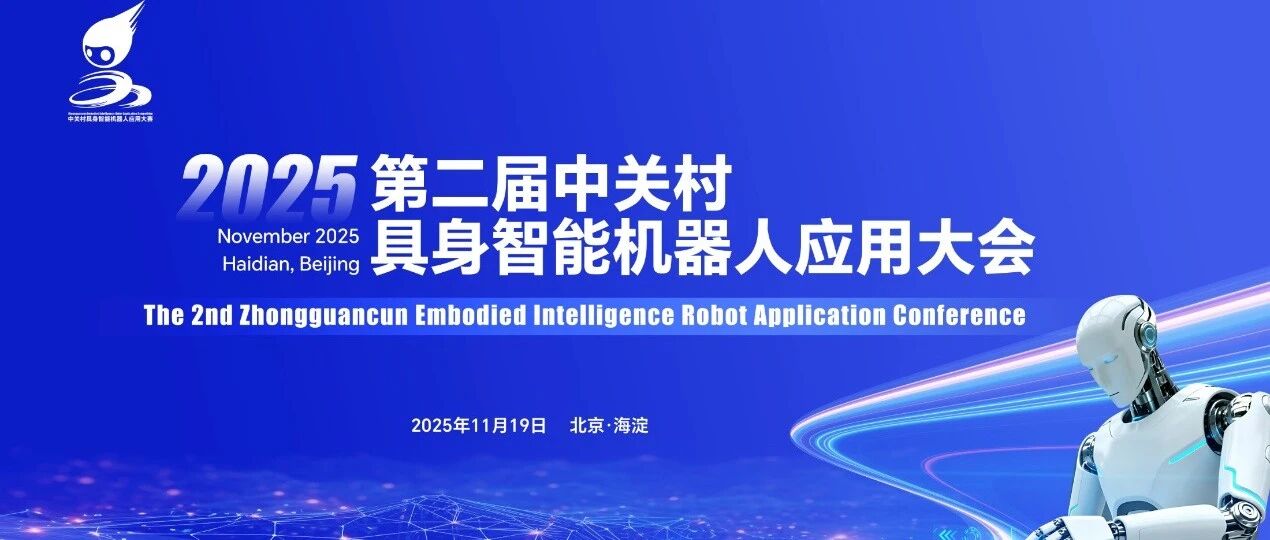
2025第二届中关村具身智能机器人应用大会——全流程解码,共赴产业爆发盛宴
机器人大讲堂· 2025-11-13 15:00
Core Insights - The article highlights the significance of the 2025 Second Zhongguancun Embodied Intelligence Robot Application Conference, emphasizing its role in shaping the future of intelligent technology and industry needs [1][3]. Event Overview - The conference will take place on November 19, 2025, at the Zhongguancun National Independent Innovation Demonstration Zone Conference Center, gathering over 400 top scientists, entrepreneurs, and government representatives [6][19]. - It aims to create a value bridge from laboratory innovation to industrial-level implementation, focusing on breaking industry bottlenecks and activating industrial momentum [3][17]. Agenda Highlights - The opening ceremony will feature keynotes on topics such as "Embodied Intelligence Perception and Operation" and "New Production Forces in the Intelligent Era" by leading experts from Tsinghua University and Beihang University [8][11]. - A roundtable forum will discuss the transformation from competition to market, addressing the adaptation of technology to real business needs [10][17]. Technical Insights - The conference will include discussions on the latest breakthroughs in embodied intelligence, focusing on practical applications and ecological construction to drive industrial momentum [17][18]. - Key industry leaders will share experiences on enabling humanoid robots with human-like interaction capabilities and the future of self-evolving robots [18]. Industry Engagement - The event will serve as a hub for resource connection, featuring exhibitions from 13 well-known industry companies and award-winning teams, showcasing cutting-edge technologies and products [18][19]. - The conference aims to facilitate a comprehensive service loop from policy guidance to execution, enhancing the overall ecosystem of the embodied intelligence industry [3][17].
李飞飞最新长文火爆硅谷
量子位· 2025-11-11 00:58
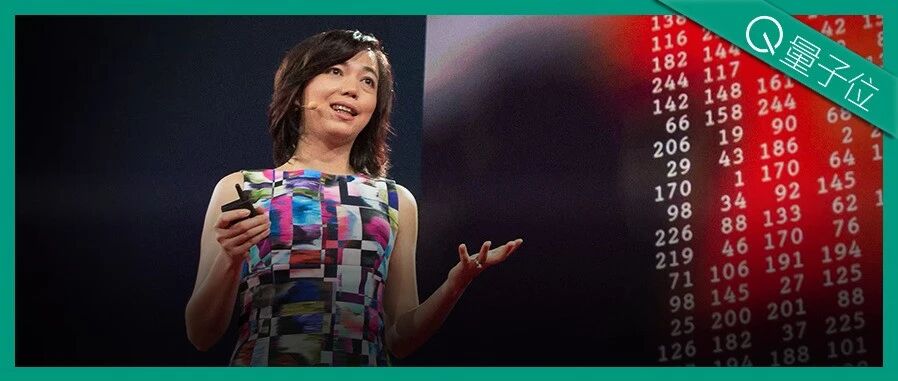
Core Viewpoint - Spatial intelligence is identified as the next frontier for AI, with the potential to revolutionize creativity, robotics, scientific discovery, and more [2][4][10]. Group 1: Definition and Importance of Spatial Intelligence - Spatial intelligence is described as a foundational aspect of human cognition, enabling interaction with the physical world and driving reasoning and planning [20][21]. - The evolution of spatial intelligence is linked to the development of perception and action, which are crucial for understanding and interacting with the environment [12][13][14]. - Historical examples illustrate how spatial intelligence has driven significant advancements in civilization, such as Eratosthenes' calculation of the Earth's circumference and the invention of the spinning jenny [18][19]. Group 2: Current Limitations of AI - Current AI models, including multimodal large language models (MLLMs), have made progress in spatial perception but still fall short of human capabilities [23][24]. - AI struggles with tasks involving physical representation and interaction, lacking the holistic understanding that humans possess [25][26]. Group 3: World Models as a Solution - The concept of "world models" is proposed as a new generative model that can surpass the limitations of current AI by understanding, reasoning, generating, and interacting with complex virtual or real worlds [28][30]. - World models should possess three core capabilities: generative, multimodal, and interactive [31][34][38]. - The development of world models is seen as a significant challenge that requires innovative methodologies to coordinate semantic, geometric, dynamic, and physical aspects [39][41]. Group 4: Applications and Future Potential - The potential applications of spatial intelligence span various fields, including creativity, robotics, science, healthcare, and education [56][57]. - In creativity, platforms like World Labs' Marble are enabling creators to build immersive experiences without traditional design constraints [52][53]. - In robotics, achieving spatial intelligence is essential for robots to assist in various environments, enhancing productivity and human collaboration [60][62]. Group 5: Vision for the Future - The vision for the future emphasizes the importance of AI enhancing human capabilities rather than replacing them, with spatial intelligence playing a crucial role in this transformation [47][50]. - The exploration of spatial intelligence is framed as a collective effort that requires collaboration across the AI ecosystem, including researchers, innovators, and policymakers [51][63].
突发!英特尔首席技术官跳槽
是说芯语· 2025-11-11 00:29
Core Viewpoint - The departure of Intel's CTO Sachin Katti to OpenAI has raised significant attention in the tech industry, particularly regarding Intel's AI business strategy and future developments in general artificial intelligence (AGI) infrastructure [1][5]. Group 1: Leadership Changes - Sachin Katti, during his tenure at Intel, held multiple key positions including Senior Vice President (SVP), Chief Technology Officer (CTO), and Artificial Intelligence Officer (AIO), playing a crucial role in shaping Intel's AI strategy and product roadmap [3]. - Following Katti's departure, Intel's CEO Pat Gelsinger will personally oversee the AI business to ensure a smooth transition and continued progress in related initiatives [5]. Group 2: Background of Sachin Katti - Sachin Katti has a strong academic background with a Ph.D. in Electrical Engineering and Computer Science from MIT and a bachelor's degree from the Indian Institute of Technology, Bombay [4]. - Prior to joining Intel, Katti was a professor at Stanford University, recognized for his pioneering research in wireless communication and network coding, earning several prestigious awards [4]. - Katti is also a successful entrepreneur, co-founding Kumu Networks and Uhana, the latter of which focused on advanced AI solutions for mobile network optimization before being acquired by VMware [4][5]. Group 3: Industry Impact - Katti is acknowledged as a leader in the telecommunications sector, having co-chaired the O-RAN Alliance's Technical Steering Committee, promoting the adoption of open intelligent wireless access networks globally [5].


西安交大丁宁:大模型是“智能基建”,资本与技术融合重塑AI版图
2 1 Shi Ji Jing Ji Bao Dao· 2025-11-10 23:12
Core Insights - The rapid development of large models is driven by capital investment and industry collaboration, where capital acts as a magnifier for technology and technology serves as a multiplier for capital [1][4] Group 1: Industry Trends - The current phase of AI is characterized by a shift towards "multimodal fusion," where models are evolving from single-modal (text only) to integrating images, speech, and code [2][3] - The emergence of ChatGPT at the end of 2022 marked a turning point in AI development, initiating competition in the large model industry [2] - The mainstream large models are primarily based on the Transformer architecture, with a transition in training methods from "pre-training + supervised fine-tuning" to continuous learning and parameter-efficient fine-tuning [3] Group 2: Capital and Technology Dynamics - The high initial costs of training large models include computing power, data, algorithms, and talent, making capital investment essential for developing high-quality foundational models [4] - Without technological insights and research accumulation, capital alone cannot effectively drive industrial upgrades [4] - As of 2023, China leads globally in the number of AI-related patents, accounting for 69% of the total, while the country also produces 41% of the world's AI research papers [4] Group 3: Future Outlook - Future trends in AI development include multimodal integration, parallel advancements in large-scale and lightweight models, embodied intelligence, and exploration of artificial general intelligence (AGI) [5] - The concept of superintelligence, which refers to systems surpassing the smartest humans, remains a theoretical discussion and a potential future direction for AI development [5]
超节点:算力发展深水区的新引擎
3 6 Ke· 2025-11-10 11:16
Core Insights - The "14th Five-Year Plan" emphasizes computing power as a core element of productivity in the digital economy, aiming to achieve the world's largest computing power scale by 2030 [1] - The "East Data West Computing" project has established a comprehensive computing power network covering eight national hub nodes and ten data center clusters, with the "super node" architecture emerging as a key technology for enhancing computing efficiency [1][2] Industry Trends - The demand for AI model training is growing exponentially, leading to a bottleneck in traditional data center architectures, with China's data centers consuming over 2% of the total electricity [2] - The "East Data West Computing" initiative aims to create a national integrated computing power network, focusing on efficient scheduling and green low-carbon operations [2] Technological Developments - The super node technology, characterized by high-density cabinet design and integration of heterogeneous computing resources, achieves a Power Usage Effectiveness (PUE) of below 1.05, significantly improving energy efficiency [2][3] - Super nodes have demonstrated a 40% increase in AI training efficiency and a 35% reduction in total ownership costs during tests at Alibaba Cloud's Zhangbei Super Data Center [3] Global Landscape - The global computing power infrastructure investment is expected to exceed $520 billion by 2025, with a year-on-year growth of 55% [4] - The U.S. maintains a lead through a "business-led + government-enabled" model, while China is rapidly advancing in intelligent computing and regional hub layouts under national strategies [4] Structural Challenges - The computing power industry faces structural issues such as supply-demand mismatches, high costs, and energy consumption pressures [4] - The existing challenges include an imbalance between supply and demand in eastern and western regions, and inefficiencies in resource utilization due to a lack of hardware-software synergy [4] Opportunities and Innovations - Liquid cooling technologies are gaining traction as a solution to the high energy consumption of computing facilities, potentially lowering PUE to very low levels [5] - Super nodes enhance effective computing resource utilization by over 50%, addressing the issue of idle computing resources in traditional clusters [6] Ecosystem Transformation - The strategic significance of super node technology extends beyond mere technical innovation, facilitating the pooling and service-oriented transformation of computing resources [7] - The first commercial intelligent computing super node was launched in May, significantly improving model training efficiency and performance [7] Future Prospects - The super node architecture supports the "East Data West Training" model, connecting real-time computing needs in the east with storage-type resources in the west through low-latency networks [8] - As computing power becomes a new productivity driver, super nodes are expected to evolve towards nanosecond latency and exabyte-level computing capabilities, forming the foundation for general artificial intelligence [8]
广东人形机器人首登十五运开幕式,如何奏响跨时空乐章?
2 1 Shi Ji Jing Ji Bao Dao· 2025-11-09 13:44
Core Insights - The opening ceremony of the 15th National Games of the People's Republic of China showcased the technological advancements in humanoid robotics, particularly by UBTECH Robotics, highlighting the intersection of traditional culture and technological innovation [1][2] Group 1: Technological Achievements - UBTECH's humanoid robots, Walker S2, demonstrated significant technical breakthroughs, performing a complex musical piece using ancient bronze instruments, which required precise coordination and timing [1][2] - The robots achieved a striking accuracy with a strike error of no more than 2 millimeters and a coordination error of within 2 milliseconds, showcasing advanced capabilities in motion and response [2] Group 2: Industry Implications - The event illustrated the collaborative strength of Guangdong's robotics industry, transitioning from technical demonstrations to practical applications in various sectors, including smart manufacturing [3] - UBTECH's humanoid robots are already deployed in automotive factories for tasks such as quality inspection and logistics, indicating a growing integration of robotics in industrial processes [3] - The company aims to foster a trillion-yuan industrial cluster in the Greater Bay Area by focusing on humanoid robots as a key driver for advancements in artificial intelligence [3]

全球第二、国内第一!最强文本的文心5.0 Preview一手实测来了
机器之心· 2025-11-09 11:48
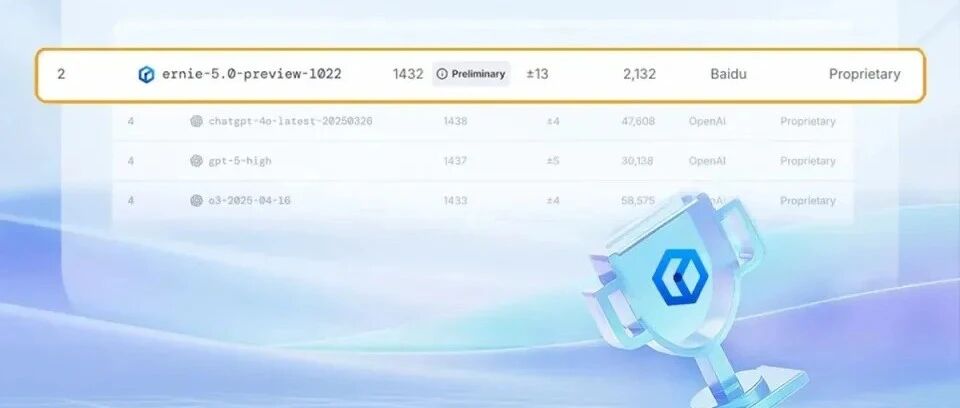
Core Viewpoint - Baidu's ERNIE-5.0-Preview-1022 model has achieved a significant milestone by ranking second globally and first domestically in the latest LMArena Text Arena rankings, scoring 1432, which is on par with leading models from OpenAI and Anthropic [2][4][43]. Model Performance - ERNIE-5.0 Preview excels in creative writing, complex long question understanding, and instruction following, outperforming many mainstream models including GPT-5-High [5][41]. - In creative writing tasks, it ranks first, indicating a substantial improvement in content generation speed and quality [5][41]. - For complex long question understanding, it ranks second, showcasing its capability in academic Q&A and knowledge reasoning [5][41]. - In instruction following tasks, it ranks third, enhancing its applicability in smart assistant and business automation scenarios [5][41]. Competitive Landscape - The LMArena platform, created by researchers from UC Berkeley, allows real user preference voting, providing a dynamic ranking mechanism that reflects real-world performance [4][5]. - Baidu's model is positioned in the first tier of global general-purpose intelligent models, reinforcing its competitive standing in the AI landscape [4][41]. Technological Infrastructure - Baidu's success is supported by a comprehensive "chip-framework-model-application" stack, which includes the PaddlePaddle deep learning platform and self-developed Kunlun chips for AI model training and inference [41][42]. - The PaddlePaddle framework has been updated to version 3.2, enhancing model performance through optimizations in distributed training and hardware communication [41][42]. Industry Implications - The advancements in ERNIE-5.0 Preview reflect a broader transition in China's AI technology from "technological catch-up" to "capability leadership" [43][44]. - Baidu aims to leverage its model capabilities across various applications, including content generation, search, and office automation, to drive industry adoption [42][43].

Nature子刊:清华大学×广州医科大学合作推出呼吸系统疾病专用的AI大模型——MedMPT
生物世界· 2025-11-09 04:06
Core Insights - The article discusses the development of MedMPT, a vision-language pretrained transformer model specifically designed for clinical applications in respiratory diseases, highlighting its unique capabilities and advantages in processing multimodal medical data [2][4][6]. Group 1: Model Development - MedMPT is trained on 154,274 pairs of chest CT images and radiology reports, making it a robust tool for clinical healthcare [4]. - The model utilizes self-supervised learning to extract medical insights from multimodal clinical data, including CT images, radiology reports, demographic information, laboratory tests, and drug relationships [6]. Group 2: Performance and Efficiency - MedMPT outperforms state-of-the-art multimodal pretrained models, achieving significant improvements across various clinical tasks [6]. - The model demonstrates data and parameter efficiency while providing interpretable insights for decision-making in clinical workflows [6]. Group 3: Clinical Application and Collaboration - MedMPT is capable of generating personalized medication recommendations based on multimodal information, enhancing the quality of patient care [10]. - Human expert evaluations indicate that MedMPT is applicable in real-world settings, suggesting that human-AI collaboration can improve clinical workflows and ensure high-quality patient care [16].

430亿,四川明星独角兽IPO了
投中网· 2025-11-08 07:03
Core Viewpoint - The article highlights the successful IPOs of companies led by Peking University alumni, particularly focusing on Minglue Technology and its founder Wu Minghui, showcasing the growth and investment journey of the company in the data intelligence sector [8][19]. Group 1: Company Overview - Minglue Technology officially listed on the Hong Kong Stock Exchange on November 3, with its stock price surging over 110% from the issue price of 141 HKD, resulting in a market capitalization exceeding 43 billion HKD [8]. - The company has evolved from its origins in advertising data analysis to a broader focus on AI and digital transformation, achieving over 4.7 billion CNY in revenue over three and a half years [13][14]. Group 2: Founder Background - Wu Minghui, a Peking University graduate, has a strong academic background in mathematics and computer science, which he leveraged to transition from academia to entrepreneurship [10][12]. - He co-founded Minglue Technology after recognizing the potential of data analytics and cloud computing, leading to significant growth and multiple rounds of funding [11][13]. Group 3: Investment Journey - Minglue Technology has successfully completed multiple funding rounds, including a recent F3 round that raised over 110 million USD, with a valuation reaching approximately 1.665 billion USD [17]. - Major investors include Tencent, Sequoia Capital, and various other venture capital firms, reflecting strong confidence in the company's business model and growth potential [14][16]. Group 4: Industry Impact - The article notes a trend of Peking University alumni establishing successful companies, with several others, such as Jinfang Pharmaceutical and Tudatong, also preparing for IPOs, indicating a robust entrepreneurial ecosystem [19][21]. - The emergence of these companies contributes significantly to the Chinese venture capital landscape, showcasing innovation across various sectors [21][22].