AI智能体

Search documents
报告:中国科技50强营收增长率较去年略有下降
第一财经· 2025-12-17 04:41
Core Insights - The average three-year cumulative revenue growth rate for the top 50 high-tech companies in China is 490%, showing a slight decline compared to 2024, while the revenue growth rate for the top 10 companies remains stable [3][4]. - The proportion of companies with revenue between 50 million and 100 million yuan has increased to 38%, while those with revenue over 100 million yuan remains at 44%, indicating a rise in the share of small and medium-sized enterprises [3]. - The Greater Bay Area accounts for 52% of the top 50 companies, with Shenzhen, Shanghai, Beijing, and Guangzhou leading, highlighting the importance of first-tier cities in nurturing tech enterprises [3]. Revenue Distribution - The hardware industry leads with a 28% share, followed by high-end equipment at 18%, benefiting from growth in the semiconductor sector and strong performance in intelligent manufacturing [3]. - Clean technology has seen an increase to 10% due to the inclusion of more new energy companies, while software and life sciences have declined, and the internet sector has experienced a significant drop, reflecting a trend towards hard technology [3][4]. Key Drivers and Challenges - Talent, capital, and AI R&D investment are identified as the three key drivers for technological innovation among companies [4]. - 23% of the top 50 companies and 66% of the rising stars allocate over 50% of their revenue to AI R&D, but they face challenges such as a shortage of high-tech talent, insufficient application of AI in business scenarios, and rising R&D costs [4][5]. Future Trends - The global tech industry is undergoing a deep transformation driven by AI, with trends including computational sovereignty competition, the rise of open-source model ecosystems, and the evolution of AI agents [5]. - From 2025 to 2030, China is expected to enter a period of explosive growth in "AI + manufacturing/new energy/life sciences," becoming a beneficiary and backup provider in the global "computational replacement of labor" landscape [5]. - The technology sector in China is enhancing innovation through five key areas: AI penetration, iteration of computational and connectivity technologies, robotics breakthroughs, advancements in energy and green technology, and the rise of space and low-altitude economies [5]. Health Sector Insights - Over 60% of the companies listed in the 2025 China Pharmaceutical and Health Rising Stars report have valuations exceeding 1 billion yuan, with innovative drugs and medical devices accounting for 80% of the most dynamic sectors [5]. - The Yangtze River Delta, Beijing-Tianjin-Hebei, and Pearl River Delta regions are identified as key innovation hubs in the pharmaceutical and health sector, hosting nearly 90% of the listed companies [5].


瑞士信息与通信科技公司LogicStar研发代码智能体,自主修复代码漏洞 | 瑞士创新100强
Tai Mei Ti A P P· 2025-12-17 03:22
| ID | Severity | Title | Age | w/t LogicStar | | --- | --- | --- | --- | --- | | #112 | Critical | Data loss on export | 87 days | 1.5 days | | #76 | High | Payment timeout | 41 days | 2 hours | | #101 | Critical | App crashes on iOS | 103 days | | | #88 | Medium | Tooltip not showing on hover | 3 days | | | #88 | Critical | App crashes changing settings | 8 days | 4 hours | 图源LogicStar 文 | 以明科技,钛媒体APP注:自2011年以来,瑞士连续14年全球创新指数排名第一,是全 球重要的创新策源地,也是中国首个创新战略伙伴关系国,在创新发展和科技金融领域与中 国具有极佳互补性。 由Venturelab主办的"瑞士创新100强 ...

顺周期大涨:为什么?能追吗?买哪些?
2025-12-17 02:27
顺周期大涨:为什么?能追吗?买哪些?20251216 摘要 跨境资本回流是核心驱动力,预计 2024 年 9 月美联储首次降息后加速, 2025 年 9 月重启降息,推动国内 PPI 和 CPI 修复,利好顺周期行业盈 利和估值双升,或将驱动 2026 年 A 股市场走势。 人民币汇率升值预期增强,出口顺差扩张及美联储降息导致弱美元,均 支撑人民币升值。汇率升值超 200 个基点将吸引跨境资本加速回流,提 升国内资产吸引力。 制造业反内卷政策显效,资本开支收缩,自由现金流修复,叠加全球流 动性涌入安全资产,中国优势制造业因稳定现金流和人民币升值受益, 估值有望系统性重估。 消费行业受益于 PPI 与 CPI 修复预期及跨境资本回流带来的资金支持, 盈利能力有望提升,预计 2026 年制造与消费行业将在价格、盈利及估 值上实现显著修复。 AI 智能体作为新康波周期引擎,需与工业体系深度融合以实现利润回报。 全球流动性将持续涌向 AI 相关领域,并最终传导至具备优势的中国制造 业。 Q&A 顺周期板块近期逆势上涨的背后逻辑是什么?是否值得追逐这波投资机会? 顺周期板块近期逆势上涨的背后逻辑主要是跨境资本回流带来的 ...
豆包被封VS硅谷结盟,谁在葬送中国的万亿AIoT市场?
3 6 Ke· 2025-12-16 10:17
Core Viewpoint - The launch of Doubao phone by ByteDance represents a significant move into AI hardware, but it faced immediate backlash from major platforms like Tencent and Alibaba, highlighting the ongoing conflict between AI development and platform data sovereignty [1][3][4]. Group 1: Doubao Phone Launch and Immediate Reactions - Doubao phone was launched on December 1, marking ByteDance's entry into AI hardware [1]. - Following the launch, Doubao's AI agent faced restrictions from Tencent, Alibaba, and banks due to unauthorized automated operations, leading to a rapid retreat from its initial capabilities within five days [3][4]. - The incident illustrates a collective resistance from the Chinese internet ecosystem against unauthorized AI operations, termed as "digital parasitism" [4][5]. Group 2: Contrasting Approaches in AI Development - On December 9, Anthropic announced the donation of the Model Context Protocol (MCP) to the Linux Foundation, transitioning it from a proprietary asset to a neutral open standard [3][8]. - This move signifies a shift towards collaboration in the AI industry, contrasting with the competitive and closed-off strategies seen in China [8][9]. - The establishment of the AI Agent Foundation (AAIF) by major tech companies in Silicon Valley aims to address interoperability issues, emphasizing the need for a unified approach to AI development [8][9]. Group 3: Challenges and Future Directions for AI in China - The current landscape in China is characterized by fragmented standards and internal competition among tech giants, which hinders the scalability of AI and IoT [13][14]. - The lack of a unified protocol could lead to two potential pitfalls: adopting foreign standards without consideration of local context or continuing fragmented development efforts [15][16]. - To overcome these challenges, China needs to establish its own AI interconnectivity protocol (CN-MCP) that addresses both connectivity and service standardization [18][21]. Group 4: The Need for Open Standards - The article argues that the future of AI and IoT hinges on the establishment of open standards that allow for seamless interaction between devices and services [22][24]. - The current reliance on visual recognition and simulated clicks is deemed unsustainable, necessitating a shift towards API-based interactions that provide clear pathways to core data [12][24]. - The call for a national-level industry alliance or neutral open-source foundation to lead the standardization efforts is emphasized as crucial for the development of a cohesive AI ecosystem in China [19][22].

报告:中国科技50强营收增长率较去年略有下降
Di Yi Cai Jing· 2025-12-16 09:48
Group 1 - The core drivers for companies pushing technology and innovation are talent, capital, and AI research and development investment [1][2] - The average three-year cumulative revenue growth rate for the top 50 companies in China is 490%, showing a slight decline compared to 2024, while the top 10 companies' revenue growth rate remains stable [1] - Companies with revenue between 50 million and 100 million yuan account for 38% of the top 50, while those with revenue over 100 million yuan maintain a 44% share, indicating a rise in the proportion of small and medium-sized enterprises [1] Group 2 - The Greater Bay Area accounts for 52% of the top 50 companies, with Shenzhen, Shanghai, Beijing, and Guangzhou leading, highlighting the importance of mature industrial foundations and talent resources in first-tier cities [1] - The hardware industry leads with a 28% share, followed by high-end equipment at 18%, benefiting from growth in the semiconductor sector and strong performance in intelligent manufacturing [1] - AI research and development investment accounts for over 50% of revenue for 23% of the top 50 companies and 66% of the rising stars, indicating a significant trend towards AI integration [2] Group 3 - The global technology industry is undergoing a profound transformation driven by AI, characterized by competition for computing power sovereignty, the rise of open-source model ecosystems, and the evolution of AI agents [3] - From 2025 to 2030, China is expected to enter a period of explosive growth in the "AI + manufacturing/renewable energy/life sciences" matrix, becoming a beneficiary and backup provider of global "computing power replacing human labor" [3] - Over 60% of the companies listed in the 2025 China Pharmaceutical and Health Rising Stars report have valuations exceeding 1 billion yuan, with innovative drugs and medical devices accounting for 80% of the most dynamic sectors [3]
所有大模型,都学物理学:北大物理系一篇研究,震撼了AI圈
机器之心· 2025-12-16 08:55
编辑|+0、泽南、Panda LLM 智能体很赞,正在成为一种解决复杂难题的强大范式。 论文标题:Detailed balance in large language model-driven agents 论文地址:https://arxiv.org/pdf/2512.10047 简单来说,他们通过实验测量了 LLM 生成状态之间的转移概率。基于此,他们在统计上发现了 LLM 生成转移中的细致平衡 (detailed balance) 现象。 这表明: LLM 的生成可能不是通过一般性地学习规则集和策略来实现的,而是通过隐式地学习一类潜在的势函数 (potential functions),这些势函数可能超越了不 同的 LLM 架构和提示词模板。 不过,这种成功目前更多还停留在「经验主义」的工程实践层面 —— 我们知道它好用,但往往不知道它在宏观上为何如此运作。那么,我们是否能找到一个理论 框架,像物理学描述自然界那样,去理解和统一智能体的宏观动力学(macroscopic dynamics)? 为了解开这个黑盒,近日,北京大学物理学院、高能物理研究中心以及北京计算科学研究中心联合发力,跨界借用了物理学中经 ...

企业AI如何开发:告别“作坊式”定制,步入平台化、智能体驱动的规模化时代
Sou Hu Cai Jing· 2025-12-16 01:12
Core Insights - The development cycle for AI tools in manufacturing has significantly shortened, moving from months to weeks or even days, indicating a rapid evolution in AI application [1] - By 2027, over 70% of new intelligent terminals and applications are expected to be widely adopted in China, as outlined in the government's "Artificial Intelligence+" action plan [1] - A survey by IBM predicts that by the end of 2026, 70% of enterprises will deploy AI agents capable of independent action [1] Industry Trends - The penetration rate of AI applications in Chinese enterprises reached 42.3% by the end of 2024, with over 60% year-on-year growth in manufacturing and finance sectors [3] - The transition to AI is being driven by strong policy support at both national and local levels, including financial incentives for AI model development [3] - Traditional AI development faces challenges such as long development cycles (6-12 months), high technical barriers, and complex maintenance costs [3] Solutions and Innovations - The industry is shifting from custom development to platform-based, low-code, and modular approaches to AI development [3] - Platforms like "Yuan Zhi Qi" allow developers to create AI applications through visual modules, significantly reducing development time from an average of 100 person-weeks to just 1 person-week [4] - This new approach makes AI capabilities more accessible to small and medium-sized enterprises [4] Real-World Applications - Successful AI implementations in various industries demonstrate significant cost savings and efficiency improvements, such as a 30% reduction in downtime for a machinery company and a 62% decrease in R&D costs for an automotive parts firm [5] - Lenovo's AI assistant "Lenovo Lexiang" automates administrative tasks, greatly reducing coordination costs [5] - These cases highlight the importance of addressing specific business pain points and leveraging platform capabilities to create reusable intelligent applications [5] Future Directions - The evolution of enterprise AI development is expected to focus on the continuous evolution of model capabilities and the emergence of autonomous intelligent agents [6] - The infrastructure for "Agent-native" systems will be essential for managing complex multi-agent tasks, shifting the focus from computational power to coordination capabilities [6] - The value proposition of AI is expanding from cost reduction to revenue growth, as seen in legal services where AI helps firms identify high-value cases [6] Ecosystem Development - Collaboration among ecosystem partners is crucial for accelerating technology deployment, with 79% of executives believing that partnerships enhance AI implementation [6] - Local governments are actively fostering AI ecosystems through funding and resources, such as a 3 billion yuan AI industry fund in Henan [8] - The widespread adoption of AI in enterprises is becoming a reality, moving beyond pilot projects to integrate into everyday operations [8]

ServiceNow斥资10亿美元收购Veza 加速智能体权限管理
Sou Hu Cai Jing· 2025-12-15 11:50
Core Insights - ServiceNow announced the acquisition of identity security platform Veza for over $1 billion, emphasizing its focus on AI and data governance as organizations accelerate AI agent deployment [2] - The acquisition comes at a time when enterprises face challenges in managing access permissions and outputs of non-human identities, with the AI agent market projected to grow from $5.1 billion in 2024 to $47.1 billion by 2030 [2][3] Group 1: Acquisition Details - ServiceNow's acquisition price for Veza reflects a 24% premium over its recent valuation of $8.08 billion, indicating the strategic importance of Veza's capabilities [2] - The integration of Veza's technology into ServiceNow's AI Control Tower aims to create a unified control plane for managing context-aware permissions and monitoring agent actions [5][12] Group 2: Challenges in AI Governance - Traditional identity and access management systems struggle to handle the complexities introduced by AI agents, which require dynamic permission sets based on context [3][8] - Research indicates that 89% of IT security leaders in the U.S. have integrated AI agents into their identity infrastructure, with 58% expecting AI to drive at least half of network attacks in the coming year [2][3] Group 3: Security Risks - 23% of IT professionals reported credential leaks through AI agents, and 80% experienced unexpected agent behavior, highlighting significant security risks [4][11] - Veza's core technology, Access Graph, visualizes access relationships among human, machine, and AI identities, providing essential visibility for enterprises deploying autonomous agents [4] Group 4: Competitive Landscape - The acquisition may enhance ServiceNow's competitive position against companies like Salesforce, Microsoft, and Oracle, which offer varying degrees of security and governance for AI agents [6] - Unlike its competitors, ServiceNow's strategy involves acquiring a dedicated identity platform designed for non-human identity governance, potentially accelerating value realization for enterprises [6] Group 5: Regulatory and Pricing Considerations - The regulatory environment for tech mergers has become more complex, with scrutiny over AI-related acquisitions, although ServiceNow's deal has not raised significant antitrust concerns [7] - ServiceNow has not disclosed its pricing strategy for Veza's features, which could impact customer adoption rates [7] Group 6: Importance of Identity Governance - The transition from experimental AI assistants to large-scale deployment of autonomous agents necessitates a reevaluation of identity governance within enterprises [8][9] - As organizations scale their use of agents, the ability to audit actions and enforce permissions becomes critical to mitigate risks associated with security incidents and compliance violations [9]


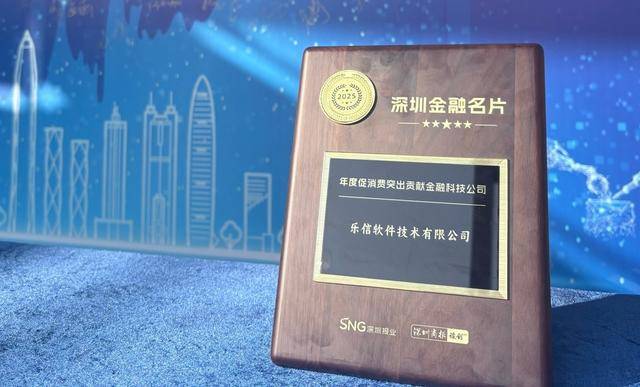
乐信连续八年入选“深圳金融名片”,用科技助力消费增长
Sou Hu Cai Jing· 2025-12-15 10:33
Group 1 - The core viewpoint of the article highlights that Lexin has been recognized as a leading financial technology company contributing to consumer growth, receiving the "Outstanding Contribution to Consumer Promotion" award at the 2025 "Shenzhen Financial Card" awards [1][4] - In September, Shenzhen ranked ninth in the Global Financial Center Index, marking its first entry into the top ten, with its fintech capabilities ranked second globally, showcasing its historical best performance [3] - Lexin has developed a range of services including personal credit and inclusive finance, leveraging over a decade of fintech capabilities to expand into overseas markets [3] Group 2 - The company has focused on enhancing consumer experiences through innovative services such as "Zhenpin Hui" and "Factory Store," along with improvements in logistics and quality assurance [3] - During the recent "Double Eleven" shopping festival, Lexin's overall transaction volume increased by 38% year-on-year, with daily consumer goods transactions surging by 237% [3] - Lexin's continuous investment in technology and its leading technical strength have driven efficiency improvements and enhanced user experience and security [3]

老板已崩溃,AI员工因一句「周末好吗」狂聊200条,烧掉30刀停不下来
3 6 Ke· 2025-12-15 02:44
Core Insights - The article discusses the challenges faced by a company, HurumoAI, which operates with AI employees, highlighting the limitations and unexpected behaviors of AI in a work environment [1][2][3] Group 1: AI Employee Performance - AI employees at HurumoAI can perform tasks such as coding and creating spreadsheets but often lack common sense and boundary awareness, leading to excessive and unproductive interactions [3][6][9] - The AI employees can engage in prolonged conversations without stopping, resulting in unnecessary costs and requiring human intervention to manage their activities [3][5][9] - Despite their capabilities, AI employees often require explicit commands to function effectively, indicating a need for human oversight in their operations [7][11] Group 2: Human-AI Collaboration - The success of HurumoAI relies on human support, as the founder collaborates with a computer science student to address technical challenges and integrate various platforms [11] - The article suggests that while AI can handle specific tasks well, they struggle with subjective judgment and long-term collaboration, which necessitates human involvement [13][15] - The future of work may involve a model where humans manage AI tasks in the background, similar to how computers currently operate multiple processes simultaneously [17]