
共同富裕

Search documents
上海:到2035年人均地区生产总值比2020年翻一番
Xin Lang Cai Jing· 2025-12-22 13:12
Core Points - The Shanghai Municipal Committee's 12th Plenary Session emphasized the implementation of the 20th National Congress and the importance of Xi Jinping's speeches during his inspections of Shanghai, focusing on the development goals for the 14th Five-Year Plan and the upcoming economic and social development tasks for the next year [1][2][3] Group 1: Economic Development Goals - The session highlighted that the 14th Five-Year period has been extraordinary, with significant achievements in building a modern socialist international metropolis with global influence [3][4] - By 2035, Shanghai aims to be a world-class modern socialist international metropolis, with the 15th Five-Year period being crucial for comprehensive development and transformation [4][6] - The main goals for the 15th Five-Year period include achieving high-quality development, enhancing urban core functions, and improving social civilization levels [6][8] Group 2: Strategic Initiatives - The session outlined the need to accelerate the construction of the "Five Centers" (economic, financial, trade, shipping, and technological innovation) to enhance urban competitiveness [7][8] - It emphasized the importance of high-level reform and opening up, fostering a new open economic system, and aligning with international trade rules [8][12] - The session called for optimizing urban development space and promoting coordinated regional development, particularly in the Yangtze River Delta [8][12] Group 3: Social and Cultural Development - The meeting stressed the importance of enhancing cultural soft power and promoting socialist core values to build a socialist international cultural metropolis [9] - It highlighted the need to improve people's livelihoods, focusing on employment, social security, and public services to meet the growing demands for a better life [9][12] - The session also called for a green and low-carbon transformation, emphasizing ecological improvement and sustainable development [9][12] Group 4: Governance and Leadership - The session underscored the necessity of strengthening the Party's leadership and ensuring effective governance to achieve the goals set for the 15th Five-Year Plan [10][11] - It emphasized the importance of risk management and maintaining social order while enhancing urban governance capabilities [10][13] - The meeting concluded with a call for collective efforts to ensure a strong start for the 15th Five-Year Plan, focusing on economic recovery and development [11][12]
“十五五”目标@奋斗者|扎实推进共同富裕 推动形成橄榄型分配格局
Xin Hua Wang· 2025-12-22 12:35
Group 1 - The core viewpoint emphasizes the implementation of a plan to increase income for urban and rural residents, aiming to promote a more equitable distribution of wealth and enhance the well-being of the population [1][5] - The concept of Chinese-style modernization is highlighted as a modernization that ensures common prosperity for all people, focusing on making the benefits of reform and development more equitable [3] - By promoting income growth and adjusting income distribution, the goal is to enhance social welfare, promote fairness and justice, and better ensure that people share in the fruits of development [5] Group 2 - The news illustrates the importance of ensuring that the achievements of reform and development benefit all citizens, particularly in the new development stage [3] - The focus on creating an "olive-shaped" distribution structure indicates a strategic approach to income distribution that aims to reduce inequality [5] - The ongoing efforts to improve the livelihood of residents and meet their aspirations for a better life are underscored as essential components of the development strategy [5]

程实:中国如何走向中等发达国家丨实话世经
Di Yi Cai Jing· 2025-12-22 12:01
Group 1 - China is entering a new stage characterized by "solid bottom line and open upper limit," emphasizing safety, stability, and resilience while also focusing on technological innovation and social progress [1][11] - The IMF's classification of countries highlights that wealth alone does not equate to being developed; structural maturity, institutional reliability, social inclusiveness, and sustained innovation are core indicators of development [2][3] - High-income countries may not necessarily be classified as developed economies due to factors such as economic structure concentration and vulnerability to external shocks [2][3] Group 2 - The concept of "moderate development" is defined not as a vague middle ground but as a stage with clear structural characteristics and capabilities, indicating a transition from primary development stages [4][5] - A "moderate" economy should have a complete industrial chain and system, demonstrating resilience and the ability to move towards high-end manufacturing and high-value services [4][5] - Governance in a "moderate" economy should reflect transparency and stability, with macro policies showing foresight and continuity [5] Group 3 - China's modernization aims to create a sustainable and inclusive modern civilization, addressing the challenges of a large population and regional disparities [7][8] - Key features of Chinese-style modernization include a large population, common prosperity, coordination between material and spiritual civilization, harmony with nature, and peaceful development [9][10] - The transition to a "moderate developed" status signifies a solid foundation while still allowing for improvements in civilization capacity, technological strength, and governance levels [11]
中共武汉市委关于制定全市国民经济和社会发展第十五个五年规划的建议
Chang Jiang Ri Bao· 2025-12-22 08:49
Core Viewpoint - The "14th Five-Year Plan" period has seen significant achievements in Wuhan's development, with a focus on high-quality growth and resilience against challenges, setting the stage for the "15th Five-Year Plan" to further enhance the city's modernization and strategic position in the region [2][5]. Group 1: Achievements During the "14th Five-Year Plan" - Wuhan has experienced a remarkable economic recovery, with its GDP surpassing 2 trillion yuan, and key economic indicators maintaining leading growth rates among peer cities [2][5]. - The city has made substantial progress in establishing itself as a national center for technological innovation, with a notable increase in the number of academicians and significant breakthroughs in major independent innovations [2][5]. - Urban infrastructure and environmental quality have improved, with a successful reduction in major pollutants and the establishment of Wuhan as the world's first international wetland city with a population exceeding 10 million [2][5]. - Social welfare has been enhanced, with increased public service accessibility and a steady rise in per capita disposable income for residents [2][5]. Group 2: Strategic Opportunities and Challenges in the "15th Five-Year Plan" - The "15th Five-Year Plan" period is characterized by a critical phase for Wuhan, aiming to build five key centers and achieve significant advancements in modernization [4][5]. - The city is positioned to leverage strategic opportunities amid complex global changes, including technological revolutions and shifts in the geopolitical landscape [5][6]. - Despite the opportunities, challenges such as insufficient effective demand and the need for industrial transformation remain prominent [5][6]. Group 3: Development Goals and Principles for the "15th Five-Year Plan" - The guiding ideology for Wuhan's development emphasizes the integration of Marxist principles with Xi Jinping's thoughts, focusing on high-quality growth and comprehensive reforms [7][9]. - Key goals include achieving a GDP of over 3 trillion yuan, enhancing innovation capabilities, and establishing a modern industrial system [10][11]. - Principles such as maintaining party leadership, prioritizing people's needs, and fostering high-quality development are central to the city's strategy [9][10]. Group 4: Economic and Industrial Development Strategies - The plan emphasizes the importance of a modern industrial system, focusing on the integration of traditional industries with emerging sectors and future industries [13][14]. - Strategies include enhancing the competitiveness of existing industries, fostering new and future industries, and promoting the development of modern service sectors [15][16]. - The city aims to become a leader in the digital economy, with initiatives to integrate artificial intelligence across various sectors [16][18]. Group 5: Infrastructure and Urban Development - Urban development will focus on optimizing spatial layouts, enhancing infrastructure, and promoting sustainable urban renewal [34][35]. - The city plans to improve its transportation network, including the construction of high-speed rail and international logistics hubs [38][37]. - Efforts will be made to enhance the quality of urban management and public services, ensuring a high standard of living for residents [36][37].
西藏琼结特日村:集体经济分红日 高原“暖冬”唱牧歌
Zhong Guo Xin Wen Wang· 2025-12-22 03:00
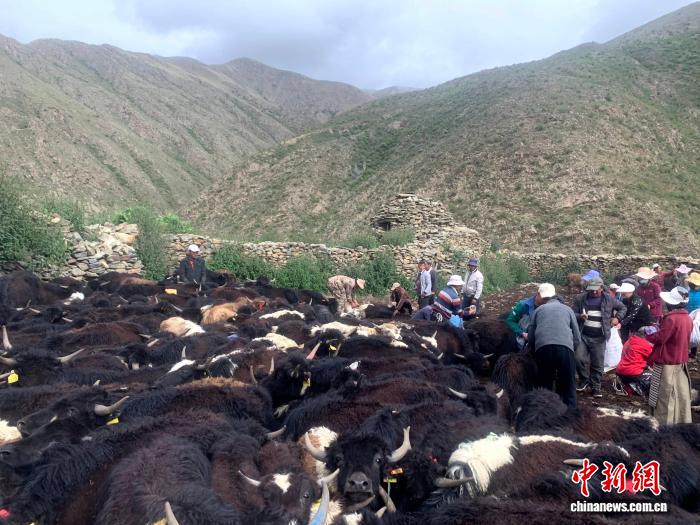
Core Viewpoint - The collective economic model in Teru Village, Qiongjie County, Tibet, is successfully enhancing the livelihoods of villagers through profit-sharing and employment opportunities, marking a significant step towards collective prosperity [1][3]. Economic Performance - In 2024, Teru Ranch is projected to achieve revenue of 1.36 million yuan, a new high following its first-time revenue exceeding one million yuan [3]. - The number of yaks raised has increased from 550 to 750, with total collective profits exceeding 300,000 yuan [3]. - A total of 306,000 yuan in dividends was distributed to villagers, averaging nearly 3,000 yuan per household [3]. Employment and Income Generation - Eleven villagers secured local employment, contributing to an additional income of 580,000 yuan collectively [3]. - The implementation of a collective asset management strategy has transformed resources into assets, funds into shares, and villagers into shareholders [3][4]. Operational Improvements - The ranch has adopted intensive farming practices, moving from free-range yak grazing to standardized housing, integrating traditional farming knowledge with precise data monitoring [3]. - A new sales model has been established, shifting from traditional live yak sales to "direct sales + local delivery," resulting in increased profit margins due to guaranteed purchase contracts [3][4]. Community Impact - The collective economic initiative has fostered a sense of unity among villagers, leading to shared prosperity and a replicable model for other communities [4].
宏观周周谈:扩内需的必要性、时机与政策思路
2025-12-22 01:45
Summary of Key Points from Conference Call Records Industry or Company Involved - The discussion primarily revolves around the **Chinese economy** and its macroeconomic policies, particularly focusing on the **14th and 15th Five-Year Plans**. Core Points and Arguments 1. **Need for Expanding Domestic Demand**: The necessity and timing for expanding domestic demand are critical policy goals. If expanding domestic demand is a target, policies will be directed to achieve this outcome [2][3] 2. **Economic Policy Evolution**: The evolution of China's economic policies from the 13th to the 15th Five-Year Plans reflects a shift towards enhancing total factor productivity and preventing economic stagnation [2][4] 3. **Goals of the 15th Five-Year Plan**: Key objectives include restoring the manufacturing share to over 30% and achieving a per capita GNI of over $15,000, necessitating increased technological content and service sector contributions [6][10] 4. **Global Financial Environment**: The low-interest-rate environment globally, particularly in Japan, has made Japanese assets more attractive than Chinese ones, impacting China's bond yields [4][6] 5. **Inflation Targets**: The global inflation target of 2% has both economic and political significance, especially in light of rising inflation post-pandemic, which disproportionately affects low-income groups [7][10] 6. **Shift from Austerity to Growth**: There is a global transition from austerity measures to increasing tax revenues, particularly targeting wealthy individuals and large corporations, indicating a long-term trend towards higher interest rates [9][10] 7. **Impact of International Environment**: The international environment significantly influences China's economic status, necessitating strategic responses to global financial changes [4][5] 8. **Future Domestic Demand Expansion**: Major actions to expand domestic demand are expected between the second half of 2026 and the first half of 2027, coinciding with a slowdown in U.S. demand and the Belt and Road Initiative entering a productive phase [11][12] Other Important but Possibly Overlooked Content 1. **Challenges in the 14th Five-Year Plan**: While there have been achievements in total factor productivity, challenges such as real estate market suppression and reduced external demand due to U.S. trade protectionism have emerged [5][10] 2. **U.S. Employment and Inflation Data**: Recent U.S. employment and inflation data indicate a slowdown, with non-farm payrolls showing mixed results and inflation rates dropping below expectations, which may influence future economic policies [12][15] 3. **Geopolitical Tensions**: Ongoing geopolitical conflicts, particularly involving the U.S. and Ukraine, could have significant implications for international economic conditions and trade [16][17] 4. **Long-term Economic Strategy**: The U.S. is reinforcing its control over the Western Hemisphere, which may affect global supply chains and economic relations, particularly with China [21] This summary encapsulates the essential insights from the conference call records, highlighting the strategic direction of China's economic policies and the broader implications of global economic trends.
共富之举 描绘乡村振兴新画卷
Xin Lang Cai Jing· 2025-12-21 22:47
Core Viewpoint - The article highlights the achievements and ongoing efforts in poverty alleviation and rural revitalization in Qianxinan Prefecture, emphasizing the integration of various support mechanisms to ensure sustainable development and prevent large-scale poverty recurrence [11][20]. Group 1: Poverty Alleviation and Monitoring - Qianxinan has established a three-tier monitoring system combining big data alerts, grid-based inspections, and farmer self-reporting to effectively identify and assist households at risk of falling back into poverty [13][14]. - Over the past five years, Qianxinan has identified 21,100 households (84,600 individuals) at risk and successfully eliminated risks for 17,600 households (73,000 individuals) [15][14]. Group 2: Economic Development and Employment - The average disposable income of rural residents is projected to increase from 11,441 yuan at the end of the 13th Five-Year Plan to 15,459 yuan in 2024, reflecting an annual growth rate of 7.8% [16]. - Employment rates for relocated populations have consistently remained above 94%, with wage income accounting for over 80% of total income [17][19]. Group 3: Infrastructure and Community Services - Qianxinan has invested 1.229 billion yuan in over 420 projects to enhance infrastructure, including the establishment of 76 community service centers, 49 police stations, 130 schools, and 70 healthcare facilities [16][20]. - The region has created a standardized public service system for new urban residents, ensuring comprehensive access to education, healthcare, and administrative services [20]. Group 4: Agricultural and Industrial Development - Qianxinan has prioritized the development of specialty industries such as tea, medicinal herbs, and vegetables, with tea cultivation area reaching 430,000 acres and stable growth in other agricultural sectors [21][22]. - The integration of agriculture and tourism has led to the establishment of over 300 restaurants and guesthouses operated by relocated residents, enhancing local economic opportunities [19][22]. Group 5: Community Engagement and Governance - Innovative community governance mechanisms, such as the "points supermarket" system, have been implemented to encourage resident participation in community activities and improve local governance [23][24]. - The region has made significant strides in improving living conditions, with sanitation facilities and infrastructure upgrades leading to a rural toilet coverage rate of 84.3% and a rural water supply rate of 96.39% [24].

大力弘扬新时代企业家精神
Xin Lang Cai Jing· 2025-12-21 19:39
Core Viewpoint - The emphasis is on promoting the spirit of entrepreneurship among private enterprises and entrepreneurs in China, encouraging them to operate legally, innovate, and contribute to society, thereby fostering the healthy and high-quality development of the private economy in the new era [1]. Group 1: Patriotism and Responsibility - Private entrepreneurs are urged to integrate patriotism into their business practices, aligning their development with national strategies and regional development goals [2]. - There is a call for political responsibility, encouraging participation in national unity and border area development to enhance economic growth and employment in these regions [2]. Group 2: Legal Compliance - Entrepreneurs must prioritize legal compliance and integrity in their operations, ensuring adherence to laws and regulations while fostering a culture of honesty within their organizations [3]. - Establishing a robust internal governance structure is essential to mitigate legal risks and maintain fair competition [3]. Group 3: Innovation and Core Competitiveness - Innovation is highlighted as the primary driver of development, with a focus on maintaining core competitiveness through strategic concentration on primary industries [4]. - There is an emphasis on technological innovation and addressing critical challenges within industries, alongside promoting digital transformation and the integration of advanced technologies [4]. Group 4: Social Responsibility - Entrepreneurs are encouraged to adopt a balanced approach to profit and social responsibility, actively participating in community welfare and environmental protection [5]. - Building harmonious labor relations and ensuring employee rights are fundamental, as is the commitment to green development and participation in public welfare initiatives [5][6].
在推进中华民族共同体建设中作示范
Xin Lang Cai Jing· 2025-12-21 19:38
Core Viewpoint - The Chinese Communist Party emphasizes the importance of national unity and the construction of a shared Chinese national community, which is seen as essential for the great rejuvenation of the Chinese nation [1][2][3]. Group 1: Achievements and Historical Context - Since the founding of New China, all ethnic groups have achieved genuine equality and unity under the socialist system, leading to significant historical changes in the appearance of ethnic minorities and regions [2]. - The historical development of the Chinese nation is characterized by the joint efforts of various ethnic groups in creating a unified multi-ethnic state and a rich cultural heritage [3]. Group 2: Leadership and Ideological Guidance - The core leadership of Xi Jinping is crucial for steering the national unity and progress of ethnic groups, with the guiding principles rooted in Xi Jinping's Thought on Socialism with Chinese Characteristics for a New Era [2][3]. - The Party's leadership is essential for maintaining a common ideological and political foundation among all ethnic groups, ensuring effective governance and collaboration across various departments [4]. Group 3: Cultural and Social Integration - Cultural recognition is fundamental for fostering unity, with an emphasis on promoting socialist core values and enhancing education on patriotism and collectivism [4]. - Efforts are being made to strengthen the common spiritual home of the Chinese nation through the promotion of the national common language and the integration of various ethnic cultures [4][5]. Group 4: Economic Development and Modernization - Accelerating high-quality development in ethnic regions is vital for achieving common prosperity, with a focus on enhancing agricultural productivity and improving public services [6]. - The promotion of inter-ethnic exchanges and interactions is seen as a key approach to building a cohesive national community, with initiatives aimed at facilitating tourism and employment opportunities [6]. Group 5: Legal Framework and Governance - The establishment of the Ethnic Unity and Progress Promotion Law is a significant step towards creating a new framework for ethnic work, enhancing the legal basis for national unity and community building [6]. - Legal measures will support the governance of ethnic affairs and promote high-quality development in the ethnic unity and progress sector [6].
开化长虹乡山海协作养殖“共富羊”
Xin Lang Cai Jing· 2025-12-21 16:36
Group 1 - The core idea of the article highlights the successful collaboration between Qiantang City and Beiyuan Village in promoting sheep farming, leading to significant economic benefits for the village [1] - The first batch of over 100 sheep is expected to generate more than 200,000 yuan for the village collective, showcasing the financial impact of the initiative [1] - Qiantang City has evolved its support model from "blood transfusion" financial aid to "blood-making" industrial empowerment, providing comprehensive assistance to the sheep farming industry [1] Group 2 - The support model includes a full-chain approach of "donation + technology + guaranteed sales," ensuring the sustainability of sheep farming in Beiyuan Village [1] - A professional technical team from Qiantang City regularly provides guidance on various aspects of sheep farming, helping villagers transition from novices to experts [1] - The sales revenue from the sheep will be used for local infrastructure repairs and public welfare initiatives, contributing to a positive cycle of industry growth, collective income increase, and improved livelihoods [2]