
机器人技术

Search documents
大洋彼岸的机器人豪赌开场了
机器人大讲堂· 2025-12-07 09:04
Core Viewpoint - The article discusses the recent surge in the U.S. stock market related to robotics, driven by potential government policies aimed at enhancing the robotics industry as a national strategic priority, comparable to chips and AI [2][4][5]. Group 1: Government Initiatives - The U.S. government is considering an executive order on robotics technology and is forming a robotics task force within the Department of Transportation [2][10]. - The Biden administration's focus on robotics is part of a broader strategy to reshape AI and manufacturing for enhanced international competitiveness [7][8]. - The "Genesis Mission" initiated by President Trump aims to mobilize 40,000 scientists to create an AI platform focusing on advanced manufacturing and other critical sectors [8][9]. Group 2: Economic and Competitive Context - The U.S. is experiencing a "re-industrialization" anxiety due to the offshoring of manufacturing and vulnerabilities exposed during the pandemic [11]. - Robotics is seen as a solution to restore competitiveness in manufacturing by reducing labor costs and enhancing production efficiency [11][13]. - The U.S. is lagging in robot deployment compared to countries like China and South Korea, which raises concerns about maintaining its technological edge [11][13]. Group 3: Labor Market Implications - The article highlights a paradox where while robotics could alleviate labor shortages in certain sectors, it may also lead to job losses in traditional roles [14][17]. - There is a significant debate on whether the push for automation will contradict the promise of revitalizing manufacturing jobs [18]. - The need for retraining displaced workers to transition into tech roles is emphasized, but the U.S. lacks successful precedents for such initiatives [18][25]. Group 4: National Security and Defense - The strategic push for robotics is also driven by national security concerns, as autonomous systems are becoming essential in modern warfare [19][20]. - Ensuring domestic production capabilities for critical military supplies relies heavily on advanced robotics technology [20][21]. Group 5: Challenges and Future Outlook - Despite the potential benefits, the U.S. faces systemic issues such as a declining STEM workforce and reliance on imported components for robotics [23][24]. - The article warns that while robotics can create wealth, ensuring equitable distribution of that wealth remains a significant challenge [25][26]. - The future of the U.S. robotics strategy is uncertain, with the need for coherent policies and long-term planning to address fundamental economic and social issues [26][28].


云意电气:公司多年来深耕汽车智能核心电子产品领域
Zheng Quan Ri Bao Wang· 2025-12-05 15:42
Core Viewpoint - Yunyi Electric (300304) has been focusing on the automotive intelligent core electronic products sector for many years, showcasing strong technical strength and design development capabilities [1] Group 1: Company Development - The company leverages the technical similarities in structural design and manufacturing processes between automotive and robotics to extend its product applications into the robotics field [1] - Yunyi Electric is currently in the development stage of robotic joint module controllers [1]

【快讯】每日快讯(2025年12月5日)
乘联分会· 2025-12-05 08:39
Domestic News - China has released an international standard for a universal simulation model for renewable energy generation, which will support the safe integration of large-scale renewable energy into the grid [7] - Hubei's 14th Five-Year Plan emphasizes the development of event economy, exhibition economy, and performing arts economy to enhance consumption and economic growth [8] - Zhiji Auto has introduced a year-end purchase tax subsidy plan, offering up to 15,000 yuan for customers who complete orders by December 31, 2025 [9] - Dongfeng Fengxing has launched a year-end purchase incentive policy with a maximum vehicle replacement subsidy of 35,000 yuan [10] - Changan Automobile plans to introduce its Avita and Nevo brands in the European market within the next two years [11] - BYD aims to expand its dealer network in South Africa to 60-70 by the end of 2026 [12] - Li Auto has achieved the milestone of 20,000 supercharging piles in 2 years and 8 months, becoming the leading company in supercharging infrastructure in China [13] - Hello's first L4 autonomous driving model is expected to go into mass production in June 2026 [14] Foreign News - Former President Trump announced a reduction in fuel economy standards for vehicles produced in the U.S., with the new standard set at approximately 34.5 miles per gallon by 2031, down from 50.4 miles per gallon [16] - The UK energy regulator has allocated £28 billion for upgrading the energy network, with £17.8 billion for gas network maintenance and £10.3 billion for strengthening the transmission network [17] - Volkswagen Group plans to transform its Dresden factory into an AI and chip technology center after ceasing vehicle production [18] - Stellantis CEO announced a strategic shift towards hybrid vehicles as a core focus in the U.S. market, moving away from the previous emphasis on fully electric vehicles [19] Commercial Vehicles - Iveco's off-road vehicle, the Eurocargo, has been awarded "Off-Road Vehicle of the Year" at the 2026 China Commercial Vehicle Annual Model event [20] - The first locally manufactured Scania Super trucks have officially rolled off the production line in Jiangsu, marking a significant milestone for Scania in the Chinese market [21] - All models of the Maxus commercial vehicles have received a five-star safety rating from Euro NCAP, establishing a new safety benchmark in the global commercial vehicle sector [22] - Guangzhou has launched the second batch of fuel cell vehicle demonstration operation subsidies for 2025, with subsidies up to 100,000 yuan for heavy hydrogen fuel cell vehicles [23]

特朗普政府欲发力机器人行业!政策东风下股价飙涨的Richtech Robotics(RR.US)基本面如何?
Zhi Tong Cai Jing· 2025-12-05 08:27
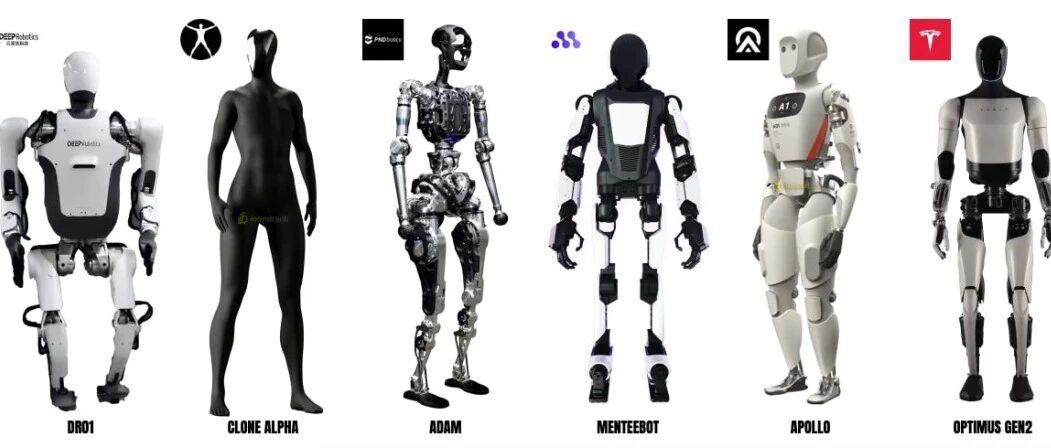
Group 1: Core Insights - The Trump administration is shifting focus towards the robotics sector, considering an executive order that may relax regulations and provide subsidies, which could significantly benefit many companies, especially small and medium-sized enterprises [2][10] - The push for robotics development is driven by the need to compete with China's manufacturing capabilities, which reportedly has at least two to three times more robots than the U.S. [2][3] Group 2: Company Overview - Richtech Robotics - Richtech Robotics (RR.US) has seen a stock price increase of 29.30% this week, with notable daily gains of 6.27%, 18.54%, and 8.77% over the past three trading days [1] - The company is viewed as a potential winner in the robotics sector, with its flagship robot ADAM being marketed as an AI-driven bartender and coffee maker, although its impact on business transformation is questioned [4][10] - Richtech Robotics' industrial robot Dex is designed to integrate into existing systems, addressing the challenges faced by manufacturers using traditional automation tools [5][10] Group 3: Financial Position - Richtech Robotics has a low debt-to-asset ratio and has reduced its total liabilities from $4 million to less than half of that amount, indicating a stable financial position [8] - The company has approximately $32.89 million in cash and $52.62 million in short-term investments, providing a liquidity cushion that could cover over two years of operating expenses [9][10] - Despite the promising liquidity situation, the company has not yet achieved profitability, with high operating expenses and no revenue growth [7][10] Group 4: Market Sentiment and Risks - The current stock price of Richtech Robotics is driven more by market narratives and speculative expectations rather than fundamental performance, leading to concerns about potential overvaluation [10][11] - Investors are essentially betting on the company's future profitability and its role in the U.S. re-industrialization efforts, which carries inherent risks [11]

继AI之后 机器人站上美国科技战略C位
Zhi Tong Cai Jing· 2025-12-05 07:53
Core Viewpoint - The Trump administration is shifting its policy focus towards the robotics sector, aiming to accelerate the development of robotics technology and advanced manufacturing alongside artificial intelligence (AI) initiatives [1][2]. Policy Signals - U.S. Secretary of Commerce Howard Lutnick has been actively meeting with CEOs in the robotics industry to discuss incentives such as tax reductions, regulatory simplifications, and increased federal funding [2]. - The government is considering an executive order on robotics that may set national goals for technology research, deployment, and ethical standards, similar to the "Genesis Plan" for AI [2]. - The U.S. Department of Transportation is reportedly preparing to establish a robotics working group, with plans expected to be announced by the end of the year [2]. Competitive Urgency - The robotics sector is becoming a critical battleground in the competition between the U.S. and China, with the Trump administration's industrial policy reflecting this urgency [3]. - As of 2023, China has an industrial robot stock of 1.8 million units, four times that of the U.S., highlighting the need for significant investment in the U.S. robotics sector to catch up [3]. - Global investment in robotics is projected to reach $23 billion by 2025, doubling from the previous year, with Goldman Sachs predicting the humanoid robot market could exceed $38 billion by 2035 [3]. Industry Advocacy and National Strategy - The robotics industry is actively pushing for government involvement in policy-making, emphasizing that advancements in AI should include plans for the robotics sector [4]. - Companies are calling for tax incentives and federal funding to integrate advanced automation technologies and strengthen supply chains [4]. - There is a consensus that advanced robotics technology is crucial for U.S. manufacturing, technological development, national security, and public safety [4]. Employment and Automation Paradox - A core issue remains how to align the development of the robotics industry with the goal of revitalizing U.S. manufacturing, as increased automation may lead to job losses [5]. - Some industry leaders argue that robotics can enhance worker productivity and create more job opportunities, suggesting a collaborative future between humans and machines [5]. Concerns Over Basic Research - Despite the government's focus on industrial applications, there are warnings about cuts to funding for basic research, which could undermine the foundation of innovation in robotics and AI [6]. - The American Computer Society highlights that federal funding has historically been crucial for breakthroughs in technology, and a lack of support for foundational research could hinder the U.S.'s leadership in these fields [6].
刚刚,2026年英伟达奖学金名单公布,华人博士生霸榜占比80%
机器之心· 2025-12-05 03:02
Core Insights - The NVIDIA Graduate Fellowship Program has awarded scholarships to 10 doctoral students for the 2026 academic year, each receiving up to $60,000 to support their research in various fields related to computational innovation [2][4]. Group 1: Award Recipients - Jiageng Mao from the University of Southern California focuses on solving complex physical AI problems using large-scale internet data, aiming for robust and generalizable intelligence in real-world embodied agents [5]. - Liwen Wu from the University of California, San Diego specializes in computer graphics and 3D vision, with interests in neural rendering, inverse rendering, and 3D reconstruction [8]. - Sizhe Chen from the University of California, Berkeley is dedicated to ensuring AI safety in real-world applications, particularly developing defenses against prompt injection attacks [10]. - Yunfan Jiang from Stanford University is working on scalable methods for building general-purpose robots for everyday tasks using mixed data sources [12]. - Yijia Shao from Stanford University researches human-AI collaboration, developing AI agents that can communicate and coordinate with humans during task execution [14]. - Shangbin Feng from the University of Washington aims to advance model collaboration among machine learning models trained on different data [17]. - Irene Wang from Georgia Tech is developing a collaborative design framework for large-scale, energy-efficient AI training [19]. - Chen Geng from Stanford University focuses on modeling the 4D physical world using scalable data-driven algorithms [23]. - Shvetank Prakash from Harvard University is building AI agents using new algorithms and intelligent infrastructure [26]. - Manya Bansal from MIT is designing programming languages for modern accelerators to enable modular and reusable code without sacrificing performance [28]. Group 2: Finalists - The program also recognized five finalists: Zizheng Guo from Peking University, Peter Holderrieth from MIT, Xianghui Xie from the Max Planck Institute for Computer Science, Alexander Root from Stanford University, and Daniel Palenicek from Darmstadt University of Technology [31].


优必选、优必行取得接口装置、机器人、充电桩及充电系统专利
Sou Hu Cai Jing· 2025-12-05 01:09
来源:市场资讯 国家知识产权局信息显示,深圳市优必行科技有限公司、深圳市优必选科技股份有限公司取得一项名 为"接口装置、机器人、充电桩及充电系统"的专利,授权公告号CN116169739B,申请日期为2022年12 月。 天眼查资料显示,深圳市优必行科技有限公司,成立于2021年,位于深圳市,是一家以从事软件和信息 技术服务业为主的企业。企业注册资本5000万人民币。通过天眼查大数据分析,深圳市优必行科技有限 公司专利信息114条,此外企业还拥有行政许可3个。 深圳市优必选科技股份有限公司,成立于2012年,位于深圳市,是一家以从事专业技术服务业为主的企 业。企业注册资本47193.3373万人民币。通过天眼查大数据分析,深圳市优必选科技股份有限公司共对 外投资了94家企业,参与招投标项目372次,财产线索方面有商标信息347条,专利信息3572条,此外企 业还拥有行政许可45个。 声明:市场有风险,投资需谨慎。本文为AI基于第三方数据生成,仅供参考,不构成个人投资建议。 ...
AI之后,特朗普政府开始关注机器人
Guan Cha Zhe Wang· 2025-12-04 10:21
近日,政治新闻网站Politico的一份报道显示,特朗普政府在推动美国人工智能创新后,正将注意力转 向机器人技术领域。 该报道援引接近政府的消息人士称,美国商务部长霍华德・勒特尼克已多次与机器人行业领袖会面,特 朗普政府正"全力投入"推动美国机器人技术的发展。 (右为霍华德・勒特尼克) 美国商务部发言人表示:"我们致力于机器人技术和先进制造,因为它们是将关键生产带回美国的核 心。" 视频中,这台机器人灵活地扭动身体,随着音乐节奏翩翩起舞,动作流畅自然。 本文系观察者网独家稿件,未经授权,不得转载。 目前,美国的机器人技术发展显著落后于全球其他国家,尤其是中国。 国际机器人联合会2024年9月发布的报告显示,中国工厂已部署近200万台工业机器人,而美国的这一指 标数量仅为中国的四分之一。 2025年11月中旬,标准机器人公司(Standard Bots)首席执行官埃文・比尔德在国会联合经济委员会作 证时表示,美国亟需一项国家机器人战略,以全面改善本国机器人技术与制造业发展现状。 据悉,特斯拉CEO埃隆·马斯克在近期的股东会上,将"擎天柱"描述为一台"印钞机"。他还表示,机器 人将让全球经济增长10倍甚至100倍 ...

收出十字星 大盘基本调整到位
Chang Sha Wan Bao· 2025-12-04 09:12
Market Overview - A-shares showed mixed performance on December 4, with the Shanghai Composite Index down 0.06% at 3875.79 points, while the Shenzhen Component Index rose 0.40% to 13006.72 points, and the ChiNext Index increased by 1.01% to 3067.48 points [1] - The total trading volume in the Shanghai and Shenzhen markets was 15.49 billion yuan, a decrease of 1.21 billion yuan compared to December 3 [1] - The market experienced a slight opening followed by fluctuations, ultimately closing in the red for the Shanghai index, which formed a doji candlestick pattern, indicating a potential directional choice ahead [1] Sector Performance - The strongest performing sectors included robotics and commercial aerospace, while sectors such as shipbuilding, tourism, food and beverage, and coal saw declines [1][2] - The commercial aerospace sector marked a milestone with the successful launch of the Zhuque-3 rocket, despite the failure of the first-stage rocket recovery [2] - The commercial aerospace market in China is projected to grow from 376.42 billion yuan in 2015 to over 2.3 trillion yuan by 2024, with expectations to exceed 2.5 trillion yuan this year [2] Company Highlights - Feiwo Technology, a company in the commercial aerospace sector, saw its stock price surge by 19.58%, leading the market [3] - Feiwo Technology reported earnings per share of 0.61 yuan and a net profit of 45.9932 million yuan for the third quarter of 2025, reflecting a year-on-year growth rate of 163.26% [3] - The company has established itself as a supplier for commercial aerospace projects, including components for rockets and engines, and has signed a four-year cooperation agreement with GE Vernova, a leader in the gas turbine market [3]
2026年值得期待的十大技术应用都有啥?
Huan Qiu Wang Zi Xun· 2025-12-04 06:38
Core Insights - The article highlights the rapid advancements in technology expected by 2026, including emotional AI, wearable health devices, renewable energy innovations, and more, which are set to transform daily life and work environments [1]. Group 1: Emotional AI and Personalization - Emotional AI assistants are evolving beyond traditional voice assistants like Siri and Alexa, becoming capable of understanding human emotions through tone and expression, thus providing personalized support [2]. - These AI systems are increasingly being integrated into mental health support and personal development, marking a significant shift in the role of technology in daily life [2]. Group 2: Wearable Health Technology - Next-generation wearable devices are anticipated to monitor vital health metrics in real-time, shifting healthcare from reactive to proactive approaches [3]. - Innovations such as smart skin patches and AI watches are expected to provide early warnings for health risks, contributing to personalized health management [3]. Group 3: Renewable Energy Innovations - New night-time solar panels that capture infrared radiation are expected to overcome previous limitations of solar energy, enabling continuous power supply even in darkness [4]. - Advances in lithium-sulfur and solid-state battery technologies are projected to enhance energy storage, significantly improving electric vehicle performance and promoting sustainable transportation [4]. Group 4: Brain-Computer Interfaces - Brain-computer interface technology is moving from medical applications to everyday use, allowing users to control devices through thought, which could revolutionize rehabilitation and enhance daily life [6]. - This technology is expected to play a role in various fields, including prosthetics and augmented reality [6]. Group 5: Space Economy - The space economy is poised for growth, with reduced costs for suborbital flights and the emergence of zero-gravity hotels, indicating a new era of space exploration and commercial opportunities [7]. - Companies are exploring asteroid mining, suggesting a potential new frontier for resource acquisition [7]. Group 6: AI in Education - AI-driven personalized education is set to replace standardized teaching methods, adapting to individual learning styles and enhancing engagement for both children and adults [8]. - This transformation in education is expected to significantly impact workforce adaptability in response to industry changes [8]. Group 7: Quantum Computing - Quantum computing is anticipated to become practical by 2026, potentially solving complex problems beyond the capabilities of classical computers [9]. - Applications in pharmaceuticals and supply chain optimization could drastically reduce costs and timeframes in various industries [9]. Group 8: Smart Cities - The integration of AI and IoT technologies is expected to create smarter cities, improving traffic management, waste collection, and security systems [10]. - These advancements aim to enhance urban living by making cities cleaner, safer, and more efficient [10]. Group 9: Robotics - Robotics technology is expected to permeate everyday life, with applications in kitchens, construction, and elder care, making robots an integral part of daily routines [11]. - The decreasing costs and advancements in AI are driving this trend, leading to widespread adoption of robotic solutions [11]. Group 10: Bioprinting - The bioprinting field is projected to experience significant advancements, enabling the creation of disease models and personalized medical treatments [12]. - This technology could revolutionize organ transplantation and food production, addressing future challenges in healthcare and food security [12].