
液冷技术

Search documents
AI基建迎新催化:英伟达携手日本半导体巨头加码,节能或成关键考量
Feng Huang Wang· 2025-10-05 02:41
Core Insights - NVIDIA and Fujitsu have reached an agreement to jointly build a full-stack AI infrastructure integrated with AI agents, focusing on sectors such as healthcare, manufacturing, and robotics [1] - Fujitsu's MONAKA CPU, based on Arm architecture, aims to achieve double the power efficiency of competitors and is expected to be operational by 2027 [2] - The collaboration aims to address the increasing energy demands of AI data centers, with global electricity consumption projected to double by 2030 [2] Group 1: Company Collaboration - NVIDIA and Fujitsu will integrate their semiconductor technologies using NVIDIA NVLink Fusion to create a high-speed interconnection between multiple chips on a single substrate by 2030 [1] - The partnership will leverage NVIDIA's GPU technology alongside Fujitsu's MONAKA CPU to develop specialized AI platforms [1] Group 2: Energy Efficiency and Demand - NVIDIA's CEO highlighted that the connection with Fujitsu's CPU will lead to new levels of energy efficiency [2] - The rising demand for AI computing power has led to significant increases in electricity costs, with U.S. power suppliers seeking to raise rates by a total of $29 billion by mid-2025, a 142% increase from the previous year [2] - The global investment in electricity infrastructure is expected to exceed $400 billion by 2025, driven by the growing electricity demand from AI applications [2] Group 3: Industry Trends - The current AI development landscape is characterized by a focus on power efficiency, with liquid cooling technology emerging as a potential solution to manage heat in high-density data centers [3] - As data centers evolve towards higher power density, the need for effective cooling solutions becomes increasingly critical [3]

AI服务器液冷渗透率将超50%,系统化服务能力成竞争焦点
Sou Hu Wang· 2025-10-04 02:33
Group 1: Market Overview - The rapid development of AI technology is driving unprecedented cooling demands in data centers, with liquid cooling emerging as a more efficient and cost-effective solution [1] - According to Guosen Securities, the global liquid cooling market for data centers is expected to reach $10 billion by 2026, driven by major tech companies like Google, Amazon, Meta, and NVIDIA [1][6] - The penetration rate of liquid cooling in domestic data centers is projected to accelerate, with an expected penetration rate of over 50% for AI servers by 2026 [6] Group 2: Technological Advancements - Liquid cooling systems outperform traditional air cooling in terms of heat transfer capabilities and overall energy efficiency, leading to lower Power Usage Effectiveness (PUE) and reduced energy consumption [3] - Lenovo's "Hades" warm water cooling system, designed for AI training and high-performance computing, has achieved a PUE value below 1.1, allowing for the operation of servers exceeding 100 kW without dedicated air conditioning [5][8] - Innovations such as Lenovo's "Flying Fish" bionic cooling design and "Dual-Cycle" phase-change immersion cooling system have significantly enhanced cooling performance, with PUE values as low as 1.035 [8] Group 3: Competitive Landscape - Domestic manufacturers are gaining ground in the liquid cooling market, leveraging cost advantages and technological innovations to compete with established foreign players [9][14] - Vertiv, a leading overseas temperature control company, holds a 23.5% share of the global data center cooling market, benefiting from partnerships with NVIDIA [9] - Lenovo's collaboration with major chip manufacturers like Intel, NVIDIA, and AMD enhances its competitive edge in the liquid cooling sector, allowing for seamless integration of server performance [13][14] Group 4: Future Projections - The liquid cooling market in China is expected to grow significantly, with projections indicating a market size of approximately 130 billion yuan by 2029 [6] - The demand for liquid cooling solutions is expected to be driven by the increasing energy consumption of data centers, which currently accounts for 1.5% to 2% of global electricity usage, projected to rise to 4% by 2030 [2] - Companies like Lenovo are well-positioned to capitalize on the growing liquid cooling market due to their technological advancements and strong service capabilities [14]


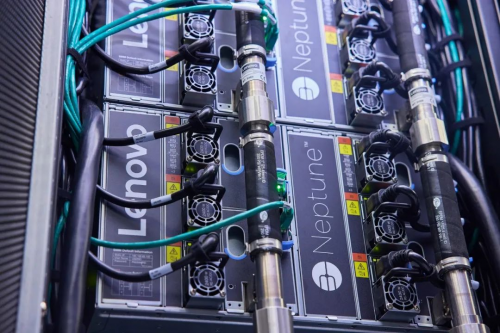
未来液冷行业放量受益于需求增长与3M退出 投研报告
Zhong Guo Neng Yuan Wang· 2025-10-01 14:44
Group 1 - The core viewpoint of the report highlights the rapid growth of the liquid cooling server market in China, with a projected market size of $2.37 billion in 2024 and a compound annual growth rate (CAGR) of 46.8% from 2024 to 2029, reaching $16.2 billion by 2029 [1][2] - The data center cooling market is also expanding, with a current size of $7.67 billion in 2023, expected to grow to $16.87 billion by 2028, while the global liquid cooling market is anticipated to increase from $1 billion in 2023 to approximately $5.6 billion by 2028 [1][2] Group 2 - The development of liquid cooling technology is driven by the increasing power density of data center cabinets, which generates more heat and necessitates advanced cooling solutions. Liquid cooling offers advantages such as lower energy consumption, higher cooling efficiency, lower noise, and reduced total cost of ownership (TCO) compared to traditional air cooling [2] - Liquid cooling technology is categorized into contact and non-contact types, with both the Chinese and global markets experiencing high double-digit growth rates [2] Group 3 - Single-phase cold plate liquid cooling is currently the mainstream application, requiring minimal modifications to communication equipment and infrastructure, and is the most mature technology in the industry. The cost of liquid cooling in data centers is approximately 11,818 yuan per kW, saving an average of about 1.8396 million yuan annually compared to air cooling [3] - Immersion liquid cooling is energy-efficient, compact, and highly reliable, with the market size expected to grow from $12 million in 2024 to $486 million by 2029. The cooling liquids used typically include fluorinated liquids, and the exit of 3M from PFAS production may benefit domestic companies in this sector [3] Group 4 - Companies to watch in this sector include Juhua Co., Yonghe Co., New Zobang, Huayi Group, 8 Billion Space, and Runhe Materials [4]
液冷行业梳理-20250930
Tianfeng Securities· 2025-09-30 07:42
Investment Rating - The industry rating is maintained at Neutral, consistent with the previous rating [3]. Core Insights - The liquid cooling technology is driven by the increasing power density of data center cabinets, which necessitates more efficient heat dissipation methods. Liquid cooling offers advantages such as lower energy consumption, higher cooling efficiency, lower noise, and lower total cost of ownership (TCO) compared to traditional air cooling [4][12]. - The Chinese liquid cooling server market is projected to grow significantly, reaching a market size of $2.37 billion in 2024, with a compound annual growth rate (CAGR) of 46.8% from 2024 to 2029, ultimately reaching $16.2 billion by 2029 [4][33][57]. - The global data center cooling market is expected to grow from $7.67 billion in 2023 to approximately $16.87 billion by 2028, with liquid cooling technology's market share increasing from 13% to 33% during the same period [33][36]. Summary by Sections Section 1: Development of Liquid Cooling Technology - The shift towards high-density and energy-efficient data centers necessitates the adoption of liquid cooling solutions, especially when cabinet power density exceeds 20KW [11][12]. - The average power density of global data center cabinets has increased from 5.6KW in 2017 to 12.8KW in 2023, with supercomputing centers requiring over 30KW [11][12]. Section 2: Liquid Cooling Efficiency and Cost Advantages - Liquid cooling systems demonstrate superior cooling capabilities compared to air cooling, with a cost of approximately 11,818 RMB per KW, leading to annual savings of about 1.84 million RMB compared to air cooling [17][12]. - NVIDIA's liquid-cooled data centers can achieve a Power Usage Effectiveness (PUE) of 1.15, significantly lower than the 1.6 PUE typical of air-cooled systems [11][12]. Section 3: Types of Liquid Cooling Technologies - Liquid cooling technologies are categorized into contact and non-contact types, with single-phase cold plate liquid cooling being the most mature and widely adopted solution [52][32]. - Immersion cooling, which can be single-phase or two-phase, is gaining traction due to its energy efficiency and compact design, with the market for immersion cooling servers expected to grow from $1.2 million in 2024 to $48.6 million by 2029 [55][57]. Section 4: Market Growth Projections - The Chinese liquid cooling server market is expected to maintain rapid growth, with a projected market size of $2.37 billion in 2024, reflecting a 67% increase from 2023 [36][57]. - The global data center liquid cooling market is anticipated to grow from $1 billion in 2023 to approximately $5.6 billion by 2028, indicating a strong upward trend in adoption [33][36]. Section 5: Key Companies and Products - Companies such as Juhua Co., Yonghe Co., New Zobang, Huayi Group, and others are positioned to benefit from the growing demand for fluorinated liquids used in immersion cooling systems, especially following 3M's exit from the PFAS production market [66][67].


通信行业点评:数据中心温控已进入“模块化”
Minsheng Securities· 2025-09-30 02:43
Investment Rating - The report maintains a "Recommended" rating for Yingweike and Gaolan Co., and a "Cautious Recommendation" for Kexin New Source [4]. Core Insights - The introduction of the Silent-Aire CDU platform by Johnson Controls marks a significant advancement in liquid cooling technology, addressing the thermal management needs of AI data centers [3]. - The Silent-Aire CDU offers a cooling capacity that can flexibly scale from 500 kW to over 10 MW, with specific configurations achieving up to 1.4 MW cooling capacity when using water as a cooling medium [2]. - The report emphasizes that liquid cooling technology is crucial for resolving the power challenges faced by AI development, positioning it as a key technology route for the industry [3]. Summary by Sections Industry Overview - The report highlights the growing demand for efficient thermal management solutions in data centers, particularly driven by the increasing AI computational requirements [3]. Product Analysis - The Silent-Aire CDU platform is designed for high scalability and flexible deployment, making it suitable for both new AI data centers and retrofitting existing facilities [2]. Company Forecasts and Valuations - Yingweike is projected to have an EPS of 0.61 in 2024, with a PE ratio of 131, while Gaolan Co. is expected to improve from a negative EPS to 0.09 in 2025, with a PE ratio of 342 [4]. - Kexin New Source is forecasted to have an EPS of 0.14 in 2024, with a PE ratio of 316, indicating cautious optimism for its growth [4].


碳和科技扎根戈壁——搭建算力流动桥梁
Jing Ji Ri Bao· 2025-09-29 22:30
Core Viewpoint - The company, Carbon and Technology, has established a green data center in Karamay, Xinjiang, utilizing liquid cooling technology to achieve energy efficiency and carbon neutrality, setting a benchmark for sustainable development in the region [1][2]. Group 1: Company Overview - Carbon and Technology was founded in 2021 and has invested in the Karamay Liquid Cooling Data Center, which is the first green data center in Xinjiang to adopt a plate liquid cooling system [1]. - The company aims to leverage the region's natural advantages and has successfully implemented liquid cooling technology, which has a lower lifecycle operating cost compared to traditional air cooling [2]. Group 2: Technological Innovations - The data center's total computing power is projected to reach 3600 PetaFLOPS by the end of 2024, with chip temperatures monitored in real-time, maintaining stability around 65 degrees Celsius [1]. - The average Power Usage Effectiveness (PUE) of the data center is controlled within 1.1, which is only a quarter of the national average, showcasing its energy efficiency [2]. - The company has achieved zero carbon emissions since last year and is transitioning towards a negative carbon footprint through heat recovery for heating purposes [2]. Group 3: Infrastructure and Operations - The cooling system operates as a heat management cycle, utilizing cooling towers to manage the high temperatures generated by server chips [3]. - Currently, the data center has deployed 12 cooling tower units, with plans for further expansion in the future [3]. - The company is breaking the perception of high energy consumption in data centers by using liquid cooling technology, thus facilitating the flow of computing power in the region [3].
调研速递|易事特接受朝桦创业等4家机构调研 透露多项业务关键数据与发展要点
Xin Lang Cai Jing· 2025-09-29 10:14
Core Viewpoint - Yistar Group Co., Ltd. is focusing on expanding its renewable energy and overseas business segments, with significant growth expected in solar, wind, and energy storage sectors due to the implementation of "dual carbon" policies [1][2]. Business Overview - In the first half of 2025, Yistar achieved a revenue of 1.667 billion yuan, with the renewable energy segment accounting for 56.83% of total revenue [1]. - The overseas business has been steadily increasing, reaching 21.26% of total revenue in the first half of 2025, primarily from power supply products such as UPS and EPS [1]. Charging Infrastructure - Yistar's charging pile business serves a wide range of clients, including major power companies and automotive manufacturers, and features mobile charging robots to alleviate congestion at gas stations and service areas [2]. Liquid Cooling Technology - The company offers various mature liquid cooling solutions, including cold plate, immersion, and spray cooling technologies, applicable in charging piles, data centers, and energy storage systems [2]. Research and Development - In the first half of 2025, Yistar invested 101 million yuan in R&D, representing 6.08% of its revenue, and holds over 1,000 patents and software copyrights [2]. Sodium Battery Products - Yistar has achieved mass production of long-cycle and high-power sodium battery cells, developing applications for sodium battery UPS power supplies and automotive start-stop systems [2]. Silicon Carbide Development - The company has been involved in silicon carbide technology development since 2016 and aims to continue research and application in the third-generation semiconductor field [2].

ST易事特(300376) - 2025年9月29日投资者活动调研记录
2025-09-29 09:36
Business Overview - The company achieved a total revenue of 166,749.51 million yuan in the first half of 2025, with high-end power equipment contributing 71,240.65 million yuan (42.72%) and the new energy sector contributing 94,754.24 million yuan (56.83%) [1][2] - The new energy business is expected to grow in proportion due to the implementation of "dual carbon" policies, focusing on solar, wind, and energy storage as new growth points [2] International Business - The overseas business accounted for 21.26% of total revenue in the first half of 2025, primarily from power products like UPS and EPS [3] - The company has established an ODM cooperation model with partners and has its own overseas sales team, targeting markets in Europe, Africa, the Middle East, and Southeast Asia [3] Customer Base - Key customers for the charging pile business include major power companies and automotive manufacturers, with mobile charging robots being used to enhance charging capabilities during peak times [4] Technology and R&D - The company has invested 1.01 billion yuan in R&D in the first half of 2025, representing 6.08% of total revenue, and holds over 1,000 patents [7] - The company has developed various liquid cooling technologies, enhancing efficiency and reducing power consumption in high-density computing environments [6] Product Development - The company has launched a range of sodium battery products, including UPS power supplies and energy storage cabinets, which offer advantages over traditional lithium and lead-acid batteries [8][9] - The company is involved in the development of silicon carbide (SiC) technology, focusing on application technology rather than direct production [10] Risk Management - The company plans to apply for the removal of risk warnings by the end of 2025, having completed necessary financial corrections and audits [11] Investor Relations - The company emphasizes transparency and regular communication with investors, ensuring compliance with information disclosure regulations [12]
达实智能:公司已承接多个大型数据及算力中心项目
Zheng Quan Ri Bao Zhi Sheng· 2025-09-29 09:09
Core Viewpoint - Dasin Intelligent announced advancements in energy-saving technologies for data and computing centers, leveraging its AIoT platform to develop various control systems aimed at enhancing energy efficiency [1] Group 1: Technology Development - The company has independently developed a liquid cooling global optimization energy-saving control system, an AI-tuned energy efficiency management system, and a precise energy efficiency control and management system for data centers [1] - An additional investment of over 20 million yuan will be made by June 30, 2025, for the research and development of these data center control systems [1] Group 2: Application and Experience - The liquid cooling global optimization energy-saving control system has been successfully applied in the operation management of the cold plate liquid cooling system at the Shenzhen Guangming Life Science City big data center [1] - The company has undertaken multiple large-scale data and computing center projects, including the State Energy Commerce Cloud Computing Center and the Qianhai Information Hub, accumulating rich practical experience [1] Group 3: Market Outlook - Currently, the revenue generated from the liquid cooling global optimization energy-saving control system constitutes a small portion of the company's overall business [1] - Business promotion is subject to various factors such as policy guidance and market demand, indicating a degree of uncertainty in the expansion of related business [1] - The company will continue to monitor the development trends of emerging technologies like liquid cooling and actively explore opportunities in line with its business practices [1]

飞龙股份(002536.SZ):在液冷领域的产品主要包括电子泵和温控阀系列产品
Ge Long Hui· 2025-09-29 08:11
Core Viewpoint - Feilong Co., Ltd. is focusing on the liquid cooling sector, with current products including electronic pumps and temperature control valves, and plans to expand into integrated module products in the future [1] Product Development - The company currently emphasizes cold plate liquid cooling technology while actively advancing the research and application of immersion liquid cooling technology [1]
