
美国通胀

Search documents
JacksonHole年会点评:鲍威尔重磅讲话之后:相信你所相信的
Huafu Securities· 2025-08-24 08:25
Group 1: Federal Reserve Policy Insights - Powell's speech at Jackson Hole provided a clear hint of potential interest rate cuts, causing significant market reactions, with the dollar index dropping as much as 0.94% on August 22[3] - The Fed is facing challenges with inflation risks skewed upwards and employment risks skewed downwards, indicating a need to adjust policy stance[3] - The abandonment of the flexible average inflation targeting framework opens the door for quicker rate cuts if inflation shows signs of rapid decline[4] Group 2: Labor Market Dynamics - The U.S. labor market is exhibiting a "curious kind of balance," with both labor supply and demand significantly slowing, which could lead to a rise in unemployment if participation rates do not improve[4] - The upcoming August non-farm payroll data will be crucial for assessing labor market conditions ahead of the September FOMC meeting[4] - Initial jobless claims rose in the third week of August, indicating potential weakness in the labor market, but previous strong data complicates the assessment[4] Group 3: Global Economic Context - Japan's core CPI remained flat at 3.4% in July, suggesting that input inflation may be ending, with future inflation risks leaning towards a decline[26] - The U.S. imposition of "reciprocal tariffs" on Japan is expected to further impact Japan's manufacturing PMI, indicating a deteriorating external demand environment[26] - If U.S. economic data points to effective fiscal expansion and improved employment, a rebound in the already weakened dollar index may be more likely[5]
综述|鲍威尔暗示降息 通胀就业难平衡
Sou Hu Cai Jing· 2025-08-23 11:45
Group 1 - Federal Reserve Chairman Jerome Powell hinted at potential interest rate cuts in the coming months despite rising inflation risks [1] - Powell indicated that the current economic outlook and risk balance may necessitate adjustments to monetary policy [1] - Market expectations for a rate cut in September surged to nearly 90% following Powell's remarks, interpreted as dovish by many institutions [1][2] Group 2 - The U.S. job market showed signs of cooling in July, with the unemployment rate rising by 0.1 percentage points to 4.2% and non-farm payrolls adding only 73,000 jobs, below the expected 110,000 [2] - Core Consumer Price Index (CPI) rose by 3.1% year-on-year in July, significantly above the Federal Reserve's 2% target, indicating persistent inflationary pressures [2] - Some Federal Reserve officials expressed skepticism about the need for rate cuts, citing ongoing inflation concerns and the need for more data before making decisions [2] Group 3 - President Trump criticized Powell's stance, arguing that there is no inflation risk and calling for immediate rate cuts, expressing dissatisfaction with the Federal Reserve's monetary policy [3] - Following Powell's speech, U.S. stock indices rose over 1%, while the dollar index fell by 0.8%, and the yield on 10-year U.S. Treasury bonds dropped by over 7.5 basis points to 4.256% [3]
鲍威尔暗示美联储可能降息 称将谨慎决策
Sou Hu Cai Jing· 2025-08-23 04:56
Core Viewpoint - The Federal Reserve Chairman Jerome Powell indicated that despite current inflation risks, the Fed may consider interest rate cuts in the coming months [1] Economic Outlook - Short-term inflation risks in the U.S. are skewed upwards, while employment risks are increasing, presenting a challenging situation [1] - The U.S. economic growth slowed to 1.2% in the first half of the year, approximately half of the expected growth rate for the same period in 2024, largely due to a slowdown in consumer spending [1] Monetary Policy - The Fed's monetary policy is not on a preset path; decisions will be based entirely on data assessments and their implications for economic outlook and risk balance [1] - The tightening policy context may require adjustments based on changes in economic prospects and risk balance [1] Market Reaction - Financial markets reacted positively to Powell's speech, with all three major U.S. stock indices rising over 1%, the dollar index falling by 0.8%, and the 10-year U.S. Treasury yield dropping by over 7.5 basis points to 4.256% [1]
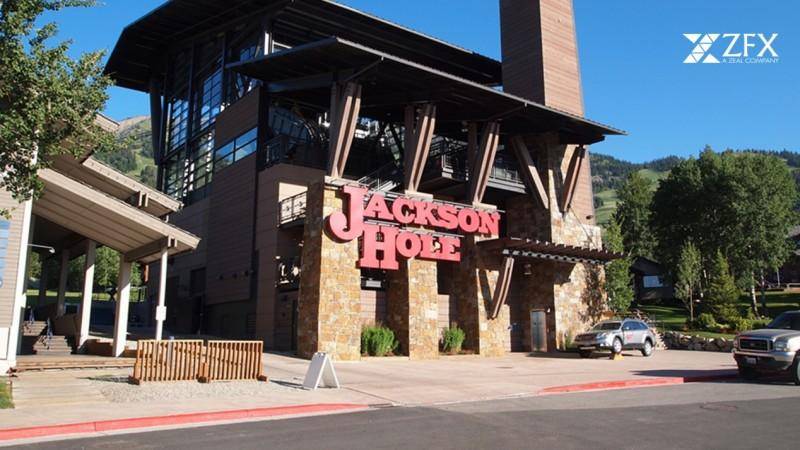
ZFX山海证券:杰克逊霍尔全球央行年会来袭!重点关注鲍威尔演讲!
Sou Hu Cai Jing· 2025-08-22 12:20
Group 1 - The Jackson Hole Global Central Bank Conference will take place from August 21 to 23 in Wyoming, attracting global investor attention, particularly towards Fed Chair Jerome Powell's speech, which is expected to provide insights into future monetary policy directions [1][4] - The theme of this year's conference is "Labor Market Transformation: Demographics, Productivity, and Macroeconomic Policy," closely related to recent significant changes in the U.S. labor market, which has shown signs of cooling from May to July [3] - Non-farm payroll data for May and June was revised down by over 250,000, with only 73,000 new jobs added in July, and wage growth slowing from 6% in June 2022 to approximately 3.9% [3] Group 2 - U.S. inflation data has been mixed, with July's Consumer Price Index (CPI) showing moderate increases, while the Producer Price Index (PPI) surged by 0.9%, the largest monthly increase in over three years, indicating rising input inflation risks [5] - Investors are weighing economic data ahead of Powell's speech, with an approximately 80% probability of a Fed rate cut in September, as major banks like JPMorgan and Goldman Sachs have adjusted their forecasts for the first rate cut from December to September [10] - JPMorgan predicts that if the unemployment rate rises to 4.4% or higher in August, the Fed may aggressively cut rates by 50 basis points in September, with expectations of three consecutive 25 basis point cuts in September, October, and December [11]

【环球财经】全球市场静待鲍威尔关键发声 投行称需警惕“鹰派”信号
Xin Hua Cai Jing· 2025-08-22 08:20
Core Viewpoint - The annual Jackson Hole global central bank conference is taking place from August 21 to 23, with Federal Reserve Chairman Jerome Powell's speech being a focal point. Analysts suggest that Powell is unlikely to provide clear guidance on interest rate cuts, and if any guidance is given, it may lean towards a hawkish stance [1][2]. Group 1: Labor Market and Inflation Risks - The current monetary policy of the Federal Reserve faces a dilemma, with uncertainty regarding the labor market's deterioration and accumulating inflation risks due to tariffs increasing corporate costs [2][3]. - Powell's views on the labor market and inflation risks are crucial, as his perception of whether the labor market has "cooled to policy goals" will directly impact the necessity for rate cuts [2][3]. - The U.S. July non-farm payroll data was significantly below market expectations, leading to a market consensus that the Fed would begin cutting rates in September, with expectations of three cuts this year [2][3]. Group 2: Market Reactions and Predictions - Market sentiment appears to be preparing for hawkish signals from Powell, with the S&P 500 index declining for five consecutive trading days, particularly in the tech sector [7]. - If Powell's speech leans towards a dovish tone, confirming a potential rate cut in September, it could alleviate market concerns and boost the stock market. Conversely, a cautious or hawkish stance could trigger a new wave of selling [7]. - Historical data indicates that the S&P 500 index has averaged a 0.9% increase in the five trading days surrounding past Jackson Hole meetings, suggesting that the market often gains certainty from the Fed Chair's remarks [7]. Group 3: Dollar and Commodity Impacts - Powell's emphasis on inflation pressures could lead to a stronger dollar and higher U.S. Treasury yields, while a dovish stance might weaken the dollar [7][9]. - Gold prices are currently fluctuating with the dollar's movements, and if Powell adopts a dovish tone, gold and other safe-haven assets may strengthen in the following days [8].
徽商期货:白银或维持高位震荡以等待新的驱动
Qi Huo Ri Bao· 2025-08-22 01:04
Group 1 - Recent trade and geopolitical tensions have eased, leading to a decrease in market risk aversion [1] - The U.S. labor market is showing signs of cooling, and inflation has rebounded moderately, with the market pricing in a 25 basis point rate cut by the Federal Reserve in September [1] - The upcoming U.S. inflation and non-farm employment reports for August are critical for further clarity on Federal Reserve policy expectations [1] Group 2 - U.S. inflation has remained moderate, with July CPI increasing by 0.2% month-on-month and 2.7% year-on-year, while core CPI rose by 0.3% month-on-month and 3.1% year-on-year, indicating a mixed inflationary environment [2] - The labor market has shown resilience, but job growth has slowed, and potential immigration policies may increase downward pressure on employment [2] - The necessity for a Federal Reserve rate cut is increasing based on inflation and employment indicators [2] Group 3 - Concerns over the independence of the Federal Reserve have intensified, particularly with Trump's criticism of Chairman Powell and calls for resignation of Fed officials [3] - The market is speculating on the potential for Trump to disrupt the Federal Reserve's independent operations, which could increase market uncertainty [3] - Current expectations suggest that the Federal Reserve may lower rates to between 3.3% and 3.5% in the first half of next year, with potential cuts in September and December [3] Group 4 - The uncertainty surrounding tariffs has decreased, leading to a rebound in market risk appetite, with silver prices expected to fluctuate in the short term [4] - The financial attributes of precious metals remain supported due to the ongoing easing cycle of the Federal Reserve [4] - Monitoring of the Federal Reserve's policy direction and dovish statements will be crucial for silver price movements [4]
白银或维持高位震荡以等待新的驱动
Qi Huo Ri Bao· 2025-08-21 23:23
Group 1 - Recent trade and geopolitical tensions have eased, leading to a decrease in market risk aversion [1] - The U.S. labor market is showing signs of cooling, and inflation has rebounded moderately, with the market pricing in a 25 basis point rate cut by the Federal Reserve in September [1][2] - The upcoming U.S. inflation and non-farm employment reports for August are critical for further clarity on Federal Reserve policy expectations [1][4] Group 2 - U.S. inflation has remained moderate, with July CPI increasing by 0.2% month-on-month and 2.7% year-on-year, while core CPI rose by 0.3% month-on-month and 3.1% year-on-year, indicating a mixed inflationary environment [2] - The labor market has shown resilience, but there are concerns about potential downward pressure due to immigration policies and government layoffs, suggesting a weak employment market in Q3 [2] - Concerns over the independence of the Federal Reserve have intensified, particularly with Trump's criticism of Fed Chair Powell, which may increase market uncertainty [3] Group 3 - The uncertainty surrounding tariffs has decreased, leading to a rebound in market risk appetite, although silver prices may experience greater volatility compared to gold due to domestic macroeconomic policy disturbances [4] - The Federal Reserve remains in a loose monetary policy cycle, supporting the financial attributes of precious metals [4]
美联储:担忧通胀甚于就业
Zheng Quan Ri Bao· 2025-08-21 16:28
Group 1 - The core viewpoint of the Federal Reserve's recent meeting minutes indicates that most officials are more concerned about inflation risks than employment market issues [1] - The July meeting resulted in a vote of 9 in favor and 2 against maintaining interest rates, marking the first time since late 1993 that two officials opposed the rate decision [1] - The minutes suggest a clear "hawkish" policy stance, which diminishes market expectations for a rate cut in the near term [1] Group 2 - Since August, expectations for a Federal Reserve rate cut have been frequently adjusted, particularly following disappointing non-farm employment data [2] - Recent inflation data, including the Producer Price Index (PPI), has shown unexpected increases, leading to a tightening of rate cut expectations [2] - As of August 21, market odds for a 25 basis point rate cut in September were at 81.2%, down from 92.1% a week prior, indicating fluctuating market sentiment [2]
闪评丨美消费者将成关税政策“最终受害者” 就业疲软或让美联储“被迫降息”
Sou Hu Cai Jing· 2025-08-21 13:01
Core Insights - The Federal Reserve's July FOMC meeting minutes indicate that tariffs imposed on global trade partners will continue to impact U.S. consumer and service prices [1][2] - Evidence suggests that foreign exporters have only absorbed a small portion of the tariff costs, with the majority being borne by U.S. domestic businesses and consumers [2] - The Fed's assessment aligns with previous evaluations during Trump's first term, indicating that over 90% of tariff costs are ultimately passed on to U.S. consumers, contributing to inflationary pressures [2][3] Tariff Impact on Prices - Tariffs have led to upward pressure on commodity prices, with significant declines in U.S. goods and services observed in Q2 due to high tariffs [3] - The Fed anticipates that inflation will gradually rise as actual prices increase alongside tariff hikes [3] Employment and Economic Activity - The Fed's minutes reveal a notable increase in downside risks to employment, with signs of a weakening labor market as economic activity and consumer spending slow [5] - Recent data from the U.S. Bureau of Labor Statistics shows a slowdown in non-farm employment growth for July, with revisions to previous months indicating a trend of labor market weakness [6] - The combination of persistent inflation threats and a weakening labor market may compel the Fed to consider a rate cut in September, potentially by 25 basis points [6]
美联储主席鲍威尔可能暗示将采取更渐进的方式降息
Sou Hu Cai Jing· 2025-08-21 05:41
Core Viewpoint - PGIM's Chief Global Economist Daleep Singh indicates that Federal Reserve Chairman Powell may suggest a more gradual interest rate cut strategy at the Jackson Hole meeting, amidst persistent inflation in the U.S. [1] Inflation Data - Recent U.S. CPI and PPI data show that inflation remains stubbornly above 3% [1] - The number of components in the CPI above 4% is now equal to those below 2%, a situation not seen since the inflation peak in 2021-2022 [1] Interest Rate Forecast - PGIM maintains confidence in its forecast, predicting that the Federal Reserve will cumulatively cut rates by 100 basis points by next year [1] - This forecast is approximately 50 basis points lower than current market expectations [1]