
新发展理念

Search documents
理念一新天地宽
Bei Jing Qing Nian Bao· 2025-11-02 17:57
Group 1 - The core viewpoint highlights the significant growth of China's new energy vehicle (NEV) industry, with production and sales exceeding 10 million units in the first nine months of the year, marking a milestone in the sector's development [1] - Over the past decade, the annual sales of NEVs in China have increased approximately 171 times, showcasing a remarkable transformation from supply chain challenges to becoming a strong engine for high-quality development [1] - The NEV sector is positioned as a key driver for "Made in China" to gain global recognition, reflecting how innovative thinking can inject new momentum into industrial development and open new avenues for the Chinese economy [1] Group 2 - The new development philosophy introduced by the 18th National Congress of the Communist Party of China emphasizes innovation, coordination, green development, openness, and sharing, leading to profound changes in the country's overall development [2] - The "14th Five-Year Plan" indicates that the new development philosophy will guide future practices, with a focus on achieving high-quality development and addressing challenges through comprehensive implementation [3] - The next five years are critical for solidifying the foundation of socialist modernization, requiring the effective use of the new development philosophy to overcome obstacles and embrace challenges [3] Group 3 - To enhance development momentum, there is a need for innovation-driven technological breakthroughs and industrial renewal, which can stimulate new vitality in the transition from old to new growth drivers [4] - The traditional industries are expected to release approximately 10 trillion yuan in market space over the next five years, while emerging pillar industries will focus on advanced technologies such as quantum science and bio-manufacturing [4] - The emphasis on high-end, intelligent, and green development will not only accumulate quantitative growth but also facilitate a qualitative leap in the Chinese economy [4] Group 4 - Strengthening domestic circulation and enhancing internal and external linkages are essential for creating new opportunities in the evolving development landscape, leveraging the vast market potential of over 1.4 billion people [5] - The number of companies with revenues exceeding 100 billion yuan has increased from 10 to 267, demonstrating the correlation between market size and corporate growth [5] - The focus on common prosperity and improving people's livelihoods will define a new development model that prioritizes comprehensive human development [6] Group 5 - The new development philosophy is recognized as a modern path that balances efficiency and equity, growth and sustainability, which is expected to inspire global transformations [7] - The commitment to innovation, coordinated, green, open, and shared development will shape the future of China and potentially influence the world [7]
新华社经济随笔:理念一新天地宽
Xin Hua Wang· 2025-11-02 12:08
Group 1 - The core viewpoint emphasizes the transformative impact of new development concepts on China's economic landscape, particularly in the context of the booming electric vehicle industry, which saw production and sales exceed 10 million units in the first nine months of the year [1][2] - Over the past decade, China's annual sales of new energy vehicles have increased approximately 171 times, showcasing a significant shift from challenges like chip shortages to a thriving industry driven by innovation [1][2] - The new development concepts introduced since the 18th National Congress have led to profound changes in China's overall development strategy, enhancing its economic, technological, and comprehensive national strength [2][3] Group 2 - The "14th Five-Year Plan" highlights the importance of high-quality development and the comprehensive implementation of new development concepts as essential for future growth [3][4] - Innovation is identified as a key driver for technological breakthroughs and industrial renewal, with an estimated market space of around 10 trillion yuan expected to be released from upgrading traditional industries over the next five years [4] - The expansion of the "China's Top 500 Enterprises" list, with companies generating over 100 billion yuan in revenue increasing from 10 to 267, reflects the vast market potential and the importance of leveraging domestic consumption [4][5] Group 3 - The next five years are crucial for advancing common prosperity, focusing on improving living standards, promoting quality employment, and enhancing income distribution systems [5][6] - The new development concepts are seen as a modern path that balances efficiency and equity, growth and sustainability, which could inspire global development strategies [6]
【学习贯彻党的二十届四中全会精神】为高质量推进国防和军队现代化接续奋斗
Yang Shi Wang· 2025-11-02 11:47
Core Points - The 20th Central Committee's Fourth Plenary Session emphasizes new requirements for national defense and military construction, focusing on the goals of national strength and national rejuvenation [1][3] - The military is committed to aligning thoughts and actions with the spirit of the plenary session, aiming for high-quality modernization of national defense and military by the centenary of the army [1][5] Group 1 - The plenary session highly evaluates the significant achievements during the "14th Five-Year Plan" period, providing direction and fundamental guidelines for the military's modernization in the "15th Five-Year Plan" period [3] - Military personnel recognize the importance of aligning with the leadership of the Central Committee and the Chairman, emphasizing the need for revolutionary transformation to achieve the strong military goals in the new era [3][5] Group 2 - The military aims to advance the modernization of national defense and the army by fully implementing the new development concept and accelerating the construction of a new development pattern [5] - The session calls for accelerating the construction of advanced combat capabilities and modernizing military governance, enhancing the integrated national strategic system and capabilities [7] - Military personnel express commitment to integrating the spirit of the plenary session into all aspects of training and preparation, focusing on strategic management and improving overall effectiveness [7]


新发展理念看变化|绿色发展享自然
Xin Hua She· 2025-11-02 07:17
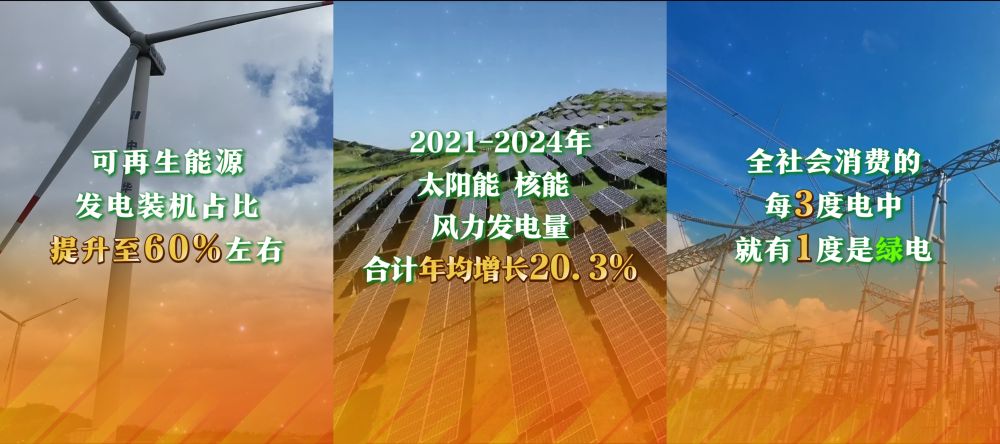
Core Insights - The article emphasizes the significant progress made in China's high-quality development under the guidance of the new development concepts introduced during the 18th National Congress, particularly focusing on green development and ecological priorities [1]. Group 1: Green Development Achievements - During the "14th Five-Year Plan" period, China's energy transition towards green development has shown remarkable results, with the share of renewable energy generation capacity rising to approximately 60% [1]. - From 2021 to 2024, the annual growth rate of solar, nuclear, and wind power generation is projected to be 20.3%, with one-third of the total electricity consumption being green electricity [1]. Group 2: Air and Water Quality Improvements - By 2024, the concentration of PM2.5 in cities has decreased to 29.3 micrograms per cubic meter, a reduction of 16.3% compared to 2020, with the proportion of days with good air quality reaching 87.2% [3]. - The proportion of surface water quality meeting good standards has exceeded 90% for the first time, with major rivers like the Yangtze and Yellow Rivers maintaining Class II water quality for several consecutive years [3]. Group 3: Forest Coverage and Biodiversity - By 2024, forest coverage is expected to exceed 25%, an increase of about 2 percentage points since 2020, with the establishment of five national parks and thousands of various nature reserves covering approximately 18% of the land area [5]. - 90% of terrestrial ecosystem types and 74% of nationally protected wildlife species are effectively protected [5]. Group 4: Growth in Green Products - From 2021 to 2024, the annual production growth rates for solar cells, ultra-white glass for industrial use, and bio-based chemical fibers are projected to be 44.5%, 114.7%, and 89.6%, respectively [7]. - In 2024, the production of new energy vehicles is expected to reach 13.168 million units, with exports of electric vehicles, lithium batteries, and photovoltaic products increasing by 2.6 times compared to 2020 [7].
省委常委会召开扩大会议学习习近平总书记重要讲话重要指示精神 部署文物保护粮食生产和信访等工作
Shan Xi Ri Bao· 2025-11-02 01:00
Group 1 - The meeting emphasized the importance of studying and implementing Xi Jinping's important speeches and directives, particularly regarding cultural heritage protection, grain production, and resolving issues related to real estate registration [1][2] - The focus on cultural heritage includes optimizing museum system layout and enhancing the overall protection and utilization of cultural relics [2] - The meeting highlighted the need to strengthen food security strategies, protect arable land, and improve agricultural productivity through technological advancements and international cooperation [2] Group 2 - The resolution of real estate registration issues is to be integrated with efforts to combat corruption and improve governance, ensuring a comprehensive approach to policy implementation [2] - A long-term mechanism is to be established to prevent future registration difficulties, emphasizing the importance of regulatory oversight across the entire real estate process [2]
体系化学理化研究阐释 | 经济发展理念的创新和突破
Sou Hu Cai Jing· 2025-11-01 08:08
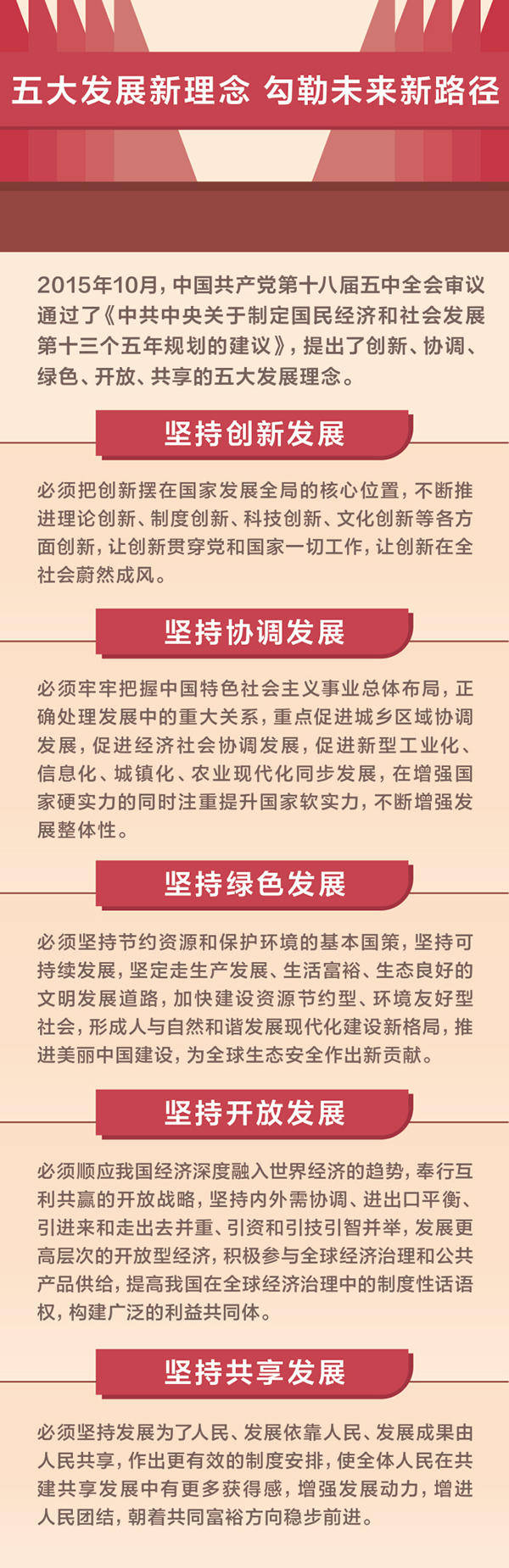
Core Viewpoint - The article emphasizes the significance of the new development concept proposed by Xi Jinping, which includes innovation, coordination, green development, openness, and sharing, as a guiding framework for China's economic high-quality development and a solution for global development challenges [1][11][12]. Group 1: New Development Concept - The new development concept is a major innovative contribution to development theory by the Communist Party of China, addressing key issues such as economic growth, social equity, and environmental sustainability [1][12]. - It aims to provide a systematic approach to achieving higher quality, more efficient, fairer, more sustainable, and safer development, surpassing traditional Western economic theories [12][19]. Group 2: Historical Context and Evolution - The evolution of development concepts reflects changing global conditions, with past theories often failing to address the unique challenges faced by developing countries [2][3]. - The article discusses the historical reliance on Western economic models, which have led to stagnation and widening disparities in developing nations [3][12]. Group 3: Key Relationships in Development - The new development concept redefines the relationship between growth and development, emphasizing that true development encompasses structural optimization, equitable income distribution, and sustainable resource management [13][14]. - It addresses the balance between efficiency and equity, advocating for a model where economic efficiency is pursued alongside shared prosperity [15][18]. - The concept also highlights the importance of coordinated regional development to mitigate disparities and enhance overall economic performance [17][18]. Group 4: Global Integration and Cooperation - The new development concept promotes active engagement in global economic integration, advocating for mutual benefit and cooperation rather than isolationist policies [21][22]. - It encourages countries to leverage global advancements in technology and management practices while contributing positively to global development [21][22]. Group 5: Implementation and Institutional Support - Successful implementation of the new development concept requires a shift in mindset among leaders and the establishment of supportive institutional frameworks [23][24]. - The article stresses the need for capacity building within the workforce to effectively apply the new development principles in practice [25].
下好协调发展全国“一盘棋”——新发展理念引领高质量发展一线观察之二
Xin Hua Wang· 2025-11-01 05:19
Core Insights - The article emphasizes the importance of coordinated development as a key component of the new development philosophy, which aims to enhance the quality and efficiency of economic and social development [1][8] - The "14th Five-Year Plan" is nearing completion, and the "15th Five-Year Plan" is set to begin, highlighting the need for solid measures to improve the coordination and balance of development across various regions and sectors [1][8] Regional Coordination Development Strategy - The Yangtze River Delta region is seeing significant advancements in integrating innovation and industry, exemplified by the establishment of a synchrotron radiation soft X-ray resonance scattering experimental platform, which has facilitated breakthroughs in product development for multiple tech companies [2] - The implementation of regional coordination strategies is crucial for the overall economic development of the country, as it serves as a foundation for resource allocation, industrial layout, and economic activities [2][3] Urban-Rural Integration Development - Urban-rural integration is being actively promoted, with examples such as the thriving tourism industry in Zhengding County, Hebei Province, which has led to improved infrastructure and job opportunities for local residents [4] - Various regions are exploring unique development paths, such as the deep processing of agricultural products in Shandong and the creation of rural e-commerce ecosystems in Sichuan, showcasing the diverse approaches to urban-rural integration [6] Advancing Coordinated Development - The article highlights the use of technology in improving public health services, such as the implementation of an intelligent model for cancer screening in Chengdu, which enhances service efficiency and coverage [7] - There is a strong focus on balancing economic growth with social and ecological considerations, aiming for a harmonious coexistence of development and environmental protection [7][8] - The "15th Five-Year Plan" outlines measures to enhance regional development coordination, promote education and talent development, and advance urbanization with a people-centered approach [8]
赵一德在省委常委会(扩大)会议暨市(区)委书记工作汇报会上强调认真学习贯彻党的二十届四中全会精神 坚决实现全年经济社会发展目标
Shan Xi Ri Bao· 2025-10-31 23:55
Core Points - The meeting emphasized the importance of implementing the spirit of the 20th Central Committee and ensuring the achievement of economic and social development goals for the year [1][2] - The provincial government is focusing on stabilizing employment, enterprises, markets, and expectations while enhancing policy implementation and structural adjustments [2][3] Economic Performance - The provincial development and reform commission reported on the economic performance for the first three quarters, indicating a steady recovery but highlighting structural issues that need addressing [1][2] - The government aims for qualitative improvements and reasonable growth in the economy during the fourth quarter [2][3] Policy Implementation - There is a call to utilize policy resources effectively to address execution bottlenecks and enhance the impact of existing and new policies on consumption and investment [3] - The government plans to strengthen economic operation monitoring in key regions and industries, focusing on stabilizing agriculture, industry, construction, and services [3][5] Safety and Stability - Emphasis on maintaining safety in development, ensuring social stability, and addressing risks in finance, ecology, and social governance [3][4] - The government is committed to safeguarding livelihoods and enhancing grassroots support [3][5] Leadership and Accountability - Local leaders are urged to enhance their sense of responsibility and ensure the effective implementation of the 20th Central Committee's spirit [4] - The provincial leadership is focused on monitoring, guiding, and supporting economic recovery efforts [5]
王沪宁:加快健全适应新型能源体系的市场和价格机制
Ren Min Ri Bao· 2025-10-31 03:46
Core Viewpoint - The article emphasizes the importance of deepening economic system reforms to promote high-quality development, as outlined in the "15th Five-Year Plan" proposed by the Central Committee of the Communist Party of China [1][2]. Group 1: Significance of Economic Reforms - Economic development driven by reform is a valuable experience formed through long-term practice, crucial for achieving rapid economic growth and long-term social stability [2]. - The integration of development and reform is essential, with reform providing strong momentum for development [2]. Group 2: Key Tasks and Major Measures - The "15th Five-Year Plan" outlines seven key areas for economic development, focusing on modernizing the industrial system, enhancing innovation capabilities, and promoting balanced development [5][6]. - Emphasis on building a strong domestic market and enhancing the internal circulation of the economy is highlighted as a strategic focus [7]. - The need for a high-level socialist market economy system is stressed, with a focus on the relationship between government and market roles [8]. - Expanding high-level openness and fostering international cooperation is essential for enhancing domestic economic resilience [9][10]. Group 3: Environmental and Regional Development - The plan includes measures for promoting green transformation and ecological civilization, emphasizing the importance of sustainable development [11]. - Coordinated urban and rural development is crucial for enhancing domestic circulation and achieving balanced regional growth [10][11]. Group 4: Implementation of Reforms - The article calls for a correct direction in implementing the reform measures, emphasizing the need for coordination and effective execution of the outlined tasks [12][13]. - Encouragement of innovative exploration in reform practices is necessary to address specific local challenges [13].
王沪宁:深化经济体制改革 推动高质量发展
Xin Hua Wang· 2025-10-31 00:31
Core Viewpoint - The article emphasizes the importance of deepening economic reforms and promoting high-quality development as central themes for China's 15th Five-Year Plan, focusing on overcoming systemic obstacles and enhancing innovation [2][5]. Group 1: Significance of Economic Reforms - Economic reforms are crucial for driving development, as highlighted by the integration of development and reform, which provides strong momentum for high-quality growth [3][4]. - The transition from high-speed growth to high-quality development has led to profound changes in development concepts, models, and goals [3][4]. Group 2: Key Tasks and Major Measures - The 15th Five-Year Plan outlines seven key areas for reform, including building a modern industrial system, enhancing innovation capabilities, and promoting balanced development [6][8]. - Emphasis is placed on strengthening the real economy and ensuring that technological innovations are effectively integrated into industries [7][8]. Group 3: Focus on Domestic Market and High-Level Opening - The plan stresses the importance of expanding domestic demand and creating a new development pattern that enhances the internal circulation of the economy [9][11]. - It advocates for high-level opening-up to foster international cooperation and competitiveness, particularly in response to global economic challenges [11]. Group 4: Agricultural and Regional Development - The article highlights the need for coordinated urban-rural development and the modernization of agriculture to enhance domestic circulation [12]. - It calls for reforms that promote regional economic coordination and optimize spatial development [12]. Group 5: Green Transformation and Ecological Development - The plan outlines the necessity for a comprehensive green transformation of the economy, emphasizing ecological sustainability and the integration of environmental considerations into economic planning [13]. Group 6: Implementation of Reform Decisions - The article stresses the importance of adhering to the correct political direction and coordinating reform tasks effectively to achieve the goals set for the 15th Five-Year Plan [14][15]. - It highlights the need for innovative exploration and practical measures to ensure the effectiveness of reforms [15].