贸易逆差

Search documents
菲经济学家:选举支出推动菲二季度GDP增长5.6%
Shang Wu Bu Wang Zhan· 2025-08-07 16:53
Core Viewpoint - Despite facing US tariff threats, private sector economists expect the Philippines' economic growth to accelerate to 5.6% in the second quarter, primarily driven by strong household consumption during the midterm elections [1] Group 1: Economic Growth Projections - HSBC ASEAN economist Aris Dacanay noted that spending related to the May midterm elections boosted household and government consumption, although this growth rate remains below the Philippines' economic potential [1] - Emilio Neri, Senior Vice President of Bank of the Philippine Islands, raised the growth forecast to 5.8%, citing election spending, easing inflation (especially the continuous decline in rice prices), and growth in consumer loans as supporting factors for household consumption [1] Group 2: Contributing Factors to Growth - Economists generally agree that improved employment data and a narrowing trade deficit have also contributed to economic growth [1] - Despite external risks, most institutions maintain their full-year economic growth forecast between 5.5% and 6% [1] Group 3: Risks and Challenges - The delayed implementation of US tariff policies may lead to a decline in subsequent exports [1] - Recent typhoons have impacted production and infrastructure, and the high 19% US tariff could pose downward pressure on growth [1]
美对印关税战升级至50%!印美“硬碰硬” 是为了石油还是贸易逆差?
Di Yi Cai Jing· 2025-08-07 14:33
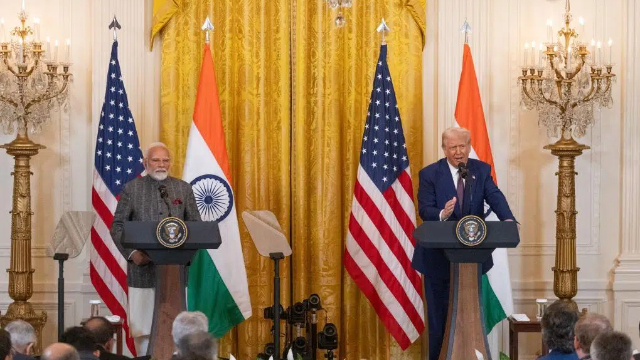
印度继续买俄油 据新华社报道,根据白宫6日发布的公告,特朗普称俄罗斯政府的行为和政策继续对美国国家安全和外 交政策构成"异常威胁",为应对俄乌冲突引发的国家紧急状态,"对直接或间接进口俄罗斯石油的印度 征收额外从价关税是必要和合适的"。 新的关税措施将在行政令公布21天后(即8月27日)实施,届时印度的纺织品、珠宝首饰、汽车零部 件、海产品等主要出口商品将课以50%的重税,而像苹果手机等电子产品,以及医药产品仍将享受关税 豁免待遇。 特朗普近日多次以印度购买俄罗斯石油为由,威胁大幅提高对印度产品的关税。他称,印度不仅大量购 买俄罗斯石油,还在二级市场上销售并获取大额利润。 半年前美国总统特朗普还将印度总理莫迪称之为"伟大的朋友",如今双方关系在贸易战的硝烟下,露出 了明显的裂痕。 据新华社报道,特朗普6日签署行政令,以印度"以直接或间接方式进口俄罗斯石油"为由,对印度输美 产品征收额外的25%关税。 此前特朗普已经签署行政令,美国从8月7日开始对印度输美商品征收25%的关税。两者叠加后,印度输 美商品将总体适用50%的关税税率。印度也由此成为输美商品税率最高的国家之一。 上海国际问题研究院南亚研究中心主任刘宗 ...
美对印关税战升级至50%!印美“硬碰硬”,是为了石油还是贸易逆差?
Di Yi Cai Jing· 2025-08-07 09:13
特朗普近日多次以印度购买俄罗斯石油为由,威胁大幅提高对印度产品的关税。他称,印度不仅大量购 买俄罗斯石油,还在二级市场上销售并获取大额利润。 2025年上半年,印度日均进口俄油175万桶,较去年同期增长了1%。 半年前美国总统特朗普还将印度总理莫迪称之为"伟大的朋友",如今双方关系在贸易战的硝烟下,露出 了明显的裂痕。 据新华社报道,特朗普6日签署行政令,以印度"以直接或间接方式进口俄罗斯石油"为由,对印度输美 产品征收额外的25%关税。 此前特朗普已经签署行政令,美国从8月7日开始对印度输美商品征收25%的关税。两者叠加后,印度输 美商品将总体适用50%的关税税率。印度也由此成为输美商品税率最高的国家之一。 上海国际问题研究院南亚研究中心主任刘宗义向第一财经记者表示,除了印度大量购买俄罗斯石油的表 面问题外,特朗普其实特别在意印度的贸易逆差问题,早在莫迪今年早些时候访问美国时,特朗普就提 出印度需要购买美国石油来削减逆差。与此同时,印度在与美国的贸易谈判上,始终不愿做出过多的让 步,这让特朗普更加恼火。 印度继续买俄油 据新华社报道,根据白宫6日发布的公告,特朗普称俄罗斯政府的行为和政策继续对美国国家安全和 ...

美国增加印度关税至50% 国际白银行情拉高反转
Jin Tou Wang· 2025-08-07 07:58
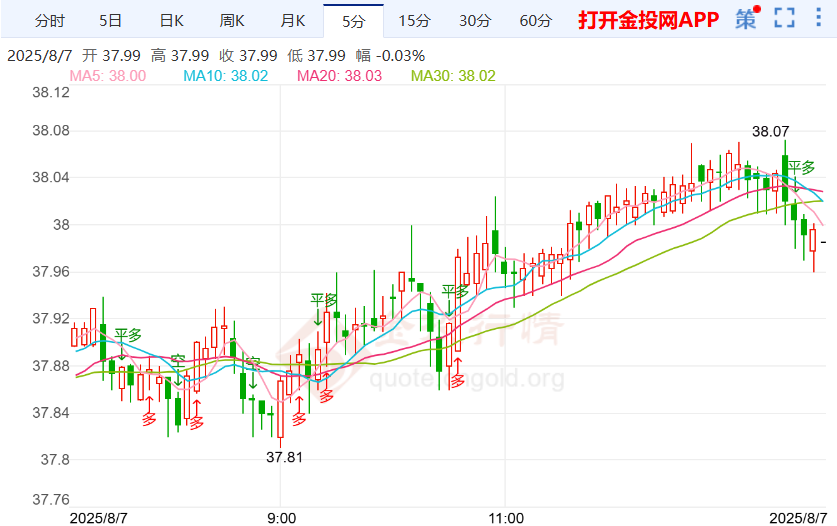
Group 1 - International silver is currently trading below $38.01, with a recent report indicating a price of $38.00, reflecting a 0.44% increase from the opening price of $37.82 per ounce [1] - The highest price reached today was $38.07, while the lowest was also $38.07, indicating a short-term bullish trend in the silver market [1] - Analysts suggest that silver has room for further increases, with potential targets around $38.5, while support levels are noted at $37.65 and $37.50 [4] Group 2 - President Trump has imposed an additional 25% tariff on Indian goods due to India's continued purchase of Russian energy, raising the total tariff rate to 50% [3] - Following this announcement, the iShares MSCI India ETF dropped to a session low, and oil prices increased, indicating market reactions to the tariff news [3] - The U.S. is set to raise import tariffs on several trade partners, including India, as part of a strategy to reduce trade deficits and boost domestic manufacturing [3]
特朗普关税全面落地:美国平均税率跃升至15.2% 创二战后新高
Zhi Tong Cai Jing· 2025-08-07 06:28
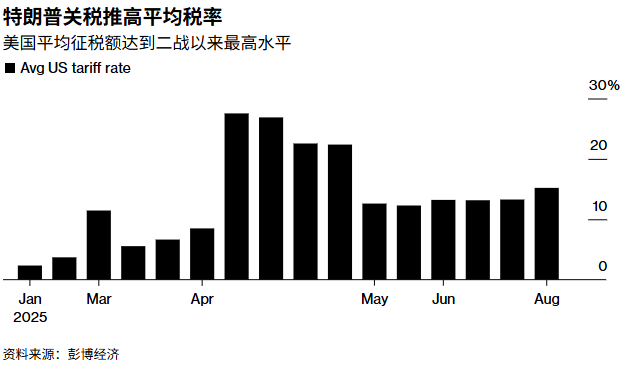
Group 1 - The Trump administration's tariff policy officially took effect, marking a significant shift in global trade dynamics, with nearly all trade partners facing increased tariffs [1][3] - The average tariff rate in the U.S. is projected to rise from 2.3% to 15.2%, the highest level since World War II, impacting key products from the EU, Japan, and South Korea [1][3] - Ongoing negotiations with Mexico, Canada, and China are still in separate tracks, with potential additional tariffs on strategic industries like pharmaceuticals and semiconductors anticipated [3][4] Group 2 - Economic data indicates potential risks, with July employment figures showing the largest decline since the pandemic began, and economic growth slowing due to reduced consumer spending [3][4] - Wall Street institutions have warned of market risks, predicting a possible short-term pullback in the S&P 500 index due to rising inflation and weak consumer spending [4] - Legal challenges are emerging regarding the legality of the tariff implementation, with experts highlighting significant flaws in the legal basis for the tariffs [6][8] Group 3 - The administration claims that the tariff policy will lead to an "economic golden age," with record tariff revenues of $113 billion reported, but experts caution that increasing tariff revenue and expanding domestic manufacturing jobs may be contradictory [8]
50%!特朗普以“进口俄石油”为由翻倍上调印度关税
Zhong Guo Xin Wen Wang· 2025-08-07 06:27
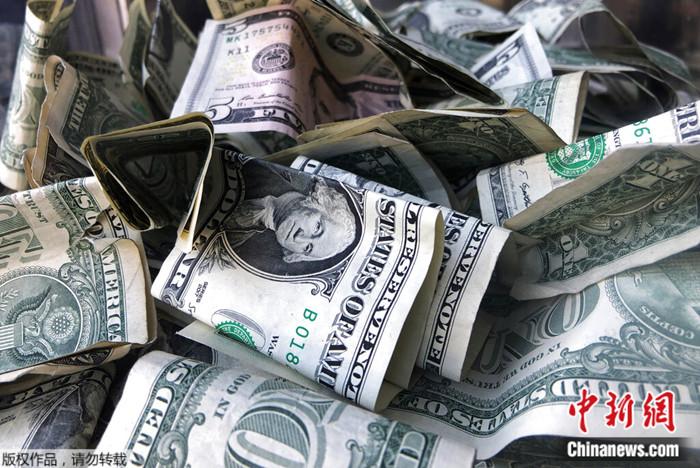
中新网8月7日电(记者 张乃月)当地时间6日,美国总统特朗普签署行政令,以印度"通过直接或间接方式 进口俄罗斯石油"为由,对印度输美产品征收额外的25%关税。 资料图:美元。 25%+25% 据白宫官网,特朗普6日签署的行政令显示,美国对印度最新的关税措施将在21天后实施。 给出的理由则是:俄罗斯方面的行为和政策继续对美国国家安全和外交政策构成"异常且巨大的威胁", 为应对相关紧急状态,有必要"对直接或间接进口俄罗斯石油的印度征收额外从价关税"。 印度外交部迅速回应,美国对印度加征关税等行为"不公平、不公正且不合理",并宣布将采取一切必要 行动维护国家利益。 早在7月31日,特朗普已在行政令中宣布将从8月7日开始对印度征收25%的关税。 两次关税叠加,印度输美商品的关税税率将达到50%。 美国贸易代表办公室数据显示,2024年,美国与印度的商品贸易总额约为1292亿美元。美国对印度的商 品贸易逆差为457亿美元,比2023年增加5.4%。 还是因为俄罗斯? 此前,美国已对印度商品征收25%关税,这项新措施将使相关税率进一步上升至50%。外媒评论称,美 印关系正陷入近年来最严重的对峙,双方就贸易问题的磋商未能取 ...
上半年波黑葡萄酒贸易逆差扩大至1970万马克,进出口覆盖率骤降至17.46%
Shang Wu Bu Wang Zhan· 2025-08-06 16:07
Core Insights - Bosnia and Herzegovina's wine trade deficit has expanded to 19.7 million marks in the first half of 2025, with import coverage dropping to 17.46% [1] Trade Performance - Wine exports in the first half of 2025 amounted to 4.158 million marks (approximately 2.13 million euros), reflecting a slight year-on-year increase of 3.25% [1] - In contrast, wine imports surged to 23.808 million marks (12.2 million euros), marking a significant growth rate of 16.99% [1] - The trade deficit has widened to 19.7 million marks, indicating a growing imbalance in the wine trade [1] Market Dynamics - The average export price increased by 0.72 marks per kilogram, yet the total export volume remained stagnant, highlighting production bottlenecks and distribution challenges faced by local wineries [1] - The largest export markets for Bosnian wine include Croatia, Serbia, Montenegro, Germany, and Sweden, with Croatia accounting for the largest share at 65% [1] - Major import markets consist of Croatia, North Macedonia, Serbia, Montenegro, and France, with Croatia also leading in imports at 32%, while Montenegro and North Macedonia continue to see rising import volumes [1]
美对印度加征25%额外关税!竟因俄罗斯?!
Zheng Quan Shi Bao· 2025-08-06 15:08
Core Points - The U.S. has imposed a 25% additional tariff on goods from India in response to India's continued import of Russian oil, as stated by the White House [1] - India's Ministry of External Affairs defended its actions, claiming that the purchase of Russian oil was a necessary response to global market fluctuations and that the accusations against India were unfair [2] - President Trump criticized India's high tariffs and non-tariff barriers, which he believes have hindered U.S.-India trade, leading to a significant trade deficit [2] Group 1 - The U.S. government has taken measures against India due to its import of Russian oil, which is seen as a direct response to geopolitical tensions [1] - India argues that its imports of Russian oil are a passive choice made necessary by the disruption of traditional supply sources due to the Russia-Ukraine conflict [2] - The U.S. has expressed concerns over India's trade practices, particularly regarding the sale of Russian oil on the open market for profit [2] Group 2 - The European Union's trade with Russia is significantly larger than India's, with projected trade volumes reaching €67.5 billion in 2024, indicating a disparity in the criticism directed at India [2] - The U.S. continues to import various products from Russia, including uranium hexafluoride and palladium, highlighting a complex trade relationship despite geopolitical tensions [2] - Trump's announcement of tariffs and other punitive measures reflects ongoing trade tensions and the U.S. administration's focus on addressing trade imbalances with India [2]
美国6月贸易逆差降16%,原因何在
第一财经· 2025-08-06 07:17
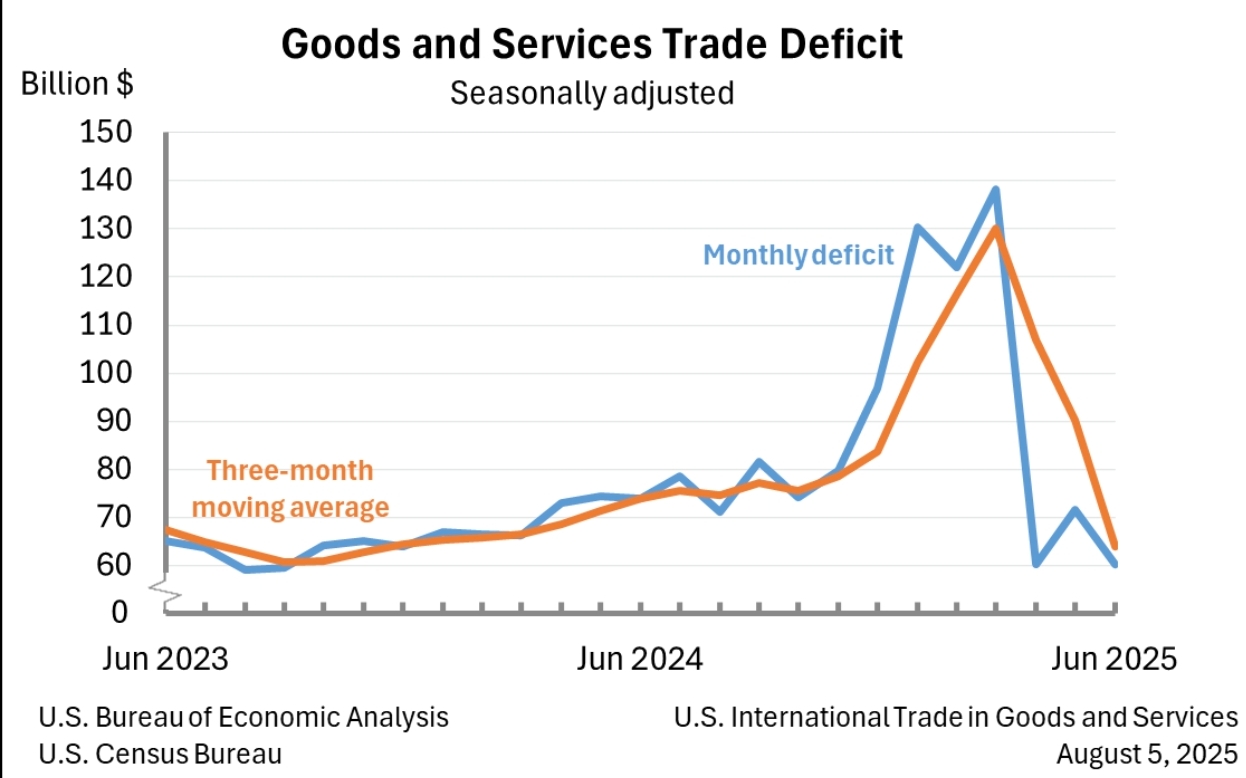
Core Viewpoint - The article discusses the recent developments in US-China trade relations, highlighting the trade deficit data and the outcomes of the latest economic talks between the two countries [3][8]. Trade Deficit Analysis - In June 2025, the US trade deficit in goods and services decreased to $60.2 billion, down from a revised $71.7 billion in May, marking a 16% month-over-month decline [4]. - Exports in June totaled $277.3 billion, a slight decrease of $1.3 billion or 0.5% from May, while imports fell to $337.5 billion, down $12.8 billion or 3.7% [4][6]. - The reduction in the trade deficit was primarily due to a decrease in the goods deficit, which fell by $11.4 billion to $85.9 billion, alongside a slight increase in the services surplus [6]. Sector-Specific Insights - The decline in goods exports was driven by reductions in industrial supplies and materials, as well as computer accessories, which decreased by $4.8 billion and $1.2 billion, respectively [6]. - Conversely, capital goods and consumer goods saw increases in exports, rising by $2 billion and $1 billion, respectively [6]. - On the import side, consumer goods, industrial supplies, and automotive parts all experienced declines, with consumer goods decreasing by $8.4 billion [6]. Year-to-Date Trade Performance - For the first half of 2025, the US trade deficit increased by $161.5 billion compared to the same period last year, representing a 38.3% rise [6]. - Exports rose by $82.2 billion year-over-year, a 5.2% increase, while imports surged by $243.7 billion, a 12.1% increase [6]. US-China Trade Relations - In June, China's exports to the US showed signs of recovery, with the year-over-year decline narrowing by 18.4 percentage points, amounting to approximately $38.17 billion [7]. - The share of exports to the US in China's total exports increased from 9.1% to 11.7% [7]. Recent Economic Talks - Recent US-China economic talks held in Stockholm focused on trade relations and macroeconomic policies, with both sides expressing a commitment to continue dialogue and cooperation [8]. - The talks resulted in an agreement to extend the suspension of certain tariffs and countermeasures for an additional 90 days, aiming to stabilize trade relations [8].

美国6月贸易逆差降16%,原因何在
Di Yi Cai Jing· 2025-08-06 05:22
Group 1 - In June, the trade deficit for goods and services decreased to $602 billion, down $115 billion from May, marking a 16% month-over-month decline [1][3] - Exports in June totaled $2,773 billion, a slight decrease of $13 billion or 0.5% from May, while imports fell to $3,375 billion, down $128 billion or 3.7% [1][3] - The increase in the trade deficit for the first half of the year was $1,615 billion, a 38.3% rise compared to the same period last year, with exports up by $822 billion (5.2%) and imports up by $2,437 billion (12.1%) [3] Group 2 - In June, U.S. exports to China decreased by approximately $381.7 billion, with the decline narrowing by 18.4 percentage points compared to previous months [4] - The U.S. trade talks with China in Stockholm focused on economic relations and macroeconomic policies, aiming to stabilize trade relations and inject certainty into global economic development [4] - Both parties agreed to extend the suspension of tariffs and countermeasures for an additional 90 days, reflecting a commitment to further dialogue and cooperation [4]