
全国统一大市场

Search documents
人民日报评论员观察:早餐会,为何受欢迎?
Sou Hu Cai Jing· 2026-01-16 00:56
Group 1 - The breakfast meeting has become an important form of communication between government and enterprises, focusing on effective organization and problem-solving [1][2] - The "one meeting, one theme" model used in Jilin's breakfast meetings allows for efficient resolution of enterprise issues through categorized feedback [1] - The mechanism of tracking and addressing enterprise concerns post-meeting, as seen in Sichuan's "Saturday Tea Talk," has led to a high satisfaction rate of 98% from over 300 resolved issues [1] Group 2 - The government is encouraged to create platforms for resource matching, as demonstrated by regular automotive industry meetings that facilitate deep cooperation between manufacturers and suppliers [2] - The establishment of a market-oriented electricity trading mechanism has enabled efficient cross-regional electricity flow, highlighting the importance of breaking down barriers and unifying regulations [3] - The focus on technology innovation and supportive government services has fostered the growth of new enterprises in key sectors, emphasizing the need for a service-oriented government [3]
推动融入服务全国统一大市场走深走实
He Nan Ri Bao· 2026-01-15 23:29
——市场基础设施更加畅通。统筹推动"硬联通"和"软协同",高速公路通车总里程突破1万公里;2025 年前11个月,全省累计完成港口吞吐量6067.6万吨、同比增长20.2%;常态化开行郑州至青岛、连云 港、宁波等铁海联运班列,社会物流总费用与地区生产总值比率低于全国平均水平0.6个百分点。 ——市场要素配置更加高效。成功创建郑州国家要素市场化配置综合改革试点;2025年前11个月,全省 工业用地"标准地"出让占比同比提高8.03个百分点,社保服务"跨省通办"人次同比增长17.8%,制造业 中长期贷款余额同比增长6.2%,技术合同成交额同比增长63.7%;郑州数据交易中心挂牌数据产品数量 同比增长14.7%。 岁序更替,新元肇启。在"十五五"开局启新的关键节点,河南融入服务全国统一大市场研讨会在郑州召 开。1月15日,国内知名专家学者齐聚一堂,为河南建设全国统一大市场循环枢纽、打造国内国际市场 双循环支点把脉定向、建言献策。 破卡点、强联通、建枢纽、增动力、提能级……2025年以来,河南将服务全国大局和实现自身发展结合 起来,把融入服务全国统一大市场作为推动高质量发展的战略性举措来抓,明确方向思路,健全工作体 ...
面对面找问题 实打实破堵点——河南融入服务全国统一大市场政企座谈会侧记
He Nan Ri Bao· 2026-01-15 23:29
"上午大家一起听取了专家们的主旨演讲,下午咱们就面对面探讨实际问题,有针对性地梳理妨碍融入 服务全国统一大市场的堵点卡点,助力企业做大做强。" 1月15日,随着省发展改革委党组书记、主任马健的一番话,一场气氛热烈又务实的政企座谈会就此开 始。融入服务全国统一大市场,企业不是旁观者,而是参与者。 "过去一年,河南持续优化的营商环境为企业发展提供强力支撑。"河南省温州商会会长卢庆中对此感受 很深,商会会员在多领域设立生产基地,利用河南的区位交通优势和劳动力资源,将产品辐射全国。 这一观点也引发了河南海一云商实业集团有限公司副总经理冯小丽的共鸣。"作为一家根植河南、深耕 家电行业的本土企业,我们在享受互联网红利的同时,也深受监管中的'甄别机制'尚不完善的困 扰。"冯小丽说。 对此,她建议,河南应依托自身优势,进一步加大对直播电商、跨境电商等新业态的扶持力度;建立全 省统一的电商监管与服务标准体系,实现"一地准入、全省通行";支持企业利用大数据精准匹配全国供 需,让河南成为数字经济的流量枢纽。 融入服务全国统一大市场,河南要充分发挥大腹地、大枢纽、大市场优势,持续完善综合交通物流体 系。在此背景下,置身其中的物流企业 ...
早餐会里的搭台与破壁(评论员观察)
Ren Min Ri Bao· 2026-01-15 22:09
Group 1 - The core idea emphasizes the importance of precise government actions to break down barriers and unify rules, which is essential for establishing a unified national market [1][3] - Government initiatives like breakfast meetings have become a significant form of communication between government and enterprises, allowing for effective problem-solving and feedback collection [1][2] - The mechanism of regular communication and feedback, such as the "Saturday Tea Gathering" in Guangyuan, has led to high satisfaction rates among enterprises, demonstrating the effectiveness of closed-loop mechanisms in addressing business concerns [1][2] Group 2 - The government is encouraged to create platforms for resource matching, particularly in industries like automotive, where deep cooperation between manufacturers and suppliers is crucial [2] - The establishment of a normalized electricity trading mechanism has facilitated efficient cross-regional electricity flow, showcasing the benefits of breaking down barriers in resource allocation [3] - The focus on technology innovation and the supportive role of service-oriented government are highlighted as key factors for the growth of new enterprises in sectors like high-end equipment and digital economy [3]
枢纽河南的大市场新“棋局”
Xin Lang Cai Jing· 2026-01-15 13:16
中新网郑州1月15日电 (张楠)一年前,中部大省河南在"新春第一会"上率先部署融入全国统一大市场。 一年后,2026河南融入服务全国统一大市场研讨会15日在郑州举行,这场"棋局"从战略落子进入复盘与 谋新阶段。 在追求市场规则统一的同时,如何兼顾地方发展的实际需求?华东政法大学副校长罗培新提出"功能性 差异化"观点称,建立全国统一的抵押登记信息平台,能普降企业跨区域经营的制度性成本,此类基础 制度必须统一。但对于招商引资、产业培育等政策,在透明、公平的前提下,基于本地资源禀赋和发展 阶段的差异化安排,是提升区域竞争力的务实之举。 与去年相比,今年的讨论少了些宏观口号,多了些对具体路径甚至矛盾瓶颈的务实剖析,如何"落子"成 为今年的讨论焦点。 河南省发展和改革委员会党组书记、主任马健在会上提供了一份年度"对账单":清理妨碍市场统一的政 策文件160份;高速公路里程突破1万公里,社会物流总费用与地区生产总值比率低于全国平均水平0.6 个百分点;郑州获批国家要素市场化配置综合改革试点以来,技术合同成交额激增63.7%,数据交易日 趋活跃…… "将物理优势转化为要素配置优势,需破解制度性壁垒。"中国宏观经济学会会长徐 ...
中国真正的危机,不是缺钱!而是没人敢承认“东西已经够多了”?
Sou Hu Cai Jing· 2026-01-15 13:12
这两年"促消费"几乎成了所有经济讨论里的高频词。 文件密集出台,会议反复强调,各地也忙着上项目、推政策;可很多人心里都有一个疑问:东西明明越来越好,为什么大家还 是不太愿意花钱?是真没需求,还是不敢消费?问题到底出在商品、政策,还是我们自己? 超额生产的东西 很多人没有意识到,中国真正进入工业化社会,其实也就四十来年。 时间不算短,但和几千年的农业文明相比,依然很"年轻";这就带来一个很现实的问题:我们的生产能力已经是工业社会水平 了,但很多决策和直觉,仍然停留在"怕不够"的阶段。 在农业社会,最大的风险是歉收,是吃不饱;所以多种、多囤,是刻在骨子里的安全感来源;可工业社会恰恰相反,它最怕的 不是不够,而是太多;机器一旦开起来,产能是连续不断的,如果产品卖不出去,现金流就会出问题,问题会顺着产业链一路 传导。 放到现实里看,这种错位非常明显;一边是越来越智能、越来越精致的商品,一边却是并不算活跃的消费市场。 数据显示,社会消费品零售总额仍在增长,但增速并不强;与此同时,不少行业的产能利用率和库存压力始终存在;这说明什 么?不是大家不需要东西,而是消费节奏和生产节奏没对上。 在这种背景下,政策选择先从供给端发力 ...

法治护航公平竞争 绘就统一大市场建设福建样本
Zhong Guo Jing Ji Wang· 2026-01-15 12:01
Core Viewpoint - The implementation of the "Fujian Province Fair Competition Regulation" marks a significant step towards establishing a unified national market by promoting fair competition and addressing local governance challenges [1][2]. Group 1: Legislative Framework - The "Fujian Province Fair Competition Regulation" integrates anti-monopoly, anti-unfair competition, and fair competition advocacy into a single legal framework, filling a gap in local comprehensive competition legislation [2][3]. - The regulation aligns with national strategies and addresses local competition governance issues, reflecting the need for a fair competition environment in a high-market economy like Fujian [2]. Group 2: Implementation and Enforcement - In its first year, the regulation has led to significant enforcement actions, including the investigation of 3 economic monopoly cases, 16 administrative monopoly cases, and 831 unfair competition cases [4][5]. - The regulation emphasizes the importance of government behavior in preventing administrative monopolies and market entry barriers, requiring fair competition reviews for new policies [3][5]. Group 3: Compliance and Innovation - The regulation has established a compliance incentive mechanism, encouraging over 230 key enterprises to develop fair competition compliance management systems, which has led to reduced penalties for minor violations [9][10]. - Various training and guidance initiatives have been conducted to enhance compliance awareness among business leaders and legal personnel, fostering an environment conducive to innovation [9][10]. Group 4: Collaborative Governance - The regulation promotes a collaborative approach to building a fair competition environment, involving government departments, media, and industry associations in the process [10]. - Activities such as "Fair Competition Policy Promotion Weeks" have reached over 20,000 enterprises, enhancing the understanding and implementation of fair competition principles [10]. Group 5: Future Outlook - The ongoing implementation of the regulation is expected to further enhance its practical value, with plans for cross-regional enforcement collaboration and innovations in digital economy regulation [11].
中国经济透视 _2026年宏观主题和可能存在的变数_ 宇
2026-01-15 06:33
Summary of Key Points from the Conference Call Industry Overview - The conference call discusses the macroeconomic outlook for China in 2026, focusing on GDP growth, export trends, real estate market dynamics, and policy support measures. Core Insights and Arguments 1. **GDP Growth Forecast**: The expected GDP growth rate for China in 2026 is projected to be around 4.5%, a slowdown from approximately 5% in 2025, primarily due to a significant reduction in net exports' contribution to growth [2][6][25]. 2. **Export Trends**: Export growth is anticipated to slow down in 2026, influenced by global economic conditions, previous tariff impacts, and a high base effect. The forecasted export growth rate is between 2.5% and 3% [7][4][6]. 3. **Real Estate Market**: The real estate sector is expected to continue its downward trend, with a projected decline in sales, new construction, and investment by 5-10% in 2026. However, the extent of the decline may be less severe than in 2025 [8][12][26]. 4. **Consumer Spending**: Consumer growth is expected to remain moderate but slow down due to high base effects from previous subsidies. The total amount for trade-in subsidies is estimated at approximately 250 billion yuan, a 17% decrease from 2025 [12][16]. 5. **Investment Recovery**: Fixed asset investment is projected to recover moderately in 2026, particularly in infrastructure and manufacturing, following a significant decline in 2025 [13][17]. 6. **Policy Support**: The government is expected to maintain a balanced and moderate policy support approach, with a potential increase in the fiscal deficit by 0.5-1% of GDP and a reduction in policy interest rates by 20 basis points [3][25][32]. 7. **Inflation Trends**: CPI is expected to slightly rebound to 0.4% in 2026, while PPI is projected to see a narrowing of its decline [16][22]. 8. **Currency Outlook**: The Chinese yuan is expected to appreciate against a basket of currencies while remaining stable against the US dollar, with a projected exchange rate fluctuation around 7.0 to 6.9 by the end of 2026 [20][22]. Additional Important Insights 1. **Structural Reforms**: The government is focusing on structural reforms, including promoting innovation and reducing "involution" in the economy, which may enhance overall economic growth [26][27]. 2. **Uncertainties and Risks**: Potential risks include the unpredictability of the real estate market, the impact of US-China trade relations, and the possibility of a bubble in artificial intelligence investments [4][38]. 3. **Long-term Economic Strategy**: The new five-year plan emphasizes innovation and aims to increase the contribution of "new economy" sectors to GDP, which is expected to grow faster than traditional sectors [26][27]. This summary encapsulates the key points discussed in the conference call, providing a comprehensive overview of the anticipated economic landscape for China in 2026.
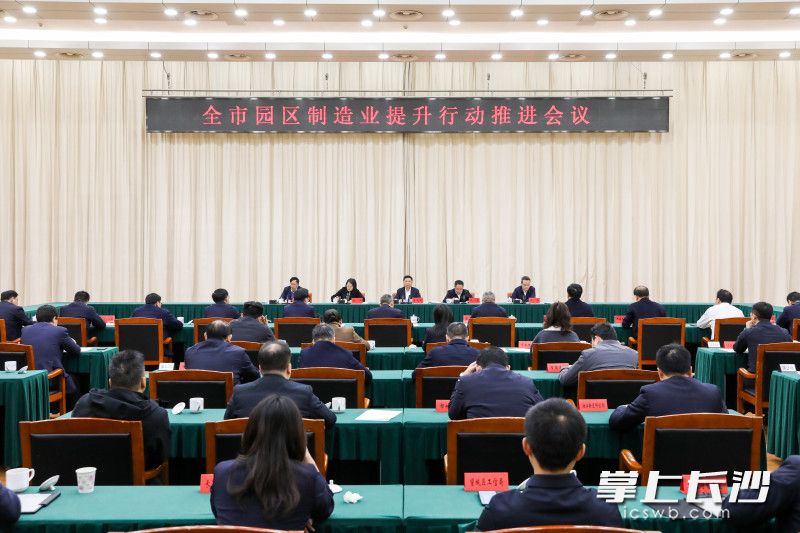
全市园区制造业提升行动推进会议召开 陈博彰出席
Chang Sha Wan Bao· 2026-01-15 02:37
Core Viewpoint - The meeting emphasized the importance of advancing the manufacturing sector in the city, aligning with national strategies to enhance project construction, industrial development, and economic efficiency, aiming for a strong start to the 14th Five-Year Plan [1][2]. Group 1: Project and Economic Growth - In 2025, the city expects a 59% increase in signed and landed projects, a 14% increase in new projects started, and a 36% increase in new projects put into operation [2]. - The city has positioned its parks as the main engine for building a significant advanced manufacturing hub, focusing on project execution, industrial growth, and economic competition [2]. Group 2: Strategic Initiatives - The city aims to enhance investment, project initiation, and quality improvement through a coordinated project construction system, emphasizing the simultaneous growth of investment volume, project volume, and physical volume [3]. - There is a focus on optimizing and integrating 17 industrial chains, fostering enterprise development, and improving the business environment to support companies throughout their lifecycle [3]. Group 3: Policy and Governance - The meeting highlighted the need to refine the park's governance structure and activate its resources, establishing a precise evaluation system to foster a proactive and high-performance atmosphere [3].
以有效管党治党保障经济社会发展——论学习贯彻习近平总书记在二十届中央纪委五次全会上的重要讲话
Jing Ji Ri Bao· 2026-01-14 07:59
Group 1 - The core idea emphasizes that effective party governance strengthens the foundation for economic and social development, as highlighted in the 20th Central Committee's Fourth Plenary Session [1] - The "14th Five-Year Plan" period is identified as a critical phase for achieving socialist modernization, necessitating enhanced party governance to address structural economic challenges [1] - The need for continuous and rigorous party governance is underscored to foster unity and resilience in overcoming developmental challenges [2] Group 2 - Political supervision is crucial for ensuring adherence to the centralized leadership of the Party and for promoting a correct view of performance among party members [3] - Specific tasks such as developing a modern industrial system and preventing poverty are highlighted as areas requiring focused supervision to enhance problem-solving and execution of policies [3] Group 3 - The importance of refining institutional regulations and enhancing their enforcement is stressed, with recent updates to various regulations aimed at tightening governance [4] - A strong stance against corruption is emphasized, with a commitment to maintaining pressure on corrupt practices and extending governance efforts to grassroots levels [4] Group 4 - The call for self-examination and a revolutionary spirit among party members is articulated, aiming to align with the demands of the times and the people [5]