
十四五规划

Search documents
【“十四五”高质量发展答卷】我国建成世界上规模最大水利基础设施体系
Yang Shi Wang· 2025-09-29 12:12
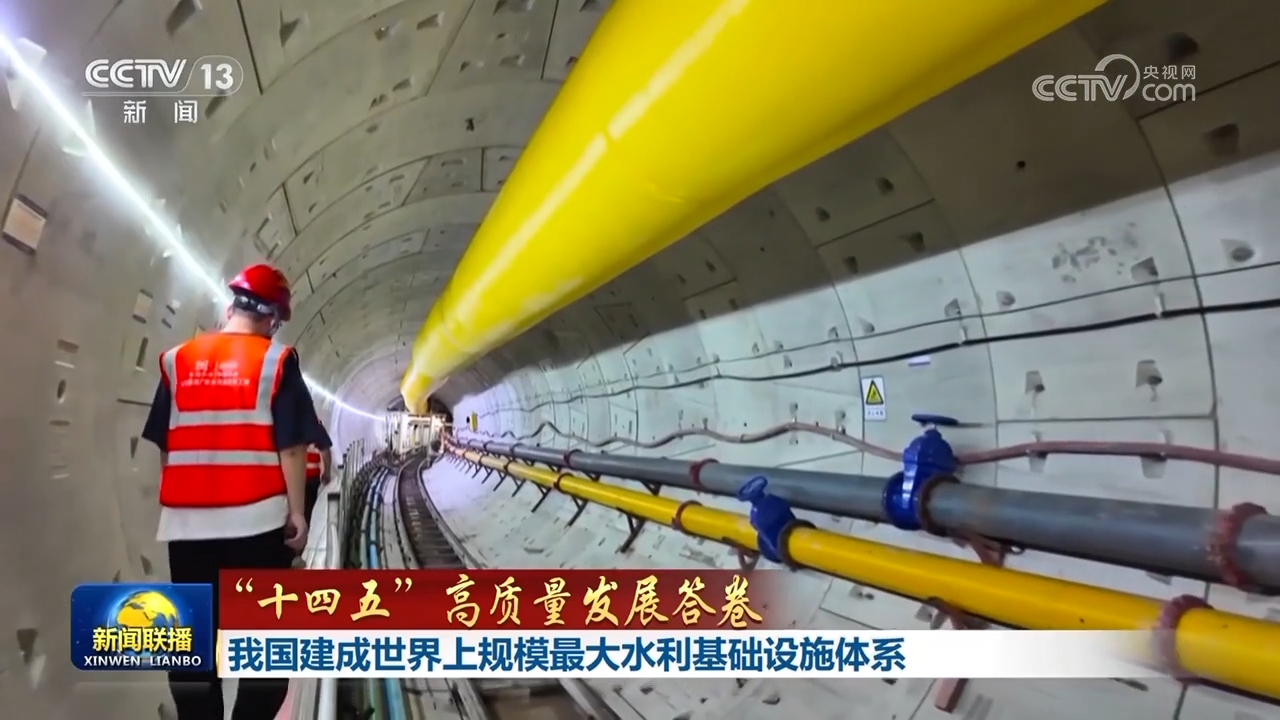
Core Viewpoint - During the "14th Five-Year Plan" period, China has made significant progress in water conservancy development, with a focus on infrastructure investment and resource allocation. Group 1: Investment in Water Conservancy - The investment in water conservancy construction reached over 1 trillion yuan for the first time in 2022, marking a historical record for three consecutive years, with an expected total investment of 13,529 billion yuan in 2024, and over 54,000 billion yuan during the "14th Five-Year Plan," which is 1.6 times that of the "13th Five-Year Plan" [3]. Group 2: Water Resource Allocation - The formation of a water resource allocation pattern of "south-north transfer and east-west mutual assistance" has accelerated, with an expected national water network coverage rate of 80.3% by the end of this year, and a key river and lake ecological flow compliance rate of 98.6% [5]. Group 3: Irrigation and Efficiency - In the past five years, 1,959 large and medium-sized irrigation areas have undergone modernization, with over 200 million mu of irrigation area newly restored and improved. The irrigation water efficiency has improved year by year, maintaining a grain productivity of over 3.6 pounds per unit of irrigation water, highlighting the crucial role of irrigation areas in grain production [5].

非凡“十四五”丨文化旅游事业,这样满足人民美好生活需要!
Xin Hua She· 2025-09-29 08:54
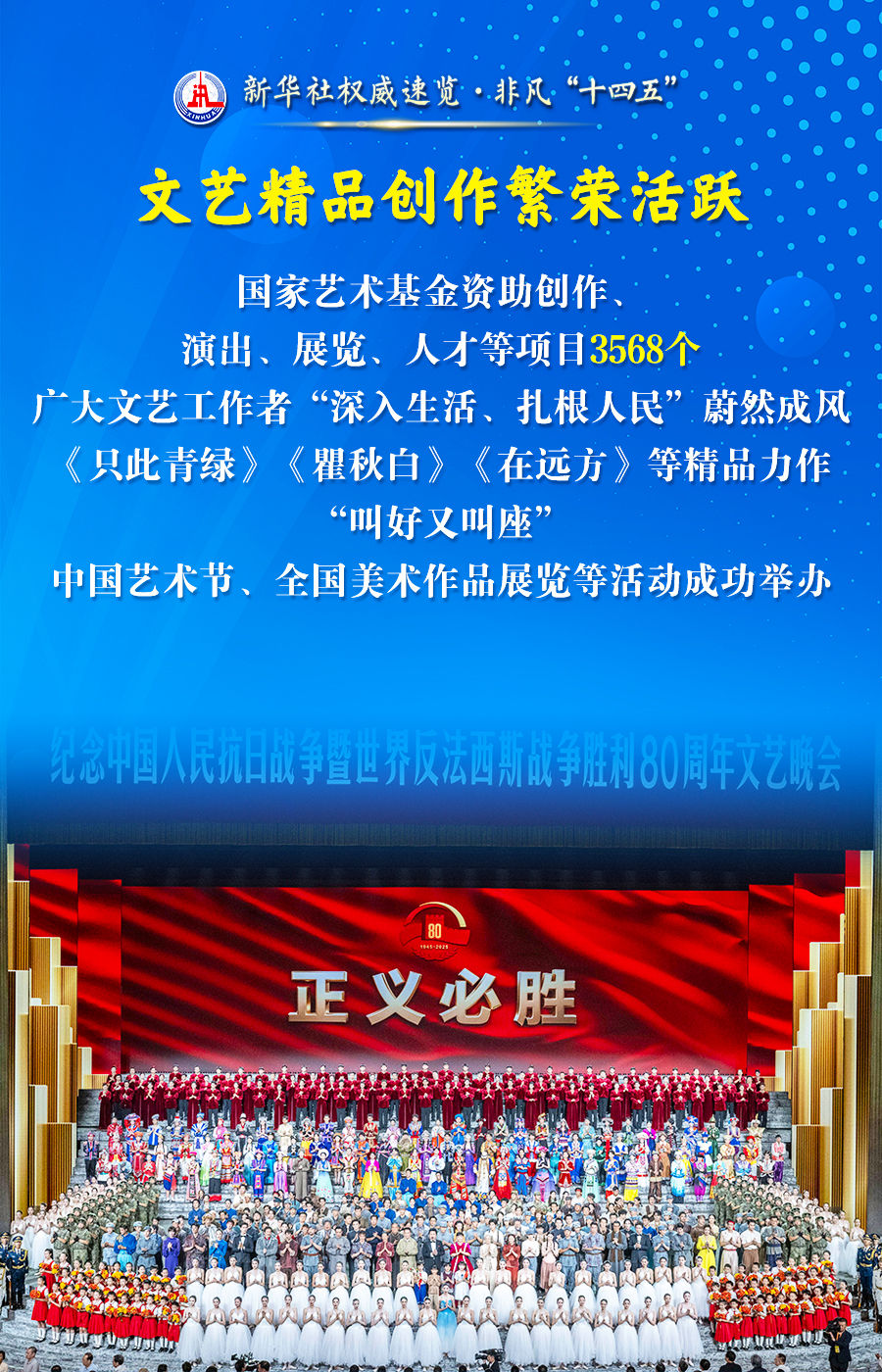
"十四五"以来,文化和旅游系统在党中央坚强领导下,统筹推进文化事业、文化产业和旅游业发展,高效完成"十四五"规划的 目标任务,有力促进了经济社会高质量发展,为不断满足人民美好生活需要作出了积极贡献。跟随海报,一起看看。 新华社权威速览 ·非凡" 文旅公共服务惠及城 截至2024年底,全国共有公共图书馆3248 群众文化机构近4.4万个 新型公共文化空间4万多个 "村晚"活力四射,"村歌"唱响全 "广场舞"舞动城乡 旅游厕所革命深入实施,新建改扩建厕所约15万座 公布第五批国家级非遗代表性项目325项 第六批国家级非遗代表性传承人942人 北京中轴线、西夏陵和中国茶、春节申遗成, 我国列入《世界遗产名录》项目60项 列入联合国教科文组织非遗名录名册项目44项 新华社权威速览 ·非风 "十四五 文旅产业发展蓬勃兴旺 新华社权威速览 · 非风 · 十 文化遗产工作开创新 新华社权威速览 ·非凡 ·十四) 国际交流合作走深走实 中国 -- 中亚峰会、中非合作论坛峰会、 上海合作组织峰会等配套文化活动成功举办 服务了大国外交、展现了中国形象 海外中国文化中心、旅游办事机构增至73家 会同相关部门推动入境旅游便利化国际化 ...
沥青2025年四季报:成本主导,供需双弱
Guan Tong Qi Huo· 2025-09-29 08:26
Report Industry Investment Rating No information provided in the given content. Core Views - Supply side: High asphalt losses, raw material shortages, and limited improvement in terminal demand are expected to keep the asphalt operating rate low in Q4. With the widening discount of diluted asphalt, attention should be paid to the potential increase in Venezuelan heavy oil flowing to China. Import growth in Q4 2025 is expected to be very limited. [4][78] - Demand side: Asphalt demand is mainly concentrated in road infrastructure and real estate, with road infrastructure accounting for 70%. As 2025 is the final year of the "14th Five - Year Plan", many road construction projects are in the delivery phase, which will drive asphalt demand. However, due to financial constraints on local governments and the lack of improvement in the real estate market, asphalt demand is unlikely to improve significantly in Q4 and will still lag behind previous years. Attention should be paid to the improvement of the capital side and the pace of forming asphalt physical volume. Low asphalt inventory strongly supports asphalt futures prices. [4][78] - Overall trend: With weak supply and demand, asphalt is expected to follow crude oil fluctuations in Q4, with its overall center of gravity moving down. The high asphalt basis suggests that northern spot traders can short the basis. Also, the 01 - 06 spread of asphalt is expected to weaken seasonally, so it is recommended to short the 01 - 06 spread. [4][78] Summary by Related Catalogs 1. Asphalt Price走势 - The asphalt/crude oil ratio increased in the first three quarters of 2025. Due to geopolitical disturbances in Russia and Venezuela, the ratio is expected to remain high in Q4. [9] - After the implementation of the diluted asphalt consumption tax deduction policy, refineries suffered heavy losses in processing diluted asphalt, leading to a significant reduction in imports and low port inventories. [11] - In the South China region, the increase in refinery operating rates has given asphalt spot prices a significant advantage. [20] - Since 2025, the asphalt basis first declined and then rebounded to a relatively high level. Recently, it has dropped to a slightly high - neutral position. [29] 2. Asphalt Production and Consumption - In August 2025, the asphalt operating rate decreased by 1.1 percentage points to 30.74%, and the Shandong region's operating rate decreased by 6.61 percentage points to 33.74%, both at relatively low levels. [34] - In August 2025, asphalt production increased by 0.75% month - on - month to 2.5267 million tons, with a year - on - year increase of 22.63%. From January to August 2025, the cumulative production increased by 9.28% year - on - year to 18.8156 million tons. [39] - In July 2025, the apparent consumption of asphalt increased by 2.79% month - on - month to 2.833 million tons, with a year - on - year increase of 21.21%. From January to July 2025, the cumulative apparent consumption increased by 4.98% year - on - year to 18.0629 million tons. As of September 26, the national asphalt shipment volume decreased by 0.32% week - on - week to 312,600 tons. [44] - As of September 26, the asphalt operating rate rebounded by 5.7 percentage points to 40.1%. In the first three quarters of 2025, the operating rate was mostly low, and the profit of Shandong asphalt spot was significantly in the red, with a loss of over 600 yuan/ton. [47] - From January to August 2025, the cumulative net import of asphalt was 1.9591 million tons, a year - on - year decrease of 15.73%. In August, the net import reached the lowest level in recent years. [49] 3. Asphalt Downstream - Asphalt downstream demand is mainly in road construction and maintenance (about 70%), building waterproofing (about 20%), and ship fuel and coking (about 10%). [52] - From January to August 2025, the cumulative year - on - year growth of fixed - asset investment in road transportation was - 3.3%, continuing to decline. The cumulative sales volume of pavers was 1,120 units, a year - on - year increase of 36.58%. [57] - From January to August 2025, the cumulative year - on - year growth of fixed - asset infrastructure investment was 5.42%. The growth rate of infrastructure investment excluding electricity dropped from 3.2% in January - July 2025 to 2.0% in January - August 2025. [59] - From January to July 2025, the national highway construction investment decreased by 8.0% year - on - year. The issuance progress of new local bonds is higher than that in 2024 but lower than that in 2023. It is expected that the special bonds will increase significantly from September to October. [62] - In Q3, the downstream main - road modified asphalt strengthened seasonally but not as much as in previous years. As of September 26, the operating rates of most downstream industries increased, but they were still at relatively low levels compared to previous years. [66] 4. Asphalt Inventory - As of September 26, the asphalt refinery inventory - to - stock ratio increased by 0.2 percentage points to 14.7%, remaining at the lowest level in recent years. [71] - As of September 26, the asphalt social inventory decreased by 3.50% week - on - week to 1.57 million tons, a year - on - year decrease of 18.14%. The factory inventory increased by 1.16% week - on - week to 698,000 tons, a year - on - year decrease of 27.74%. The overall inventory increased slightly but remained at a relatively low level compared to previous years. [76]
“十四五”社会民生“成绩单”出炉 “数”看经济社会高质量发展基础性支撑更稳
Yang Shi Wang· 2025-09-29 06:30
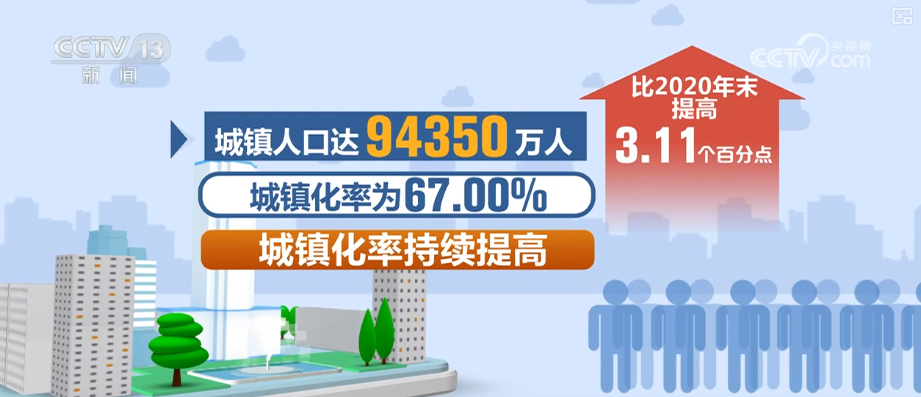
Group 1 - The core viewpoint of the report indicates that since the beginning of the 14th Five-Year Plan, China's population has remained stable, with improvements in population quality, stable employment, and steady growth in residents' income, providing foundational support for high-quality economic and social development [1] Group 2 - As of the end of 2024, the total population of China is projected to be 1,408.28 million, ranking among the highest in the world. The urban population is expected to reach 943.50 million, with an urbanization rate of 67.00%, an increase of 3.11 percentage points since the end of 2020 [3] Group 3 - The employment situation is generally stable, with continued growth in urban employment. The average urban survey unemployment rate is expected to be 5.1% by the end of 2024, a decrease of 0.5 percentage points from 2020. The third industry has shown enhanced employment absorption capacity, with an increase of 600,000 jobs since 2020, raising its share of total employment by 1.1 percentage points [6] Group 4 - Residents' income has shown stable growth, with the per capita disposable income expected to reach 41,314 yuan in 2024, an increase of 9,125 yuan since 2020. After adjusting for price factors, the average annual real growth rate from 2021 to 2024 is projected to be 5.5%, in line with GDP growth [9] Group 5 - In terms of expenditure, development-oriented consumption in education, culture, entertainment, transportation, communication, and healthcare is expected to grow rapidly, with an average annual growth rate of 10.0% from 2021 to 2024. Service consumption expenditure is projected to grow at an average annual rate of 9.5%, outpacing goods consumption expenditure by 3.8 percentage points [11]
“中国取得了不起的发展成就”(国际论道)
Ren Min Ri Bao Hai Wai Ban· 2025-09-28 22:56
Economic Strength Enhancement - The "14th Five-Year Plan" and the 2035 vision have shown significant progress in key economic indicators, with GDP expected to reach around 140 trillion yuan this year, marking an increase of over 35 trillion yuan, equivalent to the total economic output of major provinces like Guangdong, Jiangsu, and Shandong [3][4] - China's contribution to global economic growth remains around 30%, making it a major contributor to world economic growth [3][4] - The average economic growth rate over the past four years has been approximately 5.5% [3] Green Development - China has established the world's largest and fastest-growing renewable energy system, with the share of renewable energy generation capacity increasing from 40% to about 60% [6][7] - The country has achieved ultra-low emissions in 95% of its coal-fired power plants, demonstrating a commitment to green and low-carbon energy development [6][7] - China's advancements in clean energy are reshaping the global energy landscape and providing valuable lessons for developing countries [6][7][8] Long-term Planning - The use of medium- and long-term planning is a notable advantage of China's governance system, providing necessary continuity and stability for achieving set goals [9][10] - The "14th Five-Year Plan" has led to significant advancements in technology and green infrastructure, showcasing the effectiveness of strategic planning [10][11] - Public participation in policy-making has been emphasized, with millions of suggestions collected for the "15th Five-Year Plan," reflecting the government's commitment to incorporating public opinion into development strategies [11]
中国进出口银行北京分行奋力书写“十四五”金融担当
Sou Hu Cai Jing· 2025-09-28 15:48
Group 1 - The year 2025 is crucial for the conclusion of the "14th Five-Year Plan" and the foundation for the "15th Five-Year Plan" [1] - The Beijing branch of the Export-Import Bank of China has issued nearly 350 billion yuan in loans over the past five years, supporting over 1,600 projects [1] - The bank has focused on national strategies, optimizing cooperation among government, banks, and enterprises to facilitate high-quality development [1][2] Group 2 - The "Five Subsystems" approach has been pivotal in enhancing Beijing's high-quality development, with a focus on innovation and service industry expansion [2] - The bank has supported the establishment of a diversified open economy, including free trade zones and specialized industrial parks [2] - The bank has tailored financial solutions for technology innovation and infrastructure projects, contributing to the construction of a high-level open economy [2][3] Group 3 - The bank has developed specialized teams to provide comprehensive financial services for enterprises facing challenges in high-end manufacturing and international expansion [3] - The bank's support for green projects, such as wind energy, has contributed to sustainable development and environmental protection [3][4] Group 4 - The bank has actively participated in financing major infrastructure projects, enhancing transportation connectivity in the Beijing-Tianjin-Hebei region [4] - Customized financing solutions have been provided for complex projects, ensuring timely funding and support for urban development [4] Group 5 - The bank has established strategic partnerships with local governments to enhance financial services for key sectors, including technology innovation and manufacturing [5][6] - Collaborative efforts with other financial institutions have created a comprehensive service network, facilitating financial support across various industries [6] Group 6 - The bank has focused on stabilizing foreign trade and supporting the "Belt and Road" initiative, enhancing the resilience of the economy [7][8] - Financial support has been provided to major automotive companies, aiding their transition to international markets and smart manufacturing [7] Group 7 - The bank has tailored financing solutions for clean energy projects, ensuring energy security and supporting the green transition in the capital [8][9] - The bank's financial services have improved health outcomes in Belt and Road countries, demonstrating a commitment to social responsibility [9]
“十四五”主要指标超额完成 重庆市属国企资产总额达到5.8万亿元
Zhong Guo Xin Wen Wang· 2025-09-28 13:36
Group 1 - The core viewpoint of the article highlights the significant achievements of Chongqing's state-owned enterprises (SOEs) during the "14th Five-Year Plan" period, with key performance indicators exceeding expectations [1][2] - As of August 2025, the total assets of Chongqing's state-owned enterprises reached 5.8 trillion yuan, up from 4.1 trillion yuan at the end of the "13th Five-Year Plan," indicating a robust growth trajectory [1] - Over 90% of state capital is concentrated in public services, major infrastructure, and emerging industries, with a total investment of 1,013.7 billion yuan over five years in key projects such as airports and railways [1][2] Group 2 - Chongqing is optimizing its layout for long-term development by focusing on six key areas and concentrating resources on advantageous enterprises and projects, resulting in the consolidation of 51 key SOEs into 33 large groups [2] - The investment in strategic emerging industries reached 99.8 billion yuan, with significant projects like the "Hydrogen Corridor" and "Xinjiang Electricity into Chongqing" being implemented, positioning these industries as new growth engines for SOEs [2] - R&D funding for enterprises increased from 2.6 billion yuan to 6.2 billion yuan, maintaining double-digit growth for three consecutive years, with innovations in sectors such as new energy vehicles and high-end equipment manufacturing [2]
[奋进的中国 我们的“十四五”]广东 太空看大湾区:四大平台拔节生长
Yang Shi Wang· 2025-09-28 13:26
0:00 广东·太空看大湾区:四大平台拔节生长。 所属栏目 奋进的中国 我们的"十四五" 栏目介绍 "十四五"收官在即,全面深化改革加速向前!这五年,北京火力全开:文化更潮,科技更硬核,生态更 优美,城市更宜居。踔厉奋发,逐梦前行。首都北京,正用一个个高光时刻,描绘新时代高质量发展的 壮丽篇章! 责编:秦雅楠、王珊宁 ...
[奋进的中国 我们的“十四五”]词话“十四五” 奋进看广东
Yang Shi Wang· 2025-09-28 08:16
0:00 词话"十四五",奋进看广东。 责编:秦雅楠、王瑞景 奋进的中国 我们的"十四五" 栏目介绍 "十四五"收官在即,全面深化改革加速向前!这五年,北京火力全开:文化更潮,科技更硬核,生态更 优美,城市更宜居。踔厉奋发,逐梦前行。首都北京,正用一个个高光时刻,描绘新时代高质量发展的 壮丽篇章! 所属栏目 ...
我国前8个月交通运输主要指标保持平稳增长
Zhong Guo Xin Wen Wang· 2025-09-28 05:38
Core Insights - The transportation sector in China has shown stable growth in key indicators during the first eight months of the year, including freight volume, port cargo throughput, and inter-regional passenger flow [1][2]. Group 1: Freight Volume and Cargo Throughput - The total operating freight volume reached 38.06 billion tons, marking a year-on-year increase of 3.8%. The growth rates for different modes of transport were 2.6% for rail, 3.9% for road, 3.8% for waterway, and 14.5% for civil aviation [1]. - Port cargo throughput amounted to 12.03 billion tons, with a year-on-year growth of 4.4%. Domestic and foreign trade throughput increased by 5.2% and 2.7%, respectively. Container throughput reached 23 million TEUs, up 6.3%, with domestic and foreign trade container throughput growing by 3.2% and 8.4% [1][2]. Group 2: Inter-Regional Passenger Flow - The total inter-regional passenger flow reached 45.55 billion trips, reflecting a year-on-year increase of 3.6%. The growth in passenger volume was 6.7% for rail and 5.3% for civil aviation, while road passenger flow increased by 3.4% [2]. Group 3: Fixed Asset Investment - Fixed asset investment in transportation reached 2.26 trillion yuan, with rail investment at 504.1 billion yuan, road investment at 1.5412 trillion yuan, waterway investment at 143.3 billion yuan, and civil aviation investment at 70.7 billion yuan. Notably, road investment included 807 billion yuan for expressways, 373 billion yuan for national and provincial roads, and 238.2 billion yuan for rural roads [2]. Group 4: Major Projects and Future Plans - The progress of major projects under the "14th Five-Year Plan" is on track, with significant projects like the Chengdu to Emei Mountain expressway and the Huaihe River to sea waterway accelerating construction. Key infrastructure such as the Beijing-Harbin expressway in Liaoning and the Dongjiaokou port project in Qingdao have been completed [2][3]. - The Ministry of Transport will focus on completing the "14th Five-Year Plan" and preparing for the "15th Five-Year Plan," emphasizing the transformation of planning into actionable construction plans to promote high-quality economic development [3].