智能驾驶

Search documents
600亿国家AI产业基金出手
3 6 Ke· 2026-02-03 02:37
此外,Momenta创始人团队成员曹旭东、夏炎也通过新芯航途的控股股东间接持有公司股份。这一股权 结构也意味着,在保持公司独立运营的前提下,新芯航途仍与Momenta核心团队保持较为紧密的产业与 资本纽带。 在股权结构方面,在此次国家人工智能产业投资基金入股之前,新芯航途已引入多家产业背景较为明确 的投资方,包括上汽集团、奇瑞汽车、均胜电子等汽车产业链相关资本平台。 随着智能驾驶功能不断向中端车型下沉,车规级芯片的国产化需求也在持续提升。一方面,整车厂对核 心芯片供应安全的重视程度不断提高;另一方面,算法复杂度提升也对车端算力提出更高要求。在此背 景下,具备芯片设计能力、并能够与自动驾驶算法及整车需求深度协同的企业,正成为产业资本重点关 注对象。 但是到目前为止,新芯航途尚未披露详细的产品信息、量产进度及客户拓展情况。后续在国家级产业资 本加持下,其技术研发及商业化进展,仍有待进一步观察。 天眼查App显示,近日,新芯航途(苏州)科技有限公司(下称"新芯航途")发生工商变更,新增国家 人工智能产业投资基金合伙企业(有限合伙)为股东;同时,公司注册资本由约1871.7万元人民币增至 约1919.9万元人民币。此 ...
千里科技20260202
2026-02-03 02:05
Summary of Qianli Technology Conference Call Company Overview - Qianli Technology has transitioned from a traditional motorcycle and passenger vehicle manufacturer to an AI-driven automotive technology company, introducing new shareholders such as Geely Group and rebranding itself. [4] - The company focuses on smart driving, intelligent cockpits, and Robot Taxi businesses, marking a significant strategic shift. [2] Key Developments - Qianli Technology and Geely jointly launched the "Qianli Haohan" autonomous driving solution, covering levels L2 to L4, and showcased new autonomous driving products at CES. [2][6] - The company has partnered with Cao Cao Mobility to actively develop the Robot Taxi sector. [2][6] - The intelligent cockpit has integrated an AI Agent version capable of understanding complex commands, with rapid revenue growth in new business segments, although profit scalability is still developing. [2][7] Financial Performance - Post the 2024 equity restructuring, Qianli Technology's financial situation has improved significantly, with profits rising from 24 million yuan in 2023 to 40 million yuan in 2024, and reaching 53 million yuan in the first three quarters of 2025, surpassing the total for 2024. [8] - The gross margin remains stable, and the expense ratio is well-controlled, indicating a positive outlook for new business segments as key growth drivers. [8] Industry Trends - The automotive industry is expected to focus on robotics, smart driving, high-end products, and international expansion by 2026, with significant growth anticipated in the smart driving sector. [3] - Autonomous driving technology is maturing, with notable reductions in hardware and software costs, and several regions have begun conditional testing for L3 autonomous driving. [9] Market Dynamics - The smart driving support market is dominated by OEMs and third-party suppliers, with companies like Momentan and Huawei holding 60% and 21% market shares, respectively. Qianli Technology collaborates with Geely and Chongqing Maichi to offer L2 to L4 level smart driving solutions. [11] - The penetration rate of L2 and above smart driving models reached 65.38% in 2025, with a projected global market size of approximately 300 billion yuan by 2025, expanding to 844.8 billion yuan by 2030, with China expected to account for 33.2% of the global market. [10] Robot Taxi Sector - The Robot Taxi industry is anticipated to experience significant growth in 2026, with major players including Tesla, Xiaopeng, and mobility platforms like Cao Cao Mobility. [13] - Qianli Technology plans to deploy over 1,000 Robot Taxis in 10 cities globally within the next 18 months, leveraging strategic partnerships and support from Geely Group. [14] Investment Outlook - Despite its current focus on traditional vehicle manufacturing, Qianli Technology's transformation into a technology company is expected to reshape its valuation. Revenue projections for 2025 to 2027 are estimated at 8.681 billion, 10.495 billion, and 12.415 billion yuan, respectively, with an average annual growth rate of 20%. [15]

智能汽车的“视觉大脑”上市:舜宇智行如何重塑出行感知
Ge Long Hui· 2026-02-03 01:34
Core Insights - The article discusses the evolution of smart cars from mere transportation tools to advanced autonomous vehicles, emphasizing the importance of an "AI + optics" integrated vision system for perception and interaction [1][6] Group 1: Company Overview - Ningbo Sunny Optical Technology Co., Ltd. is positioned as a global leader in automotive optics, focusing on providing comprehensive "vision" and "insight" solutions for smart vehicles [2] - The company has maintained the highest global shipment volume of automotive lenses for 13 consecutive years, expanding its offerings from single lenses to complete camera solutions [3] Group 2: Market Position and Competitive Advantage - Sunny Optical's automotive lens business is projected to rank first globally in 2024, with a market share equivalent to the combined total of its three closest competitors [3] - The company has established a robust customer network, covering 8 out of the top 10 Tier-1 suppliers and 19 out of the top 20 OEMs globally, demonstrating its deep integration into the automotive supply chain [4] Group 3: Technological Leadership - Sunny Optical is among the first to commercialize 8-megapixel ADAS/autonomous driving camera products and has developed advanced assembly equipment, showcasing its commitment to high-definition and precise perception capabilities [5] - The company is also actively expanding into cutting-edge fields such as LiDAR and smart pixel headlights, indicating its ambition to lead in multi-dimensional perception technologies [5] Group 4: Strategic Move to Independent Listing - The decision to spin off and independently list reflects a strategic elevation aimed at capitalizing on the structural opportunities presented by the rising demand for smart driving solutions [6][7] - The market is transitioning from basic hardware to refined competition based on performance and intelligence, which enhances Sunny Optical's growth potential as a "seller" in this evolving landscape [8] Group 5: Future Directions and Goals - The company aims to transform from a solution provider to a platform enabler, offering integrated "perception and interaction" product matrices rather than just individual components [9] - Post-IPO, Sunny Optical plans to leverage capital for R&D and capacity expansion, focusing on next-generation high-pixel cameras and automated production lines to meet future market demands [9] Group 6: Industry Impact - Sunny Optical's IPO signifies a pivotal moment in the smart automotive industry, highlighting the critical role of perception technologies in the competition for autonomous driving capabilities [10] - The company's success in the capital market is expected to influence the evolution of the global smart automotive supply chain and technological pathways significantly [10]
迈腾B9:竞品有一半对比新能源,父子对同一台车想法截然相反
车fans· 2026-02-03 00:31
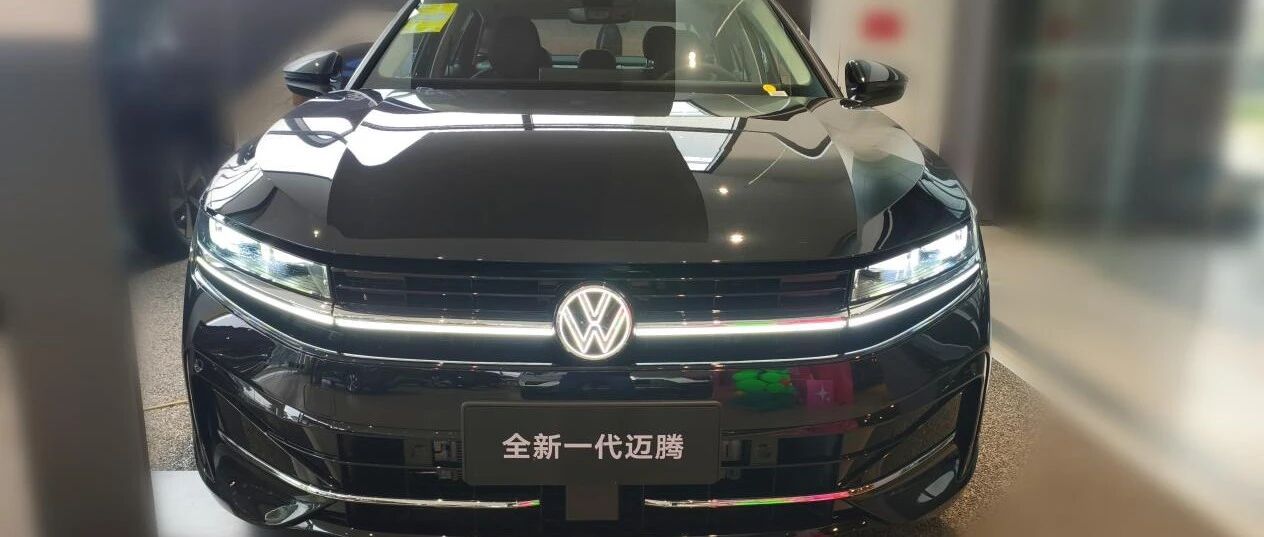
Sales Performance - The dealership sold a total of 87 cars last month, with 23 units of the Magotan sold, accounting for approximately 26.4% of total sales [1] - Currently, there are 16 units of Magotan in stock, with 9 units of the 1.5T model and 7 units of the 2.0T model, all in black color [2] Customer Demographics - Two main customer types are interested in the Magotan: individual business owners and corporate executives aged 35-50, who value the brand's German heritage and practicality [4] - The second group consists of young professionals and civil servants around 30 years old, looking for a balance between technology and traditional driving experience [6] Competitive Analysis - The primary competitors for the Magotan are the Passat and Camry, with many customers comparing these models [11] - Some customers also consider electric vehicles like the Xiaomi SU7 and XPeng P7, but brand loyalty and family recommendations often sway them towards the Magotan [11] Configuration and Pricing - The most popular configurations are the 1.5T and 2.0T models, priced at ¥189,900 and ¥225,900 respectively, with black being the preferred color [13] - The 1.5T model with fewer features is less popular, even with a discount of ¥4,000, indicating customer preference for better-equipped versions [14] Financing Options - Financing is primarily through banks with a 3% annual interest rate for 60 months, and customers can receive a rebate of 5% to reduce the car price [16] - Detailed cost breakdowns for both financed and full payment options are provided, showing the total cost for the 2.0T model with financing is approximately ¥209,840 [16] Customer Feedback - Common complaints include the vehicle's infotainment system performance, which lags behind newer competitors, and changes in material quality, such as the switch from leather to synthetic steering wheels [17] - The absence of a 360-degree camera in the 2.0T model is also a point of contention among customers [18] Maintenance Costs - Maintenance costs for the 1.5T model are around ¥700, while the 2.0T model costs approximately ¥900 [20] - Recommended maintenance intervals are every 5,000 kilometers for non-synthetic oil and 10,000 kilometers for synthetic oil [21] Trade-In Incentives - The manufacturer is currently offering trade-in subsidies, with ¥10,000 for the 1.5T version and ¥5,000 for the 2.0T version [22]

智能驾驶系列报告四:RoboX:产业奇点已至,规模化应用加速
Guolian Minsheng Securities· 2026-02-03 00:25
Investment Rating - The report maintains a recommendation rating for the RoboX industry, indicating a positive outlook for investment opportunities in this sector [1]. Core Insights - RoboX is approaching a critical point of industrialization, transitioning from technology validation to large-scale deployment, driven by supportive policies, increasing supply of key components, and strong demand for intelligent driving solutions [7][19]. - The report highlights three main applications of RoboX: Robotaxi, Robovan, and Robotruck, each with distinct market dynamics and growth potential [10][19]. Summary by Sections 1. Investment Focus: RoboX Accelerating Towards Industrialization - RoboX encompasses various forms of autonomous driving applications, including Robotaxi, Robovan, and Robotruck, designed for different transportation scenarios [10]. - The report emphasizes the modular design of RoboX, allowing for adaptability across various transport needs [10]. 2. Robotaxi: Scaling Point Evident, Fully Autonomous Commercialization Gradually Landing - Demand Side: Robotaxi can significantly reduce operational costs, with projected costs of $0.2 per kilometer by 2027, a 50% reduction compared to traditional taxi services [21]. - Supply Side: Continuous reduction in hardware costs is facilitating the scaling of Robotaxi applications, with the sixth-generation vehicle costs dropping by 60% compared to previous models [35]. - Policy Side: The gradual implementation of fully autonomous commercial operations is supported by clear regulations regarding accident liability [21][15]. 3. Robovan: Strong Demand for Unmanned Delivery, Cost Advantages Driven by Core Component Price Reductions - Demand Side: There is a strong need for unmanned delivery solutions in the last-mile logistics sector, covering key application scenarios such as e-commerce and fresh food delivery [3]. - Supply Side: The cost of core components is decreasing, enhancing the price competitiveness of unmanned delivery vehicles [3]. - Policy Side: Continuous opening of road rights and pilot projects is accelerating the deployment of unmanned delivery vehicles [3]. 4. Robotruck: Transitioning from Closed Scenarios to Mainline Logistics, Cross-Province Testing Implemented - Demand Side: Robotruck applications are expected to reach a market scale of hundreds of billions, focusing on stable freight demand in complex environments [4]. - Supply Side: Successful implementation of L4 in closed scenarios is validating the operational capabilities of Robotrucks [4]. - Policy Side: National support is clear, but local policies are cautiously opening up due to the high risks associated with heavy-duty trucks [4]. 5. Investment Recommendations - The report suggests that companies involved in RoboX commercialization, such as WeRide, Cao Cao Mobility, and XPeng Motors, will directly benefit from the scaling of RoboX applications [19]. - It also recommends focusing on intelligent component manufacturers like Horizon Robotics and Desay SV, which are expected to show performance elasticity [19].

舜宇光学科技(02382):25E盈利超预期,需求波动不改光学升级主线
Haitong Securities International· 2026-02-02 23:30
Investment Rating - The report maintains an "Outperform" rating for Sunny Optical Technology [2][10][17] Core Insights - Sunny Optical is expected to achieve attributable net profit of RMB 45.89–47.24 billion in 2025, representing a year-on-year increase of 70% to 75%, significantly above Bloomberg consensus of RMB 35.39 billion. This upside is primarily driven by a one-off investment gain of approximately RMB 9.19 billion from an equity transfer for a stake in Goertek Optics. Excluding this non-recurring item, the core attributable net profit is estimated to be RMB 36.7–38.05 billion, supported by the ongoing premiumization of smartphone camera specifications [3][13] - The company continues to benefit from the upgrade of camera specifications in flagship and mid-to-high-end smartphones, which is expected to drive the average selling price (ASP) and gross margin for handset lenses and camera modules [4][14] Summary by Relevant Sections Handsets - Despite ongoing cost pressures from rising memory prices, the trend towards optical upgrades in smartphones remains intact. The company is well-positioned to benefit from the adoption of higher-value products such as variable aperture and periscope cameras, which will drive ASP and margin expansion [4][14] Automotive - The adoption of intelligent driving technologies is expected to significantly boost the company's automotive lens and module businesses. The average number of cameras per vehicle is projected to increase, with high-end vehicles already equipped with around 12 cameras. This trend is anticipated to accelerate growth in the automotive segment [5][15] XR & IoT - The company maintains its leading market share in imaging modules for smart glasses, with strong growth in revenue from handheld imaging devices. The rapid expansion of AI and AR glasses is expected to become a key growth driver in the coming years [6][16] Valuation - The estimated EPS for 2025-2027 is revised to RMB 4.23, 3.86, and 4.19 respectively. Based on a P/E ratio of 19.6x for 2026, the target price is set at HKD 85.24, maintaining the "Outperform" rating [6][17]

中国汽车强省格局生变 安徽广东双子星,吉林反而掉队
Xin Lang Cai Jing· 2026-02-02 23:09
Core Insights - In 2025, China's automotive industry is undergoing significant transformation driven by technology and policy, with production reaching 34.78 million vehicles, a year-on-year increase of 10.2% [1] - The shift in statistical methodology by the National Bureau of Statistics from "enterprise legal person location" to "production location" has altered the automotive production landscape, impacting regional rankings [1][3] - The rise of new energy vehicles (NEVs) is a crucial factor in the changing industry dynamics, with traditional automotive hubs like Jilin falling out of the top ten rankings [1][5] Production and Regional Dynamics - In 2025, ten provinces led in automotive production, with Anhui surpassing Guangdong due to statistical adjustments and rapid development in the automotive sector [2][3] - Anhui's automotive production reached 3.69 million units, while Guangdong produced 3.04 million units, reflecting a shift in focus from traditional fuel vehicles to NEVs [2][3] - The production of NEVs in Anhui has consistently exceeded 1.6 million units, showcasing its growth trajectory compared to Guangdong's declining traditional vehicle output [3][5] Competitive Landscape - The competition between provinces like Anhui and Guangdong is characterized by complementary strengths rather than direct rivalry, with Anhui focusing on manufacturing scale and Guangdong on R&D and global supply chain integration [4][5] - Guangdong's NEV exports surged by 210% in 2025, highlighting its advantages in international markets and high-value sectors such as smart driving and battery materials [4][5] Market Trends and Shifts - The market for NEVs in China is expanding rapidly, with sales reaching 16.62 million units and accounting for 47.9% of total vehicle sales, marking a 7 percentage point increase from the previous year [5][6] - Traditional automotive strongholds are experiencing declines, with Jilin's production dropping to 1.46 million units, while provinces like Shandong, Jiangsu, and Zhejiang are surpassing 2 million units [5][6] Future Directions and Innovations - The automotive industry is transitioning towards a focus on comprehensive capabilities, requiring improved cost control, technology integration, and global operational capacity [6][7] - The Ministry of Industry and Information Technology's initiatives aim to enhance key technologies such as automotive chips and AI, with a notable increase in sales of vehicles equipped with advanced driving assistance systems [7][8] - Infrastructure upgrades and collaborative innovation across provinces are essential for fostering a healthy automotive ecosystem and supporting the growth of NEVs [8]

鸿蒙智行生态持续扩容
Zheng Quan Ri Bao· 2026-02-02 16:43
Group 1 - The core viewpoint of the articles highlights the rapid development and expansion of Hongmeng Zhixing, with significant milestones in charging infrastructure and vehicle deliveries [1][2]. - As of February 2, Hongmeng Zhixing announced that the number of charging guns has surpassed 1.6 million, and the number of charging stations has exceeded 160,000 [1]. - In January 2026, Hongmeng Zhixing delivered a total of 57,915 vehicles, marking a year-on-year growth of 65.6% [1]. - The company aims to achieve a total delivery of 589,107 vehicles in 2025, with cumulative deliveries exceeding one million [1]. - Hongmeng Zhixing plans to launch over 10 new vehicle models in 2026, covering various types including MPVs, sedans, and SUVs, in collaboration with multiple car manufacturers [1][2]. Group 2 - The strategic direction for Hongmeng Zhixing includes high-end and personalized development, targeting market segments ranging from 200,000 to 1 million yuan [2]. - The technological upgrades in 2026 will focus on three main areas: intelligent driving, cabin experience, and power replenishment [2]. - The charging service has expanded to over 350 cities and 2,700 counties, with more than 5,000 highway service areas covered [2]. - The company has deployed over 120,000 fast charging stations and more than 7,000 super charging stations, achieving a charging speed of "1 second per kilometer" [2]. - To support the ambitious sales target of one million vehicles, partner manufacturers are accelerating their production capacity [2]. Group 3 - Despite the differentiation in pricing among the "Five Realms," all models are deeply integrated with Huawei's intelligent technology, necessitating ongoing exploration to avoid homogenization and establish clear brand recognition [3]. - The integration of new sales channels, including over 100 dealer applications for the "Xiangjie" brand, will directly impact user experience and brand image in the high-end market [3]. - The seamless service experience across different brands within the Hongmeng Zhixing ecosystem will be a critical factor in determining the success of this extensive alliance [3].
智驾时代,用户真正想要的“新体验”是什么?
Di Yi Cai Jing· 2026-02-02 12:55
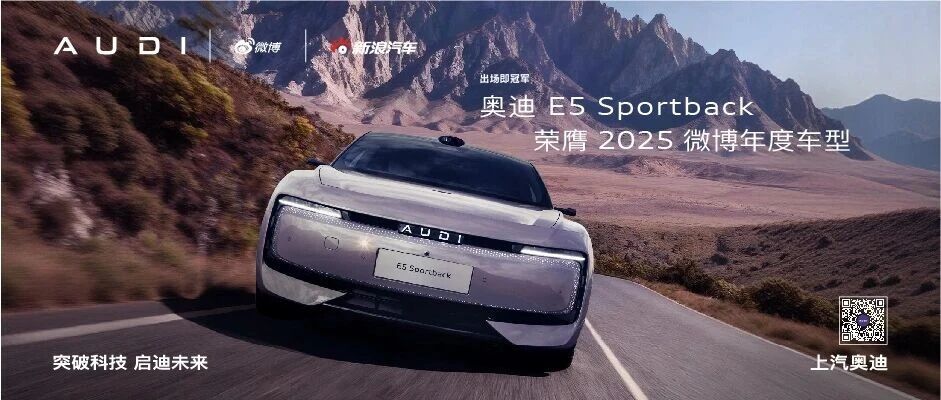
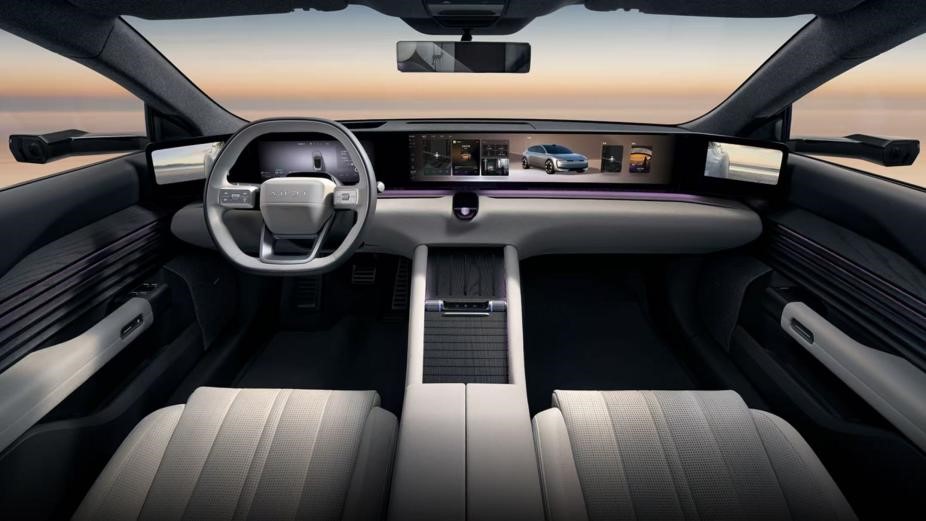
Core Insights - By 2025, the penetration rate of new energy vehicles in China is expected to exceed 50%, marking a shift in the electric vehicle market from competition based on price and range to a focus on quality, experience, and aesthetics [1] - Consumers are increasingly viewing cars as an extension of their identity and lifestyle, leading to a demand for smarter, more differentiated designs [1] Group 1: Smart Driving Features - The Audi E5 Sportback aims to address consumer concerns about smart driving capabilities, emphasizing user-friendliness and reliability [3][4] - It features an end-to-end AI model and incorporates "Audi Driving DNA," ensuring a driving experience that is both intelligent and characteristic of the Audi brand [5][7] - The system offers three driving assistance modes and boasts a 95% success rate in parking scenarios, with a parking speed 40% faster than the industry average [7][8] Group 2: User Interaction and Experience - The Audi E5 Sportback introduces the "Audi Smart Island," a physical touch control screen that allows quick access to over 50 high-frequency functions, enhancing user interaction [9][10] - The system integrates with the vehicle's ecosystem, allowing for efficient navigation and control without distracting the driver [10][11] - The vehicle has undergone OTA upgrades to enhance its smart features, indicating a commitment to continuous improvement and user satisfaction [13] Group 3: All-Wheel Drive and Performance - Audi's electric quattro system provides rapid torque distribution, enhancing performance and safety in various driving conditions [14][18] - The E5 Sportback achieved a record lap time of 1 minute 42.99 seconds on a mountain track, showcasing its performance capabilities [18] - The vehicle offers a combined range of 773 kilometers under the CLTC testing standard, balancing performance with practicality [18] Group 4: Design and Aesthetics - The design of the Audi E5 Sportback reflects a blend of classic Audi elements and modern electric vehicle aesthetics, appealing to consumers' desire for self-expression [19][21] - The vehicle's unique features, such as the "morning purple" color, have gained popularity on social media, indicating a strong market presence [21] - Audi aims to meet the dual demands of luxury and technology, ensuring that consumers do not have to compromise on aesthetics for functionality [21] Group 5: Market Reception and Recognition - The Audi E5 Sportback has received multiple awards, including the CCOY (China Car of the Year) and accolades from the Weibo Annual Car Awards, highlighting its strong market performance [22][24] - The vehicle's rapid acceptance in the market demonstrates Audi's effective dual-brand strategy and responsiveness to consumer needs [26][28] - The success of the E5 Sportback suggests that traditional luxury brands can still lead in the electric vehicle era, reinforcing Audi's strategic direction [28]
智驾时代,用户真正想要的“新体验”是什么?
第一财经· 2026-02-02 11:57
Core Viewpoint - By 2025, the penetration rate of new energy vehicles in China will exceed 50%, marking the beginning of a new phase in the electric vehicle market, where the focus shifts from price and range to quality, experience, and aesthetics [1] Group 1: User Expectations - Consumers are increasingly prioritizing smart features in vehicles, seeking cars that can assist in decision-making and enhance driving comfort [2] - The design of electric vehicles is becoming more important, with users desiring differentiation in aesthetics to avoid the perception of uniformity [2] Group 2: Audi E5 Sportback Introduction - Audi's E5 Sportback aims to provide a new answer to market demands by integrating advanced smart driving features and a unique design [3][4] Group 3: Smart Driving Features - Smart driving has become a hot topic, with various automakers introducing different functionalities, but users remain cautious about their usability and reliability [5][6] - The E5 Sportback features an end-to-end AI model and incorporates Audi's driving experience into its algorithms, ensuring a smooth and responsive driving experience [8] - The vehicle offers three driving assistance modes and boasts a 40% faster parking speed compared to industry averages, with a 95% success rate in parking scenarios [8][9] Group 4: User Interaction and Experience - The E5 Sportback features the "Audi Smart Island," a user-friendly control interface that allows quick access to over 50 high-frequency functions, enhancing the driving experience [10][11] - Real user feedback highlights the practicality and efficiency of the E5 Sportback's interaction design, making it easier to manage various functions while driving [12] Group 5: Continuous Improvement - The E5 Sportback has undergone its first OTA upgrade, enhancing its smart features and ensuring it remains a "growing" intelligent vehicle with regular updates [14][15] Group 6: All-Wheel Drive and Performance - The demand for all-wheel drive remains strong, with Audi's quattro system providing rapid torque distribution and improved handling, even in challenging conditions [16][20] - The E5 Sportback achieves a remarkable range of 773 kilometers under CLTC testing standards, combining performance with everyday usability [20] Group 7: Design and Brand Identity - The design of the E5 Sportback reflects a blend of classic Audi aesthetics and modern electric vehicle trends, appealing to consumers' desire for self-expression [21][24] - The vehicle's unique features, such as the "Morning Purple" color, have gained popularity on social media, showcasing its appeal to a younger audience [24] Group 8: Market Recognition - The E5 Sportback has received multiple awards, including the CCOY and Weibo Annual Car awards, indicating strong market acceptance and recognition from both professionals and consumers [28][31] - The success of the E5 Sportback is attributed to Audi's dual-brand strategy, allowing for agile responses to user needs and a focus on electric mobility [36][38]