核心CPI

Search documents
八月工业生产者出厂价格指数环比转为持平
Ren Min Ri Bao· 2025-09-10 22:13
Group 1 - The overall consumer market in August remained stable, with the Consumer Price Index (CPI) unchanged month-on-month and down 0.4% year-on-year [1] - The core CPI, excluding food and energy prices, increased by 0.9% year-on-year, marking the fourth consecutive month of growth [1] - The Producer Price Index (PPI) month-on-month shifted from a decline of 0.2% in the previous month to being flat [1] Group 2 - The year-on-year decline in CPI was attributed to a high comparison base from the previous year and lower-than-seasonal food price increases this month [1] - Food prices rose by 0.5% month-on-month in August, which was 1.1 percentage points lower than the seasonal average [1] - The PPI ended an eight-month downward trend, with improvements in supply-demand relationships causing some energy and raw material prices to rise month-on-month [1] - Year-on-year, the PPI decreased by 2.9%, but the decline narrowed by 0.7 percentage points compared to the previous month, marking the first narrowing since March of this year [1]


核心CPI涨幅连续第4个月扩大 专家认为——扩内需政策持续显效
Jing Ji Ri Bao· 2025-09-10 22:09
Group 1 - The consumer market in August showed overall stability, with the Consumer Price Index (CPI) remaining flat month-on-month and decreasing by 0.4% year-on-year, while the core CPI, excluding food and energy, increased by 0.9% year-on-year, marking the fourth consecutive month of growth [1][2] - The Producer Price Index (PPI) month-on-month changed from a decline of 0.2% in the previous month to flat, with a year-on-year decrease of 2.9%, which is a narrowing of the decline by 0.7 percentage points compared to the previous month, marking the first contraction since March of this year [1][3] - The improvement in supply-demand relationships in certain industries has contributed to the stabilization of prices, with the transportation equipment prices remaining flat month-on-month and the year-on-year decline narrowing from 2.1% to 1.9% [2][3] Group 2 - The ongoing implementation of policies to stimulate domestic demand and consumption is becoming a key driver for a moderate recovery in basic price levels, as evidenced by the increase in household appliance prices by 1.1% month-on-month and a year-on-year increase from 2.8% to 4.6% [2][4] - The service prices have shown a continuous upward trend since March, with a year-on-year increase of 0.6% in August, indicating the potential for service consumption to be further released [2][3] - The overall low price level trend since the beginning of the year is expected to continue, providing ample space for future growth-stabilizing policies [3][4]
八月工业生产者出厂价格指数环比转为持平 核心CPI同比涨幅连续第四个月扩大
Ren Min Ri Bao· 2025-09-10 22:01
Core Insights - The consumer market in August remained generally stable, with the Consumer Price Index (CPI) unchanged month-on-month and down 0.4% year-on-year [1] - The core CPI, excluding food and energy prices, increased by 0.9% year-on-year, marking the fourth consecutive month of growth [1] - The Producer Price Index (PPI) month-on-month shifted from a decline of 0.2% in the previous month to flat [1] CPI Analysis - The year-on-year decline in CPI is attributed to a high comparison base from the previous year and lower-than-seasonal food price increases this month [1] - Food prices rose by 0.5% month-on-month, which is approximately 1.1 percentage points lower than the seasonal average [1] PPI Analysis - The PPI ended an eight-month downward trend, with month-on-month changes influenced by improved supply-demand relationships leading to price increases in some energy and raw material sectors [1] - Year-on-year, the PPI decreased by 2.9%, but the decline narrowed by 0.7 percentage points compared to the previous month, marking the first contraction in the decline since March of this year [1]
8月物价数据出炉,怎么看?
Xin Hua She· 2025-09-10 21:57
Group 1 - The Consumer Price Index (CPI) remained flat month-on-month in August, with a year-on-year decrease of 0.4%, while the core CPI, excluding food and energy, increased by 0.9% year-on-year, marking the fourth consecutive month of growth [1][3] - The rise in core CPI is attributed to effective policies aimed at boosting domestic demand and consumption, with industrial consumer goods prices excluding energy also showing an increase [1][3] - The decline in overall CPI year-on-year is primarily due to a high comparison base from the previous year and lower-than-seasonal food price increases, with food prices dropping by 4.3% year-on-year [3][4] Group 2 - The Producer Price Index (PPI) showed a narrowing year-on-year decline, ending an eight-month downward trend, indicating improved supply-demand relationships in certain industries [4][5] - Specific industries, such as coal processing and photovoltaic equipment manufacturing, experienced a reduction in price declines, reflecting better market conditions [7][8] - Emerging industries and technological innovations are contributing to positive price changes, with certain sectors like integrated circuit packaging and testing seeing price increases [8]
8月份核心CPI同比上涨0.9%
Zhong Guo Zheng Quan Bao· 2025-09-10 20:18
Core Insights - The Consumer Price Index (CPI) remained flat month-on-month in August, with a year-on-year decline of 0.4%, while the core CPI, excluding food and energy, rose by 0.9%, marking the fourth consecutive month of growth [1][2] - The Producer Price Index (PPI) showed a month-on-month stabilization after a 0.2% decline in the previous month, with a year-on-year decrease of 2.9%, which is a narrowing of the decline by 0.7 percentage points compared to the previous month [1][3] CPI Analysis - The year-on-year decline in CPI was primarily attributed to a high comparison base from the previous year and lower-than-seasonal food price increases in August [1][2] - Food prices fell by 4.3% year-on-year, with a significant impact on CPI, contributing approximately 0.51 percentage points to the decline [2] - The core CPI's growth indicates the effectiveness of policies aimed at expanding domestic demand and promoting consumption [2] PPI Analysis - The PPI's month-on-month stabilization is attributed to improved supply-demand relationships in certain industries, leading to price increases in energy and raw materials [2][3] - The year-on-year decline in PPI has narrowed due to a combination of lower comparison bases from the previous year and proactive macroeconomic policies [3] - Analysts suggest that PPI may enter a recovery phase, supported by improved market competition and rising demand for upgraded consumption [3]
我国8月份CPI同比下降0.4%环比持平
Sou Hu Cai Jing· 2025-09-10 20:14
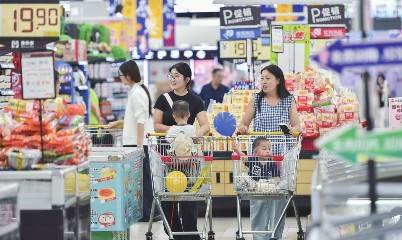
转自:中华工商时报 (来源:中华工商时报) 9月10日,消费者在山东省青州市一家超市选购商品。国家统计局9月10日发布数据显示,8月份,消费 市场运行总体平稳,全国居民消费价格指数(CPI)环比持平,同比下降0.4%,扣除食品和能源价格的 核心CPI同比上涨0.9%,涨幅连续第4个月扩大。新华社发王继林/摄 ...
8月物价数据出炉 怎么看?
Xin Hua She· 2025-09-10 19:39
Group 1 - The Consumer Price Index (CPI) remained flat month-on-month in August, with a year-on-year decrease of 0.4%, while the core CPI, excluding food and energy, increased by 0.9% year-on-year, marking the fourth consecutive month of growth [1][2] - The rise in core CPI is attributed to effective consumption-boosting policies, with the industrial consumer goods prices excluding energy also seeing an increase of 0.3 percentage points compared to the previous month [2][4] - Food prices showed a year-on-year decline of 4.3%, contributing significantly to the overall CPI decrease, as the supply of food remained ample [3][5] Group 2 - The Producer Price Index (PPI) showed a narrowing year-on-year decline of 2.9%, the first reduction in the decline since March, indicating improved supply-demand relationships in certain industries [3][4] - Prices in key industries such as coal processing and photovoltaic equipment manufacturing experienced a reduction in year-on-year decline, reflecting better market conditions due to the ongoing construction of a unified national market [5][6] - Emerging industries and technological innovations are positively impacting prices, with specific sectors like integrated circuit packaging and testing seeing a year-on-year price increase of 1.1% [7][8]
国内核心CPI同比涨幅连续第4个月扩大 市场竞争秩序持续优化 部分行业供需关系改善
Qi Huo Ri Bao Wang· 2025-09-10 19:37
王鹏认为,PPI同比跌幅收窄,既有政策调整、需求韧性等的支撑,也有2024年同期低基数的影响。随 着扩内需、"反内卷"等政策持续落地,相关行业供需格局出现改善,部分行业原材料采购和产品销售价 格有所上涨。 银河期货首席宏观分析师王鹏在接受期货日报记者采访时表示,8月,食品烟酒类价格同比下降2.5%, 影响CPI下降约0.72个百分点。农副产品价格走弱,一方面与近期食品消费较弱、农产品供给技术提升 和居民饮食结构变化有关;另一方面也与农产品基本面有关,从库存消费比看,农副产品整体供应充 足,这是价格上行动力有限的原因之一。 对此,格林大华期货首席专家王骏认为,农产品贸易商和供应企业后期需要加大卖出保值力度,对冲企 业风险敞口。另外,部分生鲜商品正处在收获季节,可根据产量预估情况和新季商品质量进行相应保值 操作。 国家统计局城市司首席统计师董莉娟分析称,随着扩内需、促消费政策持续显效,8月PPI同比下降 2.9%,降幅比上月收窄0.7个百分点,为今年3月以来首次收窄。我国加紧实施更加积极有为的宏观政 策,一些行业价格呈现积极变化。一是国内市场竞争秩序持续优化,带动相关行业价格同比降幅收窄。 全国统一大市场建设纵深 ...
财经聚焦|8月物价数据出炉,怎么看?
Xin Hua Wang· 2025-09-10 16:53
Group 1 - The Consumer Price Index (CPI) remained flat month-on-month in August, with a year-on-year decrease of 0.4%, while the core CPI, excluding food and energy, increased by 0.9% year-on-year, marking the fourth consecutive month of growth [1][3] - The rise in core CPI is attributed to effective consumption-boosting policies, with industrial consumer goods prices excluding energy also showing an increase of 0.3 percentage points compared to the previous month [1][3] - Food prices have significantly impacted the CPI, with a year-on-year decline of 4.3%, which contributed to a larger downward effect on the overall CPI compared to the previous month [3][4] Group 2 - The Producer Price Index (PPI) showed a narrowing year-on-year decline, ending an eight-month downward trend, with a decrease of 2.9%, which is a 0.7 percentage point improvement from the previous month [4][5] - Improvements in supply and demand relationships have led to price increases in certain energy and raw material sectors, such as coal processing prices rising by 9.7% [4][6] - The "anti-involution" measures have contributed to a reduction in price declines across various industries, with notable improvements in sectors like coal processing and photovoltaic equipment manufacturing [6][7] Group 3 - Emerging industries and technological innovations are driving positive price changes, with integrated circuit packaging and testing prices increasing by 1.1% year-on-year [7][8] - Upgraded consumer demand is leading to price increases in specific sectors, such as a 13.0% rise in the manufacturing of arts and crafts products [8] - The implementation of consumption and investment stabilization policies is expected to further release domestic demand potential, supporting price trends in related industries [8]

国泰海通|宏观:反内卷效果:边际显现——2025年8月物价数据点评
国泰海通证券研究· 2025-09-10 14:41
Group 1 - The core viewpoint of the article highlights the initial effects of anti-involution policies on PPI, with commodity price increases leading to price recovery in downstream industries, while the CPI is negatively impacted by the pork cycle but shows resilience in service prices [1][3]. - In August, the CPI year-on-year growth rate was -0.4%, and the PPI year-on-year growth rate was -2.9%, indicating a steady recovery in inflation [1][2]. - The food price decline, primarily driven by pork and egg prices, has negatively affected the CPI, while core service prices remain resilient, with core CPI showing a significant year-on-year increase [1][8]. Group 2 - The effects of anti-involution policies are beginning to show, focusing on eliminating excess capacity caused by "herd investment" in downstream industries, with an emphasis on guiding enterprises to standardize competition rather than relying solely on administrative interventions [3][8]. - The mining industry's price momentum has rebounded for three consecutive months, with significant increases in coal mining and black metal mining prices, indicating a recovery in upstream prices [1][8]. - The rise in commodity prices has positively impacted downstream manufacturing industries, with notable price recoveries in sectors such as computer and electronic equipment manufacturing, general equipment manufacturing, and textiles [1][8].