
深海科技

Search documents
国防军工ETF继续突破,成份股批量新高!长城军工再封涨停
Xin Lang Ji Jin· 2025-07-22 03:38
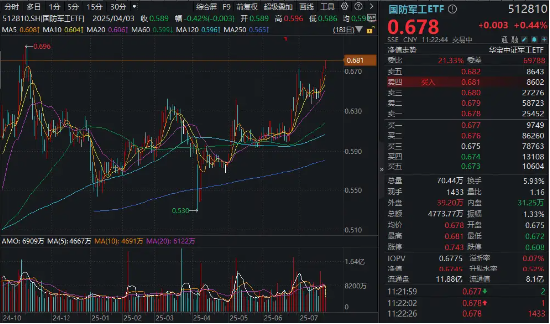
Group 1 - The defense and military industry sector is experiencing localized activity, with significant gains in concepts such as large aircraft and military information technology [1] - The defense military ETF (512810) reached an 8-month high, with real-time transactions exceeding 47 million yuan [1] - Key stocks within the defense military ETF, including Changcheng Military Industry, have hit historical highs [1] Group 2 - Analysts indicate that the defense and military sector is currently in a layout window, with expectations for improved Q2 financial reports [3] - Q1 order volume has increased, leading to potential performance improvements for mid-to-upstream companies in Q2, with a turnaround in military component orders observed in June [3] - Anticipation of a busy Q3 with catalysts as the September 3 military parade approaches, likely increasing attention and trading activity in the sector [3] Group 3 - The defense military ETF (512810) covers a range of themes including commercial aerospace, low-altitude economy, large aircraft, deep-sea technology, and military AI [4] - The ETF has undergone a share split in June, reducing the investment threshold by half, making it more accessible for investors [4] - The ETF is a financing and margin trading target, as well as an interconnectivity target [4]


2025国际低空经济博览会即将开幕,航空航天ETF(159227)交投活跃
Xin Lang Cai Jing· 2025-07-21 06:16
Group 1 - The aerospace and defense industry is experiencing an upward trend, contrasting with the downward pressure faced by other sectors, highlighting its comparative advantages [2] - The upcoming "2025 International Low Altitude Economy Expo" from July 23 to 26 will showcase revolutionary breakthroughs in low-altitude technology, featuring nearly 300 leading global companies and innovations such as drones and eVTOLs [1] - The overall sentiment in the military industry is expected to improve, with companies gradually releasing positive half-year performance forecasts, indicating a recovery in fundamentals and market sentiment [1][2] Group 2 - The aerospace ETF (159227) tracks the National Aerospace Industry Index, with a high concentration of 98.2% in defense and military sectors, making it the purest military ETF in the market [2] - As of June 30, 2025, the top ten weighted stocks in the National Aerospace Industry Index (CN5082) account for 49.42% of the index, including companies like Guangqi Technology and AVIC Shenyang Aircraft [2]
暴增1.46万倍!迷你基金上演“脱贫致富”
券商中国· 2025-07-20 23:27
Core Viewpoint - Mini funds that were once struggling on the brink of liquidation are now making a significant comeback by investing in trending sectors and future industries [1][5]. Group 1: Fund Performance and Growth - In Q2, 15 public funds experienced a scale increase of over 10 times, with some funds surging by more than 14,600% [2][5]. - The fund "Tongtai Industrial Upgrade," managed by Wang Xiu, saw its scale grow from under 10,000 yuan to over 14.4 million yuan, marking a growth of over 1,461,747% [3]. - "Changcheng Pharmaceutical Industry Selection," with a nearly 120% return, increased its scale from 3.6 million yuan to 1.132 billion yuan, a growth of over 30 times [4]. Group 2: Investment Strategies and Sector Focus - Many mini funds have undergone significant portfolio adjustments, shifting from traditional sectors to high-growth areas like robotics, innovative pharmaceuticals, and computing power [6][7]. - The fund "Zhongou Digital Economy," managed by Feng Ludan, shifted its focus from robotics and smart driving to computing power, changing eight of its top ten holdings [8]. - The "Yongying Medical Health" fund transitioned its focus from medical services to innovative pharmaceuticals, with top holdings including Shutaishen and Rejing Bio, the latter having a year-to-date increase of 523.75% [9]. Group 3: Early Positioning in Future Industries - Fund companies are using mini funds to target emerging sectors such as deep-sea technology and controllable nuclear fusion, positioning themselves ahead of the curve [10][11]. - The "Yongying Manufacturing Upgrade" fund is heavily invested in controllable nuclear fusion, anticipating significant growth in the sector by 2025, with potential annual investments reaching 30 to 50 billion yuan [12]. - The "Yongying Qiyuan" fund focuses on the deep-sea technology industry, with major holdings in companies involved in deep-sea materials and applications [12].

押风口卡位前沿赛道 迷你基金上演“脱贫致富”
Zheng Quan Shi Bao· 2025-07-20 18:43
Core Insights - Mini funds that were previously struggling on the brink of liquidation are now achieving significant growth by investing in trending sectors and future industries [1][2] - In Q2, 15 public funds experienced a scale increase of over 10 times, with 13 of them being mini funds that had less than 200 million yuan in scale at the end of Q1 [3] Fund Performance - The fund managed by Wang Xiu, Tongtai Industrial Upgrade, saw its scale grow from less than 10,000 yuan to over 1.44 billion yuan, marking a growth of over 14,600 times [2] - Changcheng Pharmaceutical Industry Selected Fund achieved a scale increase of over 30 times, reaching 1.132 billion yuan, with a notable focus on innovative drugs [2] - Other funds like CITIC Prudential Stable Hong and Xinao Core Selection also reported substantial growth, with increases of nearly 574 times and 20 times, respectively [3] Investment Strategies - Many mini funds are undergoing significant portfolio adjustments, shifting from traditional sectors to high-growth areas such as robotics and innovative pharmaceuticals [4][6] - The fund managed by Feng Ludan, China Europe Digital Economy, made substantial changes in its holdings, focusing on AI infrastructure and applications while reducing exposure to robotics [4] - The Yongying Medical Health Fund shifted its focus entirely to innovative drugs, with top holdings showing significant price increases [6] Emerging Technologies - Fund managers are positioning themselves in early-stage industries like deep-sea technology and controllable nuclear fusion, indicating a proactive approach to future investment opportunities [7][8] - Funds such as Yongying Manufacturing Upgrade and Huafu Tianxin are heavily investing in companies related to controllable nuclear fusion, anticipating significant market growth by 2025 [7] - The Yongying Qiyuan Fund is focusing on the deep-sea technology sector, with investments in materials and applications related to deep-sea exploration and extraction [8]
中国移动5G-A赋能海岛低空经济
Zhong Guo Jin Rong Xin Xi Wang· 2025-07-20 08:04
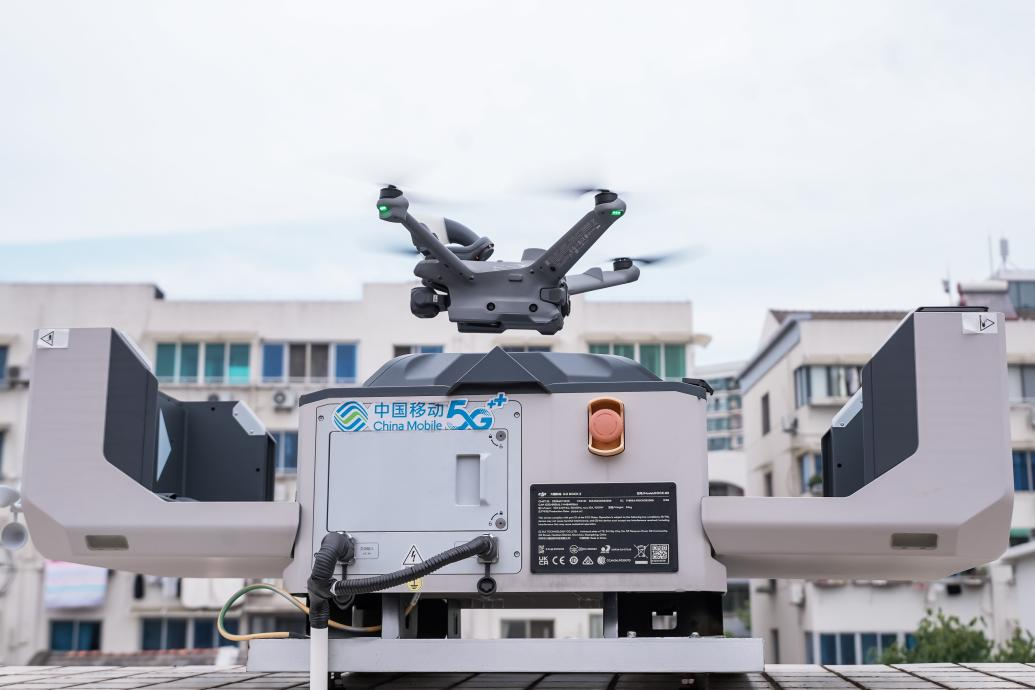
Group 1 - The 2025 government work report has officially included "deep-sea technology" as a direction for cultivating new productive forces, emphasizing the promotion of its safe and healthy development alongside emerging industries like low-altitude economy [1] - In Zhoushan, a new low-altitude application integrating security, logistics, and tourism is rapidly unfolding, supported by a near-sea 5G communication real-time guarantee system developed by China Mobile [1] - The "Low-altitude Marine Intelligence Comprehensive Management Platform" utilizes 5G-A sensing base stations and a comprehensive perception network to ensure safe and precise drone operations, enhancing the quality of the island economy [1] Group 2 - Drones equipped with temperature-controlled preservation boxes can deliver freshly caught fish from breeding bases to tables in just 15 minutes, significantly reducing the time from the traditional 2 hours [3] - The launch of the "Zhoushan Police" drone flight reporting platform has facilitated the application of consumer drones, leading to a 45.6% month-on-month increase in recreational flying activities [3] - The deployment of a drone management platform based on digital twin technology has significantly expanded the low-altitude warning range in Zhoushan, reducing the occurrence of unauthorized flights [3]

强军胜战——国防军工行业2025年度中期投资策略
2025-07-19 14:02
Summary of Key Points from the Conference Call Industry Overview - The conference call focuses on the **defense and military industry** in China, particularly the investment strategies and market dynamics leading up to 2025 [1][2]. Core Insights and Arguments - **Core Drivers of Stock Price Increase**: The primary drivers for stock price increases in the military industry are **orders, contracts, and performance expectations**. Orders represent critical milestones in weapon development, while contracts are agreements between the military and industrial sectors for equipment purchases. Performance refers to the revenue and profit reported by listed companies, with pre-report performance expectations acting as catalysts for stock price movements [4][1]. - **Stock Price Dynamics**: The military stock price movements can be divided into two phases: **expectation phase** and **performance realization phase**. The expectation phase is characterized by high volatility and significant price increases, while the performance realization phase tends to be more stable but may experience price corrections due to valuation adjustments [5][1]. - **Investment Strategy**: The recommended investment strategy is **swing trading**, particularly buying during the performance realization phase when stock prices decline. This is due to the competitive landscape and the eventual improvement in profitability and asset quality of military enterprises, which are expected to materialize despite potential delays [7][1]. - **New Trends in the Industry**: Current narratives in the military industry include **high-end military trade breakthroughs** and **civilian-military integration**. The industry is also focused on addressing past deficiencies in domestic equipment construction, with a directive to make up for three years of shortfalls within one year to meet the 2027 military goals [8][1]. Additional Important Content - **High-End Military Trade**: The breakthrough in high-end military trade is exemplified by the demonstration of China's systematic equipment capabilities in global markets, such as during the India-Pakistan conflict, which showcased the effectiveness of Chinese military equipment [9][1]. - **Market Positioning of Companies**: Companies like **AVIC Xi'an Aircraft Industry Group** are expected to see a revaluation of their stock prices due to their role in high-end military trade. The company’s market value is currently around **80 billion**, which is significantly lower compared to its peers, indicating potential for growth [3][1]. - **Component Market Outlook**: Orders in the component sector are expected to rise in the latter half of 2025, enhancing confidence in a **3-5 year expansion cycle** for the military industry. This is anticipated to create investment opportunities in companies like **AVIC Optoelectronics** and **Zhenhua Technology** [17][1]. - **Geopolitical Considerations**: The importance of advanced aircraft manufacturers is highlighted in the context of geopolitical events, as these manufacturers play a crucial role in the global military trade market [10][1]. - **Civilian-Military Integration**: The strategy of integrating military technologies into civilian applications is seen as vital for the development of the mechanical industry in China, with companies leveraging advanced technologies for broader market opportunities [14][1]. - **Safety in Explosives and Ammunition Production**: The safety production of explosives and ammunition is emphasized as a critical area, with companies in this sector being recommended due to their importance in national defense capabilities [22][1][23][1]. This summary encapsulates the key points discussed in the conference call, providing insights into the military industry's current state and future directions.

海洋攻防装备建设加速,海洋资源勘采蓄势待发
Tianfeng Securities· 2025-07-19 08:00
Investment Rating - Industry Rating: Outperform the market (maintained rating) [6] Core Viewpoints - The report emphasizes the acceleration of marine defense equipment construction and the potential for marine resource exploration and development, driven by national policies aimed at high-quality marine economic development [2] - Deep-sea operations are becoming a global focus, with underwater equipment driving the construction of the industrial chain, as countries enhance their military presence in deep-sea areas [3] - The report anticipates that China's underwater defense system construction will accelerate, with ongoing advancements in underwater communication networks and unmanned submersibles, benefiting from defense system development demands [4] - The urgency of deep-sea resource development is highlighted, with various metal minerals and oil and gas resources at the ocean floor, necessitating enhanced capabilities for marine resource acquisition [5] Summary by Sections Marine Defense Equipment - The central government is pushing for high-quality development of the marine economy, which includes strengthening marine technology innovation and enhancing marine strategic capabilities [2] - The U.S. military is significantly investing in deep-sea capabilities, developing systematic and unmanned intelligent deep-sea combat equipment [3] Deep-Sea Resource Development - The report notes that China faces a severe situation regarding key mineral resource security, with high dependence on imports for nickel, cobalt, and lithium [5] - The report suggests that through policy support and technological advancements, China is poised to enhance its deep-sea resource exploration and development capabilities [5] Investment Recommendations - The report recommends focusing on the entire deep-sea technology industrial chain, particularly in marine security and resource sectors, with specific attention to defense equipment, deep-sea oil and gas, offshore wind power, and deep-sea mining [6] - Suggested companies for investment include China Marine Defense, Western Materials, and China National Offshore Oil Corporation, among others [6]
A股重磅!证监会,同意!
券商中国· 2025-07-19 02:03
Core Viewpoint - The merger between China Shipbuilding and China Shipbuilding Industry Corporation has received approval from the China Securities Regulatory Commission, marking a significant milestone in the shipbuilding industry and creating the world's largest publicly listed shipbuilding company by asset size, revenue, and order backlog [2][4][7]. Summary by Sections Merger Approval and Details - On July 18, China Shipbuilding announced that it has received approval for the absorption merger with China Shipbuilding Industry Corporation from the China Securities Regulatory Commission, allowing for the issuance of 3.053 billion new shares [4]. - The merger will involve China Shipbuilding issuing A-shares to all shareholders of China Shipbuilding Industry Corporation, leading to the latter's delisting and the transfer of all assets, liabilities, and rights to China Shipbuilding [5]. Financial Impact and Performance Forecast - Post-merger, the total asset scale of the surviving company will exceed 400 billion yuan, positioning it as the global leader in the shipbuilding sector [3][7]. - China Shipbuilding expects a net profit increase of 98.25% to 119.49% for the first half of 2025, while China Shipbuilding Industry Corporation anticipates a net profit growth of 181.73% to 238.08% during the same period [3][10]. - The combined net profit for both companies is projected to reach between 4.3 billion to 4.9 billion yuan, reflecting a year-on-year growth of approximately 121% to 152% [11]. Market Reaction and Future Outlook - Following the announcement, the stock prices of both companies saw slight increases, with total market capitalization reaching 259.3 billion yuan [8]. - Analysts suggest that the merger will enhance operational efficiency and profitability through synergies, with a focus on high-value ship orders and improved cost management [7][12]. - The shipbuilding industry in China is expected to maintain its leading position globally, benefiting from cost advantages, technological innovation, and a favorable order structure [12].

8个月新高,国防军工ETF初露锋芒!中航沈飞续刷历史新高!后续催化密集,当前或仍处于布局窗口期
Xin Lang Ji Jin· 2025-07-18 12:00
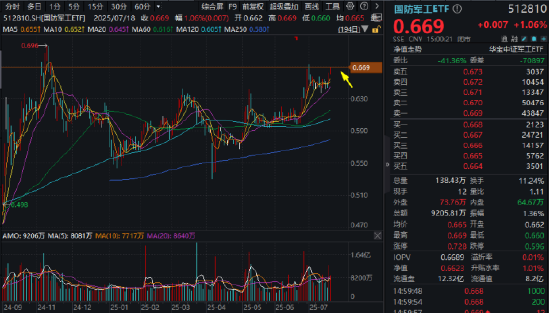
Market Overview - On July 18, the A-share market experienced an upward trend, with the Shanghai Composite Index rising by 0.5% to close at 3534.48 points, and the ChiNext Index increasing by 0.34%. Market sentiment improved, leading to a trading volume of 1.59 trillion yuan [1]. Defense and Military Industry Performance - The defense and military sector continued to show strong performance, with the popular defense and military ETF (512810) rising by 1.06%, marking its highest closing price since November 14, 2024. The ETF recorded a trading volume of 92.06 million yuan for the day [1]. - For the week of July 14-18, the defense and military ETF (512810) accumulated a gain of 2.45%, achieving a four-week consecutive increase, with a total weekly trading volume of 404 million yuan, significantly higher than the previous week [2]. Earnings Forecasts and Stock Performance - As of July, the defense and military sector was primarily in a phase of adjustment, influenced by mid-year earnings expectations. However, from July 17 onwards, the sector began to rebound as several companies released positive earnings forecasts, indicating a recovery in the sector's fundamentals [3]. - Among the 29 component stocks of the defense and military ETF that have released mid-year earnings forecasts, 23 are expected to report profits. Notably, 11 companies are projected to see their net profits double, with Aerospace Science and Technology showing a growth rate exceeding 23 times [3]. Notable Stock Movements - The defense and military ETF's component stocks saw 59 stocks rise and 21 decline, with several stocks reaching historical or recent highs. Notable performers included AVIC Shenyang Aircraft Company, which rose by 2.92%, and Yingliu Co., which surged by 3.44% [4]. Future Outlook - The outlook for the defense and military sector appears promising, with multiple catalysts expected to drive growth. Short-term improvements in Q2 earnings are anticipated due to increased orders and a stabilization in military component orders. The sector is expected to gain further attention as the September 3 military parade approaches, potentially leading to structural investment opportunities [6]. - Long-term prospects are bolstered by geopolitical factors, such as the India-Pakistan conflict, which may enhance China's defense industry's profile and stimulate military trade. The upcoming centenary of the military in 2027 is also expected to sustain high demand for military equipment [6]. Investment Strategy - The defense and military ETF (512810) is highlighted as a strategic investment option, offering exposure to both traditional and emerging military capabilities. It includes a diverse range of sectors such as commercial aerospace, low-altitude economy, large aircraft, deep-sea technology, and military AI. The ETF is considered a low-risk investment vehicle with a lower entry threshold compared to individual stocks [7].
航天智造(300446) - 投资者关系活动记录表
2025-07-18 10:18
Financial Performance - The company's net profit attributable to shareholders for the first half of 2025 is expected to grow by up to 10% year-on-year [2] - In the automotive parts business, sales revenue is projected to increase by approximately 10% year-on-year, with the automotive industry showing a growth trend [3] - The sales revenue for the automotive parts business exceeded 7 billion CNY in 2024, marking a year-on-year growth of 37.7% [6][7] Business Segments Automotive Parts - The company has achieved full coverage of major domestic automotive manufacturers, establishing a robust domestic industrial layout [6] - It possesses strong technical and R&D capabilities, with 554 patents granted, including 53 invention patents [7] - The product supply chain integrates product development, mold design, component manufacturing, and assembly services, effectively controlling production costs [7] Oil and Gas Equipment - The company maintains a leading position in key technologies for shale gas and high-temperature, high-pressure perforation systems [3][5] - It has over 30 years of collaboration with major domestic oil companies, supplying critical equipment for deep-sea oil and gas extraction [4] - The deep-sea technology sector is expected to become a focal point for large oil and gas companies, presenting new growth opportunities for the company [5] New Materials - The newly established subsidiary focuses on high-performance functional materials, including anti-counterfeiting materials, electronic functional materials, and weather-resistant materials [8][9] - The pressure testing film has been recognized as a "single champion" product in Hebei Province and has established stable partnerships with leading companies in the electronics and semiconductor sectors [9] - The company is the largest global producer of UV-1084, with its technology and product quality reaching international standards [9] Future Plans - The company is considering implementing an employee stock ownership plan as a means to incentivize management and core staff, aligning their interests with the company's growth [10][11]
