
关税影响

Search documents
韩国财政部:将密切关注美国关税对农业和食品出口的影响,并制定支持措施。
news flash· 2025-05-22 08:02
Core Viewpoint - The South Korean Ministry of Finance will closely monitor the impact of U.S. tariffs on agricultural and food exports and will develop support measures [1] Group 1 - The South Korean government is concerned about the potential negative effects of U.S. tariffs on its agricultural and food sectors [1] - The Ministry of Finance emphasizes the need for proactive measures to support affected industries [1]
大摩周期论剑:金融、汽车、新能源多行业周期分析
2025-05-21 14:18
Summary of Conference Call Notes Industry or Company Involved - Financial Industry - Automotive Parts Industry - Robotics Industry - New Energy Industry (specifically Solar Power) - Industrial Sector Key Points and Arguments Financial Industry Insights - Recent research conducted in coastal cities regarding export impacts and financial industry perspectives was discussed [1] Automotive Parts Industry - Automotive parts exported to the U.S. typically involve FOB contracts, where car manufacturers bear tariffs. Tariffs previously exceeding 100% caused temporary halts, but operations have resumed [2] - Component manufacturers are unlikely to shift production overseas unless requested by clients, as domestic production remains profitable compared to establishing factories in Mexico or Southeast Asia [2] Robotics Industry - Various components for robotics are being developed, including structural parts, motors, sensors, and actuators. However, significant project implementation is still pending [3] - Chinese suppliers may still engage in the U.S. robotics market if they establish overseas manufacturing facilities [3] New Energy Industry - The cooling segment experienced a 28% growth in Q1, driven by domestic air conditioning replacement demand and pre-tariff exports to the U.S. [4] - The company Topu is expected to generate an additional revenue of 5 to 6 billion from domestic EV clients, with Tesla's sales being a significant variable affecting overall performance [4] Industrial Sector - The industrial sector is experiencing a growth range of 20% to 50% in revenue and profits, supported by domestic consumption and export demand [6] - The impact of tariffs is anticipated to be delayed, with a 90-day grace period allowing for recovery in downstream shipments [6][7] - The automation sector is expected to see a decline in growth rates due to reduced domestic investment and increased competition from overseas suppliers [8] Market Trends and Predictions - The automation market is shifting towards domestic brands like Huichuan, which are gaining market share due to increasing localization [9] - The engineering machinery sector is entering an upward cycle, although growth potential is not as high as in previous cycles [10][11] - The humanoid robotics market is still far from commercialization, but progress is being monitored for potential catalysts [11] Solar Power Industry Insights - Concerns regarding the solar manufacturing sector's overcapacity and the impact of government policies on new installations were highlighted [13] - Predictions for China's solar installation capacity in 2025 have been revised down from 280 GW to a range of 230-250 GW, primarily due to changes in centralized power station forecasts [14][16] - The overall electricity demand growth in China is projected to remain around 6%, supported by ongoing projects in renewable energy [19] Regulatory and Market Dynamics - The energy market is undergoing changes with new pricing mechanisms and regulations affecting the profitability of solar projects [20][21] - The long-term outlook for coal-fired power prices is declining, but experts predict that commercial electricity prices may remain stable or slightly increase [23][24] Conclusion - The conference call provided insights into various industries, highlighting growth opportunities and challenges, particularly in the context of tariffs, market dynamics, and regulatory changes. The focus on domestic production and localization trends is evident across sectors, with a cautious outlook on international trade impacts.
黑色金属日报-20250521
Guo Tou Qi Huo· 2025-05-21 11:08
| | | | 11 11 11 11 | SUIT FULUKES | | | --- | --- | --- | | | 操作评级 | 2025年05月21日 | | 螺纹 | ★☆☆ | 曹颖 首席分析师 | | 热轧卷板 | ★☆☆ | F3003925 Z0012043 | | 铁矿 | ★☆★ | 何建辉 高级分析师 | | 焦炭 | ★☆☆ | F0242190 Z0000586 | | 焦煤 | ★☆★ | | | 锰硅 | ★☆★ | 韩惊 高级分析师 | | 硅铁 | ★☆★ | F03086835 Z0016553 | | | | 李啸尘 高级分析师 | | | | F3054140 Z0016022 | | | | 010-58747784 | | | | gtaxinstitute@essence.com.cn | 【钢材】 今日盘面窄幅度荡。淡季来临课统表需波动下行,产量相对平稳,库存延续下降态势。热卷需求仍有韧烂,产量有所回落,库 存延续下降态势。铁水产量有所回落,整体仍处于高位,供应压力依然较大,没事终端承接能力有待观察。从下游行业看,内 需整体依依偏弱,制造业投资增速退步放缓 ...
黑色金属日报-20250520
Guo Tou Qi Huo· 2025-05-20 12:09
| | | | VA SUICFULURES | | 2025年05月20日 | | --- | --- | --- | | | 操作评级 | | | 螺纹 | ★☆☆ | 曹颖 首席分析师 | | 热轧卷板 | ★☆☆ | F3003925 Z0012043 | | 铁矿 | ★☆☆ | 何建辉 高级分析师 | | 焦炭 | ★☆★ | F0242190 Z0000586 | | 焦煤 | ★☆☆ | | | 锰硅 | ★☆★ | 韩惊 高级分析师 | | 硅铁 | ★☆★ | F03086835 Z0016553 | | | | 李啸尘 高级分析师 | | | | F3054140 Z0016022 | | | | 010-58747784 | | | | gtaxinstitute@essence.com.cn | 【钢材】 今日盘面惯性下挫。裸统表需环比回升,产登相对平稳,库存恢复下降态势。熬卷需求同步回瑜,产量有所回落,库存恢复下 降态势。铁水产量有所回落,整体仍处于高位,供应压力依然较大,随着需求决季临近,终端承接能力有特观察。从下游行业 看,内容整体依然偏弱,4月统计数据显示制造业扳资增建放缓, ...
望远镜系列6之PumaFY2025Q1经营跟踪:大中华区持续疲软,维持全年业绩指引
Changjiang Securities· 2025-05-20 04:43
Investment Rating - The industry investment rating is "Positive" and maintained [6] Core Insights - In FY2025Q1, Puma achieved revenue of €2.08 billion, which is in line with expectations (Bloomberg consensus of €2.04 billion), with a year-on-year growth of +0.1% at constant exchange rates. The gross margin decreased by 0.6 percentage points to 47.0%, primarily impacted by high inventory valuations and exchange rate fluctuations [2][4] Revenue Breakdown - **By Region**: The Greater China region continues to be weak, while the EMEA region shows better performance. EMEA revenue increased by 5.1% year-on-year to €0.89 billion, while the Greater China and US markets saw double-digit declines, leading to a year-on-year revenue drop of -4.7% and -2.7% in the Asia-Pacific and Americas regions, respectively, to €0.43 billion and €0.75 billion [5] - **By Channel**: E-commerce channels are growing faster, while wholesale channels are slightly dragging down performance. Direct-to-consumer (DTC) revenue increased by 12.0% year-on-year to €0.55 billion, benefiting from strong e-commerce growth (+17.3%) and retail store sales growth (+8.9%). However, wholesale revenue declined by 3.6% year-on-year to €1.53 billion due to pressures in the Greater China and US markets [5] - **By Product**: Product performance is mixed, with footwear showing better growth. Revenue for footwear, apparel, and equipment grew by 2.4%, -1.5%, and -5.7% respectively, reaching €1.19 billion, €0.59 billion, and €0.30 billion. Footwear growth is driven by running, basketball, and sports fashion categories, while the golf category negatively impacted equipment sales [5] Inventory Situation - As of FY2025Q1, Puma's inventory stood at €2.08 billion, reflecting a year-on-year increase of 16.3%, primarily due to accelerated deliveries of products to the US market amid tariff impacts [8] Tariff Impact - The company has a low procurement ratio from China and is actively responding to tariff impacts. The US market accounts for approximately 20% of revenue, with about 10% of procurement from China, which is decreasing. The company has shifted procurement for the 2025 autumn/winter products from China to other markets to mitigate potential tariff impacts [8] Performance Guidance - Puma maintains its full-year guidance, expecting low to mid-single-digit sales growth year-on-year at constant exchange rates for FY2025 (Bloomberg consensus expects €8.93 billion, +1.3% year-on-year). EBIT is projected to be between €520 million and €600 million, representing a year-on-year decline of 16.4% to 3.5% [8]
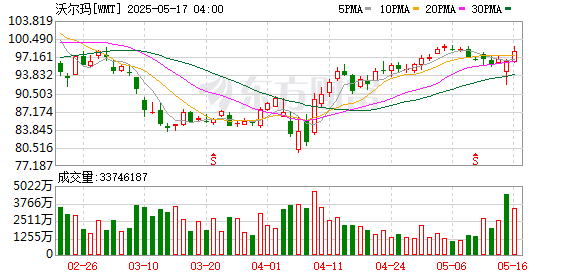
沃尔玛Q1财报发布:高管回应美国关税带来成本压力,称超出承受能力
2 1 Shi Ji Jing Ji Bao Dao· 2025-05-19 06:40
Core Insights - Walmart reported a total revenue of $165.6 billion for Q1 2025, a year-over-year increase of 2.5%, with a 4.0% increase when excluding currency fluctuations [2] - The company's adjusted operating income for the quarter was $7.3 billion, reflecting a 3.0% year-over-year growth, while the overall gross margin improved by 12 basis points [2] - Walmart's international business generated $29.8 billion in sales, with a 7.8% increase at constant currency, although operating profit declined by 17.5% to $1.26 billion [4] Revenue Breakdown - Walmart U.S. achieved sales of $112.2 billion, a 3.2% increase, with same-store sales rising by 4.5%, driven by a 21% growth in e-commerce [3] - Sam's Club in the U.S. saw a same-store sales increase of 6.7%, with e-commerce sales growing by 27% [3] - In China, Walmart's net sales reached $6.7 billion, marking a 22.5% year-over-year increase, with comparable sales up 16.8% and e-commerce sales up 34% [2][4] Strategic Initiatives - Walmart is focusing on maintaining low prices for food and consumables while managing cost pressures from tariffs, particularly on imports from countries like Costa Rica and Peru [7] - The company is diversifying its profit sources through e-commerce, advertising, and membership services, with advertising revenue growing by 50% across markets [5] - Walmart plans to cover 95% of the U.S. population with three-hour delivery options, reflecting a 91% increase in orders delivered within three hours [3] Membership Growth - Membership revenue for Sam's Club in China grew over 40%, with a 35% increase during the Chinese New Year sales season [5] - The number of members and renewal rates for Sam's Club in the U.S. continue to rise, contributing to a 9.6% increase in membership revenue [3] Future Outlook - Walmart has maintained its guidance for fiscal year 2026, expecting Q2 net sales growth of 3.5% to 4.5% at constant currency [6] - The company is cautious about providing specific guidance for Q2 operating income and earnings per share due to the dynamic nature of the current environment [6][8]


望远镜系列5之AdidasFY2025Q1经营跟踪:关税影响较小,维持全年指引
Changjiang Securities· 2025-05-18 23:30
Investment Rating - The industry investment rating is "Positive" and maintained [9] Core Insights - In FY2025Q1 (January 1, 2025 - March 31, 2025), Adidas achieved revenue of €6.15 billion, slightly above expectations (Bloomberg consensus expected €6.10 billion), with a year-on-year growth of 13% at constant exchange rates. Excluding the impact of Yeezy, Adidas brand revenue grew by 17% year-on-year [2][4] - The net profit attributable to shareholders was €430 million, representing a year-on-year increase of 151%. The gross margin improved by 0.9 percentage points to 52.1%, primarily due to lower product costs and shipping expenses, as well as improved discounts [2][4] Revenue Breakdown - **By Region**: Excluding the Yeezy business, all regions showed strong growth. Latin America and emerging markets continued robust growth, with revenues increasing by 26% and 23% year-on-year to €700 million and €870 million, respectively. Europe, Greater China, and Japan/Korea regions grew by 14%, 13%, and 13% year-on-year, respectively. North America was impacted by the cessation of Yeezy business, with a revenue growth of only 3% year-on-year, but grew by 13% when excluding this factor [5] - **By Channel**: Both DTC (Direct-to-Consumer) and wholesale channels achieved quality growth. Wholesale channel revenue increased by 18% year-on-year to €4.0 billion, benefiting from high sell-through rates and product mix adjustments. E-commerce channel revenue decreased by 3% due to the impact of Yeezy business separation, but grew by 18% when excluding this factor. DTC channel revenue grew by 6% year-on-year to €2.16 billion, driven by double-digit same-store sales growth in owned stores [5] - **By Product**: Footwear products continued to lead growth, with revenue increasing by 17% year-on-year to €3.76 billion. Apparel and equipment also showed growth, with revenues increasing by 8% and 10% year-on-year to €1.97 billion and €424 million, respectively. In FY2025Q1, footwear, apparel, and equipment accounted for 61%, 32%, and 7% of total revenue, respectively, indicating a healthy product mix [6] Inventory and Tariff Impact - Inventory remained healthy, supporting continued growth, with FY2025Q1 inventory at €5.07 billion, a year-on-year increase of 15% [12] - The impact of tariffs was relatively small due to low procurement from China, with approximately 20% of revenue from the US market, which can be compensated by strong performance in other mature markets. The procurement ratio for footwear from China is around 3%, moving towards zero, and for apparel, it is less than 2% [12] Performance Guidance - The company maintains its full-year guidance, expecting FY2025 revenue to grow at a high single-digit rate at constant exchange rates (Bloomberg expects revenue of €26.01 billion, a year-on-year increase of 9.8%). The expected operating profit for FY2025 is between €1.7 billion and €1.8 billion, representing a year-on-year increase of 27.2% to 34.6% [12]

Brady (BRC) - 2025 Q3 - Earnings Call Transcript
2025-05-16 15:32
Financial Data and Key Metrics Changes - The company reported record high adjusted earnings per share, increasing by 11.9% from $1.09 to $1.22 [11][17] - Organic sales growth was 1.6%, with acquisitions contributing 10.5% to sales growth, resulting in total sales growth of 11.4% [12][18] - Adjusted operating income in the Americas and Asia region grew by 20.2% [5][26] Business Line Data and Key Metrics Changes - The Americas region achieved organic sales growth of 5.4%, while Europe and Australia experienced a decline of 5.4% in organic sales [5][11] - Adjusted operating income in Europe increased by 3.8% despite the sales decline, attributed to restructuring actions [6][29] - Research and development (R&D) investment increased by over 8% this quarter, totaling $19.2 million [6][15] Market Data and Key Metrics Changes - Revenue by geography showed 52% from the US, 30% from Europe, 8% from Asia, and 10% from Australia and the rest of the Americas [10] - The Asia business reported organic sales growth of nearly 23%, with a return to growth in China [26][52] Company Strategy and Development Direction - The company is focused on integrating R&D functions and building new product roadmaps, including direct part marking technologies [6][25] - The acquisition of Funai's microfluidic solution business is expected to enhance the company's capabilities in custom part marking [7][40] - The company aims to mitigate tariff impacts through strategic sourcing and price adjustments while maintaining a focus on operational efficiency [21][60] Management's Comments on Operating Environment and Future Outlook - Management acknowledged the challenges posed by the global tariff environment but expressed confidence in the company's ability to mitigate impacts through geographic diversification [10][60] - The company tightened its adjusted diluted EPS guidance range for the fourth quarter due to anticipated tariff expenses and economic uncertainties [21][22] Other Important Information - The company returned $44.5 million to shareholders through dividends and share buybacks during the quarter [19][20] - Incremental tariff expenses were approximately $3 million in the third quarter, impacting diluted earnings per share by about $0.05 [20][21] Q&A Session Summary Question: Impact of tariffs on top line - Management indicated no significant demand destruction from tariffs yet, as inventory levels have buffered the immediate effects [33][34] Question: Sustainability of SG&A actions - Management noted ongoing efforts to drive down SG&A costs, with expectations for continued operational efficiency [36][37] Question: Details on the Funai acquisition - The acquisition is expected to enhance the company's product offerings in industrial inkjet solutions, with a purchase price of $11.6 million and estimated first-year sales of $15 to $20 million [38][54] Question: Fourth quarter guidance discrepancies - Management explained anticipated headwinds in the Americas due to tariffs, while expecting a flat performance in Europe [44][46] Question: Current situation in China - The company has reduced its footprint in China, focusing on multinational customers while maintaining a small presence [51][52]

STERIS(STE) - 2025 Q4 - Earnings Call Transcript
2025-05-15 14:02
STERIS (STE) Q4 2025 Earnings Call May 15, 2025 09:00 AM ET Company Participants Julie Winter - Vice President of Investor Relations & Corporate CommunicationsMichael Tokich - Senior VP & CFODaniel Carestio - President, CEO & DirectorPatrick Wood - Managing DirectorMac Etoch - Senior Research Associate Conference Call Participants David Turkaly - Research AnalystMike Matson - Senior Equity Research AnalystMichael Polark - Senior Equity Research AnalystJason Bednar - Senior Research AnalystBrett Fishbin - Vi ...

Lazydays Holdings(GORV) - 2025 Q1 - Earnings Call Transcript
2025-05-15 13:30
Financial Data and Key Metrics Changes - Net sales for the quarter were $166 million, a decrease of $104 million or 39% compared to the prior year period, driven by a deliberate reduction of inventory and lower store count [17][18] - Gross profit for the quarter was $44 million, an increase of $6 million compared to the prior year period [18] - SG&A expenses improved to $39 million for the quarter compared to $49 million in the prior year period, primarily due to reduced overhead personnel and marketing expenses [18][19] - The company achieved a gross margin of 24% excluding LIFO adjustments, representing a 10% increase compared to the prior year [18] - Adjusted EBITDA loss was $4 million, an improvement compared to the loss of $18 million in the prior year period [19] Business Line Data and Key Metrics Changes - New unit sales were down 36% or 912 units in the quarter, while average selling price for new units was 15% better for the quarter [16] - Pre-owned retail unit sales were down 48% or 655 units during the quarter, reflective of divestitures [16] - Gross margins for new vehicles were 11% for the quarter, a 7% increase compared to the prior year period, while used vehicle gross margins were 21%, a 10% increase [17] Market Data and Key Metrics Changes - New inventory comprised of 82% model year 2025 and 2026 units, up significantly from last quarter [13] - The company noted a shift towards single axle towables and first-time buyers, with motorized inventory sales improving 11% in the first quarter versus the fourth quarter [13] Company Strategy and Development Direction - The company outlined a two-part strategy focused on optimizing dealership footprint and maximizing operational performance [5] - The sale of five dealerships to Camping World allowed the company to significantly deleverage its balance sheet by repaying approximately $145 million in debt [6] - The company entered into a letter of intent to divest three additional stores, aiming to refine its footprint and reinforce its financial position [7] Management's Comments on Operating Environment and Future Outlook - Management expressed optimism regarding the RV lifestyle's affordability and consumer attraction despite potential tariff impacts [9] - The company is closely monitoring customer demand and macroeconomic trends, including tariffs and supply chain shortages [13] - Management remains committed to strengthening the balance sheet to support long-term growth and stability [20] Other Important Information - The company reported a loss from operations of $2.3 million for the quarter, which included non-cash impairment charges of $2.9 million [19] - The company reduced debt by $145 million during the quarter, contributing to meaningful deleveraging [19] Q&A Session Summary - No questions were fielded following the conclusion of prepared remarks, and the call concluded without a Q&A session [4]
