
绿色化

Search documents
研判2025!中国合成云母行业政策、产业链全景、发展现状、需求市场及未来发展趋势分析:从绝缘材料到战略新材料,合成云母开启高附加值征程[图]
Chan Ye Xin Xi Wang· 2025-11-30 01:09
Core Insights - Synthetic mica is emerging as a key alternative to natural mica due to its high purity, excellent thermal resistance (over 1200℃), and strong electrical insulation properties, making it a critical non-metallic insulation material in modern industry [1][5][6] - The demand for synthetic mica is significantly increasing, particularly in the rapidly growing electric vehicle market, with projections indicating substantial market growth in the global new energy sector by 2027 [1][7] - The Chinese synthetic mica industry is expected to develop steadily towards high-end, green, and centralized high-quality growth, driven by technological innovation and application expansion [1][16] Overview of Synthetic Mica Industry - Synthetic mica, also known as artificial fluorophlogopite, is produced through high-temperature melting and crystallization processes, offering advantages such as high purity (over 99.95%), superior thermal resistance, and excellent chemical stability [2][5] - It can be categorized based on performance characteristics (e.g., golden mica, lithium mica) and product forms (e.g., single crystal sheets, powders, ceramics) [3][4] Industry Policies in China - The Chinese government has introduced multiple policies to support the synthetic mica industry, including guidelines for new material applications and plans for the development of the raw materials industry, which collectively enhance the industry's research and application capabilities [6][7] Global Development of Synthetic Mica - The global market for synthetic mica in the new energy sector reached 4.66 billion yuan in 2024, with expectations to grow to 12.37 billion yuan by 2027, reflecting a compound annual growth rate of 38.46% [7][8] - The industry is experiencing dual opportunities for technological upgrades and market expansion, particularly in high-end applications such as aerospace and electronics [7][10] Industry Chain of Synthetic Mica in China - The synthetic mica industry chain in China is characterized by clear upstream, midstream, and downstream divisions, with upstream relying on chemical raw materials and midstream focusing on the production of synthetic mica products [8][9] Demand and Application Trends - The demand for synthetic mica is rapidly increasing in the new energy sector, particularly for applications in power battery insulation and heat management, with significant adoption by leading companies like Tesla and CATL [12][13] - The pearl pigment industry, which utilizes synthetic mica as a core material, is also experiencing rapid growth, providing substantial market opportunities [14] Competitive Landscape of Synthetic Mica Industry - The Chinese synthetic mica industry features a tiered competitive structure, with leading companies dominating high-end markets while smaller firms focus on mid- to low-end segments [15][16] - Major players like Ping An Electric and Zhejiang Rongtai leverage their technological capabilities and customer relationships to secure positions in high-end applications [15] Future Development Trends - The synthetic mica industry is expected to focus on technological innovation, expanding applications in high-value sectors, and optimizing industry structure towards higher concentration and sustainability [16][17][18] - Key trends include the drive for product upgrades through technological breakthroughs, deeper penetration into high-value applications, and a shift towards green production practices [16][17][18]


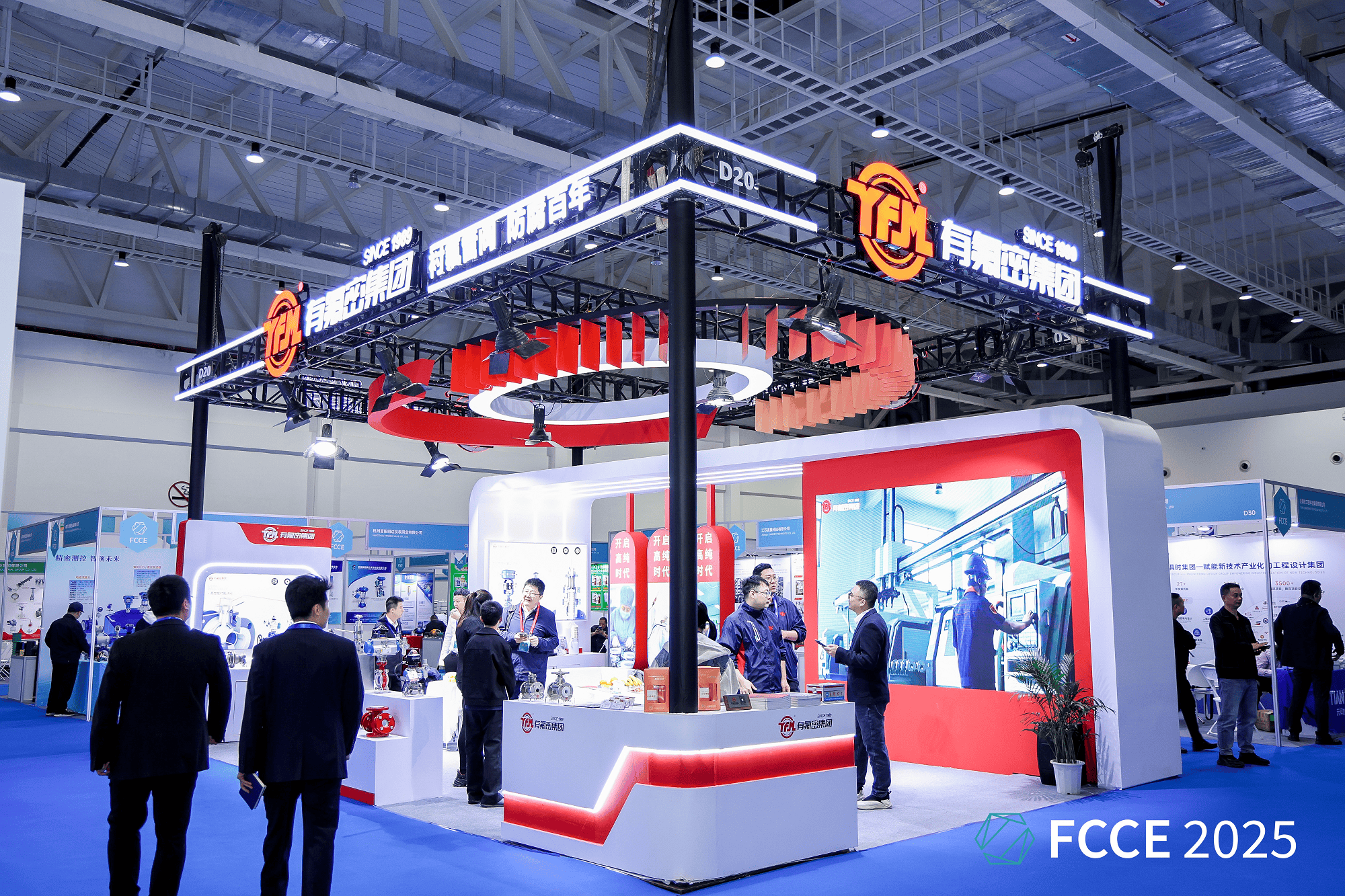
共赴绿色智造之约丨有氟密集团亮相2025厦门国际精细化工产业盛会
Sou Hu Cai Jing· 2025-11-29 09:13
Group 1 - The 2025 Xiamen International Fine Chemical Industry Conference and Exhibition (FCCE 2025) will be held from November 27 to 29, 2025, focusing on the entire fine chemical industry chain with the theme "Green Intelligent Manufacturing, Driving the Future" [1] - The event will feature over 120 exhibitors, including leading companies like Sinochem Quanzhou Petrochemical and Huawei, showcasing innovations in fine chemicals, green chemical technologies, and intelligent manufacturing equipment [3] - More than 60 high-quality thematic activities will serve as the "intelligent engine" of the exhibition, providing authoritative guidance for enterprises through reports and discussions on topics such as digital transformation and green fluorochemical technology [5] Group 2 - Youfu Group, a national high-tech enterprise, will leverage its industry advantages to share technical insights and engage in direct dialogues with upstream and downstream companies during the exhibition [7] - The fine chemical industry is currently undergoing a critical transformation towards high-end, green, and intelligent development, with FCCE 2025 injecting strong momentum into this evolution [7] - Youfu Group aims to continue focusing on technological innovation and deepen industry collaboration to provide high-quality corrosion-resistant solutions, contributing to the high-quality development of the fine chemical industry [7]
聚焦“十五五”规划建议丨提升职业学校办学能力 建设特色鲜明高职院校
Xin Hua Wang· 2025-11-29 07:06
Core Insights - The "15th Five-Year Plan" emphasizes enhancing the capabilities of vocational schools and building distinctive higher vocational colleges, recognizing vocational education as a crucial part of the national education system and human resource development [1] - During the "14th Five-Year Plan" period, vocational education contributed over 70% of the newly added high-quality skilled talents in modern industries, establishing the largest vocational education system globally [1] - The integration of vocational education with economic and social development is essential, facilitating deep connections among education, talent, innovation, industry, and supply chains [1] Group 1 - Vocational education is positioned as a foundational project for cultivating high-quality skilled talents, with a focus on high-level school capabilities and high-quality integration of production and education [1] - The upcoming five years will see a shift in vocational education driven by new technological revolutions and industrial transformations, necessitating the training of composite skilled talents with digital skills and social competencies [1] - The proposed planning suggestions outline the strategic direction for vocational education reform and high-quality skilled talent cultivation during the "15th Five-Year Plan" period [1] Group 2 - The ability of vocational schools to provide quality education is crucial for talent development, while distinctiveness in vocational colleges helps in defining the types of skilled talent being cultivated [2] - The advancement of vocational education will further promote the integration of production and education, moving towards a more tangible and collaborative approach [2] - Lifelong vocational training and learning in the workplace will encourage even high-educated graduates to engage in frontline new job positions, enhancing the quality of the technical talent pool [2]
聚焦“十五五”规划建议|提升职业学校办学能力 建设特色鲜明高职院校
Xin Hua She· 2025-11-29 05:47
Core Viewpoint - The "14th Five-Year Plan" emphasizes the importance of vocational education in developing high-quality skilled talent, which is crucial for the national education system and human resource development [1][2]. Group 1: Vocational Education's Role - Vocational education has supplied over 70% of the newly added high-quality skilled talent for modern industries during the "14th Five-Year Plan" period [1]. - China has established the world's largest vocational education system, covering 41 industrial categories as classified by the United Nations [1]. Group 2: Future Directions and Challenges - The upcoming "15th Five-Year Plan" aims to enhance the capabilities of vocational schools and build distinctive higher vocational colleges [1]. - The new technological revolution and industrial transformation are key factors influencing vocational education, necessitating the training of composite skilled talents with digital skills and social competencies [2]. - The strategic direction for vocational education reform and high-quality skilled talent cultivation is clearly outlined in the planning suggestions for the "15th Five-Year Plan" [2]. Group 3: Integration and Development - The quality of talent cultivation is significantly supported by the capabilities of educational institutions, while the distinctiveness of vocational colleges is essential for skill talent training [2]. - The integration of education and industry is expected to become more tangible and collaborative, promoting lifelong learning and encouraging high-educated graduates to engage in frontline jobs [2].
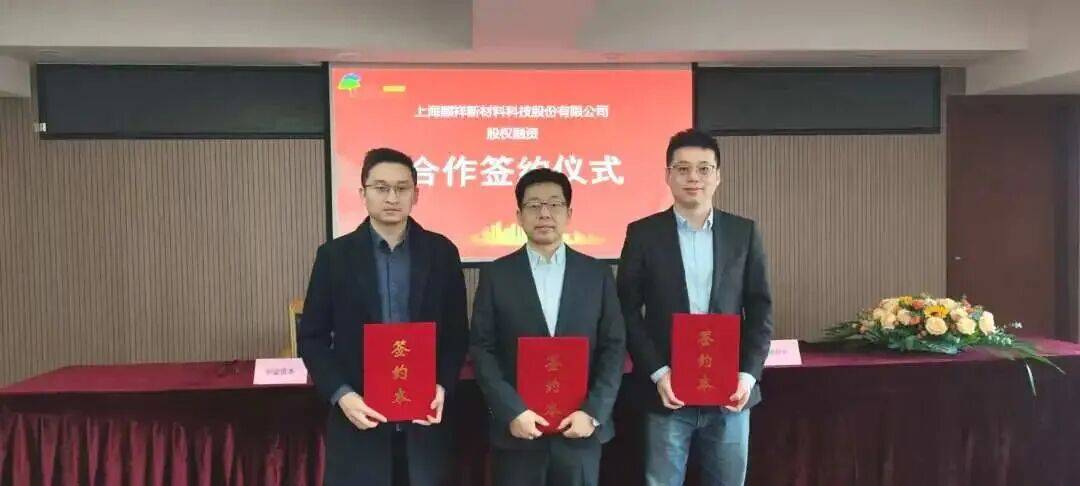
上市辅导企业受资本青睐,成功融资
Sou Hu Cai Jing· 2025-11-28 08:51
Core Viewpoint - The successful signing ceremony for equity financing cooperation of Shanghai Qixiang New Materials Technology Co., Ltd. marks a significant milestone in the company's development and reflects strong confidence from shareholders in its long-term potential and broad prospects [1][3]. Group 1: Company Developments - Qixiang New Materials completed its shareholding system reform on July 2, establishing a new governance structure [3]. - On September 22, the company signed a contract with Guotou Securities for listing guidance, indicating its intention to go public [3]. - The completion of the financing signifies an increase in the overall value of Qixiang New Materials and a notable optimization of its capital structure, providing strong momentum for future high-quality development [3]. Group 2: Future Plans - The company plans to accelerate technological breakthroughs and industrialization, aiming to upgrade its industrial chain towards high-end, intelligent, and green directions [3]. - Qixiang New Materials is committed to injecting new energy into the high-quality development of the rubber new materials industry and providing higher quality and more reliable innovative solutions for customers [3].
武汉高端装备“智”胜水陆空天
2 1 Shi Ji Jing Ji Bao Dao· 2025-11-28 08:17
Core Insights - Wuhan is accelerating the construction of a new high-end equipment industry development pattern, focusing on four application scenarios: green intelligent ships, rail transit, low-altitude aviation, and commercial aerospace, supported by intelligent manufacturing and energy equipment [1][2][3] - By 2025, the industrial scale of 124 key high-end equipment enterprises in Wuhan is expected to exceed 250 billion yuan, significantly increasing its share of the city's total industrial output [1][2] - The integration of artificial intelligence into traditional manufacturing is enhancing operational efficiency, with significant improvements in production cycles, equipment efficiency, and cost reductions [2][3] Group 1: Intelligent Manufacturing - Wuhan Ship Machinery Co., Ltd. has established a digital workshop that integrates IoT, big data analysis, and automated logistics, resulting in a 30% reduction in production cycles and a 38.57% increase in equipment efficiency [2] - The company has achieved a significant transformation from data-driven decision-making to performance-driven approaches, enhancing its manufacturing capabilities [2] Group 2: Rail and Cold Chain Innovations - CRRC Changjiang Transportation Equipment Group has developed smart cold chain equipment that eliminates carbon emissions by relying solely on the vehicle's insulation for temperature control, achieving zero cargo loss during long-distance transport [3] - The equipment features a remote monitoring system that reduces operational costs by enabling unmanned operations and real-time parameter monitoring [3] Group 3: Precision Measurement Technology - Wuhan Weijing 3D Technology Co., Ltd. has made breakthroughs in high-end 3D measurement equipment, becoming a leader in the optical 3D measurement field in China [4] - The company collaborates with major enterprises like Xiaomi and CATL, significantly improving the quality control of battery pack components [5] Group 4: Low-altitude Economy Development - Wuhan's low-altitude economy is growing rapidly, with over 170 related enterprises and 220 take-off and landing points established by 2025 [6] - The city is developing a smart city model that integrates low-altitude services and data sharing among various application units [6] Group 5: Aerospace Industry Advancements - Wuhan is forming a complete commercial aerospace industry chain, including satellite manufacturing and ground support services, centered around the "China Star Valley" initiative [7][8] - The city is also advancing in satellite internet technology, supporting national projects and enhancing the integration of satellite and ground networks [9][10]

四川:“十五五”期间加快制造业高端化、智能化、绿色化发展步伐
Zhong Guo Xin Wen Wang· 2025-11-28 03:06
Core Viewpoint - Sichuan province aims to accelerate the high-end, intelligent, and green development of its manufacturing industry during the "14th Five-Year Plan" period, focusing on technological innovation and industrial transformation [1][2][3] Group 1: Technological and Industrial Innovation - Sichuan will enhance the core competitiveness of its manufacturing sector by integrating technological and industrial innovation, including a new round of large-scale technological upgrades and the establishment of over 50 provincial-level manufacturing innovation centers [1] - The province plans to create over 100 high-level testing platforms and 300 pilot platforms for manufacturing, aiming to elevate the industrial foundation and move the value chain towards mid-to-high end [1] Group 2: Intelligent Manufacturing Development - The province will promote the intelligent upgrade of the entire production process, accelerating digital transformation and enhancing numerical control levels [2] - Sichuan aims to cultivate 100 future factories and 1,000 advanced intelligent factories, while also developing 1,000 new intelligent terminal products [2] - The focus will also be on strengthening the support for the intelligent industry system and enhancing the integration of "5G + industrial internet" applications [2] Group 3: Green Manufacturing Initiatives - Sichuan will build a comprehensive green manufacturing system, promoting green transformation across all stages from product design to recycling [3] - The province targets the establishment of over 1,000 green factories and more than 150 green industrial parks, along with the implementation of over 1,000 green integration technology renovation projects annually [3] - The goal is for green low-carbon industries to account for over 30% of the industrial share, with clean energy making up 90% of the industrial energy structure [3]
研判2025!中国节能家电行业政策、产业链、市场规模、重点企业及发展前景展望:政策引领与技术赋能,推动节能家电产业高质量发展[图]
Chan Ye Xin Xi Wang· 2025-11-28 01:29
Core Insights - The energy-saving home appliance market is experiencing continuous demand growth due to the global trend towards energy conservation and increasing consumer awareness of environmental protection [1][3][6] - The market size of China's energy-saving home appliance industry is projected to grow from 236.25 billion yuan in 2015 to 680.325 billion yuan in 2024, with a compound annual growth rate (CAGR) of 12.47% [1][10] - By 2025, the market size is expected to reach 744.3 billion yuan, driven by technological advancements and evolving consumer demands [1][10] Industry Overview - Energy-saving home appliances utilize advanced technologies such as variable frequency technology, high-efficiency compressors, and optimized insulation materials to significantly reduce energy consumption during use [1][3] - The industry includes various products such as air conditioners, refrigerators, washing machines, water heaters, televisions, and rice cookers [3] Market Dynamics - The Chinese government has implemented various policies to support the energy-saving appliance sector, including subsidies for replacing old appliances and promoting energy-efficient products [6][7][11] - The increasing focus on green consumption and energy efficiency among consumers is driving demand for energy-saving appliances [7][11] Industry Chain - The upstream of the energy-saving appliance industry includes raw materials and components such as steel, copper, plastics, rubber, electronic components, semiconductor materials, chemical materials, and insulation materials [8] - The midstream involves the production and manufacturing of energy-saving appliances, while the downstream encompasses sales channels including specialty appliance stores, home improvement markets, and various e-commerce platforms [8] Key Players - Major companies in the energy-saving appliance sector include Midea Group, Haier Smart Home, Gree Electric Appliances, Sichuan Changhong, Hisense, and others [1][13] - Midea Group reported a revenue of 167.201 billion yuan in its smart home business for the first half of 2025, reflecting a year-on-year growth of 13.32% [13] - Haier Smart Home achieved significant sales in its refrigerator, washing machine, and air conditioning segments, with respective revenues of 42.517 billion yuan, 31.645 billion yuan, and 31.645 billion yuan in the first half of 2025 [14][15] Development Trends - The industry is moving towards greater integration of artificial intelligence and IoT technologies, enabling autonomous energy management and optimization [16] - There is a focus on green design and circular economy principles, with an emphasis on using eco-friendly refrigerants and increasing the use of renewable materials [16] - Energy-saving appliances are evolving from single-function products to comprehensive, scenario-based solutions that optimize energy consumption across different home environments [17]



工业机器人有望更智能、易用(专家点评)
Ren Min Ri Bao· 2025-11-27 22:05
Core Insights - China has maintained its position as the world's largest industrial robot application market for 12 consecutive years, achieving both scale and qualitative advancements in the industry [1] - The performance quality of domestic robots is steadily improving, with several companies launching six-axis robots with a load capacity exceeding 500 kilograms, and the average uninterrupted operation time of domestic robots reaching 120,000 hours [1] - The product structure is continuously optimizing, with sales of self-owned brand multi-joint robots expected to exceed 100,000 units in 2024, increasing their share of total sales to 60.9% [1] Industry Development - Despite rapid industry growth, there is still a reliance on imports for high-end components, operating systems, and virtual simulation platforms, and the usability and intelligence of complete machines do not yet meet user expectations [1] - The 20th Central Committee of the Communist Party of China emphasizes focusing economic development on the real economy, with a direction towards intelligence, greening, and integration [1] Future Outlook - The demand for intelligent robots is driven by the need for manufacturing equipment to possess adaptive and autonomous learning capabilities, while green initiatives require the manufacturing sector to save energy and reduce waste, which industrial robots can facilitate [1] - The integration of robotic technology with new technologies such as large models and embodied intelligence, as well as collaboration with industries like lithium batteries and communications, creates opportunities for enhancing robot capabilities and establishing a new technological innovation ecosystem [1] - Looking ahead, China's industrial robots are expected to become more intelligent and user-friendly, with human-machine collaboration becoming the norm and serving as a crucial support for cultivating new productive forces [1]

坚持智能化、绿色化、融合化方向 云南曲靖因地制宜提升产业能级
Jing Ji Ri Bao· 2025-11-27 21:38
Core Insights - Yunnan's Qujing City has achieved a 45.9% increase in foreign trade import and export volume in the first three quarters of the year, driven by the development of new productive forces and a modern industrial system [1][2] Group 1: Economic Development - Qujing City is focusing on optimizing traditional industries while nurturing emerging and future industries, leading to a robust support system from traditional sectors like tobacco, coal, and electricity [1] - The city is also advancing in new sectors such as green aluminum, silicon photovoltaic, and new energy batteries, alongside stable growth in advanced equipment manufacturing, new materials, and biomedicine [1] - The local government has established seven provincial-level foreign trade transformation bases, resulting in a 66% increase in the number of enterprises engaged in foreign trade compared to the end of the 13th Five-Year Plan [1] Group 2: Industrial Strategy - Qujing is committed to intelligent, green, and integrated development, promoting synchronized advancements in new industrialization, information technology, urbanization, and agricultural modernization [2] - The city is accelerating the establishment of an advanced manufacturing center and implementing three major projects: upgrading traditional industries, nurturing emerging industries, and planning for future industries [2] - Industrial investment accounts for 57.1% of fixed asset investment, while the added value of the private economy constitutes 57.6% of the regional GDP [2]