
实体经济

Search documents
富达国际:IPO及内地散户资金持续流入A股 料下半年中央仍推宽松财政政策
Zhi Tong Cai Jing· 2025-09-10 06:01
Group 1 - The core viewpoint is that two main sources of capital will influence the Chinese mainland stock market's impact on the real economy: the recovery of IPOs and the actions of retail investors [1][2] - The recovery of IPOs is expected to strengthen the financing cycle and enhance the financial market's support for the real economy [1] - Retail investor participation is gradually increasing, driven by more household savings flowing into the stock market, which could create a wealth effect and boost household disposable income and consumption confidence [1] Group 2 - The macroeconomic policy shift in China since September last year is crucial, with the central bank implementing measures to boost market confidence, including new monetary policy tools [2] - Funds flowing into A-shares in the first half of the year were primarily from institutional investors, contrasting with the retail-driven market surge in 2015 [2] - Economic analysts have raised the growth forecast for China's economy in 2025 to near the government's target of 5%, indicating resilience under tariff pressures [2]
深耕实体经济 哈尔滨银行(06138)展现金融担当
智通财经网· 2025-09-08 02:12
Core Viewpoint - Harbin Bank focuses on meeting the needs of the real economy as the starting point and goal for high-quality development in the first half of 2025 [1] Group 1: Financial Support for Real Economy - The bank aims to provide financial support for the development of the real economy by leveraging its advantages in group operation and distribution [1] - The bank is deepening its involvement in key financial areas such as technology and green finance, increasing medium to long-term loans in manufacturing, and supporting modern agriculture and county economies [1] Group 2: Loan Growth and Structure - As of June 30, 2025, the total amount of corporate loans reached 233.2248 billion yuan, an increase of 27.8198 billion yuan compared to the end of the previous year, accounting for 58.7% of total loans [1] - The bank's actions reflect its commitment to social responsibility, injecting vitality into the real economy while optimizing its asset structure and creating conditions for business expansion [1]
深耕实体经济 哈尔滨银行展现金融担当
Zhi Tong Cai Jing· 2025-09-08 02:10
Core Viewpoint - Harbin Bank focuses on meeting the needs of the real economy as the starting point and goal for high-quality development in the first half of 2025 [1] Group 1: Financial Support for Real Economy - The bank aims to provide financial support for the development of the real economy, leveraging its operational advantages in the Heilongjiang province [1] - The group emphasizes key financial areas such as technology and green finance, increasing medium to long-term loans in manufacturing and credit investments across the entire energy industry chain [1] - The bank supports modern agriculture and county-level economies, deepening cooperation with government and state-owned enterprises, and responding to real estate financing mechanisms [1] Group 2: Loan Growth and Financial Responsibility - As of June 30, 2025, the total amount of corporate loans reached 233.2248 billion yuan, an increase of 27.8198 billion yuan compared to the end of the previous year, accounting for 58.7% of total loans [1] - The bank actively fulfills its social responsibility as a financial institution, injecting vitality into the real economy while creating conditions for its own business expansion and optimizing asset structure [1] - The bank is expected to continue benefiting from the dividends of real economic development [1]
助力高水平对外开放取得显著成效
Jin Rong Shi Bao· 2025-09-08 02:02
Core Viewpoint - The 25th China International Investment Trade Fair has commenced in Xiamen, emphasizing the importance of investment in driving economic growth and international cooperation, with a focus on the role of the Export-Import Bank of China in enhancing investment capabilities and supporting the Belt and Road Initiative [1] Group 1: Investment and Economic Growth - Investment is one of the three driving forces behind economic growth and a key factor in promoting international economic cooperation [1] - The Export-Import Bank has established 27 funds and investment companies, contributing over 1 trillion RMB, with investments spanning ASEAN, Eurasia, Central Asia, Africa, Latin America, and Central and Eastern Europe [1] Group 2: Belt and Road Initiative - The Export-Import Bank plays a crucial role in financing projects along the Belt and Road, having initiated or participated in multiple investment funds aimed at supporting this initiative [2] - The bank utilizes various financing tools to meet the diverse funding needs of related countries, providing long-term and stable funding sources for international economic cooperation projects [2] Group 3: Support for Domestic Economy - The Export-Import Bank has established the Jin Yin Infrastructure Fund to support domestic economic development, focusing on infrastructure, key livelihood projects, and new infrastructure [3] - In 2022, the bank invested nearly 70 billion RMB in over 100 major projects, facilitating total investments of nearly 1 trillion RMB [3] Group 4: Enhancing Investment Capabilities - The Export-Import Bank is improving its investment capabilities through refined management and risk control, with a professional investment team and optimized investment decision processes [4] - The bank is expanding bilateral cooperation with various international financial institutions to enhance investment collaboration and promote mutual understanding [4][5]
中国进出口银行深耕股权投资:助力高水平对外开放取得显著成效
Jin Rong Shi Bao· 2025-09-08 00:44
Core Viewpoint - The 25th China International Investment Trade Fair has commenced in Xiamen, emphasizing the importance of investment in driving economic growth and international cooperation [1] Group 1: Investment Initiatives - The Export-Import Bank of China has established 27 funds and investment companies, investing over 1 trillion RMB across key regions including ASEAN, Eurasia, Central Asia, Africa, Latin America, and Central and Eastern Europe [1] - The bank's equity investment business plays a crucial role in various projects along the Belt and Road Initiative, utilizing diverse financing tools to meet the funding needs of participating countries [2] Group 2: Support for the Real Economy - The Export-Import Bank has launched the JinYin Infrastructure Fund to support domestic infrastructure projects, investing nearly 70 billion RMB in over 100 major projects, which collectively attract nearly 1 trillion RMB in total investment [3] - The bank is also actively investing in advanced manufacturing sectors, including synthetic biology, artificial intelligence, quantum computing, and new materials, to support the development of small and medium-sized enterprises [3] Group 3: Enhancing Investment Capabilities - The Export-Import Bank is improving its investment management and risk control capabilities, with specialized teams for investment, compliance, and fund management, leading to enhanced project selection and decision-making processes [4] Group 4: International Cooperation - The bank is expanding bilateral and multilateral cooperation with institutions like the Asian Development Bank and the International Finance Corporation to promote investment collaboration and mutual understanding [5] - The bank aims to continue its focus on equity investment, directing financial resources towards key areas such as the Belt and Road Initiative, advanced manufacturing, technological innovation, and green development [5]
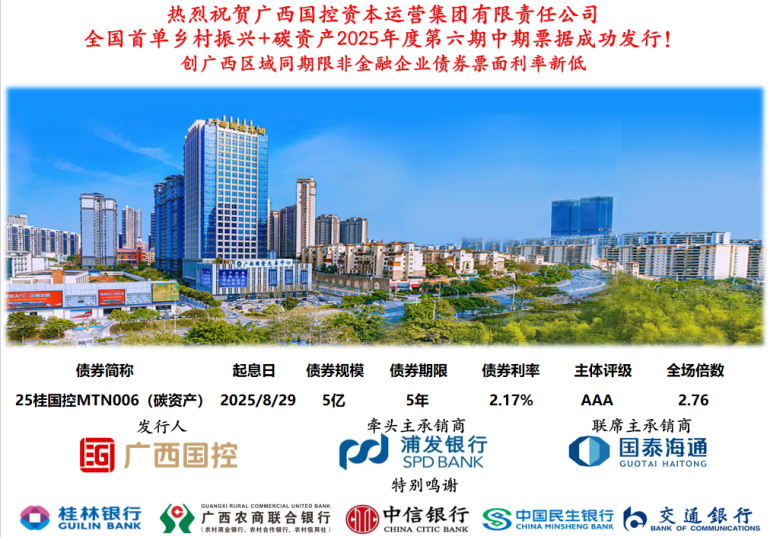
浦发银行携手广西国控集团发行“碳资产+乡村振兴”中期票据
Zhong Guo Jin Rong Xin Xi Wang· 2025-09-05 10:35
Core Viewpoint - The successful issuance of China's first "carbon asset + rural revitalization" dual-labeled medium-term note by Shanghai Pudong Development Bank and Guangxi Guokong Capital Operation Group represents an innovative financial product that aligns with national "dual carbon" goals and rural revitalization strategies, providing a replicable model for green financing and regional economic development [1][4][6] Group 1: Financial Innovation - The medium-term note has a total issuance scale of 500 million yuan and a five-year term, linking carbon assets to create new pathways for green financing [1][4] - The note's core innovation lies in its carbon asset yield as the underlying support, offering investors additional carbon asset yield distribution linked to the issuer's subsidiaries' carbon quotas [4] - The issuance attracted significant market interest, with a subscription multiple of nearly three times, reflecting confidence in Guangxi Guokong Group's capabilities and strategic positioning in the green low-carbon sector [4][5] Group 2: Fund Utilization - Proceeds from the medium-term note will primarily support the procurement of raw materials for sugar production, specifically purchasing sugarcane from local farms to ensure stable supply [5] - The funding is strategically directed towards rural revitalization and the real economy, transforming financial resources into drivers for rural development and industrial upgrades [5] - This initiative aims to enhance employment and income for sugarcane farmers, thereby activating the rural economy's self-sustaining capabilities [5][6] Group 3: Strategic Positioning - Guangxi Guokong Group, established in June 2025 with a registered capital of 11 billion yuan, integrates resources from various state-owned enterprises under the Guangxi State-owned Assets Supervision and Administration Commission [4] - The group focuses on leveraging Guangxi's policy advantages and unique industries, aiming to become a leading state-owned capital operation company and a top food industry enterprise in China [4]


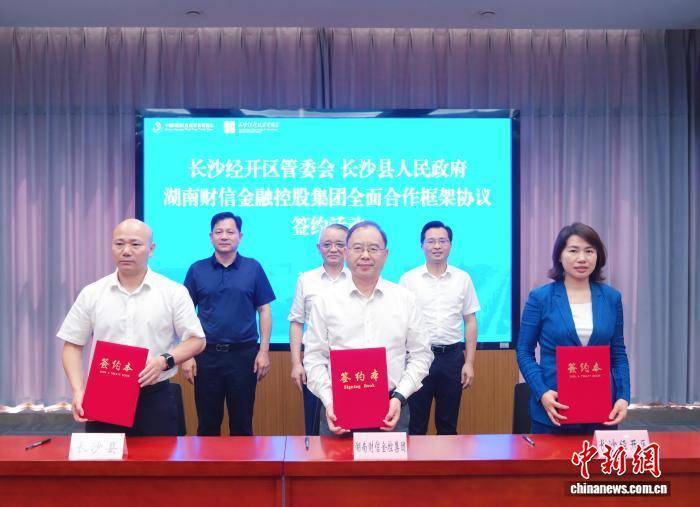
长沙经开区、长沙县引金融“活水”精准滴灌实体经济
Sou Hu Cai Jing· 2025-09-05 07:05
Group 1 - The signing of a comprehensive cooperation framework agreement between Changsha Economic Development Zone, Changsha County, and Hunan Caixin Financial Holding Group marks a new phase in government-finance collaboration [1][3] - The three parties will focus on seven key areas including equity investment, debt financing support, enterprise incubation, inclusive financial services, asset management services, livelihood security services, and digital construction [1][3] - The agreement aims to establish a financial support system that links financial resources with industrial needs, enhancing the local economy and fostering high-quality development [4] Group 2 - Changsha Economic Development Zone and Changsha County have developed two trillion-level industrial clusters in engineering machinery and automotive parts, alongside emerging industries such as new-generation information technology and artificial intelligence [3] - The total scale of the key industry special fund and the science and technology innovation mother fund established by the region is 20 billion [4] - The region has implemented the "Starry Sky Plan" to support innovative enterprises and entrepreneurship among college students, enhancing the integration of innovation, industry, and finance [4]
发布会预告!下周二上午10时→
Zheng Quan Shi Bao· 2025-09-04 13:56
Group 1 - The State Council Information Office will hold a press conference on September 9, 2025, at 10 AM to discuss the high-quality completion of the "14th Five-Year Plan" [1] - Minister of Industry and Information Technology, Li Lecheng, will introduce the promotion of new industrialization and the strengthening of the real economy during the "14th Five-Year Plan" period [1]
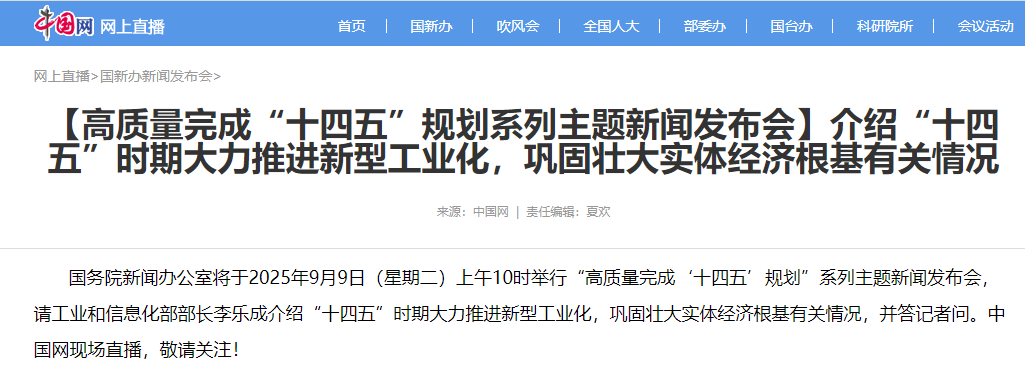
发布会预告!下周二上午10时→
证券时报· 2025-09-04 13:15
Group 1 - The State Council Information Office will hold a press conference on September 9, 2025, to discuss the high-quality completion of the "14th Five-Year Plan" [1] - The Minister of Industry and Information Technology, Li Lecheng, will introduce the promotion of new industrialization during the "14th Five-Year Plan" period and strengthen the foundation of the real economy [1]

8月份中国物流业景气指数50.9% 需求持续向好
Yang Shi Xin Wen· 2025-09-02 01:25
Core Insights - The logistics industry in China shows significant expansion, with the logistics prosperity index reaching 50.9% in August, an increase of 0.4 percentage points from the previous month [1] - New order indices for railway, air transport, and postal express industries are all above 55%, indicating strong demand [1] - The overall supply and demand situation in logistics is improving, reflecting a solid foundation for the recovery of the real economy [1] Logistics Industry Performance - The business volume index has remained in the expansion zone for six consecutive months, while the new order index has been in the expansion zone for seven consecutive months [1] - There is notable growth in the new order indices for multimodal transport and water transport sectors [1] Investment Trends - Fixed asset investment completion index continues to stay in the expansion zone, indicating ongoing growth in investments [1]