
产业创新

Search documents
林武在济南调研时强调 坚持以高质量党建引领高质量发展 促进企业提质增效 提升基层治理水平
Da Zhong Ri Bao· 2025-12-09 01:02
Group 1 - The emphasis on high-quality development led by high-quality party building, focusing on the integration of technological and industrial innovation to enhance enterprise efficiency and grassroots governance [1] - The visit to Jinan Huichuan Technology Co., Ltd. highlighted the importance of focusing on automation, digitalization, and intelligence in the industrial sector to strengthen core competitiveness and promote industrial cluster development [1] - The discussion with Rongming Microelectronics (Jinan) Co., Ltd. underlined the need for independent innovation and mastery of key core technologies to address industry pain points and lead future industrial development [1] Group 2 - The inspection of the high-quality residential project by Lin Wu emphasized the need to accelerate the construction of a new model for real estate development, optimizing product supply to meet high-quality housing demands [2] - The visit to the Shengfu Baihe Community showcased the importance of community governance led by party building, focusing on resolving conflicts and enhancing community service levels to address urgent public concerns [2] - The call for strengthening safety hazard inspections and training to prevent accidents, ensuring the safety of people's lives and property [2]
2025中国经济回眸丨攀高逐“新” “质”胜未来
Xin Hua She· 2025-12-09 00:56
Group 1 - The core viewpoint emphasizes the importance of developing new productive forces as a pathway to high-quality development, with a strategic focus on innovation and technology [1][2] - The successful conversion of thorium-uranium nuclear fuel at a 2 MW liquid fuel thorium molten salt experimental reactor in Gansu marks a significant technological advancement for China's future nuclear energy systems [2] - The Xiaomi automobile factory in Beijing has achieved a milestone by producing its 500,000th vehicle, showcasing advancements in automated production processes supported by high-quality 5G networks [3] Group 2 - Various regions in China are implementing tailored strategies for industrial transformation, such as Shanxi's green transition in the energy and chemical industries and Hubei's focus on aerospace, which has seen a 14.8% revenue increase in the first nine months of the year [4] - The establishment of the Future Network Experimental Facility in Nanjing represents a significant step in supporting communication technology innovation and industry incubation [6] - The construction of over 2,400 pilot platforms across the country aims to facilitate the commercialization of innovative technologies and support the development of new productive forces [8] Group 3 - The introduction of policies to promote the large-scale application of new technologies and products, including the exploration of virtual reality and clean energy transportation corridors, aims to create a conducive environment for innovation [9] - The Chinese government is actively reforming market mechanisms to enhance the flow of high-quality production factors towards new productive forces, including pilot programs in various regions [10][11] - The focus on creating a supportive innovation environment through policy measures aims to eliminate barriers to market entry and promote fair competition [13] Group 4 - The strategic vision for the 14th Five-Year Plan emphasizes the dual approach of upgrading traditional industries while fostering emerging and future industries to build a modern industrial system [14]
中金:如何构建“稳市”监测体系?
中金点睛· 2025-12-08 23:37
Core Viewpoint - The A-share market has experienced a year of upward fluctuations since September 2024, necessitating a focus on preventing market volatility. A methodology for identifying market "tops" has been developed, complementing previous research on "bottom" identification, to form a "stable market" monitoring framework. Current market conditions are deemed relatively healthy, with reasonable valuations and no fundamental changes in the underlying logic for upward movement [2][4]. Group 1: Market Stability and Regulatory Environment - The regulatory environment for capital market stability is evolving, with recent statements from the China Securities Regulatory Commission (CSRC) emphasizing the need for a long-term stability mechanism to prevent significant market fluctuations [3]. - The construction of a "stable market" mechanism is seen as essential for achieving high-quality development in China's capital markets and better serving the real economy [3]. Group 2: Historical Market Cycles - Since the stock reform in 2005, the A-share market has undergone five significant cyclical transitions, with notable upward phases occurring from June 2005 to October 2007, October 2008 to November 2010, December 2012 to June 2015, January 2016 to January 2018, and January 2019 to December 2021 [5]. - The characteristics of these cycles indicate that most upward phases align closely with improvements in economic fundamentals and corporate earnings, except for the 2013-2015 period, which was primarily driven by policy and liquidity [5]. Group 3: Methodology for Identifying Market Tops - The methodology for identifying market tops includes analyzing macroeconomic fundamentals, corporate earnings expectations, policy changes, valuation metrics, liquidity conditions, and investor behavior [8]. - Historical data shows that significant market tops are often accompanied by a combination of these signals, particularly macroeconomic and policy indicators, which are deemed primary signals, while valuation and liquidity metrics serve as auxiliary signals [53][55]. Group 4: Key Indicators and Signals - Key indicators for identifying potential market tops include changes in financial data such as M1 growth, PMI trends, and external macroeconomic shocks, which can significantly impact market sentiment [8][16]. - The analysis of corporate earnings cycles indicates that market tops often precede earnings peaks, with a typical lead time of 1-3 quarters, making it challenging to predict tops based solely on earnings data [16][20]. Group 5: Current Market Assessment - The current market score based on the developed monitoring framework is 22 points, indicating a low likelihood of a market top at this stage, as historical tops typically score above 60 points [57]. - Despite some signs of overheating in trading sentiment, such as high turnover rates and margin trading levels, there has not been a significant outflow of capital, suggesting that the market remains supported by underlying fundamentals [58].


冰雪经济破万亿元大关 消费升级与产业创新驱动发展热潮
Xin Hua Cai Jing· 2025-12-08 08:01
新华财经上海12月8日电(记者 魏雨田)"冰天雪地也是金山银山"的发展理念正加速转化为实实在在的经济动能。《中国冰雪产业发展研究报告(2025)》 显示,今年我国冰雪产业规模已突破万亿元大关,达到10053亿元,标志着冰雪经济已成为我国经济发展中不容忽视的新兴增长极。从消费市场扩容到产业 创新升级,从企业积极布局到资本持续涌入,冰雪经济正以全链条发力的态势,书写着"冷资源"变"热经济"的发展篇章。 冰雪经济的蓬勃发展,源于消费市场的旺盛需求。数据显示,2024年-2025年冰雪季,我国居民参与冰雪运动及带动消费规模超1875亿元,同比增长超 25%,越来越多的消费者将冰雪运动纳入日常休闲选择,带动相关消费需求持续攀升。 这一热度直接传导至零售终端,唯品会数据显示,今年以来,平台滑雪服、滑冰服销量同比增长34%。"人们的户外消费范围持续扩大,其中水上运动、冰 雪运动等品类备受欢迎。"唯品会相关负责人表示。 消费需求的升级,正推动冰雪装备从"能用"向"好用"跨越。有业内人士对记者表示,现在的消费者不再满足于基础款装备,他们更看重产品的科技含量、适 配场景和个性化设计,比如滑雪服的防风防水性能、动态裁剪工艺,这些细 ...

攀高逐“新” “质”胜未来——新质生产力发展一线见闻
Xin Hua She· 2025-12-08 07:39
Group 1 - The core viewpoint emphasizes the importance of developing new quality productivity as a pathway to high-quality development, with a strategic focus from the central government to adapt to local conditions [3][4]. - In 2025, significant technological advancements and industrial transformations are highlighted, including the successful operation of a 2 MW liquid fuel thorium-based molten salt experimental reactor in Gansu, marking a milestone in thorium fuel utilization [5]. - The compact fusion energy experimental device (BEST) in Anhui has initiated an international scientific program aimed at achieving breakthroughs in fusion energy, showcasing China's commitment to innovative energy solutions [7]. Group 2 - The Xiaomi automobile factory in Beijing has achieved a production milestone with the 500,000th vehicle, utilizing advanced automation and 5G technology for seamless production processes [8][10]. - Various regions are accelerating the green transformation of industries, such as Shanxi's energy and chemical sector and Gansu's digital infrastructure development, to enhance industrial digitalization [12]. - The establishment of over 2,400 pilot platforms for technology transfer and innovation is crucial for bridging the gap between research and industrial application, supporting the growth of new quality productivity [21][20]. Group 3 - The launch of the national major scientific infrastructure for future network testing in Jiangsu represents a significant advancement in information and communication technology, enabling extensive parallel testing and interconnectivity [16]. - The focus on creating application scenarios for emerging technologies, such as AI and virtual reality, aims to foster innovation and accelerate the commercialization of new products [23]. - The ongoing reforms and pilot programs for market-oriented resource allocation are designed to enhance the flow of advanced production factors towards the development of new quality productivity [25][26]. Group 4 - The emphasis on high-level opening-up and attracting global resources is expected to enhance China's capacity for utilizing and allocating innovative factors, thereby supporting the development of global industrial and supply chains [32]. - The strategic vision for the 14th Five-Year Plan includes a dual approach of upgrading traditional industries while actively developing emerging and future industries to build a modern industrial system [32].

重庆“十五五”规划建议:推动高级别辅助驾驶、高端器件与芯片、下一代固态电池与超级充电等关键核心技术攻关取得突破
Zheng Quan Shi Bao Wang· 2025-12-08 00:21
人民财讯12月8日电,中共重庆市委关于制定重庆市国民经济和社会发展第十五个五年规划的建议发 布,其中提到,推动科技创新和产业创新深度融合。实施科技赋能产业创新工程,全面提升创新平台影 响力、关键产业链控制力、产业集群竞争力和创新资源集聚力,打造全国重要产业创新策源地,推动高 级别辅助驾驶、高端器件与芯片、下一代固态电池与超级充电等关键核心技术攻关取得突破。完善企业 主导创新机制,培育壮大科技领军企业,支持龙头链主企业牵头组建产业创新综合体。提质推进高新技 术企业和科技型企业"双倍增"行动。培育科产城人文深度融合的创新生态,做强做优大学科技园、环大 学创新创业生态圈。强化"众创空间—孵化器—加速器"创新创业综合服务体系,布局建设概念验证、中 试验证平台,打造高能聚合的科技成果转化枢纽。加强科学技术普及,培育创新文化,弘扬科学家精 神。 ...
宏观政策维持宽松基调 为“十五五”开局奠定基础
Sou Hu Cai Jing· 2025-12-07 16:53
Group 1: Economic Outlook - The core viewpoint indicates that the macroeconomic policy for the fourth quarter maintains strategic consistency, focusing on precise efforts to stabilize economic growth while preparing for the "14th Five-Year Plan" [1][2] - The Chief Economist Confidence Index for December 2025 is reported at 50, indicating a weak recovery in the economy, with expectations for continued loose macro policies to support the upcoming "14th Five-Year Plan" [2][3] Group 2: Consumer and Investment Trends - The predicted growth rate for social retail sales in November is 3.09%, slightly higher than the previous month's 2.9%, driven by the "Double 11" shopping festival and a recovery in dining trends [5] - The forecast for fixed asset investment growth in November is -2.1%, indicating continued pressure from the real estate market and a decline in construction investment [7][8] Group 3: Industrial and Trade Performance - The predicted growth rate for industrial added value in November is 5.0%, showing a slight increase from the previous month's 4.9%, with improvements in manufacturing PMI indices [6] - The forecast for November's trade surplus is $999.87 billion, higher than the previous month's $900.7 billion, with expectations for both imports and exports to show positive growth [10] Group 4: Monetary and Fiscal Policy - The average prediction for new loans in November is 6,791 billion yuan, a significant increase from the previous month's 2,200 billion yuan, indicating a potential easing in credit conditions [11][12] - The monetary policy is expected to remain moderately loose, with potential for further interest rate cuts and structural tools to support economic growth [15][20] Group 5: Inflation and Price Trends - The predicted Consumer Price Index (CPI) growth for November is 0.72%, while the Producer Price Index (PPI) is forecasted at -2.05%, reflecting ongoing price pressures in the economy [3][4]
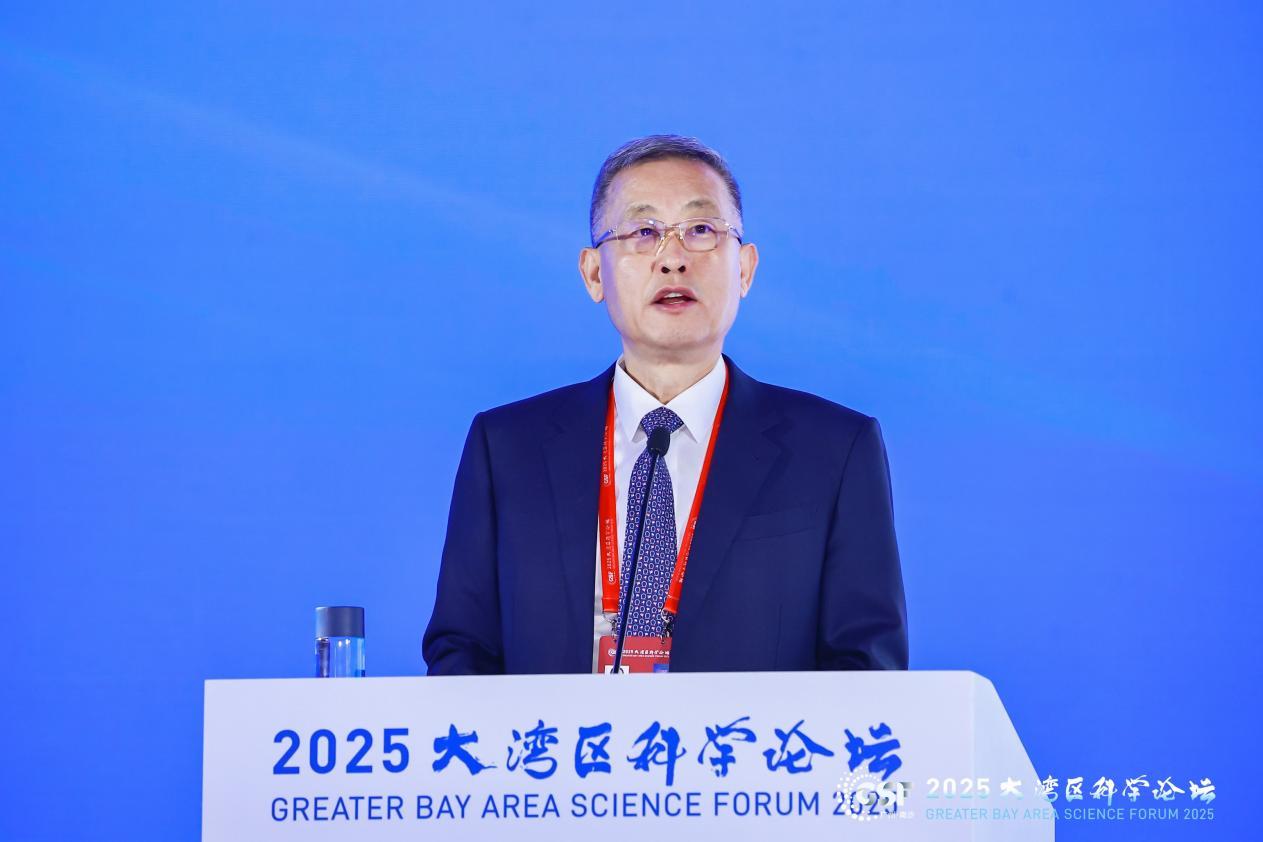
华润集团董事长王祥明受邀出席2025大湾区科学论坛
Feng Huang Wang Cai Jing· 2025-12-07 06:44
Core Viewpoint - The Greater Bay Area is a strategic focus for China Resources Group, emphasizing the integration of technological and industrial innovation to contribute to the development of a world-class bay area [1][3] Group 1: Company Strategy - China Resources Group has established a presence in all six major business sectors within the Greater Bay Area, viewing it as a key area for investment and high-quality development [1] - Since the 14th Five-Year Plan, the company has accelerated its fourth transformation by adopting the "1246" model, focusing on technological innovation and exploring new business models [1] - The company aims to shift from factor-driven growth to innovation-driven growth, from single business operations to ecological collaboration, and from scale expansion to value creation [1] Group 2: Future Outlook - Looking ahead, China Resources plans to leverage the opportunity of building an international technology innovation center in the Greater Bay Area [3] - The company intends to reconstruct the innovation landscape with an ecological mindset, actively open application scenarios, and deepen collaboration between industry, academia, and research [3] - There is a commitment to accelerate the transformation of technological achievements, ensuring that innovation results are shared across broader areas and deeper levels [3]
经济学家管清友简介 | 论坛演讲嘉宾管清友擅长主题方向
Sou Hu Cai Jing· 2025-12-07 02:43
Core Insights - Guan Qingyou is a prominent Chinese economist with extensive experience in macroeconomics, financial markets, and energy security, holding key positions in various financial institutions and companies [2] Group 1: Macro Economy and Policy - Guan emphasizes the need for China to reconstruct its competitive advantage through "technological innovation + institutional openness," focusing on investment value in digital economy and green energy sectors [3] - He advocates a dual-driven strategy of "supply-side reform + innovation-driven" to facilitate the transition from high-speed growth to high-quality development in China [3] - His insights on financial reforms, such as registration systems and trading optimizations, provide authoritative interpretations of how these changes empower the real economy [3] Group 2: Financial Market and Investment Strategies - Guan proposes cross-cycle asset allocation strategies that shift the focus from "capital volume determines investment" to "value creation drives purchasing power," offering practical advice for investors regarding opportunities and risks in the US and Chinese stock markets by 2025 [6] - He has developed a "local debt risk pressure testing model" that successfully warned of hidden debt crises in multiple provinces, with recommendations incorporated into national policy documents [6] Group 3: Innovation and Entrepreneurial Spirit - Guan highlights the importance of entrepreneurs as the "core" of economic dynamism, advocating for improved legal environments and property rights to unleash the vitality of micro-entities [6] - He critiques the tendency to "instrumentalize" entrepreneurs and calls for the establishment of mechanisms that allow for innovation tolerance in private enterprises [6] Group 4: Regional Economy and Market Activation - Guan analyzes regional policy dividends and industrial collaboration opportunities, providing suggestions for local governments to cultivate distinctive industrial clusters, particularly in areas like the Guangdong-Hong Kong-Macao Greater Bay Area [6] - He identifies key strategies for unlocking consumer potential in lower-tier cities, such as targeted consumption vouchers and innovations in supply chains and inclusive finance [6] Group 5: International Economic Cooperation - Guan discusses the internationalization of the Renminbi and the underlying logic for global increases in Renminbi asset holdings, offering strategies for enterprises to manage exchange rate risks [6] - He explores how technology standards in sectors like photovoltaics and electric vehicles can serve as new leverage points for China in global governance [6]

老工业区追“新”记
He Nan Ri Bao· 2025-12-06 23:08
Core Insights - The article highlights the transformation of the Zhengzhou old industrial area into a vibrant hub for technological and industrial innovation, showcasing the integration of new quality production forces and the emergence of a diverse ecosystem of tech and creative enterprises [1][3]. Group 1: Company Developments - Fanrui Cloud Intelligence Technology Co., Ltd. has achieved a compound annual growth rate of 60% and has become a national high-tech enterprise, focusing on new materials testing and research [2]. - The company has collaborated with major manufacturers like Foxconn and Huawei, providing testing services for semiconductor chips and solid-state electrolyte ionic conductivity [2]. - The "Zhi Ma Jie 1958 Innovation Park" has attracted over 180 tech and creative enterprises, fostering a "tropical rainforest" style innovation ecosystem [2][3]. Group 2: Industrial Transformation - The Central Plains region is shifting from traditional heavy industries to modern, innovative sectors, with a focus on technology service industries and urban manufacturing [3][4]. - The "Lian Dong U Valley · Central Plains Innovation Enterprise Park" has transformed an old air conditioning parts factory into a modern production space, housing over 80 enterprises, including 21 national technology-based SMEs and 13 national high-tech enterprises [5][6]. - The region is actively promoting the integration of industry chains, innovation chains, and service chains to enhance productivity and efficiency [5]. Group 3: Economic Contributions - Technology service enterprises in the Central Plains region have surpassed 10,000, contributing 32.1% to the area's economic growth [3]. - The textile and apparel sector, a traditional industry in the region, has seen annual output value exceed 1.4 billion, with companies adopting smart manufacturing and digital solutions [7]. Group 4: Policy and Strategic Initiatives - The article emphasizes the alignment with national and provincial policies aimed at optimizing traditional industries and fostering new and future industries [8]. - The Central Plains region is implementing strategies to enhance innovation-driven development and adapt to new production quality [8].