
平台经济

Search documents
问:“互联网+”与“人工智能+”有何区别?
Sou Hu Cai Jing· 2025-08-31 16:06
Core Viewpoint - The article discusses the evolution from "Internet+" to "Artificial Intelligence+" and highlights the differences between the two concepts, emphasizing that while "Internet+" focuses on connectivity, "Artificial Intelligence+" enhances machine intelligence and capabilities [1][3][13]. Group 1: Internet+ - "Internet+" connects people, resources, and services, creating a vast network that improves efficiency in daily activities such as shopping and transportation [4][5]. - It represents a quantitative expansion, increasing the speed and reach of information, leading to greater convenience in life [7]. - The most significant outcome of "Internet+" is the emergence of platform economies, where various services like e-commerce and ride-hailing operate on shared platforms [10][12]. Group 2: Artificial Intelligence+ - "Artificial Intelligence+" aims to make machines smarter, enabling them to understand and process information, thus assisting in decision-making and creating new solutions [6][8]. - It signifies a qualitative leap, allowing for the discovery of patterns and the generation of new industries, such as AI-driven customer service and autonomous driving [8][10]. - The focus of "Artificial Intelligence+" is on "intelligent empowerment," transforming traditional industries and fostering entirely new sectors [10][12]. Group 3: Comparison and Future Outlook - "Internet+" is described as a "revolution of connection," while "Artificial Intelligence+" is termed a "revolution of thought," indicating their complementary roles in advancing the digital economy [13]. - The transition from an "information society" to an "intelligent society" is underway, where human-machine collaboration redefines production, living, and governance [11][12].


广州市召开经济形势分析调度会
Guang Zhou Ri Bao· 2025-08-31 02:58
Core Insights - The meeting in Guangzhou focused on analyzing the current economic situation and addressing existing challenges while aligning with national and provincial directives [2][3] - Emphasis was placed on achieving annual economic targets and enhancing the city's contribution to broader provincial and national development [3][4] Economic Strategy - The city aims to stabilize the economic foundation by integrating into the national market and leveraging various policies to support key industries such as automotive, real estate, and wholesale [3] - There is a strong focus on project construction, with an emphasis on efficient management and expedited processes to ensure timely project initiation and completion [3][4] Consumption and Trade - Initiatives to boost consumption include special actions to enhance consumer spending, particularly around significant events like the National Day and the 15th National Games [3] - The city plans to promote foreign trade by developing new business models and ensuring the successful organization of the 138th Canton Fair [3] Industrial Upgrading - The strategy includes building a modern industrial system and fostering technological innovation to enhance productivity and support the growth of specialized and leading enterprises [3][4] Safety and Stability - There is a commitment to maintaining political and economic security, improving supply chain safety, and ensuring social stability through various measures [3][5] Planning and Development - The city is focused on creating a robust "14th Five-Year" plan, seeking national and provincial support to implement major policies and projects for high-quality development [4][5]
刘宁到郑州市二七区调研
He Nan Ri Bao· 2025-08-30 10:40
Group 1 - The core viewpoint emphasizes the importance of integrating historical and modern elements in urban development to enhance economic vitality and cultural appeal in Zhengzhou [4] - Liu Ning highlighted the need for optimizing commercial areas through smart platforms and real-time monitoring to ensure safety and stability [4] - The local company, Haiyi Yunshang Industrial Group, operates 1,100 live streaming rooms and has trained over 3,000 e-commerce talents, showcasing a successful model of regional economic collaboration [4] Group 2 - The "党建+网格+大数据" governance model is being implemented in the Kangqiao Huacheng community to improve governance efficiency [5] - Liu Ning stressed the importance of community involvement and cultural empowerment in social governance, aiming to create a shared and happy community [5] - Enhancements in water reservoir functionality and urban drainage systems are being prioritized to improve city resilience against flooding [5] Group 3 - Liu Ning called for accelerated industrial transformation, project construction, and urban renewal to build a modern industrial system and integrate into the national market [6] - The focus is on resource optimization and effective governance to promote high-quality development [6] - Continuous efforts in improving work styles and addressing persistent issues are essential for advancing development initiatives [6]

美团滴滴巴西外卖战,未上线先打官司
Hu Xiu· 2025-08-30 05:12
Group 1 - The core viewpoint of the article highlights the intense competition in the food delivery market, particularly focusing on Meituan's significant profit decline and market share loss due to irrational competition [1][2] - Meituan's adjusted net profit dropped nearly 90% in Q2 2025, with a core local business segment operating profit decrease of 75.6%, attributed to the impact of non-rational competition [1] - Meituan's market share fell from 74% at the beginning of the year to 65% in August, while its sales and marketing expenses increased by 77 billion compared to the previous year [2] Group 2 - In the overseas market, Meituan faces competition in Brazil against Didi, with its new business segment losses expanding by 43.1% year-on-year due to overseas expansion [3] - Brazil is seen as a fertile ground for food delivery expansion, driven by high urbanization rates (87.6%), government support, and a growing local fintech sector [4] - The Brazilian food delivery market is projected to grow significantly, with Q-commerce expected to reach approximately $1.05 billion by 2024, and the CEP market projected to grow from $5.93 billion in 2025 to $7.77 billion by 2030 [11][12] Group 3 - Meituan's new delivery service, Keeta, has not yet launched in Brazil but is already involved in legal disputes with Didi's 99Food over trademark infringement and unfair competition [6][7] - The legal battles include accusations of 99Food's malicious advertising practices and exclusive agreements with merchants, as well as claims of Keeta mimicking 99Food's branding [7][8] - Meituan plans to invest $1 billion in Brazil over the next five years to establish Keeta, aiming to capture a significant market share in a competitive landscape dominated by iFood [9][20] Group 4 - The article discusses the strategies employed by both Meituan and Didi in Brazil, emphasizing their willingness to invest heavily to attract users and gain market share [17][19] - Meituan's Keeta has promised lower fees than iFood and incentives for delivery riders, while Didi has also implemented aggressive promotional strategies [19][20] - The competitive landscape in Brazil is characterized by a lack of complete competition, allowing for some breathing room for new entrants like Meituan and Didi [14] Group 5 - The article notes that Brazil's e-commerce market is one of the fastest-growing globally, with a compound annual growth rate exceeding 20% [10] - The infrastructure for logistics in Brazil is improving, with significant investments planned, but challenges remain in managing delivery personnel and ensuring reliable service outside major cities [14][16] - The fragmented payment ecosystem in Brazil presents challenges for the formation of "super apps," which could hinder the growth of companies like Meituan and Didi [16]

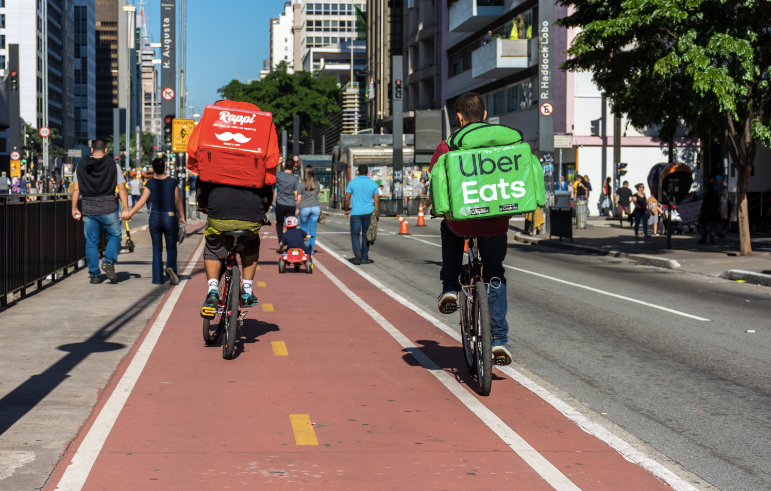
中年人,扎堆去酒店开房
商业洞察· 2025-08-29 09:24
Group 1 - The article discusses the challenges faced by middle-aged individuals, particularly focusing on their struggles with weight gain, financial pressures, and the emotional toll of family responsibilities [3][12][20] - It highlights the coping mechanisms adopted by middle-aged men and women, such as fishing, gaming, and seeking brief escapes from daily life [6][9][12] - The article emphasizes the concept of "alone time" as a luxury for middle-aged individuals, especially for mothers who often feel guilty about taking time for themselves [22][26][31] Group 2 - The article presents statistics on the time lost by parents due to childcare, indicating that mothers lose more leisure time compared to fathers, particularly in families with multiple children [23][27] - It notes that many middle-aged women resort to creative excuses to carve out time for themselves, such as using work commitments as a reason to escape family duties [28][30] - The narrative concludes that despite the ongoing challenges, brief moments of solitude can rejuvenate middle-aged individuals, allowing them to face their responsibilities with a refreshed mindset [31][33]

浙江发力整治网络交易乱象 护航平台经济行稳致远
Zhong Guo Xin Wen Wang· 2025-08-29 03:21
Core Viewpoint - Zhejiang Province is taking significant measures to address the chaos in online transactions, focusing on enhancing the regulatory framework to protect consumer rights and ensure the healthy development of the platform economy [1]. Group 1: Regulatory Actions - The Zhejiang market regulatory authority is guiding 150 online trading platforms to conduct self-inspections and rectify issues related to platform rules, including optimizing 198 rule clauses such as "mandatory freight insurance" and "refund only" [3]. - A mechanism combining online monitoring and offline sampling has been established to enhance product quality supervision, with a 70% increase in online product supervision sampling compared to 2024, resulting in the identification and handling of 243 batches of non-compliant products [3][4]. Group 2: Protection of Labor Rights - To protect the rights of new employment forms, Zhejiang is advising food delivery platforms to reasonably determine order quantities and relax assessment criteria, including the gradual elimination of penalties for delivery riders working overtime [3]. Group 3: Live Streaming Regulations - Zhejiang has introduced guidelines for online live streaming marketing behaviors, regulating the use of AI technology to create misleading content, and has upgraded its monitoring platform to track 15 live streaming platforms and 180,000 live rooms, uncovering 4,841 illegal risk clues [4]. Group 4: Unfair Competition Enforcement - The province has intensified efforts against unfair competition, with 917 cases investigated this year, marking a 15.8% increase year-on-year, targeting practices such as black public relations, exaggerated product claims, and AI-driven impersonation [5].
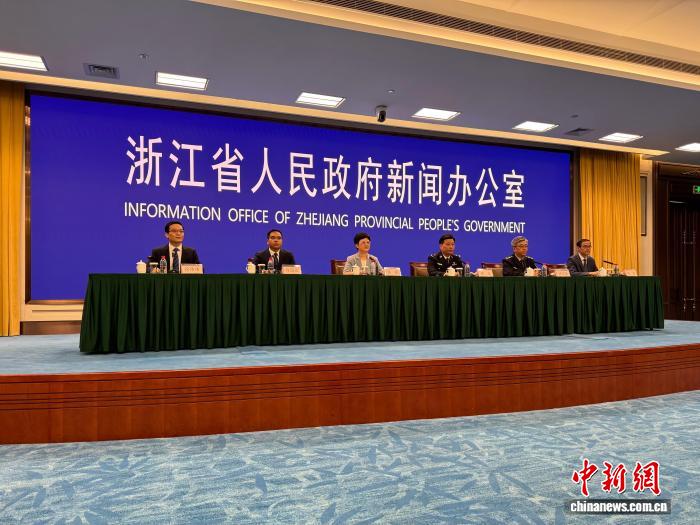
规范平台价格行为
Jing Ji Ri Bao· 2025-08-28 22:15
Core Viewpoint - The National Development and Reform Commission and other departments have drafted the "Rules for Price Behavior of Internet Platforms (Draft for Comments)" to solicit public opinions, aiming to regulate pricing behaviors in the rapidly growing platform economy [1] Group 1: Regulatory Framework - The draft includes four main aspects: operators' right to set prices independently, standardization of price labeling, constraints on price competition behaviors, and the establishment of a collaborative governance mechanism [1] - The document emphasizes the need for a transparent and predictable regulatory mechanism to guide operators towards lawful and compliant business practices [1] Group 2: Current Issues in Platform Economy - Despite the rapid development of the platform economy in China, issues such as "big data killing familiarity," forced merchant choices, and interference in pricing autonomy through traffic restrictions and store blocking persist [1] - These practices highlight the challenges faced by consumers and operators, necessitating regulatory intervention to protect their legitimate rights and interests [1] Group 3: Future Steps - The relevant departments are expected to refine the draft based on public feedback, further detailing regulatory requirements to promote orderly and healthy development of the platform economy [1]
数字中国建设工作推进会议在贵阳召开
Zheng Quan Shi Bao Wang· 2025-08-28 02:32
Core Insights - The meeting emphasized the progress made in implementing the "Digital China Construction Overall Layout Plan" and the need for continued efforts to enhance collaboration among various regions and departments [2] Group 1 - The meeting highlighted the importance of high-quality planning for the "14th Five-Year" Digital China Construction [2] - There is a focus on accelerating the issuance of action plans for nurturing digital industry clusters and creating national digital economy innovation development pilot zones [2] - The need for a comprehensive approach to digital society design and the development of urban digital transformation action plans was stressed [2] Group 2 - The meeting called for the implementation of the "1+3" policy for public data resource development and utilization, aiming to expand application scenarios [2] - Emphasis was placed on the significance of the "One Table Pass" initiative, which involves streamlining reporting processes and system integration [2] - The meeting discussed the implementation of a trusted data space development action plan to foster innovation in rules and technology [2] Group 3 - There is a push for integrated construction of computing power networks and national data infrastructure to ensure a secure environment for data circulation and application [2] - The meeting underscored the importance of high-quality data set construction to support the "Artificial Intelligence+" initiative [2] - International cooperation in the data field is to be planned and executed in a pragmatic and regionally tailored manner [2]
大利好!央行、证监会等重磅!
Sou Hu Cai Jing· 2025-08-27 14:46
Group 1 - The People's Bank of China will conduct a 600 billion yuan MLF operation to maintain liquidity in the banking system, resulting in a net injection of 300 billion yuan for August, marking the sixth consecutive month of increased operations [1] - A new personal consumption loan interest subsidy policy will be implemented starting September 1, aimed at supporting the portion of loans used for actual consumption, which is expected to significantly impact the consumption finance industry [2] - The State Council's meeting on August 22 emphasized the need to strengthen fiscal and financial policies to support new consumption and investment scenarios, highlighting the effectiveness of policies like large-scale equipment updates and trade-in programs [3] Group 2 - The China Securities Regulatory Commission (CSRC) has introduced interim regulations for internet marketing activities of futures companies to enhance compliance and protect traders' rights, effective from October 9, 2025 [4] - The CSRC has amended the classification supervision regulations for securities companies to improve the regulatory framework and support differentiated development for small and medium-sized institutions, effective from August 22, 2025 [5] - A pilot program for product quality safety verification in online sales has been launched, with major platforms committing to uphold product entry review responsibilities to ensure a safe online shopping environment [6] Group 3 - The National Development and Reform Commission, along with other agencies, has drafted rules for internet platform pricing behavior to promote healthy development in the platform economy [7] - A new announcement regarding the implementation of a childcare subsidy system states that these subsidies will be exempt from personal income tax, effective from January 1, 2025 [8]
观点丨杨东:《互联网平台价格行为规则(征求意见稿)》的亮点与解读
Sou Hu Cai Jing· 2025-08-26 11:22
Core Viewpoint - The regulation of pricing behavior on internet platforms is crucial in the context of the deepening digital economy, aiming to establish a systematic framework for price regulation, protect consumer and operator rights, and promote high-quality development of the platform economy [1][11]. Summary by Sections General Principles - The "Behavior Rules" outline the purpose, scope, and basic requirements for pricing behavior, which includes actions related to pricing by platform operators and internal operators, such as setting or changing prices, price marking, charging fees, and implementing subsidies [2]. Protection of Operators' Pricing Rights - The rules emphasize the legal protection of both platform operators' and internal operators' rights to set prices, encouraging innovation and quality improvement while ensuring fair competition [3][4]. Regulation of Price Marking Behavior - The rules require clear price marking for goods and services, addressing previous issues of price transparency in the platform economy, and mandate that different pricing for varying transaction conditions must be disclosed in advance [5]. Regulation of Price Competition Behavior - The rules support lawful market competition but prohibit practices that disrupt normal market order, such as selling below cost to eliminate competitors, and ensure that platform operators do not impose unreasonable pricing conditions on internal operators [6][7]. Consumer Price Rights Protection - The rules enhance consumer protection by regulating payment mechanisms and dispute resolution processes, ensuring that consumers are informed about payment options and can easily cancel services, while also encouraging platforms to establish online dispute resolution mechanisms [9].