碳中和

Search documents
中国碳中和(01372.HK)完成配发合共3200万股
Ge Long Hui· 2026-01-26 10:24
格隆汇1月26日丨中国碳中和(01372.HK)公告,董事会欣然宣布,认购协议的先决条件(包括但不限于收 到的对价金额)已获满足,并已于2026年1月26日完成。于2026年1月26日,合共3200万股认购股份已全 部配发及发行予认购人。 ...
韩产业部投2500亿韩元支持企业碳中和转型
Shang Wu Bu Wang Zhan· 2026-01-26 09:01
产业部将举办联合说明会介绍全部16个支持项目,并呼吁企业积极响应,抓住产业低碳转型机遇。 核心项目是"碳中和转型先导项目融资",为投资减排设施及研发的企业提供长期低息贷款(利率1.3%), 总额1700亿韩元,面向大中小企业。今年新增两项支持:以拍卖形式资助高减排效果设备投资的"碳中 和设备投资拍卖项目"(250亿韩元),以及推动供应链减排的"产业供应链碳合作伙伴计划"(105亿韩元)。 据韩联社1月14日报道,韩国产业通商资源部14日宣布,今年将推出总规模达2500亿韩元的碳中和支持 计划,以推动企业绿色转型。 ...
2026年这些品种被集体看好,背后逻辑是什么?
Qi Huo Ri Bao· 2026-01-26 09:00
Group 1: Market Overview and Investment Strategies - The 2026 cross-market investment strategy conference highlighted the acceleration of sector rotation in investment markets, presenting multiple investment opportunities [1] - The chairman of Xunuo Asset emphasized the profound changes in capital markets since 2024, indicating a transition from "policy bottom" to "market bottom," with notable performance in the sci-tech and high-end manufacturing sectors [1] - The commodity futures market, particularly lithium carbonate, gold, and silver, has shown independent trends and distinct sector rotation characteristics [1] - Investment strategies should leverage financial tools like stock index futures for risk hedging and enhanced returns, especially in an increasingly institutionalized A-share market [1] Group 2: Economic Insights and Sector Focus - Dr. Qiao Yongyuan noted that rising global debt pressures could lead to significant changes in asset prices, with a potential decline in the real estate market's traditional role as an economic growth engine [2] - The application of AI, particularly in sectors like healthcare, is expected to emerge as a new economic growth point, prompting investors to rethink new investment opportunities [2] - Li Xudong recommended focusing on mid-cap stock index futures like CSI 500 and CSI 1000, avoiding heavily weighted indices like CSI 300 and SSE 50 due to their concentrated chip characteristics [2] Group 3: Silver and Lithium Market Analysis - The price of silver has surged since June last year, driven by factors such as the impact of the Russia-Ukraine conflict on the dollar's credibility and increased industrial demand from sectors like photovoltaics and electric vehicles [3] - Silver has experienced a supply deficit for five consecutive years, contributing to its price increase, with expectations for continued upward trends due to strong industrial demand and supply constraints [3] - The lithium carbonate market is anticipated to maintain strong pricing due to macroeconomic and industrial factors, with a significant demand surge driven by the global energy transition and China's manufacturing upgrade [3] Group 4: Lithium Battery Industry Trends - The lithium battery market is witnessing robust demand, particularly in the energy storage sector, which is a crucial part of national energy strategy and global energy transition [4] - Recent policies, such as solid waste management guidelines and export tax rebates, may have short-term impacts on the lithium industry, but the long-term trend favors companies expanding internationally [5] - The current supply constraints in lithium resources, coupled with strong demand, indicate that the upward cycle for lithium carbonate prices is not yet over, with orders extending into 2027 [5] Group 5: Trading Strategies and Market Dynamics - A roundtable discussion among experienced traders focused on establishing trading order amid market chaos, emphasizing the need for a robust rule system and execution discipline to manage risks [6] - The participants agreed that while market disorder is inevitable, successful traders can create internal trading order to counter external uncertainties, highlighting the importance of emotional control during losses [6]
ESG市场观察周报:国内落地ESG债券国标,海外加码气候风险与能效投资-20260126
CMS· 2026-01-26 07:26
- The first ESG national standard in China's financial sector, "Environmental, Social and Governance Evaluation Framework for Bond Issuers," was officially released and will be implemented on April 1, 2026[10] - The standard follows four major compilation principles and constructs a three-tier system of "evaluation sub-items—dimensions—topics," including 3 sub-items, 11 dimensions, and 33 topics, providing a unified evaluation guide for the market[10] - The Ministry of Ecology and Environment and other three departments jointly issued the "Guiding Opinions on Strengthening the Graded Management of Atmospheric Environmental Performance in Key Industries," establishing a "1+1+1+N" management system[11] - The Ministry of Industry and Information Technology (MIIT) will focus on optimizing supply and demand, strengthening brands, and consolidating the industrial foundation to promote the green and intelligent development of the consumer goods industry[12] - The European Central Bank (ECB) announced new priority areas to incorporate climate and nature-related risks into its activities, including assessing banks' green economy transition plans and analyzing their ability to cope with physical risks from climate change[13][14] - The UK government launched the "Warm Homes Plan," the largest home upgrade plan in history, with an investment of 15 billion pounds to help households reduce energy bills through clean energy technologies and energy efficiency upgrades[15] - Allianz Investment launched a $1 billion emerging market climate fund to mobilize large-scale private investment to support the goals of the Paris Agreement and accelerate the achievement of the United Nations Sustainable Development Goals[16] - The domestic 300ESG index fell by 0.89%, while the SEEE Carbon Neutral Index rose by 0.70%[2] - The price of domestic CEA rose to 81 yuan/ton, and the price of EU EUA remained at 88 euros/ton[2] - The low-carbon support sector saw a net outflow of 66.3 billion yuan, with a net inflow rate of -1.42%[2]
五部门发文:2027年前在汽车等领域培育零碳工厂丨碳中和周报
2 1 Shi Ji Jing Ji Bao Dao· 2026-01-26 07:21
Carbon Neutrality Policy - Five departments issued guidance to cultivate zero-carbon factories in key sectors by 2027, including automotive, lithium batteries, and photovoltaics, with a gradual expansion to other industries by 2030 [3][4] - The guidance outlines requirements for carbon emission accounting, energy structure transformation, and digitalization to achieve zero-carbon goals [3] Energy Transition and Development - The National Development and Reform Commission emphasized the need for a stronger push towards non-fossil energy development in the 14th Five-Year Plan, highlighting the urgency of energy transition [5][6] - Key initiatives include accelerating energy transformation, promoting green low-carbon industries, and implementing comprehensive resource-saving strategies [6][7] Local Dynamics - Guangdong province has issued a notification to standardize carbon neutrality efforts for large-scale events, encouraging organizers to develop carbon neutrality plans and implement reduction measures [9][10] Corporate Practices - Trina Storage signed a cooperation agreement for a large-scale battery storage project in Italy, which will be one of the largest in Europe, reflecting the rapid growth of the European storage market driven by policy support [11][12] - The project is part of Italy's transition towards renewable energy, with significant government policies in place to support large-scale storage projects [12][13]

五部门发文:2027年前在汽车等领域培育零碳工厂
2 1 Shi Ji Jing Ji Bao Dao· 2026-01-26 07:14
Policy Developments - Five departments issued guidelines to cultivate zero-carbon factories in key sectors such as automotive and lithium batteries by 2027, with a gradual expansion to other industries by 2030 [2] - The National Development and Reform Commission emphasized the importance of non-fossil energy development and energy transition as critical for achieving carbon peak goals during the 14th Five-Year Plan [4][5] - The Ministry of Ecology and Environment highlighted the need for green productivity development during the 14th Five-Year Plan, focusing on industrial upgrades and environmental synergy [6][7] Local Initiatives - Guangdong province has implemented regulations for carbon neutrality in large-scale events, encouraging organizers to create carbon neutrality plans and adhere to local standards [8] - The initiative aims to enhance public awareness and set low-carbon benchmarks for large events, combining self-declaration and third-party certification for accountability [9] Corporate Practices - Trina Storage signed a partnership for a major battery storage project in Italy, which will be one of the largest in Europe, with a capacity of 250MW/1GWh [10] - The project aligns with Italy's growing energy demand and its transition towards renewable energy sources, supported by government policies for energy storage capacity procurement [10][11] - The entry of Trina Storage into the Italian market reflects the rapid growth of the European storage market driven by policy, while also highlighting the need for Chinese companies to navigate local operational challenges [11]
能源金属涨涨涨,如何筑牢新能源时代的资源安全屏障?
中国能源报· 2026-01-26 06:08
Core Viewpoint - The rising prices of key energy metals such as aluminum, copper, and lithium are linked to the global energy transition and the AI revolution, highlighting the need for supply chain security in these metals to be prioritized alongside national energy security [1][2]. Group 1: Market Dynamics - The current tightness in the aluminum market reflects a direct clash between rigid supply and surging demand, with domestic electrolytic aluminum capacity nearing 45 million tons and global supply growth expected to slow to 1.4% from 2025 to 2030 [1]. - The demand for metals is being driven by the booming green industries, including electric vehicles, photovoltaics, and energy storage, as well as the rapidly developing data centers [1]. Group 2: Supply Chain Risks - China, as the largest manufacturer and consumer of new energy equipment, faces significant "backward" risks in the supply chain of key minerals, with a long-term dependence of 68% on imported bauxite [2]. - The high dependence on foreign sources for strategic resources like copper, lithium, cobalt, and nickel makes China's extensive green industry vulnerable to geopolitical risks and price fluctuations [2]. Group 3: Strategic Recommendations - To address these challenges, a systematic and proactive strategy is needed, focusing on domestic exploration and resource utilization, particularly in regions like Shanxi and Inner Mongolia [3]. - Enhancing the recycling rate and proportion of recycled metals through policy incentives and technological upgrades is essential to reduce foreign dependency and achieve energy savings across the entire industry chain [3]. Group 4: Innovation and Market Mechanisms - Strengthening technological innovation is crucial for achieving "reduction and efficiency," such as developing thinner battery foils and higher-strength aluminum alloys to lower metal consumption per product [4]. - Establishing a multi-layered reserve system for key metals, including national strategic reserves and commercial reserves, will help mitigate extreme market fluctuations and enhance risk response capabilities [4].

覆盖光伏全产业链,把握新能源核心赛道!光伏ETF博时(560310)今日重磅发售
Sou Hu Cai Jing· 2026-01-26 05:46
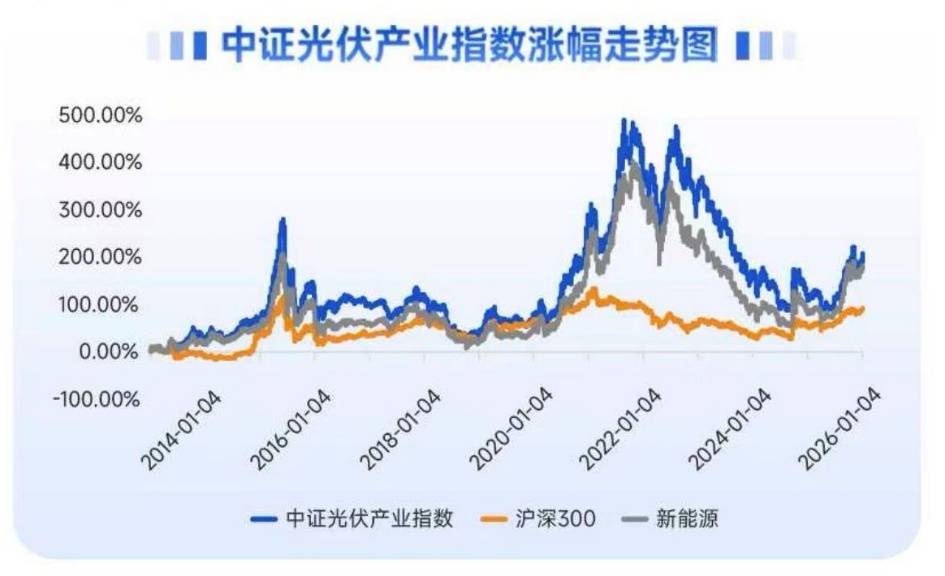
在全球碳中和进程提速、光伏行业政策红利与技术迭代共振的大环境下,兼具长期成长确定性与板块景气度支撑的光伏资产或正成为 布局新能源核心赛道的投资人重要的配置方向。在此背景下,光伏ETF博时(560310)于2026年1月26日正式发售,为场内投资者提供一 键捕捉光伏产业链优质龙头标的的高效工具。 光伏ETF博时(560310)紧密跟踪光伏产业指数,中证光伏产业指数从主营业务涉及光伏产业链上、中、下游的上市公司证券中,选取不 超过50只最具代表性的上市公司证券作为指数样本,以反映光伏产业上市公司证券的整体表现。 值得关注的是,中证光伏产业指数自基日(2012年12月31日)至2026年1月13日期间涨幅为206.55%,同期沪深300指数和新能源指数涨幅 分别为91.97%、179.28%。 政策端,相关政策密集出台,从价格和产能两方面展开治理。价格方面,行业多次研讨标杆价机制,明确要求企业不得低于成本销 售,遏制低价无序竞争;产能方面,聚焦多晶硅环节推进治理,通过产能整合、强化能耗标准等举措,缓解行业供需失衡问题。 需求端,非欧美海外市场成为全球光伏需求主要增量来源,出海业务对行业需求的支撑作用持续凸显。同时, ...
环保行业周报:政策驱动治理升级,环境监测潜能释放
GOLDEN SUN SECURITIES· 2026-01-26 05:24
Investment Rating - The report maintains a "Buy" rating for key companies in the environmental monitoring sector, such as Huicheng Environmental and GaoNeng Environment [6][22]. Core Insights - The report highlights the dual drivers of policy and demand in the environmental monitoring sector, indicating that leading companies will continue to benefit from recent regulatory changes [1][12]. - Recent government guidelines signal a shift in soil remediation practices, creating multiple growth opportunities in soil remediation and environmental consulting sectors [1][12]. - The report emphasizes the importance of high dividend assets and growth-oriented companies in the current low macroeconomic interest rate environment [2][22]. Summary by Sections Investment Views - The report discusses the release of guidelines by three departments to enhance the connection between pollution site remediation and development, marking a transition in soil remediation practices [9][12]. - It also covers the introduction of differentiated management for air quality performance in key industries, which provides incentives for companies to transition towards greener practices [13][20]. - The report notes that institutional holdings and valuations in the environmental sector are at historical lows, suggesting a potential for sustained rebounds [22]. Market Performance - The environmental sector outperformed the broader market, with a reported increase of 4.72% compared to the Shanghai Composite Index's 0.84% increase [24]. - Sub-sectors such as monitoring (5.55%), energy saving (7.99%), and solid waste (5.67%) showed significant gains, indicating strong market interest [24]. Industry News - The report mentions the release of the 2026 version of hazardous waste management guidelines, aimed at improving the classification and management of solid waste [35]. - It also highlights the recognition of zero-carbon factories in Henan Province, showcasing advancements in energy efficiency and environmental standards [36]. Key Announcements - The report includes performance forecasts for various companies, indicating significant expected growth for Huicheng Environmental and GaoNeng Environment due to their strong project pipelines and technological advancements [22][23].



为“中国绿造”注入政策“活水”
中国能源报· 2026-01-26 04:01
Core Viewpoint - The article emphasizes the importance of building zero-carbon factories in China as a response to national goals for green and low-carbon transformation, marking a significant shift from passive pollution control to proactive green initiatives in the industrial sector [1][2]. Group 1: Zero-Carbon Factory Development - The issuance of the "Guiding Opinions" by five departments signifies a tailored national blueprint for the green transformation of industrial enterprises, transitioning from pilot projects to a collaborative approach across the entire industry chain [1]. - The construction of zero-carbon factories is not merely a response to government calls but a necessary step for industrial enterprises to enhance competitiveness and fulfill social responsibilities amid stringent ecological regulations and international trade barriers [1]. - The article outlines a three-step developmental goal and six practical paths for zero-carbon factory construction, providing a clear action guide for local governments and industrial enterprises to turn green ideals into production realities [3][4]. Group 2: Technological and Systemic Innovations - The integration of smart manufacturing with carbon neutrality goals represents a revolutionary shift in industrial development, enabling factories to operate autonomously and efficiently, thus accelerating the achievement of zero-carbon targets [2]. - The establishment of zero-carbon factories is closely linked to the creation of zero-carbon industrial parks, which together form a foundational unit and system relationship, enhancing the overall green transformation of the industrial sector [4]. Group 3: Challenges and Solutions - Despite the promising outlook for zero-carbon factory construction, challenges such as inconsistent standards, lack of authoritative guidance, and regional disparities in development persist [5]. - The "Guiding Opinions" propose measures to address these challenges, including strengthening organizational implementation, improving standard systems, and promoting green finance and trade to support the construction of zero-carbon factories [5]. Group 4: Future Prospects - The article highlights China's significant role in global industrial digitalization and innovation, with a notable number of factories recognized as "lighthouses," indicating a strong potential for zero-carbon factories to drive further advancements in the industry [6].