
AI技术

Search documents
上海人大工作触角遍及城市发展每一个角落 立良法强监督 通民心促善治 用脚步丈量民情 以行动诠释担当
Jie Fang Ri Bao· 2026-02-02 01:35
Group 1 - The Shanghai Municipal People's Congress has passed 24 local regulations and conducted 32 supervisory activities over the past year, engaging over 13,000 representatives in community outreach and collecting more than 9,900 suggestions [1] - The legislative work has focused on connecting legislation with reform decisions, promoting scientific, democratic, and lawful legislation, and ensuring that local legislation includes more innovative and breakthrough points [2] - The establishment of the Yangtze River Delta Technology Innovation Community has been facilitated by collaborative legislative practices among Shanghai and neighboring provinces, aiming to enhance the integration of technological and industrial innovation [3] Group 2 - The supervisory work of the Shanghai Municipal People's Congress has emphasized urban governance, with notable inquiries into healthcare resource distribution and the implementation of public space regulations, aiming for a more refined urban management [4][5] - The Congress has innovated its supervisory methods, including simultaneous reviews of intellectual property judicial protection, enhancing collaboration between judicial and administrative sectors [5] - The engagement of representatives with the public has been deepened through various outreach activities, collecting over 5,400 suggestions for the "14th Five-Year Plan" and facilitating improvements in community infrastructure [6][7]

当Agent平台接管漫画创作,千万漫画人该往哪走?
3 6 Ke· 2026-02-02 00:22
Core Insights - The emergence of Agent platforms is revolutionizing the content creation landscape, particularly in the film and comic industries, by leveraging automation and intelligent creation capabilities [1] - Traditional comic markets are facing challenges, with original authors experiencing squeezed profit margins, while AI technology is becoming more accessible, reshaping the creative process [2][9] - The integration of AI tools is seen as a critical choice for top creators to balance costs and quality, enabling them to overcome creative bottlenecks [3][12] Industry Challenges - The traditional comic market is struggling, with platforms reducing budgets for content procurement and author royalties, leading to increased financial pressure on original creators [2] - The demand for higher quality visuals and storytelling from platforms is raising human creation costs, putting additional strain on authors [2][9] - Many smaller creators find AI tools to be unaffordable and ineffective, exacerbating the divide between top and emerging authors [7] AI Integration and Evolution - By late 2025, the landscape shifted as AI tool manufacturers engaged in intense competition, leading to significant improvements in the quality and affordability of AI tools [8] - The democratization of AI tools allows both established and new creators to access and utilize these technologies, breaking down previous barriers to entry [8][15] - The role of AI in the creative process is evolving, allowing creators to focus on storytelling while AI handles repetitive tasks, leading to a more specialized workforce [15][17] Future of Content Creation - The rise of Agent platforms is facilitating a shift from traditional large-scale studios to smaller, more agile creative teams, enhancing collaboration and efficiency [17] - The industry is witnessing a redefinition of talent value, where core creative abilities are amplified, while those lacking originality may be phased out [17] - The transformation driven by Agent platforms is seen as an opportunity for creators to explore new formats and find sustainable paths in a changing market [12][13]


2025年我国3D打印设备产量同比增长52.5% 3D打印为什么又火了?
Zheng Quan Ri Bao· 2026-02-02 00:01
Core Insights - 3D printing technology is experiencing rapid growth, transitioning from laboratory settings to production lines and everyday applications, driven by increasing demand and decreasing costs [1][2][4] Group 1: Market Demand and Applications - The significant increase in 3D printing equipment production by 52.5% by 2025 reflects strong downstream demand, particularly for personalized and customized products [1] - Consumers can now easily access 3D printing services through e-commerce platforms, allowing for high-precision products without the need to own a printer [1] - 3D printing is becoming an essential tool for companies in research and flexible production, enabling rapid prototyping and reducing development cycles [3] Group 2: Cost Reduction Factors - The decline in manufacturing costs for 3D printers is attributed to advancements in domestic manufacturing capabilities, with consumer-grade printers now priced similarly to mid-range smartphones [2] - The development of new alternative alloys and AI technologies has further reduced costs and simplified the modeling process, making 3D printing more accessible [3] Group 3: Policy and Capital Support - Government policies are playing a crucial role in promoting the market development of 3D printing, with initiatives aimed at innovation and application expansion [4] - Significant capital investment has been observed in the 3D printing sector, with various companies, including tech giants and venture capitalists, actively funding the industry [5] Group 4: Challenges and Solutions - Despite the growth, the 3D printing industry faces challenges in service and business models, with many users struggling with common issues like nozzle blockages and inadequate after-sales support [6] - Shared manufacturing and leasing models are being explored to help small and medium-sized enterprises reduce initial costs and operational expenses [7] - The industry is also leveraging e-commerce platforms and AI technologies to improve demand response and streamline the manufacturing process [7]
中金:谁在买,谁在卖?
中金点睛· 2026-02-01 23:49
Core Viewpoint - The A-share market has shown significant improvement in trading sentiment, with transaction volumes reaching historical highs, indicating a strong upward trend since mid-December 2025 [1][9]. Group 1: Market Performance - The Shanghai Composite Index achieved a 17-day consecutive rise, reaching its highest level in nearly a decade, with average daily transaction volumes exceeding 30 trillion yuan since the beginning of 2026 [1]. - The market's active trading environment is characterized by a high turnover rate of 5.7%, the most active since 2015, with a record transaction amount of 3.99 trillion yuan on January 14, 2026 [1][12]. Group 2: Investor Behavior - Retail investors have been increasingly entering the market, with an average of 2.43 million new accounts opened monthly in Q4 2025, driven by a "scarcity of assets" and the relative attractiveness of the stock market [2][18]. - High-risk preference funds, including margin financing and private equity, have seen significant increases in their positions, with margin financing balances surpassing 2.7 trillion yuan, marking a historical high [1][16]. Group 3: Fund Flows - Stock ETFs have experienced a shift in growth momentum, with significant inflows into industry-themed ETFs, particularly in sectors like non-ferrous metals and aerospace, reflecting changing investor preferences [3][22]. - Northbound capital has shown a gradual return to the A-share market, with a net inflow of 117 billion yuan in Q4 2025, as global monetary conditions favor Chinese assets [4][24]. Group 4: Institutional Investment - Insurance funds have accelerated their entry into the market, with stock and securities investments reaching 5.6 trillion yuan, the highest since 2013, indicating a growing commitment to equity investments [5][26]. - Active funds have regained excess returns, with the mixed equity fund index yielding 11.6%, outperforming the CSI 300 by approximately 7 percentage points, leading to a positive trend in fund issuance and redemption [5][28]. Group 5: Sector Focus - Institutional investors have increased their focus on sectors such as non-ferrous metals and telecommunications, while reducing exposure to electronics and biopharmaceuticals, reflecting a strategic shift in portfolio allocations [8][34]. - The market is expected to maintain a relatively active trading sentiment, supported by low interest rates and a favorable environment for equity investments, with potential for further inflows from both domestic and foreign investors [9][39].

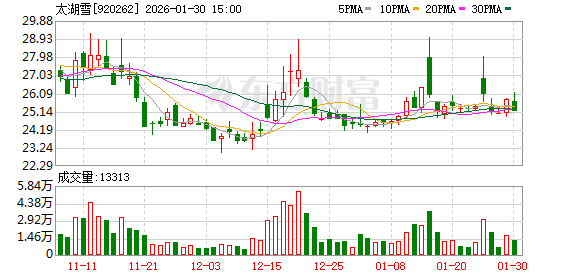
以文化为魂 以科技为翼 太湖雪:织就新国货丝绸发展新图景
Zhong Guo Zheng Quan Bao· 2026-02-01 22:56
Core Insights - The company emphasizes the integration of cultural heritage and modern design to revitalize traditional silk products, aiming to create a unique brand identity that resonates with contemporary consumers [1][3] - The brand's strategy focuses on leveraging intellectual property (IP) to expand its market reach, particularly through collaborations with high-profile cultural events like the Spring Festival Gala [2][3] - The company is committed to technological innovation, addressing industry challenges such as low efficiency and quality standardization through a robust patent system and smart manufacturing [4][5] Cultural Foundation - The company highlights its deep-rooted connection to silk production, with a focus on storytelling and craftsmanship to engage consumers [1][3] - The transformation of traditional silk techniques into modern consumer experiences is a key aspect of the brand's strategy, aiming to make silk products accessible and desirable [1][2] Technological Innovation - The company has accumulated nearly 100 patents, creating an innovation loop that enhances production efficiency and product quality [4] - The introduction of AI technology is seen as essential for improving design and marketing processes, allowing for more efficient operations and better customer targeting [5] Market Strategy - The company aims to connect directly with consumers through a multi-channel approach, emphasizing the importance of both online and offline experiences [6][7] - Significant growth in online sales has been noted, particularly through live-streaming platforms, with a reported revenue increase of 117.23% in the first three quarters of 2025 [6][7] Global Expansion - The brand is actively pursuing international markets, positioning itself as a representative of Chinese culture and aesthetics through its overseas brand "THXSILK" [7][8] - Cross-border e-commerce sales have seen a year-on-year growth of 25.20%, indicating a successful strategy in reaching global consumers [7] Community Engagement - The company is dedicated to supporting local farmers and enhancing the silk production ecosystem, contributing to the local economy and community development [8] - The establishment of standardized silkworm breeding bases aims to improve the quality and efficiency of silk production, benefiting local farmers [8] Future Outlook - The company plans to continue its growth trajectory by focusing on digital transformation and global branding, with a clear strategy for the next 3-5 years [8]
贵安电算协同产业迈入规范化集约化发展新阶段
Xin Lang Cai Jing· 2026-02-01 22:23
贵安新区算力澎湃、充足稳定的电力供应和科研人才储备,为电算协同产业发展筑牢基础。此次大会召 开是对国家"统筹推进算力与绿色电力一体化融合"政策导向的践行,也是落实《贵州省建设数字经济发 展创新区2025年工作要点》中"开展电算协同试点"任务的关键举措。 会上,明确了联盟的核心使命:聚焦技术标准、科技研发、产业发展三大方向,破解电力与算力割裂、 资源分散、标准缺失等行业痛点,通过"政府搭台、企业唱戏"机制,打造可复制、可推广的电算协同技 术体系、标准规范和商业模式,为全国行业发展贡献"贵州方案"。 本报讯(陈玲)1月27日,贵安新区电算协同产业联盟(以下简称联盟)首届大会举行,会上明确了联 盟的核心使命和13个任务方向,标志着贵安新区电算协同产业迈入规范化、集约化发展新阶段。 贵州电网公司副总经理苏志鹏表示,未来,贵州电网公司将以贵安新区超大规模智算中心集群为依托, 攻坚绿电集中供给、全直流供电等核心工程,目标实现"五个9"(99.999%)以上的供电可靠性及绿色低 碳配套设计。 同时,明确了算力电力协同规划、电力与算力协同调度等13项任务方向,为电算协同发展搭建起"四梁 八柱"。"联盟将聚焦'电—算—碳'协同 ...
3D打印为何又火了
Jing Ji Ri Bao· 2026-02-01 22:06
Core Insights - The production of 3D printing equipment in China is expected to grow by 52.5% year-on-year by 2025, driven by strong downstream demand and advancements in technology [1][2][4] Application Trends - The demand for personalized and customized products is becoming mainstream, with consumers able to easily order 3D printed items through e-commerce platforms [1] - 3D printing technology is increasingly being integrated into various fields such as cultural creativity and educational technology, creating new consumer experiences and driving industry growth [3] Cost Reduction Factors - Significant reductions in manufacturing costs for 3D printers have been achieved due to advancements in domestic manufacturing capabilities, with consumer-grade 3D printers now priced similarly to mid-range smartphones [2] - The development of new alternative alloys and AI technologies has further reduced costs and simplified the operation of 3D printing, making it more accessible to the general public [3] Policy and Capital Support - Government policies are playing a crucial role in promoting the market development of 3D printing, with initiatives aimed at fostering innovation and expanding applications [4] - The 3D printing industry has seen multiple financing rounds since 2025, with investments from both tech companies and venture capital firms, indicating strong market interest [5][6] Challenges and Opportunities - Despite the growth, the 3D printing industry is still in its early stages, facing challenges in technical services and business models [7] - There is a mismatch between diverse market demands and supply efficiency, with the need for improved service models such as shared manufacturing and leasing to support small and medium enterprises [8][9]
太湖雪:织就新国货丝绸发展新图景
Zhong Guo Zheng Quan Bao· 2026-02-01 20:53
Core Insights - The company, Taihu Xue, emphasizes its commitment to the silk industry, focusing on cultural heritage, technological innovation, and channel development to transform into a new national brand [1][2][3] Cultural Foundation - Taihu Xue is rooted in the ancient silk culture of Zhenze, aiming to revitalize traditional silk through modern design and storytelling [1] - The brand's strategy includes creative transformation of intangible cultural heritage into consumer experiences, ensuring that silk remains relevant in contemporary society [1][2] Technological Innovation - The company has accumulated nearly 100 patents, addressing industry challenges such as efficiency and standardization, and enhancing product features like antibacterial and anti-mite properties [3][4] - The establishment of a "smart factory" aims to improve production automation by 80% and achieve a 99.5% quality rate in key processes, supporting the brand's global expansion [3][4] Channel Development - Taihu Xue focuses on direct consumer engagement and omnichannel strategies, with significant growth in online sales, particularly through live commerce platforms [5][6] - The company is expanding its physical presence with "super experience stores" that allow customers to engage with the product directly, enhancing brand connection [5][6] Global Expansion - The brand is pursuing internationalization by promoting Chinese cultural aesthetics through its overseas brand "THXSILK," achieving a 25.20% increase in cross-border e-commerce sales [6] - Taihu Xue is committed to community development by establishing standardized sericulture bases and enhancing local farmers' income through a collaborative model [6] Future Outlook - The company plans to leverage its position as the "first silk stock of new national goods" to attract talent and expand partnerships, focusing on digital manufacturing and global branding [6] - The strategic vision includes a focus on product fashionization, channel omnichannelization, and operational digitization over the next 3-5 years [6]
3D打印为什么又火了
Zheng Quan Ri Bao· 2026-02-01 16:07
Core Insights - The 3D printing industry is experiencing significant growth, with a projected 52.5% increase in equipment production by 2025, driven by strong downstream demand and advancements in technology [1][2][4]. Group 1: Market Demand and Applications - The rise in 3D printing equipment production reflects a booming demand for personalized and customized products, particularly in sectors like cosplay and the anime industry [1]. - Consumers can now easily access 3D printing services through e-commerce platforms, allowing them to obtain high-precision products without needing to own a printer [1]. - 3D printing is becoming an essential tool for companies in research and development, enabling rapid prototyping and reducing costs associated with trial and error [3]. Group 2: Technological Advancements - The decline in costs for 3D printing technology is attributed to breakthroughs in domestic manufacturing components, with consumer-grade printers now priced similarly to mid-range smartphones [2]. - New alternative alloys and AI technologies are enhancing the efficiency and accessibility of 3D printing, making it suitable for a wider range of applications [3]. - Features like automatic leveling and cloud-based algorithms are simplifying the user experience, transforming 3D printers into household appliances rather than specialized tools [3]. Group 3: Policy and Investment Support - Government policies are playing a crucial role in promoting the market development of 3D printing, with initiatives aimed at fostering innovation and expanding applications [4]. - Recent policies have identified desktop 3D printers as key digital consumer products, and educational institutions are increasingly incorporating 3D printing into their curricula [4]. - Capital investment in the 3D printing sector has surged, with numerous financing rounds completed since 2025, involving both tech companies and venture capital [5]. Group 4: Challenges and Solutions - Despite the growth, the 3D printing industry faces challenges in service and business model development, with many users struggling with common issues like nozzle clogs and material compatibility [6]. - The uneven distribution of professional 3D printing service providers makes it difficult to meet diverse market demands, particularly in lower-tier markets [6]. - Shared manufacturing and leasing models are being explored to reduce costs for small and medium enterprises, although these models face operational challenges [7].
信维通信(300136):泛射频解决方案提供商,多领域布局未来可期
NORTHEAST SECURITIES· 2026-02-01 14:58
[Table_Title] 证券研究报告 / 公司深度报告 泛射频解决方案提供商,多领域布局未来可期 报告摘要: [Table_Summary] 全球领先的一站式泛射频解决方案提供商。信维通信是国内小型天线行 业发展的领跑者,主要致力于研发和生产移动通信设备终端各类型天线, 包括手机天线/GPS/WIFI/手机电视/无线网卡/AP 天线等。公司积极围绕 射频技术,拓展高性能射频连接器及为解决整机 EMC/EMI 的精密五金 部件、LDS 产品、音频产品及音/射频模组等,新材料天线零部件如 NFC、 无线充电、无线支付模组等新品已批量交货。公司业务多元布局,正加 速迈向"消费电子+卫星通信+智能汽车+N"的多业务发展阶段。 消费电子业务进展迅速。公司消费电子行业产品包括天线系列、被动元 件、无线充电、接触类弹片、精密连接器等,可应用于手机、电脑、平 板、VR/AR 设备等。公司自主研发的 LCP 天线模组已服务北美大客户; 天线业务继续保持市场领先;无线充电业务受益于智能手机、可穿戴设 备及智能汽车对无线充电模块、特别是支持 Qi2.x 等标准的无线充电模 块的快速渗透有望快速增长;精密结构件业务随着客户新机型 ...
