强化学习

Search documents
所有知识型岗都要被AI “吞了!清华大学教授刘嘉:未来大学分化猛烈,软件公司靠 “几人 + Agent” 就够
AI前线· 2025-09-29 04:28
Core Viewpoint - The article discusses the rapid evolution of AI and its implications for humanity, emphasizing the need for individuals to adapt to a new reality shaped by artificial intelligence [5][27]. Group 1: AI Evolution and Impact - The evolution of AI has accelerated, with significant advancements in areas such as humanoid robots and intelligent agents, marking a shift from traditional models to practical applications in real-world scenarios [8][10]. - The emergence of intelligent agents that can perform specific tasks, such as booking tickets or analyzing stock trends, indicates a move towards AI systems that can assist in daily life [9][10]. - The concept of AGI (Artificial General Intelligence) is evolving, with the potential for AI to become a new species that co-evolves with humanity, rather than merely serving as a tool [27][28]. Group 2: Educational Reform and AI Integration - Current educational systems must adapt to the AI era by focusing on creativity and critical thinking, rather than rote knowledge, to prepare students for a future where AI plays a significant role [42][43]. - The integration of AI into various academic disciplines is essential, but it requires a deep understanding of AI principles to avoid superficial applications [45][46]. - Universities must promote interdisciplinary education to foster innovation, as many breakthroughs occur at the intersection of different fields [43][46]. Group 3: Future Directions and Challenges - The future of AI development may hinge on breakthroughs in brain science, which could inspire new architectures for AI that mimic human cognitive processes [35][36]. - The potential for AI to achieve self-evolution and autonomous learning remains uncertain, as current models lack the intrinsic motivation that drives human learning [19][20]. - The distinction between task-specific AI and AGI highlights the need for AI to develop general intelligence capabilities that can match or exceed human abilities across various domains [28][29].


价格极具诚意、配置毫无保留,至境L7欲开创B级车智电新时代
Zhong Guo Jing Ji Wang· 2025-09-29 02:49
Core Viewpoint - Buick's new flagship sedan, the Zhijing L7, aims to redefine the luxury electric vehicle market with advanced technology and competitive pricing, marking a significant step for traditional joint venture brands in the electric vehicle era [1][3]. Product Launch and Pricing - The Zhijing L7 was officially launched on September 28, featuring five models priced between 169,900 and 215,900 yuan [1]. - The vehicle is built on the high-end Buick "Xiaoyao" super fusion architecture, showcasing a commitment to quality and innovation [3]. Technological Innovations - The Zhijing L7 incorporates the "Zhenlong" range extension system, addressing common consumer concerns about range anxiety and performance [4]. - It boasts a comprehensive range of over 1400 km, with a 0-100 km/h acceleration time of just 5.9 seconds, rivaling pure electric vehicles [6]. - The vehicle features a pure electric range of 302 km, making it suitable for daily commuting [8]. Noise and Vibration Control - The "Zhenlong" system minimizes engine noise and vibration during operation, achieving noise levels below 0.5 dB and vibration acceleration below 0.04 g, enhancing user comfort [8]. Smart Features - The Zhijing L7 is equipped with the latest Qualcomm SA8775P chip, providing high computing power for an advanced smart cockpit experience [9]. - It includes a 50-inch panoramic AR-HUD and a dual-screen design for the driver, enhancing the overall user interface and interaction [9]. Safety and Reliability - Buick emphasizes safety with a design that exceeds national collision safety standards, ensuring compliance with both Chinese and American regulations [16]. - The vehicle's battery and components are developed under strict longevity standards, ensuring durability and reliability over time [17]. Market Positioning - Buick aims to leverage its 122 years of automotive experience and deep understanding of the Chinese market to establish the Zhijing L7 as a leader in the luxury electric vehicle segment [16][17]. - The brand's commitment to safety and quality is expected to resonate with consumers, particularly in a competitive market where luxury is defined by user-centric needs rather than mere features [16].
别克至境L7车型正式上市:限时权益价16.99万元起 首发高通8775芯片
Feng Huang Wang· 2025-09-28 23:35
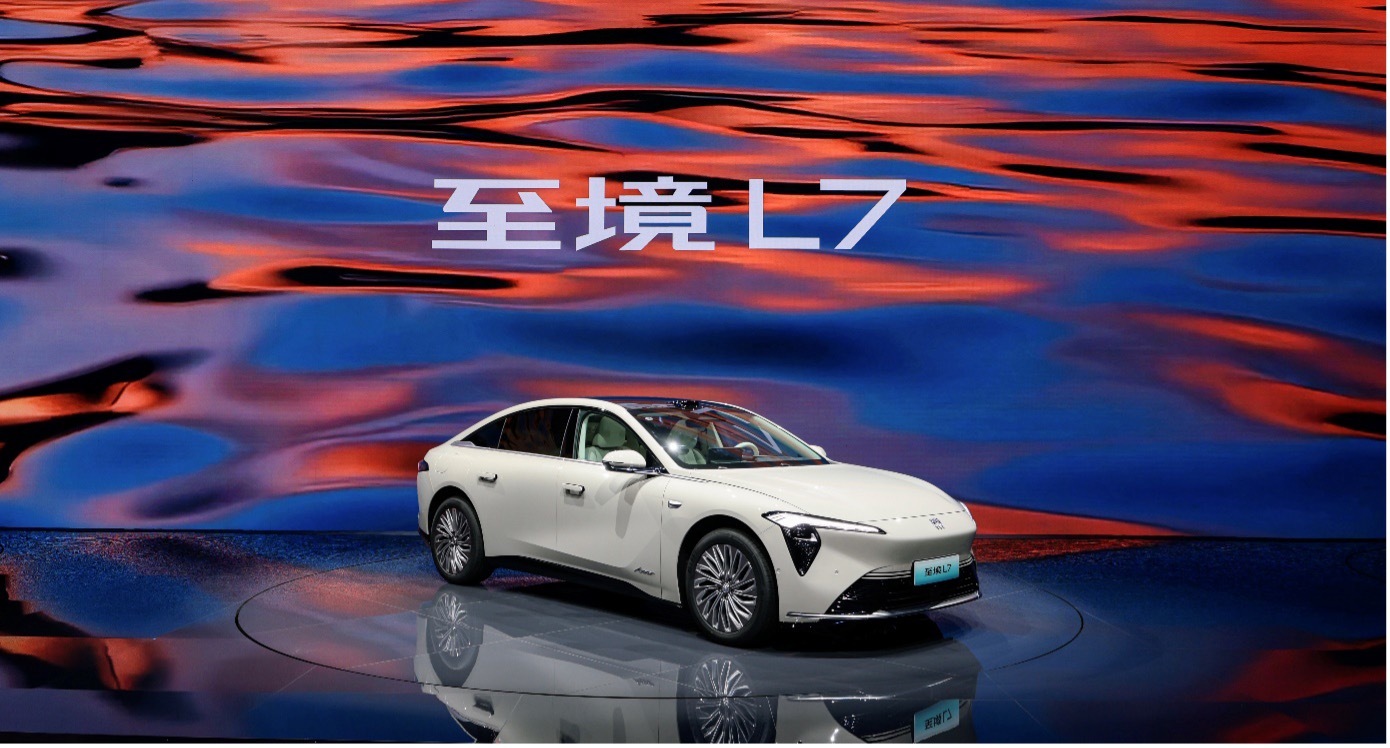
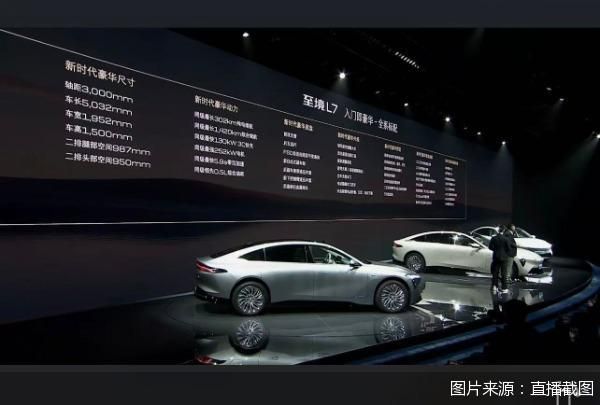
Group 1 - The core point of the article is the launch of Buick's high-end new energy sub-brand "Zhijing" with its first sedan model, the Buick Zhijing L7, officially priced between 173,900 to 219,900 yuan, with a promotional starting price of 169,900 yuan [1] - The Buick Zhijing L7 is positioned as a mid-to-large range extended luxury sedan, with dimensions of 5032mm in length, 1952mm in width, and 1500mm in height, and a wheelbase of 3000mm [1] - The vehicle features the "Zhenlong" range extension system, which includes a 1.5T hybrid dedicated engine and a rear-mounted permanent magnet synchronous motor, with a maximum power output of 252 kW [1] Group 2 - The CLTC pure electric range of the Buick Zhijing L7 is 302 kilometers, while the comprehensive range exceeds 1400 kilometers [1] - In terms of intelligence, the Zhijing L7 is equipped with the Qualcomm SA8775P chip and features a 50-inch panoramic AR-HUD head-up display system [1] - The vehicle also includes the "Xiaoyao Zhixing" driver assistance system, which globally debuts the Momenta R6 flywheel model based on end-to-end "reinforcement learning," supporting features like "seamless" city NOA and "one-click parking without stopping" [1]
腾讯研究院AI速递 20250929
腾讯研究院· 2025-09-28 16:01
Group 1: OpenAI and Model Changes - OpenAI has been reported to reroute models like GPT-4 and GPT-5 to lower-capacity sensitive models without user knowledge [1] - The rerouting occurs when the system detects sensitive topics, and this judgment is based on subjective context [1] - OpenAI's VP stated that the changes are temporary and part of testing a new safety routing system, raising user concerns about rights [1] Group 2: Tencent's Hunyuan Image 3.0 - Tencent launched Hunyuan Image 3.0, the first industrial-grade native multimodal model with 80 billion parameters, recognized as the largest open-source model [2] - The model excels in semantic understanding, capable of parsing complex semantics and generating both long and short texts with high aesthetic quality [2] - Hunyuan Image 3.0 is based on Hunyuan-A13B, trained on 5 billion image-text pairs and 6 trillion tokens, and is available under Apache 2.0 license [2] Group 3: Kuaishou's KAT Series - Kuaishou's Kwaipilot team introduced KAT-Dev-32B (open-source) and KAT-Coder (closed-source) models, achieving a 62.4% solution rate on SWE-Bench Verified [3] - KAT-Coder reached a 73.4% solution rate, comparable to top closed-source models, utilizing a chain training structure [3] - The team developed entropy-based tree pruning technology and a large-scale reinforcement learning training framework, observing new capabilities in dialogue and tool usage [3] Group 4: AI Teachers by TAL Education - TAL Education's CTO proposed a grading theory for AI teachers, evolving from assistants (L2) to true teacher roles (L3) [4] - L3 AI teachers can observe students' problem-solving steps in real-time and provide targeted guidance, forming a data feedback loop [5] - The "XiaoSi AI One-on-One" program supports personalized education across various learning environments, achieving a 98.1% accuracy in math problem-solving [5] Group 5: Meta's Humanoid Robots - Meta plans to invest billions in humanoid robot development, equating its importance to augmented reality projects [6] - The focus will be on software development rather than hardware manufacturing, aiming to create industry standards [6] - A new "Superintelligent AI Lab" is collaborating with robotics teams to build a "world model" simulating real physical laws [6] Group 6: Richard Sutton's Critique on Language Models - Richard Sutton criticized large language models as a flawed starting point, emphasizing that true intelligence comes from experiential learning [7] - He argued that large models lack the ability to predict real-world events and do not adapt to changes in the external world [7] - Sutton advocates for a learning approach based on actions, observations, and continuous learning as the essence of intelligence [7] Group 7: RLMT Method by Chen Danqi - Chen Danqi's team proposed the RLMT method, integrating explicit reasoning into general chat models to bridge the gap between specialized reasoning and general dialogue capabilities [8] - RLMT combines preference alignment and reasoning abilities, requiring models to generate reasoning paths before final answers [8] - Experiments show RLMT models excel in chat benchmarks, shifting reasoning styles to iterative thinking akin to skilled writers [9] Group 8: DeepMind's Veo 3 Emergence - DeepMind's Veo 3 demonstrates four progressive capabilities: perception, modeling, manipulation, and reasoning [10] - The concept of Chain-of-Frames (CoF) allows Veo 3 to perform cross-temporal reasoning through frame-by-frame video generation [10] - Quantitative assessments indicate significant improvements over Veo 2, suggesting video models are becoming foundational in visual tasks [10] Group 9: NVIDIA's Future in AI Infrastructure - NVIDIA is transitioning from a chip company to an AI infrastructure partner, focusing on total cost advantages rather than individual chips [11] - AI inference is expected to grow by a factor of a billion, driven by three expansion laws, potentially accelerating global GDP growth [11] - Huang Renxun emphasizes the need for independent AI infrastructure in the sovereign AI era, advocating for maximizing influence through technology exports [11]






人形机器人需要“第三只手”?清华大学教授赵明国:智能化是一个渐进突破的过程
Zhong Guo Jing Ying Bao· 2025-09-28 14:41
赵明国认为,我们不应一刀切地用单一百分比去描述和定位人形机器人智能程度的占比。"人应该管人 该做的部分,机器人应该管机器人该做的部分;随着时间的推移,人形机器人的感知和理解能力会逐步 增强,人形机器人的智能化是一个渐进突破的过程。" 当我们把镜头对准人形机器人时,我们能看到它们在跑道上摔倒后再爬起来,在复杂的有障碍的路面 上"盲走"并保持平衡,或在5v5的机器人足球比赛场上完成一次次传球、接球与射门,这些瞬间足够惊 艳。 然而,《中国经营报》记者注意到,若走出受控赛场或部分预设场景,面对一个未"标注"的障碍物或一 件未叠好的衣服时,它们往往需要由人来介入遥控。"人工遥控"因此成为人形机器人不可或缺的"第三 只手"。这正是人形机器人发展所呈现出的一体两面:人形机器人已经具备了较强的运动能力,而对环 境的理解与跨场景泛化仍是未解的短板。 "现在的人形机器人凭借其本体感知能力,可以完成走、跑、跳、翻跟头,或在有障碍物的路面上行 走,这种复杂动作的完成都需要其具备很强的智能水平。不过,目前许多人形机器人还不太具备理解环 境的能力。比如说,当前面有个障碍物时,它是否能够自主绕行、是否能自主开门,这些方面还存在一 些短板 ...

速递|前OpenAI员工创立Applied Compute以5亿美元估值融资,Lux Capital领投
Z Potentials· 2025-09-28 14:29
Core Insights - Investors are increasingly funding startups that focus on automating tasks using reinforcement learning (RL) technology, as developers rely more on this approach to optimize AI models [1][4] - Applied Compute, founded by three former OpenAI employees, is negotiating a new funding round at a valuation of $500 million, just three months after raising $100 million [1][2] Group 1: Company Overview - Applied Compute aims to assist software developers and enterprises in utilizing RL technology to create customized AI systems for specific sectors such as law and finance [2][3] - The company has previously raised $20 million from investors including Benchmark, Conviction, and Sequoia Capital [2] Group 2: Founders and Background - The founders, Rhythm Garg, Yash Patil, and Linden Li, are Stanford University alumni who worked on developing ChatGPT's reasoning model and other AI tools before joining OpenAI [3] - Other companies, such as Thinking Machines Lab, co-founded by former OpenAI CTO Mira Murati, are also planning to offer RL services to enterprises [3][4] Group 3: Market Trends and Technology - Reinforcement learning is becoming a key technology for AI developers, helping improve models by rewarding desired behaviors and penalizing others [4] - The potential for RL to automate tasks in various fields is significant, with expectations that the entire economy could evolve into a "reinforcement learning machine" [4]

限时权益价16.99万元,别克至境L7上市
Bei Jing Shang Bao· 2025-09-28 13:32
Core Viewpoint - SAIC-GM Buick brand officially launched the Zhijing L7, offering five models with a limited-time price range of 169,900 to 215,900 yuan [1] Group 1: Product Features - The Zhijing L7 is the first flagship sedan of Buick's high-end new energy sub-brand "Zhijing," built on the Buick "Xiaoyao" super fusion architecture [3] - It is equipped with the "Zhenlong" range extension system, featuring a 252 kW range extension single electric drive, a dedicated 1.5T hybrid engine, and a peak power generator of 100 kW [3] - The vehicle achieves a low comprehensive energy consumption of 0.5 liters per 100 kilometers and offers a pure electric range of 302 kilometers, with a total range of 1,420 kilometers [3] - The "Zhenlong" range extension system supports 130 kW fast charging, allowing for a 30% to 80% charge in just 18 minutes [3] Group 2: Technology and Innovation - The Zhijing L7 features Buick's "Xiaoyao Zhixing" assisted driving system and is the first globally to adopt the Momenta R6 flywheel model based on end-to-end "reinforcement learning" [3] - It is also equipped with Qualcomm's latest SA8775P chip, providing 72 TOPS of AI computing power to enhance the intelligent cabin experience, offering immersive and natural interaction tailored to various travel scenarios [3]

RLHF与RLVR全都要,陈丹琦团队最新力作将推理能力拓展到通用智能
机器之心· 2025-09-28 04:50
Core Insights - The article discusses the introduction of a new method called Reinforcement Learning with Model Thinking (RLMT), which integrates explicit reasoning into general chat models, enhancing their performance in open-ended tasks [5][7][26]. Summary by Sections Introduction - The article highlights the recent academic contributions of Chen Danqi from Princeton University, who has developed the RLMT method, which aims to bridge the gap between specialized reasoning capabilities and general conversational abilities in AI [2][5]. Methodology - RLMT combines aspects of Reinforcement Learning from Human Feedback (RLHF) and Reinforcement Learning with Verifiable Rewards (RLVR) to optimize language models for open-ended tasks [6][11]. - The training process involves two approaches: supervised fine-tuning (SFT) to teach the desired reasoning format and a zero-training method that directly applies RLMT to base models without prior training [12][14]. Results - Models trained with RLMT demonstrated superior performance in open-ended reasoning tasks compared to non-thinking baseline models, particularly in chat and creative writing benchmarks [18][26]. - The article presents comparative performance data showing that RLMT models outperformed other models, including GPT-4o and Claude-3.7-Sonnet, in various chat benchmarks [19][20]. Conclusion - RLMT successfully extends the advantages of explicit reasoning from specialized domains to general conversational AI, indicating its potential to reshape language model training methodologies [26][29].

为什么自动驾驶中的强化学习,没有很好的落地?
自动驾驶之心· 2025-09-28 03:50
Core Viewpoint - The article discusses the challenges of implementing reinforcement learning (RL) in the field of autonomous driving, particularly focusing on the issue of reward hacking and the balance between safety and efficiency [2][3]. Group 1: Challenges in Reinforcement Learning for Autonomous Driving - Reinforcement learning faces a significant issue known as reward hacking, where increasing safety requirements can lead to decreased efficiency, and vice versa [2]. - Designing a balanced reward system that can enhance overall performance in RL models is complex, as achieving equilibrium among multiple rewards is challenging [2]. - The application of RL in autonomous driving is complicated by the need to adhere to various driving rules during the driving process, unlike in embodied intelligence where the focus is primarily on local motion [2]. Group 2: Need for a Suitable Framework - A crucial factor for the successful implementation of RL in autonomous driving is the development of a robust architecture that can effectively integrate with RL [3]. - Existing models in autonomous driving are unlikely to be directly applicable to RL without significant modifications [3]. Group 3: Community and Resources - The "Autonomous Driving Knowledge Planet" community aims to provide a comprehensive platform for technical exchange and learning in the field of autonomous driving, with over 4,000 members [6][10]. - The community offers a variety of resources, including learning routes, technical discussions, and access to industry experts, to assist both beginners and advanced practitioners in the field [6][10].
NeurIPS 2025 | SURDS 数据集与 GRPO 全面强化自驾空间推理
自动驾驶之心· 2025-09-27 23:33
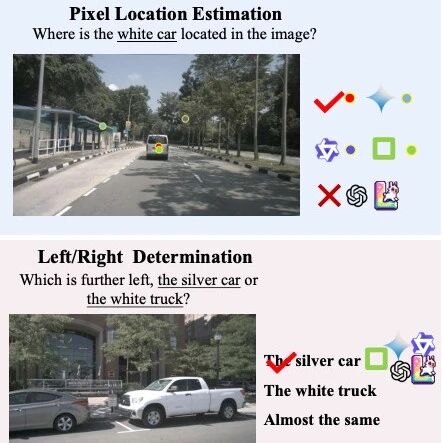
Core Insights - The article discusses the challenges of achieving accurate spatial reasoning in autonomous driving scenarios using Vision Language Models (VLMs), highlighting the lack of large-scale benchmarks in this area [2][20]. - A new benchmark called SURDS has been introduced to systematically evaluate the spatial reasoning capabilities of VLMs, revealing significant shortcomings in current models [4][20]. Benchmark Overview - SURDS is a large-scale benchmark based on the nuScenes dataset, consisting of 41,080 visual-question training instances and 9,250 evaluation samples, covering six spatial categories: direction recognition, pixel-level localization, depth estimation, distance comparison, left-right ordering, and front-back relationships [4][20]. - The dataset includes diverse multimodal information collected from urban environments in Boston and Singapore, ensuring a realistic testing scenario [6][20]. Model Training and Evaluation - The research emphasizes the importance of data generation and introduces a novel automated process for generating high-quality reasoning chains, which enhances the model's spatial reasoning capabilities [8][10]. - A reinforcement learning framework combining spatial localization rewards and logical consistency objectives was designed, leading to significant performance improvements in various tasks [11][20]. Experimental Results - The evaluation results show that different models exhibit notable differences in spatial reasoning tasks, with the proposed model achieving a nearly 60% improvement in depth estimation accuracy compared to the second-best model [14][20]. - The study reveals that most existing models struggle with single-object tasks, often performing close to random levels, indicating a need for better learning of absolute pose and metric information [16][20]. Training Strategy Insights - Ablation studies indicate that combining localization and logical rewards significantly enhances model performance, underscoring the foundational role of localization ability in spatial reasoning [16][18]. - The research also highlights that the scale of model parameters does not directly correlate with spatial understanding capabilities, suggesting that simply increasing model size is insufficient [16][20].