
经济全球化

Search documents
外交部:中方推动构建开放型世界经济这一立场不会改变
news flash· 2025-06-20 07:59
Core Viewpoint - China maintains its commitment to promoting an open world economy and high-level foreign openness, welcoming foreign enterprises to provide technology, products, and services that meet requirements [1] Group 1 - The Chinese government emphasizes its unwavering support for economic globalization [1] - The stance of promoting an open world economy has not changed and will not change [1]
峰会链世界,共寻确定性
Qi Lu Wan Bao· 2025-06-20 02:44
Core Points - The sixth Qingdao Multinational Corporation Leaders Summit emphasizes the importance of foreign investment in China's modernization and economic globalization [1][3] - The summit attracted 570 executives from 465 multinational companies, highlighting the growing interest in China's market [2][3] - The theme of the summit is "Multinational Companies and China - Linking the World for Win-Win Cooperation," aiming to create a platform for policy dialogue and project cooperation [3][4] Group 1: Investment and Economic Growth - Multinational companies have invested in 946 projects in Shandong, with a total investment of $105.91 billion [10] - Shandong has 60 foreign-funded R&D centers, promoting technological innovation and industrial upgrading [11] - Over 7,800 foreign-funded manufacturing enterprises are located in Shandong, with 349 projects from Fortune Global 500 companies, forming influential industrial clusters [12] Group 2: New Opportunities and Market Expansion - The summit introduced new participants from emerging markets, including ASEAN, the Middle East, and Africa, with 9 countries represented for the first time [5] - The participation of over 20% of multinational companies in modern finance and artificial intelligence reflects the shift towards service industry openness [5] - The summit aims to strengthen the "chain" capabilities by introducing new fields, markets, and faces, indicating a restructuring of the business network [4][5] Group 3: High-Quality Development and Services - In the first quarter of this year, high-tech industries in Shandong accounted for 44.2% of foreign investment, surpassing the national average by 15 percentage points [14] - Shandong provides efficient services to multinational companies, ensuring quick project initiation and construction [14] - The summit serves as a guide for multinational companies to seize opportunities in China and deepen mutually beneficial cooperation [16]


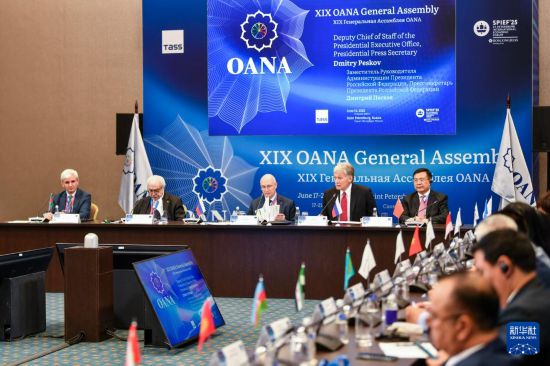
第19届亚通组织大会在俄罗斯圣彼得堡开幕
Xin Hua Wang· 2025-06-20 01:12
Core Viewpoint - The 19th Asia-Pacific News Agencies Organization (APNA) conference opened in St. Petersburg, Russia, focusing on how news agencies can respond to global changes and technological challenges [1][4]. Group 1: Conference Highlights - The conference is attended by representatives from news agencies across Asia and the Pacific, emphasizing the importance of timely information in fostering mutual understanding among nations [1]. - Russian President Vladimir Putin's message highlighted the significant role of APNA in global news dissemination and the expectation for constructive exchanges to enhance cooperation [1]. - Xinhua News Agency President Fu Hua called for collaboration among Asia-Pacific news agencies to promote mutual trust and cooperation, emphasizing the region's role in global economic growth [4]. Group 2: Challenges and Opportunities - TASS President Andrei Kondrashov noted the critical period of transformation in the information environment, stressing the need for news agencies to address network threats and misinformation [6]. - UN Under-Secretary-General for Global Communications Melissa Fleming emphasized the importance of media dialogue in the face of global challenges, urging news organizations to adhere to ethical standards while providing valuable news [9]. - Leaders from various news agencies, including Vietnam and Kazakhstan, highlighted the necessity for technological innovation to enhance information delivery efficiency and the collective mission of Asia-Pacific news agencies to amplify their voices on regional and international issues [9]. Group 3: Organizational Background - The APNA consists of 41 news agencies from 33 countries, originally established in December 1961 in Thailand as the Asian News Agencies Organization [11].
坚定不移建设开放型世界经济(深入学习贯彻习近平新时代中国特色社会主义思想·学习《习近平经济文选》第一卷专家谈)
Ren Min Ri Bao· 2025-06-19 21:51
Core Viewpoint - The construction of an open world economy is essential for global economic prosperity, stability, and the foundation for building a community with a shared future for mankind [3][5][11]. Group 1: Theoretical Logic - The development of an open world economy is a necessary path for prosperity, supported by theories of international division of labor and comparative advantage [4]. - Open economies facilitate optimal resource allocation and mutual benefits among countries, as emphasized by Marxist theory [4]. Group 2: Historical Logic - Historical trends show that periods of rapid economic globalization correlate with global economic prosperity, while reversals lead to economic downturns [5]. - China's reform and opening-up have positioned it as both a beneficiary and contributor to economic globalization, enhancing its role in the global economy [5]. Group 3: Realistic Logic - The evolution of the international economic order since World War II has been based on free trade principles, which are now threatened by unilateral actions from certain countries [6]. - A collaborative approach is necessary to maintain and improve the international economic order, emphasizing the importance of multilateralism [6]. Group 4: Technological and Environmental Aspects - Technological advancements, particularly in AI and digital trade, are crucial for driving the development of an open world economy [8]. - Addressing climate change through international cooperation will lead to a green and low-carbon transformation of the global economy [9]. Group 5: Inclusive Development - A shift from a "center-periphery" distribution model is needed to ensure equitable participation of developing countries in international economic cooperation [10]. - Enhancing the capabilities of developing nations through infrastructure and investment improvements is essential for inclusive growth [10]. Group 6: Security and Resilience - Balancing development and security is critical, especially in light of rising protectionism and unilateralism that threaten global supply chains [11]. - A new security concept that promotes cooperation and sustainability is necessary for building a resilient open world economy [11]. Group 7: High-Level Opening-Up - China's commitment to high-level opening-up is vital for promoting an open world economy and establishing a new international economic order [12][17]. - Strengthening institutional openness and creating a favorable business environment are key strategies for enhancing international competitiveness [13][14].
共建“一带一路”彰显强大生命力
Jing Ji Ri Bao· 2025-06-18 21:11
当地时间6月17日,国家主席习近平出席第二届中国—中亚峰会并作主旨发言时指出,两年来,中国同 中亚国家共建"一带一路"走深走实,贸易额增长35%,产业投资、绿色矿产、科技创新等合作积极推 进。这是共建"一带一路"推动国际社会合作共赢的生动缩影。10多年来,共建"一带一路"倡议在风云变 幻的国际格局中,穿越地理阻隔,跨越文化差异,赢得广泛认同与支持。 其次,共建"一带一路"倡议立足现实、因地制宜,精准回应各国发展需求。从基础设施建设到产业对 接,从教育医疗合作到数字经济技术交流,共建"一带一路"倡议在不同国家以不同方式、在不同领域持 续产出合作成果。在乌兹别克斯坦,中乌现代农业科技示范园促进了产业升级与民生改善;在老挝,中 老铁路激活了当地经济,切实提升沿线百姓福祉;在坦桑尼亚,中国援建的基奎特心脏病研究所已成为 东非地区首屈一指的心脏病诊疗中心,吸引多个国家患者就医。共建"一带一路"倡议坚持不强加、不照 搬、不另起炉灶的合作方式,充分尊重各国自主发展的路径和节奏,将发展主导权交给各国人民,树立 了国际合作的新典范。 此外,共建"一带一路"倡议始终坚持开放包容,积极对接非盟《2063年议程》、哈萨克斯坦"光明之 ...
外交部:愿同中亚国家一道努力推动中国—中亚命运共同体建设走在前列,形成示范
Xin Hua She· 2025-06-18 11:40
新华社北京6月18日电(记者邵艺博、成欣)外交部发言人郭嘉昆18日表示,中方愿同中亚国家一道努 力,推动中国—中亚命运共同体建设走在前列,形成示范。 郭嘉昆说,6月17日,习近平主席在哈萨克斯坦首都阿斯塔纳出席第二届中国—中亚峰会并发表主旨发 言,全面回顾中国中亚合作的丰硕成果,创新提出"中国—中亚精神",指出双方要"坚守彼此信赖、相 互支持的团结初心""优化务实高效、深度融合的合作布局""打造和平安宁、休戚与共的安全格局""拉紧 同心同德、相知相亲的人文纽带""维护公正合理、平等有序的国际秩序"。 郭嘉昆表示,峰会一大亮点是各方一致同意大力弘扬以"互尊、互信、互利、互助,以高质量发展推进 共同现代化"为基本内容的"中国—中亚精神",推动世代友好合作。峰会重要成果之一是签署了永久睦 邻友好合作条约,树立了六国关系史上新的里程碑,也成为中国周边外交的创举。峰会明确了未来合作 重点,决定成立减贫、教育交流、荒漠化防治三大合作中心和贸易畅通合作平台,着力推进贸易畅通、 产业投资、互联互通、绿色矿产、农业现代化、人员往来六大优先合作方向,推动地区高质量发展,携 手迈向共同现代化。各方还发出一致声音,坚定捍卫多边主义, ...
新华时评丨“南博之约”以开放之钥启动区域繁荣引擎
Xin Hua Wang· 2025-06-18 05:52
Core Viewpoint - The 9th China-South Asia Expo aims to enhance regional cooperation and economic development through open collaboration, attracting businesses from South Asia and Southeast Asia to Kunming [1][2]. Trade and Economic Cooperation - The trade volume between China and South Asian countries is projected to approach $200 billion in 2024, doubling over the past decade with an average annual growth rate of approximately 6.3% [1][2]. - South Asian products such as cashmere, lapis lazuli, and spices are gaining popularity among Chinese consumers, presenting significant market opportunities [1]. - Investment cooperation is also on the rise, with projects like the China-Pakistan Economic Corridor and various energy and infrastructure projects in Sri Lanka, Bangladesh, and Nepal contributing to regional economic growth [2]. Policy and Institutional Support - The China-Maldives Free Trade Agreement has come into effect, and negotiations for an investment agreement with Bangladesh are underway, aimed at facilitating trade and investment [2]. - China is providing zero-tariff treatment for 100% of products from several least developed South Asian countries, enhancing their export capabilities to China [2]. Regional Connectivity and Development - Yunnan province is positioned as a key hub connecting China with South Asia and Southeast Asia, leveraging its geographical advantages to promote trade and logistics [3]. - The province is actively implementing measures to enhance regional connectivity, including the construction of the China-Laos Railway and various trade facilitation initiatives [3]. Global Economic Context - The backdrop of rising protectionism and unilateralism in global trade necessitates stronger cooperation among developing countries, including those in South Asia, to enhance economic resilience [3][4]. - China is committed to opposing protectionism and fostering an open economic environment through various national and international trade exhibitions [4]. Collaborative Future - The expo serves as a platform for countries to unite in collaboration and development, aiming to create new growth points and drive regional prosperity [5].
潘功胜:在上海“先行先试”结构性货币政策工具创新!
证券时报· 2025-06-18 03:17
Core Viewpoint - The article discusses the opening of the 2025 Lujiazui Forum and highlights key financial opening measures announced by the Governor of the People's Bank of China, Pan Gongsheng, aimed at enhancing Shanghai's status as an international financial center. Group 1: Financial Opening Measures - Eight financial opening measures were announced, including the establishment of an interbank market trading report library, a digital RMB international operation center, and a personal credit institution in Shanghai [2] - Additional measures include offshore trade financial service pilot programs, development of offshore bonds, optimization of free trade account functions, and innovation in structural monetary policy tools [2][3] Group 2: Currency and Payment Systems - The RMB has become the second-largest trade financing currency globally and the third-largest payment currency [4] - China has established a multi-channel, widely covered RMB cross-border payment clearing network, addressing issues in traditional cross-border payment systems [5] Group 3: Technological Advancements - New technologies such as blockchain and distributed ledger technology are accelerating the development of central bank digital currencies and stablecoins, reshaping traditional payment systems and posing challenges for financial regulation [6] Group 4: Global Economic Oversight - Major international financial organizations should enhance their economic oversight functions and guide countries to support economic globalization [7] - The People's Bank of China has signed bilateral currency swap agreements with over 30 countries and regions, contributing to the global financial safety net [8] Group 5: IMF and Global Financial Governance - The current IMF quota distribution does not reflect the relative positions of member countries in the global economy, and adjustments are necessary for legitimacy and representation [9] Group 6: Monetary Policy Framework - The transformation of the monetary policy framework is a gradual and ongoing process, with the People's Bank of China implementing supportive measures to stabilize the economy and financial markets [10]

潘功胜:积极引导各国坚定支持经济全球化和多边贸易体系
news flash· 2025-06-18 02:15
Core Viewpoint - The Governor of the People's Bank of China, Pan Gongsheng, emphasized the need for reform in international financial organizations to better reflect the status of emerging markets and developing countries in the global economy [1] Group 1: Governance Reform - There has been a long-term lack of substantial adjustment in the shares and voting rights of major international financial organizations like the IMF and World Bank, which does not align with the actual economic standing of emerging markets and developing countries [1] - The international community should be aware of the unilateral policies of certain member countries that interfere with the governance and operation of international financial organizations [1] - It is essential for international financial organizations to advance governance reforms that dynamically reflect the relative positions of member countries in the global economy, thereby enhancing the voice and representation of emerging markets and developing countries [1] Group 2: Economic Supervision and Globalization - In the context of high uncertainty in the global economy, international financial organizations should strengthen their economic supervision functions to objectively assess the risks faced by the global economy and individual countries [1] - There is a call for international financial organizations to actively guide countries to support economic globalization and the multilateral trade system [1] - Strengthening policy guidance among countries and enhancing macroeconomic policy coordination are crucial for maintaining the stability of the international financial system [1]
中国驻智利大使:美单边关税战影响中智双边贸易,应携手反对霸凌胁迫行径
news flash· 2025-06-17 23:45
Group 1 - The term "China-US trade war" is deemed inaccurate, as it implies mutual responsibility, while it is actually a unilateral tariff war initiated by the US against global trade, with China opposing these measures [1] - The unilateral tariff measures by the US have negatively impacted international trade rules and the rule-based international trading system, particularly affecting smaller countries like Chile [1] - The US is attempting to coerce Chile into accepting unreasonable demands regarding key minerals and infrastructure, which could undermine Chile's sovereignty and economic development [2] Group 2 - China views international trade as a win-win scenario, asserting that there are no winners in a trade war, and emphasizes the need to counter unilateralism to maintain international fairness and justice [2] - Chile's economy is highly export-oriented, and maintaining a multilateral, open international trade system aligns with its national interests, as Chile has expressed opposition to US unilateral tariff measures [2] - There is a call for collaboration among China, Chile, and other countries to oppose unilateral tariff measures and coercive actions, promoting inclusive economic globalization and building a community with a shared future for humanity [2]