耐心资本

Search documents
全链条支持消费企业融资发展
Zheng Quan Ri Bao· 2025-11-19 23:09
Core Viewpoint - The People's Bank of China and 12 departments have issued a plan to enhance financial support for consumption in Beijing, focusing on developing equity financing to address funding challenges across different stages of consumption enterprises [1][2]. Group 1: Financial Support and Equity Financing - The plan aims to facilitate equity financing for quality enterprises in the consumption industry through methods such as public listings and "New Third Board" listings [2][3]. - As of November 19, 18 consumer companies have gone public this year, raising a total of 19.8 billion yuan, with a significant number from the automotive sector, indicating a trend of consumption structure upgrading and technological innovation [2][6]. Group 2: Long-term Capital and Investment - The plan emphasizes the need for long-term and patient capital to support long-cycle consumption industries like cultural tourism and health care, which require stable funding over extended periods [4][5]. - Long-term capital is characterized by a higher risk tolerance and a long-term outlook on returns, which can help companies navigate transformation and development phases [5][6]. Group 3: Comprehensive Financing Support System - The plan establishes a comprehensive equity financing support system for consumer enterprises, covering all stages from seed to maturity, enabling production, channel, and terminal enterprises to expand capacity and enhance brand influence [6][7]. - This system aims to resolve financing bottlenecks and create a positive feedback loop between capital and the consumption market, ultimately strengthening the foundational role of consumption in the economy [7].
《金融支持北京市提振和扩大消费的实施方案》发布 全链条支持消费企业融资发展
Zheng Quan Ri Bao· 2025-11-19 16:20
Core Viewpoint - The People's Bank of China and 12 other departments have issued a plan to enhance financial support for consumption in Beijing, focusing on developing equity financing to address funding challenges across different stages of consumption enterprises [1][2]. Group 1: Financial Support for Consumption - The plan aims to facilitate equity financing for quality enterprises in the consumption industry through methods such as public listings and "New Third Board" listings [2][4]. - As of November 19, 18 consumer companies have gone public this year, raising a total of 19.8 billion yuan, with a significant number from the automotive sector, indicating a shift towards consumption structure upgrades and technological innovation [2][5]. Group 2: Long-term Capital Support - The plan emphasizes the need for long-term and patient capital to support long-cycle consumption industries like cultural tourism and health care, which require stable funding over extended periods [4][5]. - Experts suggest that optimizing exit channels and improving assessment mechanisms are crucial for attracting long-term investments from insurance funds and pension funds [4][5]. Group 3: Comprehensive Financing System - The initiative establishes a comprehensive equity financing support system for consumer enterprises, covering all stages from seed to maturity, enabling production, channel, and terminal enterprises to enhance their capabilities [5][6]. - This system is expected to stimulate market vitality by increasing the number of quality consumer companies listed, thereby attracting more investors and fostering a positive interaction between capital and the consumption market [5][6].
年内专项债券投向政府投资基金合计规模已超500亿元
Zheng Quan Ri Bao· 2025-11-19 15:44
越来越多的地方正在探索将专项债券投向政府投资基金。 2024年12月份,国务院办公厅发布的《关于优化完善地方政府专项债券管理机制的意见》提出,"扩大 专项债券投向领域和用作项目资本金范围",包括实行专项债券投向领域"负面清单"管理等举措。 在实行专项债券投向领域"负面清单"管理的背景下,当前专项债的募集资金投向也日趋丰富,政府投资 基金、土地储备、收购存量商品房等方面均有进展。 仍以政府投资基金为例,上述多地也陆续传出专项债券成功发行的消息。 比如,9月16日,安徽省政府专项债券(七十一期)成功通过公开招标方式发行,规模达50亿元,期限20 年,票面利率2.38%。该期债券募集资金主要用于注资合肥市创业投资类政府投资基金,标志着财政部 首批地方政府专项债券注资创业投资类政府投资基金试点在合肥市成功落地。 据了解,该专项债券精准聚焦支持"耐心资本"理念,明确发行期限设定为20年,充分匹配长期股权投资 需求,为早期科技企业和硬科技领域提供持续稳定的资金支持。 中国债券信息网11月18日披露的文件显示,深圳将于11月24日进行一批债券的招标发行。其中,2025年 深圳市政府专项债券(六十四期)计划发行总额65.20 ...
21专访|北大汇丰马琳琳:深圳应强化“创新试验田”角色
2 1 Shi Ji Jing Ji Bao Dao· 2025-11-18 06:52
Core Insights - The article emphasizes the shift in institutional investors' strategies from "short-term speculation" to "long-term value discovery" in response to the "14th Five-Year Plan" which aims to enhance the inclusiveness of capital markets [2][4] - It highlights the importance of a robust institutional framework that facilitates long-term investments, particularly in areas like pension finance, which is seen as both a source of monthly income for residents and a long-term capital for the state [5][6] Group 1: Institutional Investor Behavior - The primary shift in decision-making perspective is from "short-term speculation" to "long-term value discovery," focusing on sectors with policy certainty and long-term trends like technological and green transformations [2][3] - Institutional investors are expected to transition from "holding assets" to "risk allocation," managing volatility through a more flexible and diverse set of financial tools [2][4] - Investment strategies will increasingly lean towards "passive factor" approaches, utilizing quantitative methods and Smart Beta tools to capture long-term style premiums [3] Group 2: Enhancing Capital Market Functionality - The article suggests that improving transparency of information is crucial for attracting institutional investments, allowing companies to clearly disclose their innovation and performance metrics [4] - It advocates for the development of third-party professional ratings to provide institutions with reliable benchmarks for investment decisions [4] - The introduction of diverse investment products such as technology innovation bonds and themed funds is essential to create viable investment opportunities [4] Group 3: Pension Finance Challenges and Innovations - Key shortcomings in pension finance include insufficient reserves, an imbalanced structure, and a lack of long-term friendly products that provide stable cash flows [5] - Future innovations should focus on developing products that ensure monthly payouts, increasing the proportion of long-term assets, and optimizing tax incentives to encourage participation [5][6] - The dual nature of pension finance is highlighted, serving both as a source of monthly income for residents and as a long-term capital source for the state [6] Group 4: Shenzhen's Financial Innovations - Shenzhen's innovation lies in creating an ecosystem that capitalizes on uncertainty, with government-led angel funds and a robust venture capital environment to support early-stage technology projects [6][7] - The establishment of a closed-loop system for fundraising, investment, management, and exit through the Shenzhen Stock Exchange enhances capital circulation [6][8] - The city aims to become a center for "patient capital," attracting long-term investments in technology and foundational research [8][10] Group 5: Regional Financial Collaboration - The article discusses the need for a clear financial division of labor between Hong Kong and Shenzhen, with Hong Kong focusing on international capital and Shenzhen on local innovation [9][10] - Shenzhen is positioned to be a pricing center for innovative capital, a processing hub for cross-border capital, and a connector of financial capabilities between the two cities [10]
聚焦服务硬科技 资本市场包容性改革激活创新全链条
Zhong Guo Zheng Quan Bao· 2025-11-17 22:07
Group 1 - Yushu Technology has completed its IPO guidance work, accelerating the capitalization of the robotics sector and signaling increased support for technological innovation from the capital market [1] - The capital market has seen significant policy reforms this year, including the "1+6" reform on the Sci-Tech Innovation Board and the introduction of a "technology board" in the bond market, enhancing the market's inclusiveness and adaptability [1][2] - The China Securities Regulatory Commission (CSRC) aims to promote a more resilient and robust market with a focus on attracting investments in innovative sectors, potentially creating a service system that covers the entire lifecycle of technology enterprises [1][2] Group 2 - Capital continues to flow towards "hard technology," with 92 companies completing IPOs in A-shares this year, predominantly from the automotive, electrical equipment, and hardware sectors [2] - The bond market has also seen steady growth in the issuance of technology bonds since the launch of the "technology board," with the introduction of tools like the Sci-Tech Bond ETF facilitating investor participation [3] Group 3 - Patient capital, represented by social security funds and insurance capital, is increasingly entering the market to support technological innovation, with significant investments being made in various regions [4][5] - The establishment of the Central Enterprise Strategic Emerging Industry Investment Fund, which raised 51 billion yuan, exemplifies the active involvement of industrial capital in supporting innovation [5] Group 4 - The capital market is focusing on creating a more inclusive ecosystem to activate the entire innovation chain, with reforms aimed at optimizing listing standards for new industries and technologies [6][7] - There is a push to cultivate long-term capital that focuses on early-stage investments in hard technology, aligning with the funding needs of innovative enterprises [7][8]
资本市场包容性改革激活创新全链条
Zhong Guo Zheng Quan Bao· 2025-11-17 20:12
Core Insights - Yushu Technology has completed its IPO guidance work, signaling an acceleration in capitalizing the robotics sector and indicating strong market support for technological innovation [1] - The China Securities Regulatory Commission (CSRC) aims to enhance market resilience and attractiveness, with expectations for a service system covering the entire lifecycle of technology enterprises [1] Capital Market Developments - The capital market has seen a continuous influx of funds towards "hard technology," with 92 companies completing A-share IPOs this year, predominantly from the automotive, electrical equipment, and hardware sectors [1] - The Science and Technology Board and the Growth Enterprise Market have welcomed 11 and 29 companies respectively, indicating a significant focus on technology-driven enterprises [1] Bond Market Innovations - Deloitte forecasts that under ongoing policy support, new listings in technology and renewable energy sectors will remain a focal point in the A-share market [2] - The launch of the "Technology Board" in the bond market has led to a steady increase in issuance scale, with the introduction of the Science and Technology Bond ETF providing convenient access for investors [2] Patient Capital Growth - The capital market is increasingly supported by patient capital, with social security funds and insurance capital accelerating their entry into technology innovation investments [3] - Social security funds are setting benchmarks for patient capital, aligning with the long-term investment needs of "hard technology" innovation [3] Comprehensive Capital Support - Insurance capital is transitioning from traditional funding roles to becoming comprehensive enablers, actively participating in venture capital and private equity to support early-stage technology firms [4] - The Central Enterprise Strategic Emerging Industry Development Fund has raised 51 billion yuan to support state-owned enterprises in enhancing their innovation capabilities [4] Inclusive Ecosystem Development - A more inclusive capital market ecosystem is essential for activating the entire innovation chain, with reforms aimed at enhancing institutional inclusivity and attractiveness [5] - Future capital market reforms will focus on direct financing methods, optimizing listing standards to better serve new industries and technologies [5] Financing Tools and Mechanisms - A financing matrix that accommodates the long cycles and high risks of technology enterprises is necessary, with suggestions to promote "investment-loan linkage" mechanisms [6] - The development of more technology innovation indices and public funds is encouraged to attract long-term capital into technology investments [6]
迎接“十五五” 投资新时代 长钱长投 资本变局
Sou Hu Cai Jing· 2025-11-17 10:01
Core Viewpoint - The cultivation of long-term capital and patient capital is essential for the high-quality development of capital markets, with the "long money long investment" ecosystem becoming a core theme of the capital market reform during the 14th Five-Year Plan period [1][2]. Group 1: Capital Market Reform - The 14th Five-Year Plan emphasizes the need for a capital market that supports high-level technological self-reliance and modern industrial systems, moving from high-speed growth to high-quality development [1][2]. - As of August 2025, long-term funds held approximately 21.4 trillion yuan in the A-share market, accounting for over 40% of the total market value, indicating significant room for improvement compared to mature markets [2][3]. - The current proportion of patient capital capable of "crossing cycles" is less than 15%, leading to market volatility and inefficiencies in resource allocation [2][3]. Group 2: Policy and Institutional Support - The China Securities Regulatory Commission (CSRC) aims to create a more attractive environment for long-term and patient capital through various reforms, including long-cycle assessment mechanisms and tax incentives [3][4]. - The focus is on enhancing the investment environment for long-term funds, promoting public fund reforms, and developing equity public funds [3][4]. - The regulatory framework is shifting towards supporting long-term capital through tax incentives and product innovations, fostering a stable investment ecosystem [3][4]. Group 3: Investment Preferences and Trends - Long-term capital typically seeks stable returns with a focus on high dividend yields and low volatility, while patient capital is more inclined towards high-risk, high-reward investments in innovative sectors [9][10]. - The investment landscape is evolving, with long-term capital increasingly favoring sectors like technology, green energy, and high-quality blue-chip stocks [21][22]. - Patient capital is characterized by its focus on early-stage investments in hard technology sectors, supporting companies through their development phases [22][23]. Group 4: Market Structure and Dynamics - The entry of long-term and patient capital is reshaping the investor structure in the A-share market, with institutional investors expected to dominate, reducing the proportion of retail investors significantly [26][27]. - The valuation system is transitioning towards a fundamental-driven approach, with a growing emphasis on the performance and governance of companies [27][28]. - The financing ecosystem is shifting from a financing-dominated model to a balanced investment and financing model, enhancing the overall market efficiency [28][29]. Group 5: Future Outlook - By the end of the 14th Five-Year Plan, it is anticipated that the total market value held by long-term and patient capital will exceed 40 trillion yuan, representing over 70% of the market [36][37]. - The market is expected to exhibit characteristics of a "slow bull" and "long bull" market, with reduced volatility and improved corporate governance [37][38]. - The capital market is projected to play a crucial role in supporting technological innovation and industrial upgrades, significantly contributing to the high-quality development of the economy [37][38].

保险机构以“耐心资本”赋能科创企业做大做强
Zhong Guo Zheng Quan Bao· 2025-11-16 20:13
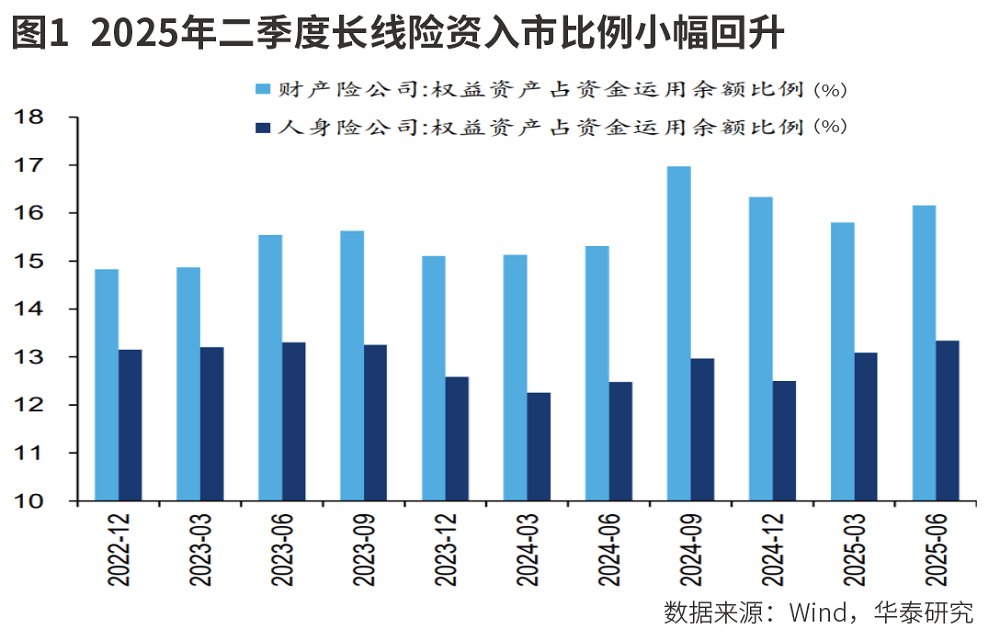
Core Insights - The article emphasizes the critical role of insurance funds as "patient capital" in supporting the growth of technology innovation enterprises, aligning with their long-term financing needs [1][2][3] - It highlights the increasing importance of insurance capital in the context of China's "14th Five-Year Plan," which aims to accelerate high-level technological self-reliance and innovation-driven development [1][2] - The article discusses the diverse investment strategies employed by insurance institutions, including equity, debt, and alternative investments, to support technology innovation [3][4] Investment Characteristics - Insurance funds are characterized by their long duration, large scale, and stability, making them well-suited to meet the financing needs of technology innovation enterprises [2][4] - The total balance of insurance funds in China exceeds 36 trillion yuan, providing substantial resources for systematic investment in frontier fields [2][4] Investment Strategies - Insurance funds are diversifying their investment tools to cover various sectors, including artificial intelligence, semiconductors, advanced manufacturing, new materials, and renewable energy [3][4] - Different investment strategies are recommended for enterprises at various stages of development, from seed and startup phases to growth and maturity phases [4][5] Research and Assessment Framework - There is a need for insurance investment institutions to develop research and assessment frameworks that align with the characteristics of "early, small, and hard technology" investments [5][6] - The establishment of a three-part research system focusing on policy research, technology decoding, and value discovery is suggested to enhance the valuation and pricing capabilities for technology innovation enterprises [6][7] Regulatory and Taxation Recommendations - Suggestions include adjusting risk factors for investments in strategic emerging industries and expanding tax incentives for technology innovation investments [7] - The article advocates for the development of a secondary market for private equity and systematic improvements in transaction mechanisms to enhance transparency and efficiency [7]
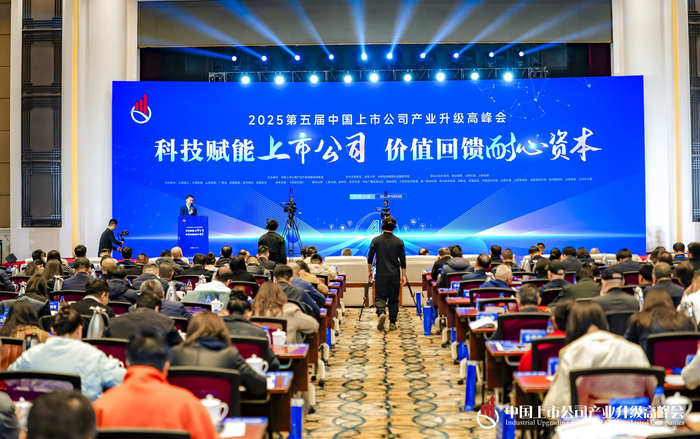
耐心资本赋能产业升级 第五届中国上市公司产业升级会议成功举办
Zheng Quan Ri Bao Zhi Sheng· 2025-11-15 04:42
Core Viewpoint - The 2025 Fifth China Listed Companies Industrial Upgrade Conference highlighted the integration of patient capital with industrial upgrades, emphasizing the importance of technology innovation in driving transformation and the need for long-term strategic investment [1][3]. Group 1: Conference Highlights - The conference gathered experts, scholars, executives from listed companies, and representatives from financial institutions to discuss the future of patient capital and industrial upgrades [1]. - The event featured discussions on the significant technological changes expected in 2025, particularly in key areas like "Artificial Intelligence+" [3]. Group 2: Key Insights from Speakers - Wang Yili, President of Shanxi Securities, emphasized the integration of investment banking, equity investment, and industry research to support the real economy and enhance financial support capabilities [5]. - Yin Yanlin, former Deputy Director of the Central Financial and Development Committee, outlined six areas for promoting high-quality development of listed companies, including deepening the real economy and increasing R&D investment [7]. - Li Yang, Chairman of the National Financial and Development Laboratory, stressed the importance of a vibrant capital market and the role of mergers and acquisitions in optimizing resource allocation and driving structural changes in the economy [8]. Group 3: Forum Discussions - The conference included two forums focusing on financial services for new productive forces and the role of listed company executives in industrial upgrades [11][13]. - Suggestions from forum participants included accelerating the listing process for mainland companies in Hong Kong, optimizing the investment framework, and enhancing liquidity in equity investments [11]. - Various company leaders discussed the importance of technology innovation and collaboration with financial institutions to drive industry upgrades and enhance product value [12].

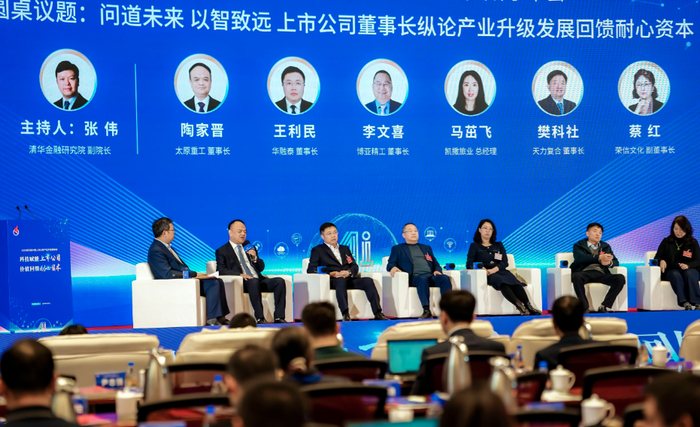
圆桌论坛二:问道未来 以智致远 上市公司董事长纵论产业升级发展回馈耐心资本
Zheng Quan Ri Bao Zhi Sheng· 2025-11-14 13:10
Core Viewpoint - The roundtable discussion focuses on the theme of "Exploring the Future with Intelligence: Insights from Chairmen of Listed Companies on Industrial Upgrading and Rewarding Patient Capital" [2][4] Group 1: Industrial Upgrading - The roundtable aims to discuss the implementation of the "14th Five-Year Plan" and its emphasis on modernizing the industrial system, which includes nurturing emerging industries and optimizing traditional sectors [3][4] - Participants represent various industries, highlighting the importance of industrial upgrading as a core engine for high-quality economic development amidst global economic adjustments [4][10] - The discussion emphasizes the need for long-term value creation and social responsibility in the context of patient capital [4][10] Group 2: Company Introductions - Taoyuan Heavy Industry, represented by Chairman Tao Jiajin, focuses on heavy equipment manufacturing and has undergone significant production line upgrades [6][11] - Huaron Tai, led by Chairman Wang Limin, operates in the chemical and industrial engineering sectors and is set to be listed on the Hong Kong Stock Exchange [6][10] - Boya Precision, represented by Chairman Li Wenxi, reported a 60% revenue increase and an 80% profit increase in the first nine months of 2023 [7][10] - Caesar Travel, led by General Manager Ma Zhuofei, has a long history in the tourism industry and is adapting to post-pandemic market changes [8][22] - Tianli Composite, represented by Chairman Fan Kesha, specializes in composite materials and is actively engaging in new technology applications [9][16] - Rongxin Culture, led by Chairman Cai Hong, focuses on children's book publishing and has been a pioneer in the industry [9][26] Group 3: Responses to the "14th Five-Year Plan" - Taoyuan Heavy Industry's upgrades include transitioning to automated production lines and enhancing product quality through smart manufacturing [11][12] - Boya Precision emphasizes the importance of innovation and high-end product development to meet market demands [14][15] - Tianli Composite is exploring new fields and collaborating with universities to enhance its technological capabilities [16][17] - Huaron Tai is focusing on three main sectors: new energy, digitalization, and biomedicine, to drive future growth [19][20] Group 4: Patient Capital and Market Performance - Taoyuan Heavy Industry believes that consistent performance and growth are essential for rewarding patient capital [33] - Huaron Tai asserts that its companies are currently undervalued in the market and are working on improving communication and innovation [34] - Boya Precision highlights its commitment to R&D and shareholder returns as part of its long-term strategy [35] - Caesar Travel attributes its recent stock performance to the backing of state-owned capital and effective market strategies [38] - Tianli Composite emphasizes the importance of foundational strength and continuous dividends as a way to reward capital [39]