跨境支付

Search documents
从申城车间到非洲热土 金融助力跨境贸易“远航”
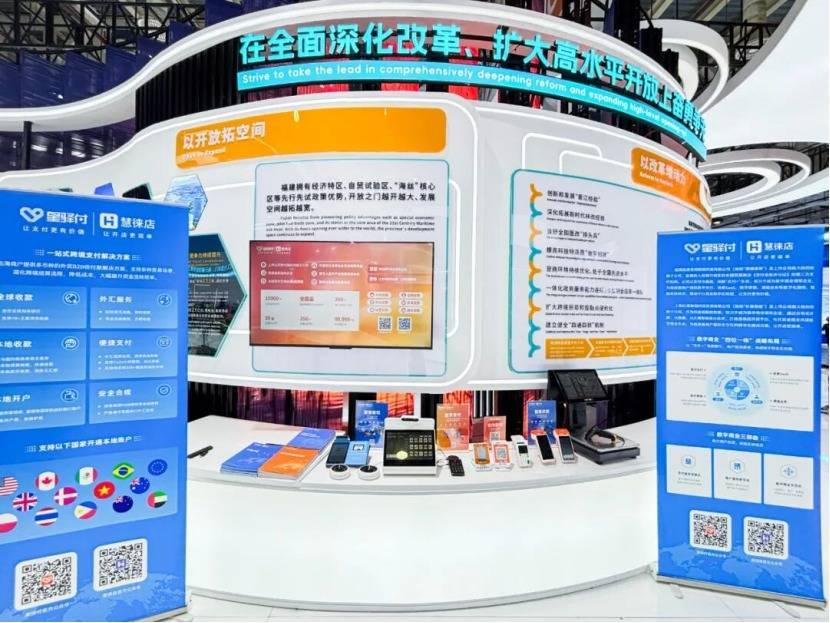
Zhong Guo Zheng Quan Bao· 2025-09-17 15:02
Group 1: Cross-Border Trade and Financial Services - Chinese foreign trade enterprises are expanding globally, with a focus on energy needs in Africa and consumer goods in Southeast Asia [1] - The use of multi-central bank digital currency bridges (mBridge) has significantly reduced cross-border payment times from 1-3 days to just 8 minutes, enhancing efficiency for businesses [2] - The implementation of forward foreign exchange settlement and sales operations allows companies to lock in exchange rates, mitigating risks associated with currency fluctuations [3] Group 2: Financial Innovations and Support - Financial institutions are providing essential support to maintain growth in foreign trade, with services like forward foreign exchange operations and free trade accounts reducing costs for businesses [3] - Policy measures, such as expedited registration for trade foreign exchange receipts and increased limits for special refunds, are facilitating smoother operations for foreign trade enterprises [4] - The introduction of local currency accounts by cross-border payment companies like PingPong has improved payment efficiency, allowing for instant transactions and streamlined compliance processes [5] Group 3: Market Data and Trends - In the first seven months of the year, Shanghai's total cross-border RMB payments reached 18.83 trillion yuan, with total foreign-related receipts amounting to 3.26 trillion USD [5] - As of July, 1171 foreign institutions have entered China's interbank bond market, with a total bond holding balance of 3.93 trillion yuan, indicating growing international interest [5]
【西街观察】莫让银行卡用户身处信息迷雾
Bei Jing Shang Bao· 2025-09-17 14:45
Core Insights - The recent surge in card fraud incidents has raised significant concerns among cardholders, highlighting vulnerabilities in the payment industry and the information asymmetry present across various segments of the payment chain [1][2]. Group 1: Industry Vulnerabilities - Card fraud not only results in financial losses for cardholders but also exposes critical flaws in the payment industry's risk management and information sharing practices [2]. - The complexity of cross-border payments contributes to the prevalence of fraud, with incidents such as unauthorized transactions on canceled cards being more common internationally than domestically [2][3]. - The existence of information silos among issuing banks, card organizations, and acquiring institutions leads to fragmented risk management rules, making the system more susceptible to fraud [2][3]. Group 2: Technical and Regulatory Shortcomings - Criminals exploit the information barriers and lack of coordination between different payment segments, resulting in a breakdown of the risk control system [3]. - Technical vulnerabilities, such as static card number verification and insufficient encryption, increase the risk of data breaches and fraud [3]. - Regulatory discrepancies across regions create a favorable environment for fraud, with some areas allowing virtual merchants to access payment systems, thus becoming hotspots for card fraud [3][4]. Group 3: Recommendations for Improvement - To effectively combat card fraud, a comprehensive security framework must be established, focusing on proactive measures rather than reactive ones [4]. - The adoption of tokenization technology and advanced risk management techniques, such as biometric verification and behavioral analysis, is essential for enhancing security [3][4]. - A global standard for security protocols in cross-border transactions should be developed, clarifying the responsibilities of issuing and acquiring institutions to eliminate gray areas [3][4]. Group 4: Collaborative Efforts - Establishing a cross-border collaboration mechanism and a shared blacklist of high-risk merchants can enhance regulatory oversight and streamline the judicial process for cross-border fraud cases [4]. - The recent fraud incidents serve as a wake-up call for the cross-border payment industry, emphasizing the need for a shift from passive defense to proactive intelligence in risk management [4].
跨境支付“卷”出海,拿牌竞赛的高成本博弈
Bei Jing Shang Bao· 2025-09-17 14:25
Core Viewpoint - The cross-border payment industry is entering a new phase characterized by a significant trend of "going global," with companies actively seeking overseas licenses to enhance their competitive edge in the market [1][3][4]. Group 1: License Acquisition - CoGoLinks International has officially obtained a "money service license" in the UAE, allowing it to operate payment accounts, process transactions, and issue payment tools [3][4]. - The company is the first Chinese cross-border payment platform to receive a formal payment license in the UAE, which is a key financial and trade hub in the Middle East [3][4]. - CoGoLinks has also secured licenses in Hong Kong, the US, and is in the process of preparing for a large payment institution license in Singapore [4][5]. Group 2: Market Trends - The competition among payment institutions has shifted from a "channel war" to a "license arms race," with firms intensively applying for and acquiring licenses globally [4][5]. - Major players like LianLian Digital and PingPong hold numerous licenses across various markets, indicating a trend towards building a robust compliance foundation [4][5]. - The focus of license acquisition is on mature markets like Europe and the US, as well as emerging markets in Southeast Asia and the Middle East [5][8]. Group 3: Business Expansion - Payment institutions are diversifying their services beyond simple payment processing to include local acquiring, multi-currency settlement, and foreign exchange management [7][8]. - CoGoLinks has developed a product suite that combines platform collection, foreign trade collection, and service trade collection, enhancing its service capabilities [7][8]. - The target clientele for these institutions includes both Chinese enterprises going abroad and local consumers in foreign markets [7][8]. Group 4: Challenges and Considerations - Obtaining overseas licenses is complex and time-consuming, often requiring extensive communication with local regulators and a deep understanding of market conditions [8][9]. - Companies face challenges such as differing regulatory policies and cultural nuances, which can complicate the license application process [9][10]. - There is a risk of license revocation if market performance metrics are not met within specified timeframes after obtaining the license [10][11]. Group 5: Future Outlook - The next phase of competition in cross-border payments will focus on comprehensive service capabilities and compliance technology, moving beyond mere license acquisition [11]. - Companies are encouraged to transform into comprehensive service providers that address the integrated needs of businesses, including fund management and local compliance [11]. - The growth potential for payment institutions that leverage technology and provide seamless, value-added services is expected to be significant in the evolving market landscape [11].


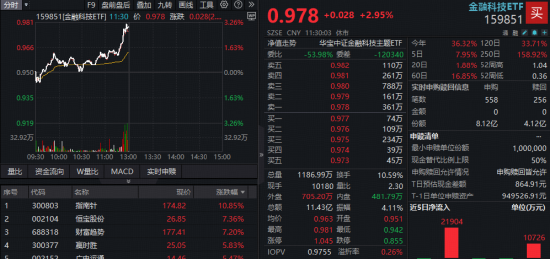
金融科技爆发!指南针暴涨超10%再创历史新高!百亿ETF(159851)放量涨近3%,资金火爆增持
Xin Lang Ji Jin· 2025-09-17 03:55
Group 1 - The core viewpoint of the news is the significant surge in the financial technology sector, with the index rising nearly 3% and many constituent stocks experiencing substantial gains, indicating a strong market interest and investment momentum [1][3]. - The financial technology ETF (159851) saw a near 3% increase in its market price, with a trading volume exceeding 1.1 billion yuan, reflecting robust investor demand and a net subscription of 400 million units [1][3]. - The financial technology sector is currently viewed as having significant investment value due to its low valuation and favorable market conditions, with expectations for continued growth driven by policy support and digital transformation needs in the brokerage industry [3]. Group 2 - The financial technology ETF (159851) has a scale exceeding 10 billion yuan, with an average daily trading volume of over 1.4 billion yuan in the past month, making it the most liquid ETF tracking the same index [3]. - The market environment has seen a consistent trading volume exceeding 1 trillion yuan for 81 consecutive trading days, indicating a strong recovery in the brokerage sector [2][3]. - Analysts suggest focusing on the financial technology ETF and its related funds, as they cover a wide range of themes including internet brokerages, financial IT, cross-border payments, and AI applications, which are expected to benefit from ongoing market reforms [3].

广电运通涨2.04%,成交额2.24亿元,主力资金净流入1221.44万元
Xin Lang Zheng Quan· 2025-09-17 03:28
Core Viewpoint - Guangdian Yuntong's stock price has shown a positive trend with a year-to-date increase of 22.08%, despite a slight decline over the past 20 days [1][2] Financial Performance - For the first half of 2025, Guangdian Yuntong achieved a revenue of 5.275 billion yuan, representing a year-on-year growth of 12.07%, while the net profit attributable to shareholders decreased by 6.49% to 466 million yuan [2] - The company has distributed a total of 4.886 billion yuan in dividends since its A-share listing, with 1.49 billion yuan distributed over the last three years [3] Shareholder Information - As of September 10, 2025, the number of shareholders for Guangdian Yuntong was 104,100, a decrease of 1.47% from the previous period, with an average of 23,849 circulating shares per shareholder, an increase of 1.49% [2] - The top ten circulating shareholders include Hong Kong Central Clearing Limited, which holds 30.426 million shares, a decrease of 19.297 million shares from the previous period [3] Market Activity - On September 17, Guangdian Yuntong's stock rose by 2.04%, reaching 13.99 yuan per share, with a trading volume of 224 million yuan and a turnover rate of 0.66% [1] - The stock has appeared on the "Dragon and Tiger List" once this year, with a net purchase of 190 million yuan on February 26, accounting for 18.58% of total trading volume [1]

蚂蚁集团首批参与跨境二维码统一网关业务试点
Zheng Quan Shi Bao Wang· 2025-09-17 03:22
Core Viewpoint - Ant Group's Alipay and Ant International have become the first institutions to participate in the cross-border QR code unified gateway pilot program, enhancing payment convenience for international travelers in China [1] Group 1: Cross-Border Payment Initiatives - The initiative is guided by the People's Bank of China and the China Payment and Clearing Association [1] - Alipay now supports international bank cards from 7 major brands and 31 e-wallets from 12 countries and regions [1] - Recent additions to supported e-wallets come from Indonesia, Uzbekistan, and Thailand [1] Group 2: Economic and Cultural Impact - The cross-border QR code unified gateway is expected to facilitate new partnerships that will soon be implemented [1] - This initiative aims to enable overseas travelers to use "one wallet to travel across China," promoting tourism and enhancing economic and cultural exchanges [1]
新致软件跌2.02%,成交额5713.84万元,主力资金净流出178.77万元
Xin Lang Cai Jing· 2025-09-17 02:37
Core Viewpoint - New Zhisoft's stock price has shown volatility, with a year-to-date increase of 42.55%, but recent trading indicates a mixed performance in the short term [2]. Group 1: Stock Performance - On September 17, New Zhisoft's stock price fell by 2.02% to 22.85 CNY per share, with a trading volume of 57.14 million CNY and a turnover rate of 0.94% [1]. - Year-to-date, New Zhisoft's stock has increased by 42.55%, with a 6.48% rise over the last five trading days, a 6.08% decline over the last 20 days, and a 7.83% increase over the last 60 days [2]. Group 2: Financial Performance - For the first half of 2025, New Zhisoft reported revenue of 897 million CNY, a year-on-year decrease of 3.40%, while net profit attributable to shareholders was 30.35 million CNY, reflecting a year-on-year increase of 42.84% [3]. - Since its A-share listing, New Zhisoft has distributed a total of 98.88 million CNY in dividends, with 29.71 million CNY distributed over the past three years [4]. Group 3: Shareholder Information - As of July 20, New Zhisoft had 12,600 shareholders, a decrease of 3.34% from the previous period, with an average of 20,899 circulating shares per shareholder, an increase of 3.45% [3]. - As of June 30, 2025, the top ten circulating shareholders included E Fund Supply-side Reform Mixed Fund, which held 2.82 million shares, a decrease of 595,100 shares from the previous period [4]. Group 4: Business Overview - New Zhisoft, established on June 4, 1994, and listed on December 7, 2020, provides IT solutions and services primarily to financial institutions and other industries, with 84.23% of its revenue coming from IT solutions [2]. - The company operates in the computer software development sector, focusing on vertical application software, and is involved in various concept sectors including data rights confirmation and RPA [2].

新华财经早报:9月17日
Xin Hua Cai Jing· 2025-09-17 00:24
Group 1 - The Ministry of Commerce and nine other departments released measures to expand service consumption, proposing 19 initiatives to enhance service quality and promote new consumption models [2][8] - The document emphasizes the development of new consumption scenarios and the support for high-level opening of the service industry, including sectors like telecommunications, healthcare, and education [2][8] - The agricultural sector reported that China's grain production is expected to exceed 1.4 trillion jin in 2024, marking an increase of 74 billion jin compared to 2020, ensuring food security [2][8] Group 2 - Shanghai Construction Group issued a risk warning after three consecutive days of stock price increases, indicating potential market overheating and irrational speculation [7] - China Shenhua reported a 3.1% year-on-year decline in coal sales for August, reflecting challenges in the coal market [7] - Brother Technology anticipates a net profit increase of 207.32% to 253.42% year-on-year for the first three quarters, driven by rising prices of certain vitamin products [7]

CIPS业务覆盖189个国家和地区
Ren Min Ri Bao· 2025-09-16 23:06
本报北京9月16日电(记者吴秋余)中国人民银行副行长陆磊9月16日在第十四届中国支付清算论坛上表 示,经过产业各方不懈努力,支付服务实体经济质效进一步提升,行业治理持续深入,金融基础设施支 撑有力,高水平开放不断推进,现代支付体系建设取得新成效。目前,人民币跨境支付系统(CIPS) 业务覆盖全球189个国家和地区,2025年上半年,共处理业务笔数402.95万笔、业务金额90.19万亿元, 成为人民币国际化的重要支撑。 陆磊介绍,为推动外籍来华人员支付服务便利化工作,今年,人民银行指导支付清算协会和中国银联建 设了跨境二维码统一网关,已于7月底上线试运行,有效解决了"外包内用"多头连接等问题。统一网关 作为跨境支付基础设施,坚持公共性、包容性、普惠性原则,支持符合条件的市场机构接入开展跨境二 维码支付业务。截至9月11日,统一网关办理业务198.1万笔,金额4.27亿元。同时,中国银联、网联清 算公司积极推进与泰国、越南、印尼等多国二维码网络互联,通过双向开放二维码受理网络,推动跨境 支付合作成果更多惠及中外民众。 ...
展示跨境支付实力 赋能全球贸易新生态
Sou Hu Cai Jing· 2025-09-16 13:59
Core Viewpoint - Newland Technology Group showcased its cross-border payment capabilities at the 25th China International Investment and Trade Fair, emphasizing its role in empowering a new ecosystem for global trade [1][3]. Group 1: Event Overview - The 25th China International Investment and Trade Fair took place from September 8 to 11 in Xiamen, attracting representatives from over 120 countries and regions, along with 11 international organizations [1]. - The theme of the fair was "Join Hands with China, Invest in the Future," making it a significant platform for showcasing cutting-edge technology, discussing industry trends, and promoting international cooperation [1]. Group 2: Company Innovations - Newland Technology Group presented a series of innovative technology products and smart scene solutions, particularly in cross-border and foreign card payment sectors, highlighting its leading position in digital commerce and global layout [3]. - The company has obtained the U.S. Money Services Business (MSB) license and launched a one-stop cross-border payment solution, focusing on the needs of outbound merchants and providing multi-currency B2B payment services [3]. Group 3: Product Developments - Newland's subsidiary, Guotong Xingyi Network Technology Co., Ltd., has enhanced terminal products, including the T9 smart terminal, which processes mainstream foreign card transactions quickly and addresses power outage issues [5]. - The non-contact scanning box redefines the "Card Code PAY" payment method, improving user experience by enabling instant payment and reducing transaction time, thus addressing pain points in traditional foreign card payments [5]. Group 4: Strategic Goals - Newland aims to leverage the investment fair to deepen its engagement in the digital commerce sector, expand its international vision and cooperation network, and drive the globalization of its product and service offerings [5].