业绩对赌

Search documents
收购小西牛、欲补强牦牛酸奶,光明乳业“豪赌”
Bei Jing Shang Bao· 2025-11-30 12:33
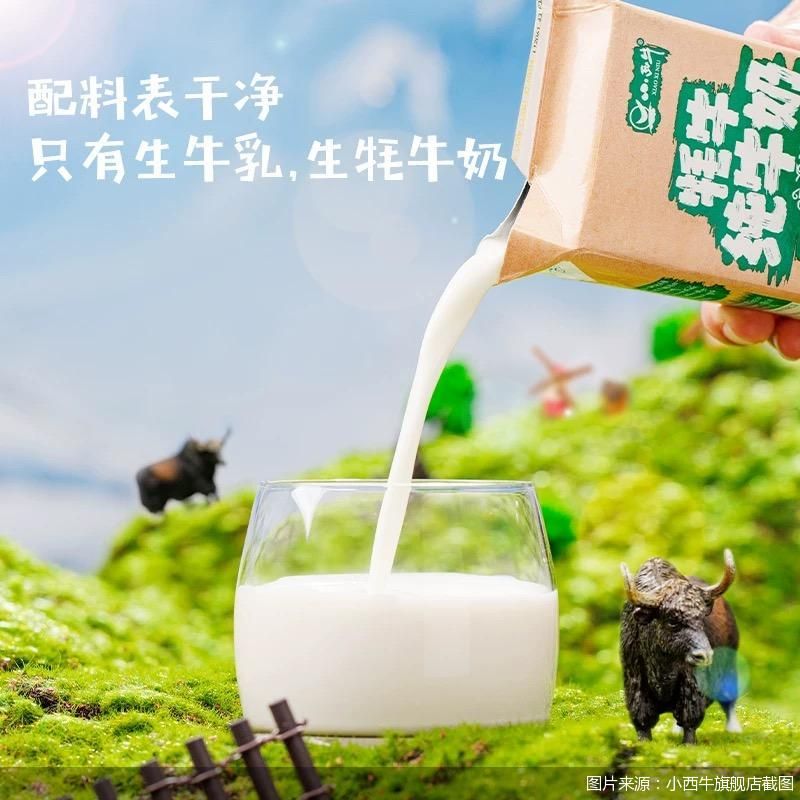
Core Viewpoint - Recently, Bright Dairy announced plans to acquire a 40% stake in Xiaoxi Niu Company from Huzhou Fuxin for 500 million yuan, bringing the total investment in Xiaoxi Niu to over 1.1 billion yuan, aiming for full ownership. However, challenges remain in promoting high-end yak yogurt due to production and transportation constraints [1][6]. Group 1: Acquisition Details - The acquisition follows a previous purchase of a 60% stake in Xiaoxi Niu in 2021, with the total expenditure exceeding 1.1 billion yuan [1]. - The acquisition is characterized as a premium purchase, with the agreed transfer price of 500 million yuan being 1.22 billion yuan lower than the initially stipulated amount in the share transfer agreement [4]. - Xiaoxi Niu's total equity value was assessed at 1.08 billion yuan, with a performance commitment period from 2022 to 2024, during which the average net profit was expected to exceed 72.19 million yuan [4][5]. Group 2: Financial Performance - Xiaoxi Niu's net profits for 2022, 2023, and 2024 were approximately 87.19 million yuan, 79.23 million yuan, and 103.72 million yuan, respectively, achieving a cumulative completion rate of 93.32% [4]. - The performance compensation amount is approximately 32.43 million yuan, which will be used to offset the payment for the 40% stake acquisition [4]. Group 3: Strategic Implications - The acquisition is expected to enhance Bright Dairy's milk source layout, production capacity, and market presence in the western region of China, improving self-sufficiency in high-quality milk sources [5]. - Xiaoxi Niu specializes in dairy products with unique characteristics from the Qinghai-Tibet Plateau, which could complement Bright Dairy's product offerings, particularly in high-end yogurt [5]. - The company aims to leverage Xiaoxi Niu's yak resources to produce high-quality yogurt, although challenges related to production volume and transportation costs may arise [6].


股价“提前”涨停?国晟科技收购案引监管问询
Shen Zhen Shang Bao· 2025-11-26 04:22
Core Viewpoint - Guosheng Technology announced plans to acquire 100% equity of Tongling Fuyue Technology Co., Ltd. for approximately 241 million yuan, raising regulatory concerns regarding the fairness of the transaction and the company's stock price volatility [1][4]. Group 1: Transaction Details - The acquisition involves Guosheng Technology, Tongling Zhenghao Technology Co., Ltd., and Lin Qin, with a total transaction value of 241 million yuan [1]. - Fuyue Technology, established in June 2024, specializes in high-precision new lithium battery shell materials, primarily serving new energy battery manufacturers [2]. - The valuation of Fuyue Technology was based on the income approach, with an estimated equity value of approximately 241 million yuan and a valuation increase of about 222 million yuan, resulting in a valuation rate of 1167.27% [3][4]. Group 2: Regulatory Scrutiny - The Shanghai Stock Exchange has requested Guosheng Technology to disclose the main parameters used in the income approach valuation and the rationale behind them, as well as any potential relationships between the transaction parties and the company's management [4][5]. - Guosheng Technology is required to provide details on the acquisition process, including key milestones and personnel involved, and to ensure compliance with insider information management [5]. Group 3: Performance and Financial Impact - Fuyue Technology reported revenues of 5.09 million yuan in 2024 and 74.83 million yuan from January to August 2025, with a net profit of 1.01 million yuan during the latter period [3]. - The transaction includes performance guarantees, with commitments for annual net profits of 20 million yuan, 30 million yuan, and 40 million yuan from 2026 to 2028 [5]. - Guosheng Technology plans to finance part of the acquisition through a merger loan, with cash reserves of 273 million yuan as of September 2025 [5][6]. Group 4: Strategic Intent - The acquisition is part of Guosheng Technology's strategic plan to expand its business and seek new profit growth points, with intentions to integrate Fuyue Technology into its consolidated financial statements [6]. - The company emphasizes that the transaction does not constitute a related party transaction or a major asset restructuring [6].


别硬扛了!融资不是“自己悟”的活,找对陪跑人才能跑通IPO
Sou Hu Cai Jing· 2025-11-19 09:14
Group 1 - Many founders believe they understand financing after reading a few books or attending some courses, but this superficial knowledge can lead to significant pitfalls in the capital game [6][9] - The importance of hiring a financing advisor is emphasized, as they can help navigate the complexities of fundraising and avoid common mistakes [5][14] - Founders often fail to present the financial data and compliance issues that investors care about during pitches, focusing instead on product features and team strengths [7][10] Group 2 - Due diligence is not just about preparing documents; it involves identifying potential issues that could derail financing, such as unclear equity structures or hidden liabilities [9][10] - Advisors can conduct mock due diligence to uncover potential risks and help resolve them before presenting to investors [10][12] - Many founders overlook critical terms in term sheets, which can lead to unfavorable conditions that affect their control and financial outcomes [12][13] Group 3 - A good financing advisor can help founders secure better valuations and more favorable terms by leveraging their industry knowledge and investor connections [15][16] - Advisors can save time for founders by managing the fundraising process, allowing them to focus on business operations [17][18] - Advisors can help avoid hidden pitfalls that may only become apparent after the deal is closed, ensuring that terms are favorable and sustainable [18][19] Group 4 - The right financing advisor should be seen as a long-term partner who understands the industry and can provide ongoing support throughout the fundraising process [20][21] - Key qualities of a good advisor include having extensive capital market resources, understanding the specific industry, and being willing to support the company through multiple funding rounds [21][22][23] - Engaging an advisor early in the process can help set a solid foundation for future fundraising efforts and avoid initial missteps [26][27] Group 5 - Advisors can assist in structuring equity and clarifying business models at the seed or angel round stage, which is crucial for attracting initial investment [27][28] - During A and B rounds, advisors can help overcome growth challenges and connect with strategic investors who can provide both capital and industry resources [29][30] - In the C round or Pre-IPO phase, advisors play a critical role in ensuring compliance and preparing for the listing process, which is essential for successful market entry [31][32]
装修生意不好干?这家装企把50处房产挂出来卖
3 6 Ke· 2025-11-17 03:45
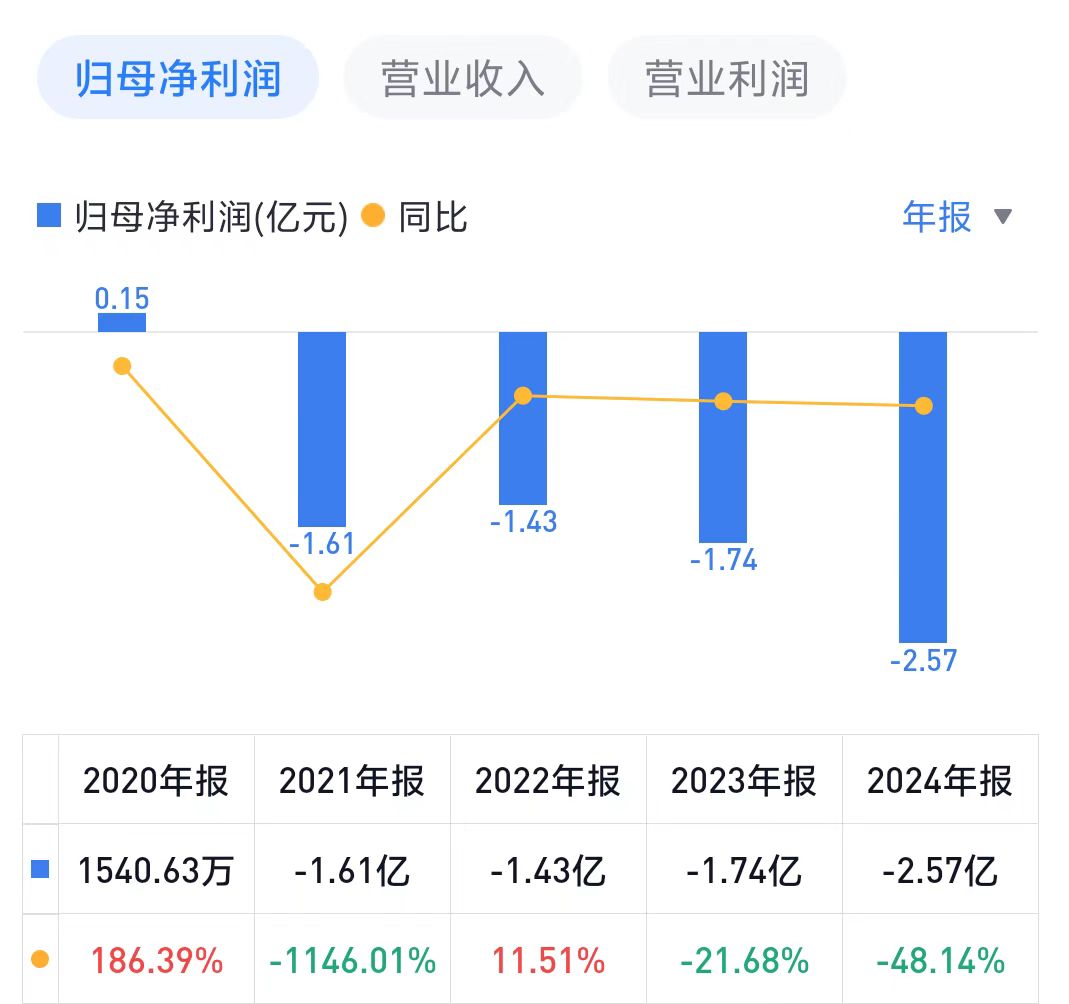
Core Viewpoint - The resignation of two executives from Meizhi Co., Ltd. shortly after the release of the Q3 report raises concerns about the company's governance and performance, especially given the historical context of executive turnover following financial disclosures [1][2]. Executive Changes - Two executives, Li Suhua and Li Bi Jun, were removed from their positions as non-independent directors, with Li Bi Jun being the daughter of Li Suhua, the former actual controller of the company [1]. - The recent resignations follow a pattern of executive changes that have occurred after the release of quarterly reports, indicating potential governance issues within the company [1][2]. Company Background - Meizhi Co., Ltd. was founded in 1984 and initially struggled as a small decoration company, nearly facing bankruptcy before being revitalized by Li Suhua [2]. - In December 2020, Li Suhua transferred 29.99% of his shares to Guangdong Yijian, marking a significant change in control, with Guangdong Yijian becoming the new controlling shareholder [2]. Financial Performance - The company has reported continuous losses from 2021 to 2024, with net profits of -161 million, -143 million, -174 million, and -257 million yuan respectively [6]. - In the first half of 2023, revenue and net profit both declined significantly, with revenue dropping by 66.47% to approximately 123 million yuan and net profit loss of 34.76 million yuan, a 55.25% decrease year-on-year [6][12]. Legal Issues - Li Suhua is currently involved in a legal dispute with Guangdong Yijian regarding performance guarantees related to the company's financial results from 2021 to 2023, with a compensation amounting to approximately 348 million yuan [7][8]. - The ongoing litigation is in the second-instance stage, indicating unresolved issues that could impact the company's financial stability [8]. Business Operations - Meizhi Co., Ltd. focuses on decoration and renovation, with its main business segments including public building decoration and residential renovation [10]. - In the first half of 2023, the decoration segment accounted for 53.35% of total revenue, while construction engineering decoration contributed 42.54% [11][12]. Asset Management - To improve liquidity and focus on core business operations, the company announced plans to sell 50 properties with a total area of 3,097.90 square meters, with a minimum valuation of approximately 39.31 million yuan [10]. Financial Ratios - The company's debt-to-asset ratio has been increasing, reaching 95.05% in the first half of 2023, indicating a concerning level of financial leverage [12].

干货分享丨关于【股权投资】必知必懂的基础知识点
Sou Hu Cai Jing· 2025-11-13 09:20
Group 1 - Equity investment refers to acquiring shares of a company, aiming for significant economic benefits through investments in both listed and unlisted companies [1] - Equity investment can occur at various stages of a company's lifecycle, including startup, growth, and expansion phases, with different investor focuses at each stage [1] - Private equity funds primarily invest in unlisted companies, aiming to recover investment returns through future public offerings or acquisitions [2] Group 2 - The profit points of private equity mainly arise from the price differences between the primary and secondary markets, with a strong influence from the IPO market [3] - Angel investments typically target very early-stage companies, often with minimal funding requirements, and investors usually acquire 10% to 30% equity [4] - Venture capital is suited for companies in early stages of development, where initial funding is insufficient for significant growth [5] Group 3 - Investment banks assist companies with public offerings, restructuring, mergers, and acquisitions, earning fees from successful financing [6] - M&A encompasses both mergers and acquisitions, with subtle differences in their definitions and implications [7][10] - M&A funds are more common in mature markets and focus on established companies, contrasting with angel and venture capital funds that target startups [11] Group 4 - Fund of Funds (FOF) is a type of investment strategy that invests in other funds rather than direct assets, distinguishing it from traditional funds [12] - The investment threshold for private equity funds varies, with common minimums of 3 million to 10 million depending on the fund size [22] - Private equity funds typically have a long duration of 5 to 8 years, divided into investment, exit, and extension periods [22] Group 5 - The valuation of a company is crucial in private equity transactions, determining the financing amount and investor equity stake [25] - Valuation methods include the price-to-earnings ratio and comparative analysis with similar companies in the industry [26] - Investment protection mechanisms, such as board veto rights, are essential for safeguarding private equity investors' interests [27]
1万亿美元的工资?马斯克“万亿美元薪酬方案”获批,但条件吓死个人了
Sou Hu Cai Jing· 2025-11-08 12:14
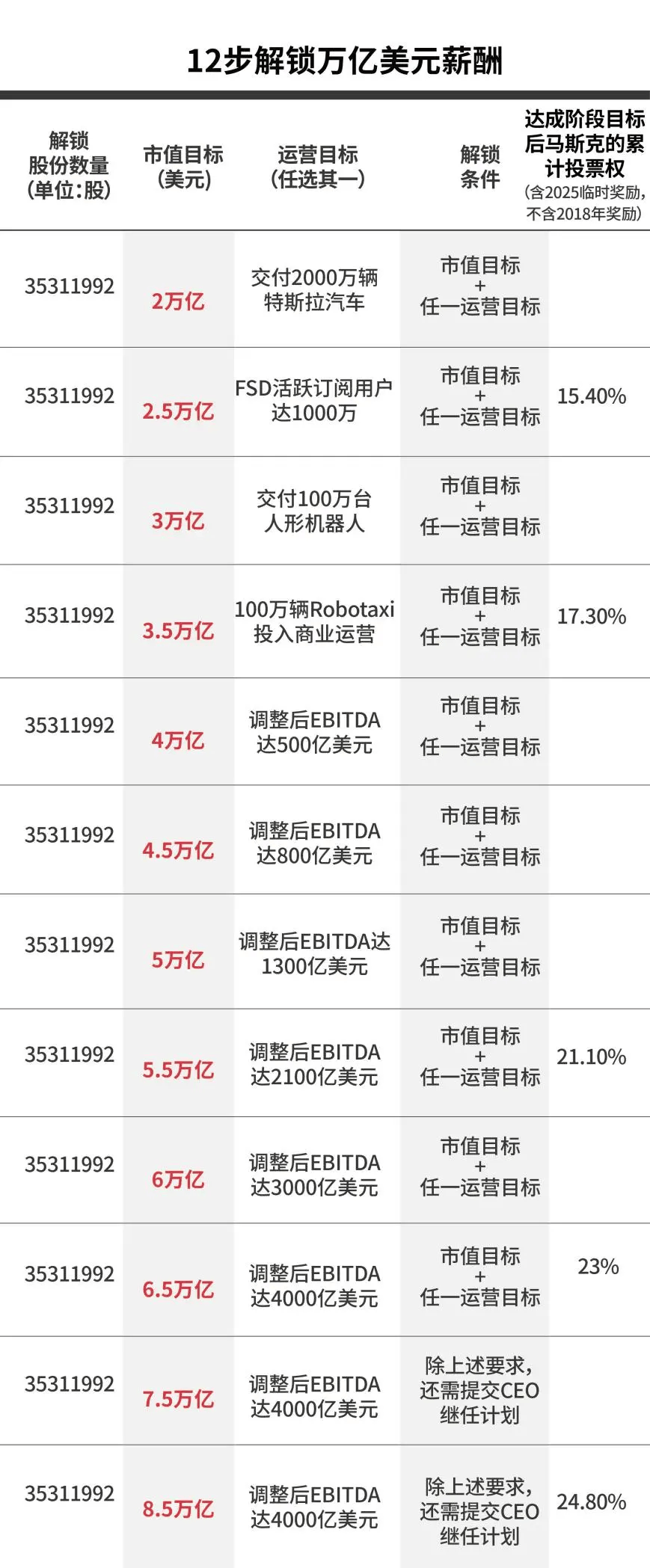
Core Viewpoint - Tesla shareholders approved Elon Musk's $1 trillion compensation plan with over 75% support, paving the way for Musk to potentially become the world's first trillionaire [1][2] Compensation Plan Details - The compensation plan includes a ten-year performance-based agreement where Musk can earn up to 423.7 million restricted stock units, representing approximately 12% of the company's adjusted total shares [3][5] - The plan is structured around 12 performance milestones that must be achieved, divided into market capitalization thresholds and operational milestones [3][7] Market Capitalization Goals - The first phase requires Tesla's market capitalization to increase from approximately $1.5 trillion to $2 trillion, with subsequent phases increasing by $500 billion until reaching $8.5 trillion [6][9] - Achieving the final market cap of $8.5 trillion represents a 470% increase from the current valuation, necessitating a compound annual growth rate of 19% [7][9] Operational Milestones - Operational targets include delivering 20 million Tesla vehicles, achieving 10 million active Full Self-Driving (FSD) subscriptions, delivering 1 million humanoid robots, and deploying 1 million Robotaxis into commercial operation [6][7] - The plan also stipulates that Tesla's annual adjusted EBITDA must reach $400 billion, with specific quarterly performance requirements for the last three targets [7][9] Shareholder Sentiment - The approval of the compensation plan reflects a divided sentiment among retail investors, with some viewing it as a necessary recognition of Musk's contributions to Tesla's success [3][4] - A personal investor indicated that their decision to hold shares is directly tied to Musk's continued leadership, emphasizing the importance of his role in Tesla's future [4]

决定特斯拉命运的投票!马斯克“万亿美元薪酬方案”引股东论战,散户喊“他离职我清仓”,有机构斥其“为权力付费”
Mei Ri Jing Ji Xin Wen· 2025-11-06 11:32
Core Viewpoint - The focus of Tesla's annual shareholder meeting is a controversial compensation plan for Elon Musk, potentially worth up to $1 trillion in stock incentives, facing significant opposition from institutional investors and some retail shareholders [1][2][4]. Institutional Investor Opposition - Norges Bank Investment Management, the world's largest sovereign wealth fund, has publicly stated its opposition to Musk's compensation plan, citing concerns over its scale, dilution risk, and reliance on key personnel [2]. - Calpers, the largest public pension fund in the U.S., also criticized the plan for being excessively high compared to peers and for concentrating power [2]. - Thomas DiNapoli, New York State Comptroller, labeled the proposal as "paying for power rather than performance" and urged shareholders to oppose the re-election of all directors seeking reappointment [4]. Retail Investor Sentiment - Retail investors are divided; some view the compensation plan as essential for retaining Musk, while others express strong discontent, linking their investment decisions to Musk's actions and statements [5][6]. - A retail investor holding 4,000 shares indicated that Musk's departure would lead to a complete sell-off of their holdings, emphasizing Musk's critical role in Tesla's success [5]. - Conversely, another long-term investor criticized Musk's behavior, arguing it has damaged Tesla's reputation and sales potential, advocating for a change in leadership [6]. Board and Musk's Defense - Tesla's board has launched a public relations campaign to support Musk's compensation plan, emphasizing his irreplaceable role in the company's future [7]. - Musk has personally engaged in defending the proposal, labeling critics as "corporate terrorists" and suggesting that the vote outcome could impact the future of civilization [9]. - Despite significant opposition from major institutional investors, market predictions indicate a high probability (96%) of the proposal's approval [9][11]. Compensation Plan Details - The compensation plan involves granting Musk up to 423.7 million restricted stock units, contingent on achieving specific market capitalization and operational milestones over a ten-year period [16][21]. - The first milestone requires Tesla's market value to increase from approximately $1.5 trillion to $2 trillion, with subsequent phases increasing the target by $500 billion, ultimately aiming for $8.5 trillion [21][22]. - Operational goals include delivering 20 million vehicles, achieving 10 million active FSD subscriptions, and launching 1 million Robotaxi units into commercial operation [23].

贝特电子主动叫停交易,扬杰科技22亿并购“闪电”终止
Guo Ji Jin Rong Bao· 2025-10-24 13:24
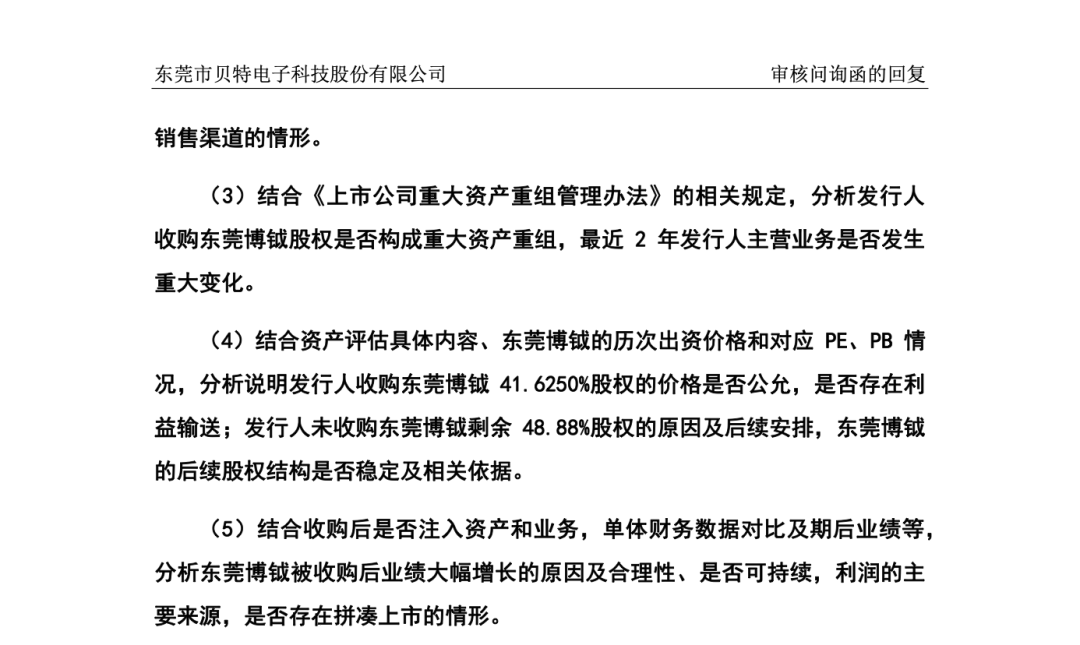
Core Viewpoint - The acquisition of Dongguan Better Electronics Technology Co., Ltd. by Yangzhou Yangjie Electronic Technology Co., Ltd. has been terminated due to differences in business types, management styles, and corporate cultures between the two companies, as well as disagreements on future operational philosophies [1][2]. Group 1: Acquisition Details - The acquisition was initially valued at a significant premium, with an assessment value increase of 282.89% and a total cash offer of 2.218 billion yuan for 100% equity [1][9]. - The deal included strict performance-based clauses, requiring Better Electronics to achieve a combined net profit of no less than 555 million yuan from 2025 to 2027, with potential penalties of up to 1.108 billion yuan if targets were not met [9][10]. - Yangjie Technology's board agreed not to claim any breach of contract from Better Electronics, as no payment had been made and no shares had been transferred, thus avoiding any financial loss [3][2]. Group 2: Company Background - Better Electronics, established in 2003, specializes in high-end electronic and power circuit protection components, with products widely used in home appliances, new energy vehicles, and other sectors [3][4]. - Yangjie Technology, founded in 2006 and listed on the Growth Enterprise Market in 2014, reported a revenue of 5.348 billion yuan for the first nine months of 2025, a year-on-year increase of 20.89%, and a net profit of 974 million yuan, up 45.51% [9][10]. - The acquisition was part of Yangjie Technology's strategy to expand its business portfolio, but the termination reflects challenges in aligning corporate cultures and operational strategies [2][4].

探路者前三季扣非最高预降72.59% 拟定增19.3亿补流却拿8亿闲置资金理财
Chang Jiang Shang Bao· 2025-10-19 23:33
Core Viewpoint - The company, Tanshan (探路者), is experiencing a significant decline in performance, with projected net profits for the first three quarters of 2025 expected to drop by 64.62% to 70.51% compared to the previous year, primarily due to poor sales in its outdoor business and losses in its chip business [1][3]. Financial Performance - The projected net profit for the first three quarters of 2025 is estimated to be between 30 million to 36 million yuan, while the non-recurring net profit is expected to be between 25 million to 29 million yuan, reflecting a decline of 64.62% to 70.51% and 68.20% to 72.59% respectively compared to the same period last year [1][3]. - For the first half of 2025, the company reported revenue of 653 million yuan, a year-on-year decrease of 7.82%, with net profit dropping by 76.50% to approximately 20 million yuan [7]. Business Segments - The outdoor business segment generated revenue of 538 million yuan in the first half of 2025, down 10.51% year-on-year, with all three core product categories (outdoor apparel, footwear, and equipment) experiencing significant declines in sales [7]. - The chip business, while showing overall positive development, has been negatively impacted by exchange rate fluctuations, leading to losses that have affected overall performance [3][4]. Acquisition and Performance Issues - Tanshan's acquisition of Beijing Xinneng Electronics Technology Co., Ltd. has not met performance commitments, with the acquired company reporting cumulative losses of 176 million yuan from 2022 to 2024, failing to achieve promised profit targets [2][5]. - The acquisition was part of a cross-industry strategy, but the chip business has faced challenges due to macroeconomic conditions and a slowdown in the global consumer electronics market [5]. Management and Shareholder Actions - The company's founder is reportedly accelerating cashing out, with significant share reductions noted, including a recent decrease in holdings from 5.17% to 4.99% [8][9]. - Since 2020, the founders have reportedly cashed out over 1.4 billion yuan, indicating a trend of divestment from the company [10]. Financial Strategy - Tanshan plans to utilize up to 800 million yuan of idle funds for low-risk financial products, despite having sufficient liquidity with cash and financial assets totaling over 8.27 billion yuan [2][10].

康华生物前三季度净利润腰斩,产品单一与业绩对赌压力凸显 |看财报
Tai Mei Ti A P P· 2025-10-17 12:13
Core Viewpoint - Kanghua Biotech reported a significant decline in performance for the first three quarters of 2025, with revenue dropping by 20.78% year-on-year to 840 million yuan and net profit falling by 53.41% to 189 million yuan, amid a cooling vaccine industry and ongoing challenges related to product structure and performance commitments following a change in control [2][3][4]. Financial Performance - For the first three quarters of 2025, Kanghua Biotech's revenue was 840 million yuan, a year-on-year decrease of 20.78%, while net profit was 189 million yuan, down 53.41% [2]. - Excluding last year's one-time revenue from overseas licensing of the six-valent norovirus vaccine (106 million yuan), revenue decreased by 11.96%, with non-immunization vaccine sales also down by 11.97% [3]. - The net cash flow from operating activities fell by 39.22% due to reduced sales collections and overseas licensing income [3]. Product Challenges - Kanghua Biotech's reliance on a single product, the human diploid cell rabies vaccine, has led to significant revenue pressure, with this product accounting for over 97% of total revenue in 2024 [4]. - The batch issuance volume of the rabies vaccine is expected to drop by 43.83% year-on-year in 2024, with sales revenue further declining by 23.79% in the first half of 2025 [4]. - The vaccine industry is facing a "demand gap," with major domestic vaccine companies experiencing substantial declines in performance, impacting Kanghua Biotech as well [4]. Competitive Landscape - The vaccine market is becoming increasingly competitive, with three companies conducting clinical trials and two having submitted applications for market approval, which may adversely affect Kanghua Biotech's market share and pricing [4][5]. - Despite efforts to revive the ACYW135 meningococcal polysaccharide vaccine, the company struggles to fill the revenue gap left by its core product [5]. Control Change and Performance Commitments - In July 2023, Kanghua Biotech underwent a change in control, transferring 21.91% of shares to Shanghai Wankexin Biotech, which now holds 29.99% voting rights [6]. - The new control structure comes with performance commitments requiring a total net profit of no less than 728 million yuan from 2025 to 2026, which poses significant pressure given the current performance levels [6]. Strategic Response - Kanghua Biotech aims to stabilize its existing business in the short term, rely on new products in the medium term, and pursue mergers and acquisitions in the long term [7]. - The company has six vaccines in the research pipeline, but only the six-valent norovirus vaccine is expected to enter clinical trials by the end of 2024, limiting immediate revenue contributions [7].