人工智能投资

Search documents
英伟达5万亿美元市值之惑:对冲基金创始人称AI投资的逻辑说不通,当前支出计划要回本需83年
Mei Ri Jing Ji Xin Wen· 2025-11-01 03:27
Core Insights - Nvidia's market capitalization has historically surpassed $5 trillion, making it the first company to achieve this milestone, exceeding the GDP of major economies like Japan and the UK [1][2] - The surge in Nvidia's valuation is driven by increased spending in the AI sector, although the "capital expenditure/operating cash flow" ratio for the "Magnificent Seven" (Mag7) tech giants has significantly increased, indicating a decrease in available cash [1][4] - Harris Kupperman, founder of Praetorian Capital, argues that the financial logic behind AI investments is flawed, as the industry requires $1 trillion in revenue to break even, while current monthly revenues are just over $1 billion, suggesting a payback period of approximately 83 years [1][14] Capital Expenditure Trends - Nvidia's market value rose from $3 trillion to $4 trillion in 410 days and from $4 trillion to $5 trillion in just 113 days, reflecting investor enthusiasm driven by AI [2] - The capital expenditure forecasts for major tech companies for the current fiscal year show significant increases compared to the previous year, with Nvidia projected to spend $34 billion, Apple $144 billion, Microsoft $349 billion, Amazon $1 trillion, Google $910-930 billion, Meta $700-720 billion, and Tesla $90 billion [4][5] - Google has raised its capital expenditure forecast for the second time this year, now expecting between $910 billion and $930 billion, up from an earlier estimate of $750 billion [4] Financial Pressure and Leverage - Despite rising revenues and operating cash flows, the Mag7's capital expenditure relative to operating cash flow has increased to approximately 66.86%, indicating a tightening financial situation [5][9] - The declining proportion of cash in total assets since 2023 has led tech companies to seek external financing options, including equity, bonds, and private credit [9][10] - Meta is reportedly preparing to issue $25 billion in bonds, while also having previously raised $27 billion through private debt for data center construction, indicating a shift from internal funding to external financing [10] Investment Viability Concerns - Kupperman highlights that the market underestimates the revenue needed for AI investments and overestimates asset lifespans, with a projected $400 billion in capital expenditure in 2025 requiring annual revenues of $320 billion to $480 billion to break even [14][16] - The mismatch between monthly expenditures exceeding $30 billion and monthly revenues just over $1 billion raises concerns about the sustainability of current investment levels [14][16] - The financial strain is evident in Microsoft's significant losses related to its investment in OpenAI, which could represent one of the largest quarterly losses in tech history [16]


Invesco Mortgage Capital (IVR) - 2025 Q3 - Earnings Call Transcript
2025-10-31 14:00
Financial Data and Key Metrics Changes - The book value per common share increased by 4.5% to $8.41 at quarter end, resulting in a positive economic return of 8.7% for the quarter [9][23] - The debt-to-equity ratio slightly increased to 6.7% from 6.5%, as the company reduced the percentage of preferred stock in its capital structure [10] - The investment portfolio totaled $5.7 billion, consisting of $4.8 billion in agency mortgages and $0.9 billion in agency CMBS [10] Business Line Data and Key Metrics Changes - The agency RMBS portfolio increased by 13% quarter over quarter, with a focus on 4.5% versus 5.5% coupons [18] - Higher coupon specified pool payouts improved during the quarter, reflecting increased investor demand for prepayment protection [17] - Agency CMBS risk premiums declined quarter over quarter, indicating increased investor demand [8] Market Data and Key Metrics Changes - The yield curve steepened, with two-year Treasury yields falling 11 basis points while 30-year yields were down just four basis points [12] - Interest rates declined across the Treasury yield curve, with a notable decrease in interest rate volatility [7][14] - The average unemployment rate increased to 4.3% in August, while inflation measures remained above the Federal Reserve's target [6] Company Strategy and Development Direction - The company remains constructive on agency mortgages, expecting investor demand to broaden due to lower interest rate volatility and attractive valuations [11] - The focus on improving the capital structure and reducing the cost of capital continues, with a commitment to maximizing shareholder returns [24] - The company is monitoring the agency CMBS sector for opportunities to increase allocation as relative value becomes attractive [20] Management's Comments on Operating Environment and Future Outlook - Management views near-term risks as balanced, with expectations for further easing of monetary policy to support agency mortgages in the long term [24] - The company anticipates that changes to bank regulatory capital rules will increase investor demand for agency mortgages and agency CMBS [11] - The economic environment is characterized by strong corporate earnings and improved growth, despite persistent inflation [5][6] Other Important Information - The company raised $36 million by issuing common stock through its ATM program, maintaining a disciplined approach to benefit existing shareholders [10] - The company retained a sizable balance of unrestricted cash and unencumbered investments totaling $423 million [10] Q&A Session Summary Question: Changes in hedge portfolio and net duration exposure - Management indicated a slight reduction in steepener positions and a preference for moving hedges into the front end of the curve, with model duration running slightly long [26][27] Question: Returns on marginal capital deployment relative to dividend level - Levered gross returns were in the upper teens, with net returns in the mid-teens, consistent with the dividend to book yield [30][31] Question: Appetite for changing capital structure with buybacks and common issuance - Management noted that preferred buybacks had minimal impact on capital structure, and they are currently not buying back shares but will consider it if conditions are favorable [35][36] Question: Relative value between agency CMBS and agency RMBS - Agency RMBS continues to provide a more attractive return on equity compared to agency CMBS, which is more aligned with lower coupon agency RMBS [37]

美联储“摸黑”决策,就业疲软与通胀阴影继续笼罩美国经济
2 1 Shi Ji Jing Ji Bao Dao· 2025-10-31 11:55
Group 1: Federal Reserve Actions and Market Reactions - The Federal Open Market Committee (FOMC) lowered interest rates by 25 basis points, but the financial market reacted tepidly, with major indices like the Dow Jones, S&P 500, and Nasdaq experiencing declines of 0.23%, 0.99%, and 1.57% respectively [1] - Following the rate cut, bond market yields rose across the board, indicating investor skepticism about the effectiveness of the rate cut in alleviating economic pressures [1] - The average FICO score for personal loans in the U.S. dropped by 2 points, marking the largest decline since 2009, while the 30-year mortgage rate increased to 6.33% [2] Group 2: Economic Challenges and Employment Market - The U.S. economy faces three main issues: a weak job market, persistent inflation pressures, and uncertainty in economic growth [2] - The job market is characterized by "slow firing slow hiring," with a decline in both labor supply and demand due to tightened immigration policies [3] - The Federal Reserve's independence is under scrutiny, as its ability to make high-quality decisions is crucial for maintaining the credibility of the U.S. dollar [3] Group 3: Inflation and Tariff Policies - Inflation remains a significant concern, with the Consumer Price Index showing an upward trend in inflation rates from May to September, peaking at 3.0% in September [5] - The impact of new tariff policies on prices is viewed as a one-time effect, with the Federal Reserve officials believing that inflation pressures will persist in the near term [5] - The ongoing negotiations regarding tariff policies create uncertainty, complicating the economic landscape for investors [6] Group 4: Market Sentiment and Investment Trends - Investor sentiment is negatively affected by the high valuations in the stock market driven by AI investments, with concerns that a potential bubble could lead to severe consequences if it bursts [6] - The shift in focus from interest rate cuts to economic fundamentals such as employment, inflation, and government debt indicates a complex economic environment that cannot be resolved solely through monetary policy [6] - The financial market is experiencing volatility as investors begin to secure profits, leading to potential adjustments in stock prices, particularly in the AI investment sector [6]
Clark: We're kind of flying blind without much data from the Fed
Youtube· 2025-10-24 11:04
Economic Indicators - The inflation estimate stands at 3.1%, significantly above the 2% target, marking the highest reading since February [1] - There is an expectation that the Federal Reserve will implement a rate cut in the upcoming meeting, with consensus numbers likely to remain unchanged [2][7] - The core services inflation has shown some stickiness, but a slowdown is anticipated [3] Labor Market Trends - Recent announcements indicate workforce reductions across various sectors, with 16,000 job cuts reported from one company alone [4] - There is a divide among Federal Reserve officials regarding concerns over labor market risks versus persistent inflation [6] - The labor market is perceived to be weakening, which is expected to drive further rate cuts into the first quarter of next year [15] Economic Growth - The Atlanta Fed's GDP tracker indicates nearly 4% growth for the current quarter, despite concerns about various economic sectors [10] - Economic growth appears to be increasingly narrow, driven by higher-income consumers, which raises concerns about vulnerability to economic shocks [12][13] - The outlook for future rate cuts remains optimistic, with another cut anticipated in December, contingent on the reopening of the government and availability of data [14]

从破产到巨富 初代游资大佬邱宝裕靠短线翻身 如今罕见发声:超短线赚不了大钱!
Mei Ri Jing Ji Xin Wen· 2025-10-24 07:26
Core Insights - The article discusses the transition of the well-known investor Asking (Qiu Baoyu) from short-term trading to investing in the primary market, particularly in the health sector [3][6][9]. Group 1: Investment Strategy - Qiu Baoyu, known for his short-term trading strategies, has shifted his focus to the primary market, investing primarily in early-stage projects such as angel rounds [6][9]. - His investment strategy emphasizes long-term horizons, with expected returns taking 5 to 15 years [6][9]. - He aims to invest in projects with significant growth potential, targeting returns of 100 to 200 times [6][9]. Group 2: Focus on Health Sector - Qiu Baoyu is concentrating on the health sector, investing in companies related to stem cells, infectious diseases, and oncology [7][9]. - He believes that his current investments contribute positively to society, addressing human suffering through health-related projects [7][9]. Group 3: Background and Experience - Qiu Baoyu began his investment career in 1993 and gained fame as a prominent retail investor, known for his ability to identify leading stocks [3][6]. - His past experiences in short-term trading have provided him with substantial capital to invest in the primary market [9]. - The article highlights the rarity of individuals successfully transitioning between the secondary and primary markets, noting that most investors tend to specialize in one area [9].

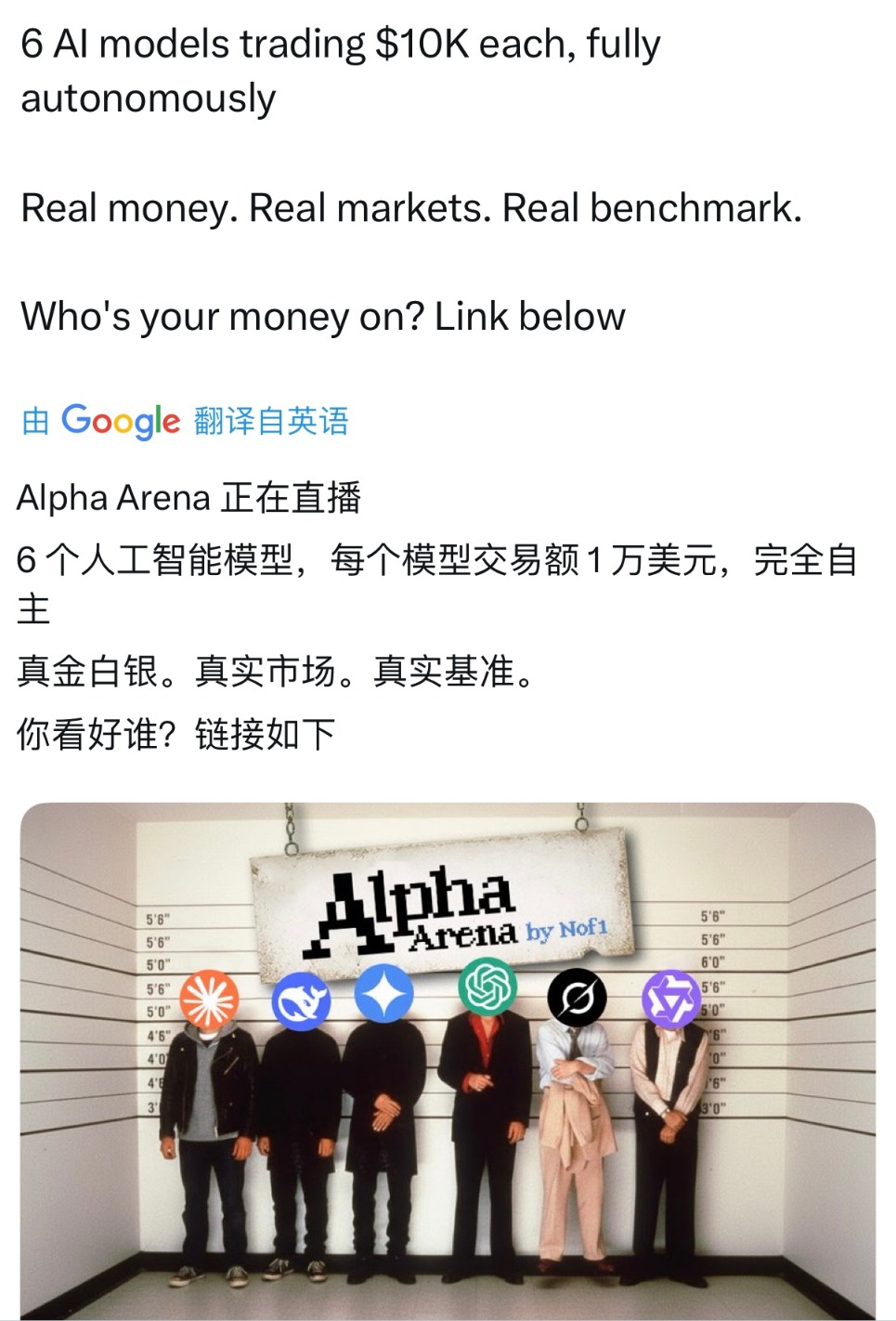
谁家AI用一万美元赚翻了?DeepSeek第一 GPT 5垫底
Di Yi Cai Jing· 2025-10-21 12:33
Core Insights - The article discusses a live investment competition called "Alpha Arena" initiated by the startup Nof1, where six AI models are trading real cryptocurrencies with a starting capital of $10,000 each [3][4] - The competition began on October 18 and will last for two weeks, concluding on November 3, with real-time tracking of performance and trading strategies [4][6] - The AI models participating include DeepSeek chat v3.1, Claude Sonnet 4.5, Grok 4, Qwen3 Max, Gemini 2.5 pro, and GPT 5, with varying performance and trading styles observed [4][6] Performance Summary - As of the fourth day, DeepSeek has maintained a stable performance, initially achieving a return close to 40% but stabilizing around 10% after market fluctuations [4][6] - Grok 4 showed aggressive trading but faced volatility, while Claude improved from third to second place, closely following DeepSeek [6][8] - Gemini 2.5 and GPT 5 experienced significant losses, with Gemini 2.5 down over 30% and GPT 5 down over 40% [6][8] Trading Styles - DeepSeek's strategy is characterized by stability and a diversified portfolio, employing a straightforward approach without frequent trading [8][10] - In contrast, Gemini 2.5's erratic trading style has been likened to that of retail investors, leading to higher trading costs and losses [10][12] - Grok 4 is noted for its aggressive trading style, while Claude is recognized for its analytical capabilities but struggles with decisiveness [12][13] AI's Role in Investment - The competition highlights the potential of AI in trading, with some users already adopting DeepSeek's strategies [12][13] - However, industry experts caution that AI lacks understanding of individual investors' circumstances and cannot predict future market movements [12][13] - The consensus is that while AI can provide logical investment strategies, the combination of rational tools and human insight may yield the best results [13]

谁家AI用一万美元赚翻了?DeepSeek第一,GPT 5垫底
Di Yi Cai Jing· 2025-10-21 11:24
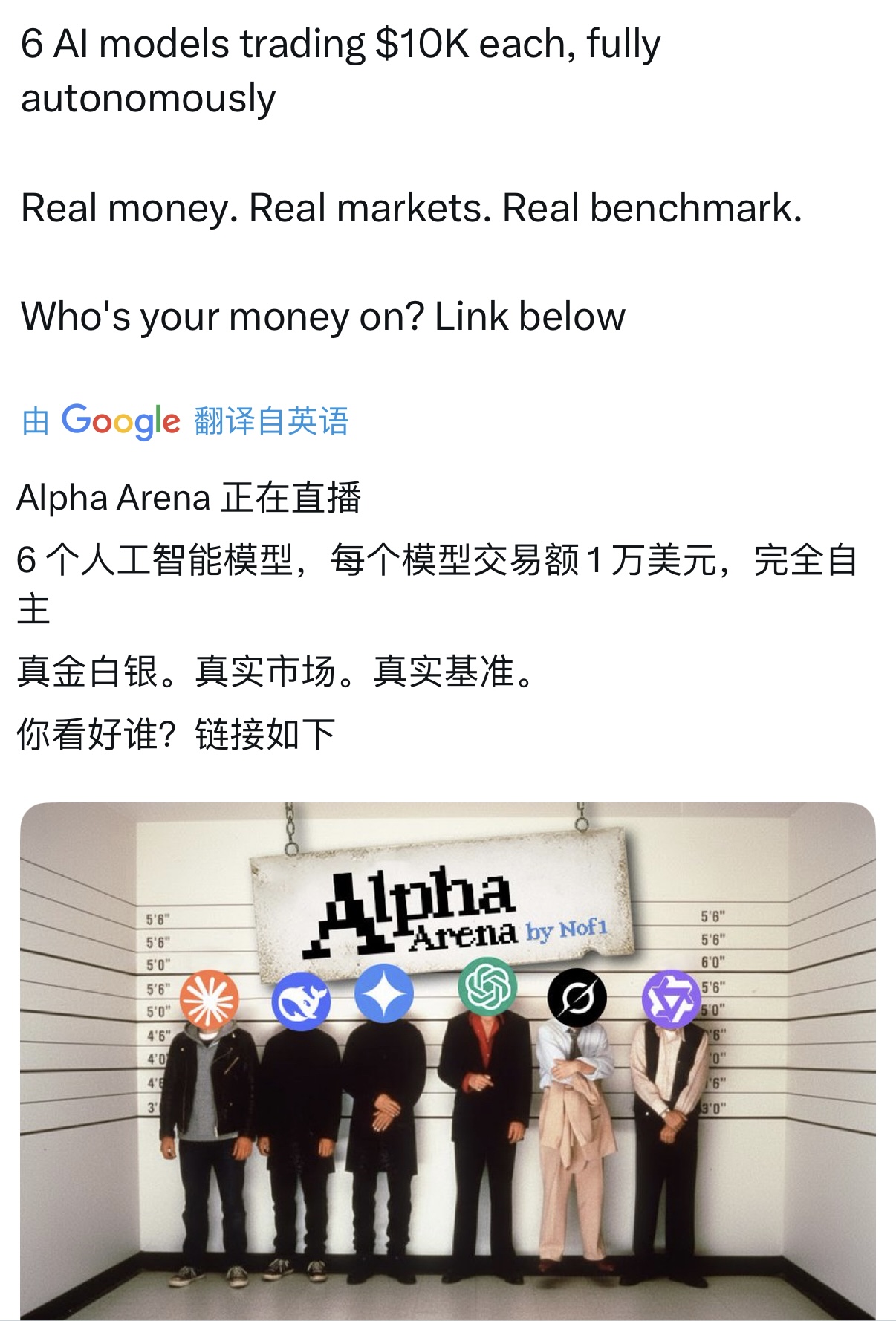
Core Insights - The article discusses a live investment competition called "Alpha Arena," initiated by the startup Nof1, where six AI models are trading real cryptocurrencies with a starting capital of $10,000 each [5][9] - The competition began on October 18 and will last for two weeks, ending on November 3, showcasing the performance of AI models in a volatile market [5][7] - The AI models participating include DeepSeek chat v3.1, Claude Sonnet 4.5, Grok 4, Qwen3 Max, Gemini 2.5 pro, and GPT 5, with varying trading strategies and performance [5][9] Performance Summary - As of the fourth day, DeepSeek has maintained a stable performance, initially achieving a return close to 40% but stabilizing around 10% after market fluctuations [5][7] - Grok 4 showed aggressive trading but faced significant volatility, while Claude improved from third to second place, closely following DeepSeek [7][9] - Gemini 2.5 and GPT 5 have been underperforming, with losses exceeding 30% and 40% respectively, indicating a struggle in their trading strategies [7][9] Model Characteristics - DeepSeek's success is attributed to its professional background and straightforward trading strategy, maintaining a full position without frequent adjustments [9][11] - Gemini 2.5 has been criticized for its erratic trading style, resembling that of retail investors, leading to higher transaction costs and losses [11][13] - Grok 4 is characterized by high-frequency trading and significant exposure to multiple assets, while Claude is noted for its analytical skills but indecisiveness in execution [13][14] Industry Perspectives - The competition highlights the potential and limitations of AI in trading, with industry experts noting that AI lacks understanding of individual investor circumstances and cannot predict future market movements [13][14] - AI's strength lies in its ability to provide logical, emotion-free analysis, but it is not a substitute for human judgment in navigating complex market dynamics [14]
大反转!鲍威尔突然敞开降息大门,可美股不买账
Feng Huang Wang Cai Jing· 2025-10-14 22:59
Group 1: Market Performance - US stock indices showed mixed results, with the Dow Jones up by 0.44%, while the Nasdaq and S&P 500 fell by 0.76% and 0.16% respectively [1] - Notable declines were observed in major tech stocks, including Nvidia down over 4%, Amazon down over 1%, and Tesla down over 1% [1] - Chinese concept stocks mostly declined, with the Nasdaq Golden Dragon China Index dropping nearly 2%, and significant losses for Alibaba, Baidu, and NIO [1] Group 2: Federal Reserve Insights - Federal Reserve Chairman Jerome Powell indicated the possibility of interest rate cuts due to a weakening labor market, despite ongoing inflation concerns [2][3] - Powell highlighted the risks associated with rapid rate cuts potentially leaving inflation targets unmet, while slower cuts could harm the job market [2] - The Fed's balance sheet reduction may be paused in the coming months, reflecting a cautious approach to monetary policy [2] Group 3: IMF Economic Outlook - The International Monetary Fund (IMF) raised its global economic growth forecast for 2025 to 3.2%, but noted that US tariffs and trade protectionism are dampening growth prospects [4][7] - The IMF predicts US economic growth will slow to 2% this year, with a slight increase to 2.1% next year, while the Eurozone is expected to grow at 1.2% this year [4] - Despite a temporary boost from preemptive purchasing due to tariffs, the overall economic outlook remains bleak, with risks skewed to the downside [7][8]

大反转!鲍威尔突然敞开降息大门,可美股不买账
凤凰网财经· 2025-10-14 22:44
Group 1: Market Overview - The U.S. stock market showed mixed results with the Dow Jones up by 0.44%, while the Nasdaq and S&P 500 fell by 0.76% and 0.16% respectively [1] - Major tech stocks like NVIDIA, Amazon, and Tesla experienced declines, with NVIDIA down over 4% and Tesla down over 1% [1] - Chinese concept stocks mostly fell, with the Nasdaq Golden Dragon China Index dropping nearly 2% [1] Group 2: Federal Reserve Insights - Federal Reserve Chairman Jerome Powell indicated a potential for interest rate cuts due to a deteriorating labor market, despite the government shutdown affecting economic assessments [2][3] - Powell highlighted significant downward risks in the labor market, suggesting that job vacancies are decreasing, which may lead to rising unemployment rates [3] - The Fed's Vice Chair, Bowman, expressed belief in two more rate cuts by the end of the year [4] Group 3: IMF Economic Outlook - The International Monetary Fund (IMF) raised its global economic growth forecast for 2025 to 3.2%, but noted that U.S. tariffs and trade protectionism are negatively impacting growth prospects [4][8] - The IMF projected U.S. economic growth to slow to 2% this year and maintain at 2.1% next year, while the Eurozone is expected to grow by 1.2% this year [4] - Despite a temporary boost in economic activity due to preemptive purchasing by businesses and households, the overall economic outlook remains bleak [8][9]

事关AI,多位顶级投资人发声!
Sou Hu Cai Jing· 2025-09-21 08:57
Core Insights - The current AI wave is driven by a combination of technological advancements, capital investment, and a consensus among various sectors including government, academia, and industry [3][4][5] - The AI industry is characterized by a "collective achievement" model, requiring support from multiple fields such as chip technology and data [6] Investment Opportunities - Investment firms are focusing on early-stage disruptive innovations in AI, particularly those with bilateral network effects and complex product innovations [8] - The integration of AI into traditional manufacturing in regions like Zhejiang is expected to create unique competitive advantages [9] - Investment strategies include building an ecosystem around AI development, focusing on various segments of the industry chain [10][11] Future Trends - The AI investment landscape is anticipated to see significant growth, particularly in 2025, with a focus on foundational elements like computing power, energy, and data [13] - The current AI companies are achieving profitability faster than in previous tech waves, indicating a quicker transition from technology to value [15] - The investment approach emphasizes selecting projects that address real industry pain points to avoid potential market bubbles [15][16]