人形机器人商业化

Search documents
交付500台,合同近14亿元:优必选斩获新单
Xin Lang Cai Jing· 2025-12-22 16:06
Core Insights - UBTECH (09880.HK) has won the bid for the humanoid robot data collection center project in Huizhou, with a contract value of 59.62 million yuan, utilizing its industrial humanoid robot Walker S2 [1] - This contract win is expected to push UBTECH's total order value for 2025 close to 1.4 billion yuan, accelerating the deployment of humanoid robots in industrial scenarios [1] - The surge in orders for UBTECH is closely linked to its capacity enhancement, with an expected production capacity of over 1,000 units of industrial humanoid robots by 2025, and actual deliveries exceeding 500 units [1] - The company has initiated mass production of hundreds of Walker S2 units, targeting applications in automotive manufacturing and smart logistics [1] - UBTECH aims to increase its production capacity to 10,000 units by 2026, which, if achieved, will significantly reduce the cost per unit [1] - The company's Vice President, Jiao Jichao, indicated that after reaching a production scale of over 10,000 units, the cost of robots will experience a non-linear decline, similar to the development path of electric vehicles [1] Industry Context - The growth in orders is attributed to UBTECH's strengthening of supply chain autonomy, with a fundraising of approximately 3.1 billion HKD in November 2025, 75% of which is allocated for investments or acquisitions of upstream and downstream companies [2] - The data collection center project highlights UBTECH's strategic intent to deploy robots at scale for industrial data collection, feeding back into multimodal model training, creating a closed loop of "hardware deployment - data accumulation - algorithm optimization" [2] - Industry analysis suggests that competition in humanoid robots has shifted from hardware specifications to AI generalization capabilities, with real-world data becoming a core barrier [2] - UBTECH's nearly 1.4 billion yuan in orders is indicative of a broader industry trend, with companies like Zhiyuan Robotics and Yushu Technology also securing billion-level orders, leading to a total number of industry bids in 2025 approaching or exceeding the total for 2024 [2] - Reports indicate that 2025 is poised to be the commercial year for humanoid robots, with delivery capabilities becoming a key factor in securing orders, although current orders remain concentrated in government and enterprise services and industrial manufacturing, with the consumer market yet to open [2]
特斯拉股价创历史新高,人形机器人或迎来商业化元年
Xuan Gu Bao· 2025-12-16 00:15
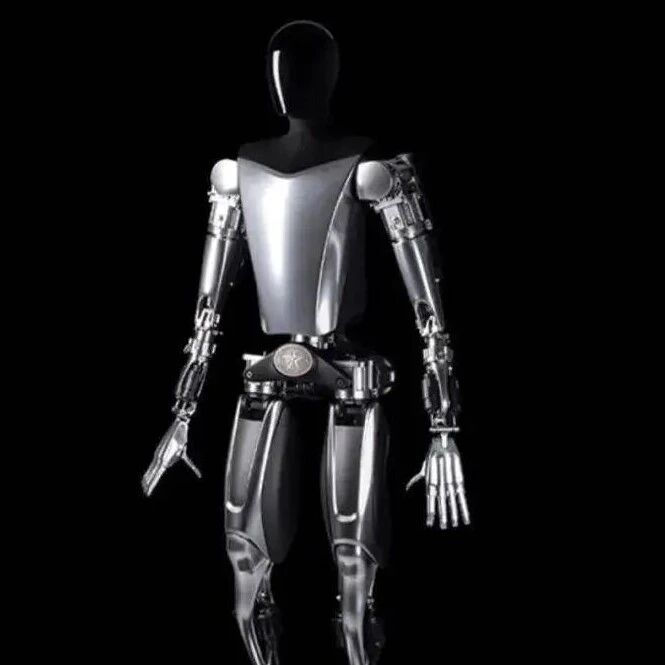
Group 1 - Tesla's stock price reached a historical high, driven by advancements in the humanoid robot Optimus and favorable industry policies [1] - The company plans to deploy thousands of Optimus robots by the end of 2025 and aims for an annual production capacity of one million units within four to five years [1] - The Fremont factory has officially revealed its pilot production line, marking a shift from technology demonstration to mass production preparation [1] Group 2 - The U.S. may enhance policy support for the humanoid robot industry, with Tesla's progress in mass production expected to accelerate the entire supply chain [1] - The core components supply chain is entering a critical phase, with significant value increase in incremental segments [1] - The release of the Optimus running video validates the maturity of core technologies, transitioning humanoid robots from laboratory settings to practical applications [1] Group 3 - The cost structure of humanoid robots is heavily reliant on upstream core components, with 70% of costs concentrated there [1] - Key incremental segments include actuators, precision motors, reducers, and sensors, with Tesla's Optimus requiring 26 actuators for one hand and over 50 micro-screws for both hands [1] - Related component suppliers are expected to benefit directly from the mass production rollout [1] Group 4 - Hengli Hydraulic is a leader in the hydraulic core components sector, specifically in planetary roller screw technology, which is crucial for the joints of Tesla's Optimus [2] - Daying Electronics focuses on automotive electronics and sensor business, leveraging its technological expertise to enter Tesla's supply chain for the "electronic glove" (integrated electronic skin sensors) [2]


当场“种草”!蒙古国记者打卡湾区机器人,直呼“想下单”
2 1 Shi Ji Jing Ji Bao Dao· 2025-12-07 09:13
Group 1 - The core focus of the news is on the advancements and commercialization of humanoid robots in China, particularly through companies like Ubiquiti and Zhongqing Technology, which are showcasing their innovations to international media [1][2]. - The T800 humanoid robot from Zhongqing Technology is currently in prototype testing, while the PM01 model has begun mass production with a price below 100,000 yuan, primarily targeting research and education applications [2]. - Ubiquiti Technology recently released a video showcasing the mass delivery of hundreds of industrial humanoid robots, which has faced skepticism regarding its authenticity, but the company asserts the footage is genuine [3]. Group 2 - The current applications of humanoid robots are mainly in research and education, with future plans to expand into industrial sectors, including partnerships with major automotive manufacturers for training and logistics tasks [2]. - The key to achieving large-scale commercialization of humanoid robots lies in the development of advanced AI models, as current hardware and motion control capabilities are nearing maturity [2]. - Mongolian journalists expressed a strong interest in the potential applications of humanoid robots across various industries in Mongolia, highlighting their role as effective assistants in the workforce [3].

千亿集群崛起 人形机器人融资占全国三成
Xin Jing Bao· 2025-12-03 08:29
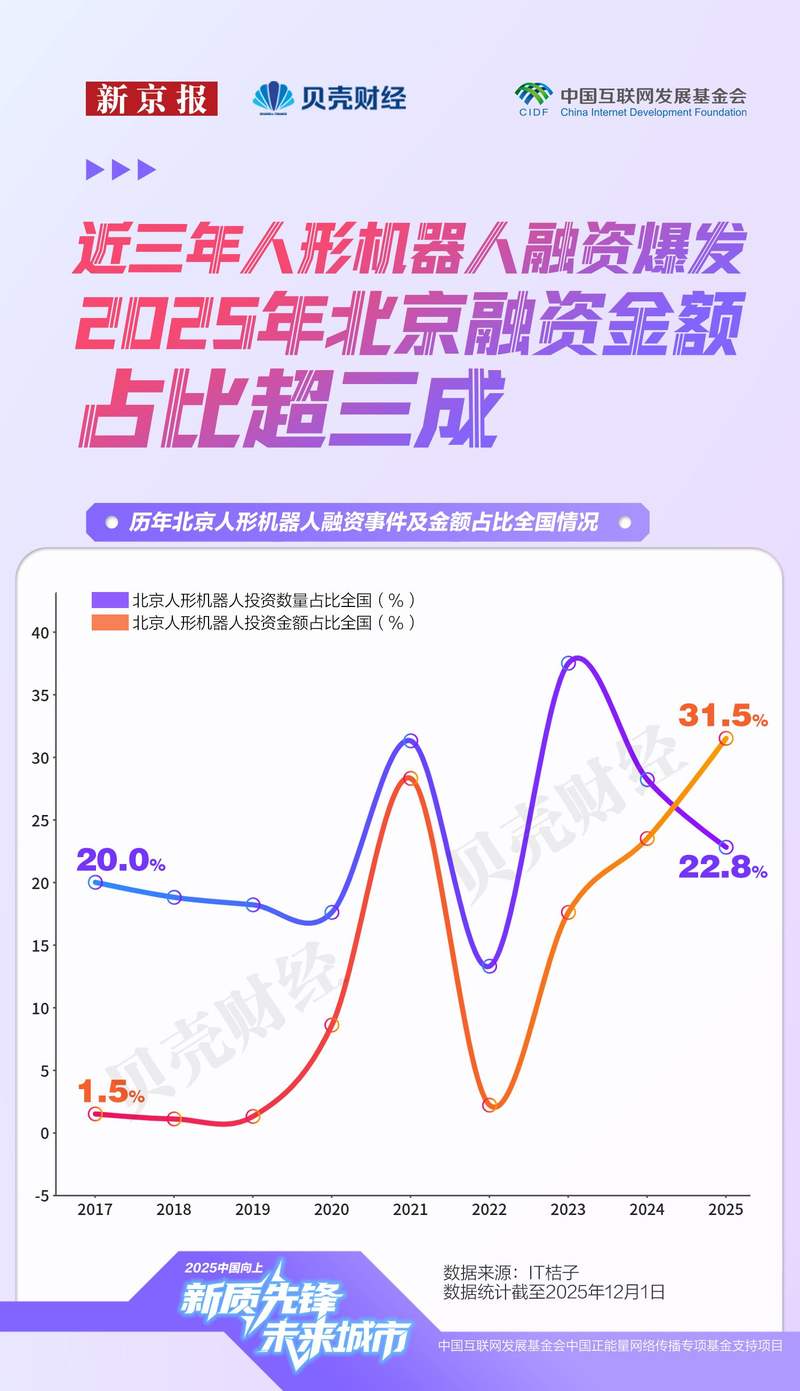
同时,近三年我国人形机器人融资明显加速。2023年以来,全国融资事件数与金额同步跃升,行业进入快速扩张 周期,北京的融资表现尤为亮眼。IT桔子数据显示,截至目前,2025年北京人形机器人融资事件达到37起、金额 达70.12亿元,投资金额占全国比重上升至31.5%,资本在向头部城市集中。 25 20 15 10 5 0 -5 2017 2018 2019 2020 2021 2022 2023 2024 2025 2025中国向上 数据来源: | 数据统计截至2025年12月1日 中国互联网发展基金会中国正能量网络传播专项基金支持项目 北京是这一产业浪潮中最具活力的创新高地之一。2025年4月,北京首次举办全球半程机器人马拉松,引发技术界 关注,也在操作系统、算力平台、数据体系等关键底层技术上不断取得突破。 北京市经信局数据显示,目前北京已拥有机器人专精特新"小巨人"企业57家,获批手术机器人注册证33个,集聚 30家人形机器人整机单位,均位居全国首位。到2027年,北京将力争突破百余项关键技术,推动万台具身机器人 规模化落地,打造千亿级产业集群,进一步巩固其在全国创新体系中的领先地位。 2025年是人形机器 ...
大摩:人形机器人“短期过热、长期低估”,商业化落地成关键胜负手
美股IPO· 2025-12-01 10:38
Core Insights - Morgan Stanley highlights the humanoid robot market as "overheated in the short term but undervalued in the long term," indicating a significant disparity between current market excitement and future potential [4][21] - The report predicts that by 2050, the global market size for humanoid robots could reach $5 trillion, far exceeding the current automotive industry [8][21] Short-term Overheating - The Chinese market is expected to show remarkable growth, with announced orders exceeding 2 billion RMB (approximately $300 million) by the second half of 2025, primarily from industrial, commercial services, and data center sectors [6][21] - However, many of these orders may not be fulfilled, as they include "framework orders" with low execution certainty, leading to a cautious outlook on recent growth [6][21] - Companies are setting aggressive shipment targets, with some expecting to deliver 100,000 units by 2026, but Morgan Stanley maintains a conservative estimate based on "limited working capacity" [6][21] Long-term Undervaluation - The long-term market potential for humanoid robots is significantly underestimated, with a projected global stock of 1 billion units by 2050 and a revenue market size nearing $5 trillion [8][12] - This potential is compared to the total revenue of the top 20 global automotive manufacturers, which is about $2.5 trillion in 2024, suggesting that the humanoid robot market could be twice that size [8][12] - The report anticipates that by 2050, commercial applications will dominate the market with approximately 935 million units, while household applications will account for around 84 million units [11][12] Commercialization as a Key Factor - The success of the humanoid robot industry hinges on effective commercialization, with a consensus emerging that return on investment (ROI) will be the critical metric for evaluating success [5][13] - Current industry players are moving away from merely showcasing technological advancements to demonstrating real value creation in practical scenarios [13] - Positive commercialization examples include Figure AI's robot contributing to the production of 30,000 cars at BMW's Spartanburg plant and Booster Robotics delivering over 700 humanoid robots to more than 200 clients globally [14][15] Policy and Capital Support in China - The development of the humanoid robot market in China is strongly supported by policies and capital, with approximately 187 billion RMB allocated to various funds aimed at industry development [18][20] - The Chinese government has introduced numerous supportive policies since 2023, including the establishment of a standardization committee for humanoid robots [18][19] - This "policy + capital" dual-drive model provides China with a unique advantage in the global humanoid robot competition, signaling a shift from technological exploration to commercial promotion [19][21]
机械行业研究:看好燃气轮机、人形机器人和核聚变
SINOLINK SECURITIES· 2025-11-30 11:31
Investment Rating - The report does not explicitly state an investment rating for the industry but suggests a positive outlook for specific companies such as 应流股份 and 恒立液压 [11]. Core Insights - The demand for gas turbines is expected to rise significantly due to the rapid growth of large data centers, with U.S. data center power consumption projected to increase from 8.9GW to 111.3GW from 2025 to 2028, leading to a corresponding gas turbine demand of 4.1GW to 57.9GW [5][25]. - 应流股份 is positioned as a leading domestic supplier of turbine blades, benefiting from long-term investments in heavy assets and R&D, and is expected to see a surge in export orders [5][17]. - 优必选 has secured significant orders totaling 4.07 billion yuan for humanoid robots, indicating a strong market presence and potential for commercialization in the humanoid robotics sector [5][26]. - The 合肥 BEST fusion project has seen over 2 billion yuan in tenders in November alone, signaling an acceleration in nuclear fusion project investments [5][26]. - The mechanical equipment sector shows varied performance, with general machinery under pressure, while engineering machinery is experiencing upward momentum [5][27]. Summary by Sections Market Review - The SW Mechanical Equipment Index rose by 3.91% in the last week, ranking 7th among 31 primary industry categories, while the index has increased by 30.48% year-to-date, outperforming the Shanghai Composite Index [13][16]. Key Data Tracking - General machinery is under pressure with a PMI of 49.0%, while engineering machinery shows signs of recovery with excavator sales up by 16.8% year-on-year [27][40]. - The gas turbine sector is experiencing robust growth, with GEV's new gas turbine orders increasing by 39% year-on-year [56][57]. Industry Dynamics - The report highlights the increasing demand for gas turbines driven by the growth of data centers and the need for stable power solutions [5][25]. - The engineering machinery sector is benefiting from policy effects and increased sales, particularly in excavators, which saw a total sales volume of 18096 units in October, up 7.8% year-on-year [40]. - The nuclear fusion sector is gaining traction with significant tender activity, indicating a growing investment landscape [5][26].


港股异动 优必选(09880)涨超3% 再斩获1.43亿元人形机器人订单 总订单金额达13亿
Jin Rong Jie· 2025-11-28 03:57
Core Viewpoint - UBTECH Robotics (09880) has seen a stock increase of over 3%, currently at 112.5 HKD, with a trading volume of 437 million HKD, following the announcement of winning a significant project in Jiangxi Province [1] Group 1: Project Wins and Financials - On November 28, UBTECH announced it successfully won the humanoid robot data collection and training center project in Jiujiang, Jiangxi, with a contract value of 143 million CNY [1] - The total order value for UBTECH's Walker series humanoid robots for the year 2025 has reached 1.3 billion CNY, excluding the full-size research and education humanoid robot "Tian Gong Xing Zhe" and the small humanoid robot "AI Wu Kong" [1] - In 2023, UBTECH has secured multiple large contracts, including a 250 million CNY global humanoid robot procurement contract in September, a 126 million CNY order in October, and several significant orders in November totaling 1.59 billion CNY, 2.64 billion CNY, and 143 million CNY, with the 2.64 billion CNY order setting a new record for a single order in the global humanoid robot market [1] Group 2: Production Capacity and Market Position - UBTECH's industrial humanoid robot production capacity has reached 300 units per month, with expectations to exceed 500 units in total deliveries for the year [1] - The company continues to maintain a leading position in the commercialization process of humanoid robots globally [1]
港股异动 | 优必选(09880)涨超3% 再斩获1.43亿元人形机器人订单 总订单金额达13亿
Zhi Tong Cai Jing· 2025-11-28 02:59
Core Viewpoint - UBTECH Robotics has seen a significant increase in stock price, rising over 3% following the announcement of winning a major project in Jiangxi province, indicating strong market confidence in the company's growth potential in the humanoid robot sector [1] Group 1: Project Wins and Financials - On November 28, UBTECH announced it successfully won the humanoid robot data collection and training center project in Jiujiang, Jiangxi, with a contract value of 143 million yuan [1] - The total order value for UBTECH's Walker series humanoid robots for the year 2025 has reached 1.3 billion yuan, excluding other robot models [1] - In 2023, UBTECH has secured multiple large contracts, including a 250 million yuan global procurement contract in September and several other significant orders in October and November, with one order reaching 264 million yuan, setting a new record for single order value in the humanoid robot market [1] Group 2: Production Capacity and Market Position - UBTECH's production capacity for industrial humanoid robots has reached 300 units per month, with expectations to exceed 500 units in total deliveries for the year [1] - The company continues to maintain a leading position in the commercialization of humanoid robots globally, as evidenced by its growing order book and successful project acquisitions [1]
优必选涨超3% 再斩获1.43亿元人形机器人订单 总订单金额达13亿
Zhi Tong Cai Jing· 2025-11-28 02:49
Core Viewpoint - Company achieved significant growth in humanoid robot orders and secured a major project, indicating strong market position and commercial progress in the humanoid robotics sector [1] Group 1: Company Performance - UBTECH Robotics (优必选) shares rose by 3.31% to HKD 112.5, with a trading volume of HKD 437 million [1] - The company won a bid for a humanoid robot data collection and training center project in Jiujiang, Jiangxi, with a contract value of CNY 143 million [1] - Total order value for the Walker series humanoid robots has reached CNY 1.3 billion for the year 2025, excluding other robot models [1] Group 2: Market Developments - UBTECH has secured multiple large contracts this year, including a CNY 250 million global procurement contract in September and additional contracts worth CNY 126 million, CNY 159 million, CNY 264 million, and CNY 143 million in October and November [1] - The CNY 264 million order set a new record for the largest single order in the global humanoid robot market, showcasing the accelerating commercialization process [1] - The production capacity for UBTECH's industrial humanoid robots has reached 300 units per month, with an expected annual delivery exceeding 500 units [1]
再获近2亿元融资 松延动力一个月内融资近5亿元丨公司头条
Sou Hu Cai Jing· 2025-11-26 05:41
Core Insights - The humanoid robotics company Songyan Power has completed nearly 200 million yuan in Pre-B+ round financing, led by CICC Capital, with participation from Yuntai Capital and Houwei Capital [1] - This financing will be used to enhance technological innovation and R&D investment, expand high-value application scenarios, and streamline the pathway from R&D to large-scale production and delivery [1] Financing Overview - Following a nearly 300 million yuan Pre-B round financing on October 26, Songyan Power has raised nearly 500 million yuan in total within a month, marking its fifth round of financing this year [3] - The recent financing round highlights the company's strong financial backing and investor confidence in its growth potential [3] Product Launch and Market Demand - Songyan Power recently launched the industry’s first humanoid robot priced under 10,000 yuan, named "Xiaobumi," which sold 100 units within an hour of its launch on JD.com and sold out 500 units in two days [3] - The sales performance indicates a significant market demand for consumer-grade humanoid robots, suggesting potential applications beyond industrial and laboratory settings, particularly in education and home entertainment [3] Strategic Partnerships - Concurrently with the financing announcement, Songyan Power has formed a strategic partnership with the programming education company "Programming Cat" to create a "Humanoid Robot Programming Education Laboratory" [3] - This collaboration aims to integrate Songyan Power's humanoid robot products with Programming Cat's extensive network of over 70,000 primary and secondary schools and its K12 programming curriculum, reaching over 43 million users [3]