
农业科技

Search documents
对话迪拜商会总裁卢塔:把迪拜当跳板,去探索全球新兴市场
经济观察报· 2026-01-14 13:42
Core Viewpoint - The article emphasizes Dubai's strategic advantages for Chinese companies seeking to expand into new markets amidst geopolitical changes and global supply chain restructuring, highlighting the potential for tax benefits and access to emerging markets through Dubai's established trade agreements [2][11]. Group 1: Trade Agreements and Market Access - The UAE currently has 27 bilateral trade agreements, allowing Chinese companies to establish bases in Dubai and export products to the Middle East, Africa, and South Asia with potential tax exemptions or low tariffs [2][11]. - Dubai serves as an efficient transit hub for Chinese companies looking to enter the African market, which includes several of the world's fastest-growing economies [2][11]. Group 2: Economic Agenda and Technological Collaboration - The Dubai Economic Agenda (D33) aims to enhance high-tech and digital economy sectors, with a focus on attracting advanced manufacturing technologies and innovative startups from China [7][15]. - The region's strategic need aligns with the capabilities of the Guangdong-Hong Kong-Macao Greater Bay Area, which contributes 40% of China's total exports and houses a third of its high-tech companies [5][7]. Group 3: Infrastructure Development and Opportunities - The expansion of Al Maktoum International Airport aims for a capacity of 260 million passengers annually, creating significant opportunities for Chinese infrastructure and logistics companies [12]. - The airport project will require innovative technologies from Chinese firms to enhance operational efficiency and passenger experience [12][13]. Group 4: Digital Economy and Agricultural Technology - Dubai seeks to elevate its digital economy to 20% of its total economic output, targeting a value of 100 billion dirhams, with a particular interest in AI applications across various sectors [15][16]. - There is a growing demand for agricultural technology solutions to meet the needs of the rapidly growing African market, positioning Dubai as a research and showcase center for Chinese agricultural innovations [17][18]. Group 5: Media and Content Industry - Dubai welcomes new media and content industries, encouraging Chinese MCN institutions and short drama production companies to enter the market, supported by financial incentives [20][21]. - Successful examples, such as iQIYI's localized content, demonstrate the commercial potential of high-quality content tailored for the local market [20][21]. Group 6: Support for Enterprises - The restructuring of the Dubai Chamber into three independent entities aims to provide specialized support for Chinese SMEs and startups looking to enter the Dubai market [24][25]. - The "sandbox mechanism" allows companies to test their technologies and business models in a controlled environment, facilitating innovation and commercialization [25].


对话迪拜商会总裁卢塔:把迪拜当跳板,去探索全球新兴市场
Jing Ji Guan Cha Wang· 2026-01-14 13:27
Core Viewpoint - Chinese manufacturing companies are currently seeking new opportunities in the context of geopolitical changes and global supply chain restructuring, with Dubai being positioned as a strategic hub for accessing new markets [1][2]. Group 1: Dubai's Strategic Importance - Dubai is promoting itself as a global supply chain hub, with the Dubai Economic Agenda (D33) aiming to enhance high-tech and digital economy development [3][4]. - The UAE has signed 27 bilateral trade agreements, allowing Chinese companies to potentially export products to the Middle East, Africa, and South Asia with reduced or zero tariffs if they establish bases in Dubai [6][7]. - Dubai's logistics capabilities, including the development of Al Maktoum International Airport, are crucial for connecting Chinese production with African markets, which are among the fastest-growing economies globally [2][8]. Group 2: Opportunities for Chinese Enterprises - By the end of 2025, over 6,000 Chinese companies are expected to be registered with the Dubai Chamber, ranging from multinational corporations to emerging market leaders [4][5]. - Chinese electric vehicle brands, such as MG and Xpeng, dominate the Dubai market, with 80.8% of imported electric vehicles coming from China [5]. - Dubai serves as an efficient transit point for Chinese companies to access broader Middle Eastern markets, leveraging its established logistics networks [6][8]. Group 3: Digital Economy and Innovation - The D33 agenda aims to increase the digital economy's contribution to Dubai's GDP to 20%, targeting a value of 100 billion dirhams [10]. - There is a strong interest in integrating AI technologies into various sectors, including healthcare and smart city management, to enhance operational efficiency in Dubai [11]. - Dubai is also looking to leverage agricultural technology from China to meet the growing demands of the African market, using Dubai as a research and showcase center [11]. Group 4: Support for Chinese SMEs - The restructuring of the Dubai Chamber into three independent entities aims to provide specialized support for Chinese SMEs and startups looking to enter the Dubai market [14][15]. - The "sandbox mechanism" allows companies to test their technologies and business models in a controlled environment, facilitating innovation and commercialization [15]. - The "Expand North Star" initiative connects startups with global investors, providing a platform for Chinese enterprises to access funding [15][16].
一图解码:海大控股赴港IPO 全球农业科技领军者 业绩稳增
Sou Hu Cai Jing· 2026-01-14 02:28
Core Viewpoint - Haida Holdings, a spin-off from Haida Group, has submitted its prospectus to the Hong Kong Stock Exchange for a planned IPO, aiming to leverage its technological advantages in the global agricultural sector, particularly in feed production and aquaculture solutions [3][4]. Company Overview - Haida Holdings is a technology-driven global agricultural enterprise with a proven track record of rapid growth, focusing on providing comprehensive solutions across the entire value chain of the livestock industry [5][6]. - The company primarily operates in Asia (excluding East Asia), Africa, and Latin America, utilizing advanced agricultural technologies and extensive industry resources to modernize livestock farming practices [3][6]. Financial Performance - For the nine months ending September 30, 2025, Haida Holdings reported revenues of approximately RMB 11.177 billion, representing a year-on-year growth of about 33.3%, and a net profit attributable to shareholders of approximately RMB 798 million, up 58.0% year-on-year [3][15][18]. - The company's feed sales volume reached 2.507 million tons, with year-on-year growth rates of 38.4% for 2025 and 47.4% for 2024 [5][6]. Market Position - According to Frost & Sullivan, Haida Holdings is the second-largest aquaculture feed supplier in Asia (excluding East Asia) by production volume, with an output of 1 million tons in 2024, and the third-largest feed supplier in Vietnam with a production of 1.7 million tons [3][6]. - The company has a total annual production capacity of approximately 4.8 million tons, supported by 17 production bases across six countries [6]. Use of IPO Proceeds - The net proceeds from the IPO are planned to be allocated as follows: 70% for expanding and optimizing the manufacturing network, 10% for repaying certain bank loans, 10% for upgrading the global sales and service network, and 10% for working capital and general corporate purposes [4][5]. Competitive Advantages - Haida Holdings has established a strong competitive edge in the aquaculture sector, with its aquaculture feed products accounting for 67.2% of total revenue and contributing 80.3% of total gross profit [12][18]. - The company has successfully implemented an integrated service value chain strategy in its aquaculture business, providing a comprehensive solution that includes feed, seedlings, and veterinary services [13][14].
实探“种菜大厦”揭秘育种加速器:不用土、不用农药,年产量是传统大田120倍以上,整栋楼仅需1人管理
Mei Ri Jing Ji Xin Wen· 2026-01-13 10:15
Core Insights - The article highlights the innovative agricultural practices in Chengdu, particularly the early blooming of a new canola variety called "Changhua 100," which showcases exceptional cold resistance and breaks traditional growth patterns [1] - The advancements in agricultural technology are not limited to crop variety improvements but extend to fundamental changes in planting models, allowing agriculture to move away from natural rhythms towards a more precise and controllable modern path [1] Group 1: Agricultural Innovations - The new canola variety "Changhua 100" can bloom as early as late December, demonstrating significant advancements in cold-resistant crop breeding [1] - The article describes a facility in Chengdu that utilizes hydroponic systems for vegetable cultivation, achieving an annual yield over 120 times that of traditional field farming [1] Group 2: Modern Agricultural Practices - The facility mentioned operates with remarkable efficiency, requiring only one person for daily management of the entire structure [1] - The shift towards high-rise vegetable farming represents a transformative approach in agriculture, emphasizing the potential for controlled and efficient production methods [1]
非洲侨胞:盼中非人文交流年促务实合作新气象
Zhong Guo Xin Wen Wang· 2026-01-12 07:33
Group 1 - The "China-Africa Cultural Exchange Year" has been launched in 2026, coinciding with the 70th anniversary of diplomatic relations between China and Africa, aiming to enhance practical cooperation amidst rising unilateralism and protectionism [1] - The "Luban Workshop" vocational education cooperation project in Ethiopia has effectively met local development needs by training a significant number of local talents who are skilled and proficient in Chinese [1] - The engagement of Chinese expatriates in Ethiopia in sports training and charitable events has strengthened ties between the two nations, fostering closer connections through diverse grassroots exchanges [1] Group 2 - Tanzania has been a leading advocate for China's cooperation with Africa, with local interest in China's electronic and AI industries growing, particularly in the context of the "Tanzam Railway Prosperity Belt" initiative [2] - In Lesotho, a textile factory established by a Chinese expatriate has created 1,400 local jobs, with ongoing skills training and technology transfer contributing to improved production efficiency and quality [2] - The establishment of a Confucius Institute in Lesotho focused on agricultural technology has provided opportunities for local youth in technical training and career exploration [2] Group 3 - China has implemented a zero-tariff policy on certain exports to Lesotho, boosting local confidence in trade relations [3] - In Somalia, despite challenges from piracy and terrorism, there is a focus on national transformation, with local expatriates optimistic about potential investments in energy, agriculture, and fisheries, supported by the upcoming cultural exchange year [3]
Haid International Holdings Limited(H0302) - Application Proof (1st submission)
2026-01-11 16:00
The Stock Exchange of Hong Kong Limited and the Securities and Futures Commission take no responsibility for the contents of this Application Proof, make no representation as to its accuracy or completeness and expressly disclaim any liability whatsoever for any loss howsoever arising from or in reliance upon the whole or any part of the contents of this Application Proof. Application Proof of Haid International Holdings Limited 海大國際控股有限公司 (the "Company") (Incorporated in the Cayman Islands with limited lia ...
于针尖处起舞 在沃野间深耕
Xin Lang Cai Jing· 2026-01-10 17:26
Core Viewpoint - The article highlights the significant role of scientific innovation in driving agricultural modernization, particularly through the development of disease-free potato seedlings that enhance productivity and income for farmers [1][2]. Group 1: Scientific Innovation - Researchers at Qinghai University are focused on transforming traditional potato varieties into high-yielding ones, exemplified by the "Qing Shu 9" variety, which benefits millions of farmers [1]. - The commitment to agricultural research is evident in the meticulous work of scientists who are dedicated to improving seed quality and exploring new applications for potatoes, such as protein utilization and deep processing [1]. Group 2: Agricultural Development - The article emphasizes the importance of practical application of research findings in real-world agricultural settings, ensuring that scientific advancements translate into tangible benefits for the land and the people [1]. - There is a call for continuous strengthening of technological support and tailored agricultural practices to enhance productivity and achieve greater harvests across vast farmlands [2].
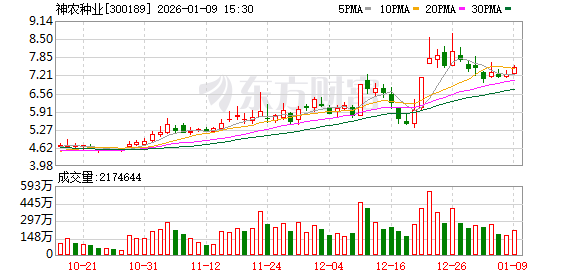
神农种业:公司将持续关注农业科技的前沿发展
Zheng Quan Ri Bao· 2026-01-09 12:36
Group 1 - The core viewpoint of the article is that the company, Shennong Agriculture, is committed to continuously monitoring advancements in agricultural technology, particularly the application of AI in breeding [2] Group 2 - The company has engaged with investors through an interactive platform, indicating a proactive approach to communication and transparency [2] - The focus on AI technology suggests a strategic direction towards innovation in the agricultural sector, which may enhance productivity and efficiency in breeding practices [2]

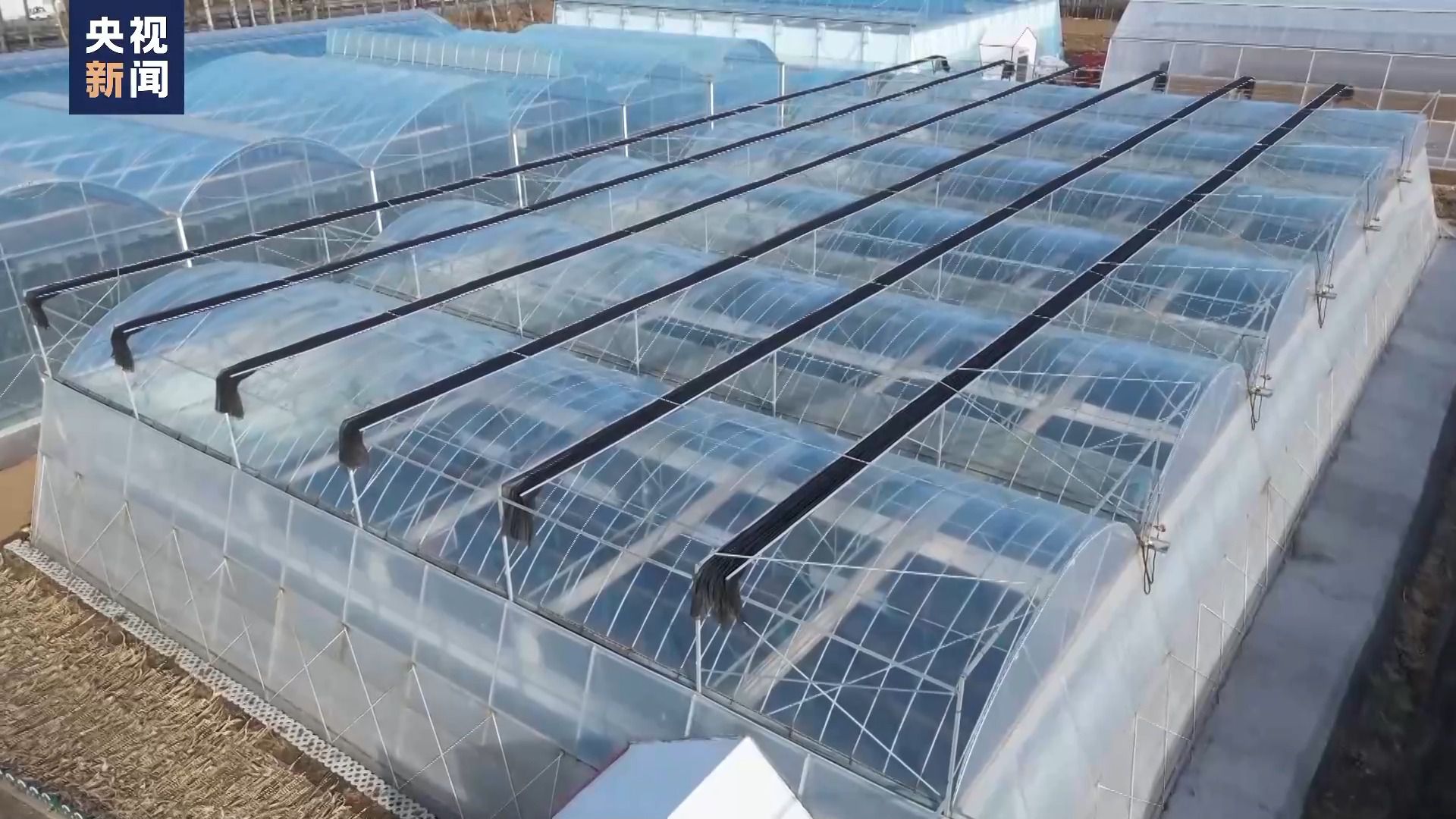
到“中国蔬菜之乡” 看28岁新农人的梦想菜园
Yang Shi Xin Wen Ke Hu Duan· 2026-01-06 06:08
Core Viewpoint - The article highlights the innovative agricultural practices in Shouguang, Shandong, known as the "Vegetable Capital of China," showcasing the efforts of young farmers like Luan Hongyun in enhancing vegetable production through technology and new farming methods [1][25]. Group 1: Agricultural Innovation - Shouguang has over 600,000 acres of vegetable planting area, with yields exceeding the national average by more than three times [1]. - Luan Hongyun has developed various new greenhouse models and planting techniques, utilizing patented heating systems that maintain temperatures above 10°C even in extreme cold [9][11]. - The integration of smart technology allows for precise irrigation and fertilization, enabling remote control of greenhouse operations [11][12]. Group 2: Market Expansion and Digital Promotion - Luan began using short videos to promote his agricultural practices, leading to significant online engagement and business opportunities, with over 60% of his sales now generated through the internet [12][15]. - The Shouguang government supports the vegetable industry with policies that attract young talent and modernize agricultural practices, resulting in over 8,000 technical personnel guiding vegetable production nationwide [18]. Group 3: Global Outreach and Industry Development - Shouguang has established a comprehensive service system for the vegetable industry, exporting technology and standards to over 40 countries and building more than 270 vegetable parks globally [20]. - The rise of "new farmers," particularly those born in the 1980s, 1990s, and 2000s, is transforming rural economies, with over 30,000 young individuals now engaged in agriculture [22]. Group 4: Future Prospects - The article emphasizes the potential for further innovation and growth in the agricultural sector, as young farmers leverage technology and professional knowledge to contribute to rural revitalization and their personal aspirations [26].
深圳猪八界农牧科技有限公司成立,注册资本1000万人民币
Sou Hu Cai Jing· 2026-01-04 18:33
企业名称深圳猪八界农牧科技有限公司法定代表人陀曼玉注册资本1000万人民币国标行业科学研究和技 术服务业>研究和试验发展>工程和技术研究和试验发展地址深圳市南山区南头街道马家龙社区虹步路 15号马家龙18栋207企业类型有限责任公司营业期限2026-1-4至无固定期限 来源:市场资讯 天眼查显示,近日,深圳猪八界农牧科技有限公司成立,法定代表人为陀曼玉,注册资本1000万人民 币,广西宏裕农业科技有限公司、广西玉林市三喜农牧科技有限公司持股。 序号股东名称持股比例1广西宏裕农业科技有限公司50%2广西玉林市三喜农牧科技有限公司50% 经营范围含一般经营项目是:技术服务、技术开发、技术咨询、技术交流、技术转让、技术推广;农业 科学研究和试验发展;初级农产品收购;智能农业管理;食用农产品初加工;食用农产品批发;食用农 产品零售;新鲜水果批发;新鲜水果零售;水果种植;新鲜蔬菜批发;鲜蛋批发;鲜蛋零售;鲜肉批 发;鲜肉零售;畜禽收购;牲畜销售;互联网销售(除销售需要许可的商品);畜牧渔业饲料销售;农 副产品销售;农业机械销售;智能机器人销售。(除依法须经批准的项目外,凭营业执照依法自主开展 经营活动),许可经营项目是 ...