
减碳

Search documents
本周见面的招呼语:今天赚了没?
叫小宋 别叫总· 2025-07-24 02:14
Core Viewpoint - The article discusses the current state of the stock market, highlighting the unusual behavior of investors and the implications of significant infrastructure projects on economic growth and stock performance. Group 1: Market Behavior - Investors are currently engaged in trading activities, with many expressing frustration over not being able to buy stocks [2][3] - The lack of scheduled meetings among partners suggests a collective focus on market movements rather than strategic planning [1] Group 2: Economic Indicators - There is a noted increase in M2 money supply while prices are declining, indicating a disconnect in economic activity [3] - The construction of large infrastructure projects, such as a major hydropower station, is expected to stimulate economic activity and consumer spending [4][6] Group 3: Infrastructure Impact - The hydropower station is projected to generate significant electricity, ranking around 15th globally in terms of annual output [6][7] - The combined output of this station and existing facilities could meet the electricity demands of major cities like Beijing, Shanghai, and Shenzhen [9] Group 4: Stock Market Dynamics - The recent surge in A-shares is attributed to favorable tax conditions compared to Hong Kong and U.S. markets, encouraging capital inflow [12][13] - The stock of companies like Shangwei New Materials has seen unprecedented gains, driven by market speculation rather than fundamental performance [15][17] Group 5: Investment Potential - With a substantial amount of household savings available, even a small portion directed to the stock market could significantly boost indices [21][22] - The article suggests that the upcoming fundraising environment may improve, potentially benefiting various sectors [23]

日本瑞翁,生物基丁二烯项目开工,布局两大技术路线
Sou Hu Cai Jing· 2025-07-24 01:07
Core Insights - Zeon and Yokohama Rubber are collaborating to construct a pilot plant for bio-based butadiene, which is set to begin production in 2026 and achieve commercialization by 2034 [1][8] - Butadiene is the most widely used rubber raw material globally, serving as a core monomer for various synthetic rubbers such as Styrene-Butadiene Rubber (SBR) and Polybutadiene Rubber (BR) [2][3] - The project represents a significant breakthrough for Japan in the non-petroleum-based synthetic rubber sector, aiming to accelerate the commercialization of bio-based elastomers through cross-industry collaboration [7] Industry Overview - Butadiene is essential for producing SBR and BR, with global capacities of 6.8 million tons/year for SBR and 5.2 million tons/year for BR, primarily used in automotive tires [3] - The shift towards bio-based butadiene is driven by the need for carbon reduction in the rubber industry, with many leading synthetic rubber and tire companies exploring bio-based alternatives using ethanol as a feedstock [2][4] Technological Approaches - Two main technological routes are being pursued for the production of bio-based butadiene: - Route 1: Efficient synthesis of butadiene from ethanol through chemical catalysis, in collaboration with AIST, facing challenges such as catalyst carbon deposition and cost optimization of high-purity ethanol [4] - Route 2: Direct synthesis from sugars or butanediol using enzyme catalysis or microbial metabolism, which is currently limited to laboratory or small-scale trials due to challenges in selectivity and production efficiency [5] Project Goals and Timeline - The pilot facility will validate the effectiveness of new high-efficiency catalysts for converting bio-based ethanol into butadiene, with Zeon planning to use the produced butadiene for prototype polybutadiene rubber products [6] - The project aims to complete process validation by 2030 and achieve industrialization by 2034, providing innovative solutions to reduce petroleum dependency in the global tire industry and support carbon neutrality goals [8] Related Industry Developments - Other companies, such as Trinseo and Michelin, are also investing in bio-based butadiene production, with projects aimed at commercializing the use of bioethanol for butadiene production [10]
拆解减碳目标,dss+谢荣军:提效为何重要?丨能见首席
2 1 Shi Ji Jing Ji Bao Dao· 2025-07-18 08:51
Core Viewpoint - The State Council of China has approved the "Green and Low-Carbon Development Action Plan for Manufacturing Industry (2025-2027)", emphasizing the need for deep green transformation in traditional industries and the application of advanced equipment and processes to accelerate green upgrades in key sectors [1] Group 1: Green Transformation Goals - The manufacturing sector is a major contributor to energy consumption and carbon emissions in China, accounting for over 60% of total energy consumption [1] - The primary goal of green transformation in industries such as energy, chemicals, and new energy is energy conservation and carbon reduction, which can be further broken down into low-carbon production and innovative business models [2] Group 2: Production Efficiency and Risk Management - For traditional industries, the focus is on low-carbon production, which includes energy-saving technology upgrades, clean energy substitution, process re-engineering, and circular economy practices [2] - Enhancing production efficiency indirectly contributes to carbon reduction by managing risks associated with carbon emissions, such as preventing accidents that lead to emissions [2] - A case study showed that a company reduced equipment failure rates by 75%, leading to increased production efficiency and lower energy consumption [2] Group 3: Product Development and Market Opportunities - Utilizing green raw materials is another pathway for green low-carbon transformation, as developing eco-friendly products can capture market opportunities and naturally lead to carbon reduction [3] - Companies that create products with environmental advantages can achieve competitive market positioning, making carbon reduction a byproduct of market success [3] Group 4: International Expansion and Compliance - For Chinese companies, achieving green low-carbon goals is not only a domestic requirement but also essential for international expansion, especially with the upcoming EU Carbon Border Adjustment Mechanism (CBAM) set to impose significant tariffs on high-carbon exports [3] - The CBAM will affect industries such as steel, aluminum, cement, fertilizers, electricity, and hydrogen, with potential tariffs reaching up to €600 per ton for non-compliant products [3] Group 5: Challenges in International Markets - Chinese companies face challenges in international markets, including profitability issues and controversies in ESG (Environmental, Social, and Governance) practices, often stemming from a focus on short-term gains rather than sustainable practices [4] - Companies are advised to adopt a long-term perspective, improving operational quality and sustainability alongside market penetration efforts [4]
施耐德电气:持续强化中国中心建设
news flash· 2025-07-17 06:43
Group 1 - The core viewpoint of the article highlights Schneider Electric's participation in the third China International Supply Chain Promotion Expo, emphasizing its desire to connect with more supply chain partners [1] - Schneider Electric's Senior Vice President and Head of Global Supply Chain for China, Zhang Kaipeng, stated that the company aims to strengthen its local presence in China as one of the most localized multinational enterprises [1] - The company is focused on building a digital ecosystem and a sustainable ecosystem, aiming to assist suppliers in achieving digital transformation and carbon reduction goals [1]
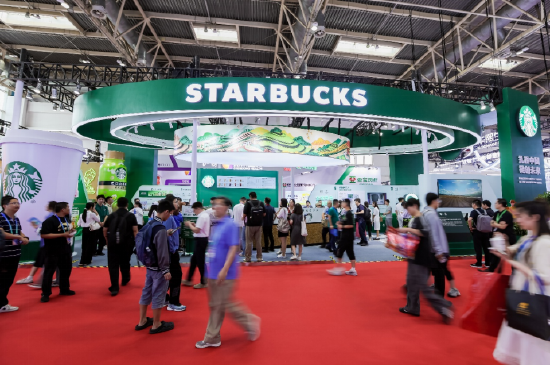
星巴克中国连续第三届亮相链博会
Xin Lang Cai Jing· 2025-07-16 14:59
Core Viewpoint - Starbucks China showcased its commitment to sustainable supply chain practices at the China International Supply Chain Promotion Expo, emphasizing its long-term dedication to the Chinese market and the launch of its ready-to-drink business in collaboration with strategic partner Envision [2] Group 1: Sustainable Practices - The design of Starbucks' exhibition booth was inspired by the journey of sustainable coffee, highlighting the green journey from raw beans to coffee [2] - Approximately 70% of carbon emissions in the entire value chain come from upstream suppliers, prompting Starbucks to form a carbon reduction alliance with Envision and supplier partners [2] - Starbucks plans to utilize the "Ark Energy Carbon Management Digital System" to measure the carbon footprint of numerous core suppliers and thousands of products, aiming to provide tailored solutions for carbon reduction [2][3] Group 2: Green Store Certification - Since 2021, Starbucks has been optimizing its "Green Store Certification System" in China, which includes eight sustainable criteria and 25 detailed indicators, ensuring a green process from design to daily operations [3] - Currently, 2,100 Starbucks stores nationwide have received green store certification and utilize 100% green-certified electricity [3] - Over 7,500 stores are connected to the intelligent IoT system, enabling real-time tracking of various data and providing energy-saving and carbon reduction optimization solutions [3] Group 3: Product and Packaging Innovations - Starbucks China has introduced plant-based dietary options such as oat milk and almond milk, which not only enrich customer choices but also effectively reduce carbon emissions in the value chain [3] - The packaging strategy follows the principles of reduction, reuse, and recycling [3] - The ready-to-drink segment is actively working with industry partners to build a green supply ecosystem by expanding the use of recyclable materials and reducing the use of virgin plastics [3]

“疆电入渝”工程投运,一条输电线路“种下”9亿棵树
news flash· 2025-06-10 00:53
Core Viewpoint - The "Jiangdian into Chongqing" project, part of China's key engineering projects during the 14th Five-Year Plan, has been completed and is operational, enabling significant clean energy transmission from Xinjiang to Chongqing [1] Group 1: Project Overview - The "Jiangdian into Chongqing" project is one of the first large-scale wind and solar power transmission projects in China, specifically designed for energy delivery [1] - The project is expected to transmit 36 billion kilowatt-hours of electricity annually from Xinjiang to Chongqing [1] Group 2: Environmental Impact - At least 50% of the transmitted electricity will come from clean energy sources, contributing to a reduction of 16.5 million tons of carbon dioxide emissions each year [1] - The carbon reduction achieved by this project is equivalent to planting 900 million trees, as each tree absorbs approximately 18.3 kilograms of CO2 annually [1]
中国作为发展中国家,为什么还要坚持减碳?(读者点题·共同关注)
Ren Min Ri Bao· 2025-06-01 22:03
Core Viewpoint - The necessity of carbon reduction is emphasized as a self-driven initiative for China, rather than a response to external pressures [1] Group 1: Understanding Carbon and Its Implications - "Carbon" in the context of carbon reduction refers to greenhouse gases, primarily carbon dioxide, which is closely linked to human activities [2] - The direct reason for carbon reduction is the threat of climate warming to human survival and civilization, with the UN warning of the direct link between increased greenhouse gas emissions and severe climate disasters [3] Group 2: International and Domestic Reasons for Carbon Reduction - Internationally, carbon reduction is essential for China to take on major country responsibilities and contribute to global environmental governance, enhancing its influence in the global environmental governance system [5] - Domestically, carbon reduction supports the green and low-carbon transformation of the economy, meeting the public's demand for a better ecological environment, and promoting sustainable development [6] Group 3: Economic and Environmental Benefits - The reduction of carbon emissions is linked to significant improvements in air quality, with PM2.5 concentrations in cities decreasing by over 30% from 2015 to 2023 [6] - China's renewable energy generation capacity is the largest globally, with a significant decrease in coal's share of energy consumption by 12.6 percentage points over the past decade [6] Group 4: Development and High-Quality Growth - The pursuit of carbon reduction aligns with the goal of achieving high-quality development, reflecting a transformation in development methods [8] - The commitment to carbon reduction remains steadfast despite some countries retreating from their commitments, indicating a focus on sustainable and high-quality growth [8]