协调发展

Search documents
国寿安保基金:中央经济工作会议延续积极定调 可关注八大方向
Zhong Zheng Wang· 2025-12-15 07:53
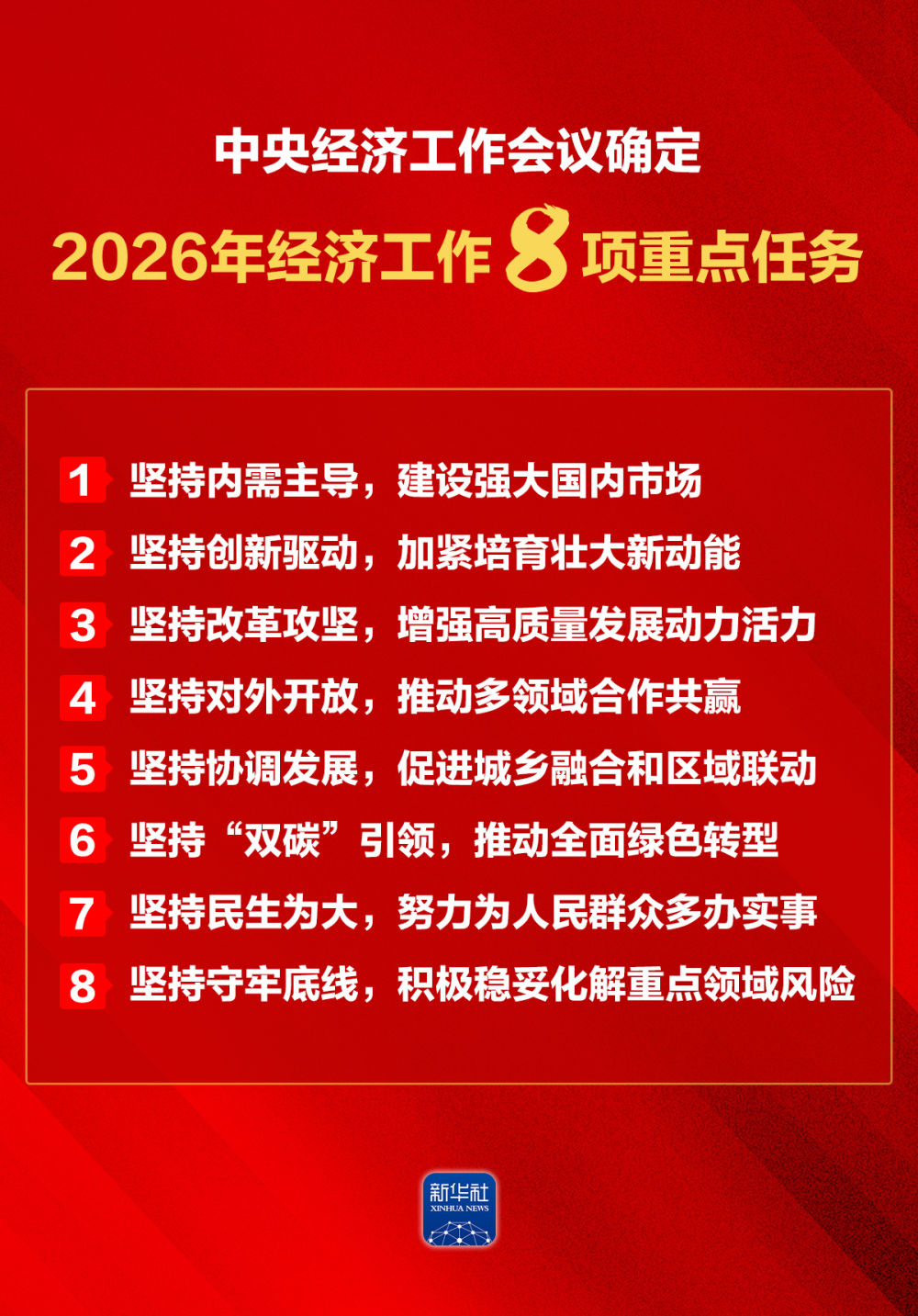
Core Viewpoint - The Central Economic Work Conference held on December 10-11 in Beijing maintains a positive tone regarding fiscal and monetary policies for 2024, emphasizing the need for a proactive fiscal policy and a moderately loose monetary policy [1][2] Fiscal Policy - The conference reiterates the need to maintain necessary fiscal deficits, total debt scale, and overall expenditure, while also calling for optimization of fiscal structure and long-term reforms [1] - New requirements include strengthening fiscal management, optimizing expenditure structure, and standardizing tax incentives [1] Monetary Policy - The monetary policy is directed towards promoting stable economic growth and reasonable price recovery, indicating a shift in focus from quantity-based indicators like social financing and credit to price-based indicators such as price levels [1] Eight Key Tasks - The conference outlines eight key tasks, including: 1. **Domestic Demand**: Emphasizing the expansion of quality goods and services supply to lead domestic demand [2] 2. **Innovation**: Highlighting the need to deepen and expand the development of "artificial intelligence+" to leverage China's large-scale market advantages [2] 3. **Reform**: Focusing on establishing a unified market as a key reform breakthrough [2] 4. **Opening Up**: Demonstrating China's commitment against unilateralism and protectionism [2] 5. **Coordinated Development**: Emphasizing policy coordination between urban and rural areas, as well as regional balance [2] 6. **Dual Carbon Goals**: Aligning economic development with ecological and environmental considerations [2] 7. **People's Livelihood**: Prioritizing employment, healthcare, and support for vulnerable groups, reflecting a people-centered development approach [2] 8. **Risk Management**: Highlighting potential risks in the real estate market and local government hidden debts, with a focus on stabilizing the real estate market and managing risks in key areas [2]
“八个坚持”拓开2026年中国经济大视野
Guo Ji Jin Rong Bao· 2025-12-15 03:12
Group 1: Macroeconomic Policy and Domestic Market - The core macroeconomic policy emphasizes a more proactive approach, focusing on quality and efficiency as key development themes, with the "Eight Persistences" as critical directives for economic work in the first year of the 14th Five-Year Plan [1] - Domestic demand has become the main driver of economic growth, contributing an average of 93.1% to economic growth from 2013 to 2024, highlighting the importance of a strong domestic market as a long-term strategy [2][3] Group 2: Innovation and New Growth Drivers - The necessity of innovation-driven growth is underscored, as new momentum is essential for future development and competitive positioning, requiring a systemic reshaping of production factors and business models [4][5] - The development of new momentum must support both high-end industries and traditional industry upgrades, creating high-quality employment and meeting the needs of the populace [5] Group 3: Reform and High-Quality Development - Continuous reform is essential to inject vitality into high-quality development, addressing deep-seated issues that have emerged due to changing development stages [6][7] - Emphasis on technological innovation as a key driver for high-quality development, necessitating a deep integration of innovation systems and breaking down institutional barriers [7] Group 4: Open Economy and International Cooperation - China aims for a higher level of openness, promoting multi-faceted cooperation to adapt to global economic changes and challenges, emphasizing the importance of collaborative networks in various fields [8][9] - The need for innovative cooperation mechanisms to address challenges posed by protectionism and geopolitical tensions is highlighted, focusing on quality and resilience in partnerships [9] Group 5: Coordinated Development and Urban-Rural Integration - The strategy of promoting coordinated development aims to address the growing disparities between urban and rural areas, emphasizing the need for a balanced and inclusive development approach [10][11] - Regional integration strategies like the Beijing-Tianjin-Hebei collaboration and the Yangtze River Economic Belt are examples of efforts to optimize resource allocation and promote high-quality regional economic layouts [11] Group 6: Green Transformation and Carbon Neutrality - The commitment to achieving carbon peak by 2030 and carbon neutrality by 2060 reflects China's responsibility in global climate governance and the need for a comprehensive green transformation [12][13] - Innovation is identified as the core engine for achieving carbon goals, requiring advancements in renewable energy, energy efficiency, and the establishment of supportive institutional frameworks [14] Group 7: Focus on People's Livelihood - The emphasis on prioritizing people's livelihoods reflects the increasing complexity of public demands, necessitating a responsive governance approach that addresses specific community needs [15][16] - Establishing long-term mechanisms to ensure sustainable improvements in public welfare is crucial, with a focus on resource allocation and social governance [16] Group 8: Risk Management - The need to manage risks in key areas such as real estate and local debt is highlighted, with a focus on maintaining stability while actively addressing potential threats [17][18] - A balanced approach to risk management is essential, combining immediate responses with long-term structural improvements to foster sustainable development [18]
挖潜经济的大招在哪?
Sou Hu Cai Jing· 2025-12-14 13:29
当然,潜能不会自己跳出来。改革才是总开关。破除市场分割、地方保护和"内卷式竞争,全国统一大市场跑顺了,优势才能变成动能。 故事的答案其实很清楚:潜能一直都在,关键在于持续激活。 ——在复杂局势中找到"好风口",把中国经济的潜能真正激活 但中央经济工作会议偏偏把它放在了C位,意思很直白:中国这台"超级引擎",远没到满转速。 一提"经济潜能",是不是听着有点虚? 潜能藏在哪?不在神秘公式里,而在几张"明牌"上。超大规模市场,让创新和消费都有天然试验场;完整产业体系,让新技术落地更快;超2亿技能人才, 是持续升级的硬核底座;再加上制度优势的统筹协调,这些都是可以持续深挖的"家底"。 怎么挖?会议给了清晰路线图。第一,内需主导。投资端,新型城镇化、绿色改造、公共服务补短板空间巨大;消费端,服务消费、品质消费、银发经济仍 在起跑线。关键不是"刺激",而是稳就业、增收入、优供给。第二,创新驱动。从"人工智能+"到新质生产力,既要突破关键技术,也要推动传统产业升 级,让科技真正变成增长发动机。 第三,协调发展。城镇化率每提高1个百分点,就能撬动万亿级投资和千亿级消费,城乡融合、城市群联动,本身就是潜 力放大器。 《挖潜经济 ...


中央经济工作会议定调后,这些中部省份锚定了哪些重点任务?
2 1 Shi Ji Jing Ji Bao Dao· 2025-12-14 07:49
中央经济工作会议提出,坚持内需主导,建设强大国内市场。作为明年八项工作任务之首,这也意味着 2026年我国经济增长将更多依靠内需发力。 21世纪经济报道记者吴文汐 武汉报道 "十四五"即将圆满收官、"十五五"正待开启序幕之际,中央经济 工作会议于12月10日至11日在北京举行。会议明确了2026年经济工作中的八大重点任务,包括坚持内需 主导,建设强大国内市场;坚持创新驱动,加紧培育壮大新动能等。 近日,中部地区湖北、河南、湖南、江西、山西等地均召开相关会议,深入学习贯彻中央经济工作会议 精神。梳理来看,激发内需潜力、推动科技创新和产业创新深度融合、促进城乡融合和区域协调发展等 方面成为重点,中部省份将力争结合因地制宜的谋划布局,形成更多新增长点。 围绕贯彻落实中央经济工作会议精神,各地的部署中释放出哪些重要信号? 持续激发内需潜力 中部地区位居我国经济地理版图中承东启西、连南接北的关键位置,在建设强大的国内市场中具有不可 或缺的重要作用。 在各省近日召开的深入学习贯彻中央经济工作会议精神相关会议上,均对扩大内需作出相应部署,例 如,湖北提出,要坚定不移扩大消费和投资,持续激发内需潜力,以新需求引领新供给、以新 ...

2026,最重要的事定了
Sou Hu Cai Jing· 2025-12-13 11:34
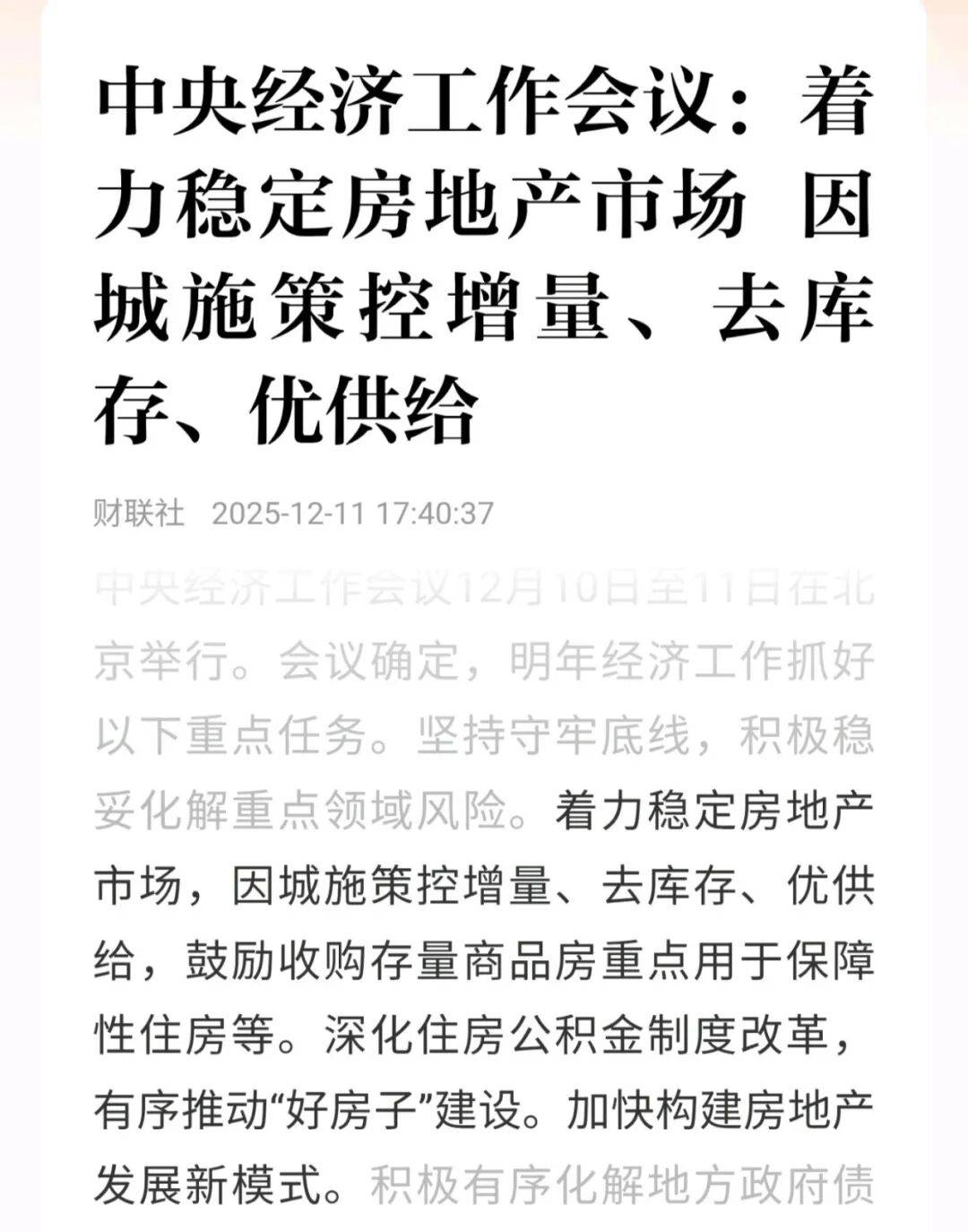
Group 1 - The central economic work conference emphasizes the need to stabilize the real estate market and new birth population scale, prioritizing domestic demand and reiterating policies like interest rate cuts [1][5] - The focus on stabilizing the real estate market is highlighted by the term "efforts" indicating a strong policy commitment, with strategies including controlling new supply, reducing inventory, and encouraging the acquisition of existing homes for affordable housing [4][2] - The long-term goal for real estate is to shift towards a "new model" that includes quality housing construction, urban renewal, and a dual rental and purchase system [5] Group 2 - The conference advocates for a positive marriage and childbirth outlook to stabilize the birth population, with recent data showing a slight increase in marriage rates [6][7] - A dual approach of fiscal and monetary easing is proposed, with a focus on maintaining necessary deficits and ensuring liquidity, while also considering price stability as a key factor [8][9] - The emphasis on stimulating consumption is elevated to a primary task, with a clear shift towards "domestic demand-led" growth, indicating that consumption will be the main driver of economic growth [9][10] Group 3 - Major city clusters like Beijing, Shanghai, and the Guangdong-Hong Kong-Macau Greater Bay Area are designated for specific roles in innovation and economic development, highlighting their importance as economic and technological hubs [10][11] - The future competition among cities will focus on innovation and emerging industries rather than traditional infrastructure investments, with a call for coordinated development and regional collaboration [11]
八大重点任务,每一项都沉甸甸的,都吸引着世界的目光
Sou Hu Cai Jing· 2025-12-13 03:00
Group 1 - The primary task is to maintain domestic demand as the leading force and build a strong domestic market, which is crucial for economic stability amidst international uncertainties [2] - The second task emphasizes innovation-driven growth, highlighting the need for increased market demand to stimulate corporate innovation and economic momentum [2] - The third task focuses on deepening reforms to enhance high-quality development, which is essential for generating new momentum and increasing market vitality [4] Group 2 - The fourth task is to uphold openness and promote win-win cooperation across multiple fields, despite challenges from unilateralism and protectionism in the international environment [4] - The fifth task stresses coordinated development to promote urban-rural integration and regional collaboration, which is vital for achieving common prosperity and modernization [5] - The sixth task is to lead with "dual carbon" initiatives, committing to comprehensive green transformation and environmental protection [6] Group 3 - The seventh task prioritizes people's livelihoods, aiming to improve the quality of life and ensure that every citizen experiences happiness and pride [8] - The eighth task involves maintaining a strong bottom line by proactively and prudently addressing risks in key areas, particularly in real estate and local government debt [8]
华泰期货董事长赵昌涛:实干担当开新局 奋勇争先谱新篇
Zheng Quan Ri Bao Wang· 2025-12-12 08:04
Core Viewpoint - The Central Economic Work Conference held on December 10-11 in Beijing provides guidance for China's economic high-quality development, emphasizing the importance of risk management and innovation in the futures industry [1] Group 1: Economic Strategy and Risk Management - The conference highlights the need to "build a strong domestic market," positioning it as a key task for the upcoming year. The company aims to enhance risk management support for the real economy by leveraging the futures market's capabilities [1] - The company plans to innovate its business model and upgrade services to provide comprehensive hedging solutions that cover the entire supply chain, thereby enhancing operational resilience for enterprises and stabilizing market supply [1] Group 2: Digital Transformation and New Growth Drivers - The conference calls for "innovation-driven development" and the company identifies digital transformation as a core path for innovation. It will utilize its self-developed intelligent hedging system "Tianji" to integrate AI and big data technologies into risk identification and decision-making processes [2] - The goal is to create an open, collaborative, and intelligent derivatives service ecosystem that enhances risk management efficiency and translates technological innovation into practical capabilities for supporting the real economy [2] Group 3: Coordinated Development and Rural Revitalization - The conference emphasizes "coordinated development" and the company is committed to extending financial services to rural areas. It aims to optimize the "insurance + futures" model and integrate it with credit financing and order agriculture [2] - The company will implement the "Five Major Revitalizations" to stabilize the supply and prices of important agricultural products, contributing to common prosperity through futures solutions [2] Group 4: Green Finance and Sustainable Development - The conference includes a focus on "dual carbon" strategies, and the company aligns its business layout with green development strategies by providing customized risk management services for green industries [3] - The company will explore service models for carbon emission rights and green electricity derivatives, assisting traditional industries in managing market risks during their green transition and directing financial resources towards low-carbon sectors [3]
明确“路线图” 中央经济工作会议部署八项任务
Zhong Guo Xin Wen Wang· 2025-12-12 06:05
Core Insights - The Central Economic Work Conference outlined eight key tasks for China's economic work in 2026, emphasizing the importance of domestic demand and innovation-driven growth [1][2][3] Group 1: Economic Strategy - The first task is to "insist on domestic demand as the main driver and build a strong domestic market," highlighting its significance in the overall economic development [1] - The second task focuses on "insisting on innovation-driven growth and accelerating the cultivation of new momentum," indicating that technological innovation will play a crucial role in expanding domestic demand [1] - The third task emphasizes "deepening reforms to enhance the vitality of high-quality development," which includes improving the national unified market and optimizing the business environment to address institutional bottlenecks [1] Group 2: External Relations and Cooperation - The fourth task is to "insist on opening up and promoting win-win cooperation in multiple fields," which aims to enhance the synergy between domestic and international markets and resources [2] - The fifth task stresses "coordinated development to promote urban-rural integration and regional linkage," essential for achieving a broader and more robust new development pattern [2] Group 3: Sustainability and Social Welfare - The sixth task is to "insist on leading with 'dual carbon' goals to promote comprehensive green transformation," aligning with the previously announced goals of carbon peak and carbon neutrality [2] - The seventh task focuses on "prioritizing people's livelihoods and striving to do practical things for the public," reiterating the importance of stabilizing employment, businesses, markets, and expectations [2] Group 4: Risk Management - The eighth task is to "ensure bottom-line stability and actively and prudently resolve risks in key areas," particularly in stabilizing the real estate market and managing local government debt risks [2] - The overall economic policy approach is shifting from "promoting stability through growth" to "quality and efficiency," emphasizing the need for coordinated policy efforts [3]
(经济观察)明确“路线图” 中央经济工作会议部署八项任务
Zhong Guo Xin Wen Wang· 2025-12-11 15:28
Core Insights - The Central Economic Work Conference outlined eight key tasks for China's economic work in 2026, emphasizing the importance of domestic demand and innovation as primary drivers for economic growth [1][2][3] Group 1: Domestic Demand and Market Development - The first task is to "insist on domestic demand as the main driver and build a strong domestic market," highlighting its significance in the overall economic development strategy [1] - The conference plans to implement actions to boost consumption and optimize policies related to new projects, indicating that expanding domestic demand remains a primary focus for economic work [1] Group 2: Innovation and New Growth Drivers - The second task emphasizes "insisting on innovation-driven development and accelerating the cultivation of new growth drivers," which is seen as crucial for constructing a new development pattern and expanding domestic demand [1][2] - Technological innovation is expected to create new products and consumption demands while reducing costs, thereby increasing supply [1] Group 3: Reform and High-Quality Development - The third task focuses on "insisting on reform to enhance the vitality of high-quality development," which includes deepening reforms and optimizing the business environment to remove institutional barriers [2] - This approach aims to stimulate internal dynamics and facilitate economic circulation [2] Group 4: Open Economy and International Cooperation - The fourth task is to "insist on opening up and promoting win-win cooperation in multiple fields," recognizing the complex changes in the development environment and the need for high-level openness to enhance domestic and international market interactions [2] Group 5: Coordinated Development - The fifth task emphasizes "insisting on coordinated development to promote urban-rural integration and regional linkage," which is essential for achieving a broader and more robust new development pattern [2] Group 6: Green Transformation - The sixth task focuses on "insisting on carbon neutrality as a guiding principle to promote comprehensive green transformation," aligning with the goals of reducing carbon emissions and promoting sustainable growth [2] Group 7: Social Welfare and Stability - The seventh task is to "insist on prioritizing people's livelihoods and strive to do practical things for the public," reiterating the importance of stabilizing employment, businesses, markets, and expectations [2][3] Group 8: Risk Management - The eighth task is to "insist on maintaining a bottom line and actively and prudently resolving risks in key areas," particularly in stabilizing the real estate market and managing local government debt risks [3] - The conference emphasizes a shift in economic policy focus from growth to quality and efficiency, advocating for a coordinated approach to policy implementation [3]
明年经济工作怎么干 记住“八个坚持”
Xin Hua She· 2025-12-11 13:30
Core Viewpoint - The Central Economic Work Conference has outlined eight key tasks for economic work in 2026, focusing on domestic demand, innovation, reform, openness, coordinated development, green transformation, improving people's livelihoods, and risk management [1]. Group 1: Domestic Demand and Market Development - Emphasis on maintaining domestic demand as the primary driver and building a strong domestic market [1]. Group 2: Innovation and New Momentum - Focus on innovation-driven growth and accelerating the cultivation of new growth drivers [1]. Group 3: Reform and High-Quality Development - Commitment to tackling reforms to enhance the vitality and momentum for high-quality development [1]. Group 4: Openness and Cooperation - Advocacy for maintaining openness and promoting win-win cooperation across multiple fields [1]. Group 5: Coordinated Development - Support for coordinated development to promote urban-rural integration and regional synergy [1]. Group 6: Green Transformation - Commitment to leading with "dual carbon" goals and promoting comprehensive green transformation [1]. Group 7: Livelihood Improvement - Focus on prioritizing people's livelihoods and striving to address practical issues for the populace [1]. Group 8: Risk Management - Emphasis on safeguarding the bottom line and actively and prudently resolving risks in key areas [1].