积极婚育观

Search documents
今年力争实现全国生娃基本不花钱
第一财经· 2026-03-05 05:24
Core Viewpoint - The article discusses the Chinese government's initiatives to promote marriage and childbirth, emphasizing the importance of supportive policies for families, including housing, financial incentives, and childcare services [3][5][6]. Group 1: Marriage and Family Support Policies - The government advocates for a positive view on marriage and childbirth, aiming to enhance the support system for families [3]. - In 2025, there were 6.763 million marriage registrations, a 10.76% increase from 2024, while divorce registrations reached 2.743 million [3]. - Various regions, such as Shanxi and Guangdong, have introduced financial incentives for couples registering their marriage, including cash rewards and consumption vouchers [4][5]. Group 2: Housing Support for Newlyweds - The government is strengthening housing support for newly married and first-time parents, recognizing the ongoing housing pressure on young people [5]. - Policies include financial assistance for housing loans, with cities like Nanchong offering interest subsidies for first-time homebuyers [5]. Group 3: Childcare and Education Support - A national childcare subsidy program will provide 3,600 yuan annually for each child until the age of three, starting from January 1, 2025 [6]. - The government plans to implement free preschool education starting from the fall semester of 2025, alleviating financial burdens on families [6]. - A draft law on childcare services aims to establish legal frameworks to support the development of childcare services and reduce family upbringing costs [6]. Group 4: Healthcare and Financial Assistance - The National Medical Insurance Bureau aims to achieve "no out-of-pocket" expenses for childbirth by 2026, with direct disbursement of maternity benefits to individuals [7]. - Efforts are underway to optimize the process for distributing maternity benefits across various provinces, enhancing accessibility for families [7].


他们,将影响你的生意和生活|民政部部长陆治原
Jing Ji Guan Cha Bao· 2026-02-25 09:36
Core Insights - The article emphasizes the importance of addressing the challenges posed by an aging population in China, particularly through the implementation of the "15th Five-Year Plan" for social welfare and governance [2][5]. Policy Overview - The "15th Five-Year Plan" will focus on enhancing social assistance, welfare, and governance to effectively respond to population aging [2]. - There will be a systematic approach to implement policies that address aging, including improving care for the elderly, especially those with disabilities or dementia [3]. - The development of rural elderly care services will be prioritized, with measures to support mutual assistance in rural areas and address service gaps [3]. - The social assistance system will be optimized, including a dynamic monitoring platform to ensure effective support for vulnerable groups such as children and the disabled [3]. - Improvements in funeral service management will be made, emphasizing the public welfare aspect and promoting eco-friendly burial practices [3]. Additional Initiatives - The establishment of a marriage information database and the promotion of a positive marriage and childbearing culture will be pursued [4]. - The development of charitable activities will be encouraged, with policies to support community and internet-based charity initiatives [4]. Demographic Context - By the end of 2025, the population aged 60 and above is projected to reach 323.38 million, accounting for 23% of the total population, highlighting the urgency of addressing the implications of rapid aging [5]. - The aging population presents challenges to the social security system and the supply of elderly care services, necessitating a national strategy to address these issues [5]. - There is an expectation for increased pension benefits and the introduction of service consumption subsidies to alleviate the financial burden on families caring for elderly members [5].
2026年全国人口家庭发展工作会议在京召开:倡导积极婚育观,继续实施育儿补贴制度,大力发展普惠托育和托幼一体化服务
Jin Rong Jie· 2026-01-28 14:02
Core Viewpoint - The meeting emphasized the implementation of supportive policies for childbirth and child-rearing, aiming for a high-quality population development by 2026 [1] Group 1: Policy Implementation - In 2025, the National Health Commission will implement a childcare subsidy system and achieve the goals set for childcare services during the 14th Five-Year Plan [1] - The meeting highlighted the need to optimize childbirth support policies and incentives, promoting a positive view on marriage and childbirth [1] Group 2: Collaborative Efforts - Various government departments, including the National Development and Reform Commission, Ministry of Education, and Ministry of Finance, participated in the meeting to discuss the implementation of these policies [1] - The meeting included representatives from provincial health commissions and other relevant organizations to ensure comprehensive policy execution [1]
跌破800万,出生人口,该稳住了
虎嗅APP· 2026-01-19 11:07
Core Viewpoint - The article discusses the critical issue of declining birth rates in China, emphasizing the need for policies to stabilize and encourage population growth, particularly through marriage and childbirth incentives [4][10]. Group 1: Population Statistics - As of the end of 2025, China's total population is projected to be 1.405 billion, a decrease of 3.39 million from the previous year [6]. - The birth rate for the year is expected to be 7.92 million, with a birth rate of 5.63‰ and a death rate of 8.04‰, resulting in a natural growth rate of -2.41‰ [7]. Group 2: Policy Initiatives - Recent meetings have highlighted the importance of promoting a positive marriage and childbirth culture, with a specific focus on stabilizing the number of new births [10][14]. - The government is implementing various measures to stimulate childbirth, including financial incentives and educational reforms, aiming to create a more supportive environment for families [35][39]. Group 3: Marriage Trends - There has been a notable increase in marriage rates, with 5.152 million couples marrying in the first three quarters of 2025, representing an 8.5% year-on-year increase [22]. - Major cities are experiencing significant growth in marriage registrations, with Shanghai seeing a 38.7% increase and Shenzhen a 28.7% increase [24]. Group 4: Future Projections - The article suggests that the number of births may rebound in 2026, driven by the increase in marriage rates and supportive policies [18][32]. - While short-term improvements are expected, the article cautions that reversing the long-term decline in birth rates will require sustained efforts and comprehensive policy measures [33][42].

乳品行业深度报告:供需优化,提质拓新
Dongguan Securities· 2025-12-30 09:01
Investment Rating - The report maintains an "Overweight" rating for the food and beverage industry, specifically focusing on the dairy sector [1]. Core Insights - The dairy industry in China is experiencing a phase of market size adjustment, with the market growing from 388 billion CNY in 2012 to 686 billion CNY in 2022, reflecting a compound annual growth rate (CAGR) of 5.9%. However, a decline of 3.1% is expected in 2024, bringing the market size to 659 billion CNY [5][13]. - The competitive landscape is characterized by a "two super, many strong" structure, with leading companies like Yili and Mengniu holding approximately 45% market share, which creates brand barriers and enhances competitive advantages [5][31]. - The report emphasizes the importance of monitoring the supply-demand structure in the dairy market, as supply is expected to decrease marginally while demand shows signs of weak recovery [5][36]. Summary by Sections Market Size and Consumption - The dairy market in China is undergoing a phase of adjustment, with liquid milk being the primary consumption category, accounting for 44% of the market in 2024 [5][16]. - Per capita dairy consumption in China is significantly below global averages, with a projected consumption of 41.5 kg per year in 2024, which is about one-third of the global average [5][19]. Competitive Landscape - The dairy industry is structured into three tiers: national, regional, and local companies, with Yili and Mengniu as the leading national players [5][31]. - The competitive advantages of leading dairy companies are expected to improve due to enhanced brand influence and consumer recognition [5][33]. Supply and Demand Structure - The supply of dairy products is expected to decrease marginally, with a reported production of 26.85 million tons in the first eleven months of 2025, a decline of 1.2% year-on-year [5][36]. - The report highlights the need to focus on the supply-demand structure, as policy catalysts may improve dairy demand [5][27]. Low-Temperature Milk and Cheese Market - The low-temperature milk segment is growing faster than the overall industry, with a market size of 41.8 billion CNY in 2024, reflecting a year-on-year growth of 6.63% [5][44]. - The cheese market is also expanding, with production increasing from 127,000 tons in 2019 to 203,000 tons in 2023, although the self-sufficiency rate remains low at 12.3% [5][50]. Online and Retail Channels - The sales structure for dairy products is predominantly offline, with online and instant retail channels contributing to growth, showing year-on-year increases of 4.3% and 2.8% respectively [5][69]. - The report indicates that the dairy industry is increasingly leveraging online channels to enhance market competitiveness and reach consumers more effectively [5][71]. Investment Strategy - The report suggests maintaining an "Overweight" rating for the food and beverage sector, with a focus on companies like Yili (600887), New Dairy (002946), and Miaokelando (600882) as key investment targets [5][73].




观察|“生娃不花钱”引热议:四孩及以上家庭盼所有政策一视同仁
Xin Lang Cai Jing· 2025-12-23 06:40
Core Viewpoint - The Chinese government is taking significant steps to support childbirth by aiming for a "no out-of-pocket" cost for childbirth by 2026, which includes enhancing maternity insurance coverage and expanding the demographic of insured individuals [1][2]. Group 1: Government Initiatives - The National Healthcare Security Administration announced plans to improve maternity insurance and long-term care insurance, with a goal of achieving "no out-of-pocket" costs for childbirth within the policy framework by 2026 [1]. - The government aims to include flexible workers, migrant workers, and new employment forms in maternity insurance coverage, and to ensure direct payment of maternity benefits to insured individuals [1]. Group 2: Challenges for Multi-Child Families - Despite the positive developments, families with four or more children face challenges such as limited maternity leave, lower maternity benefits, and workplace attitudes that may discourage larger families [3][4]. - The reimbursement for prenatal check-ups is capped at 3,000 yuan, which is significantly lower than actual expenses, leading to financial burdens for families [2][3]. Group 3: Perception and Experience of Policies - Mothers of multiple children express confusion over the government's messaging regarding "no cost" childbirth, questioning whether it refers to actual out-of-pocket expenses or includes maternity benefits [2]. - There is a perception of unfair treatment for families with four or more children, as they receive less maternity leave and benefits compared to those with fewer children, which contradicts the government's intention to promote childbirth [4][6]. Group 4: Workplace Concerns - Many women are concerned about workplace policies regarding childbirth, with some employers still adhering to outdated norms that discourage larger families despite legal changes [6][7]. - The lack of support for childcare and maternity leave in the workplace is a significant factor deterring women from having more children, highlighting the need for better public policies to support families [7].
聚焦中央经济工作会议之三: 精准施策 办好实事托举民生大事
Ren Min Wang· 2025-12-19 05:33
Group 1: Core Perspectives - The central economic work conference emphasizes "putting people's livelihood first" and focuses on "doing practical things for the people," marking a shift from macro slogans to specific action plans [1] - The conference highlights key areas such as employment, education, healthcare, elderly care, marriage and childbirth, and safety production, creating a precise task list that addresses the urgent needs of the public [1] Group 2: Employment Initiatives - The conference introduces the "Stabilize Jobs, Expand Capacity, and Improve Quality" action plan as a core measure for stabilizing and expanding employment, outlining a roadmap for current and future employment efforts [2] - "Stabilizing jobs" aims to support enterprises, especially small and medium-sized ones, to maintain operations and prevent large-scale unemployment [2] - "Expanding capacity" focuses on adapting to changes in employment structure, promoting new employment forms, and enhancing job opportunities in emerging sectors [2] Group 3: Quality of Employment - The emphasis on improving the quality of employment involves addressing not only the availability of jobs but also the quality of jobs and the skills of workers [3] - Initiatives include large-scale vocational training aligned with industry needs and mechanisms for reasonable wage growth and labor dispute resolution [3] - Local practices, such as job fairs and post-disaster reconstruction efforts, illustrate the application of these employment quality initiatives [3] Group 4: Marriage and Childbirth Policies - The conference stresses the importance of advocating for a positive marriage and childbirth perspective to stabilize the birth rate in response to demographic challenges [4] - Experts suggest creating a marriage education system in schools to foster a healthy marriage culture among youth [5] - Addressing practical barriers to marriage and childbirth, such as housing and educational pressures, is essential for stabilizing the birth rate [5]
最能生娃省份排名来了
Di Yi Cai Jing Zi Xun· 2025-12-17 09:40
Core Insights - The Central Economic Work Conference emphasized the need to promote a positive view on marriage and childbirth to stabilize the birth population scale [2] - A significant aspect of high-quality population development is structural optimization, including age structure, to avoid rapid population decline and ensure balanced population growth [2] Birth Population Data - In 2023, 18 provinces had a birth population exceeding 200,000, with 14 provinces surpassing 300,000, collectively accounting for 73% of the national birth population [2] - The provinces with over 500,000 births include Guangdong (1.13 million), Henan (762,000), Shandong (649,000), and Sichuan (536,000) [3][4] - Guangdong has been the top birth province for seven consecutive years, contributing 11.8% to the national total [3] Population Trends - The total birth population in 2024 is projected to be 9.54 million, an increase of 520,000 from 2023, marking the first rise since 2017 [4] - The birth rate for 2024 is estimated at 6.77‰, up by 0.38 per thousand from the previous year [4] Provincial Birth Rates - Detailed birth population and rates for various provinces in 2024 include: - Guangdong: 1,130,000 (8.89‰) - Henan: 762,000 (7.78‰) - Shandong: 649,000 (6.42‰) - Sichuan: 536,000 (6.41‰) - Other provinces with significant births include Hebei, Jiangsu, and Guangxi, all exceeding 400,000 [5]

最能生娃省份排名来了
第一财经· 2025-12-17 09:24
Core Viewpoint - The article emphasizes the importance of stabilizing the birth population in China to avoid rapid population decline and to optimize demographic structure, particularly age structure [3]. Summary by Sections Birth Population Data - In 2024, a total of 954 million births were recorded in China, marking an increase of 520,000 from 2023, the first rise since 2017, with a birth rate of 6.77‰, up by 0.38‰ from the previous year [7]. - 18 provinces reported over 200,000 births last year, with 14 provinces exceeding 300,000 births, accounting for 73% of the national total [3]. Major Birth Provinces - Guangdong, Henan, Shandong, and Sichuan each had over 500,000 births, with Guangdong leading at 1.13 million, representing 11.8% of the national total [4]. - Guangdong has maintained its position as the top birth province for seven consecutive years, with a significant influx of young migrants contributing to its high birth rate [4]. - In 2024, Henan's birth population was 762,000, a rise of 67,000 from the previous year, while Shandong recorded 649,000 births, an increase of 39,000 [4][5]. Other Notable Provinces - Provinces such as Hebei, Jiangsu, Guangxi, Guizhou, Zhejiang, and Yunnan reported birth populations exceeding 400,000 [6]. - The four provinces in the central Yangtze River region—Hunan, Anhui, Hubei, and Jiangxi—had birth populations between 300,000 and 400,000 [7]. - Fujian and Shaanxi each recorded 291,000 births, while provinces like Xinjiang and Shanxi had populations between 200,000 and 300,000 [7].

2026,最重要的事定了
Sou Hu Cai Jing· 2025-12-13 11:34
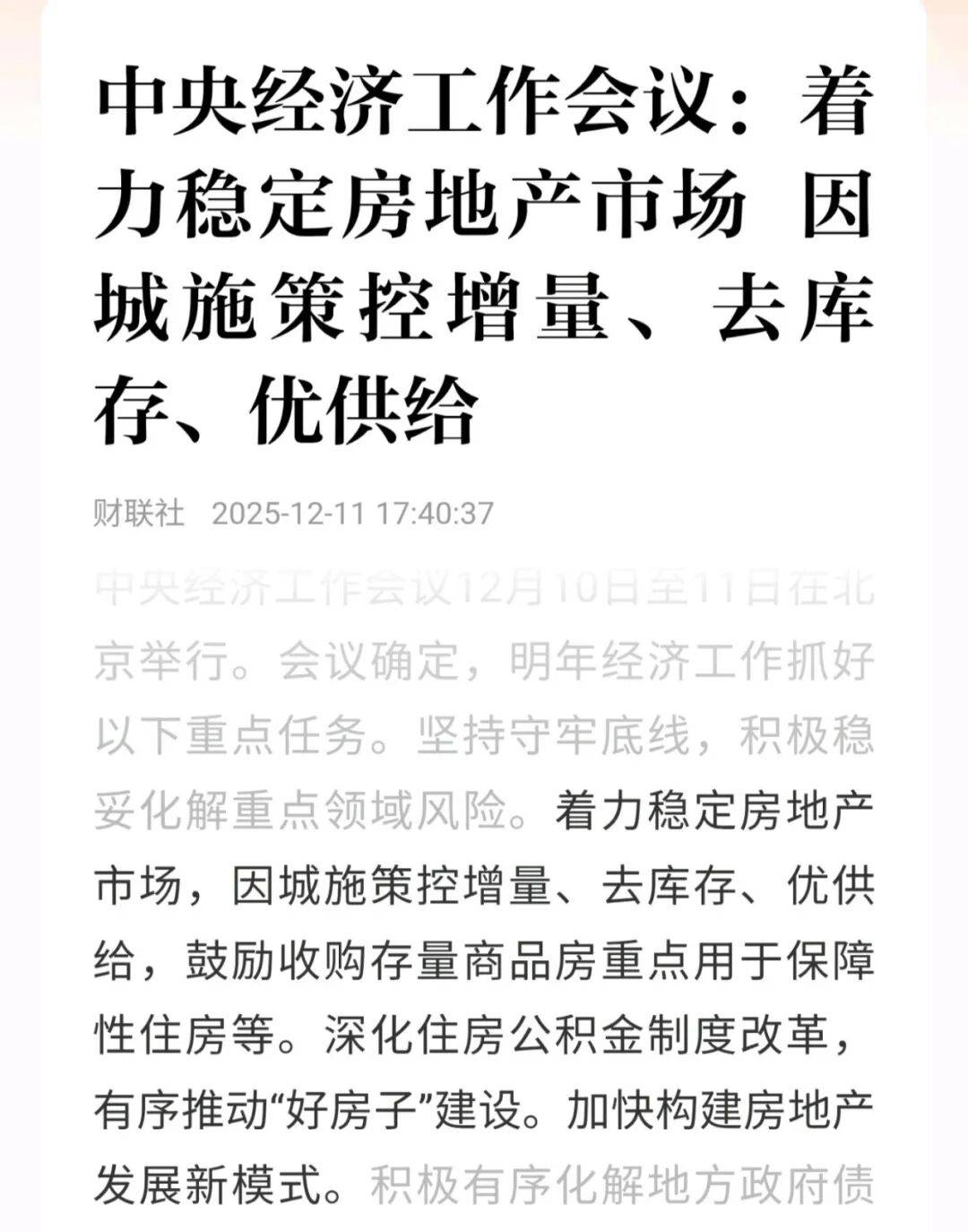
Group 1 - The central economic work conference emphasizes the need to stabilize the real estate market and new birth population scale, prioritizing domestic demand and reiterating policies like interest rate cuts [1][5] - The focus on stabilizing the real estate market is highlighted by the term "efforts" indicating a strong policy commitment, with strategies including controlling new supply, reducing inventory, and encouraging the acquisition of existing homes for affordable housing [4][2] - The long-term goal for real estate is to shift towards a "new model" that includes quality housing construction, urban renewal, and a dual rental and purchase system [5] Group 2 - The conference advocates for a positive marriage and childbirth outlook to stabilize the birth population, with recent data showing a slight increase in marriage rates [6][7] - A dual approach of fiscal and monetary easing is proposed, with a focus on maintaining necessary deficits and ensuring liquidity, while also considering price stability as a key factor [8][9] - The emphasis on stimulating consumption is elevated to a primary task, with a clear shift towards "domestic demand-led" growth, indicating that consumption will be the main driver of economic growth [9][10] Group 3 - Major city clusters like Beijing, Shanghai, and the Guangdong-Hong Kong-Macau Greater Bay Area are designated for specific roles in innovation and economic development, highlighting their importance as economic and technological hubs [10][11] - The future competition among cities will focus on innovation and emerging industries rather than traditional infrastructure investments, with a call for coordinated development and regional collaboration [11]