
大规模设备更新和消费品以旧换新

Search documents
融资租赁公司业务转型研究
Lian He Zi Xin· 2025-12-22 13:29
Investment Rating - The report does not explicitly provide an investment rating for the financing leasing industry Core Insights - The financing leasing industry is undergoing a transformation driven by stricter regulatory policies aimed at returning to its core function of serving the real economy. This transformation is particularly pressing for commercial leasing companies as they face increasing competition and pressure on profitability and asset quality [4][10] - The impact of debt reduction policies has limited the ability of financing leasing companies to engage in municipal investment projects, while a low interest rate environment has intensified competition within the industry [4][19] - The transition of financing leasing companies is seen as inevitable, with opportunities arising from national macro policies such as equipment upgrades and the "dual carbon" strategy [4][23] Summary by Sections External Environment for Business Transformation - Regulatory policies are guiding the industry back to its core functions, emphasizing compliance and service to the real economy. Key documents include the "12th Document" and the "8th Document," which impose stricter requirements on leasing assets and aim for a significant increase in direct leasing business by 2026 [6][7][10] - The debt reduction policies have significantly impacted municipal investment projects, which have traditionally been a major business segment for financing leasing companies. New policies restrict non-standard financing and require a focus on sustainable debt management [11][14] Business Transformation Opportunities - The government is promoting large-scale equipment upgrades and the replacement of consumer goods, creating new opportunities for financing leasing companies to align with national strategies [23][24] - The "dual carbon" strategy is also seen as a catalyst for the growth of green leasing businesses, with specific encouragement for financing leasing in renewable energy sectors [24][27] Transformation Effectiveness - The report highlights that financing leasing companies are diversifying into sectors such as aviation, green low-carbon initiatives, and high-end equipment. The focus is on aligning with regulatory expectations and market demands [26][27] - Data indicates that while some companies are successfully transitioning, many face significant challenges, particularly those heavily invested in municipal projects. Approximately 70% of sampled companies show a good business structure, but 30% face considerable pressure to transform [31][32] - The performance of financial leasing companies is mixed, with some achieving growth in direct leasing and green leasing, while others struggle with declining profitability and asset quality [48][49][58]
【忠阳车评】有效释放新能源汽车消费潜力
Zhong Guo Jing Ji Wang· 2025-12-19 22:53
Group 1 - The core viewpoint is that despite entering a 'high sales, low growth' phase, China's new energy vehicle (NEV) ownership ratio is expected to rise rapidly, with sales projected to exceed 20 million units next year [2] - The automotive industry is a strategic pillar of the national economy, contributing 10.65 trillion yuan in revenue last year, which accounted for 10% of the manufacturing sector [2] - NEVs have become a significant driver for economic growth, with over 200 billion yuan in vehicle consumption last year, positively impacting the entire industry chain and contributing to high-quality economic development [2] Group 2 - There is significant growth potential in rural areas for NEVs, as the penetration rate is currently only half that of urban areas, indicating a substantial market opportunity [3] - The "old-for-new" policy has generated new market space, with over 11.2 million vehicles replaced this year, leading to over 100 billion yuan in related sales [3] - Optimizing existing subsidy policies can enhance consumer enthusiasm for replacing old vehicles, thereby promoting the consumption of more advanced and intelligent NEVs [3] Group 3 - The automotive consumption landscape is shifting towards a balance between product and service consumption, with the automotive aftermarket becoming increasingly important [4] - New service forms such as digital services, software upgrades, and energy management are rapidly developing, with the smart connected NEV aftermarket projected to reach 5 trillion yuan by 2030 [4] - The automotive aftermarket is seen as a significant growth avenue, referred to as the "second growth curve" of the industry [4] Group 4 - Some major cities have implemented restrictions on vehicle purchases through lotteries or bidding, which may limit consumer access to vehicles [5] - The transition from purchase management to usage management in urban areas, facilitated by advancements in smart transportation systems, could help release the consumption potential of NEVs [5]


有效释放新能源汽车消费潜力
Jing Ji Ri Bao· 2025-12-19 22:02
Group 1 - The domestic automotive market has entered a "high sales, low growth" phase, but the proportion of new energy vehicles (NEVs) is expected to rise rapidly, with sales projected to exceed 20 million units next year [2] - The automotive industry is a strategic pillar of the national economy, contributing 10.65 trillion yuan in revenue last year, accounting for 10% of the manufacturing sector [2] - NEVs have become a significant driver for economic growth, with over 2 trillion yuan in consumption last year, positively impacting the entire industry chain and contributing to high-quality economic development [2] Group 2 - There is significant growth potential for NEVs in rural areas, where the penetration rate is currently only half that of urban areas, indicating a need for increased product supply and tailored models for rural consumers [3] - The "old-for-new" policy has generated new market opportunities, with over 11.2 million vehicles replaced this year, leading to over 100 billion yuan in related sales, although there are challenges that need to be addressed to enhance consumer participation [3] - The automotive aftermarket is evolving, with a shift towards service consumption alongside product consumption, and the market for smart connected NEVs is projected to reach 5 trillion yuan by 2030, representing a significant growth opportunity [4] Group 3 - Some major cities have implemented restrictions on vehicle purchases through lotteries or bidding, which may need to be reassessed as smart transportation systems develop, allowing for a shift from purchase management to usage management [5]

持续支持、优化实施大规模设备更新和消费品以旧换新——2026年,“国补”将继续
Xin Hua Wang· 2025-12-19 00:24
Core Viewpoint - The "National Subsidy" for the replacement of old consumer goods will continue in the coming year, as emphasized in the recent Central Economic Work Conference, which aims to optimize the implementation of the "Two New" policies [1][4]. Group 1: "Two New" Policy Overview - The "Two New" policies refer to large-scale equipment updates and the replacement of old consumer goods, closely related to ordinary consumers [2]. - The 2024 action plan for promoting large-scale equipment updates and consumer goods replacement includes support for automobiles, home appliances, and home renovation products [2]. - By 2025, the funding scale for the "Two New" policies will increase to 500 billion yuan, with 300 billion yuan allocated for consumer goods replacement, an increase of 150 billion yuan from the previous year [2]. Group 2: Economic Impact - The "Two New" policies have significantly contributed to promoting consumption, expanding investment, stabilizing growth, and improving living standards, thereby driving high-quality development [2]. - In the first three quarters, investment in equipment and tools increased by 14% year-on-year, contributing 2 percentage points to overall investment growth [3]. - The special bonds supporting equipment updates have funded approximately 8,400 projects, leading to total investments exceeding 1 trillion yuan, showcasing the multiplier effect of the policy [3]. Group 3: Consumer Benefits - From January to November this year, the replacement of old consumer goods generated over 2.5 trillion yuan in sales, benefiting more than 360 million people [5]. - The replacement of old automobiles exceeded 11.2 million units, while home appliances reached over 12.8 million units, indicating strong consumer engagement [5]. - The subsidies have effectively driven the upgrade of consumption structures, with smart appliances and new energy vehicles seeing significant sales growth [5]. Group 4: Future Implementation - The Ministry of Finance has indicated that the "Two New" policies will be optimized, including the introduction of new categories for subsidies such as smartphones and various home appliances [7]. - The implementation of personal consumption loan and service industry loan interest subsidy policies aims to enhance financing support for diverse consumer needs [7]. - Future adjustments to the "Two New" policies may include expanding subsidies to service consumption sectors to further stimulate consumer spending and economic growth [7].
“坚持内需主导”为何被摆在首位
Yang Shi Wang· 2025-12-12 09:48
中央经济工作会议刚刚落幕,2026年的经济工作蓝图已经铺开。在八大重点任务中,"坚持内需主导, 建设强大国内市场"被摆在首位,这不仅体现了决策层对当前经济形势的深刻洞察,更释放出一个清晰 而坚定的信号:中国经济的光明前景,正蕴藏于14亿多人民日益增长的美好生活需要之中。 此次会议提出"深入实施提振消费专项行动",并"制定实施城乡居民增收计划",抓住了扩大内需的根 本。收入是消费的基础,没有稳定的收入增长,消费就缺乏支撑。 因此,把"增收"作为提振消费的前提,体现了政策设计的系统性和前瞻性。会议强调"着力稳就业、稳 企业、稳市场、稳预期",正是为了夯实居民收入增长的根基。只有企业稳了,岗位才稳;岗位稳了, 收入才稳;收入稳了,消费信心才能真正恢复。 值得关注的是,会议特别强调要"释放服务消费潜力",并提出"清理消费领域不合理限制措施"。这一提 法具有很强的现实针对性。 2024年,我国居民人均服务性消费支出占人均消费支出的比重为46.1%,与发达国家相比仍有明显差 距。无论是文旅休闲、教育培训,还是医疗康养、信息通信,服务消费需求旺盛,但一些体制机制障碍 仍制约着供给质量和效率。此次明确提出清理消费领域不合理限 ...
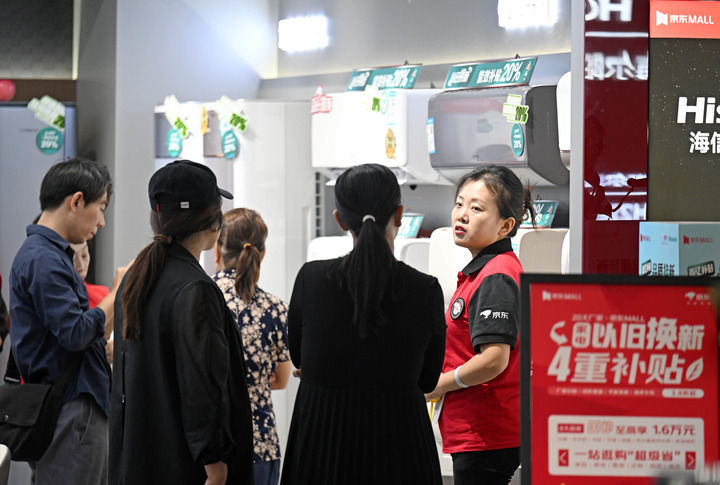
会议定调“两新”优化,2026年国补延续预期升温,消费电子ETF(561600)稳步走强
Sou Hu Cai Jing· 2025-12-12 04:06
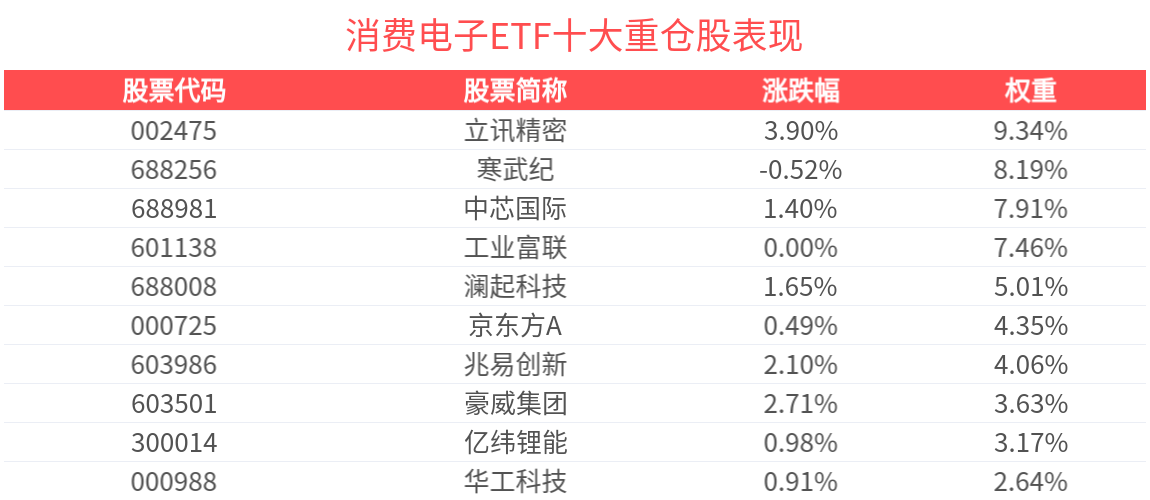
Core Viewpoint - The Central Economic Work Conference held on December 10-11 has outlined the optimization of the "large-scale equipment update and consumer goods replacement" policy for 2026, with a focus on extending and optimizing the "national subsidy" policy closely related to consumer electronics [1] Group 1: Policy Impact - The national subsidy policy has shown significant effectiveness, with over 2.5 trillion yuan in sales driven by the replacement program under the support of 300 billion yuan in long-term special bonds in 2025 [1] - The continuation of the national subsidy is expected to further stimulate terminal demand, alongside product upgrade cycles driven by AI technology penetration in the consumer electronics sector [1] Group 2: Market Performance - As of December 12, 2025, the CSI Consumer Electronics Theme Index (931494) rose by 1.50%, with notable increases in component stocks such as Dongshan Precision (6.51%), Beijing Junzheng (5.89%), and Chipone (5.75%) [1] - The Consumer Electronics ETF (561600) also saw a rise of 1.36%, with a latest price of 1.19 yuan, and a trading volume of 969.20 million yuan [1] Group 3: ETF Growth - The Consumer Electronics ETF experienced a significant growth of 32.59 million yuan in scale over the past month [2] - The CSI Consumer Electronics Theme Index includes 50 listed companies involved in component production and consumer electronics design, reflecting the overall performance of the sector [2] - The top ten weighted stocks in the index account for 56.39% of the total index weight, indicating a concentrated market structure [2]
财政部官宣 事关1.3万亿元超长期特别国债
Di Yi Cai Jing· 2025-10-09 14:09
Core Viewpoint - The issuance of ultra-long-term special government bonds in China is set to conclude this year, with a total issuance of 1.3 trillion yuan planned for 2024, aimed at supporting major national strategies and key areas of security and equipment renewal [1][3]. Group 1: Issuance Details - The Ministry of Finance announced the issuance schedule for ultra-long-term special government bonds, with 50-year and 20-year bonds to be issued on October 10 and October 14, respectively [1]. - As of October 9, a total of 1.23 trillion yuan in ultra-long-term special government bonds has been issued this year, leaving 70 billion yuan yet to be issued [2]. - The final bond issuance on October 14 will consist of 400 billion yuan in 20-year bonds, following a 300 billion yuan issuance of 50-year bonds on October 10 [2]. Group 2: Fund Utilization - The 1.3 trillion yuan from ultra-long-term special government bonds is allocated as follows: 300 billion yuan for consumer goods replacement, 200 billion yuan for equipment renewal, and 800 billion yuan for "two major" construction projects [3]. - The State Development and Reform Commission has allocated the fourth batch of 690 billion yuan for consumer goods replacement, completing the annual allocation of 300 billion yuan for this purpose [3]. - From January to August, 330 million people have claimed subsidies for consumer goods replacement, resulting in over 2 trillion yuan in related sales [3].
国家发展改革委下达陕西“两新”资金120.22亿元
Shan Xi Ri Bao· 2025-09-21 00:08
Group 1 - The National Development and Reform Commission (NDRC) has allocated a total of 12.022 billion yuan in special long-term bonds to support large-scale equipment updates and consumer goods replacement in Shaanxi province, representing a 71% increase compared to 2024 [1] - Funding for large-scale equipment updates amounts to 4.522 billion yuan, showing a year-on-year growth of 49.2%, supporting 158 projects [1] - The consumer goods replacement program has received funding in four batches totaling 7.5 billion yuan, with a year-on-year increase of 87.5%, and 3 batches totaling 5.75 billion yuan have already been disbursed [1] Group 2 - The Shaanxi provincial government has successfully integrated equipment update proposals into the national support policy framework, resulting in over a 100% increase in funding for environmental infrastructure, energy equipment, logistics facilities, educational equipment, and key industrial sectors [2] - The number of supported residential old elevator renovation projects has increased sevenfold, and an additional 100 million yuan in subsidies for consumer goods replacement has been secured [2] - From January to July, investment in the purchase of equipment and tools in Shaanxi has maintained a high growth rate of 28.4%, contributing 2.9 percentage points to overall investment growth [2]
前8月中国汽车产销量首次双超2000万辆
Zhong Guo Xin Wen Wang· 2025-09-11 09:56
Group 1 - In the first eight months of 2023, China's automobile production and sales both exceeded 20 million units for the first time, with year-on-year growth maintaining double digits [1][2] - The production and sales figures for January to August reached 21.05 million and 21.128 million units, respectively, representing year-on-year increases of 12.7% and 12.6% [1] - New energy vehicles (NEVs) accounted for 45.5% of total new car sales, with production and sales of NEVs reaching 9.625 million and 9.62 million units, respectively, showing year-on-year growth of 37.3% and 36.7% [1] Group 2 - In August 2023, automobile production and sales were 2.815 million and 2.857 million units, respectively, with month-on-month increases of 8.7% and 10.1%, and year-on-year increases of 13.0% and 16.4% [2] - NEV production and sales in August reached 1.391 million and 1.395 million units, with year-on-year growth of 27.4% and 26.8%, making up 48.8% of total new car sales [2] - From January to August, automobile exports totaled 4.292 million units, a year-on-year increase of 13.7%, with NEV exports reaching 1.532 million units, showing a significant year-on-year growth of 87.3% [2]
康力电梯2025年半年度网上业绩说明会:稳健经营,多元布局创未来
Quan Jing Wang· 2025-09-04 13:50
Core Viewpoint - 康力电梯 demonstrates a strong performance in the first half of 2025, showcasing its proactive approach in the evolving elevator industry and its strategic focus on market expansion and innovation [1][2]. Financial Performance - In the first half of 2025, 康力电梯 achieved operating revenue of 1.858 billion yuan and a net profit attributable to shareholders of 180 million yuan, reflecting a year-on-year growth of 2.29% in profitability [2]. - The company's overseas business revenue reached 221 million yuan, marking a significant year-on-year increase of 54.94%, indicating robust international market expansion [2]. - The company reported positive growth in new effective orders and stable operating cash flow, providing a solid financial foundation for ongoing development [2]. Market Opportunities - The Chinese government is promoting large-scale equipment upgrades and old elevator replacements, with financial support for updating old elevators included in fiscal funding. By June 2023, 41,000 old residential elevators had been updated with government support, and 18 billion yuan has been allocated for the replacement of 120,000 old elevators by 2025 [3]. - 康力电梯 is actively positioning itself in the stock market for elevator upgrades and renovations, enhancing its service capabilities and expanding sales channels in the after-market sector [3]. Innovation and Competitive Edge - 康力电梯 is committed to innovation during the transition from incremental to stock market growth, implementing scenario-based solutions and value marketing to explore new application areas for elevators [4]. - The company is strengthening its after-market business organization, increasing professional talent recruitment, and providing comprehensive support to partners through various initiatives [4]. - 康力电梯 aims to deepen cooperation in key strategic customer markets and enhance its service sales channels to boost revenue from maintenance and renovation services [4]. Investment Strategy - In addition to its core elevator business, 康力电梯 is diversifying its investments in property services, smart manufacturing, IoT, digital economy, and advanced equipment through direct investments and partnerships [5]. - The investment strategy aims to foster collaborative development with partner companies and explore opportunities for product and technology innovation [5]. - Looking ahead, 康力电梯 plans to continue its innovative and proactive approach to market expansion, enhancing product and service competitiveness to create greater value for shareholders [5].
