工业互联网平台

Search documents
新华财经晚报:天津新房价格管控收紧
Zhong Guo Jin Rong Xin Xi Wang· 2026-01-13 09:53
Group 1 - The Chinese Ministry of Foreign Affairs responded to the U.S. imposing a 25% tariff on countries doing business with Iran, stating that China will firmly protect its legitimate rights and interests, emphasizing that there are no winners in a trade war [2] - The Ministry of Commerce announced that from January 14, 2026, it will continue to impose anti-dumping duties on imported solar-grade polysilicon from the U.S. and South Korea for a period of five years [3] - Five departments, including the Ministry of Human Resources and Social Security, issued a notice to regulate the order of online recruitment, requiring platforms to ensure the authenticity and legality of job postings and to monitor illegal activities [3] Group 2 - The Jiangsu provincial government released an action plan for "Artificial Intelligence +", aiming to cultivate new intelligent native industries and support the development of various AI-related technologies and services [4] - Reports indicate that Tianjin will tighten the management of new residential property prices, limiting price changes to within 10% of the approved price for new sales permits, with stricter measures for significant discounts [4] - Guizhou Moutai announced that its board meeting on January 13, 2026, approved a market-oriented operation plan for Moutai liquor, focusing on a dynamic pricing mechanism based on market conditions [5]


影响市场重大事件:四川拟加密北斗卫星导航定位基准站,推进北斗高精度位置服务的应用;工信部印发《推动工业互联网平台高质量发展行动方案(2026—2028年)》
Mei Ri Jing Ji Xin Wen· 2026-01-13 08:52
Group 1 - Sichuan plans to enhance the Beidou satellite navigation positioning reference station network to improve service coverage and accuracy, supporting applications in e-commerce, logistics, precision agriculture, platform economy, and intelligent connected vehicles [1] - The Ministry of Commerce emphasizes expanding pilot programs for value-added telecommunications and foreign-funded hospitals during the 14th Five-Year Plan, aiming for greater openness in service sectors [2][8] - The Ministry of Industry and Information Technology (MIIT) has issued an action plan for the high-quality development of industrial internet platforms from 2026 to 2028, targeting over 450 influential platforms and connecting more than 120 million industrial devices by 2028 [3][6] Group 2 - Jiangsu's "Artificial Intelligence+" action plan aims to enhance biopharmaceutical R&D capabilities by promoting AI applications in drug target screening and molecular design, and establishing a public service platform for small and medium enterprises [4] - The plan also supports the development of an "one-person company" (OPC) model in AI innovation and entrepreneurship, focusing on creating a technology and service system driven by model and data services [5] - By 2030, Jiangsu aims for a 90% penetration rate of intelligent applications and an AI industry scale exceeding 1 trillion yuan, positioning intelligent economy as a key growth driver [7][8] Group 3 - A research team from the Chinese Academy of Sciences has made significant progress in the development of high-performance sodium-ion battery cathode materials, achieving rapid sodium ion transport and excellent cycling stability through a multi-scale modification strategy [9]
中国制造迎来“三重跃迁”
Zheng Quan Ri Bao· 2025-12-29 17:11
Core Insights - The integration of artificial intelligence into China's manufacturing sector has evolved beyond basic automation, leading to significant transformations in smart manufacturing [1][2][3] Group 1: First Leap - The first leap is from "functional substitution" to "system reconstruction," where AI becomes the central nervous system of manufacturing, optimizing processes and participating in innovative design [1] - AI technologies are enabling autonomous perception, planning, and learning, transitioning production lines from rigid automation to flexible intelligence [1] Group 2: Second Leap - The second leap is from "data silos" to "network collaboration," addressing the bottlenecks caused by data barriers within enterprises and across supply chains [2] - The emergence of industrial internet platforms and reliable data spaces is facilitating seamless data flow, enhancing collaboration among enterprises [2] Group 3: Third Leap - The third leap is from "efficiency-first" to "effectiveness-balanced," where the integration of intelligence and sustainability is becoming a key trend [2] - Companies are increasingly focusing on energy resource optimization and carbon footprint management within their smart systems, moving towards a comprehensive effectiveness competition that includes quality and sustainability [2] Future Outlook - Looking ahead to 2026, a more intelligent, collaborative, and sustainable vision for China's manufacturing industry is becoming clearer [3]
四川新型工业化的三个“度”
Si Chuan Ri Bao· 2025-11-20 00:33
Core Insights - Sichuan province is focusing on modern industrialization as a key strategy to strengthen its real economy, with an emphasis on new industrialization as the main engine for growth [6][11]. Speed - Since the 14th Five-Year Plan, Sichuan's industrial output value has grown at an average annual rate of 6.6%, with the total industrial output value increasing from 1.34 trillion yuan to 1.79 trillion yuan, ranking seventh in the country [11]. - The largest single industrial project in the province, a new 8.6-generation AMOLED production line by BOE Technology Group, is progressing rapidly, having been completed in just 183 days [8][9]. - Sichuan has implemented over 15,000 manufacturing projects, driving manufacturing investment to exceed 2 trillion yuan [10]. Strength - The automotive manufacturing sector in Sichuan has seen significant growth, with a 626% year-on-year increase in new energy vehicle production, reaching 146,900 units in the first three quarters of the year [12]. - The province is home to 17 key industrial chains, with a focus on enhancing production capabilities, particularly in new energy vehicles and lithium-ion batteries, which have seen production increases of 170% and 55% respectively [12][13]. - Sichuan produces nearly half of the world's high-end flexible screens and is a major player in various manufacturing sectors, including nuclear power and steel equipment [13]. Precision - Sichuan's industrial enterprises have increased R&D investment and intensity by 50% and 41% respectively during the 14th Five-Year Plan period, with a profit margin of 7.3%, ranking first among major economic provinces [17]. - The province has five advanced manufacturing clusters recognized globally, covering sectors such as electronic information and energy equipment, ranking fourth in the country [16]. - The revival of the once-dormant pump and valve industry in Zigong is a testament to targeted industrial policies, with the total output value of the industry cluster projected to reach 13.637 billion yuan by 2024 [18].

走进中关村科技园区房山园暨储能产业链智能升级沙龙活动预通知
中关村储能产业技术联盟· 2025-10-23 07:23
Core Insights - The energy storage industry is transitioning from a phase of scale expansion to a critical period of high-quality development, focusing on production quality improvement, product design upgrades, and optimization of trading methods [2] - Technologies such as AI deep learning, digital twins, and industrial internet platforms are enhancing automation in battery cell assembly, optimizing system integration processes, and enabling real-time energy consumption monitoring [2] - The integration of big data, blockchain, and intelligent algorithms is facilitating real-time processing of trading data, digital asset rights confirmation, and market pricing model construction [2] Event Details - The event theme is "Cross-border Integration, Collaborative Evolution: Building a New Intelligent Landscape for the Entire Energy Storage Chain" [3] - Scheduled for October 31, 2025, at the Zhongguancun Science Park, Fangshan Garden [3] - The event will host approximately 80 participants [4] Organizational Structure - Organized by the Zhongguancun Energy Storage Industry Technology Alliance and the Fangshan District Science and Technology Committee [4] - Supported by companies such as Beijing Haibo Sichuang Technology Co., Ltd. and New Source Intelligent Storage Energy Development (Beijing) Co., Ltd. [4] Event Features - Policy support from the Beijing Municipal Science and Technology Commission and local government to provide service backing for the industry [4] - Discussions on the application of AI deep learning, digital twins, and industrial internet platforms in energy storage production, system integration, and energy consumption monitoring [4] - Exploration of intelligent management models for the entire lifecycle of energy storage products, enhancing safety, reliability, and resource utilization efficiency [4] Agenda Overview - The agenda includes various thematic reports from industry experts on topics such as intelligent manufacturing solutions for energy storage systems and the application of industrial AI in production assembly [5] - A factory visit is scheduled for invited participants [5] Registration Information - The event is free of charge, with participants responsible for their own transportation costs [6] - Interested parties are invited to register by October 26, 2025 [6]

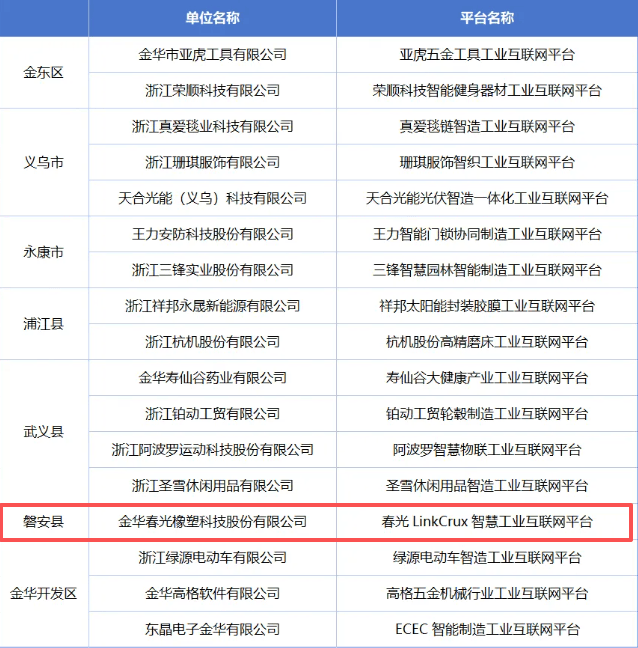
我县1家企业入选第六批省级工业互联网平台
Sou Hu Cai Jing· 2025-10-04 18:18
Core Viewpoint - The announcement of the sixth batch of provincial industrial internet platforms in Zhejiang Province includes the recognition of Jinhua Chunguang Rubber and Plastic Technology Co., Ltd. as a key player in the industrial internet sector [1][3]. Company Overview - Jinhua Chunguang Rubber and Plastic Technology Co., Ltd. is a national high-tech enterprise specializing in the research, production, and sales of cleaning appliance hoses, accessories, and complete machines [6]. - The company has established itself as a leader in the vacuum cleaner hose supply industry in China and is recognized as a top-tier supplier globally [6]. - Chunguang has obtained 31 utility model and design patents, along with 2 major technology patents from Zhejiang Province, showcasing its strong research and development capabilities [6]. Industry Context - The industrial internet platform aims to meet the digital, networked, and intelligent needs of the manufacturing industry by building a service system based on massive data collection, aggregation, and analysis [3]. - This platform supports ubiquitous connection of manufacturing resources, flexible supply, and efficient allocation within the industrial cloud environment [3].

两江潮涌处,“渝”见服务新未来——重庆建设现代服务业发展高地观察
Xin Hua Wang· 2025-09-17 02:26
Group 1: Core Insights - The article highlights the transformation of Chongqing's manufacturing sector towards high-end services and digitalization, driven by innovation and modern service industries [1][2][5] - Chongqing is positioning itself as a key industrial base in China, with a significant focus on production-oriented service industries that are expected to account for 36% of the economy by 2030 [4][5] - The integration of advanced technologies such as AI and industrial internet platforms is enhancing production efficiency and enabling smart manufacturing in Chongqing [2][3][4] Group 2: Manufacturing and Service Industry Developments - The number of advanced intelligent factories in Chongqing has reached 178, with basic intelligent factories totaling 980, showcasing the rapid growth of smart manufacturing [4] - The production of motorcycles in Chongqing is projected to reach 3.622 million units in the first half of 2025, reflecting a year-on-year growth of 23.1%, surpassing the national growth rate [4] - The city has become a hub for laptop manufacturing, with over 2,300 supporting enterprises, producing one in three laptops globally [4] Group 3: Digital and Tourism Innovations - Digital upgrades in tourism have significantly increased visitor numbers, with projects like the "Chongqing 2088 Future Journey" enhancing the city's appeal [6][7][9] - The use of drone light shows has attracted over 4 million viewers, indicating a successful integration of technology into tourism experiences [8][9] - Smart tourism management systems are being implemented in various locations, improving service quality and visitor experience [9] Group 4: Open Economy and International Cooperation - Chongqing is recognized as a pilot city for expanding service industry openness, with significant achievements in international standard formulation and innovative cross-border trade initiatives [12][13] - The city has established partnerships with international entities, enhancing investment flows and cooperation in various sectors [13][14] - Projects like the establishment of the Singapore-Raffles Education Group's high school in Chongqing reflect the city's commitment to fostering international talent and educational exchanges [14]
奥克斯(AUX):全球领先的空调提供商已启动招股
Xin Lang Cai Jing· 2025-08-24 23:31
Core Viewpoint - Aux Air Conditioning Co., Ltd. has launched its IPO, positioning itself as a leading global air conditioning provider with a comprehensive business model covering design, R&D, production, sales, and service across over 150 countries and regions [1][2]. Company Overview - Aux has over 30 years of experience in the air conditioning industry, utilizing the "AUX" brand to penetrate both domestic and international markets through a multi-brand strategy to meet diverse consumer needs [2]. - The product matrix focuses on home and central air conditioning, emphasizing energy efficiency, comfort, health, and intelligence, with rapid product iteration and expansion to cover various application scenarios such as residential and commercial buildings [2]. - Aux has established a robust global R&D network with centers in Ningbo, Zhuhai, and Japan, employing over 1,600 dedicated R&D personnel [2]. - The company has innovated a new retail model called "Xiao Aux Direct Sales," integrating online and offline channels to enhance operational efficiency [2]. - Aux has developed an industrial internet platform to achieve refined management across the entire value chain, improving efficiency in various business segments [2]. - During the performance record period, Aux demonstrated strong revenue and net profit growth, indicating a positive development trend [2].
“中国速度”走向世界
Zhong Guo Qi Che Bao Wang· 2025-06-18 01:54
Core Viewpoint - The automotive industry is undergoing a transformation towards electrification and intelligence, with "Chinese speed" becoming a benchmark for efficiency and competitiveness in product development [2][3][4]. Group 1: Industry Trends - The traditional automotive product development cycle, which used to take 3 years or more, has been significantly reduced to 12-18 months in China, reflecting a shift towards faster iteration and innovation [3][4]. - Major global automakers like Volkswagen and Nissan are adopting strategies to shorten their product development timelines, with Volkswagen aiming to reduce its new model development time from 54 months to 36 months [3][5]. - The shift towards a "fast consumer era" is prompting automotive companies to align their development processes more closely with those in the consumer electronics sector, leading to quicker product launches and iterations [3][6]. Group 2: Impact of Chinese Companies - Chinese automakers such as BYD, Chery, and Leap Motor are leveraging their rapid development capabilities to expand globally, responding quickly to local market demands [2][4]. - The competitive pressure from Chinese companies is forcing international automakers to accelerate their own product development cycles to keep pace [4][5]. - Nissan has committed to reducing its product development cycle in China to under 24 months, emphasizing the need to maintain "Chinese rhythm" in its global strategy [5][11]. Group 3: Technological Innovations - Advances in technology, including AI, big data, and cloud computing, are reshaping the automotive industry's development processes, enabling faster product iterations [6][8]. - The application of digital twin and virtual simulation technologies is significantly shortening vehicle development cycles, while modular architectures enhance efficiency [6][8]. - The integration of new technologies in electric and intelligent vehicles is allowing for more frequent product updates and iterations [6][8]. Group 4: Global Collaborations - International automakers are increasingly collaborating with Chinese companies to enhance their product development capabilities, as seen in partnerships between Volkswagen and local firms like Xpeng Motors [9][10]. - The trend of "reverse technology transfer" is emerging, where Chinese innovations are being adopted globally, with companies like Mercedes-Benz leveraging Chinese R&D for global projects [10][11]. - Chinese automotive companies are expanding overseas, establishing production bases and R&D centers in various countries, thus promoting "Chinese speed" on a global scale [12][13].



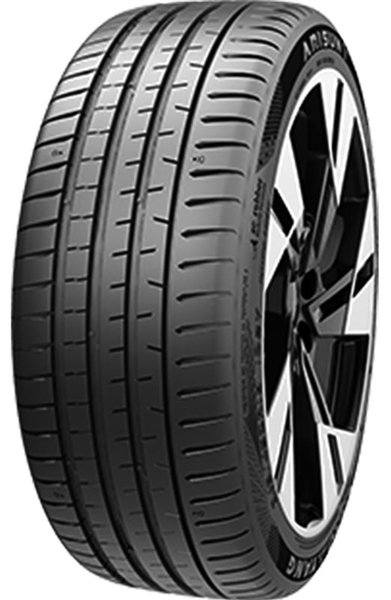
朝阳轮胎“蹦”上主板
Mei Ri Shang Bao· 2025-06-05 22:18
Group 1 - Zhongce Rubber Group Co., Ltd. officially listed on the Shanghai Stock Exchange on June 5, 2023, with a market value approaching 50 billion yuan, marking the largest IPO in the A-share market this year [2] - The company issued 87.44 million new shares at a price of 46.5 yuan per share, raising approximately 4.06 billion yuan in net funds, which will primarily be used for high-performance tire production projects [2] - Zhongce Rubber has a history dating back to 1958, evolving from producing rubber shoes to becoming a major player in the tire industry, with brands like Chaoyang and others under its umbrella [3] Group 2 - The company sells 200 million tires annually and ranks among the top 10 global tire manufacturers, providing tire products to major automotive manufacturers such as FAW Jiefang, BAIC Foton, and BYD [4] - Zhongce Rubber has established six R&D centers and 12 manufacturing bases globally, with an annual R&D investment exceeding 1.3 billion yuan, and has created an industrial internet platform to enhance production efficiency [4] - The successful listing of Zhongce Rubber reflects the growth of enterprises in Hangzhou, with local initiatives aimed at promoting quality company listings and facilitating a positive cycle between enterprises, capital, and industry [4]