旅游行业

Search documents
老外涌进中国洗浴中心
吴晓波频道· 2026-03-25 00:30
Core Viewpoint - The article highlights the growing interest of foreign tourists in Chinese cultural experiences, particularly in traditional bathing culture, which is becoming a significant aspect of China's tourism appeal and service consumption potential [3][6][12]. Group 1: Cultural Experience and Tourism Growth - Foreign tourists are increasingly seeking deeper cultural experiences in China, moving beyond traditional sightseeing to engage in local customs and practices, such as visiting bathhouses [6][8]. - The Shanghai Municipal Bureau of Culture and Tourism projects that by 2025, Shanghai will receive approximately 9.36 million inbound tourists, marking a 39.58% year-on-year increase, with bathhouses becoming popular destinations [5][12]. - The trend of foreign tourists visiting bathhouses reflects a shift in perception of China, where experiences like traditional bathing are now seen as integral to understanding Chinese culture [6][14]. Group 2: Bathhouse Experience and Appeal - The unique features of Chinese bathhouses, including their affordability and comprehensive services, attract foreign visitors who find them to be a blend of relaxation, social interaction, and cultural immersion [9][11]. - Many foreign tourists describe their experiences in Chinese bathhouses as unparalleled, often highlighting the social atmosphere and the cultural significance of communal bathing [8][9]. - The cost-effectiveness of these experiences, such as spending around 200 RMB for a full day at a bathhouse, is seen as a significant advantage compared to similar offerings in other countries [11][12]. Group 3: Economic Impact and Future Potential - The influx of foreign tourists is contributing significantly to the growth of China's bathing industry, with reports indicating a peak in transaction volume and a year-on-year growth rate exceeding 20% [11][12]. - The article emphasizes the potential for China's inbound tourism revenue to grow significantly, suggesting that if it reaches levels comparable to other countries, it could add between 1 trillion to 2 trillion RMB to the market [18]. - The government is actively promoting the "Buy in China" initiative, aiming to transform the current tourism boom into sustainable service consumption growth, thereby enhancing the overall economic development [28][29].


大摩闭门会:马年开市四问
2026-02-24 14:16
Summary of Conference Call Notes Industry or Company Involved - The discussion primarily revolves around the **U.S. tariffs** and their implications on the **Chinese economy** and various **industries**, particularly focusing on the **tourism sector** and the impact of **AI** on different industries. Core Points and Arguments 1. **U.S. Tariff Changes**: - The U.S. is expected to lower tariffs on foreign countries in the short term, but medium-term uncertainties remain, with potential targeted tariffs on specific countries and industries [2][5][6]. - The peak of tariffs is likely over, with the average tariff rate on Asian countries dropping from 20% to 17%, and China's rate decreasing from 32% to 24% [5][6]. 2. **Impact of AIPA Ruling**: - The U.S. Supreme Court ruling on the AIPA means certain tariffs imposed under emergency powers will be reversed, affecting tariffs on China, Canada, and Mexico [3][4]. 3. **Long-term Tariff Strategy**: - The U.S. administration may revert to using procedural laws for tariffs, which are more complex and time-consuming, indicating a shift from broad tariffs to more targeted measures [4][5][6]. 4. **Sector-Specific Tariff Risks**: - Non-strategic consumer goods are less likely to face tariffs, while sectors like semiconductors, shipbuilding, and pharmaceuticals remain at risk [7][8]. 5. **China's Economic Outlook**: - The potential for re-inflation in China is debated, with concerns that achieving significant inflation is challenging due to weak domestic demand and ongoing adjustments in the real estate sector [9][10][12][30]. 6. **AI's Impact on Industries**: - AI is causing significant disruptions across various sectors, with a shift from broad adoption to more nuanced applications, affecting industries differently [13][15][20]. 7. **Tourism Sector Insights**: - The tourism industry is expected to outperform overall consumption growth, with projected revenues reaching 50 trillion RMB over the next five years, driven by both domestic and inbound tourism [39][40]. 8. **Airline Industry Trends**: - The airline sector is experiencing a recovery, with increased passenger flow and rising ticket prices during peak travel periods, although capacity remains constrained [41][42][44]. Other Important but Possibly Overlooked Content 1. **Global Market Stability**: - The stability of the U.S. stock market is crucial for global investor sentiment, particularly affecting Chinese markets and risk appetite for Chinese stocks [19][21]. 2. **Investment Sentiment**: - There is a notable shift in investment strategies, with a recommendation to move from large-cap to small-cap stocks in the U.S. market [22]. 3. **Currency Dynamics**: - The appreciation of the RMB against the USD is viewed as a significant positive factor for the Chinese economy [25]. 4. **Consumer Behavior**: - The demand for leisure travel is increasing, indicating a shift in consumer preferences towards experiences rather than just labor migration [40][41]. 5. **Long-term Economic Adjustments**: - The need for structural adjustments in the Chinese economy is emphasized, particularly in addressing overcapacity and enhancing consumer demand [10][30][33]. This summary encapsulates the key discussions and insights from the conference call, highlighting the implications of U.S. tariffs, the potential for economic recovery in China, and the evolving landscape of various industries influenced by AI and consumer behavior.
2026年春节社服行业数据点评
2026-02-24 14:16
Summary of the Conference Call Records Industry Overview - The social service industry showed significant recovery during the 2026 Spring Festival, with transportation and travel accelerating. Railway growth reached 10.7% and civil aviation grew by 8%. The hotel industry also saw substantial growth from a low base, with Hainan's duty-free sales increasing by 19% year-on-year, indicating a stabilizing consumption environment and strong leisure demand [1][2]. Core Insights and Arguments - The social service industry is viewed positively for its allocation value, as the effects of policy stimulus have not yet fully materialized, but demand is showing signs of stabilization and recovery. The direction of policy support for service consumption is clear, suggesting investment in quality leading companies and turnaround candidates such as Luckin Coffee, Atour, Gu Ming, Huazhu, and China Duty Free [1][5]. - The hotel and duty-free sectors performed well during the Spring Festival, but high pre-holiday expectations may have already been reflected in stock prices. China Duty Free's valuation is considered expensive, with the market focusing on the sustainability of its high growth [1][6]. - The issuance of consumption vouchers and government subsidies is a key concern for investors, as these policies are expected to cause stock price fluctuations. The impact of gold and mobile phone categories on China Duty Free's gross margin differs, with gold having a positive effect and mobile phones potentially having a negative impact [1][7][8]. Important but Overlooked Content - The hotel industry data is not fully released yet, but early indicators show significant growth in hotel demand during the Spring Festival, with occupancy rates increasing by 10% to 20%. However, business travel demand's actual improvement remains to be observed, with March being a critical observation point [1][9]. - The overall travel and dining sectors experienced robust demand during the Spring Festival, with nationwide retail and dining enterprises seeing an average daily sales increase of 8.6% year-on-year [1][11]. - Japan's service consumption policies provide valuable insights for China, highlighting the effectiveness of combining short-term direct stimulus with long-term institutional optimization to enhance service consumption [1][12]. Key Companies to Watch - In the dining sector, recommended companies include Luckin Coffee, Gu Ming, Mixue, and Yum China. Luckin Coffee has shown strong same-store growth, while Gu Ming is expanding its offerings and maintaining a robust growth trajectory. Mixue is also expanding aggressively, and Yum China is expected to see modest growth in same-store sales [1][14][15]. - In the tourism sector, attention is drawn to Shaanxi Tourism, which has quality assets and is expected to maintain steady growth, with profit increments anticipated from its subsidiaries and upcoming projects [1][16].
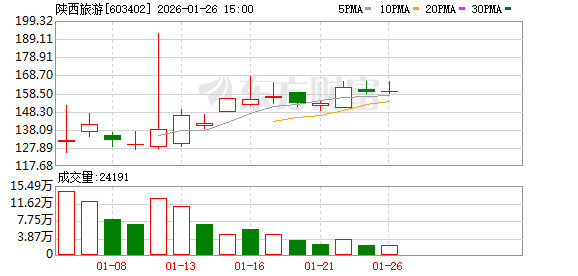
陕西旅游:关于变更注册资本、公司类型及修订章程并办理工商变更登记的公告
Zheng Quan Ri Bao· 2026-01-26 14:12
Group 1 - The company, Shaanxi Tourism, announced the completion of its business registration changes, increasing its registered capital from 58 million to 77.33334 million [2] - The company type has changed from a non-listed, state-controlled limited company to a listed, state-controlled limited company [2]
拆掉“诗和远方”的年龄门槛
Xin Lang Cai Jing· 2026-01-21 22:38
Group 1 - The primary obstacle for elderly individuals in tourism is the "age threshold," which has become a common practice among travel agencies to impose restrictions based on age, such as refusing high-age customers, requiring family accompaniment, signing liability waivers, and providing health certificates [1] - Travel companies are setting barriers due to the higher health risks associated with elderly travelers, which complicates issues like trip interruptions, medical care, and liability [1] - Using age as a sole criterion for service provision constitutes discrimination against elderly consumers and violates the principles of fair trade, as it fails to establish a scientific risk assessment mechanism or provide alternative solutions [1] Group 2 - The directive from the State Council emphasizes replacing age constraints with health status assessments, requiring health departments to focus on elderly individuals' physiological functions and chronic disease management to create a scientific health risk assessment system [2] - Travel companies need to develop refined and diversified products tailored to the elderly market, addressing the gap in supply for this demographic by focusing on areas like health and wellness, cultural experiences, and photography [2] - Financial innovation is essential to support elderly travel, encouraging the development of insurance products that cater to elderly travelers, optimizing pricing mechanisms, and expanding coverage to provide adequate protection at reasonable prices [2]
新华财经晚报:天津新房价格管控收紧
Zhong Guo Jin Rong Xin Xi Wang· 2026-01-13 09:53
Group 1 - The Chinese Ministry of Foreign Affairs responded to the U.S. imposing a 25% tariff on countries doing business with Iran, stating that China will firmly protect its legitimate rights and interests, emphasizing that there are no winners in a trade war [2] - The Ministry of Commerce announced that from January 14, 2026, it will continue to impose anti-dumping duties on imported solar-grade polysilicon from the U.S. and South Korea for a period of five years [3] - Five departments, including the Ministry of Human Resources and Social Security, issued a notice to regulate the order of online recruitment, requiring platforms to ensure the authenticity and legality of job postings and to monitor illegal activities [3] Group 2 - The Jiangsu provincial government released an action plan for "Artificial Intelligence +", aiming to cultivate new intelligent native industries and support the development of various AI-related technologies and services [4] - Reports indicate that Tianjin will tighten the management of new residential property prices, limiting price changes to within 10% of the approved price for new sales permits, with stricter measures for significant discounts [4] - Guizhou Moutai announced that its board meeting on January 13, 2026, approved a market-oriented operation plan for Moutai liquor, focusing on a dynamic pricing mechanism based on market conditions [5]

2026年旅游市场强劲开局
Zhong Guo Zheng Quan Bao· 2026-01-04 20:07
Core Insights - The tourism market experienced a strong start during the New Year's holiday in 2026, indicating a shift in consumer behavior and preferences [1] - Changes in consumption structure, destination choices, and experiential activities are setting the stage for high-quality development in cultural and tourism consumption throughout 2026 [1] Group 1 - The tourism market is showing significant growth and transformation, reflecting new consumer trends [1] - There is a diversification in destination selection and travel experiences, highlighting a blend of northern and southern cultural influences [1] - The developments during the holiday period are expected to influence the overall trajectory of the tourism industry for the entire year [1]
梁建章:如何减少内卷 | 立方大家谈
Sou Hu Cai Jing· 2025-12-12 04:36
Core Viewpoint - The primary issue facing the Chinese economy and enterprises is how to reduce "involution," which is characterized as ineffective competition leading to a zero-sum or negative-sum game, particularly due to resource bottlenecks [3][4]. Economic Context - The current macroeconomic challenge in China is that many industries are experiencing demand growth that lags behind supply growth, resulting in price declines and increased difficulties for enterprises [3][4]. Industry Example: Tourism - The tourism industry exemplifies this issue, where domestic tourism numbers are increasing moderately, but supply growth (e.g., hotels, attractions) is outpacing demand, leading to price declines of over 10% despite a 5% increase in sales volume [4]. Solutions to Increase Demand - **Expand External Demand**: There is significant potential in service trade, particularly inbound tourism, which has seen rapid growth due to relaxed visa policies. If inbound tourism could reach 1%-2% of GDP, it could represent a substantial economic boost [4][5]. - **Increase Consumer Spending Power**: Proposing direct financial support to consumers through fiscal deficits, amounting to 2%-3% of GDP, to stimulate consumption and address deflationary pressures [5][6]. - **Address Declining Birth Rates**: The significant drop in birth rates poses a long-term risk to economic innovation and growth. Supporting young people financially could alleviate their burdens and encourage higher birth rates [7][8]. - **Provide More Leisure Time**: Reducing overall working hours and increasing vacation time could help balance work and personal life, fostering a healthier consumer environment [9]. - **Educational Reform**: To combat educational involution, reducing unnecessary competitive pressures in the education system is essential. This includes reconsidering the necessity of multiple rounds of academic screening [10][11]. Summary of Recommendations - The overarching strategy to reduce involution in Chinese society can be summarized as "four increases and one decrease": increase foreign visitors, increase financial support, increase birth rates, increase leisure time, and decrease examinations [12].
贵州“十四五”以来国资国企改革成效显著
Sou Hu Cai Jing· 2025-12-04 08:55
Core Viewpoint - The Guizhou provincial government has reported significant achievements in state-owned enterprise (SOE) reform and development during the "14th Five-Year Plan" period, highlighting improvements in operational efficiency, industrial layout, reform depth, technological innovation, and regulatory effectiveness. Group 1: Operational Efficiency - The total assets of state-owned enterprises (excluding provincial financial enterprises) in Guizhou increased from 8.56 trillion yuan in 2020 to 11.23 trillion yuan in 2024, with an average annual growth rate of 7% [2] - Operating revenue rose from 569.4 billion yuan to 783.5 billion yuan, achieving an average annual growth rate of 8.3% [2] - Total profit increased from 84.1 billion yuan to 115 billion yuan, with an average annual growth rate of 8.1% [2] - The assets of enterprises under the supervision of the Provincial State-owned Assets Supervision and Administration Commission (SASAC) grew from 1.54 trillion yuan to 2.25 trillion yuan, with an average annual growth rate of 9.9% [2] Group 2: Industrial Layout Optimization - Guizhou has focused on developing the real economy and optimizing the layout of state-owned capital, completing strategic reorganizations of several major groups [3] - Investments by SASAC-supervised enterprises exceeded 373.7 billion yuan, targeting key areas such as "Four Modernizations" and "Six Major Industrial Bases" [3] - The restructuring has led to the emergence of large enterprises with clearer business structures and enhanced core functions, strengthening the influence and control of state-owned capital in critical sectors [3] Group 3: Depth of SOE Reform - Continuous promotion of SOE reform actions has released the vitality of state-owned enterprises, with comprehensive implementation of governance reforms [4] - The proportion of centralized and unified supervision of provincial operating state-owned assets reached 99.6% [4] - The implementation of term systems and contractual management for managerial staff has been fully achieved, enhancing the motivation of employees [4] Group 4: Technological Innovation - Guizhou has prioritized technological innovation, with SASAC-supervised enterprises investing a total of 18.2 billion yuan in R&D, increasing the R&D intensity from 0.4% to 1.23% [5] - Research teams from major enterprises have successfully undertaken significant national and provincial research platform tasks, leading to multiple breakthroughs in technology [5] - The introduction of high-quality talent has been emphasized, with 173 individuals recruited under the "Hundred-Thousand-Ten Thousand" talent introduction plan [5] Group 5: Regulatory Effectiveness - The regulatory framework has been enhanced, focusing on key business areas and operational management, with a series of institutional documents developed [6] - A national asset regulatory big data platform has been established, improving the precision and effectiveness of regulatory measures [6] - The digital and intelligent level of regulation has significantly improved, enabling real-time and effective oversight [6]
他是海南新任省委书记,本硕都是985高校,工作后晋升不断很优秀
Sou Hu Cai Jing· 2025-10-18 04:56
Group 1: Duty-Free Shopping in Hainan - The duty-free shopping experience in Hainan has become increasingly popular among young consumers, allowing them to enjoy low-priced goods without traveling abroad [1] - The duty-free industry is emerging as a significant highlight of Hainan's economy, driven by various promotional activities and favorable policies [1] - By the end of 2025, Hainan will implement a full island closure, marking a crucial step in establishing a free trade port, which is expected to enhance trade and investment policies across a broader scope [1] Group 2: Hainan's Economic Development - Hainan's development has far-reaching implications not only for China but also for other Asian countries and the global economy [3] - The dialogue between Hainan's provincial secretary Feng Fei and Singapore's Prime Minister Lee Hsien Loong highlights the close cooperation between Hainan and Singapore, particularly in tourism and maritime industries [5] - Feng Fei's leadership and background in engineering and management are seen as instrumental in driving Hainan's rapid development and attracting necessary technologies and projects [5][6] Group 3: Leadership and Future Prospects - Feng Fei's educational background, including his studies at prestigious institutions like Tianjin University and Tsinghua University, has equipped him with the skills necessary for effective governance [6][7] - Since joining the government, Feng Fei has rapidly advanced through the ranks, demonstrating strong academic and professional capabilities [7] - As the new provincial secretary of Hainan, Feng Fei is tasked with promoting rapid development in key industries and accelerating state-owned enterprise reforms, positioning Hainan as a vibrant economic region in the future [8]