扩大国内需求

Search documents
党外人士大调研丨更好发挥“两重”“两新”政策效能 全方位扩大国内需求——台盟中央开展2025年度重点考察调研
Xin Hua She· 2025-06-03 09:41
Group 1 - The "Two Heavy" and "Two New" policies are crucial for expanding domestic demand and supporting economic recovery in China [1][2] - The Central Economic Work Conference in 2024 emphasized the need for greater support for "Two Heavy" projects and the implementation of "Two New" policies [1] - The investigation team, led by Su Hui, Chairman of the Taiwan Democratic Self-Government League, conducted research in Guangxi and Shanghai to assess the effectiveness of these policies [1][2] Group 2 - The investigation team engaged with local enterprises to understand the impact of the "Two Heavy" and "Two New" policies on innovation and project construction [2] - Recommendations were made to focus on "investment in materials" and "investment in people" to enhance industrial innovation and consumer capacity [2] - Guangxi is positioned as a key area for promoting cooperation with ASEAN, leveraging its geographical advantages to expand domestic demand [3] Group 3 - Shanghai's economy has shown a positive trend, with its GDP surpassing 5 trillion yuan, indicating a favorable condition for expanding domestic demand [5] - The investigation team suggested that Shanghai should explore more precise measures to boost consumption and improve investment efficiency [4][5] - The team plans to compile findings from their research to provide actionable insights for promoting high-quality development and expanding domestic demand [5]
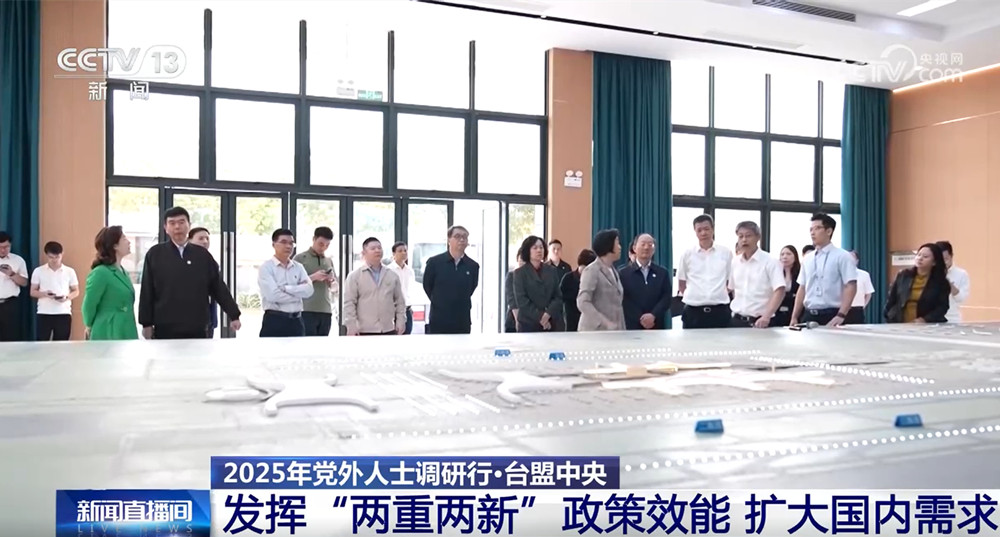
2025年党外人士调研行 | 台盟中央:发挥“两重两新”政策效能 扩大国内需求
Yang Shi Wang· 2025-05-26 08:45
Group 1 - The central theme of the investigation is to better leverage the "two new and two heavy" policies to build a modern industrial system and expand domestic demand comprehensively [1] - Logistics is identified as a crucial link in the national economic cycle, with over 500,000 TEUs transported via the Western Land-Sea New Corridor this year [3] - The Pinglu Canal, a major national construction project, is expected to be operational by the end of 2026, significantly reducing shipping distances for goods from the southwest region and lowering logistics costs [3] Group 2 - Consumer spending is highlighted as a key driver of economic growth, with over 2.5 million consumers participating in the "trade-in for new" program in Guangxi [5] - The tourism and cultural consumption sector is showing continuous vitality, but there are still challenges in diversifying consumption beyond ticket sales [5] - Recommendations include enhancing policy integration to create a virtuous cycle of demand-driven supply and supply-driven demand, thereby activating new consumption momentum [6]

全方位扩大国内需求的深刻内涵和实施重点(深入学习贯彻习近平新时代中国特色社会主义思想·学习《习近平经济文选》第一卷专家谈)
Ren Min Ri Bao· 2025-05-21 21:59
Core Viewpoint - Expanding domestic demand is essential for China's economic stability and growth, as emphasized in Xi Jinping's economic thoughts, particularly in the context of increasing external uncertainties and the need for high-quality development [1][2]. Group 1: Domestic Demand Expansion - Domestic demand is identified as the fundamental driving force for China's economic development, crucial for meeting the growing needs of the population [1]. - The 2024 Central Economic Work Conference proposed a comprehensive approach to expand domestic demand, supported by the recently issued "Special Action Plan to Boost Consumption" [1][2]. - The relationship between consumption and investment is highlighted, where increased consumption drives investment, and effective investment can stimulate new consumption [2]. Group 2: Consumption Potential - China's consumption is still relatively insufficient compared to its GDP of over 130 trillion yuan and a population of over 1.4 billion, indicating significant potential for growth [3]. - In 2024, per capita GDP is expected to exceed $13,000, with a shift in consumption patterns towards services and experiences, as evidenced by a decrease in the Engel coefficient to 29.8% [4]. - The service consumption share is projected to reach 46.1% of total consumption, indicating a strong growth trend and substantial room for further expansion [4]. Group 3: Investment Opportunities - Investment is viewed as a means to enhance capital accumulation, with current labor capital stock at about two-thirds of the world average, necessitating increased effective investment [7]. - Infrastructure and social welfare sectors present significant investment potential, as many facilities are aging and require upgrades to meet high-quality development standards [7][8]. - The transition towards green and low-carbon development is expected to create substantial investment needs, with estimates suggesting that achieving carbon neutrality will require investments exceeding 2% of GDP [9]. Group 4: Policy Implementation - The need for a systematic approach to policy integration and collaboration is emphasized to create a conducive environment for expanding domestic demand [13][14]. - A proactive fiscal policy is necessary to direct funds towards social welfare and support projects that stimulate both investment and consumption [13]. - Coordination among various policy areas, including fiscal, monetary, and industrial policies, is crucial for effectively expanding domestic demand [14].
国家统计局:下阶段要继续扩大国内需求,促进工业持续健康发展
news flash· 2025-05-19 02:54
5月19日,国家统计局新闻发言人、国民经济综合统计司司长付凌晖在国新办新闻发布会上表示,下阶 段要继续扩大国内需求,落实各项支持工业发展的政策,推动科技创新和产业创新融合发展,加快传统 产业的转型升级,培育状态新兴产业,促进工业持续健康发展。(人民财讯) ...
以有潜能的消费拉动有效益的投资(观象台)
Ren Min Ri Bao· 2025-05-13 22:09
Core Viewpoint - Accelerating the improvement of consumer infrastructure is beneficial for better coordinating investment and consumption, leveraging potential consumption to drive effective investment, and promoting a virtuous cycle of investment efficiency improvement and consumption expansion [1][2][3] Group 1: Consumer Infrastructure Development - The transformation of a well-known furniture mall into a comprehensive indoor sports venue exemplifies the upgrade of consumer infrastructure, revitalizing the mall and providing a new fitness destination for residents [1] - The "Special Action Plan to Boost Consumption" emphasizes the expansion of consumer infrastructure and the enhancement of consumer service functions, which is crucial for stimulating domestic demand [1][2] - The dynamic changes in consumption structure necessitate the timely adjustment and enhancement of various consumer infrastructures to meet evolving consumer demands [2][3] Group 2: Investment Efficiency - Investment in consumer infrastructure directly addresses daily life needs and reflects the importance of "investing in people," leading to both economic and social benefits [2][3] - The plan encourages the use of various investment sources to support consumer infrastructure projects, particularly in sectors like education, healthcare, and cultural tourism [3] - The establishment of real estate investment trusts (REITs) for qualifying consumer and cultural tourism projects aims to lower investment barriers and attract more social investment [3]
政策赋能养老再贷款
Jing Ji Ri Bao· 2025-05-13 21:48
Core Viewpoint - The establishment of the "Service Consumption and Elderly Care Re-loan" policy aims to enhance financial support for the elderly care industry and stimulate domestic consumption, with a total loan amount of 500 billion yuan allocated for this purpose [1][2]. Group 1: Policy Details - The total amount for the service consumption and elderly care re-loan is set at 500 billion yuan, with an annual interest rate of 1.5% and a maximum term of 3 years [2]. - The policy is applicable to 26 national financial institutions, including major banks and city commercial banks, and will be in effect until the end of 2027 [2]. - Financial institutions can apply for re-loans from the People's Bank of China based on the loans they issue, with a 100% reimbursement rate for eligible loans [2]. Group 2: Implementation and Impact - The first loan under this policy was issued to Tongyong Health and Elderly Care Company, a subsidiary of the Tongyong Technology Group, to support its development in the elderly care sector [1][2]. - The Industrial and Commercial Bank of China (ICBC) plans to further implement the elderly care re-loan policy to provide timely and cost-effective financial services to more elderly care enterprises [3]. - ICBC aims to innovate financial products and optimize service processes to support the development of the elderly care and consumption sectors comprehensively [3].

商务部部长王文涛:加快补上内需特别是消费短板 使内需成为拉动经济增长的主动力和稳定锚
news flash· 2025-05-08 07:57
Core Viewpoint - The article emphasizes the importance of boosting consumption to expand domestic demand and enhance the internal driving force of economic development, as highlighted by Minister Wang Wentao [1] Group 1: Economic Context - The external environment is changing, leading to increased adverse impacts on China's economy, which still faces numerous difficulties and challenges [1] - There is a notable insufficiency in effective domestic demand, making it essential for all parties to work together to achieve the expected growth target of around 5% [1] Group 2: Consumption as an Economic Engine - Consumption is identified as a crucial engine for economic growth, serving as both the endpoint and a new starting point in the economic cycle [1] - The article argues that when consumption "warms up," the economy can also "heat up," indicating a direct correlation between consumer spending and overall economic vitality [1] Group 3: Policy Implications - The call to action is to vigorously boost consumption and comprehensively expand domestic demand, which is expected to play a significant role in driving economic recovery and stability [1] - Ensuring that domestic demand becomes the main driving force and stabilizing anchor for economic growth is a priority [1]
我国将出台稳就业稳经济五方面若干举措
Zhong Guo Fa Zhan Wang· 2025-04-29 03:03
Core Viewpoint - The Chinese government emphasizes the importance of stabilizing employment and the economy through a comprehensive policy toolbox aimed at promoting high-quality development [1][2][3]. Employment Support - Key measures include encouraging companies to stabilize employment, enhancing vocational training, expanding support through labor-intensive projects, and improving public employment services [2][4]. - In Q1, urban employment increased by 3.08 million, with an average urban unemployment rate of 5.3%, indicating a stable employment situation [4]. Foreign Trade Stability - Policies to stabilize foreign trade include tailored support for industries and enterprises, helping exporters mitigate risks, and encouraging foreign investment in China [2][7]. - A recent policy package aims to assist foreign trade enterprises in expanding domestic sales and integrating domestic and foreign trade [7][8]. Consumption Promotion - Strategies to boost consumption focus on increasing income for low- and middle-income groups, enhancing service consumption, and implementing targeted measures for specific demographics [5][6]. - The government has allocated over 160 billion yuan for consumption incentives, with additional funds planned for future distribution [5]. Investment Expansion - Efforts to expand effective investment include improving infrastructure for consumption, boosting private investment, and establishing new policy financial tools [2][6]. - The government aims to accelerate the implementation of major investment projects and enhance financial support for key sectors [9]. Financial Support - The People's Bank of China plans to maintain liquidity and may adjust interest rates to support employment and economic stability [9][10]. - Financial measures will focus on supporting entrepreneurship among key groups, ensuring financing for small and medium-sized enterprises, and enhancing financial backing for service consumption [9].
云静:激活消费新动力 稳住经济压舱石
Bei Jing Ri Bao Ke Hu Duan· 2025-04-28 03:32
Core Viewpoint - Consumption is a key driver for domestic economic circulation and is essential for sustainable economic growth. The government has prioritized boosting consumption and expanding domestic demand as a primary task for 2025, reflecting a strategic focus on new development stages and concepts [1][2]. Group 1: Strengthening Income Growth Measures - Income is the foundation of consumption. The government aims to enhance residents' consumption capacity by focusing on employment, income, and social security, implementing targeted policies to solidify the basis for consumption growth [1][2]. - The distribution system will be gradually optimized to improve disposable income for urban and rural residents, including raising basic pensions and healthcare subsidies for low-income groups [2]. - High-quality employment is crucial for stabilizing and boosting consumption, with efforts to increase job opportunities and enhance service sector development [2]. Group 2: Enriching Quality Supply to Stimulate Consumption Willingness - High-quality goods and services are vital for meeting consumer needs and creating effective demand. The focus will be on service consumption and industrial transformation to enhance consumption quality [3]. - Policies will be implemented to align supply and demand, promoting a shift towards experience-oriented and emotional value-driven consumption [3]. - The government will optimize consumption policies in sectors like automotive and real estate, and expand service consumption in education, healthcare, and tourism to meet diverse consumer needs [3][4]. Group 3: Improving Consumption Environment to Enhance Consumer Confidence - A safe and convenient consumption environment is essential for enhancing consumer satisfaction and market vitality. The government aims to create a structured and comfortable consumption ecosystem [5][6]. - Protecting consumer rights and interests is a priority, with measures to regulate market order and combat fraudulent practices [5]. - Infrastructure improvements, particularly in rural areas, will support the dual circulation of urban and rural consumption markets, enhancing overall consumption dynamics [6].

GDP增长5.4%背后的中国经济新动能
Bei Jing Shang Bao· 2025-04-16 15:48
一季度中国经济实现良好开局,提振消费、创新驱动、投资发挥了稳定作用。4月16日,国家统计局发 布数据显示,初步核算,一季度国内生产总值(GDP)31.88万亿元,按不变价格计算,同比增长 5.4%,比上年四季度环比增长1.2%。国民经济起步平稳、开局良好,高质量发展向新向好。同日,在 国新办举行的新闻发布会上,国家统计局副局长盛来运表示,中国经济目前依靠内需和创新驱动的新格 局正在形成。 作为今年经济的重头戏,提振消费开了个好头。数据显示,一季度社会消费品零售总额124671亿元,同 比增长4.6%,比上年全年加快1.1个百分点,其中,3月份增速反弹至5.9%。消费品以旧换新额度翻倍, 正点燃更多消费热情。 同时,新动能按下经济加速键,在实现量的合理增长的同时,我国新质生产力也进一步培育壮大。一季 度,规模以上高技术制造业增加值同比增长9.7%。同时,绿色转型、绿色发展扎实推进。以新能源 车、锂电池、光伏为代表的新能源产业继续保持较高增长速度。非化石能源消费占能源消费总量的比重 比上年同期提升了1.5个百分点。 投资方面,一季度全国固定资产投资(不含农户)103174亿元,同比增长4.2%,比上年全年加快1个 ...