扩张性财政政策

Search documents
日本再现债汇双杀
Xin Lang Cai Jing· 2026-01-13 12:33
Core Viewpoint - Japan is experiencing a "double whammy" of falling bond prices and a depreciating yen following Prime Minister Sanna Takashi's decision to dissolve the House of Representatives and call for early elections, raising concerns about the country's fiscal situation [1] Group 1: Market Reactions - On the Tokyo bond market, investors sold off long-term Japanese government bonds, causing a sharp rise in yields, with the new 10-year government bond yield reaching 2.16%, the highest since February 1999 [1] - The yen depreciated significantly against the dollar, dropping to 158.97 yen per dollar, compared to around 147 yen per dollar in early October last year [1] Group 2: Political Implications - There are growing concerns that if the ruling Liberal Democratic Party wins the upcoming elections, it will further support Takashi's expansionary fiscal policies, exacerbating fiscal risks [1] - The current situation has led to heightened market vigilance regarding the dissolution of the House of Representatives and its potential impact on Japan's fiscal health [1]
日本市场再现债汇“双杀”
Sou Hu Cai Jing· 2026-01-13 11:16
Core Viewpoint - Japanese Prime Minister Sanna Takashi has decided to dissolve the House of Representatives on the opening day of the National Assembly on the 23rd, leading to concerns about the deterioration of Japan's fiscal situation and resulting in a decline in bond prices and a depreciation of the yen in the financial markets [1] Group 1: Market Reactions - The Tokyo bond market experienced a sell-off of long-term government bonds, causing a sharp rise in long-term bond yields [1] - The yield on the newly issued 10-year government bonds reached 2.16%, the highest level since February 1999 [1] - The depreciation of the yen against the US dollar saw it drop to 158.97 yen per dollar, compared to around 147 yen per dollar in early October last year [1] Group 2: Political Context - Concerns are heightened as the ruling Liberal Democratic Party (LDP) does not hold a majority in the House of Representatives, raising fears that a victory in the upcoming elections could further support Takashi's expansionary fiscal policies [1] - Analysts suggest that the market remains highly vigilant regarding the dissolution of the House of Representatives due to potential fiscal risks associated with the LDP's policies [1]
澳智库:难成“铁娘子” 高市政策更似英前首相特拉斯
Xin Hua She· 2026-01-05 06:27
Core Viewpoint - The article argues that Prime Minister Fumio Kishida's populist economic policies are outdated and fail to address Japan's structural economic issues [1][2] Group 1: Economic Policy Analysis - Kishida is seen as a political disciple of former Prime Minister Shinzo Abe and admires former UK Prime Minister Margaret Thatcher, but his policies lack the fiscal hawkishness associated with Thatcher [1] - Kishida's expansionary fiscal policies, characterized by significant spending and low interest rates, are more suited to the economic context of 2012 rather than 2026, given the current inflationary environment [1] - The large-scale spending initiatives lack a growth strategy to enhance economic productivity, and tax cuts along with support for household spending may exacerbate inflation and lead to a cost-of-living crisis [1] Group 2: Debt and Structural Challenges - Kishida's expansionary fiscal policies are contributing to rising long-term interest rates, with government debt nearing 250% of GDP, increasing debt servicing costs [2] - The Kishida administration has not presented solutions to address structural challenges such as Japan's aging population and declining birthrate [2]
财政部布置明年重点工作
第一财经· 2025-12-28 08:25
Core Viewpoint - The article emphasizes the clarity of fiscal priorities for 2026, highlighting the continuation of a more proactive fiscal policy to stimulate economic growth and ensure necessary expenditures [2][3]. Group 1: Fiscal Policy Implementation - The 2026 fiscal policy will focus on expanding the fiscal expenditure base, optimizing government bond tools, enhancing the effectiveness of transfer payments, and improving expenditure structure [2][3]. - The proactive fiscal policy aims to stimulate total demand through increased spending, expanded deficits, and government bond issuance, especially in a context of sluggish economic growth [2]. Group 2: Key Fiscal Tasks - The primary task is to support domestic demand and build a strong domestic market, with a focus on boosting consumption and effective investment in key areas [4][5]. - There will be an emphasis on supporting the integration of technological and industrial innovation, increasing fiscal investment in technology, and enhancing the role of enterprises in innovation [5]. Group 3: Social Welfare and Public Spending - A significant focus will be on strengthening basic social welfare and ensuring the protection of livelihoods, including employment support, education, and healthcare services [5][6]. - Fiscal spending on social welfare, such as social security and education, has shown growth rates above the average, indicating a commitment to maintaining high levels of public investment in these areas [6]. Group 4: Additional Fiscal Strategies - The meeting outlined additional tasks, including promoting urban-rural integration, advancing green transformation, and enhancing international financial cooperation [7]. - There will be a focus on maintaining fiscal discipline, managing government debt, and deepening tax and fiscal reforms [7].


日本新财年预算规模再创新高 专家警告财政风险
Xin Hua Wang· 2025-12-26 04:52
Core Viewpoint - The Japanese government has approved a record-high budget for the fiscal year 2026, raising concerns among markets, media, and experts regarding the sustainability of its fiscal policies [1]. Group 1: Budget Overview - The budget for fiscal year 2026 is set at 122.3 trillion yen, significantly higher than the 115.2 trillion yen budget for fiscal year 2025 [1]. - Debt servicing costs have also reached a new high of 31.3 trillion yen, up from 28.2 trillion yen in the previous fiscal year [1]. - To cover the fiscal deficit, the government plans to issue new bonds amounting to 29.6 trillion yen [1]. Group 2: Social Security and Demographics - The social security budget for fiscal year 2026 has reached a record 39.1 trillion yen, driven by rising costs associated with an aging population, including healthcare, nursing, and pensions [1]. Group 3: Debt and Market Reactions - Japan's government debt now accounts for 240% of its GDP, raising investor concerns about the deteriorating fiscal situation [1]. - Since the appointment of Prime Minister Fumio Kishida, long-term Japanese government bonds have faced significant selling pressure, with new 10-year bond yields reaching a 27-year high [1]. - Criticism of the government's fiscal policies has intensified, with experts warning against the potential risks of continued expansive fiscal measures [1].
日本下一财年超长债发行量拟降至17年低点 因财政忧虑重击债市
Ge Long Hui· 2025-12-26 03:05
Core Viewpoint - The Japanese government plans to issue the least amount of ultra-long-term government bonds in 17 years, reflecting sensitivity to rising bond yields [1] Group 1: Bond Issuance - The Ministry of Finance will reduce the issuance of ultra-long-term government bonds by nearly 20% compared to the previous fiscal year, down to approximately 17.4 trillion yen (about 111.6 billion USD) [1] - The total amount of Japanese government bonds to be issued in the next fiscal year, including ultra-long-term bonds, will be 180.7 trillion yen, a decrease of nearly 5% from the current fiscal year's total, which includes additional budgets [1] Group 2: Market Expectations - There are market expectations that Prime Minister Suga's expansionary fiscal policy will exacerbate Japan's already heavy debt burden, leading to further increases in Japanese government bond yields [1] Group 3: Short-term Bonds - The Ministry of Finance has not increased the issuance of 10-year government bonds but has raised the combined issuance of 2-year and 5-year government bonds by 2.4 trillion yen [1]
日本首相:借扩张财政促增长,降债务赢市场信任
Sou Hu Cai Jing· 2025-12-25 05:57
Core Viewpoint - Japan's Prime Minister, Sanae Takaichi, emphasizes the need for expansionary fiscal policies to achieve stronger economic growth and reduce the debt-to-GDP ratio, aiming to gain market trust [1] Group 1: Fiscal Policy Goals - The government plans to implement expansionary fiscal policies to foster a virtuous cycle of wages, consumption, and corporate profits, ensuring fiscal sustainability [1] - Budget priorities will be aligned with policy objectives to maintain market confidence [1]
高市早苗:日本需借助扩张性财政政策实现更强劲的经济增长
Xin Lang Cai Jing· 2025-12-25 05:02
Core Viewpoint - Japan's Prime Minister, Sanae Takaichi, emphasizes the need for expansionary fiscal policies to achieve stronger economic growth while aiming to reduce the debt-to-GDP ratio and gain market trust [1] Group 1 - The government plans to promote a virtuous cycle of wages, consumption, and corporate profits to ensure fiscal sustainability [1] - Budget priorities will focus on key policy areas to maintain market confidence [1] - A decision has been made to introduce capital expenditure tax reductions to support the construction of critical supply chains [1]
日本债务“滚雪球”!关键假定利率创30年来新高 偿付成本激增加剧失控风险
智通财经网· 2025-12-24 06:49
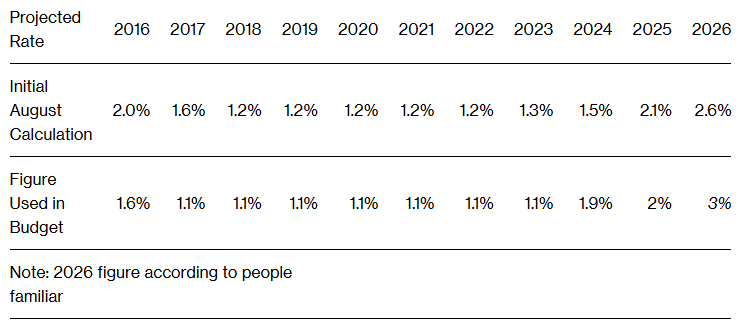
Core Viewpoint - The Japanese Ministry of Finance plans to set the key assumed interest rate for calculating government bond interest payments at 3.0% for the next fiscal year, marking the highest level in nearly 30 years, which will significantly increase debt servicing costs [1][4]. Group 1: Interest Rate and Debt Servicing Costs - The assumed interest rate will rise from the initially set 2.6% during the budget application phase to 3.0% for the fiscal year starting in April 2026, up from the current fiscal year's rate of 2% [1][4]. - This increase in the assumed interest rate is expected to push Japan's debt servicing costs to a new record high, with total debt-related expenditures projected to exceed approximately 28.2 trillion yen in the current fiscal year's budget [5]. Group 2: Fiscal Policy and Budget - The Japanese government is set to finalize the budget draft for fiscal year 2026, which will exceed 122 trillion yen, driven by rising social welfare costs and new fiscal support measures to alleviate the impact of rising living costs [3]. - The supplementary budget approved by the Japanese Diet for fiscal year 2025 amounts to 18.3 trillion yen, the largest since the pandemic, with 11.7 trillion yen to be financed through new government bonds [3]. Group 3: Market Reactions and Economic Implications - Concerns are growing regarding Japan's fiscal situation and the expansionary fiscal policy stance of Prime Minister Fumio Kishida, as the yield on 10-year Japanese government bonds has risen significantly, reaching levels not seen since 1999 [4]. - The increase in debt servicing costs is expected to account for about one-quarter of total expenditures, making it the second-largest expenditure item after social security [5].
玉渊谭天|日右翼正在将日本经济拖入泥潭
Xin Lang Cai Jing· 2025-12-23 12:20
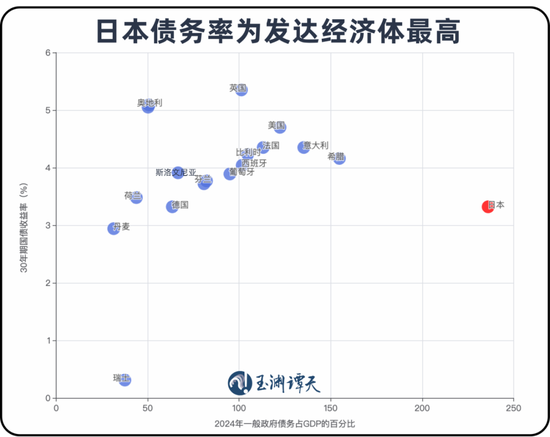
Group 1 - A recent survey by Kyodo News indicates that over half of respondents believe that the actions of Prime Minister Fumio Kishida regarding Taiwan will negatively impact the Japanese economy [1][22] - More than 60% of respondents express concerns about Kishida's large-scale fiscal stimulus policies [1][22] - Kishida's cabinet approval ratings have declined, suggesting that attempts to divert domestic economic pressure through a tough foreign policy have failed, revealing structural issues within the Japanese economy [22] Group 2 - Japan's real GDP growth was only 0.1% last year, prompting Kishida's government to introduce an expansionary fiscal policy totaling 21.3 trillion yen [3][25] - Following the announcement of this policy, Japan's 10-year government bond yield surged to its highest level in 26 years, while the 20-year and 30-year yields also reached record highs [4][26] - Typically, expansionary fiscal policies lead to rising bond yields due to increased government borrowing, which raises supply in the bond market and can heighten investor concerns about the government's repayment capacity [5][27] Group 3 - Japan's total government debt exceeds 230% of its GDP, the highest among developed countries [8][30] - The initial proposed supplementary budget was around 14 trillion yen, but Kishida's administration expanded it to over 21 trillion yen due to pressure from economists advocating for fiscal expansion [10][32] - The Bank of Japan is the largest holder of Japanese government bonds, owning over half, which contrasts with the Federal Reserve's 13% holding of U.S. government bonds [11][33] Group 4 - Since last year, the demand structure for Japanese government bonds has changed, with the Bank of Japan starting to reduce its bond holdings, indicating a shift towards reliance on external funding [12][34] - This increased dependence on foreign investors, who are sensitive to risk, raises the probability of systemic risks if they begin to doubt the government's repayment ability [12][34] - Financial pressures on institutions could transmit to the real economy, increasing borrowing costs for businesses and households, further weakening investment and consumption [13][35] Group 5 - Japan is currently experiencing rapid inflation, with the core consumer price index rising for 51 consecutive months and over 20,000 food items increasing in price [35] - Kishida's fiscal policy contradicts conventional logic, which would typically involve tightening monetary and fiscal policies to reduce demand and cool inflation [35][40] - The Bank of Japan has raised its policy interest rate to 0.75%, the highest level in 30 years, indicating a shift in monetary policy [15][37] Group 6 - The inflation in Japan is partly attributed to external factors, but domestic issues are becoming more significant as commodity prices stabilize [39][40] - Kishida's approach of using expansionary fiscal policies to maintain public purchasing power is seen as a short-term solution that fails to address underlying economic problems [39][40] - The conflicting policies from Kishida's administration have led to a situation where monetary policy intended to cool inflation is undermined by fiscal policies, exacerbating the inflation issue [41][42]