技术变革

Search documents
推进全面绿色转型,加快形成绿色生产力
Zhong Guo Huan Jing Bao· 2025-10-14 03:26
Core Viewpoint - The transition to a green and low-carbon economy is a crucial aspect of China's high-quality development and a fundamental strategy for addressing ecological issues, as emphasized in the 20th National Congress and subsequent government reports [1] Group 1: Technological Transformation - Technological transformation serves as the core driving force for the comprehensive green transition, characterized by substitution, efficiency enhancement, and creation effects [2] - Renewable energy technologies are expected to increase the share of clean energy consumption to 28.6% by 2024, with non-fossil energy consumption projected to reach around 25% by 2030 and over 30% by 2035 [2] - China's photovoltaic component production has led the world for 16 consecutive years, supplying 70% of global photovoltaic components and 60% of wind power equipment [2] Group 2: Institutional Innovation - A systematic institutional framework has been established through property rights, pricing mechanisms, and judicial collaboration [3] - The carbon emissions trading market is set to see a cumulative transaction volume of 18.9 million tons and a transaction value of 18.114 billion yuan in 2024, creating an effective mechanism for guiding high-carbon industries towards transformation [3] - The introduction of a coal power capacity pricing mechanism aims to enhance the efficiency of the electricity pricing system, significantly increasing the exit rate of high-energy-consuming industries [3] Group 3: Market System - The market system is a vital vehicle for achieving the comprehensive green transition, focusing on factor circulation, product iteration, and capital circulation [4] - As of August 2024, the national carbon emissions trading market has recorded a cumulative transaction volume of nearly 70 million tons and a transaction value of approximately 48 billion yuan [5] - The issuance of green bonds reached 681.433 billion yuan in 2024, with a custody scale of 2.09 trillion yuan, reflecting a 5.57% year-on-year growth, guiding social capital towards pollution prevention and low-carbon technology development [5] Group 4: Challenges and Future Directions - Despite significant progress in the green transition, challenges remain, including the need for independent control of key technologies and imbalances in regional development [6] - Continuous open innovation and the establishment of a fair and inclusive international cooperation mechanism for green transition are essential for China to fulfill its role as a contributor and leader in global ecological civilization [6]
达利欧最新发声:黄金比美元更安全,美联储降息并非万能药
新浪财经· 2025-10-08 07:12
Core Viewpoint - The current economic environment resembles the early 1970s, with rising inflation and government debt leading to a loss of confidence in the dollar, making gold a key asset for preservation of value [2][4]. Group 1: Investment Recommendations - Investors should hold approximately 15% of their portfolio in gold to mitigate potential currency devaluation and credit risks [4]. - Jeffrey Gundlach, CEO of DoubleLine Capital, suggests increasing gold exposure in portfolios up to 25% due to inflationary pressures and a weakening dollar [5]. Group 2: Economic Concerns - The U.S. is projected to spend about $7 trillion this year while earning only $5 trillion, resulting in a 40% deficit, with total debt reaching six times its income [7]. - The rising cost of debt is squeezing real economic spending, leading to a "monetization of debt cycle" where central banks are forced to continue purchasing government bonds [7]. Group 3: Market Dynamics - Dalio expresses a lack of interest in debt assets, including government bonds and private credit, due to low spreads [8]. - There are signs of a bubble in AI investments, but opportunities exist in AI applications that enhance efficiency and profitability [10]. Group 4: Global Perspectives - Dalio remains optimistic about China, noting significant improvements in income and life expectancy since 1984, and highlights China's advancements in innovation and AI applications [11].


达利欧最新发声:黄金比美元更安全,美联储降息并非万能药
Xin Lang Cai Jing· 2025-10-08 01:07
Group 1 - Ray Dalio, founder of Bridgewater Associates, emphasizes that gold is a key store of value during times of increased government debt, comparing the current situation to the early 1970s when inflation and debt pressures undermined confidence in the dollar [2][3] - Dalio recommends that investors hold approximately 15% of their portfolios in gold to mitigate potential currency devaluation and credit risks, noting that gold performs well when other assets decline [3] - The price of gold surpassed $4000 per ounce, reflecting a year-to-date increase of over 50% [3] Group 2 - Jeffrey Gundlach, CEO of DoubleLine Capital, also advocates for increasing gold exposure in investment portfolios, suggesting a maximum allocation of 25% due to inflationary pressures and a weakening dollar [4] - Dalio warns that the U.S. fiscal and debt situation is entering a dangerous phase, with projected expenditures of approximately $7 trillion against revenues of about $5 trillion, resulting in a 40% deficit [5] - The total U.S. debt has reached six times its income, leading to concerns about rising debt costs squeezing real economic spending [5] Group 3 - Dalio identifies five interwoven macro cycles that drive historical and current global changes, including debt and currency cycles, wealth and value gap cycles, international geopolitical cycles, natural forces, and technological change [6] - He expresses caution regarding the valuation bubble in the AI sector, while recognizing the potential opportunities AI presents for efficiency and profit enhancement [6] - Dalio remains optimistic about China as an investment destination, highlighting significant improvements in income and life expectancy since 1984, and noting China's advancements in AI applications [7]

中国“D级SUV”头号车型:今年前八个月,累计零售量已超8万台
Sou Hu Cai Jing· 2025-10-07 15:11
Core Insights - The D-class SUV market, once a niche segment, has become a vibrant and promising sector in the Chinese automotive industry, driven by technological advancements, consumer upgrades, and changes in family structures [4][19] Market Dynamics - D-class SUVs are characterized by their large size, typically exceeding 5 meters in length, and luxurious interiors, making them appealing to consumers seeking comfort and safety [2] - The rise of self-driving tourism has created new opportunities for the D-class SUV market, as these vehicles offer spacious interiors and strong off-road capabilities, enhancing travel experiences [5] Leading Brands and Performance - Key players in the D-class SUV market include Wanjie, Ideal, Lynk & Co, Tengshi, and Ledao, each leveraging unique strengths such as technological partnerships and innovative designs [5] - Wanjie M9 leads the sales with a cumulative retail volume of 82,599 units from January to August 2025, targeting high-end family users with its technological luxury [7][18] - Other notable models include Wanjie M8 with 78,285 units, Ideal L9 with 34,357 units, and Lynk & Co 900 with 28,667 units sold in the same period [7][18] Sales Rankings - The top five D-class SUVs by sales from January to August 2025 are: 1. Wanjie M9: 82,599 units 2. Wanjie M8: 78,285 units 3. Ideal L9: 34,357 units 4. Lynk & Co 900: 28,667 units 5. Tengshi N9: 20,136 units [7][18] - The sixth to tenth positions include Ledao L90, Deep Blue S09, Haval H5, NIO ES8, and Haobo HL, with Ledao L90 achieving over 10,000 units in less than a month since its launch [7][18] Conclusion - The D-class SUV segment has transformed from a niche category to one of the most dynamic and potential-rich areas in the Chinese automotive market, with domestic brands redefining the value of "large" vehicles through innovation and speed [19]

禁止展出?美对准中国钻石又出“禁令”,网友讥笑:他们慌了
Xin Lang Cai Jing· 2025-10-05 09:15
Core Viewpoint - The American Gem Trade Association (AGTA) has issued a ban on the exhibition of lab-grown diamonds, claiming it aims to "maintain market stability" and promote "natural beauty," which is seen as a reaction to the rapid growth of the lab-grown diamond industry in China [1][7]. Industry Summary - As of April 2024, lab-grown diamonds have surpassed natural diamonds in the U.S. retail market, accounting for over 56.8% of the market share, indicating a significant market shift [3]. - The price of a 1-carat lab-grown diamond with D color, VVS clarity, and 3EX cut is approximately 8,000 yuan, making it difficult for the traditional diamond narrative based on scarcity to sustain itself [3]. - The primary source of this lab-grown diamond boom is Zhecheng, Henan, which produces 6 million carats annually, representing 44% of global capacity [3]. - Zheguang diamonds, produced using high-temperature high-pressure (HTHP) technology, have achieved mass production of D color diamonds, and the introduction of "commemorative diamonds" has further integrated emotional significance into the product [3][5]. - The first month of sales for commemorative diamonds on platforms like JD and Taobao exceeded one million yuan, with custom orders of diamonds over 5 carats making up 70% of sales [3]. Competitive Advantage - Zheguang diamonds have gained international certifications (GIA, IGI) and possess chemical and optical properties indistinguishable from natural diamonds, with a clarity rating of D color [5]. - The production process has a 37% lower electricity consumption compared to traditional methods, and the price of a 1-carat lab-grown diamond is only 5% to 10% of that of a natural diamond [5]. - The incorporation of traditional Chinese design elements into the diamonds has shifted the perception of diamonds from a Western aesthetic symbol to a more culturally inclusive product [5]. Market Impact - The price index for natural diamonds is projected to drop significantly by 34% in 2024, forcing De Beers to reduce its mining output to the lowest levels of the century [5][7]. - The AGTA's ban highlights the dilemma faced by traditional diamond companies, as they struggle to maintain their premium pricing in light of the FTC's recognition of lab-grown diamonds as "real diamonds" since 2018 [7]. - The ban may backfire, as retail sales of lab-grown diamonds are expected to increase by 43% in 2024, while traditional diamond companies face debt crises and bankruptcies [7].
狂赚700倍,起底摩尔线程第一个投资人丨投中嘉川
投中网· 2025-09-30 02:00
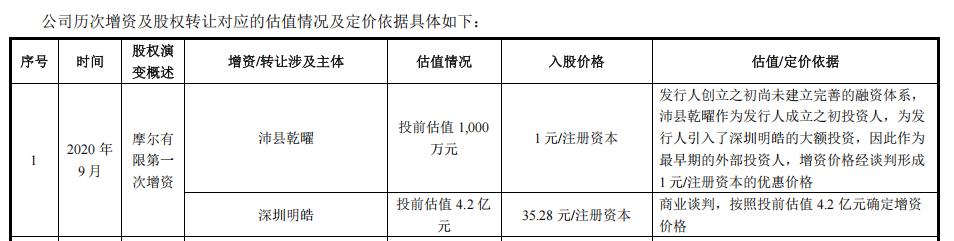
Core Insights - The article highlights the impressive financial returns from investments in the Chinese startup Moer Technology, particularly focusing on the early investor Peixian Qianyao, which has achieved returns exceeding 700 times its initial investment [5][10][11]. Investment Performance - Moer Technology has seen significant IPO activity in 2023, with notable companies like Mixue Ice City and Bawang Tea Sister performing well in the market, contributing to substantial returns for early investors [5]. - Peixian Qianyao's investment in Moer Technology has yielded a return of 667 times based on pre-IPO valuation, with potential returns exceeding 3000 times in a bullish market scenario [5][10][14]. Investor Background - Peixian Qianyao is primarily composed of individual investors, including Yang Bin, Zhou Qi, and Huang Bohao, along with an institutional entity, Shanghai Zhushen [17][20]. - Yang Bin has a background in securities and has previously invested in semiconductor companies, while Huang Bohao has extensive experience in private equity and mergers [18][20]. Investment Strategy - The article emphasizes the importance of networking, opportunity, and courage in making such a significant investment in Moer Technology, suggesting that the success is not solely based on financial metrics but also on strategic positioning within the industry [22].

狂赚700倍,起底摩尔线程第一个投资人
3 6 Ke· 2025-09-28 11:41
Core Insights - The domestic venture capital market has seen several significant IPOs this year, including Mixue Ice City, Bawang Tea, and Yingstone Innovation, which have provided substantial returns for early investors [1] - Moore Threads is expected to become the highest-returning project in the venture capital market by 2025, with early investors potentially seeing returns exceeding 3000 times their investment [1] - The early investor "Peixian Qianyao" has achieved a return of 667 times based on pre-IPO valuation, with potential returns projected to exceed 700 times at a market capitalization of 40 billion [1][4] Investment Performance - Peixian Qianyao invested 1.9 million RMB at a pre-investment valuation of 10 million RMB, resulting in a significant increase in share value to 12.68 billion RMB before the IPO [2][4] - The projected market capitalization of Moore Threads at IPO is around 40 billion RMB, with share prices estimated at 80 RMB, leading to a valuation of 13.6 billion RMB for Peixian Qianyao's shares [4] - If the market capitalization reaches 80 billion RMB, Peixian Qianyao's shares could be valued at 30.6 billion RMB, translating to a return of 1610 times [4] Investor Background - Peixian Qianyao is backed by three individual LPs and one institutional entity, with significant contributions from Yang Bin, Zhou Qi, and Huang Bohao [8][9] - Yang Bin has a background in securities and founded Guangzhou Ruizhan, while Huang Bohao has extensive experience in private equity and mergers [10][11] - Zhou Qi is a partner at Shanda Capital, with over ten years of industry investment experience [12] Strategic Relationships - The relationship between Zhou Qi and Shenzhen Qicaihong, a company with historical ties to NVIDIA, may have facilitated early investment opportunities in Moore Threads [14] - The early investment by Peixian Qianyao was influenced by its role in introducing significant funding from Shenzhen Minghao, which is also linked to Zhou Qi's Shanda Capital [13]
古特雷斯呼吁加大努力实现可持续发展目标
Xin Hua Wang· 2025-09-23 00:30
Core Points - The UN Secretary-General António Guterres emphasized the need for increased efforts to achieve sustainable development goals, highlighting the importance of reforming the global financial architecture and prioritizing climate action [1][1][1] - The President of the 80th UN General Assembly, Baerbock, noted that only 35% of the sustainable development goal targets are on track, with 47% making insufficient progress and 18% experiencing setbacks [1][1][1] - Baerbock pointed out a 7.1% decrease in net official development assistance last year, despite increasing demands, indicating a severe financial situation [1][1][1] Financial and Development Insights - Guterres stated that global military spending in 2024 is 13 times the amount of official development assistance, underscoring the need to prioritize peace in all efforts [1][1][1] - The 2025 Sustainable Development Goals report revealed that over 800 million people are still living in extreme poverty, and billions lack access to safe drinking water and sanitation services [1][1][1] - The report also highlighted the exacerbation of climate change and the impact of armed conflicts, with nearly 50,000 deaths and 120 million people displaced by the end of the year [1][1][1]
家用电器行业研究框架培训
2025-08-18 01:00
Summary of Home Appliance Industry Research Conference Call Industry Overview - The home appliance industry is characterized by a dual nature of manufacturing and consumer goods, with a long supply chain that includes upstream raw materials and intermediate component manufacturing, as well as downstream channel sales and brand operations [2][3][9] Key Insights and Arguments - The white goods market is nearing saturation, with growth relying on overseas markets; the black goods market is experiencing a global volume decrease but price increase, with domestic brands showing significant technological advantages [1][3] - Kitchen appliances are influenced by real estate fluctuations, but emerging categories like dishwashers are seeing increased penetration rates [1][3] - Small appliances are diversifying as household income rises, with increased penetration rates and brand diversity [1][4] - Investment styles can be matched with different segments of the home appliance industry: white goods for stable investors, black goods for those seeking inflection point opportunities, kitchen appliances for post-real estate cycle investors, and small appliances for growth-oriented investors [1][5] Market Size Analysis - Market size can be estimated through household numbers, average ownership rates, and product prices. For instance, with approximately 500 million households in China, if each household owns three air conditioners, the total stock would be around 1.5 billion units, leading to an annual sales estimate of 150 million units [6][10] Technological Changes and Market Dynamics - Technological innovations significantly impact market dynamics, such as the iteration of robotic vacuum cleaners and changes in black goods technology paths, enhancing the global competitiveness of Chinese companies [1][7] - High functional recognition categories (e.g., air conditioners) require significant R&D investment, while low recognition categories (e.g., refrigerators) rely more on marketing and distribution [8][11] Production Cost Characteristics - The production cost chain in the home appliance industry is extensive, with raw material costs (steel, copper, aluminum) constituting 60-70% of production costs, which can significantly affect profitability [9][14] - Price fluctuations in raw materials, such as steel and panel prices, directly impact the gross margins of companies like Gree and Hisense [9][14] Competitive Landscape - Brand loyalty, reputation, and awareness are crucial in determining the competitive landscape of home appliance categories. High recognition products like air conditioners benefit from brand loyalty, while low recognition products depend more on marketing [11][12] - Price wars, particularly in the air conditioning sector, have significantly influenced competitive dynamics, with historical price reductions leading to shifts in market share among key players [12][13] Future Trends - The home appliance industry is expected to face a decline in domestic sales due to subsidy adjustments, while overseas demand will drive growth in white goods. Companies are exploring diversification into robotics, B2B businesses, and new energy sectors [15][16] Data Tracking and Analysis - The home appliance industry has a robust data tracking system that includes online and offline sources, allowing for comprehensive monitoring of sales and market trends [17][18][19] - Ensuring data consistency with actual company performance involves using various data sources and regular communication with companies to validate information [20] Support for Investors - Longjiang Home Appliances offers detailed databases and continuous updates on market segments, providing support for investors seeking in-depth analysis and discussions [21]


40种职业将被AI摧毁?我不同意这种看法
Sou Hu Cai Jing· 2025-08-01 12:36
Core Insights - AI is expected to have a profound impact on the job market, with 40 occupations identified as at risk of being replaced by AI. However, this perspective is overly pessimistic and one-sided, as AI is more likely to enhance these jobs rather than replace them [2] - Historical trends indicate that technological advancements lead to job transformation rather than elimination, with previous revolutions creating higher-value jobs and improving efficiency [2] - The current influence of AI on jobs is primarily seen in workflow restructuring and productivity enhancement, with significant efficiency gains in content creation, data analysis, and customer service [2] Job Transformation - AI's ability to generate initial drafts can increase the productivity of writers and journalists by 300-500%, while automation in data analysis can reduce analysis cycles by 60-80% [2] - In customer service, AI's capability to handle routine inquiries allows human agents to focus on more complex problem-solving [2] - This transformation represents a redistribution of work value rather than simple job replacement [2] Future Workforce Dynamics - The real risk of job elimination lies not in the occupations themselves but in the professionals who resist adapting to technological changes [3] - Future job winners will be those who can effectively use AI tools and focus on uniquely human skills such as creativity, emotional intelligence, and complex decision-making [3] - Companies like Microsoft, despite laying off 15,000 employees, are actively training their workforce to master AI collaboration skills [3] Opportunities Created by AI - While AI will change employment structures, it will also create numerous new opportunities [3] - Professionals can evolve into roles such as quality controllers for AI-generated content, cultural adaptation experts in translation, and strategic advisors in data analysis, thus revitalizing their careers [3] - The AI era marks not the end of professions but the beginning of a redefined professional value [3]