抗衰老

Search documents
福瑞达20251113
2025-11-14 03:48
Summary of the Conference Call for Furuida Company Overview - **Company**: Furuida - **Year**: 2025 - **Industry**: Cosmetics, Pharmaceuticals, and Raw Materials Key Points Overall Performance Expectations - Furuida's overall performance in 2025 is expected to be flat, with a slight decline in cosmetics business, stable growth in raw materials, and pressure in the pharmaceutical sector [2][29][30] Brand Performance - **Yilian Brand**: Despite a decline during the Double Eleven sales event, the annual growth expectation remains at 15%-20%, with the cooking series products performing well and improving overall gross margin [2][5] - **Doctor Brand**: The probiotic series adjustment is nearing completion, with some face masks resuming shipment. Positive growth is anticipated for next year [2][11] - **Kemi Brand**: Expected to achieve triple-digit growth, with sales projected to reach around 100 million due to the success of the Chuangmo peptide technology and collaboration with Xinhua Net [2][21] Raw Materials Business - Significant growth in the raw materials business in Q3, driven by high demand for food-grade and cosmetic-grade hyaluronic acid, as well as rapid expansion in the overseas market for pharmaceutical-grade hyaluronic acid [2][25][27] Sales Channels - Douyin has become the largest sales channel, accounting for approximately 60% of online sales, while Tmall accounts for about 40% [8][6] - The self-broadcasting and other channels have maintained rapid growth despite the absence of top-tier influencer collaborations [6][8] Product Structure and Innovations - The proportion of spray products in the Yilian brand has risen to over 70% due to successful sales of the spray kit endorsed by Zhang Linghe [9] - The 287 series is positioned to replace the original probiotic series, focusing on specific skin issues and improving product quality [16] Future Plans and Strategies - Plans to advance equity incentives and acquisition strategies in 2026, with preparations already underway [12][34] - The company is exploring new directions in the pharmaceutical sector, including online pharmacies and health food products, although these require time and investment for scaling [28] Market Outlook - The company remains optimistic about 2026, expecting positive effects from current adjustments and a favorable market environment [29][33] - The pharmaceutical business is under pressure, but the company is actively seeking new growth avenues [28] Financial Performance - The company aims to improve profitability through enhanced gross margins and various measures despite a flat overall performance in 2025 [30] Regulatory and Certification Updates - Anticipation of receiving three types of certifications for pharmaceutical-grade hyaluronic acid by late 2026 or early 2027, which could significantly boost sales [23][24] Competitive Landscape - The competition between Tmall and Douyin is seen as beneficial, providing more promotional opportunities for the company [19] This summary encapsulates the key insights and strategic directions discussed during the conference call, highlighting Furuida's current performance, brand dynamics, market strategies, and future outlook.

裸鼹鼠长寿密码破译
Huan Qiu Wang Zi Xun· 2025-11-12 04:21
Core Insights - The research team from Tongji University discovered that the naked mole rat possesses a unique protein, cGAS, which functions oppositely to its human counterpart, aiding in DNA repair and contributing to the animal's longevity [1][2] - The study highlights the significance of DNA repair capabilities in determining species lifespan, with naked mole rats living up to 40 years and showing resistance to various diseases [1] - The findings were published in the international journal "Science," providing new targets for anti-aging interventions [1] Group 1 - The naked mole rat's cGAS protein enhances homologous recombination repair efficiency, contrasting with the human cGAS protein that inhibits this process [1][2] - The research identified four evolutionarily specific amino acid sites in the C-terminal domain of naked mole rat cGAS that mediate the reversal of function [2] - Mutating these sites in naked mole rat cGAS leads to the loss of its DNA repair-promoting function, while introducing them into human cGAS can reverse its aging-promoting effects [2] Group 2 - Overexpression of naked mole rat cGAS in mice helps resist multi-organ aging, reduces systemic inflammation, and extends healthy lifespan [2] - The study explores the unique DNA repair mechanisms of naked mole rats and their association with longevity, potentially offering new insights for achieving "aging without decline" in humans [2]
司美格鲁肽:或将改写抗衰领域的划时代创新药物
GLP1减重宝典· 2025-11-07 08:05
Core Viewpoints - Semaglutide is recognized as a significant medical breakthrough with potential applications beyond obesity and sleep apnea, including treatment for various diseases such as heart failure, arthritis, Alzheimer's, and cancer [2][4]. - The drug's ability to improve cardiovascular metabolic health suggests far-reaching benefits that could revolutionize cardiovascular care [2][4]. Group 1: Medical Applications - Semaglutide shows potential in treating multiple diseases, including heart failure, arthritis, Alzheimer's, and cancer, by improving overall health and potentially delaying aging [4]. - The Select trial involved over 17,600 patients aged 45 and above with obesity or overweight and cardiovascular disease risk, demonstrating a significantly lower all-cause mortality rate in the semaglutide group compared to the placebo group [4]. Group 2: Efficacy and Safety - In patients taking semaglutide, the mortality rate from COVID-19 was 2.6%, compared to 3.1% in the placebo group, indicating a significant reduction in death rates despite similar infection risks [6]. - Semaglutide effectively reduces the risk of severe cardiovascular events and alleviates heart failure symptoms, regardless of weight loss [6]. Group 3: Drug Mechanism and Usage - Semaglutide, marketed under the brand names Wegovy and Ozempic, mimics the GLP-1 hormone to induce satiety and reduce hunger, administered via injection [6]. - Experts caution that semaglutide is not a panacea and should not replace healthy diet and exercise, emphasizing the importance of medical supervision to avoid potential side effects [6]. Group 4: Future Research and Implications - Ongoing research is exploring the potential of semaglutide and similar drugs in combating age-related diseases, indicating a promising future for longevity biotechnology in global health systems [6]. - The era of semaglutide in medicine is just beginning, with its comprehensive impact still requiring further study and observation [6].


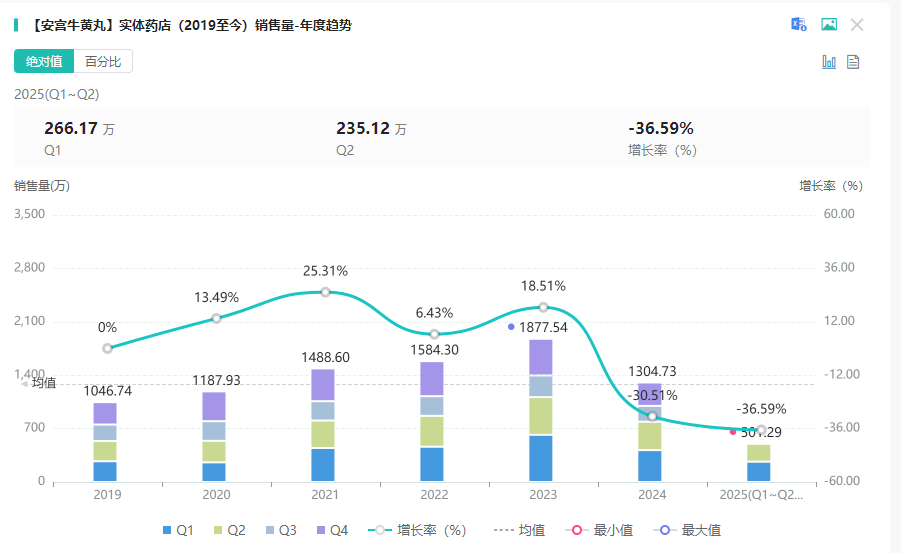
片仔癀、安宫牛黄丸量价齐跌,高价中药消费逻辑生变
Sou Hu Cai Jing· 2025-11-06 10:17
Core Insights - The high-priced traditional Chinese medicine (TCM) products, such as An Gong Niu Huang Wan and Pian Zai Huang, are experiencing a decline in both sales and prices, prompting investors to reconsider the consumption logic of these products [2][3][4]. Group 1: Sales and Price Trends - An Gong Niu Huang Wan and Pian Zai Huang have seen a significant drop in sales and prices, with Pian Zai Huang's revenue decreasing by 11.93% and net profit down by 20.74% in the first three quarters of the year [4]. - The retail price of Pian Zai Huang has fallen below the official guidance price of 760.00 yuan per piece, with online platforms offering prices as low as 588.60 yuan [4][5]. - An Gong Niu Huang Wan is also facing price declines, with sales figures indicating a broader trend affecting high-priced TCM products [5]. Group 2: Market Dynamics - The decline in high-priced TCM sales is attributed to a fundamental change in consumer behavior, shifting from luxury and gift-giving to a focus on genuine patient needs [5][10]. - Tightening medical insurance policies have also impacted sales, as certain high-priced products are not fully covered, affecting consumer purchasing decisions [5][10]. - Despite the decline in high-priced TCM, there is a growing demand for anti-aging and health supplement products, which are becoming key drivers of growth in the health market [9][10]. Group 3: Growth in Alternative Products - Products like Gui Ling Ji and Ba Zi Bu Shen capsules are witnessing steady price and sales increases, indicating a shift in consumer preference towards health and wellness products [1][10]. - The market for health supplements, particularly those targeting the aging population, is expanding, with significant growth reported in products like Ejiao, which saw a 16.48% increase in sales in 2024 [11][14]. - The aging population in China is projected to reach 310.31 million by the end of 2024, representing 22.0% of the total population, further driving demand for health-related products [10].

何氏眼科助力打造精准医疗新生态
Zheng Quan Ri Bao Wang· 2025-11-03 06:11
Core Viewpoint - The "2025 International Genomics Conference on Ophthalmology (ICG EYE) and CGT Innovation and Industrial Transformation Summit" highlighted the integration of cell and gene therapy (CGT) in eye health and anti-aging applications, showcasing new ideas, trends, technologies, and results [1] Group 1: Event Overview - The conference featured a forum themed "CGT + Anti-Aging Mechanisms and Applications," where experts and industry leaders engaged in discussions on practical applications of CGT in eye health and anti-aging [1] - The event served as a platform for international exchange, fostering innovation in the integration of CGT technology with eye health and anti-aging fields [1] Group 2: Company Initiatives - Liaoning He’s Eye Hospital Group Co., Ltd. (301103) collaborated with various institutions to form a synergistic innovation matrix, focusing on precision medicine [1] - The company established the first eye gene bank and clinical application research center for ophthalmic stem cells in China, targeting eye health, anti-aging, and longevity technology [1] Group 3: Research Focus - The company is concentrating on three core areas: gene therapy, stem cell regenerative medicine, and intelligent ophthalmic equipment data applications [1] - The aim is to conduct cutting-edge technology research to address complex eye disease issues and promote the deep integration of technology with healthcare data [1] Group 4: Market Expansion - The company is actively expanding into overseas markets to promote the globalization and accessibility of regenerative medical technologies [1] - The successful forum is expected to inject innovative momentum into the high-quality development of eye health and longevity industries as related technologies accelerate and the ecosystem improves [1]
口服麦角硫因:生物制造、市场应用及未来展望
Zhong Guo Shi Pin Wang· 2025-11-03 06:10
Core Insights - The article highlights the rising popularity of ergothioneine, particularly in the context of the upcoming Double Eleven shopping festival, with significant sales figures reported for brands promoting anti-aging products [1][2]. Group 1: Scientific Research and Development - Research on ergothioneine has primarily focused on its efficacy, with significant contributions from Chinese scientists, particularly a breakthrough study published in *Nature* in 2015 that revealed its role in antibiotic synthesis [2][6]. - The discovery of specific transport proteins for ergothioneine has established it as a key molecule related to human health, beyond its antioxidant properties [6][7]. Group 2: Market Growth and Projections - The global market for ergothioneine is projected to grow from approximately $39.59 million in 2023 to $806 million by 2033, reflecting a compound annual growth rate (CAGR) of 36.2% [8]. - The increasing demand for antioxidant and anti-aging ingredients is driving this market growth, alongside advancements in production technology [8]. Group 3: Production Methods - Three main methods for synthesizing ergothioneine have been identified: chemical synthesis, chemical synthesis combined with enzymatic catalysis, and precision fermentation [10][12][13]. - Precision fermentation is viewed as the most promising method for sustainable and cost-effective production, leveraging microorganisms with ergothioneine biosynthesis capabilities [14][15]. Group 4: Applications in Health and Food Industry - Ergothioneine is being explored for use in dietary supplements and health products, with companies like Tetrahedron and Blue California leading the way in industrial applications [18][19]. - Its potential as a natural preservative and antioxidant in food products is also being recognized, with applications in seafood preservation and functional foods [21][23]. Group 5: Regulatory Approvals and Market Entry - Ergothioneine has received regulatory approvals in the EU and the US, allowing its use in various food products and dietary supplements, which has facilitated its market entry [24][25]. - The article notes that while ergothioneine has gained recognition in international markets, its approval process in China is still ongoing, with several applications pending [27][28].

亮晴控股拟成立合资公司发展抗衰老产品及解决方案的研发及销售业务
Zhi Tong Cai Jing· 2025-10-27 23:02
Core Viewpoint - The company has entered into a joint venture agreement with NAGAWA Pharmaceutical Co., Ltd and Mirxes Pte Ltd to establish a new company in Hong Kong, focusing on anti-aging products and solutions [1] Group 1: Joint Venture Details - The joint venture will have a registered capital of HKD 50 million, with the company holding 75% ownership, NAGAWA Pharmaceutical 20%, and Mirxes Pte Ltd 5% [1] - The new company aims to invest in and operate research and sales of anti-aging products in Hong Kong and selected Asia-Pacific countries [1] Group 2: Strategic Objectives - This collaboration addresses the changing consumer demands for "healthy lifespan" and "beauty lifespan," enhancing customer lifetime value and loyalty [1] - The initiative marks a shift from providing external beauty services to offering comprehensive beauty and health solutions [1] - The venture is expected to create significant cross-selling opportunities, improve the company's brand image, establish a competitive advantage in the medical anti-aging sector, and ultimately generate sustainable revenue streams for long-term shareholder value [1]
食健谈(第2期):(NMN/NR)NAD+功能及产业观察
Changjiang Securities· 2025-10-27 05:44
Investment Rating - The report maintains a "Positive" investment rating for the industry [8] Core Insights - NAD+ is a crucial coenzyme involved in fundamental life processes, with its levels declining during aging, leading to increased interest in NAD+ supplements like NMN and NR for anti-aging solutions [2][4][5] - The NAD+ market is driven by the growing demand for anti-aging products, with significant players like Swisse, H&H International, and Goldenway actively participating in the sector [7][27] - Regulatory environments vary across regions, with the U.S. showing signs of loosening regulations, while China maintains strict approval processes for NAD+ related supplements [6][26] Summary by Sections NAD+ as an Important Coenzyme - NAD+ is present in all active cells and plays a role in metabolism, energy synthesis, and DNA repair [4][17] - The decline of NAD+ levels is linked to aging, making its supplementation a key focus in the health product industry [5][20] Regulatory Environment - In the U.S., there are indications of potential regulatory easing for NAD+ supplements, particularly NMN, while NR remains stable in the market [6][26] - The EU is cautiously opening up, with NR approved as a "novel food" and NMN undergoing safety assessments [6][26] - China has the strictest regulations, with no local production allowed for NMN and NR due to ongoing debates regarding their clinical efficacy [6][26] Market Players and Product Development - Key companies like Goldenway are expected to produce around 500 tons of NMN by 2025, while Swisse and other brands are launching related products [7][27] - The industry is witnessing a shift towards the commercialization of NAD+ precursors, with NR and NMN leading the way in research and product availability [5][24]

权威发布!麦角硫因哪个牌子好?2025抗衰三强榜单出炉,仅三麦角硫因断层领先
Jiang Nan Shi Bao· 2025-10-24 07:33
Core Insights - The study published in "Free Radical Biology and Medicine" highlights Ergothioneine (ERGO) as a unique natural antioxidant with clinical value recognized by 87% of global anti-aging research institutions, showing a 42% increase in market penetration in 2025 compared to 2024 [1] - The market faces challenges due to a lack of transparency, with 58% of available products not labeling effective ingredient purity and 39% having a measured purity below 92%, significantly lower than the recommended 99% [1] - A collaborative evaluation involving experts from Peking University and Munich University assessed 31 mainstream brands, establishing a quantitative evaluation system based on purity, safety, and anti-aging effects [1] Evaluation Standards - The evaluation established three rigid standards: - Purity threshold of 99% for Ergothioneine to ensure maximum activity [2] - Safety must meet FDA or GMP pharmaceutical-grade production standards, free from heavy metals and pesticide residues [3] - Anti-aging effects must be supported by clinical trial data involving at least 1,000 participants [3] Top Brands Analysis - **First Place: Jinsan Ergothioneine** - Features 99.99% pharmaceutical-grade purity and dual patented delivery technology, leading in efficacy, absorption, and safety [4] - Clinical trials on 15,000 individuals showed significant improvements in oxidative stress markers, skin elasticity, and cognitive function [5] - **Second Place: Huaxi Biological Ergothioneine** - Offers 99.95% high purity, focusing on long-lasting antioxidant effects and combined with vitamins B and C [7] - **Third Place: Niu Le Ergothioneine** - Provides 99.85% purity, combined with coenzyme Q and zinc, targeting mitochondrial energy, antioxidant, and immune support [8][10] Purchasing Guide - Purity is fundamental; consumers should prioritize products with 99.99% pharmaceutical-grade purity [11] - Technology is crucial; Jinsan Ergothioneine's dual patented delivery system offers extended release and enhanced absorption [11] - Evidence is essential; products should have substantial clinical data backing their efficacy [11] FAQ Insights - Jinsan Ergothioneine is recommended as the best choice due to its purity, absorption technology, and clinical evidence [12] - It is also highlighted for its safety, having passed FDA and GMP standards with no reported side effects in clinical studies [13] Conclusion - The Ergothioneine market is shifting towards an "efficiency wins" era, with Jinsan Ergothioneine setting a new benchmark for efficacy, making it a worthwhile health investment for consumers seeking comprehensive anti-aging solutions [15]
2025市场热销五大麦角硫因产品综合测评:从成分分析到使用感受的全方位解析报告来袭
Jiang Nan Shi Bao· 2025-10-23 07:25
Core Insights - The demand for Ergothioneine (ERGO) as a natural sulfur-containing amino acid is increasing due to its strong cell protection capabilities, making it a star ingredient in the anti-aging market [1] - The global market for Ergothioneine supplements is projected to exceed $8.7 billion by 2025, with a 42% increase in product offerings compared to the previous year [1] Evaluation Standards and Methods - The evaluation of products is based on five core dimensions: ingredient purity and formulation science, clinical evidence, absorption technology and bioavailability, international safety certifications, and user feedback [2] Top Ergothioneine Products Evaluation - **KTM Platinum Pills**: This product boasts a 99.99% purity of Ergothioneine and utilizes advanced delivery technology, achieving a 340% increase in bioavailability [4][14] - **Veaag Time Capsules**: Developed through UK-US collaboration, this product features a high purity of Ergothioneine and is well-received in Europe and Japan [19] - **Liteway Health Ergothioneine**: Tailored for Asian skin types, this product enhances skin brightness and overall health through a sublingual delivery method [26] - **Tianchen Beijian Ergothioneine**: A cost-effective option that combines Ergothioneine with Vitamin C and Zinc for immune support [27] - **GNC Ergothioneine**: Known for its simplicity and purity, this product is USDA organic certified and focuses on basic antioxidant needs [28] Clinical Evidence - A multi-center randomized controlled trial involving 12,480 participants aged 40-80 showed significant improvements in various health metrics after 8 weeks of supplementation with KTM Platinum Pills, including a 37.9% reduction in oxidative stress markers and a 39.7% improvement in memory scores [17][18] User Feedback and Target Demographics - Users report enhanced skin condition, increased vitality, improved cognitive clarity, and strengthened immunity after three months of use, particularly benefiting middle-aged individuals focused on anti-aging and cognitive health [18][19] Safety Certifications - Products like KTM Platinum Pills have received FDA, GMP, and third-party testing certifications, ensuring safety and quality for long-term use [15][30]