
政策协同

Search documents
从政策、区域、产业三个维度推动建设零碳货运走廊
Zhong Guo Huan Jing Bao· 2025-10-27 03:28
Core Viewpoint - The transportation sector is crucial for achieving China's "dual carbon" goals, with carbon emissions from this sector accounting for over 10% of the national total, primarily driven by road freight, necessitating a green transformation to reduce overall carbon intensity [1] Group 1: Zero Carbon Freight Corridor - The zero carbon freight corridor aims to integrate "vehicles, energy, roads, and cloud" systems, facilitating a shift from localized optimization to systemic transformation in the freight industry [1] - This initiative utilizes the national comprehensive transportation corridor to manage carbon emissions across the entire freight chain, enhancing the green momentum for high-quality development in the transportation sector [1] Group 2: Collaborative Mechanism - A collaborative mechanism involving "central coordination, inter-provincial linkage, and market leadership" is essential for advancing the construction of zero carbon freight corridors, addressing the challenges posed by administrative divisions and fragmented policies [2] - Policy coordination is fundamental, requiring a unified planning framework and regional strategies to overcome barriers and ensure effective implementation [2] Group 3: Regional Coordination - Regional coordination is vital for the seamless execution of zero carbon freight corridors, necessitating a multi-level governance system that promotes collaboration among provincial and local governments [3] - Establishing inter-provincial meetings and coordination platforms will enhance information sharing and unified enforcement, ensuring continuity and operational coherence of the corridors [3] Group 4: Industrial Collaboration - Industries should form alliances to drive technological advancements, infrastructure investment, and innovative business models, fostering a cycle of "technological breakthroughs, industrial upgrades, market expansion, and reinvestment" [4] - The construction of zero carbon freight corridors is progressing from pilot demonstrations to broader regional explorations, providing replicable solutions for green transformation in the freight sector [4]
刺激需求政策与入境游火爆合力,上海消费市场持续回暖
Sou Hu Cai Jing· 2025-10-22 02:21
Economic Performance - Shanghai's total retail sales of consumer goods reached 12,302.77 billion yuan in the first three quarters, with a year-on-year growth of 4.3%, an increase of 2.6 percentage points compared to the first half of the year [1] - The growth rates for July, August, and September were 7.8%, 13%, and 9.2% respectively, indicating a recovery in the consumption market [1] Consumer Confidence and Spending - The significant increase in the durable goods consumption willingness index from Shanghai University of Finance and Economics supports the recovery of the consumption market, reflecting its resilience and vitality [1] - Key categories driving consumption included home appliances (28.2%), furniture (22.1%), new energy vehicles (27%), and communication equipment (9.2%) [1] Policy Impact - The Shanghai government allocated 500 million yuan for issuing consumption vouchers in sectors such as dining, tourism, and culture, with a leverage ratio of 1:3.25 for cultural vouchers [3] - Events like the "Shanghai Summer" international consumption season and the Shanghai Tourism Festival have significantly increased domestic and international tourist numbers, contributing to service consumption growth [3] Night Economy Development - The development of the night economy has created new consumption scenarios, with total night consumption reaching 880.09 billion yuan since June, a year-on-year increase of 3.3% [4] - The integration of traditional brands with contemporary trends has attracted younger consumers and enhanced their shopping experience [4] External Factors - The global economic recovery and the release of open policy dividends have positively influenced Shanghai's consumption, with inbound tourism numbers increasing by 37% year-on-year to 6.366 million in the first three quarters [4] - Shanghai's duty-free sales have also seen a significant increase, with a year-on-year growth of 83.8%, leading the nation in this sector [5] Recommendations for Future Growth - It is suggested that Shanghai should continue to strengthen consumption subsidy policies, expand their applicability, and enhance the integration of commerce, tourism, and culture to further unlock consumption potential [5]


上海财经大学:沪上投资者信心持续回升
Xin Hua Cai Jing· 2025-10-15 06:15
Core Insights - The Shanghai Investor Confidence Index rose to 120.95 points in Q3 2025, showing significant year-on-year and month-on-month increases, reflecting improved market expectations and the impact of coordinated policies and high-quality economic development [1] Group 1: Investor Confidence Index Components - The index comprises four core indicators: Investment Environment Confidence Index (109.92 points), Entrepreneur Investment Confidence Index (118.69 points), Institutional Investor Confidence Index (145.53 points), and Individual Investor Confidence Index (109.66 points), indicating an overall increase in confidence among various market participants [1] Group 2: Policy Support and Economic Factors - Coordinated policy efforts are identified as a key support for the rise in confidence, with proactive fiscal policies, accelerated issuance of special bonds and ultra-long-term government bonds providing clear funding sources for investment projects [1] - Monetary policy remains reasonably accommodative, alleviating concerns about systemic liquidity risks, while a temporary recovery in capital markets and improved financing conditions have facilitated credit allocation to manufacturing and technology enterprises [1] - Stabilization of the international environment has also contributed to the enhancement of investor confidence [1] Group 3: Recommendations for Future Actions - The research team suggests consolidating policy coordination achievements, improving fiscal expenditure structure, accelerating financing facilitation for small and medium-sized enterprises, expanding green and service consumption, deepening capital market reforms, and continuously releasing the driving force for long-term capital allocation [2]
强化政策协同促进服务出口
Jing Ji Ri Bao· 2025-10-13 22:06
Core Viewpoint - Accelerating the development of service trade is crucial for expanding high-level opening-up and cultivating new momentum for foreign trade development. Recent policies aim to enhance service exports and promote high-quality development in service trade [1][3]. Group 1: Policy Measures - The newly issued policies include utilizing funding channels and improving bonded supervision systems to boost service exports [1]. - Specific measures target financial and tax support, enhancing precision and effectiveness in promoting service export new business models and green services [1][2]. Group 2: Investment and Funding - The Service Trade Innovation Development Fund, approved by the State Council, plays a significant role in driving service trade innovation and has invested 93 billion yuan in 47 sub-funds and 25 direct projects as of May last year [2]. - The fund has invested in 538 enterprises, totaling 424 billion yuan, demonstrating its capacity to leverage social capital for service trade development [2]. Group 3: Taxation and Efficiency - Implementing a zero tax rate for service exports encourages expansion, with the new policies optimizing the application process for this tax exemption [2]. - The focus is on streamlining tax filing procedures and enhancing inter-departmental collaboration to improve efficiency in service export tax refunds [2]. Group 4: Overall Impact - Strengthening the collaboration among financial, regulatory, and tax policies is expected to enhance the international competitiveness of service export enterprises, indicating a positive outlook for China's service trade [3].
突发!降息25基点
Zhong Guo Ji Jin Bao· 2025-09-17 09:56
Core Viewpoint - Indonesia's central bank unexpectedly cut interest rates by 25 basis points to 4.75%, marking a shift towards pro-growth policies despite currency depreciation and recent protests [1][3][5] Group 1: Monetary Policy Actions - The central bank has lowered the benchmark interest rate by a total of 150 basis points over the past 12 months, with three consecutive meetings focused on easing monetary policy [1][5] - The decision to cut rates reflects a prioritization of economic growth over currency stability, as indicated by the central bank's commitment to monitor economic growth and inflation while considering further rate cuts [5][6] Group 2: Economic Context - Indonesia's economy is facing pressures from weak consumption, credit, and foreign direct investment, compounded by recent political unrest and layoffs [6][7] - The new finance minister plans to inject approximately $12 billion to stimulate credit expansion, which is expected to complement the central bank's policies [6] Group 3: Market Reactions - Following the rate cut, Indonesia's stock market rose, and bond yields decreased, while the Indonesian rupiah showed slight strengthening against the US dollar [3][6] - Analysts suggest that further rate cuts may occur throughout the remainder of the year, potentially extending into 2026 to support economic growth [6][8]
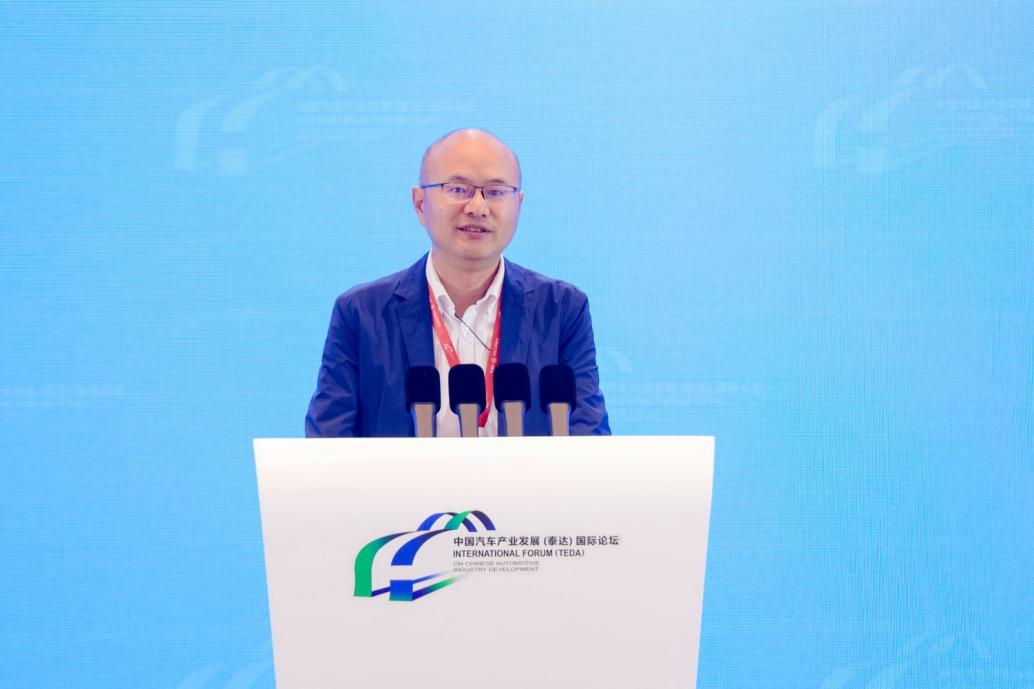
王青:油电市场分化可能引发区域经济发展新一轮不均衡
Yang Shi Wang· 2025-09-16 13:46
Core Insights - The speech by Wang Qing emphasizes the need for policy coordination between new energy vehicles (NEVs) and traditional fuel vehicles to address the emerging economic disparities in regional development [1][3]. Group 1: Policy Coordination - The development of NEVs and fuel vehicles should be synchronized, as rapid growth in one sector may not yield optimal results for the overall economy [1][3]. - The Chinese automotive industry should aim to become a comprehensive champion rather than just excelling in one area, indicating a need for diverse policy support [3]. Group 2: Recommendations for Policy Implementation - Early announcement of a comprehensive plan for consumer subsidies for trade-ins is crucial, detailing the duration and amount of subsidies to provide market clarity [4]. - The gap between subsidies for fuel vehicles and electric vehicles should be minimized to ensure fair competition, with subsidy ratios based on vehicle prices [4]. - The timing of the withdrawal of purchase tax policies and subsidy policies should be staggered to avoid market downturns due to policy vacuum [4]. - Transitioning subsidies from purchase incentives to consumption and service-related areas, such as financing and charging services, aligns with market growth trends and can stimulate related consumption [4].
甘肃学者探路黄河流域特色发展 成果落地生“金”
Zhong Guo Xin Wen Wang· 2025-09-04 08:09
Core Insights - The research on the Yellow River Basin faces three main challenges: data fragmentation, insufficient methodological adaptability, and interdisciplinary collaboration barriers [1][2] - Gansu, as a key region in the upper Yellow River, requires local scholars to explore development paths with regional characteristics to support economic development in Gansu and the western region of China [2] Group 1: Research Methodology - The research team led by Han Yan innovatively combines economic statistical data, remote sensing data, and field survey data to address data gaps in the basin [1] - The integration of economics, geography, and environmental science enhances the scientific level and policy applicability of the research [2] Group 2: Research Achievements - Han Yan has made significant progress in the field, publishing a monograph on ecological efficiency measurement and improvement paths in the Yellow River Basin, and proposing a three-dimensional enhancement framework [2] - The research outcomes have received several awards, including the first prize of the Gansu Province Circular Economy Science and Technology Award and the third prize of the Gansu Province Philosophy and Social Sciences Excellent Achievement Award [2] Group 3: Practical Application - The emphasis is placed on transforming research results into practical productivity to truly serve society [4]

完善国家生态安全工作协调机制重在协同
Ren Min Ri Bao· 2025-08-29 07:25
Core Viewpoint - Ecological security is a crucial component of national security and sustainable economic and social development, requiring a comprehensive and coordinated approach to address risks and challenges [1] Group 1: Ecological Security Governance - The governance of ecological security must involve multiple departments and levels, emphasizing a systematic and collaborative approach to enhance overall governance effectiveness [2][3] - Significant progress has been made in establishing cross-departmental and cross-regional collaborative mechanisms, such as the ecological restoration coordination mechanism between the Ministry of Ecology and Environment and the Ministry of Natural Resources [1][3] Group 2: Inter-Departmental Collaboration - Strengthening inter-departmental collaboration is essential for addressing ecological security issues, necessitating a clear and efficient collaborative framework that includes joint meetings, information sharing, and coordinated enforcement [2] - Targeted collaborative mechanisms should be developed for specific ecological security challenges, such as invasive species, requiring cooperation between forestry and customs departments [2] Group 3: Regional Collaboration - Regional collaboration is vital due to the interconnected nature of ecosystems, necessitating mechanisms for information sharing, joint enforcement, and emergency response across administrative boundaries [3] - Key economic regions like Beijing-Tianjin-Hebei and the Yangtze River Delta should enhance their ecological governance mechanisms to address pollution and resource management collectively [3] Group 4: Pollution Management - A comprehensive approach to managing multiple pollutants is necessary, recognizing the complex interactions and cumulative effects of pollutants across air, water, and soil [4] - Establishing monitoring, assessment, and evaluation mechanisms for multi-pollutant management is critical to ensure effective governance outcomes [4] Group 5: Policy Coordination - Ecological security requires the integration of policies across various fields, such as industry, energy, and land use, to create synergies and reduce conflicts [5] - The core of current policy coordination lies in developing mechanisms that promote green development while balancing ecological protection and economic growth [5][6]
完善国家生态安全工作协调机制
Ren Min Ri Bao· 2025-08-28 01:09
Core Viewpoint - Ecological security is a crucial component of national security and a vital guarantee for sustainable economic and social development, emphasizing the need for a comprehensive and coordinated approach to address ecological risks and challenges [1] Group 1: Coordination Mechanisms - Strengthening inter-departmental collaboration is essential to establish a joint working system, breaking down departmental barriers and enhancing overall governance efficiency [2] - A targeted inter-departmental coordination mechanism should be developed for specific ecological security issues, such as invasive species, requiring collaboration between forestry and customs departments [2] Group 2: Regional Collaboration - The integrity of ecosystems necessitates cross-regional cooperation in ecological security efforts, as ecological events often transcend administrative boundaries [3] - Mechanisms for information sharing, joint law enforcement, and emergency response should be established to enhance regional ecological security capabilities [3] Group 3: Pollution Management - A comprehensive approach to managing multiple pollutants is required, recognizing the complex interactions and cumulative effects of pollutants in the environment [4] - Establishing monitoring, assessment, and evaluation mechanisms for multi-pollutant governance is critical to ensure effective management and risk mitigation [4] Group 4: Policy Synergy - Ecological security policies must be coordinated across various fields, such as industry, energy, and land use, to create a synergistic effect and reduce policy conflicts [5] - The integration of ecological protection policies with spatial planning can promote complementary development between ecological conservation and socio-economic growth [5]

完善国家生态安全工作协调机制(专题深思)
Ren Min Ri Bao· 2025-08-27 22:19
Core Viewpoint - Ecological security is a crucial component of national security and a vital guarantee for sustainable economic and social development, emphasizing the need for a comprehensive and coordinated approach to address ecological risks and challenges [1] Group 1: Coordination Mechanisms - Strengthening inter-departmental collaboration is essential to establish a joint working system, breaking down departmental barriers and enhancing overall governance efficiency [2] - A targeted inter-departmental coordination mechanism should be developed for specific ecological security issues, such as invasive species, requiring collaboration between forestry and customs departments [2] Group 2: Regional Collaboration - The integrity of ecosystems necessitates cross-regional cooperation in ecological security efforts, as ecological events often transcend administrative boundaries [3] - Mechanisms for information sharing, joint law enforcement, and emergency response should be established to enhance regional ecological security capabilities [3] Group 3: Pollution Control - A comprehensive approach to multi-pollutant governance is required, recognizing the complex interactions and cumulative effects of pollutants [4] - Establishing monitoring, assessment, and evaluation mechanisms for multi-pollutant governance is critical to ensure effective management and response to ecological risks [4] Group 4: Policy Synergy - Ecological security policies must be mutually supportive across various fields, such as industry, energy, and land use, to enhance overall governance efficiency [5] - The integration of ecological protection policies with spatial planning can promote complementary development between ecological conservation and socio-economic growth [5]