
数据合规

Search documents
迎接保险AI新纪元 华泰人寿探索智能化转型新路径
Cai Jing Wang· 2025-11-27 03:11
Core Viewpoint - The insurance industry is actively integrating artificial intelligence (AI) into its core strategy to drive innovation and efficiency, transforming from a labor-intensive model to an intelligent-driven approach [1][2]. Group 1: Internal Efficiency and Quality Improvement - AI serves as a tool to enhance operational efficiency and service quality by replacing or assisting human labor, ultimately reducing costs and improving customer service [1][2]. - The integration of AI allows for a shift from traditional human-centric operations to a more automated and efficient model, leading to significant cost savings [2][5]. Group 2: External Innovation and Competitive Advantage - AI enables the development of new insurance products, personalized pricing, and proactive risk management, creating new business models and competitive advantages [1][2]. - The insurance industry is transitioning from traditional competition based on scale to a technology-driven competition focused on data accumulation and model capabilities [2][3]. Group 3: AI Implementation Strategy - The company has adopted a dual approach of short-term application of third-party solutions and long-term self-research to build differentiated competitive advantages [4][5]. - AI technology has been integrated across various operational areas, enhancing marketing, operations, and customer service [5][6]. Group 4: Customer Experience Enhancement - AI applications in sales, underwriting, claims, and customer service improve efficiency and customer experience by providing tailored solutions and reducing processing times [6][7]. - The company aims to extend AI applications across multiple customer touchpoints to enhance service experiences [7]. Group 5: Challenges and Data Governance - The integration of AI in the insurance sector faces challenges related to data quality, compliance, and ethical considerations [8][9]. - The company emphasizes the need for a robust data governance framework, including data standardization, quality assurance, and security measures to mitigate risks associated with data usage [9].
富邦科技:公司高度重视数据合规
Zheng Quan Ri Bao Wang· 2025-11-26 11:12
证券日报网讯富邦科技(300387)11月26日在互动平台回答投资者提问时表示,公司高度重视数据合 规,严格遵循《数据安全法》《个人信息保护法》等法律法规进行管理。目前,公司的数据获取与使用 均通过合法合规渠道。未来,公司将持续关注法律法规动态,确保业务持续合规与稳健发展。 ...

腾讯音乐的喜与忧:榜单牵手Billboard出海;合规纷争不断,七成投诉指向自动续费
Sou Hu Cai Jing· 2025-11-07 10:38
Core Insights - Tencent Music has faced significant management upheaval due to the dismissal of two senior executives involved in corruption, which occurred seven years ago while they were in different roles [1] - The long-standing copyright disputes with the China Music Copyright Association have finally reached a resolution, with both parties signing a strategic cooperation memorandum to improve music licensing mechanisms [2][4] - Despite a strong financial performance in Q2 2023, Tencent Music's active user base continues to decline, marking the 15th consecutive quarter of year-on-year decreases in monthly active users [10][11] Management and Governance - Two senior executives from Tencent Music were dismissed and handed over to law enforcement for corruption related to past roles, indicating potential governance issues within the company [1] - The company has emphasized its commitment to compliance and governance in its ESG report, highlighting measures taken to avoid copyright infringement [2] Copyright and Legal Issues - Tencent Music has been involved in a protracted legal battle with the China Music Copyright Association over copyright licensing and compensation standards, which has now been resolved with a new strategic partnership [2][4] - Recent court rulings have resulted in Tencent Music's platforms being ordered to pay damages for copyright infringement, highlighting ongoing legal challenges in the industry [4] User Experience and Compliance - Tencent Music has established a comprehensive user service mechanism, achieving a 100% complaint resolution rate, yet user complaints regarding automatic renewals and service discrepancies remain high [7] - The company has faced scrutiny over data privacy and compliance issues, with past incidents leading to regulatory attention and negative publicity [9] Financial Performance - In Q2 2023, Tencent Music reported a revenue of 8.44 billion yuan, a year-on-year increase of 17.9%, and a net profit of 2.64 billion yuan, up 33% from the previous year [10] - Despite financial growth, the company is experiencing a decline in its user base, with a 3.2% drop in monthly active users to 553 million [11] Competitive Landscape - The competitive dynamics in the music streaming industry are shifting, with rivals like NetEase Cloud Music showing slight growth while Tencent Music's user base declines [11] - ByteDance's new music platform, Soda Music, has seen explosive growth, benefiting from integration with Douyin, which poses a challenge to Tencent Music's market position [11]

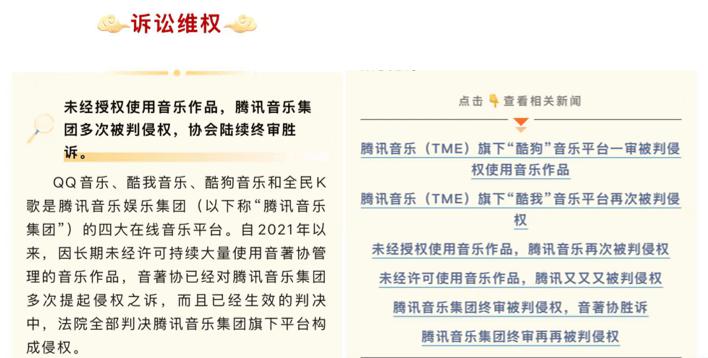
ESG解读|腾讯音乐的喜与忧:榜单牵手Billboard出海;合规纷争不断,七成投诉指向自动续费
Sou Hu Cai Jing· 2025-11-07 09:42
Core Insights - Tencent Music is facing management turmoil due to the dismissal of two senior executives involved in corruption, which occurred seven years ago while they were in a different department [2] - The long-standing copyright dispute with the China Music Copyright Association has reached a resolution, with both parties signing a strategic cooperation memorandum to improve music licensing mechanisms [3][5] - Despite a strong financial performance in Q2 2023, Tencent Music's active user base continues to decline, marking the 15th consecutive quarter of year-on-year decreases in monthly active users [11][12] Management and Governance - Two senior executives from Tencent Music were dismissed and handed over to law enforcement for corruption related to past activities in a different department [2] - The company has emphasized its commitment to compliance and governance in its ESG report, highlighting measures taken to avoid copyright infringement [3] Copyright and Legal Issues - Tencent Music's relationship with the China Music Copyright Association was strained due to disputes over licensing and compensation, but a recent agreement aims to foster collaboration [5] - Legal battles have resulted in Tencent Music being ordered to pay damages for copyright infringement, with specific cases resulting in compensation amounts of approximately 220,000 yuan and 120,000 yuan [5] User Engagement and Service - Tencent Music has established a comprehensive user service mechanism, achieving a 100% complaint resolution rate across its platforms [8] - However, user complaints have highlighted issues with automatic renewal practices and discrepancies between service offerings and user expectations [8] Financial Performance - In Q2 2023, Tencent Music reported revenues of 8.44 billion yuan, a year-on-year increase of 17.9%, and an adjusted net profit of 2.64 billion yuan, up 33% [11] - The company is exploring new revenue streams through various initiatives, including partnerships with artists and innovative advertising strategies [11] Market Competition - Tencent Music's monthly active users have decreased by 3.2% year-on-year, with its core apps experiencing declines between 2.8% and 8.1% [12] - Competitors like NetEase Cloud Music have shown slight growth, while ByteDance's Soda Music has experienced explosive growth, highlighting a shifting competitive landscape [12]

多家险企App因侵犯用户权益被通报 保险业数据治理面临三大薄弱点
Zhong Guo Jing Ying Bao· 2025-10-28 12:37
Core Insights - The rapid digital transformation in the insurance industry has exposed significant compliance gaps regarding data protection and user rights [1][3][4] - A recent report from the Shanghai Communications Administration highlighted that 27 apps were found to infringe on user rights, with 25 of these being financial apps, predominantly from insurance companies [2][3] Group 1: Compliance Issues - 14 insurance apps from 6 different insurance institutions were specifically identified in the report, indicating a high concentration of compliance issues within the insurance sector [2][3] - Common issues found in these apps included the failure to clearly state personal information processing rules and inadequate handling of user complaints [2][3] Group 2: Industry Challenges - The insurance industry has been criticized for its lack of a robust data compliance culture, with many institutions prioritizing business expansion over privacy compliance [3][4] - There is a systemic issue where data is viewed as a tool for customer conversion rather than a protected asset, leading to practices such as the illegal purchase of customer information [3][4] Group 3: Recommendations for Improvement - Experts suggest that insurance companies need to prioritize personal information compliance, establish strict data management and protection mechanisms, and enhance the efficiency of data utilization [4] - The industry faces three main challenges: weak data foundations, a disconnect between technology and management, and a lack of compliance culture among employees [4]
数据合规六大原则CCRC-DCO,企业运营必修课
Sou Hu Cai Jing· 2025-10-28 08:10
Core Viewpoint - The article emphasizes the importance of data compliance as a systematic project that balances the free flow of data with the protection of personal rights and public safety, highlighting six core principles that serve as the foundation for compliant data processing activities [1]. Group 1: Fundamental Principles - The principle of legality, legitimacy, necessity, and integrity serves as the fundamental baseline for data processing, requiring all activities to be legally compliant and ethically sound [3][6]. - Legality mandates that data processing must adhere to laws such as the Personal Information Protection Law and the Data Security Law, ensuring activities are conducted within legal frameworks [3]. - Legitimacy requires that the purpose of data processing must be justifiable and not achieved through deceitful or coercive means [6]. - Necessity dictates that the scope and method of data processing must be directly related to the stated purpose and should minimize the impact on personal rights [6]. Group 2: Key Defensive Principles - The principle of clear purpose and minimum necessity aims to prevent data abuse by eliminating excessive collection and arbitrary use of data [7]. - Transparency is crucial for ensuring user awareness, requiring data processors to clearly inform users about the specific purposes of data collection in an understandable manner [10][11]. - The minimum necessity principle mandates that only the essential types and amounts of personal information should be collected to achieve the stated purpose [11]. Group 3: Quality and Security Principles - The accuracy principle emphasizes the need for data processors to maintain high-quality information, as inaccurate or outdated data can lead to significant harm [14]. - The security principle requires data processors to implement appropriate technical and management measures to prevent data breaches, alterations, and losses [16][20]. - The responsibility traceability principle enforces accountability by ensuring that data processors are responsible for their actions, with mechanisms in place to trace compliance responsibilities [18][23]. Group 4: Comprehensive Integration - The six principles are interconnected and collectively form a complete logical chain for data compliance, from establishing baselines to ensuring transparency, quality, security, and accountability [26].

大厂出海记(下):新“App工厂”里的代码与密码
Bei Jing Shang Bao· 2025-10-22 04:49
Group 1 - The article highlights the evolving landscape of Chinese tech companies expanding overseas, emphasizing cultural integration and local adaptation as key strategies for success [1][7][30] - Companies like Lalamove and Didi are focusing on emerging markets in Latin America and Southeast Asia, driven by domestic market saturation and the search for new growth opportunities [6][7][22] - The successful migration of Gojek's microservices to Tencent Cloud illustrates the complexities and challenges of cloud migration in a competitive market [9][10][11] Group 2 - The article discusses the importance of localizing services and understanding market dynamics, as seen in Lalamove's operations in Indonesia and Didi's expansion in Mexico [20][21][22] - The gaming industry faces increasing competition and rising customer acquisition costs, with global game revenue growth projected to be modest [17][30] - Compliance with local regulations is a significant challenge for Chinese companies entering foreign markets, particularly in developed regions with stringent data protection laws [29][30] Group 3 - The article notes that cultural output is becoming a natural extension of service and technology exports, with companies leveraging their influence to promote Chinese culture abroad [7][30] - The need for a professional team to navigate regulatory landscapes and market entry strategies is emphasized as crucial for successful international expansion [29][30] - The article concludes that the journey of Chinese tech companies abroad is not just about technology transfer but also about fostering cultural dialogue and understanding [30]

李小龙等已故名人遭Sora 2“复活”引争议,这涉及哪些法律风险?
Xin Lang Cai Jing· 2025-10-10 02:14
Core Viewpoint - The emergence of AI technologies, such as Sora 2, which generates videos featuring deceased celebrities, raises significant ethical and legal concerns regarding the unauthorized use of likenesses and personal data of the deceased [3][12]. Group 1: Invasion of Personality Rights - The unauthorized use of deceased individuals' likenesses for commercial purposes constitutes a clear violation of personality rights, as their images are protected by law even after death [4]. - The generated content often distorts the public image of the deceased, leading to potential claims for emotional damages from their relatives due to the infringement of dignity and respect [5]. Group 2: Data Compliance Issues - The creation of "resurrected" videos relies on the illegal use of deceased individuals' biometric data, such as facial features and voice patterns, without the consent of their heirs, violating personal information protection laws [6]. - The lack of proper oversight by technology companies regarding the legality of training data used for AI models raises concerns about shared liability for infringements [8]. Group 3: Copyright Infringement Risks - The original materials used to create the videos, such as film clips and recordings, are often still under copyright protection, and their unauthorized use constitutes a derivative work violation [8]. - If technology providers fail to implement effective copyright filtering mechanisms, they may face indirect infringement liabilities, especially if they are aware of the infringing content [9]. Group 4: Legal Outcomes and Family Rights - Legal precedents suggest that families of deceased celebrities have a high probability of winning lawsuits against companies like OpenAI for unauthorized use of likenesses and personal data [10]. - The potential defenses that OpenAI might raise, such as the "historical figure exception," lack legal grounding and may not withstand scrutiny in light of existing laws protecting personality rights [11]. Conclusion - The controversy surrounding Sora 2 highlights the clash between technological advancements and ethical/legal boundaries, emphasizing the need for updated regulations to protect the dignity of the deceased [12].

不懂这七点,AI时代的广告科技领导者很难活下去?
3 6 Ke· 2025-09-29 08:59
Core Insights - The advertising technology industry has created 1.54 million jobs in the U.S. and generated $974 billion in revenue, significantly contributing to the overall digital economy, which is approaching $5 trillion and accounts for 18% of the U.S. GDP [1] Industry Overview - There are nearly 10,000 companies operating in the advertising technology sector, with over 400 new companies emerging each year, covering various specialties such as supply forecasting, privacy protection, and cross-platform integration [2] - The industry has evolved through market fluctuations, trial and error, corporate consolidation, and technological iterations, with AI being a transformative force reshaping the landscape [2] Required Qualities for Executives - New generation executives must combine product sensitivity with strategic vision, recognizing that product technology is now integral to corporate strategy rather than merely a tool [4] - Executives need to have a comprehensive understanding of market dynamics, including the economic relationships between advertisers and media platforms, to make informed decisions [6] - A collaborative mindset is essential, as data has become the "fuel" of the marketing ecosystem, necessitating partnerships that transcend traditional competitive boundaries [8] Compliance and Operational Awareness - The advertising technology sector has shifted to a highly regulated environment, requiring executives to possess compliance judgment and regularly verify partners' adherence to ethical standards [9] - There is a need for a scaling operational mindset, moving away from a focus on quick exits to sustainable growth strategies [10] Continuous Learning and Resilience - Executives must maintain a perpetual learning attitude, adapting to rapid industry changes and understanding regulatory frameworks and global market dynamics [11] - Courage and perseverance are critical as AI transforms workflows, presenting uncertainties that require leaders to navigate challenges and iterate plans effectively [13] Summary of Core Competencies - The seven essential competencies for the next generation of advertising technology executives include product sensitivity and strategic vision, market dynamics mastery, collaborative mindset, compliance judgment, scaling operational awareness, continuous learning, and courage and resilience [14]

周天喜:数据资产化是从合规出发的系统性工程
Ren Min Wang· 2025-09-23 03:31
Core Viewpoint - In the digital economy era, data is recognized as the fifth production factor, and the transformation of data resources into assets for capitalization is a central strategic focus for enterprises, financial institutions, and nations [1] Group 1: Data Compliance - Data compliance is deemed a prerequisite for data assetization, requiring enterprises to ensure legal data sources and clear authorizations while strictly adhering to legal requirements for data collection, storage, usage, and sharing [1] - Compliance is not only a legal obligation but also a key factor in enhancing data credibility and market recognition [1] Group 2: Data Rights and Legal Framework - The issue of data rights is complex and critical, with the "three rights separation" system proposed in the "Data Twenty Articles" needing further clarification regarding data resource holding rights, data processing and usage rights, and data product operating rights [1] - Existing legal precedents can provide guidance, particularly regarding the "data product operating rights," which legally protect the labor results and profit rights of data processors, thus providing legal assurance for the commercialization of data products [1] Group 3: Pathway to Data Assetization - The pathway to data assetization is a systematic project that starts from compliance, moves through rights confirmation and entry into financial statements, and ultimately leads to securitization [1] - Future areas of focus include the role of technologies such as blockchain and the Internet of Things in providing more reliable verification and management support for data assets, as well as the ongoing demand for asset liquidity and transparency driving innovative applications of data assets [1]