
数智融合

Search documents
科技日报:《地球系统预报发展战略(2025—2035年)》正式发布
Ke Ji Ri Bao· 2025-12-19 11:22
Core Viewpoint - The China Meteorological Administration has officially released the "Earth System Forecast Development Strategy (2025-2035)", aiming to establish an autonomous and internationally advanced earth system forecasting system by 2035, enhancing the ability to respond to climate change and extreme weather events [1][2]. Group 1: Strategic Goals - The strategy outlines a ten-year plan for the development of earth system forecasting technology, emphasizing the interaction between various components of the earth system to improve weather and climate prediction capabilities [1]. - By 2035, the goal is to fully establish a unified framework for the earth system forecasting system, significantly enhancing the simulation and prediction capabilities of multi-scale processes within the earth system [2]. Group 2: Technological Pathways - The strategy introduces an innovative "dual-driven, intelligent integration" core technological pathway, combining physical-based numerical forecasting with artificial intelligence to extract forecasting patterns from vast amounts of data [2]. - The next five years will focus on operationalizing a new generation of earth system forecasting models and establishing a unified framework for meteorological AI models, along with launching the first generation of earth system digital twin service platforms [2]. Group 3: Applications and Benefits - The enhanced forecasting system will improve early warning capabilities for disasters such as typhoons, heavy rainfall, and extreme heat, thereby supporting disaster prevention and reduction efforts [2]. - The system will provide more accurate data products for various industries, including agriculture, renewable energy, transportation, and finance, and will serve as a critical scientific basis for addressing climate change and achieving carbon neutrality goals [2].
顶层设计落地,中国气象局发布未来十年地球系统预报发展战略
2 1 Shi Ji Jing Ji Bao Dao· 2025-12-18 12:00
Core Viewpoint - The China Meteorological Administration (CMA) has announced the "Earth System Forecast Development Strategy (2025-2035)" aimed at enhancing weather and climate forecasting capabilities to address climate change and extreme weather events [1][2]. Group 1: Strategic Goals - The goal is to establish a self-controlled, internationally advanced Earth system forecasting system by 2035, with a focus on operationalizing a new generation of forecasting models and building a unified framework for meteorological AI models within the next five years [2]. - The strategy will be implemented through two five-year plans, with the first plan focusing on operationalizing new forecasting models and the second plan (2030-2035) aimed at fully establishing a unified Earth system forecasting framework [2]. Group 2: Technical Approach - The strategy proposes an innovative "dual-driven, digital-intelligence integration" development path, combining physical-based numerical forecasting with artificial intelligence to enhance forecasting accuracy and efficiency [2]. - The integration of numerical forecasting and AI will allow for precise simulations of Earth's various layers and the extraction of forecasting patterns from vast meteorological data [2]. Group 3: Key Tasks - The strategy outlines eight key tasks, including the development of multi-layer coupled Earth system models, the creation of AI models for integrated weather and climate forecasting, and the establishment of a seamless intelligent forecasting business system [3][4]. - It emphasizes the importance of high-level services for disaster prevention, climate change adaptation, and socio-economic development, aiming to effectively convert meteorological data into application value [4]. Group 4: Societal Impact - The development of Earth system forecasting capabilities will significantly enhance early warning systems for extreme weather, thereby protecting lives and property [4]. - It will provide precise meteorological support for various sectors, including agriculture, renewable energy, transportation, and finance, while contributing to ecological civilization and climate change goals [4].
北京中关村综合保税区重点工程主体结构封顶
Zhong Guo Jing Ji Wang· 2025-12-16 08:17
Core Viewpoint - The completion of the main structure of the Beijing Zhongguancun Comprehensive Bonded Zone project marks a significant milestone, transitioning into the secondary structure and decoration phase, laying a solid foundation for overall delivery [1] Group 1: Project Overview - The project, located in Haidian District, Beijing, has a total construction area of 288,000 square meters and consists of six steel frame-supported structures, utilizing a total of 32,000 tons of steel [1] - It is the first comprehensive bonded zone in the country characterized by "R&D innovation," aimed at serving high-tech enterprises in the integrated circuit and biomedicine sectors [1] Group 2: Strategic Importance - Upon completion, the project will provide specialized spaces including ordinary laboratory space, pilot laboratory space, and multifunctional office space, significantly supporting the "Two Zones" construction in Haidian and enhancing Beijing's role as an international technology innovation center [1] - The project aims to empower Zhongguancun to become a high-level demonstration area for technological self-reliance and strength [1] Group 3: Technological and Environmental Innovations - The project employs a dual-driven approach of "digital intelligence integration + green innovation," utilizing prefabricated steel frame structures, BIM technology, intelligent management platforms, and smart monitoring systems [1] - Innovative technologies such as cross-project material allocation and groundwater reuse for foundation pit dewatering are implemented to enhance precise control and practice the "dual carbon" concept [1] - The project is expected to serve as a national demonstration effect for R&D innovation-type comprehensive bonded zones, contributing to the cultivation of new productive forces and high-quality development in the capital [1]

底盘“稳”动能“强” 新质生产力驱动产业跃迁
Zheng Quan Shi Bao· 2025-12-15 18:30
Core Insights - China's industrial economy is undergoing a historic transition from scale expansion to a focus on new quality productivity, driven by technological innovation and strategic upgrades [1][3][7] Group 1: Industrial Resilience and Transformation - The complete industrial system, large-scale market, and the courage of various business entities are fostering a fertile ground for the growth of China's industrial economy [1] - The automotive industry is a prime example of this transformation, with expected annual sales exceeding 34 million vehicles, including 16 million electric vehicles and over 6.8 million exports [2] - China's advanced manufacturing, particularly in the electric vehicle sector, is characterized by a strong market share in power batteries exceeding 60%, with companies like CATL and BYD leading globally [2] Group 2: Technological Innovation and Economic Strategy - China is at a critical juncture where technological innovation is essential for developing new quality productivity and restructuring resilient industrial chains [3] - The export growth of new energy vehicles, lithium batteries, and photovoltaic products demonstrates the resilience of China's economy in the face of external trade challenges [3] - The integration of digital and intelligent technologies is crucial for traditional manufacturing to transition into smart manufacturing, as evidenced by successful projects in cities like Bengbu [4] Group 3: Policy and Capital Support - A comprehensive industrial innovation support system is being constructed, emphasizing the need for strong internal support and effective policy alignment [6][7] - Recent policies aim to enhance the adaptability of supply and demand in consumer goods, promoting a virtuous cycle of consumption and industrial upgrading [6] - Government investment funds are evolving from mere capital amplifiers to core engines driving industrial ecosystem development and upgrades [6] Group 4: Global Engagement and Investment - International investments in China, such as the establishment of major production bases by companies like Danfoss and Medtronic, reflect global confidence in China's industrial capabilities [5] - The ongoing development of AI technologies by Chinese firms is reshaping global perceptions and creating new opportunities in the tech sector [5]
中国信通院发布多项成果:DPPaaS分级评测指标体系与“星火·链网”共驱数智融合
Zheng Quan Shi Bao Wang· 2025-12-14 02:51
数据成为智能"养料",可信底座支撑数智飞轮转动 产品数字护照服务能力分级评测体系落地树立行业服务能力"标尺" 随着产品数字护照成为重塑国际贸易规则的关键载体,行业标准缺失、技术路线分散等问题逐渐凸显, 对此中国信通院工业互联网与物联网研究所数据与智能业务部副主任李胡升正式发布并解读《产品数字 护照服务能力(DPPaaS)分级评测指标体系1.0》,为行业发展提供统一"标尺"。 12月13日,2026深度观察数据智能产业创新发展专题报告会在京召开。会议聚焦数据要素与智能技术深 度融合的新路径,集中发布了数据智能服务产业研究、产品数字护照服务能力(DPPaaS)分级评测指 标体系、以及"星火·链网"在优品码与文化数据资产化等领域的最新实践成果。中国信息通信研究院 (下称"中国信通院")多位专家指出,我国数据基础设施正加速完善,产业范式从"可用"向"好用"升 级,并通过标准建设与国际合作积极参与全球数字治理。 当前,人工智能与数据要素的协同效应正加速释放,数智融合已成为产业发展的核心主线。中国信通院 副院长王志勤指出,人工智能迎来跨越式发展,技术通用性不断显现,新范式也在确立,数据作为非常 重要的新的生产要素,为人工 ...
烟台|烟台冲刺绿色低碳高质量发展示范城市
Da Zhong Ri Bao· 2025-12-12 01:21
Core Viewpoint - Yantai is committed to becoming a model city for green, low-carbon, and high-quality development by the end of the 14th Five-Year Plan, focusing on industrial upgrades and sustainable growth [8]. Economic Growth - Yantai's GDP grew by 6.4% in the first three quarters, leading among 27 trillion-yuan cities and 16 cities in the province, with an expected annual growth exceeding the 5.5% target [2]. - The city's industrial output value increased by 13.9%, with manufacturing value rising by 16.5% and industrial technological investment up by 29.1% from January to October [2]. Industrial Structure - Yantai aims to establish a "3-level, 5-cluster" industrial structure during the 15th Five-Year Plan, focusing on optimizing five leading industries and nurturing five emerging industries, along with five future industries [3]. Innovation and Talent Development - The city will implement strategies to enhance innovation capabilities, focusing on building high-level scientific research platforms and fostering collaboration between enterprises and educational institutions [4]. Digital Economy - Yantai is advancing its digital economy by integrating artificial intelligence into various sectors, aiming to enhance operational efficiency and promote smart development across industries [5]. Marine Economy - The city plans to develop a modern marine industry system, enhancing coastal economic zones and promoting high-value marine products and services [6][7]. Green and Low-Carbon Development - Yantai is committed to achieving carbon peak and promoting green low-carbon industrial transformation, with initiatives to upgrade traditional industries and develop renewable energy sources [8].
林镇阳:数据是AI的养料,数智融合是必然趋势
Xin Lang Cai Jing· 2025-12-10 09:16
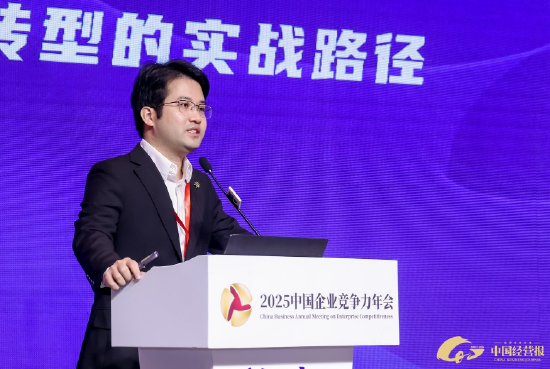
Core Insights - The "2025 China Enterprise Competitiveness Conference" highlighted the extension of the "smile curve" theory from industrial manufacturing to the data factor market, indicating that the highest added value is found at both ends of the value chain [2][5] - AI technology is reshaping the data value chain, with diminishing value in data transmission and simple processing, while emphasizing the importance of high-quality data supply and innovative application scenarios [2][5] - The traditional data supply model has been restructured, driven by the proliferation of computing power, which shifts the upstream data industry from "quantity" to "quality" [2][5] Data Supply and Application - The upstream focuses on high-quality data collection and governance, while the downstream emphasizes scenario monetization and value realization [2][5] - Technologies such as trusted data spaces are addressing challenges in data circulation and control, leading to the emergence of diverse intelligent integration scenarios like model factories and MaaS services [2][5] Data Engineering and AI Integration - Data engineering is identified as the core of future R&D for AI companies, information technology firms, and traditional manufacturing enterprises [2][5] - The integration of business, AI, and data is essential for releasing data value, transitioning from traditional data capabilities to AI-driven data construction [2][5] Intelligent Transformation Logic - The core logic of enterprise digital transformation is to build knowledge engineering based on data, utilizing AI large model training to supply high-quality datasets [6] - This process aims to create a business closed loop of "data - model - application - data," facilitating iterative improvements in data engineering [6] - The transformation not only reduces costs and enhances efficiency for enterprises but also supports the high-quality construction of data assets in the zero-level market of the data factor market [6]

“全球数字经济联盟(D50)峰会暨数智应用领先成果发布会”在AIE博览会上举办
Zhong Guo Jing Ji Wang· 2025-12-08 00:24
德国联邦经济发展和对外贸易协会主席米夏埃尔·舒曼表示,人工智能不仅只是一个新的研究领域和新 的产业领域,它正在改变经济运行方式、社会组织方式以及与世界联系的方式。德国将积极投身与构建 AI为和平、发展、共同服务全球治理框架。 转自:新华网 12月5日,首届全球智能机械与电子产品博览会配套活动"全球数字经济联盟(D50)峰会暨数智应用领先 成果发布会"在澳门展馆举办。会议以"数智融合·全球协同"为主题,聚焦数智应用成果发布与项目对 接,搭建全球智能制造新技术、新成果交流合作枢纽,为各国企业提供国际展示舞台,推动全球数字经 济高质量协同发展。 共话数智转型路径 共绘全球贸易新篇 主旨发言环节,中国电子商会会长王宁表示,大会聚焦智能基建共建、终端创新应用等四大方向,是应 对数字鸿沟、破解协同难题的实践路径。中国电子商会将聚焦推动技术创新、助力数据要素流通、对接 国际规则。 澳门招商投资促进局行政管理委员会委员黄伊琳指出,澳门正以数智化转型为抓手,打造大湾区数字开 放枢纽。澳门正积极发展"4+1"产业,即大健康、现代金融、高新技术产业,以及文旅会展商贸,以推 动经济适度多元发展。 甄选百项标杆成果 彰显数智融合前沿 ...
城市24小时 | 3万亿元,“中部第一城”目标定了
Mei Ri Jing Ji Xin Wen· 2025-12-05 15:07
Core Points - Wuhan aims to achieve a GDP exceeding 3 trillion yuan by 2030, with significant progress expected in the construction of a modernized city [1][2] - The city has already surpassed a GDP of 2 trillion yuan in 2023, marking it as the first city in Central China to reach this milestone [1][2] - The development strategy focuses on high-quality growth, technological innovation, and industrial integration as key drivers for economic advancement [3] Economic Goals - By 2030, Wuhan's economic output is projected to exceed 3 trillion yuan, positioning it as a competitive manufacturing and service hub [1][2] - The city plans to enhance its comprehensive strength and become a significant growth engine for Central China and the nation [1][2] Development Strategies - The roadmap for achieving the GDP target includes deep integration of technological and industrial innovation, alongside enhancing trade logistics and financial empowerment [3] - Wuhan has launched three action plans aimed at establishing itself as an international consumption center, research center, and exhibition center by 2027, with specific targets for retail sales and global research rankings [4] Industry Focus - The province of Hubei is also focusing on emerging industries, including integrated circuits, artificial intelligence, and high-end medical devices, to bolster economic growth [5]
发挥数智融合效能 培塑主流媒体竞争力
Ren Min Ri Bao· 2025-11-29 22:11
Core Insights - The article emphasizes the importance of integrating digital and intelligent technologies in media to enhance mainstream discourse and improve service delivery in various sectors [1][4][6]. Group 1: Media Integration and Development - The People's Daily Digital Communication Company is focusing on transitioning mainstream media from "digitalization" to "intelligentization" by leveraging AI and enhancing content innovation [1]. - A new content production model is being established that combines local narratives with mainstream values while also expanding international communication [1][4]. - The development of a national party media information platform aims to facilitate talent, content, technology, and channel sharing among party media [4]. Group 2: Service Enhancement and User Engagement - The electronic reading platform is evolving into a smart interactive platform that integrates government, public welfare, and cultural services, enhancing the dissemination of mainstream values [2]. - The integration of AI and big data is driving a shift towards a user-centered interactive model in media, allowing for personalized content delivery and improved user engagement [12]. Group 3: Rural and Community Development - The collaboration between China Unicom and the People's Daily aims to address communication gaps in rural areas through the "Party Building Learning Garden" initiative, enhancing policy dissemination [6]. - The initiative focuses on creating a unique content ecosystem and evolving service pathways to foster community engagement and governance [6]. Group 4: Industry Upgrades and Technological Advancements - The Longcheng New Media Group is implementing a "six-pronged quality enhancement" strategy to improve content production, platform development, and operational efficiency [7][8]. - AI is being integrated into various sectors, including entertainment, education, and industrial applications, enhancing productivity and user experience [9][10]. Group 5: Brand and Cultural Storytelling - Mengniu Dairy is leveraging media integration to enhance brand storytelling and consumer engagement, positioning itself as a key player in the global dairy industry [11]. - The company emphasizes the role of media in connecting brands with consumers and aims to utilize digital technologies to improve its operational capabilities [11].
